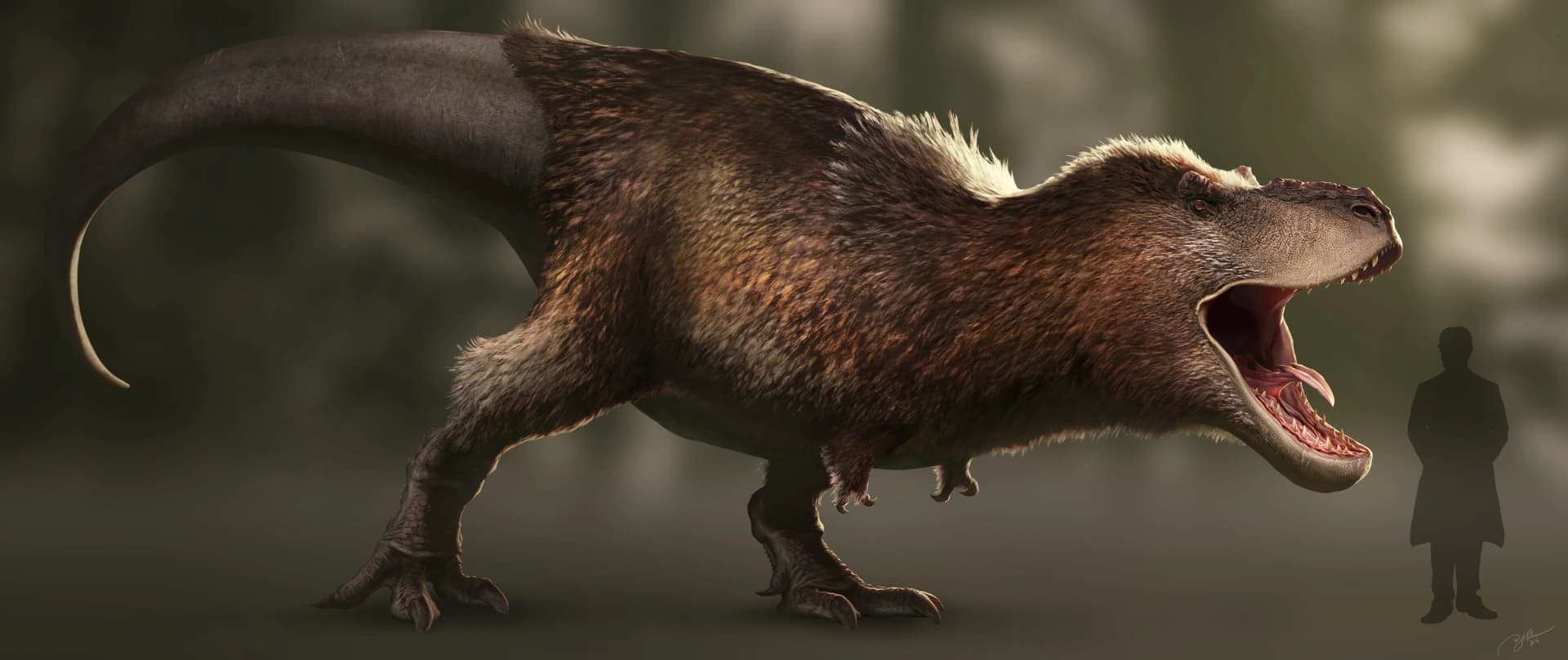
Tyrannosaure
Tyrannosaurus rex was a carnivorous theropod from North America that lived 68 to 66 million years ago, at the very end of the Late Cretaceous. Measuring 12 to 13 metres and weighing 5 to 9 tonnes, it delivered a bite force measured at 57,000 newtons, the strongest known for any land animal. Roughly fifty specimens have been unearthed since 1902; the most complete, Sue, is 90% intact.
The ultimate Apex. Its 'Bone Break' bite shatters bones and inflicts devastating slowdown. Slow with low stamina, but one mistake from your prey and it's over.
Playable in The Isle: Evrima
See Tyrannosaurus rex's in-game stats, tier, strengths & weaknesses on our server.
Playable in Path of Titans
See Tyrannosaurus rex's stats, abilities and role on our survival server.
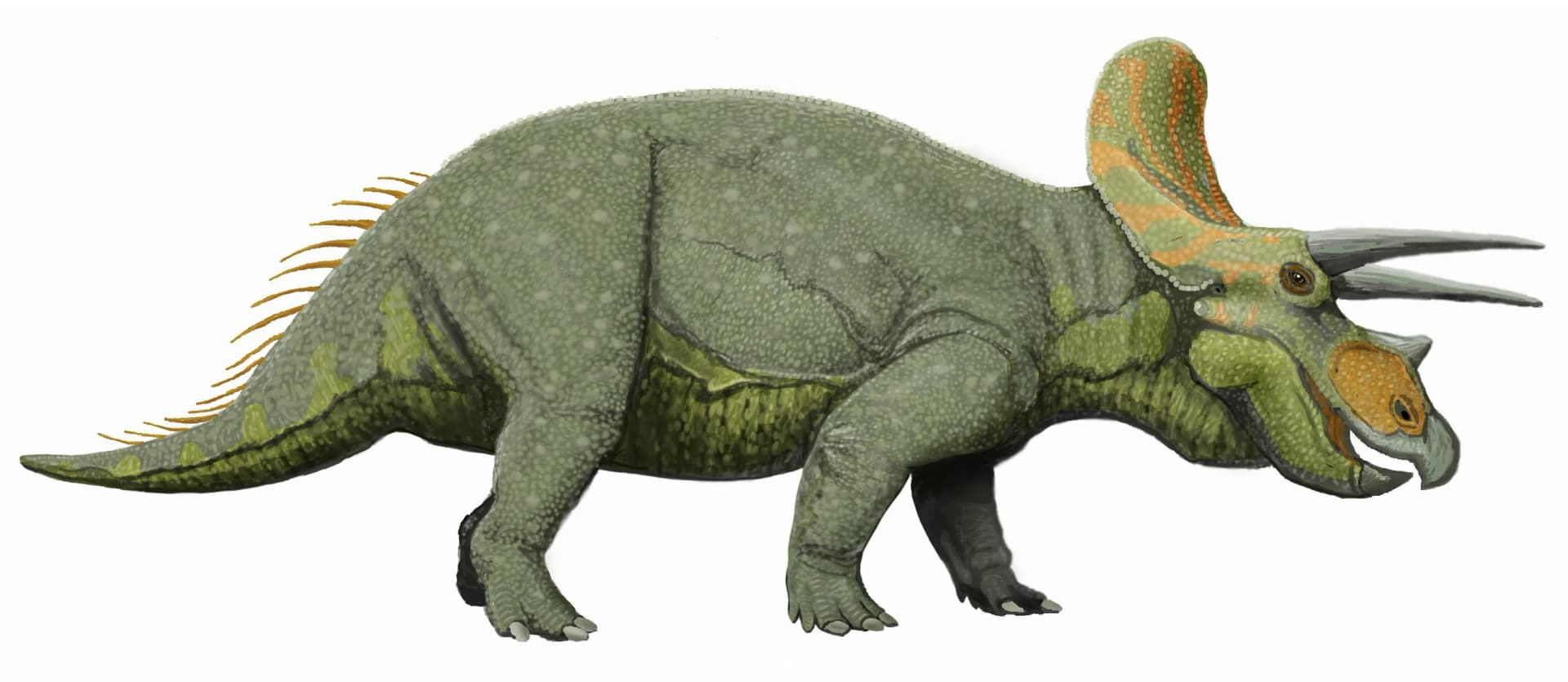
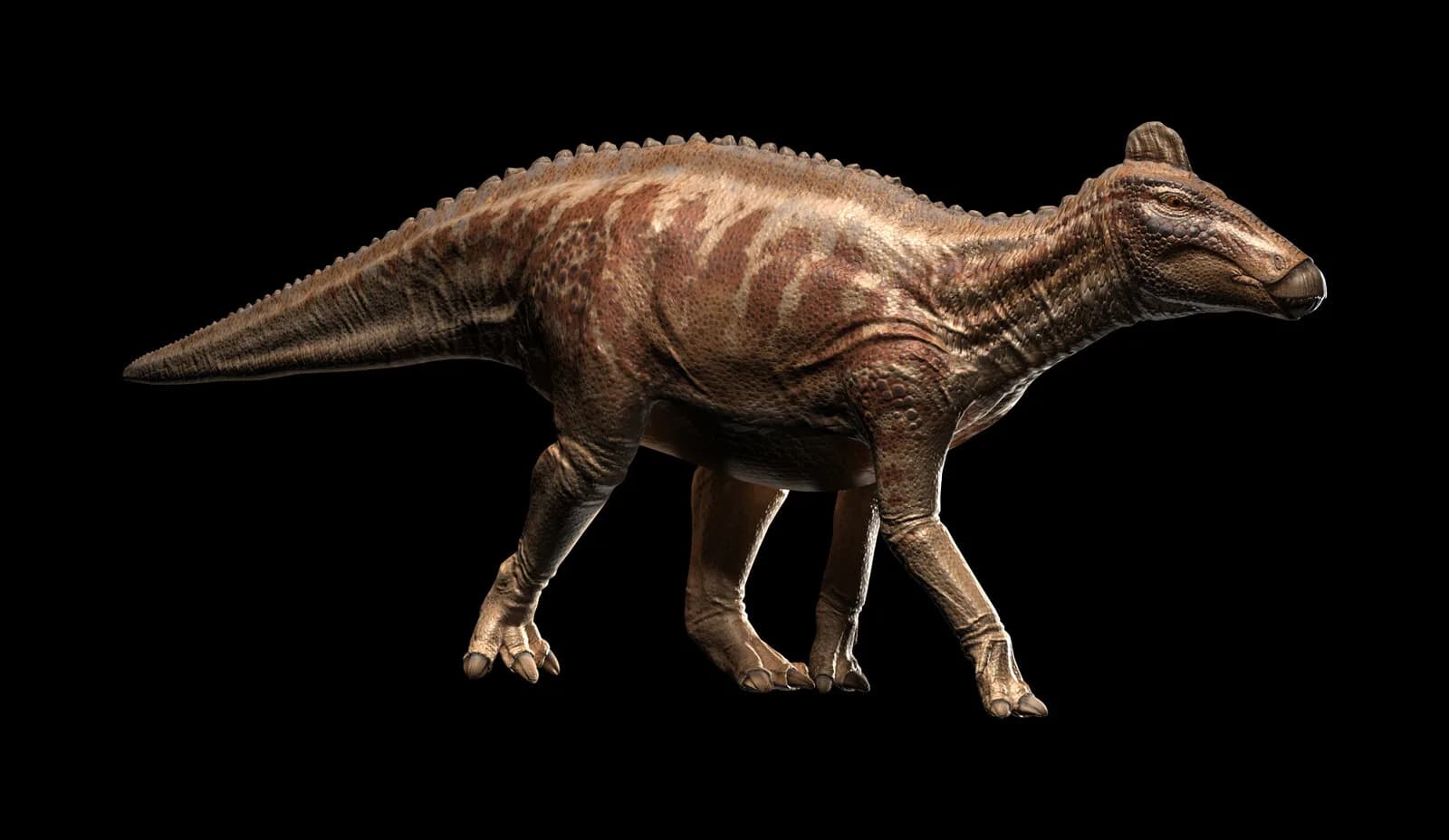
Tyrannosaurus rex lived during the Late Cretaceous period, approximately 68 to 66 million years ago, just before the Cretaceous-Paleogene mass extinction event. This period corresponds to the Maastrichtian age, marking the final millions of years of the age of dinosaurs. T. rex was one of the last great carnivorous dinosaurs to walk the Earth, reigning as an apex predator in its ecosystem. The climatic conditions of the time were warmer than today, with an atmosphere rich in CO2. T. rex shared its habitat with other iconic dinosaurs such as Triceratops and Edmontosaurus.
Standing 12 to 13 meters long, 4 meters tall at the hips, and weighing an estimated 5 to 9 tons, Tyrannosaurus rex was one of the largest terrestrial carnivores of all time. Its massive skull measured up to 1.5 meters in length and housed conical teeth that could reach 30 centimeters including their roots. The hind limbs were powerful and muscular, adapted for bipedal locomotion, while the forelimbs, though ridiculously small compared to the body (about 1 meter), were not useless according to recent research. The long, robust tail served as a counterbalance during walking and running.
A strict carnivore and apex predator, T. rex possessed jaws capable of exerting a bite force estimated between 35,000 and 57,000 Newtons, the most powerful ever measured in a terrestrial animal. Its massive, banana-shaped teeth were designed to crush bones and tear off enormous chunks of flesh. Analysis of coprolites (fossilized feces) revealed partially digested bone fragments, confirming its ability to consume prey whole, bones included. The debate between active hunter and opportunistic scavenger has long divided paleontologists, but current consensus suggests T. rex practiced both strategies depending on opportunities. Likely prey included Hadrosaurs, Ceratopsians like Triceratops, and potentially other large herbivores.
Tyrannosaurus rex lived primarily in the floodplains and coastal forests of western North America, in what is now Montana, South Dakota, Wyoming, and Canada (Alberta, Saskatchewan). The Late Cretaceous environment was a mix of subtropical forests, marshy wetlands, and floodplains. The Western Interior Seaway then divided the North American continent in two, creating a humid, warm climate favorable to rich biodiversity. T. rex fossils have been discovered in the Hell Creek Formation and Lance Formation, geological deposits rich in remnants from this period. The habitat offered a network of rivers, lakes, and deltas populated by varied fauna.
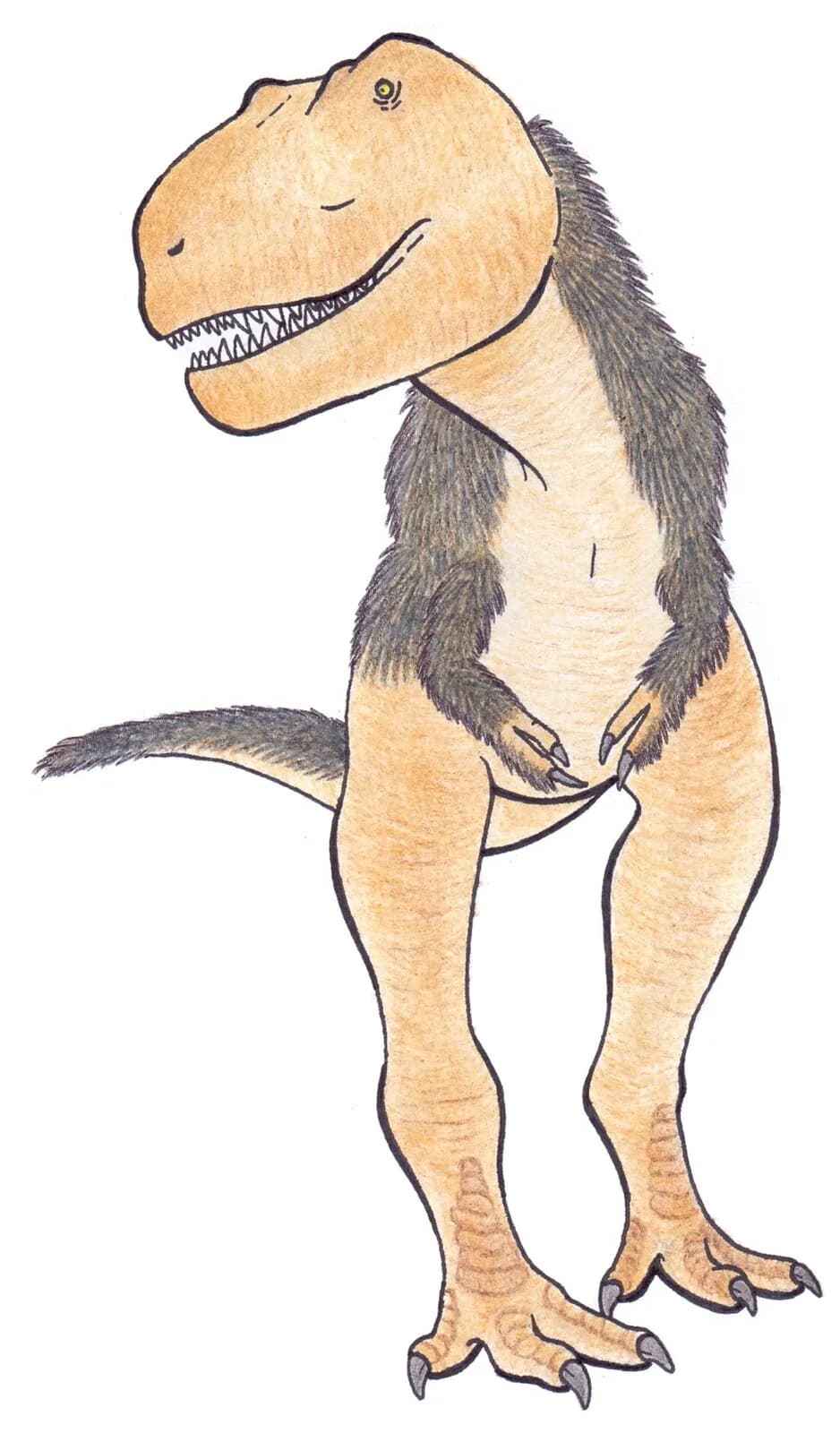
T. rex anatomy reveals a highly specialized hunting machine. Its massive skull featured enlarged temporal fenestrae reducing weight while maintaining robust structure. Forward-facing eye sockets provided exceptional binocular vision, allowing depth perception crucial for hunting. The brain, relatively large for a dinosaur, suggests advanced cognitive abilities and a developed sense of smell, as shown by the size of the olfactory bulbs. The forelimbs, though short, possessed two clawed digits and powerful musculature capable of grasping prey. The massive hind legs, equipped with three main toes and a rear spur, supported its colossal weight. Recent discoveries suggest the presence of primitive filamentous structures (proto-feathers) in some juveniles, though adults likely had scaly skin.
Behavioral studies based on fossils and biomechanics suggest T. rex was a solitary predator or lived in small family groups. Bite marks on T. rex bones indicate cannibalistic behaviors or violent territorial conflicts. Movement speed is debated: estimates range from 17 to 40 km/h for an adult, with juveniles probably being faster and more agile. The excellent sense of smell allowed detection of carcasses several kilometers away, supporting the theory of opportunistic scavenging. Healing marks on some fossils prove these animals survived serious injuries, testifying to remarkable resilience. Juveniles presented different proportions, being more gracile and probably more active in hunting, while massive adults may have adopted ambush-type strategies.
The first partial T. rex specimen was discovered in 1900 by Barnum Brown in Montana, but it was the 1902 discovery that allowed Henry Fairfield Osborn to officially name the species in 1905. Since then, approximately 50 specimens have been identified, some remarkably complete. 'Sue' (FMNH PR 2081), discovered in 1990 in South Dakota by Sue Hendrickson, is the most complete specimen (about 90%) and largest ever found, measuring 12.8 meters. Other famous specimens include 'Stan' (BHI 3033), 'Scotty' (RSM P2523.8) considered the most massive, and 'Trix' exhibited in the Netherlands. Fossils have been discovered primarily in the Hell Creek Formation (Montana, Dakota) and reveal varied pathologies: infections, healed fractures, and even possible arthritic gout. These discoveries have revolutionized our understanding of the biology, growth, and behavior of this iconic predator. In January 2026, a histological study by Woodward, Myhrvold and Horner (PeerJ), covering 17 individuals from juvenile to adult, revised its growth: T. rex likely kept growing until 35 to 40 years of age to reach its ~8 tonnes — about fifteen years longer than earlier models estimated — with a markedly longer subadult phase.
| Period | Crétacé supérieur / Late Cretaceous |
| Era | Mésozoïque / Mesozoic |
| Age | 68-66 Ma |
| Location | Amérique du Nord / North America |
| Length | 12-13 m |
| Height | 4 m |
| Weight | 5-9 tonnes |
| Diet | Carnivore |
| Discovery | 1902 |
| Type (in-game) | Carnivore |
| Tier | Apex |
Tyrannosaurus rex measured 12 to 13 meters long, stood 4 meters tall at the hips, and weighed an estimated 5 to 9 tonnes. Its skull reached 1.5 meters and its conical teeth up to 30 cm including roots. According to a histological study by Woodward, Myhrvold and Horner (PeerJ, 2026), it kept growing until age 35-40 to reach its ~8 tonnes.
Current consensus holds that Tyrannosaurus rex used both strategies depending on opportunities. Its bite force estimated at 57,000 Newtons — the strongest ever recorded in a land animal — and its keen sense of smell (large olfactory bulbs) enabled it both to actively hunt hadrosaurs and ceratopsians and to detect carcasses several kilometers away.
The first partial Tyrannosaurus rex specimen was discovered in 1900 by Barnum Brown in Montana; the species was officially named by Henry Fairfield Osborn in 1905. Since then, approximately 50 specimens have been identified. The most complete (~90%) is 'Sue' (FMNH PR 2081), found in 1990 in South Dakota and measuring 12.8 meters.
Information on this page is based on peer-reviewed scientific publications.
T. Rex holotype skeleton
Wikipedia Commons
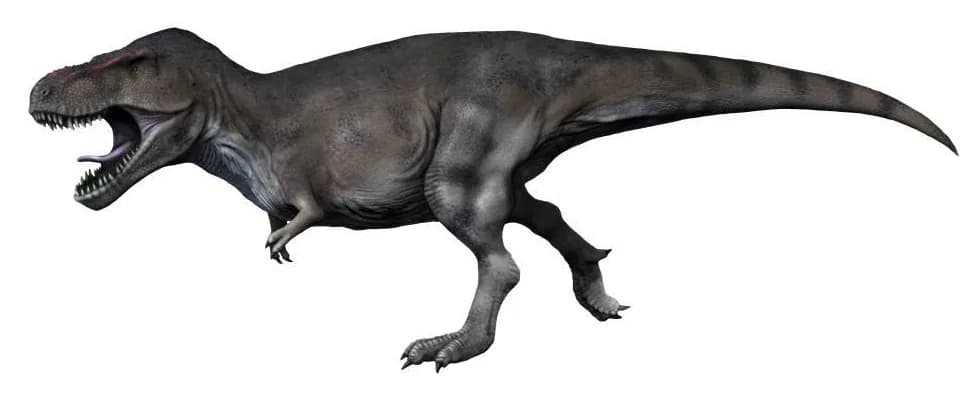
Tyrannosaurus rex life reconstruction
Nobu Tamura, CC BY-SA 4.0