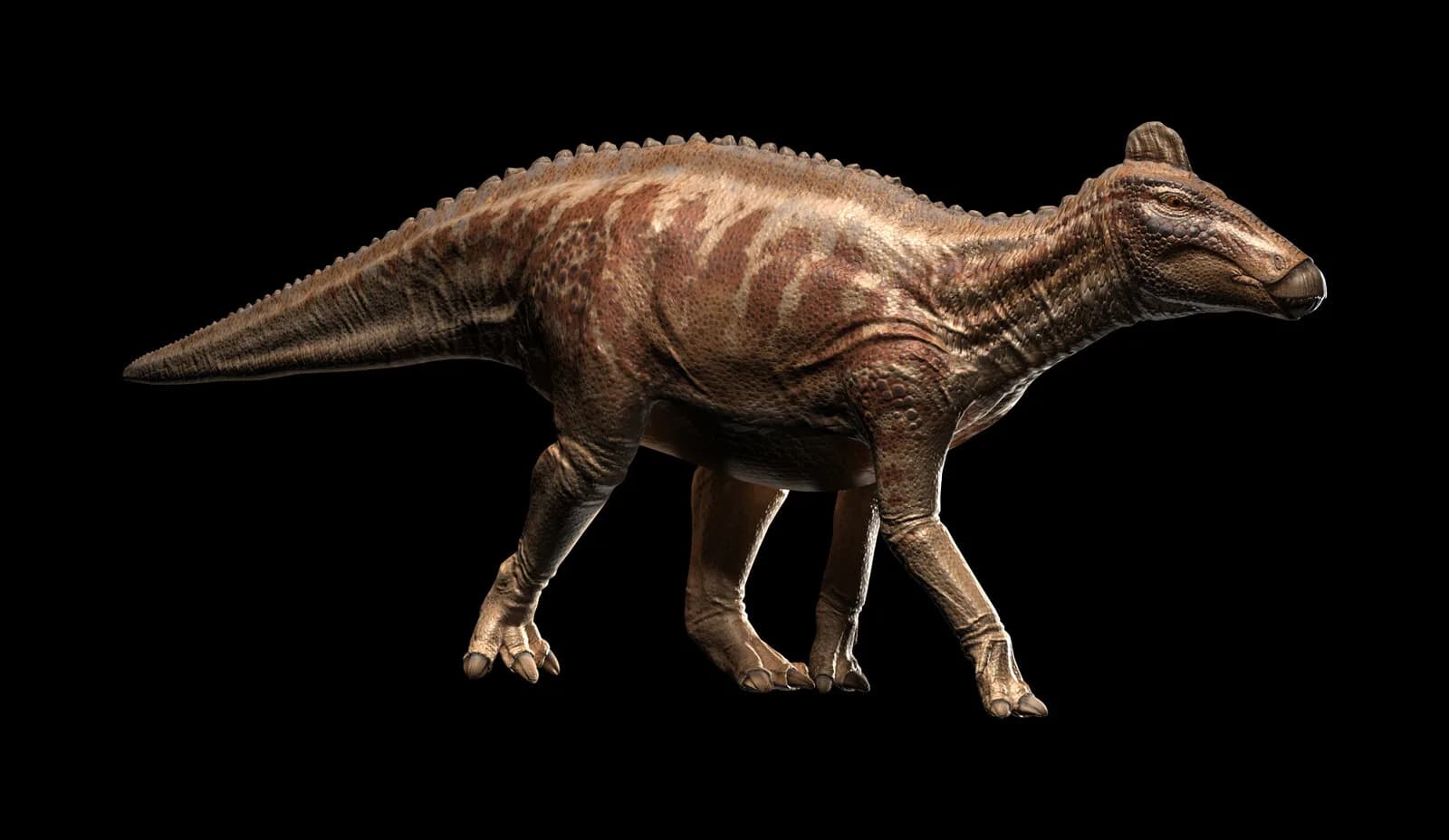
Edmontosaure
Edmontosaurus annectens was a herbivorous hadrosaur from North America, described in 1892 and dated to 73 to 66 million years ago. At 9 to 12 metres and 4 to 8 tonnes, it moved in herds of thousands. Mummified specimens have preserved its skin and even a fleshy crest on the head; it was prey for Tyrannosaurus rex.
Edmontosaurus lived during the Late Cretaceous, approximately 73 to 66 million years ago, during the Campanian and Maastrichtian stages. It was one of the very last non-avian dinosaurs to have lived on Earth, disappearing during the catastrophic mass extinction event at the end of the Cretaceous period. This era saw a gradual cooling of the global climate and the progressive retreat of the Western Interior Seaway, creating vast continental plains covered with diverse vegetation. Edmontosaurus was one of the dominant herbivores of western North America, coexisting alongside the fearsome Tyrannosaurus rex as one of its primary prey species.
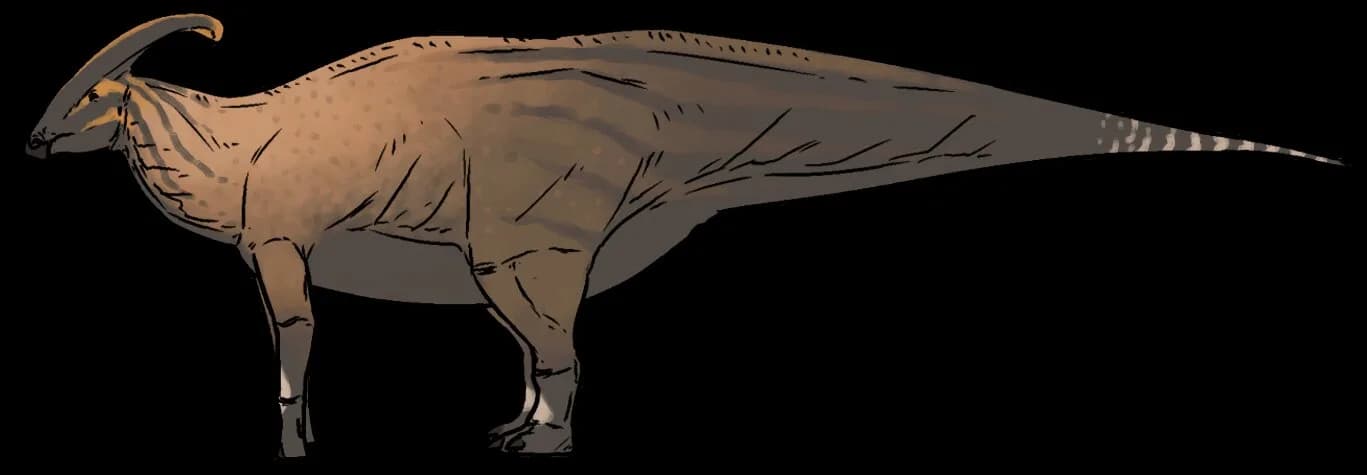
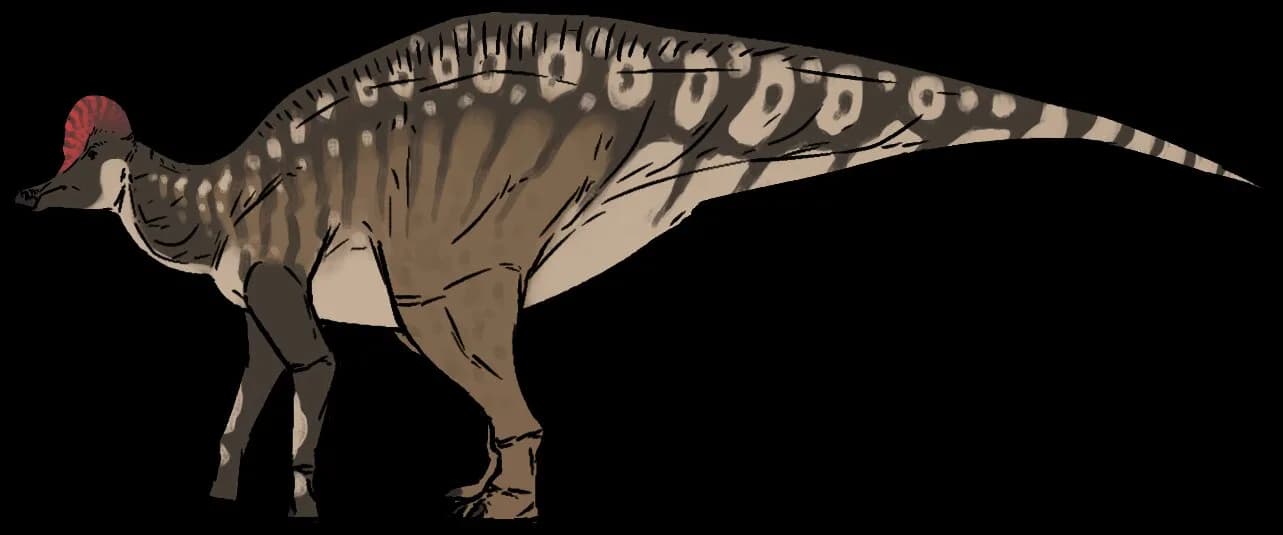
Edmontosaurus was one of the largest hadrosaurs, measuring between 9 and 13 meters long depending on the species, with an estimated weight of 4 to 6 tonnes. The species E. annectens reached about 12 meters, while E. regalis could measure up to 13 meters. Its flat, elongated skull, lacking a prominent bony crest (unlike its lambeosaurine cousins), measured about 1 meter long. However, the recent discovery of a mummified specimen revealed the presence of a soft fleshy crest atop the skull, invisible in the bony fossil record.
Edmontosaurus possessed one of the most efficient chewing systems of all dinosaurs ever discovered. Its dental batteries contained over 1,000 functional teeth organized in multiple rows, creating a self-renewing grinding surface that never wore out completely. Its broad, toothless shovel-shaped beak served to tear off large quantities of vegetation in a single bite. It fed on conifers, flowering plants, ferns, and probably various fruits available seasonally. Isotopic analysis and fossilized stomach contents indicate a remarkably diverse diet adapted to changing seasons, grazing low vegetation and herbaceous plants in summer and turning to tougher conifers and woody browse during the colder winter months.
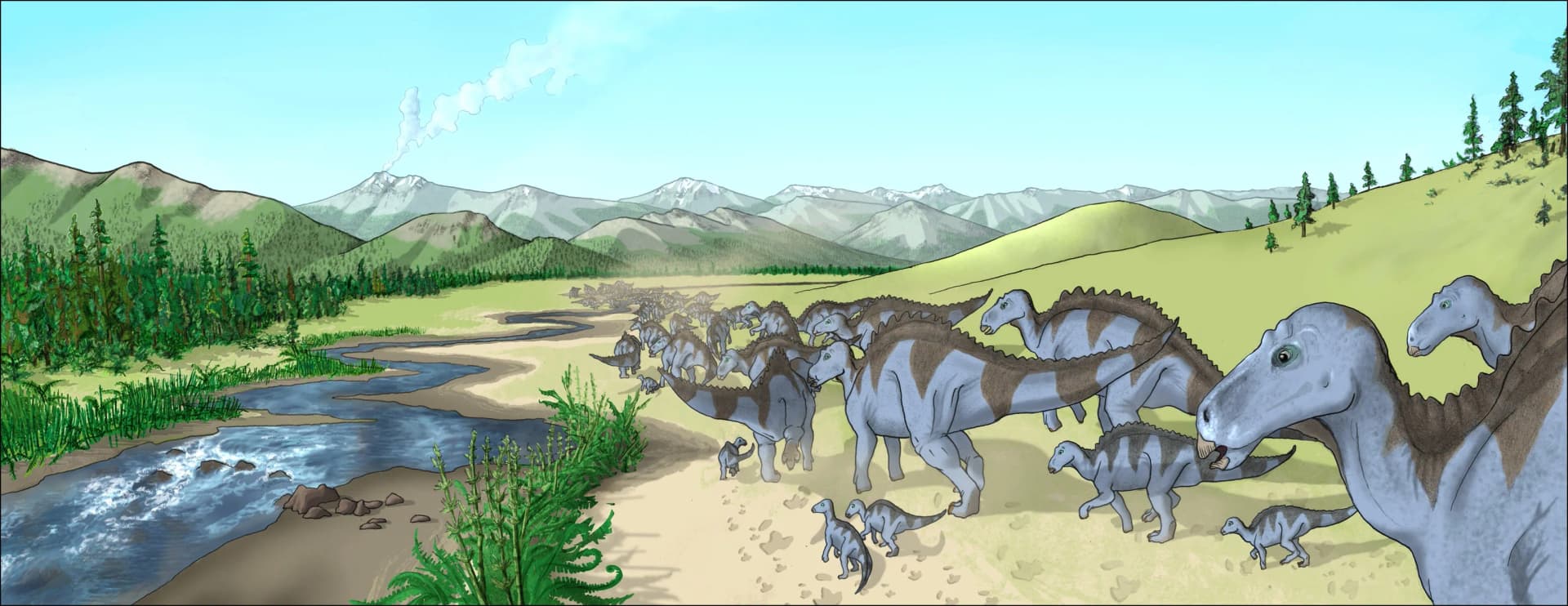
Edmontosaurus inhabited the vast coastal plains and forests of western North America, with a geographic range extending from Alaska in the north to Colorado in the south. Its fossils are particularly abundant in the Horseshoe Canyon and Lance Creek formations in Alberta and Wyoming respectively, indicating large population sizes. It frequented alluvial plains, dense conifer forests, and coastal wetlands where food was plentiful year-round. Compelling evidence suggests it undertook long-distance seasonal migrations, similar to those of modern caribou herds, moving between summer grazing areas in the far north (as far as Alaska) and more temperate southern regions during the cold, dark winter months.
Edmontosaurus displayed the classic anatomy of hadrosaurines, the flat-crested subfamily of hadrosaurs. Its elongated skull possessed a broad spatula-shaped beak covered by a tough horny rhamphotheca used for stripping vegetation. The discovery of exceptionally preserved mummified specimens, with skin and soft tissues intact, has considerably enriched our knowledge of its external anatomy and appearance. Its skin was covered with non-overlapping polygonal scales of varying sizes, arranged in distinct patterns with rows of larger tubercles running along the back. A remarkable specimen nicknamed Dakota revealed preserved muscles, tendons, and even blood vessels, providing unprecedented insight into the soft tissue anatomy of a dinosaur.
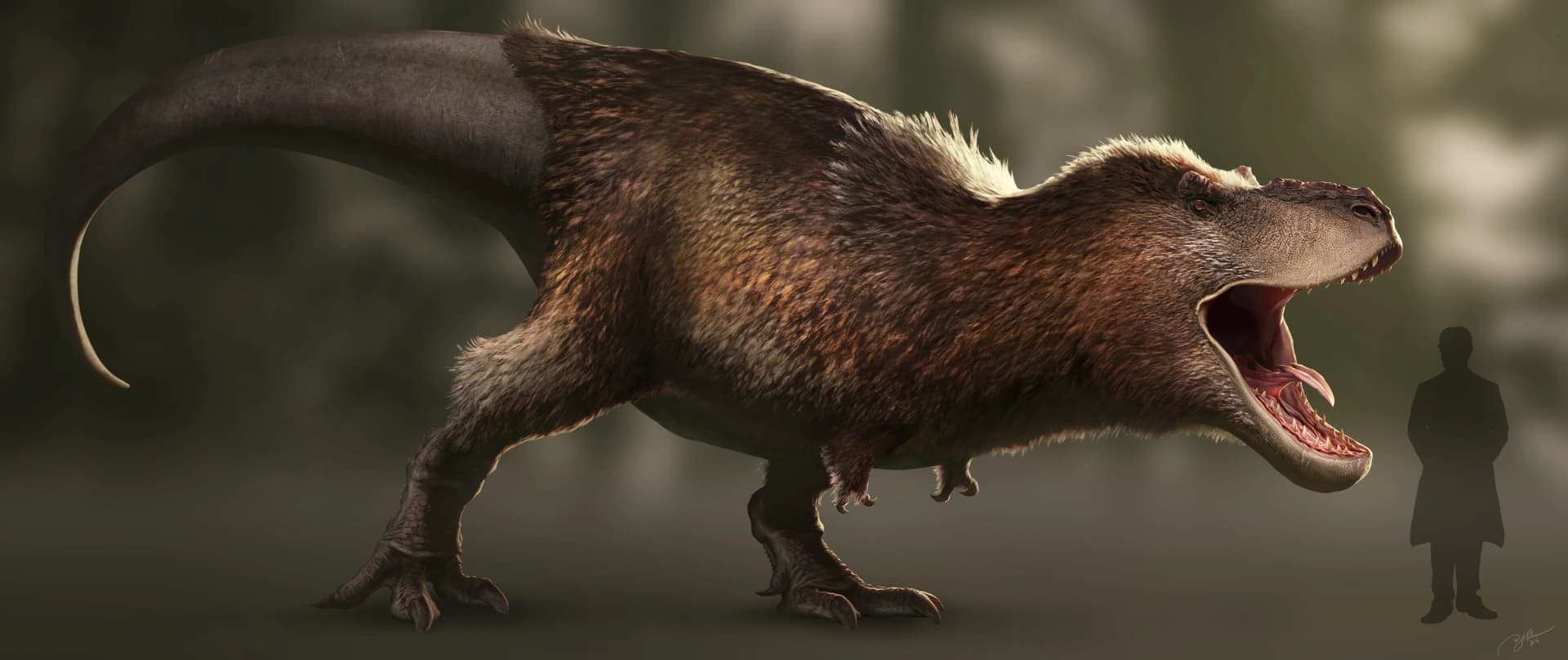
Edmontosaurus was a highly social animal that lived in immense herds of hundreds or even thousands of individuals. Colonial nesting sites (bone beds) containing thousands of bones attest to massive gatherings. These mega-herds offered protection against large predators like Tyrannosaurus rex, although tyrannosaur bite marks have been found on Edmontosaurus bones. A famous specimen shows a partially healed tail after a T. rex bite, proving some individuals survived attacks. When in danger, the herd could flee at estimated speeds of 45 km/h.
Edmontosaurus has a rich history of discoveries. The species E. regalis was described in 1917 by Lawrence Lambe from specimens found near Edmonton, Alberta, Canada, hence the genus name. E. annectens, originally described as Claosaurus annectens by Marsh in 1892, was later reclassified. The most remarkable specimens are dinosaur 'mummies' — individuals whose skin and soft tissues dried out and fossilized. The 'Dakota' mummy (2007) provided unprecedented information about hadrosaur biology through the 3D preservation of skin, muscles, and internal organs.
| Period | Crétacé supérieur / Late Cretaceous (Campanien–Maastrichtien) |
| Era | Mésozoïque / Mesozoic |
| Age | 73–66 Ma |
| Location | Amérique du Nord / North America (Alberta, Saskatchewan, Montana, Wyoming) |
| Length | 9–12 m |
| Height | ~4 m |
| Weight | 4 000–8 000 kg |
| Diet | Herbivore |
| Discovery | 1892 |
Edmontosaurus annectens reached about 12 meters in length and weighed 4 to 8 tonnes. Its chewing system was among the most efficient of all dinosaurs: its dental batteries contained over 1,000 functional teeth organized in self-renewing rows, enabling continuous grinding of conifers, flowering plants, and ferns throughout its lifetime.
Several Edmontosaurus specimens were found in a naturally mummified state with skin and soft tissues preserved. The 'Dakota' mummy (2007) revealed muscles, tendons, and even blood vessels. These findings show that the skin was covered with non-overlapping polygonal scales, and that a soft fleshy crest topped the skull — invisible from bones alone.
Yes. Edmontosaurus annectens lived from 73 to 66 million years ago, precisely contemporaneous with Tyrannosaurus rex in western North America. Tyrannosaur bite marks have been identified on Edmontosaurus bones, and a famous specimen shows a partially healed tail following a T. rex attack — proof that some individuals occasionally survived such assaults.
3D reconstruction of Edmontosaurus
Die Infografen UG, CC BY-SA 4.0, via Wikimedia Commons
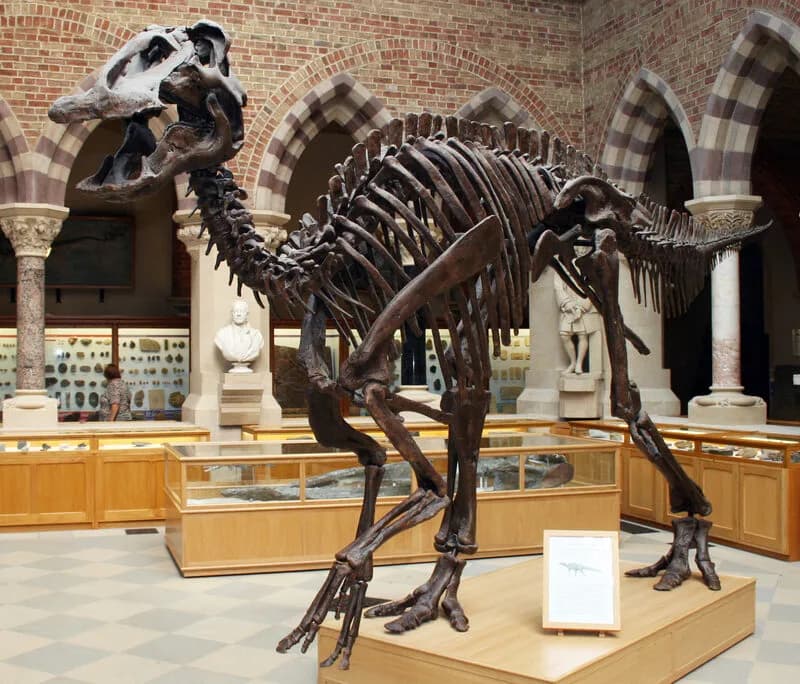
Mounted Edmontosaurus skeleton, Oxford
Kevin Walsh, CC BY 2.0