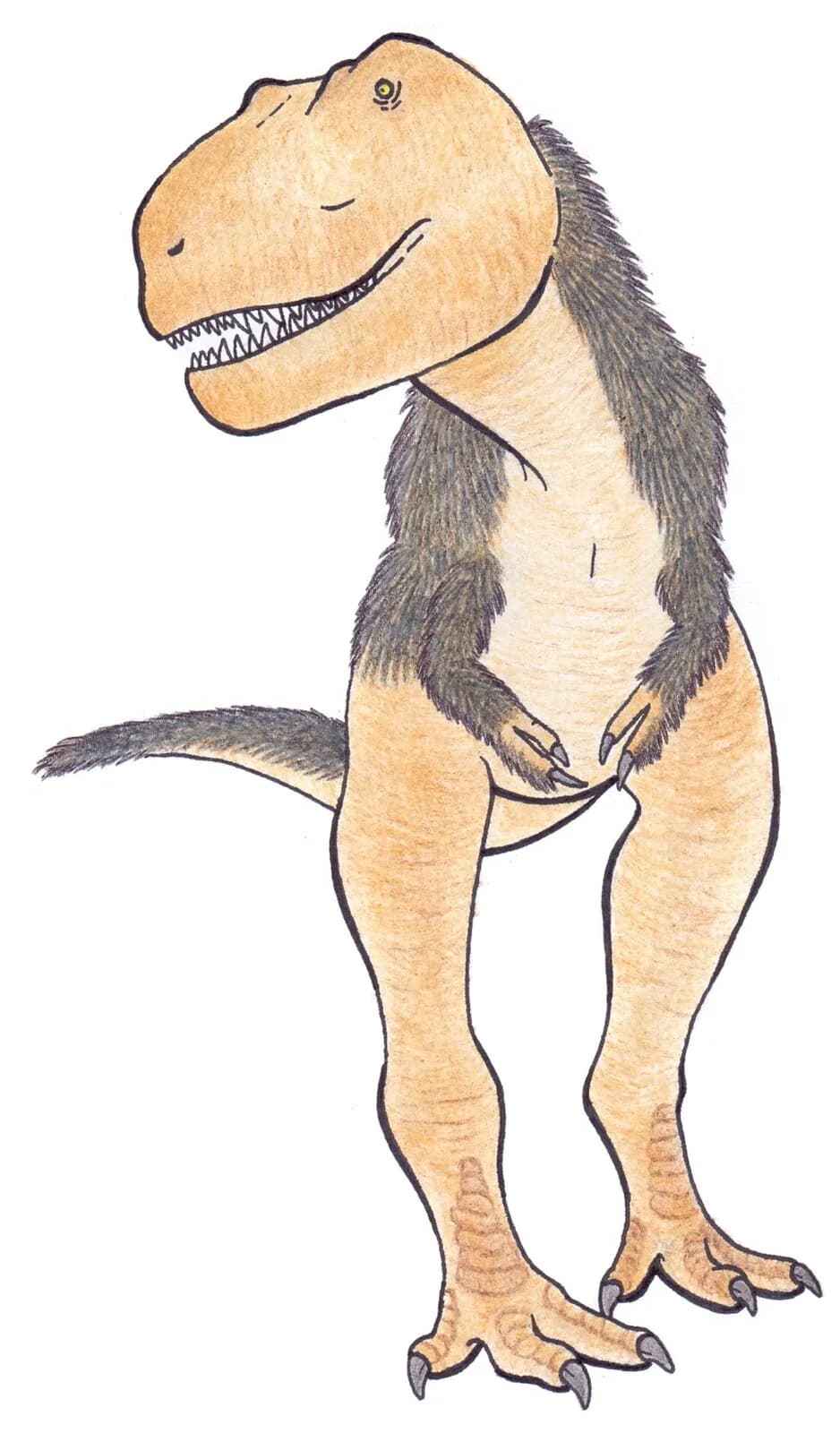
Albertosaure
Albertosaurus sarcophagus was a tyrannosaurid from Alberta, described in 1884 and dated to 70 to 68 million years ago. At 8 to 9 metres and 1.3 to 2.5 tonnes, it was lighter and faster than T. rex, which it preceded by a few million years. A Canadian bone bed holding 22 individuals strongly suggests pack hunting.
Albertosaurus lived during the Late Cretaceous, approximately 70 million years ago, during the early Maastrichtian stage. This period shortly preceded the mass extinction at the end of the Cretaceous. Present-day Alberta, where this animal was discovered, was then a coastal plain bordering the Western Interior Seaway, with a humid subtropical climate. Tyrannosaurs were reaching their maximum diversity in North America at this time, and Albertosaurus was the dominant predator of its ecosystem, before being replaced by larger species like Tyrannosaurus rex a few million years later.
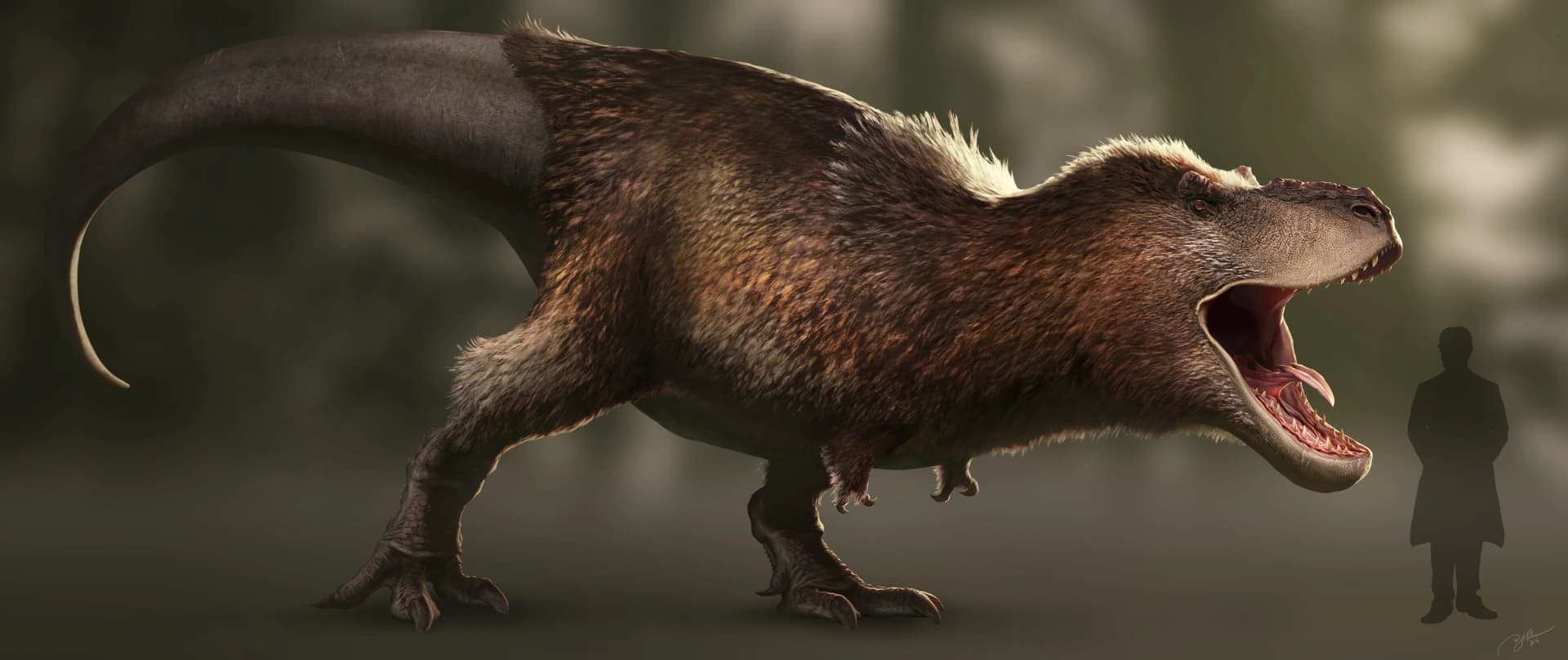
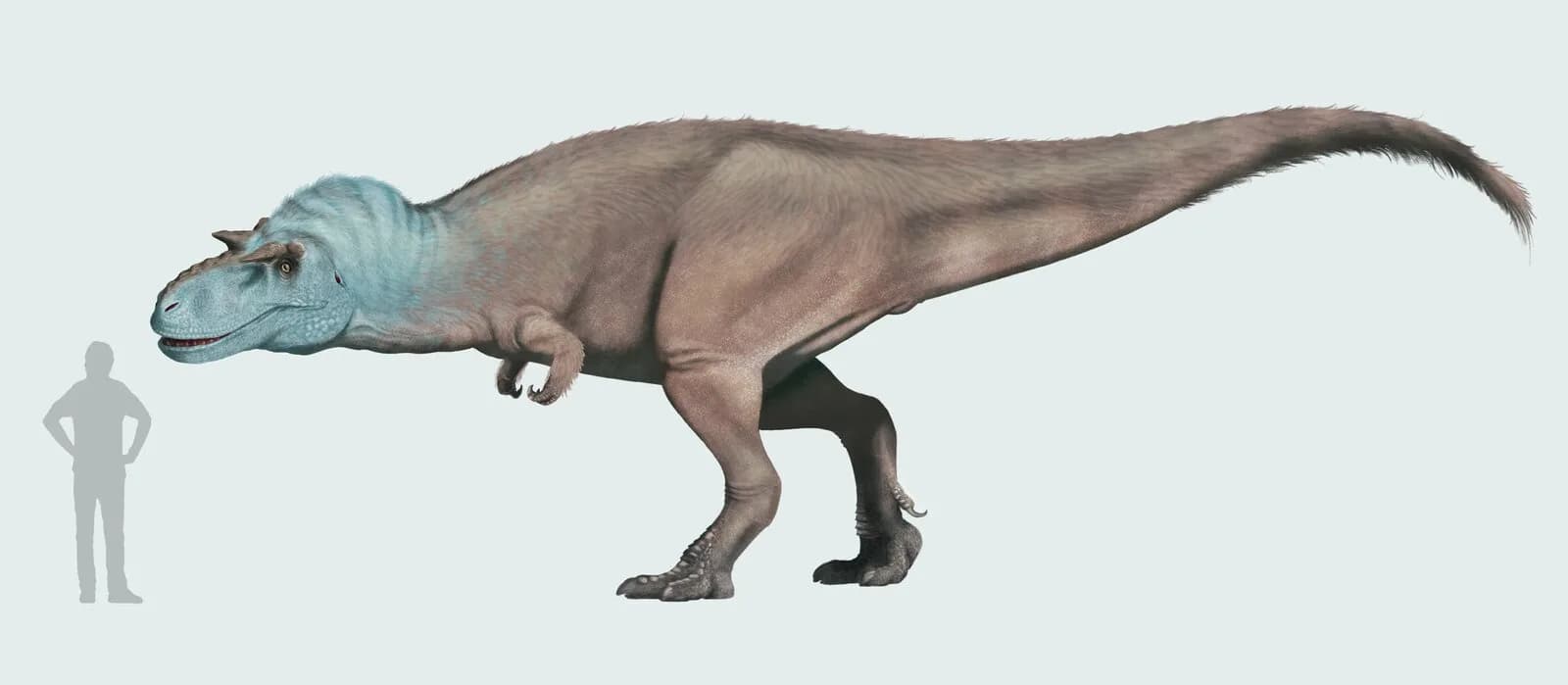
Albertosaurus measured approximately 8 to 9 meters in length and weighed between 1.3 and 1.7 tons, making it somewhat smaller than its more famous relative Tyrannosaurus rex. Its skull was large and powerfully built, measuring roughly one meter in length, equipped with dozens of thick, banana-shaped teeth designed for crushing bone and tearing flesh. The body was robust and muscular, supported by powerful hind limbs that suggest Albertosaurus was a faster runner than the heavier T. rex. The forelimbs were characteristically small with two functional fingers, though they retained some muscular strength for grasping prey at close quarters.
Albertosaurus was an apex carnivore that likely preyed on the abundant hadrosaurs and ceratopsians that populated Late Cretaceous Alberta. Its powerful jaws and robust teeth could generate tremendous bite forces capable of crushing bone, a hallmark of tyrannosaur feeding mechanics. The discovery of bone bed sites containing multiple Albertosaurus individuals has led to speculation about possible pack hunting of large prey, which would have been a highly efficient strategy for taking down well-defended ceratopsians like Centrosaurus. Juvenile Albertosaurus may have occupied a different ecological niche, hunting smaller, faster prey with their more gracile build before transitioning to the megapredator role as adults.
Albertosaurus inhabited the coastal lowlands and river plains of what is now Alberta, Canada, during the Late Cretaceous period. The Horseshoe Canyon Formation preserves an environment of lush, subtropical forests, meandering rivers, and swampy lowlands adjacent to the Western Interior Seaway that divided North America. This productive ecosystem supported enormous herds of hadrosaurs and ceratopsians, providing abundant prey for apex predators like Albertosaurus. The climate was warm and humid with mild seasonal variations, supporting dense vegetation that included conifers, ferns, and an increasing diversity of flowering plants. This habitat offered ample opportunities for ambush predation along forested riverbanks and at drinking sites frequented by herbivorous dinosaurs.
Albertosaurus possessed the characteristic tyrannosaur body plan with a massive skull, powerful jaws, tiny forelimbs, and robust hind legs, but in a somewhat more gracile package than Tyrannosaurus rex. Its skull featured prominent bony crests and rugosities above the eyes that may have been covered in keratin, serving as visual display structures. The teeth were thick and conical, well-suited for gripping and crushing rather than slicing. The legs were proportionally longer than those of T. rex, with a longer tibia-to-femur ratio indicating greater cursorial ability. The brain was relatively large for a dinosaur, with well-developed olfactory lobes suggesting an acute sense of smell used for tracking prey across the forested landscapes of Late Cretaceous Alberta.
The most revealing discovery about Albertosaurus behavior comes from a bone bed in the Horseshoe Canyon Formation containing the remains of at least 26 individuals of varied ages, from juveniles to mature adults. This exceptional accumulation strongly suggests pack hunting behavior, making Albertosaurus the only tyrannosaur for which there is solid evidence of social behavior. Younger, faster individuals may have served as drivers, pushing prey toward the more powerful adults. This cooperative hunting strategy would have been formidably effective against large hadrosaur herds.
Albertosaurus was discovered in 1884 by Joseph B. Tyrrell (founder of the Royal Tyrrell Museum) along the Red Deer River in Alberta. The specimen was described by Henry Fairfield Osborn in 1905 as Albertosaurus sarcophagus, meaning 'flesh-eating lizard of Alberta.' The Dry Island bone bed, discovered by Barnum Brown in 1910 and rediscovered by Philip Currie in the 1990s, containing 26 individuals, is one of the most important tyrannosaur sites in the world. Over 30 Albertosaurus specimens are known, making it one of the best-documented tyrannosaurs.
| Period | Crétacé supérieur / Late Cretaceous (Campanien–Maastrichtien) |
| Era | Mésozoïque / Mesozoic |
| Age | 70–68 Ma |
| Location | Amérique du Nord / North America (Alberta, Canada) |
| Length | 8–9 m |
| Height | ~2.5 m |
| Weight | 1 300–2 500 kg |
| Diet | Carnivore |
| Discovery | 1884 |
An exceptional bone bed in the Horseshoe Canyon Formation (Alberta) contains remains of at least 26 Albertosaurus sarcophagus individuals of varied ages, from juveniles to mature adults. Discovered by Barnum Brown in 1910 and re-studied by Philip Currie in the 1990s, this site makes Albertosaurus the only tyrannosaur with solid evidence of social behavior, possibly cooperative hunting where juveniles drove prey toward adults.
Albertosaurus sarcophagus measured 8 to 9 meters and weighed 1.5 to 2.5 tonnes — smaller and lighter than Tyrannosaurus rex (12-13 m, 5-9 t). Its proportionally longer hindlimbs suggest it was a more agile and faster runner. It lived approximately 70 million years ago, a few million years before T. rex, in the coastal plains of present-day Alberta along the Western Interior Seaway.
Albertosaurus sarcophagus was discovered in 1884 by Joseph B. Tyrrell — founder of the Royal Tyrrell Museum — along the Red Deer River in Alberta. Henry Fairfield Osborn described it in 1905, giving it the name meaning 'flesh-eating lizard of Alberta.' Over 30 specimens are known today, making it one of the best-documented tyrannosaurs.
Information on this page is based on peer-reviewed scientific publications.
Life reconstruction of Albertosaurus sarcophagus
Mariomassone, CC BY-SA 4.0, via Wikimedia Commons
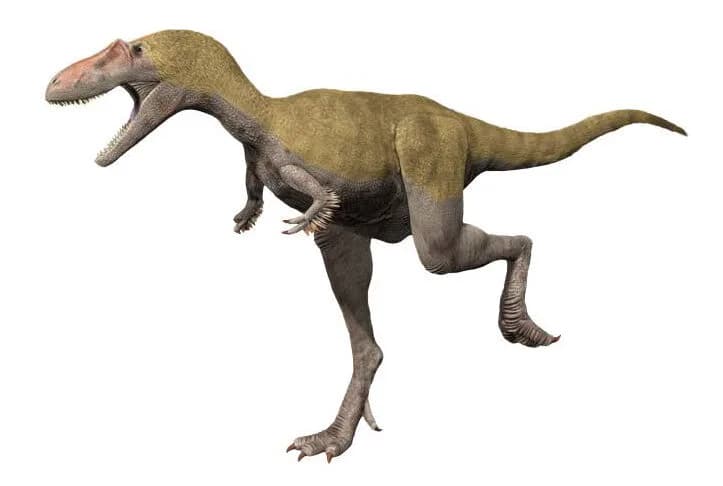
Albertosaurus sarcophagus life reconstruction
Nobu Tamura, CC BY-SA 4.0