Allosaure
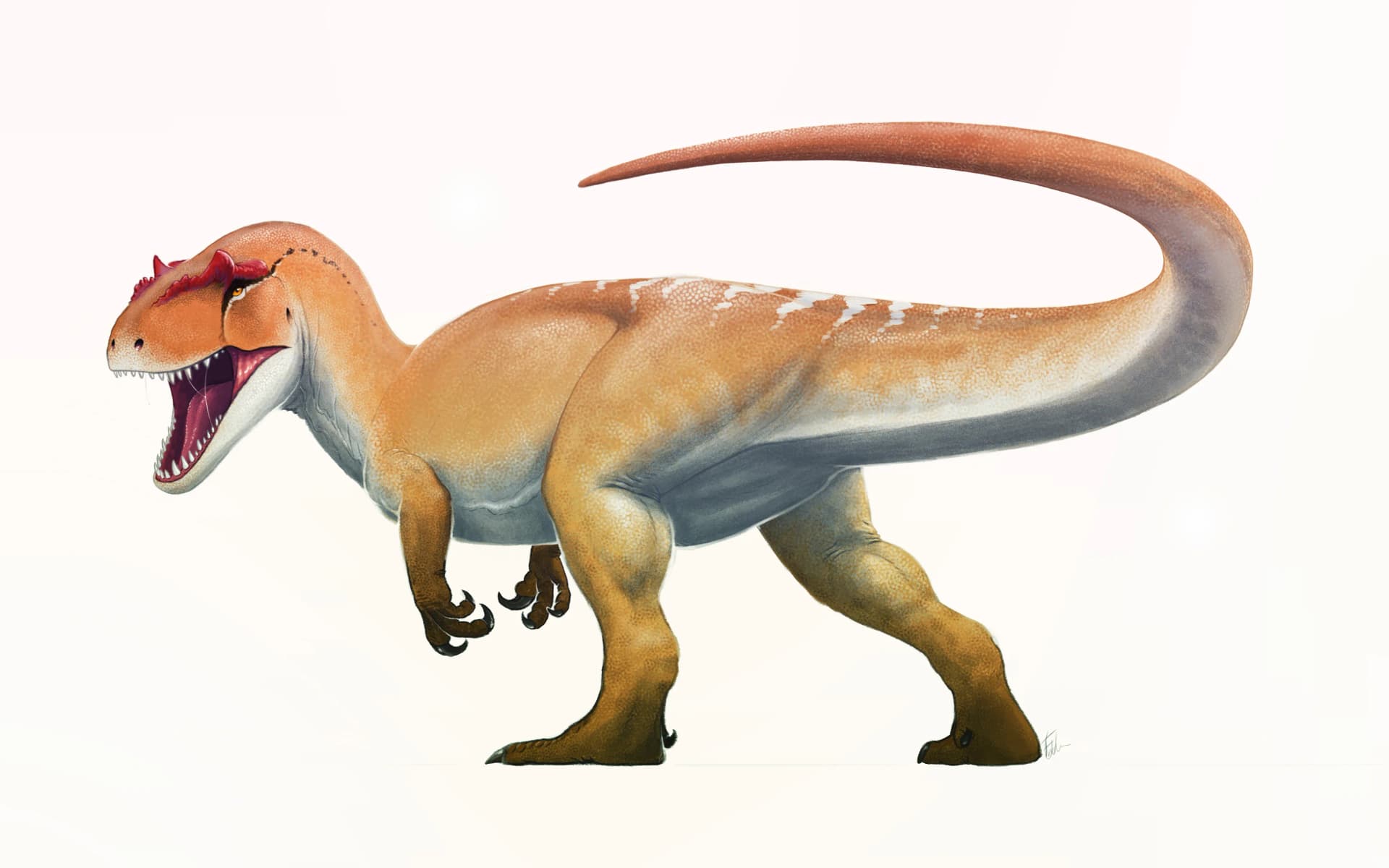
Allosaurus fragilis was a large carnivorous theropod of the Late Jurassic, described in 1877 during the Bone Wars between Marsh and Cope. It reached 8.5 to 9 metres and 1.5 to 2 tonnes, and lived across North America and Europe. More than 60 skeletons make it the best-documented Jurassic predator; the specimen known as Big Al, found in 1991, carries 19 healed injuries.
Tactical bleeder. Its claws inflict massive rapid bleeding, then its bite finishes the job. Formidable in a coordinated pack.
Playable in The Isle: Evrima
See Allosaurus fragilis's in-game stats, tier, strengths & weaknesses on our server.
Playable in Path of Titans
See Allosaurus fragilis's stats, abilities and role on our survival server.
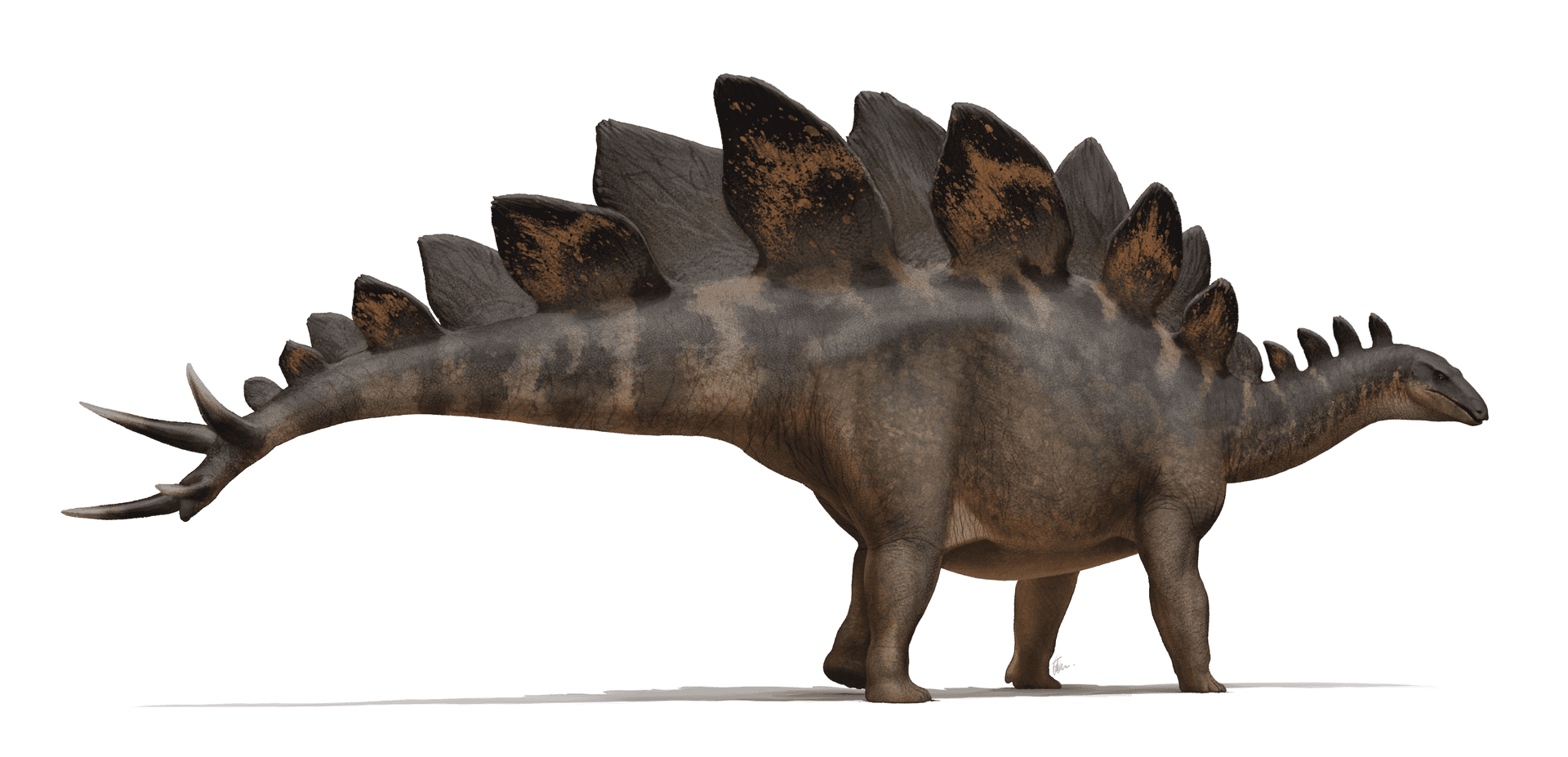
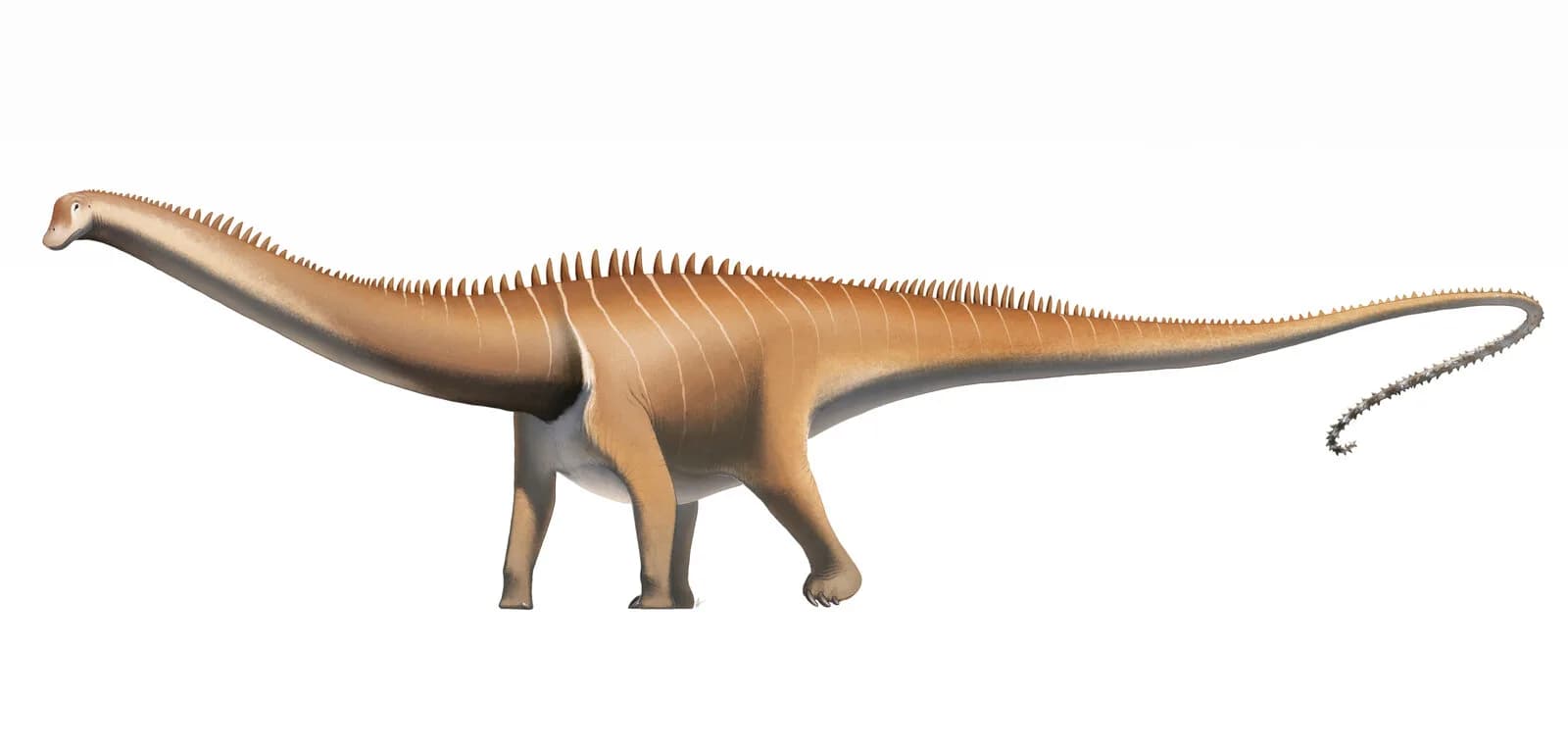
Allosaurus lived during the Late Jurassic period, approximately 155 to 145 million years ago, primarily in the Morrison Formation of North America. A dominant predator and undisputed apex carnivore of its era, it coexisted with gigantic sauropods like Apatosaurus and Diplodocus, as well as Stegosaurus and Camptosaurus. It reigned at the top of the Late Jurassic North American food chain, a role T. rex would not assume until 80 million years later. The Morrison Formation ecosystem was a vast semi-arid floodplain dotted with rivers and seasonal lakes, supporting an incredibly diverse fauna of dinosaurs, pterosaurs, and early mammals.
Adult Allosaurus averaged 8.5 to 9 meters in length and weighed 1.5 to 2 tons, with some giant specimens possibly reaching 12 meters. Its skull, about 85 centimeters long, was lightened by large bony fenestrae that reduced weight without sacrificing structural strength. The powerful hind limbs supported bipedal locomotion at considerable speed, while three-fingered forelimbs bore sharp, curved claws ideal for grasping prey. The tail was long and muscular, serving as a counterbalance during movement. The vertebral column was robust yet flexible, allowing the animal to twist and turn effectively during pursuit of prey. Overall, the body plan of Allosaurus was perfectly optimized for an active predatory lifestyle.
An apex carnivore, Allosaurus likely targeted large sauropods and ornithopods of its era. Its lower jaw could be lowered very widely through flexible articulations, allowing it to bite by slashing upward with serrated teeth like a hatchet. This unique feeding mechanism set it apart from other large theropods that relied on crushing bites. Evidence of healed bite marks on sauropod bones suggests repeated attacks on large prey, likely targeting young or weakened individuals. Allosaurus may also have scavenged opportunistically when carcasses were available. Its teeth were continually replaced throughout life, ensuring it always had sharp cutting edges for processing meat and tearing through tough hide.
Allosaurus inhabited the semi-arid plains and riparian forest zones of Late Jurassic North America. The Morrison Formation represented a tropical savanna environment with seasonal vegetation, where sauropod herds migrated following water sources. Fossils have also been discovered in Portugal (A. europaeus), suggesting a trans-Atlantic distribution. This ecosystem was shared with iconic contemporaries such as Stegosaurus, Diplodocus, Brachiosaurus, and Camptosaurus — a rich community of large herbivores that provided abundant prey. Seasonal droughts concentrated animals around rivers and lakes, creating predictable ambush opportunities. The climate alternated between pronounced wet and dry seasons, driving vegetation cycles and shaping the migratory patterns of the enormous sauropod herds Allosaurus depended upon.
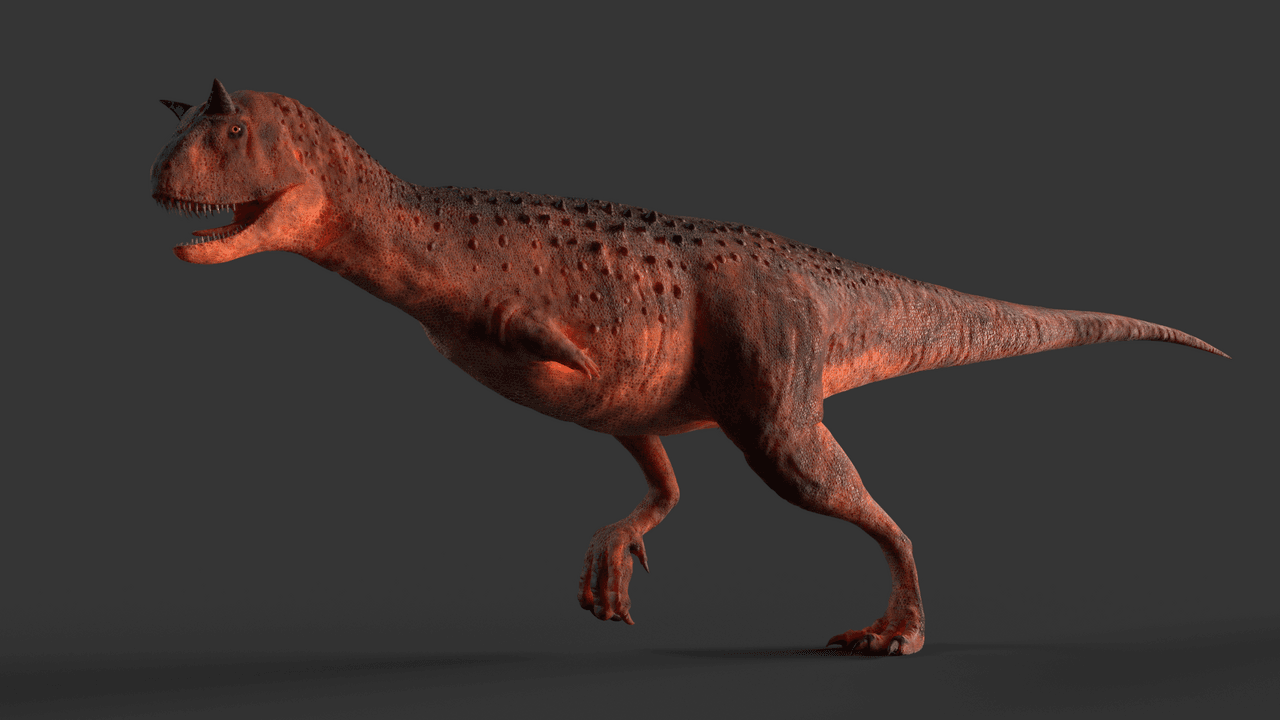
The Allosaurus skull featured two bony crests above the eyes, likely colored for intraspecific recognition or courtship displays. The skull structure, with its numerous lightened fenestrae, combined lightness and sturdiness. Powerful hind legs allowed speeds estimated at 30-55 km/h, while its massive tail provided balance during charges. Each upper jaw bore 14 to 17 serrated, blade-like teeth that were continuously replaced throughout the animal's life — ensuring a perpetually functional weapon. The three-clawed forelimbs, though shorter than the hind legs, were powerful grasping tools used to seize and restrain struggling prey. Biomechanical studies suggest the tail functioned as a dynamic counterbalance, shifting mass to maintain stability during high-speed pursuit and turns.
Fossil evidence suggests opportunistic hunting behavior that may have included group attacks on large sauropods, though solitary hunting was also practiced. Bone beds containing multiple Allosaurus individuals at the Cleveland-Lloyd Quarry in Utah have fueled debate about possible pack hunting or social aggregation. Some paleontologists interpret these mass death assemblages as evidence of coordinated group behavior, while others suggest the animals were drawn individually to trapped prey. Territorial combat between individuals is evidenced by healed injuries found on many specimens. Growth ring analysis indicates rapid juvenile growth followed by a slower adult phase, suggesting complex life history strategies similar to modern large predators.
Allosaurus was named by Othniel Charles Marsh in 1877 from a fragmentary Colorado specimen. Specimen 'Big Al' (MOR 693), discovered in 1991 in Wyoming, is one of the most complete (95%) and reveals numerous healed injuries providing insights into the animal's life history. The Cleveland-Lloyd Quarry in Utah has produced more than 11,000 Allosaurus bones from at least 46 individuals, making it the largest concentration of Jurassic theropod remains in the world. Several species have been described, including A. fragilis and A. europaeus found in Portugal, demonstrating a broad geographic distribution across Laurasia during the Late Jurassic period.
| Period | Jurassique supérieur / Late Jurassic |
| Era | Mésozoïque / Mesozoic |
| Age | 155-145 Ma |
| Location | Amérique du Nord, Europe / North America, Europe |
| Length | 8.5-9 m |
| Height | 3-3.5 m |
| Weight | 1.5-2 tonnes |
| Diet | Carnivore |
| Discovery | 1877 |
| Type (in-game) | Carnivore |
| Tier | Sub-Apex |
Allosaurus fragilis used a technique nicknamed the 'hatchet bite': its lower jaw could drop very wide through flexible articulations, allowing it to bite by slashing upward. Sauropod bones bearing its tooth marks confirm bold attacks on prey weighing dozens of tonnes, likely juveniles or weakened individuals.
Allosaurus fragilis lived during the Late Jurassic, approximately 155 to 145 million years ago, in the semi-arid plains of the Morrison Formation in North America (Colorado, Utah, Wyoming). A European species, A. europaeus, was also found in Portugal, suggesting a trans-Atlantic distribution when the continents were still close.
The 'Big Al' specimen (MOR 693), discovered in 1991 in Wyoming, is one of the most complete (95%) and reveals 19 healed injuries — bone infections, healed fractures — testifying to a life of combat against defensive prey. The Cleveland-Lloyd Quarry (Utah) yielded more than 10,000 Allosaurus bones from at least 46 individuals, the largest concentration of a single carnivore ever discovered.
Information on this page is based on peer-reviewed scientific publications.
"Big Al 2" Allosaurus cast
Wikipedia Commons
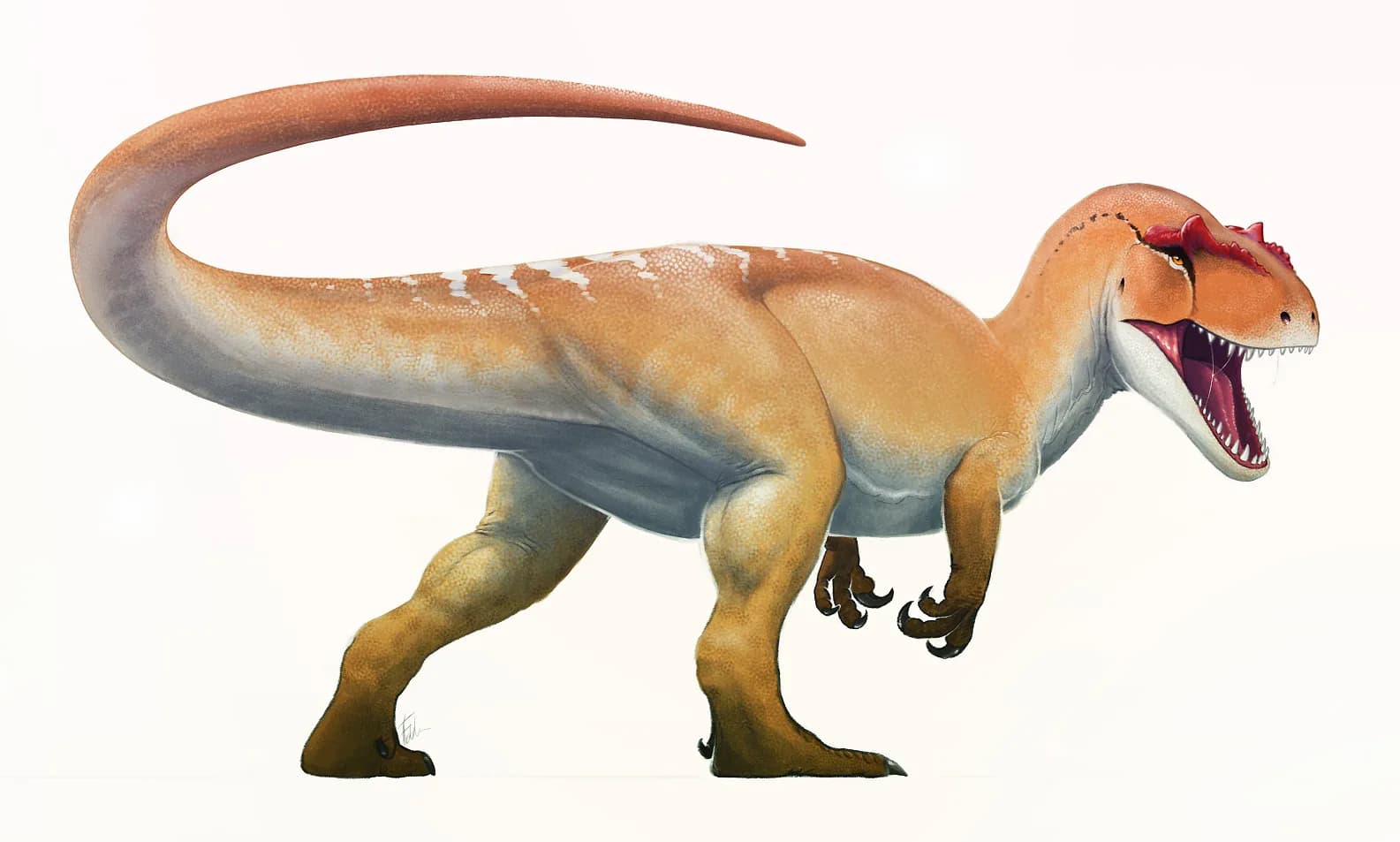
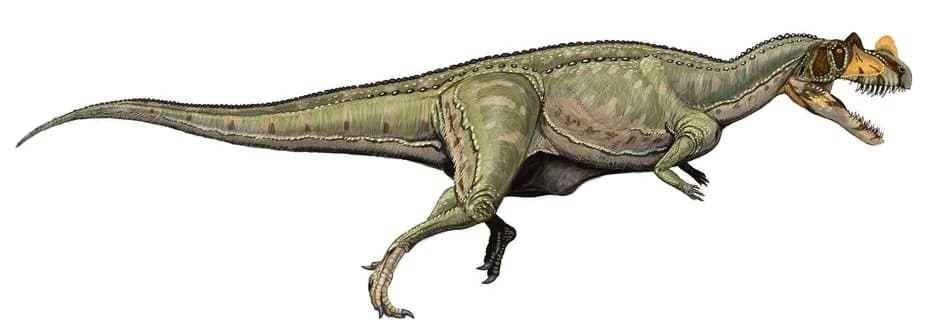
Allosaurus fragilis life reconstruction
Fred Wierum, CC BY 3.0