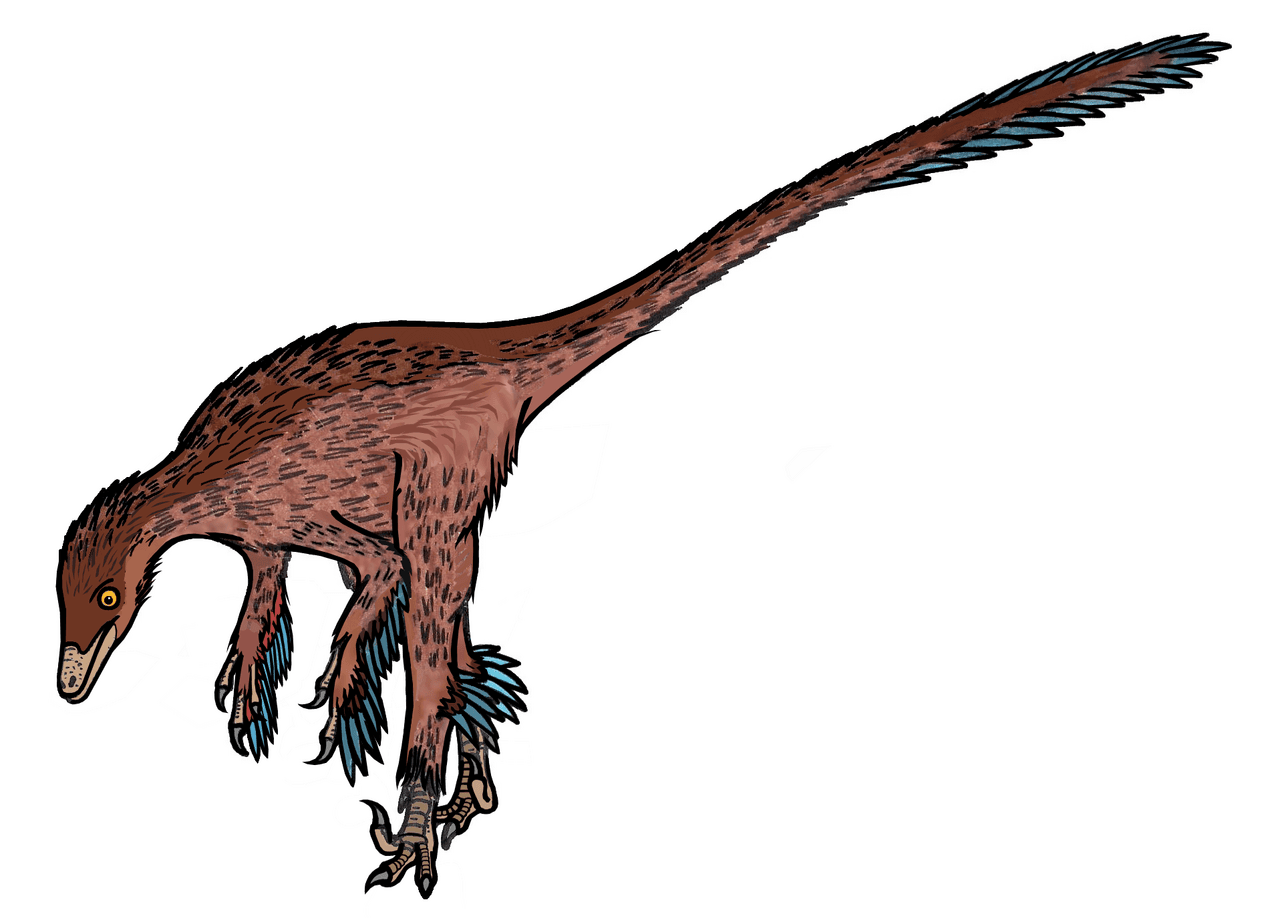
Dent blessante
Troodon formosus shows the highest brain-to-body ratio of any non-avian dinosaur, which earns it a reputation as the sharpest of the group. Its large forward-facing eyes gave it binocular and probably nocturnal vision. About 2 metres long and 40 to 50 kilograms, described in 1856, it lived 76 to 65 million years ago.
The venomous pack hunter. Its venom stacks in packs for devastating effect. Vocal mimicry to disorient prey. Fast and hard to catch.
Playable in The Isle: Evrima
See Troodon formosus's in-game stats, tier, strengths & weaknesses on our server.
Troodon lived during the Late Cretaceous period, approximately 77 to 69 million years ago, during the Campanian to Maastrichtian stages. It inhabited what is now North America, with fossils found across a wide geographic range from Alaska to Montana and Alberta, Canada. This period was marked by high global temperatures and rising sea levels that divided North America into two landmasses. Troodon thrived in diverse environments across the western portion of the continent known as Laramidia, demonstrating remarkable ecological adaptability. Its temporal range spanning several million years indicates it was a highly successful genus that persisted through significant environmental changes.
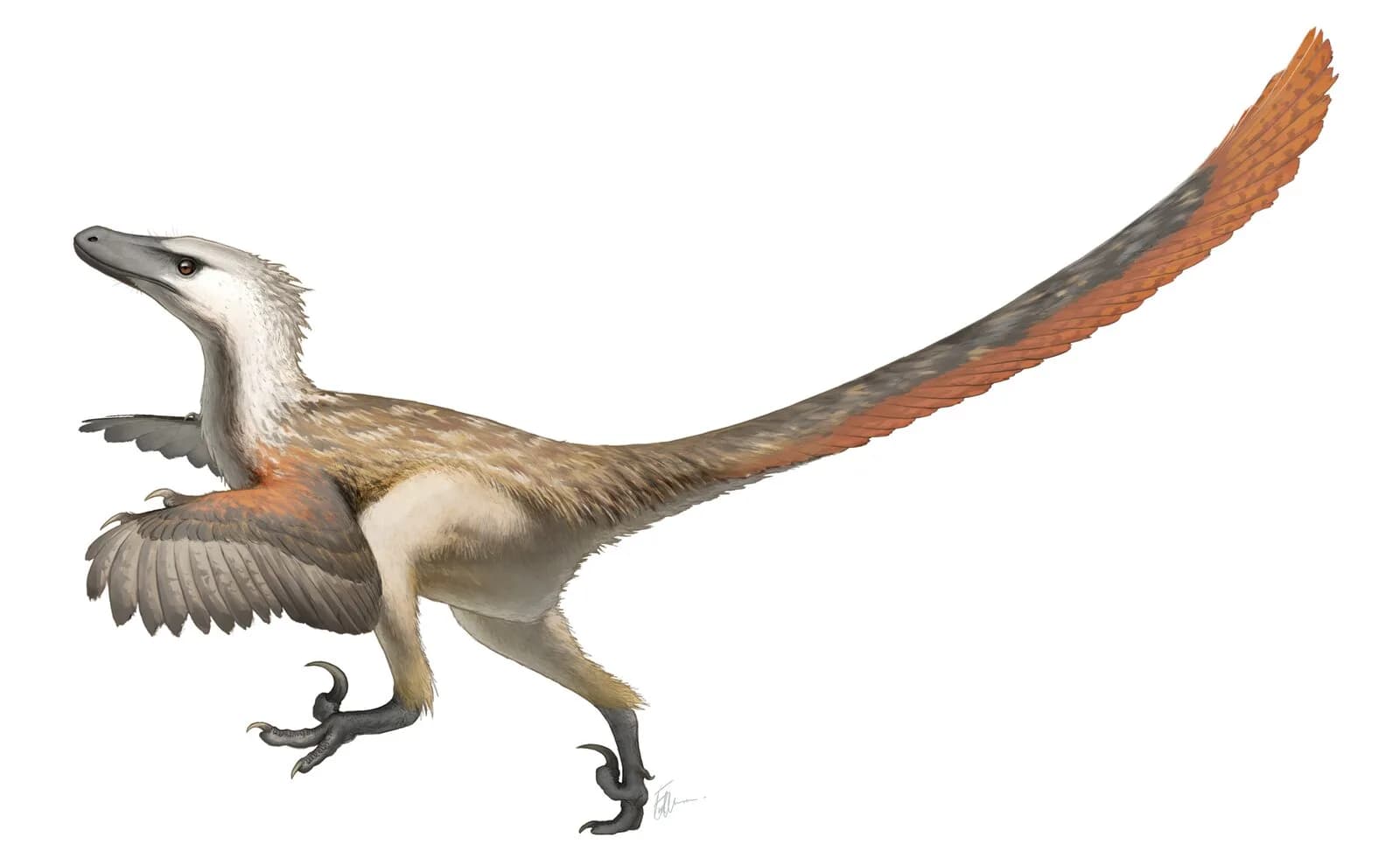
Troodon measured approximately 2 to 3 meters in length and weighed around 50 kilograms, making it a relatively small but highly capable predator. Its most remarkable feature was its exceptionally large brain relative to body size, giving it one of the highest encephalization quotients among all known dinosaurs. The skull was lightly built with large, forward-facing eyes that provided excellent binocular vision. The body was slender and built for agility, with long legs adapted for swift running. The famous sickle-shaped retractable claw on each foot, while smaller than that of Deinonychus, was still an effective weapon for subduing small prey during hunting.
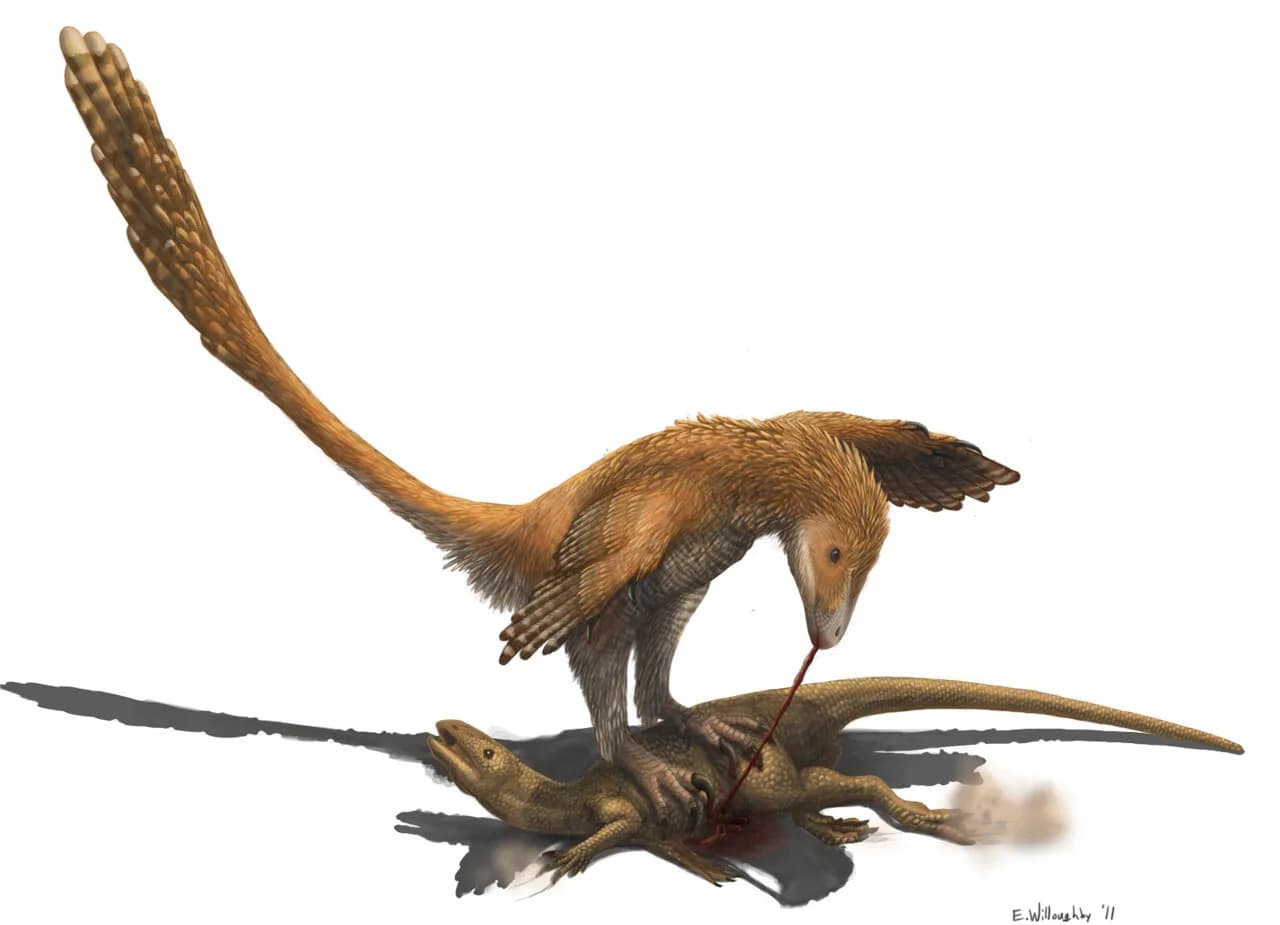
Troodon was likely omnivorous, with its distinctive teeth showing serrations on both edges — unusual among theropods, where serrations typically appear only on the posterior edge. This dental morphology suggests a varied diet that may have included small mammals, lizards, insects, eggs, and possibly plant material. Its large eyes and binocular vision indicate it was well-adapted for hunting in low-light conditions, possibly being a crepuscular or nocturnal hunter. The combination of speed, intelligence, and sensory acuity would have made Troodon an efficient predator of small vertebrates and invertebrates, capable of exploiting food resources unavailable to larger, less agile dinosaurs.
Troodon inhabited diverse environments across western North America, from the temperate forests of Montana and Alberta to the cold, dark winters of ancient Alaska, demonstrating remarkable ecological flexibility. Its fossils have been found in several formations including the Judith River Formation and the Dinosaur Park Formation, representing various coastal and floodplain habitats. The ability to survive at high latitudes, where winters brought months of near-total darkness, suggests Troodon possessed exceptional adaptations for low-light vision and possibly endothermic metabolism. These northern populations may have experienced annual temperature variations that required behavioral adaptations such as seasonal migration or periods of reduced activity.
Troodon anatomy reveals one of the most neurologically advanced dinosaurs known to science. Its brain-to-body-size ratio rivals that of some modern birds, suggesting complex cognitive abilities and behavioral flexibility. The large, forward-facing eyes provided stereoscopic vision essential for judging distances when capturing small, fast-moving prey. The inner ear structure indicates excellent hearing and balance. Each foot bore a specialized retractable sickle claw on the second toe, held off the ground during locomotion to maintain its sharpness. The hands were notably dexterous with opposable fingers capable of grasping, and the wrist could fold in a manner similar to modern birds, suggesting a close evolutionary relationship.
Troodon is famous for its nesting behavior, with several well-preserved nests discovered containing eggs arranged in circular patterns partially buried in soil or sand. The adult apparently incubated eggs by sitting on the nest, similar to modern ground-nesting birds, with the eggs positioned to allow the feathered arms to cover them effectively. This brooding behavior represents some of the strongest evidence for parental care in non-avian dinosaurs. Its high intelligence and binocular vision suggest sophisticated hunting strategies, possibly including coordinated group hunting of larger prey. Troodon may have been primarily nocturnal or crepuscular, exploiting a temporal niche less frequented by larger, visually-oriented predators.
Troodon formosus was originally named by Joseph Leidy in 1856 based solely on a single distinctive tooth found in the Judith River Formation of Montana, making it one of the earliest named North American dinosaurs. The taxonomic history of Troodon has been extremely complex and controversial, with some researchers questioning whether the tooth-based holotype can be reliably assigned to the more complete specimens traditionally referred to this genus. In recent years, some paleontologists have proposed abandoning the name Troodon as a nomen dubium, reassigning more complete material to other genera like Stenonychosaurus and Latenivenatrix. Despite this ongoing debate, Troodon remains one of the most culturally recognizable small theropod dinosaurs.
| Period | Crétacé supérieur / Late Cretaceous |
| Era | Mésozoïque / Mesozoic |
| Age | 76-65 Ma |
| Location | Amérique du Nord / North America |
| Length | ~2 m |
| Height | 0.9 m |
| Weight | 40-50 kg |
| Diet | Omnivore |
| Discovery | 1856 |
| Type (in-game) | Carnivore |
| Tier | Tier 1 |
Troodon formosus possessed the highest encephalization quotient among known non-avian dinosaurs, comparable in brain-to-body ratio to some modern birds. This relatively large brain size suggested advanced cognitive capabilities. Its size was modest — about 2 meters and 40 to 50 kilograms — but its large forward-facing eyes gave it binocular and likely nocturnal vision.
Fossil nests attributed to Troodon in the Two Medicine Formation (Montana) show eggs semi-buried in a regular circular arrangement with tips pointing upward. This arrangement and nest structure suggest active incubation by a parent sitting on the nest, similar to modern ground-nesting birds. These sites represent some of the best evidence of parental care in non-avian dinosaurs.
The validity of Troodon formosus is debated. The genus was described in 1856 by Joseph Leidy from a single tooth found in Montana. Some paleontologists propose abandoning it as a nomen dubium, the holotype tooth being too fragmentary to be reliably attributed to the more complete skeletons. More complete material is sometimes reassigned to Stenonychosaurus or Latenivenatrix.
Troodon at Museum of the Rockies
Wikipedia Commons
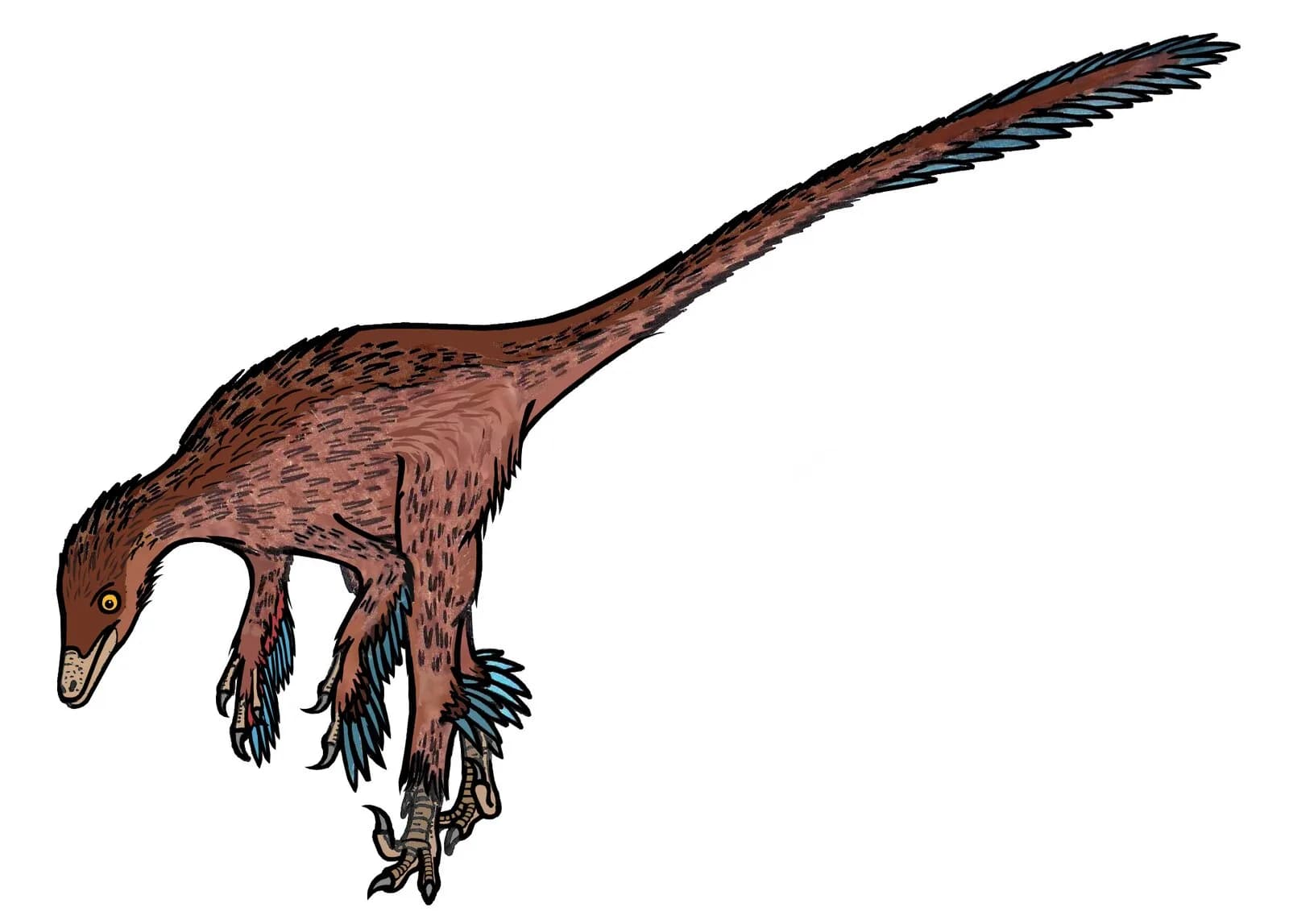
Feathered Troodon/Stenonychosaurus life reconstruction
Conty, CC BY-SA 4.0