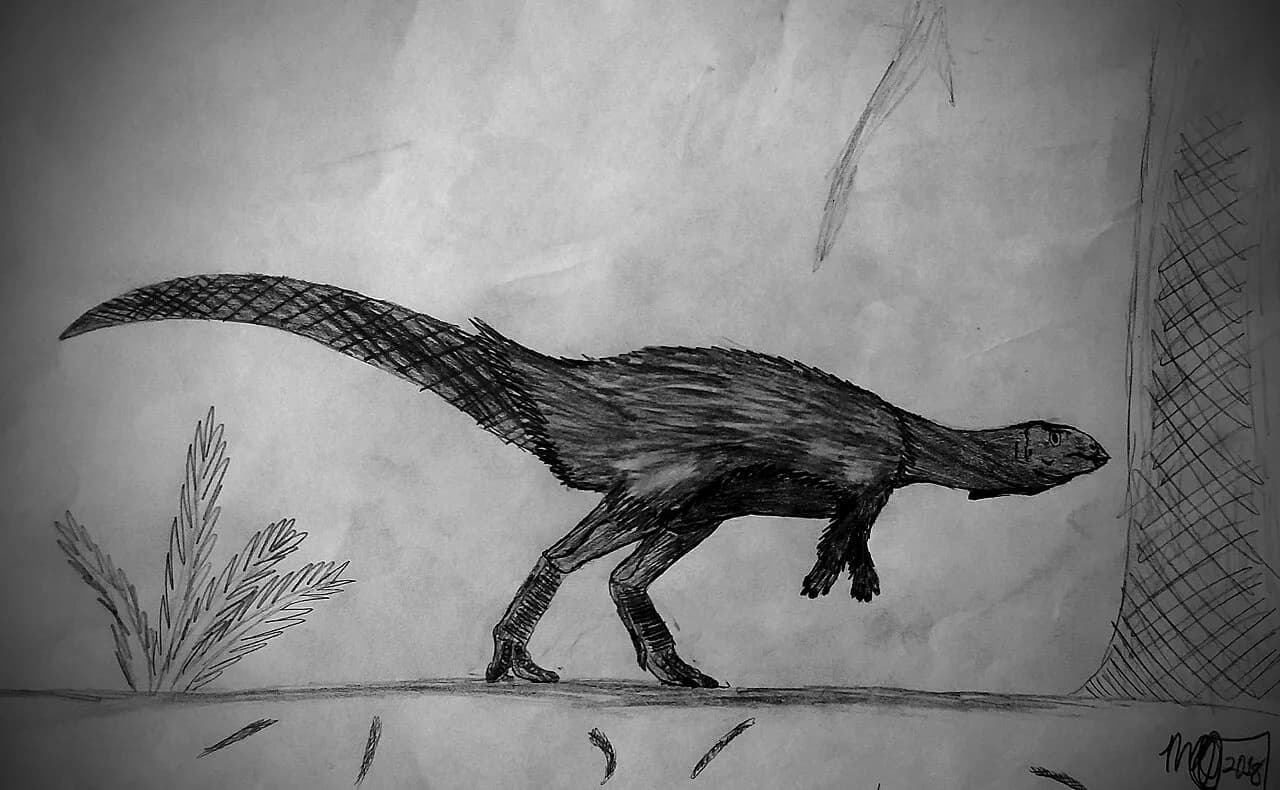
Lézard des chênes
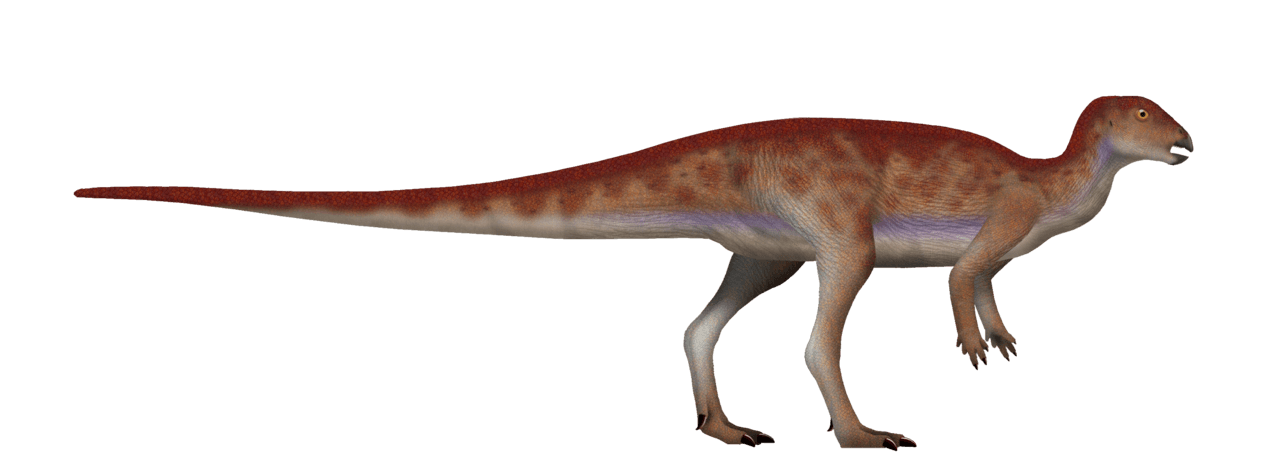
Dryosaurus altus is a small ornithopod 2.4 to 4.3 metres long and 70 to 80 kilograms, described in 1894 and found in both North America and Africa. It lived 155 to 145 million years ago. With no armour and no horns, it owed its survival to speed alone: long hind legs and a stiff tail let it turn sharply at full pace.
The king of dodging. Its unique Dodge Roll makes it very hard to hit, and its Burrow makes it disappear from enemy radar. Surprisingly high bite force for its size.
Playable in The Isle: Evrima
See Dryosaurus altus's in-game stats, tier, strengths & weaknesses on our server.
Dryosaurus lived during the Late Jurassic, approximately 155 to 145 million years ago, in the famous Morrison Formation of North America. Contemporary with large sauropods such as Diplodocus and Brachiosaurus, as well as the formidable predator Allosaurus, it represented one of the most common and best-adapted running ornithopods of its era. An African species, D. lettowvorbecki (sometimes placed in the separate genus Dysalotosaurus), was discovered in Tanzania, testifying to a remarkable intercontinental distribution of this dinosaur group during this geological period.
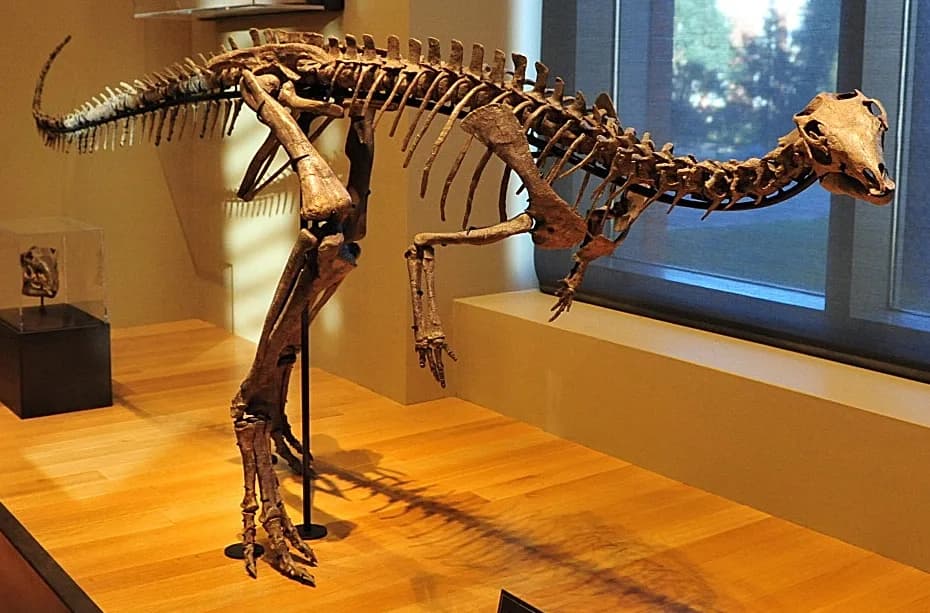
Dryosaurus measured between 2.4 and 4.3 meters in length with an estimated weight between 70 and 80 kilograms. Its light and graceful morphology, combined with its long, muscular hind legs, made it a particularly efficient and fast bipedal runner. Its toothless beak at the front and small teeth at the rear of its jaws allowed it to pluck and grind low vegetation effectively. Its long, rigid tail, reinforced by ossified tendons along its length, served as an indispensable counterbalance during high-speed bipedal running, helping maintain stability during rapid direction changes.
A strict herbivore, Dryosaurus grazed on low to medium-height vegetation: ferns, horsetails, cycadophytes, and young conifer shoots growing in its Jurassic environment. Its horny beak effectively cut stems with precision, and its small cheek teeth allowed rudimentary grinding of plant material before swallowing. Like many ornithopods, it likely practiced mixed locomotion — bipedal for running and fleeing from predators, and quadrupedal for ground-level feeding. Unlike the later hadrosaurs of the Cretaceous period, Dryosaurus had not yet developed the complex dental batteries that would allow advanced mastication of tough, fibrous vegetation.
Dryosaurus inhabited the semi-arid plains and riparian zones of the Morrison Formation across Colorado, Wyoming, Utah, and Oklahoma. This Late Jurassic landscape combined dry, open spaces with denser vegetation zones along seasonal waterways that provided crucial moisture and food resources. Its presence in the same formation as the fearsome Allosaurus and the smaller Ceratosaurus forced it to rely heavily on speed as its primary defense against these large predators. The discovery of similar fossils in Tanzania's Tendaguru Formation suggests the existence of active intercontinental faunal corridors during the Late Jurassic period, when land bridges still connected the separating continents.
Dryosaurus anatomy is a classic example of adaptation for fast bipedal running among ornithopod dinosaurs. Its elongated tibiae and metatarsals relative to femurs — diagnostic characteristics of fast cursorial runners — allowed long, energetically efficient strides across open terrain. Its broad vision through lateral eye sockets gave it a good panoramic visual field for detecting approaching predators at a distance. The rigid tail maintained horizontally counterbalanced body mass during high-speed bipedal locomotion, providing essential stability. Fossil trackways showing multiple Dryosaurus individuals moving together suggest well-established gregarious behavior within this species.
Dryosaurus likely lived in small groups or herds, benefiting from collective vigilance against the omnipresent predators of the Late Jurassic ecosystem. Its survival strategy relied essentially on early detection of danger and rapid flight — it possessed no notable passive defenses such as horns or body armor to deter attackers. Fossilized trackways showing multiple individuals moving in the same direction suggest well-established gregarious behaviors among this species. During a threat from a predator, a sentinel individual serving as an alarm giver likely allowed the entire group to flee in a coordinated manner, maximizing their chances of escape.
Dryosaurus altus was described by the renowned paleontologist Othniel Charles Marsh in 1894 from fossils discovered in Wyoming, United States. Complete or near-complete specimens have been found in several Morrison Formation localities, providing a thorough understanding of its overall anatomy and body proportions. The Yale University Peabody Museum of Natural History possesses a remarkably well-preserved skeleton that has been extensively studied. The relationship between North American D. altus and African D. lettowvorbecki (Tendaguru Formation, Tanzania) remains debated among paleontologists: some researchers place the African species in the distinct genus Dysalotosaurus, highlighting significant morphological differences between the two populations.
| Period | Jurassique supérieur / Late Jurassic |
| Era | Mésozoïque / Mesozoic |
| Age | 155-145 Ma |
| Location | Amérique du Nord, Afrique / North America, Africa |
| Length | 2.4-4.3 m |
| Height | 1.4 m |
| Weight | 70-80 kg |
| Diet | Herbivore |
| Discovery | 1894 |
| Type (in-game) | Herbivore |
| Tier | Tier 1 |
Dryosaurus altus measured between 2.4 and 4.3 meters long, weighing an estimated 70 to 80 kg. It lived 155 to 145 million years ago in the Morrison Formation of North America (Colorado, Wyoming, Utah, Oklahoma), a Late Jurassic ecosystem shared with Diplodocus, Brachiosaurus, and Allosaurus. Related fossils were also found in Tanzania in the Tendaguru Formation.
Dryosaurus altus had neither horns nor armor. Its only defense was speed and collective vigilance. Its elongated tibiae and metatarsals relative to femurs made it an efficient bipedal runner. Its rigid tail held horizontally served as a counterbalance for stability during tight high-speed turns. Fossil trackways of groups suggest well-established gregarious behavior.
The relationship between North American Dryosaurus altus and the African species D. lettowvorbecki from the Tendaguru Formation remains debated. Some paleontologists place the Tanzanian species in the distinct genus Dysalotosaurus, highlighting significant morphological differences between the two populations. Their presence on two continents attests to active intercontinental faunal corridors during the Late Jurassic.
Dryosaurus at Beneski Museum
Wikipedia Commons
Dryosaurus altus life reconstruction
Nobu Tamura, CC BY-SA 4.0