Déinonychous
Deinonychus antirrhopus was a carnivorous theropod from North America, described in 1964 and dated to 115 to 108 million years ago. It measured 3.4 metres and weighed 70 to 80 kilograms, carrying a 13-centimetre sickle claw on each foot. Its proportions, not those of Velociraptor, were the model for the raptors of Jurassic Park.
Playable in Path of Titans
See Deinonychus antirrhopus's stats, abilities and role on our survival server.
Deinonychus lived in the Early Cretaceous, approximately 115 to 108 million years ago, during the Aptian and Albian stages. Its discovery in 1964 by John Ostrom triggered the 'Dinosaur Renaissance' and the hypothesis of their relationship to birds — a major turning point in paleontological history. Before Deinonychus, dinosaurs were perceived as slow, stupid, cold-blooded animals. Ostrom demonstrated that Deinonychus was an active, agile, and possibly warm-blooded predator, overturning a century of prejudice. This intellectual revolution led directly to the now widely accepted theory that birds are direct descendants of theropod dinosaurs.
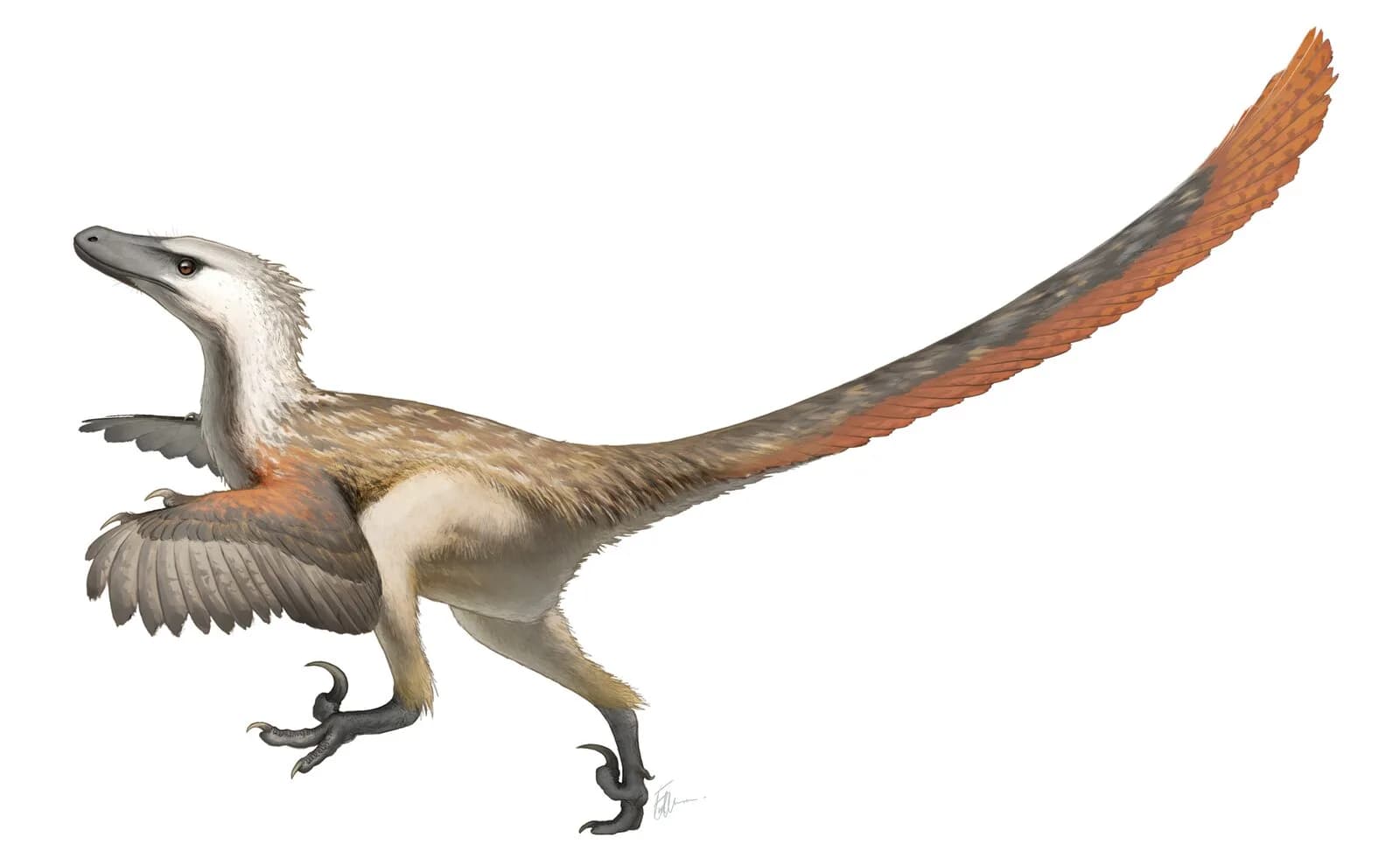
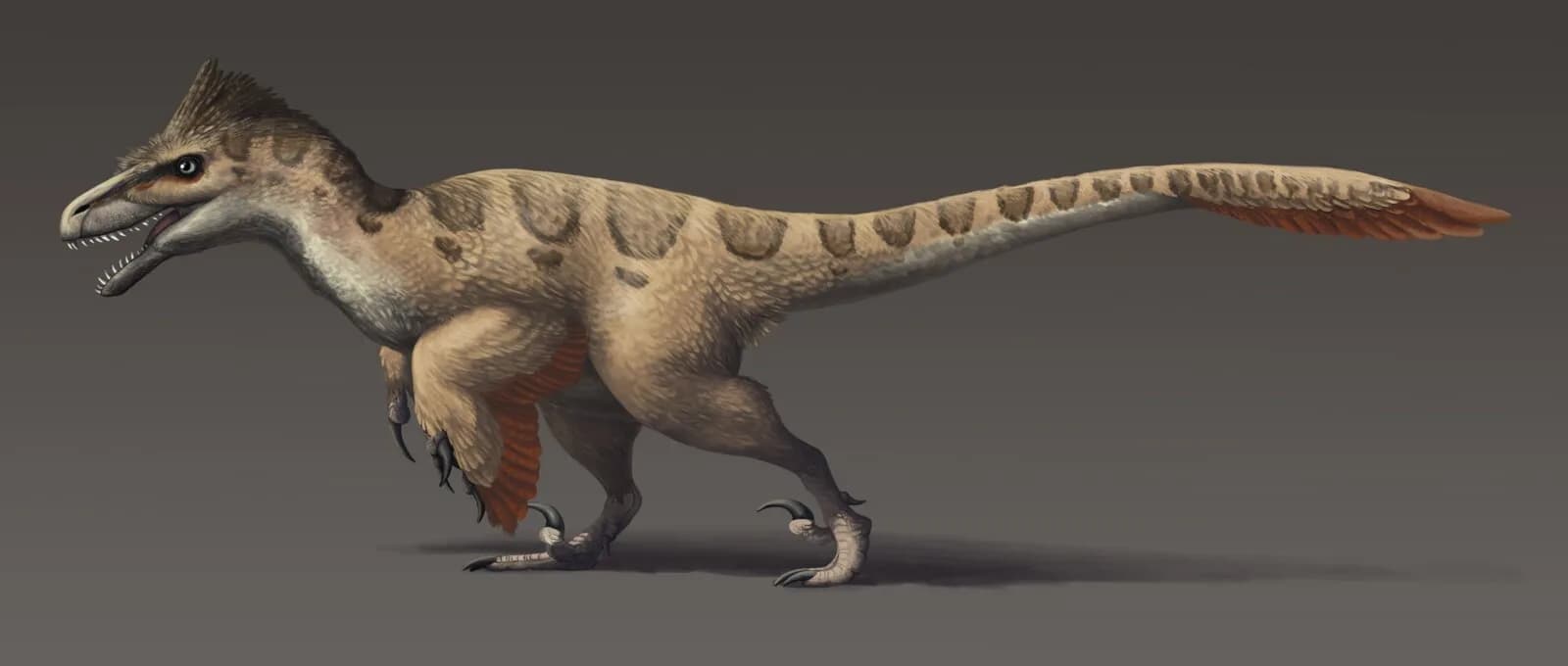
Medium-sized for a raptor: 3.4 meters long and 70 to 80 kg. Much larger than the actual Velociraptor, it was actually Deinonychus that inspired the Jurassic Park raptors, whose size was exaggerated for cinema. Its skull measured about 41 cm long, with large orbits indicating good vision. Its body was muscular and compact, with a low center of gravity favoring agility. Its rigid tail, reinforced by ossified tendons, measured nearly half its total length and served as a counterbalance during rapid maneuvers. Its forelimbs were relatively long and powerful, equipped with three sharp claws for grasping prey.
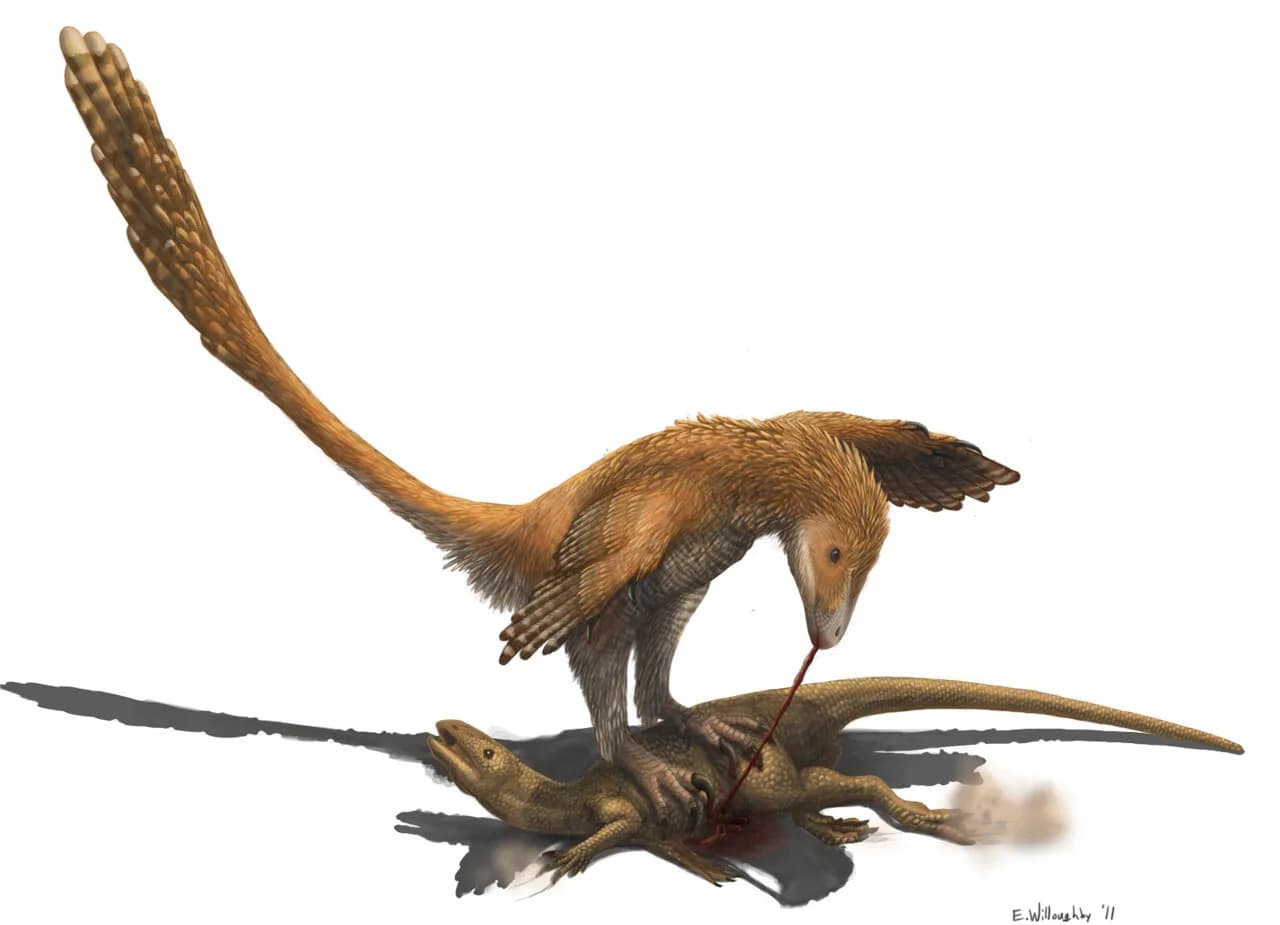
An active predator, Deinonychus hunted large ornithopods like Tenontosaurus, a 7-meter herbivore. A famous fossil site shows multiple Deinonychus around a Tenontosaurus, long interpreted as evidence of cooperative hunting — a first among dinosaurs. However, more recent studies suggest this association could also reflect competitive scavenging rather than social cooperation. Its 12 cm sickle claw, according to the RPR (Raptor Prey Restraint) model by Fowler et al., served to perch on prey like modern raptorial birds, holding them down while the jaws inflicted lethal bites. Its diet probably also included smaller prey such as mammals, lizards, and juvenile dinosaurs.
Deinonychus lived in the swamps, deltas, and forested plains of Early Cretaceous North America, primarily in the Cloverly Formation of Montana and Wyoming. The environment was semi-humid, very different from the arid Late Cretaceous landscapes, with dense forests of tree ferns, conifers, and early angiosperms (flowering plants). Meandering rivers and lakes created a mosaic landscape of wetlands and forests. The Cloverly Formation harbored a diverse ecosystem with sauropods (Sauroposeidon), ornithopods (Tenontosaurus), and other theropods. The climate was warm temperate with regular precipitation, favorable to dense vegetation and abundant fauna.
Deinonychus anatomy is that of a predator highly specialized for active hunting. Its 12 cm retractable sickle claw on the second toe of each foot, held raised while walking to prevent dulling, was its primary weapon and most iconic feature. Recent studies confirm the presence of feathers on its forelimbs, including true secondary remiges, making Deinonychus a confirmed feathered dinosaur. Its forward-facing eyes provided binocular vision for precisely estimating distances — an essential characteristic of active predators. Its proportionally large brain contained developed sensory areas, suggesting intelligence superior to most dinosaurs. Its jaws bore about 60 recurved, serrated teeth adapted for tearing flesh. The tail, stiffened by ossified tendons, formed an almost straight rod that served as a rudder during high-speed tight turns.
Its group discoveries with prey long suggested coordinated pack hunting, a first among dinosaurs. However, debate persists: the fossil associations could reflect competitive Komodo dragon-type scavenging rather than social cooperation. Its forward-facing eyes provided binocular vision for precisely estimating distances — an essential characteristic of high-performance active predators. The discovery of Deinonychus revolutionized the view of dinosaurs, transforming them from slow, stupid animals to active, agile, and possibly endothermic (warm-blooded) creatures. Biomechanical models suggest it could run at about 40 km/h and perform considerable jumps. Its feathers, though not adapted for flight, likely served for thermoregulation, camouflage, egg incubation, and courtship display. The RPR model suggests it mounted the backs of its prey, using foot claws to anchor and hand claws to grip, while its jaws tore vital tissues.
Described by John Ostrom in 1969 following a Montana discovery in 1964, this find radically changed the view of dinosaurs and triggered the 'Dinosaur Renaissance.' The holotype (YPM 5205) includes a nearly complete foot with the famous sickle claw. The Cloverly site in Montana remains the primary source of Deinonychus fossils. The discovery of multiple individuals associated with a Tenontosaurus skeleton was interpreted as the first evidence of pack hunting in dinosaurs, though this interpretation is now nuanced. Over 1,000 isolated bones and about ten partially articulated specimens have been found. The scientific impact of Deinonychus goes well beyond paleontology: it directly inspired research on dinosaur-bird relationships that led to the modern cladistic theory of avian evolution.
| Period | Crétacé inférieur / Early Cretaceous (Aptien–Albien) |
| Era | Mésozoïque / Mesozoic |
| Age | 115–108 Ma |
| Location | Amérique du Nord / North America (Montana, Wyoming, Oklahoma) |
| Length | 3.4 m |
| Height | ~0.9 m |
| Weight | 70–80 kg |
| Diet | Carnivore |
| Discovery | 1964 |
The discovery of Deinonychus antirrhopus in 1964 (described by John Ostrom in 1969) triggered the 'Dinosaur Renaissance.' Before it, dinosaurs were seen as slow and cold-blooded. Ostrom demonstrated it was an active, agile, possibly warm-blooded predator — overturning a century of prejudice and directly leading to the now-accepted theory that birds descend from theropod dinosaurs.
Deinonychus antirrhopus measured 3.4 meters long and weighed 70 to 80 kg — much larger than Velociraptor (15-20 kg). It, not Velociraptor, served as the model for the Jurassic Park raptors. Its retractable sickle claw reached 12 cm on the second toe, held raised while walking and used according to the RPR (Raptor Prey Restraint) model to pin prey down.
The debate persists. Multiple Deinonychus antirrhopus fossils were found associated with a Tenontosaurus skeleton in the Cloverly Formation, long interpreted as pack hunting. Recent studies suggest however that this association may reflect competitive Komodo dragon-style scavenging rather than structured social cooperation — no direct evidence of coordination remains.
Information on this page is based on peer-reviewed scientific publications.
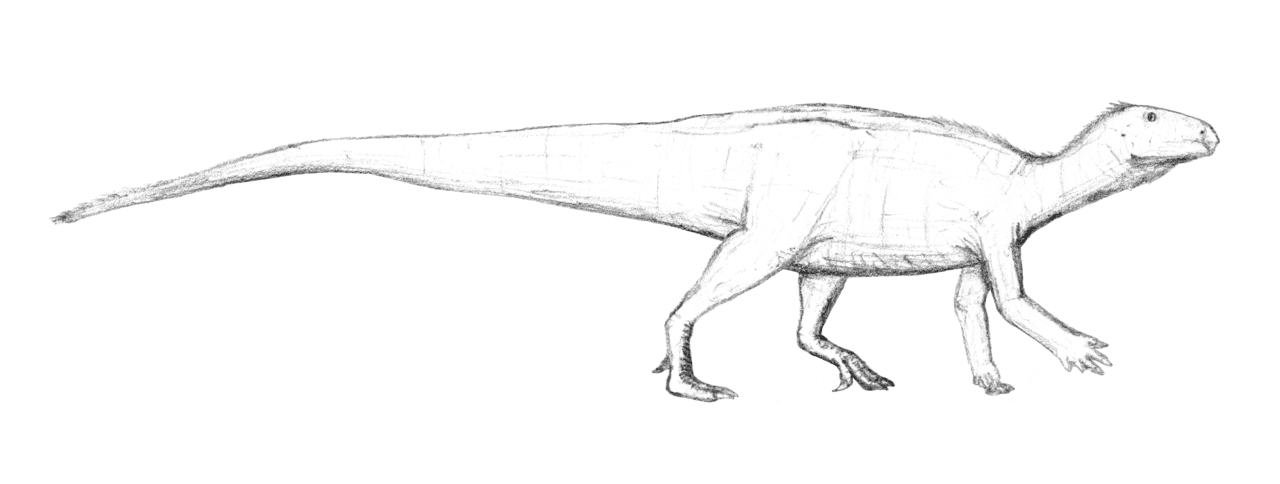
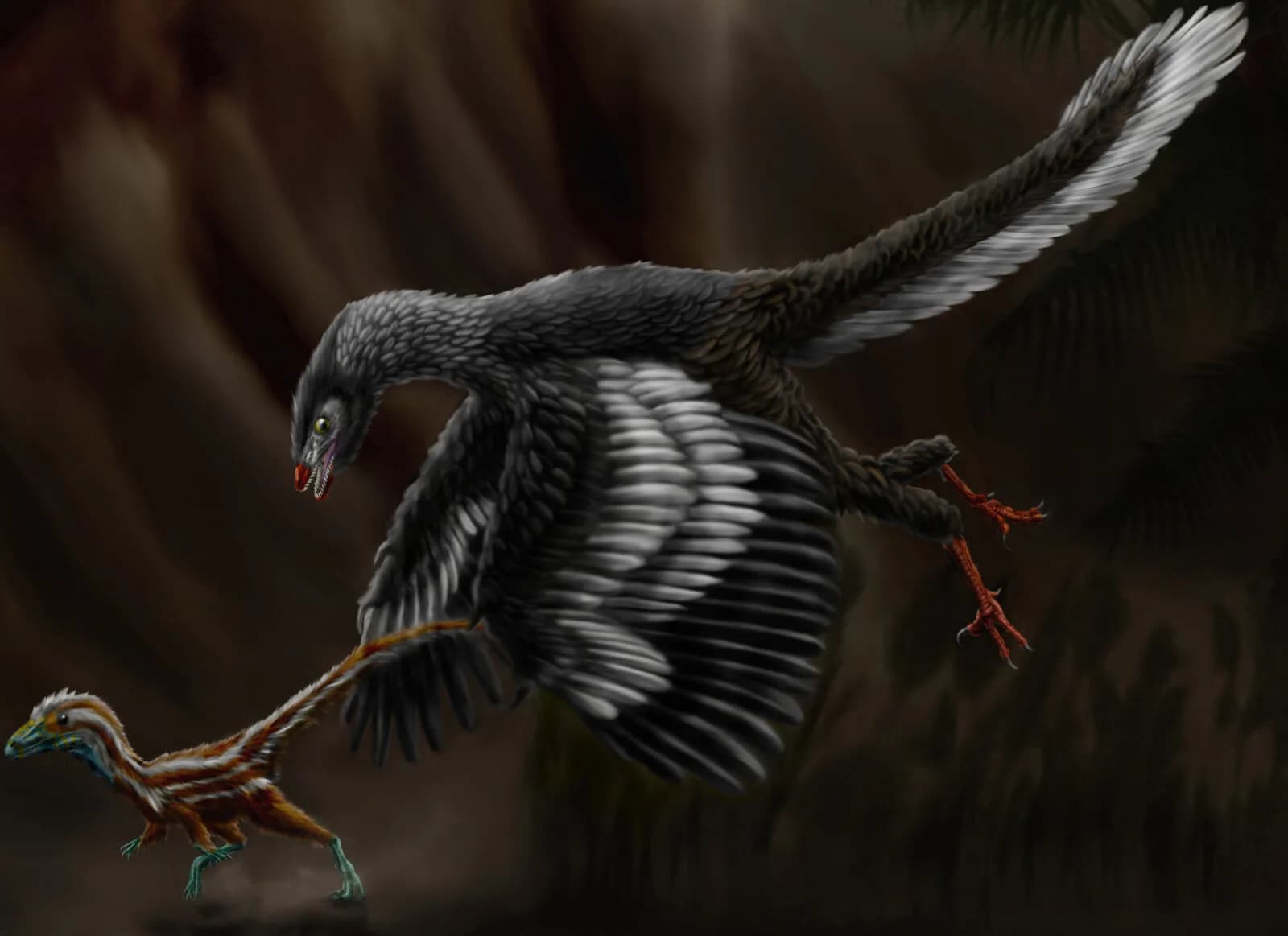
Deinonychus engaging in prey restraint on a Zephyrosaurus
Emily Willoughby, CC BY-SA 3.0, via Wikimedia Commons
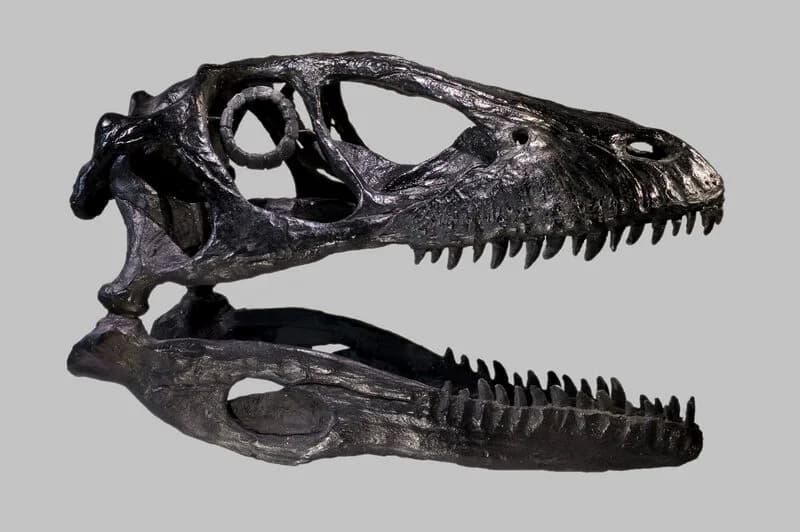
Mounted Deinonychus antirrhopus skeleton
Didier Descouens, CC BY-SA 4.0