Véloraptor
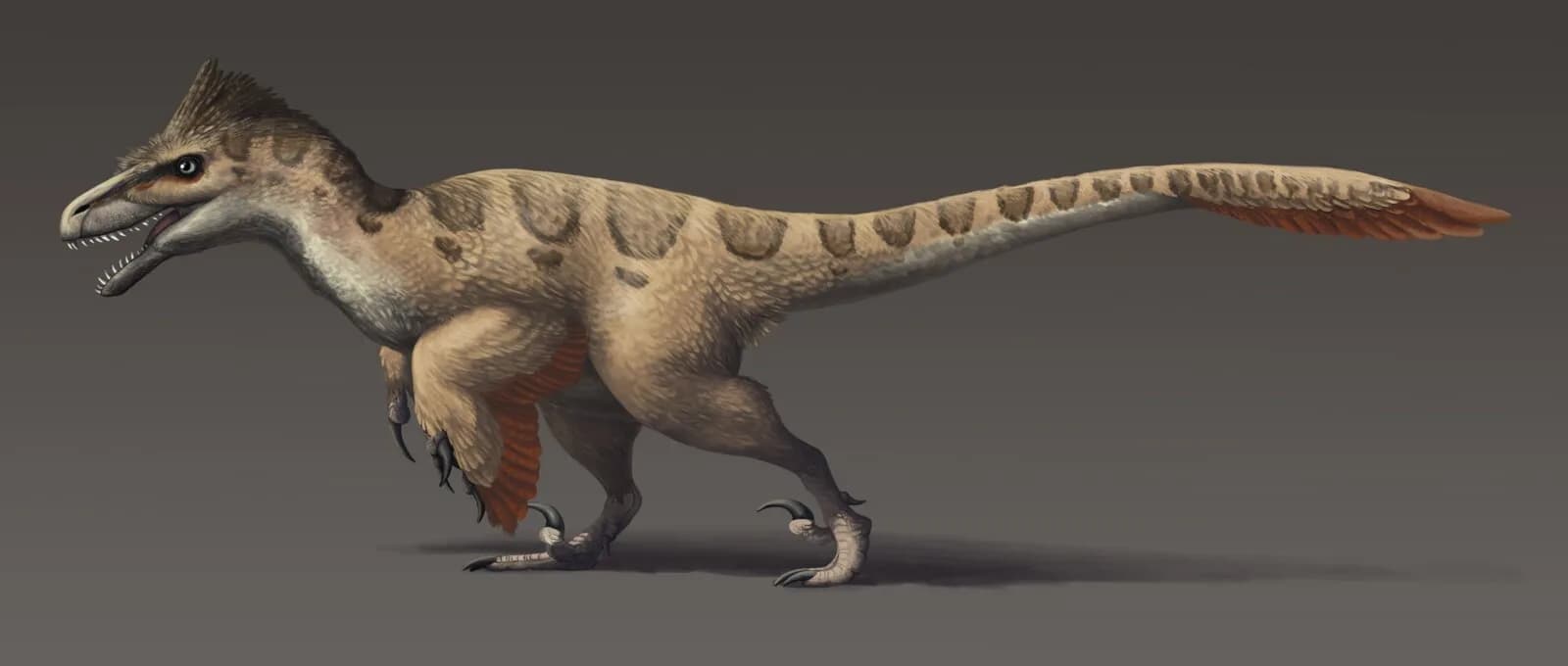
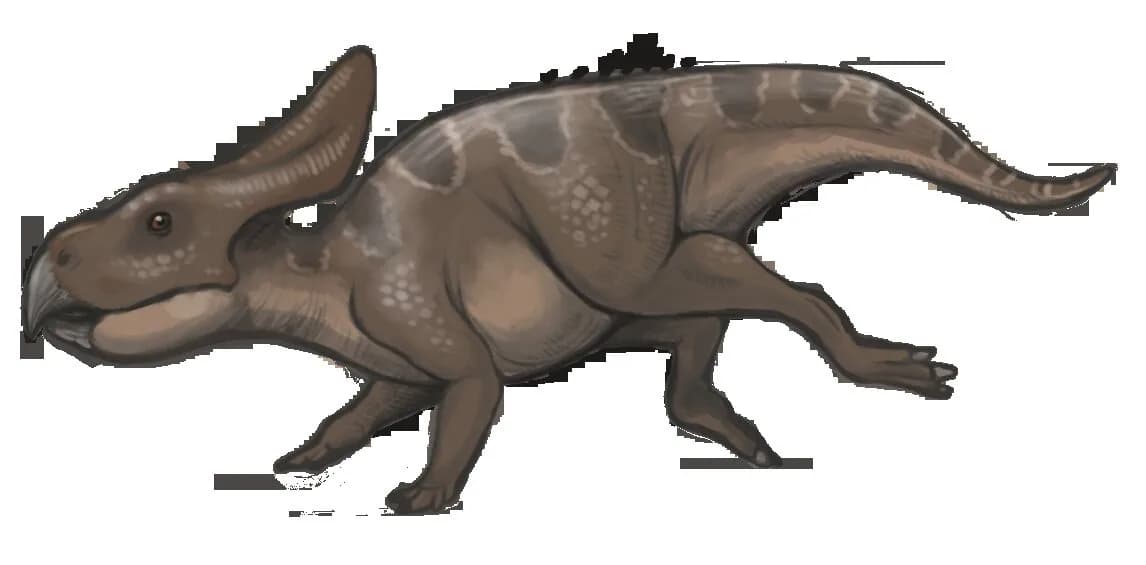
Velociraptor mongoliensis was a small feathered theropod from Central Asia, described in 1923 from fossils found in Mongolia and China. Unlike its film portrayal, it measured 1.8 to 2 metres long and weighed just 15 to 20 kilograms, about the build of a large turkey. The Fighting Dinosaurs fossil, unearthed in 1971, preserves one locked in combat with a Protoceratops.
Velociraptor lived in the Late Cretaceous, approximately 75 to 71 million years ago, during the Campanian stage. Despite its cinematic fame, it was much smaller than its portrayal in Jurassic Park. It belongs to the dromaeosaurid family, coelurosaurian theropods closely related to modern birds. The Campanian of Central Asia was a period of great dinosaur diversity, with numerous ceratopsian, hadrosaur, and theropod species coexisting in the deserts and semi-deserts of present-day Mongolia. Velociraptor is one of the most studied dinosaurs thanks to the exceptional quality of its fossils preserved in the Gobi sands.
The real Velociraptor measured about 1.8 to 2 meters long and weighed only 15 to 20 kg — roughly the size of a large turkey. The 'raptors' in Jurassic Park were actually inspired by Deinonychus or Utahraptor, much larger animals. Its skull measured about 25 cm long, with a characteristically low, elongated snout. Despite its small size, it was an agile and formidable predator, perfectly adapted to its desert environment. Its rigid tail, reinforced by ossified tendons, served as a counterbalance during high-speed tight turns. Its hip height reached only about 50 cm, allowing it to effectively conceal itself in low vegetation.
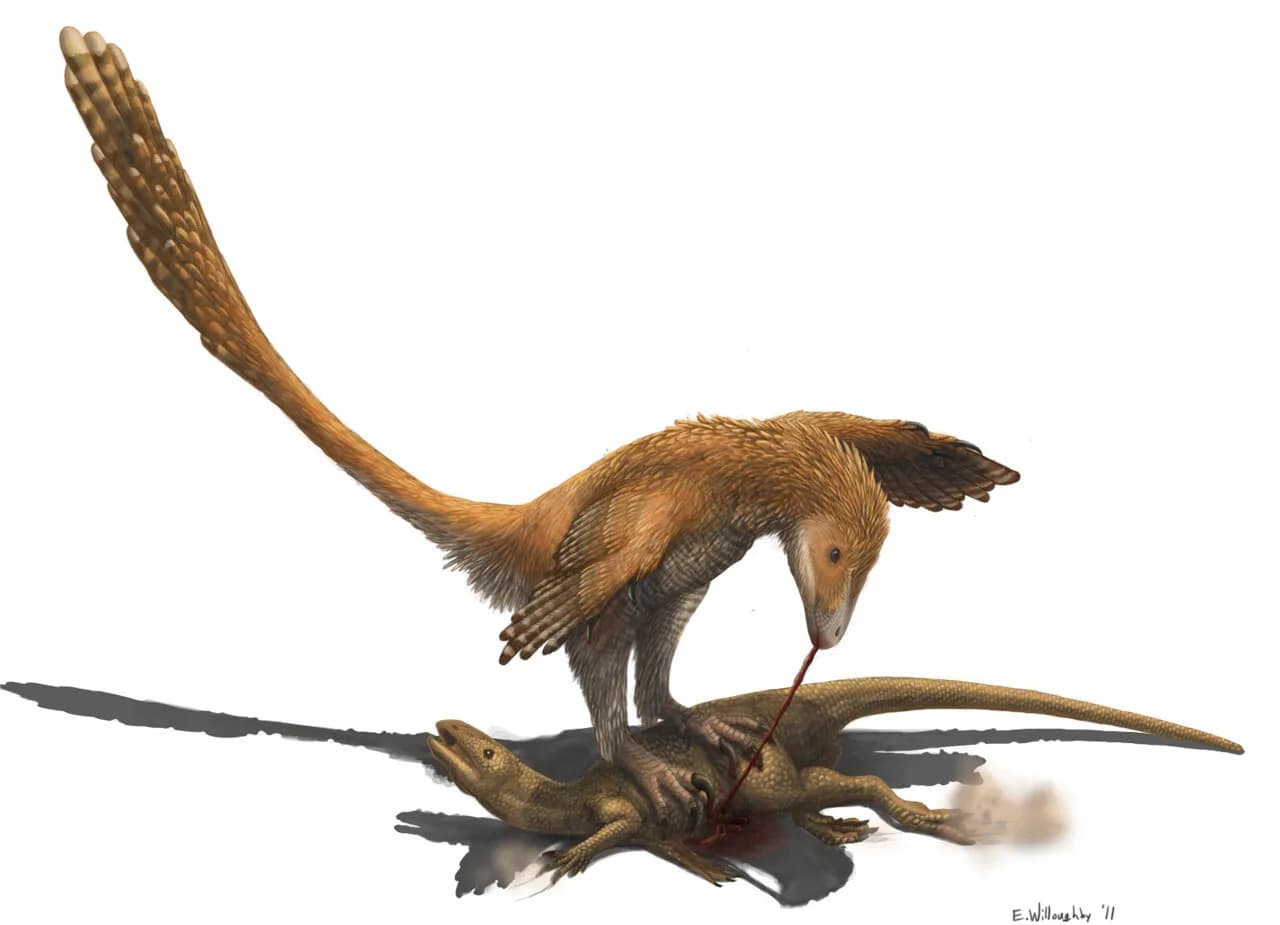
An active carnivore, it likely hunted small mammals, lizards, small dinosaurs, and possibly eggs. Its 6.5 cm retractable sickle claw on the second toe of each foot was used to pin prey down rather than to disembowel them, contrary to popular belief. Recent biomechanical studies (Fowler et al., 2011) showed that the claw served to perch on prey like modern raptorial birds, holding them down while the jaws finished the job. The famous 'Fighting Dinosaurs' fossil shows a Velociraptor attacking a Protoceratops, prey much larger than itself, testifying to its predatory boldness. Its diet was probably opportunistic, combining active hunting, scavenging, and egg theft.
Velociraptor inhabited the deserts and semi-deserts of Central Asia, corresponding to present-day Mongolia and northern China. The Cretaceous climate of this region was arid with large sand dunes, scattered oases, and intermittent watercourses. The Djadokhta Formation, where most specimens have been found, represents a sand dune environment similar to the present-day Sahara. Despite the arid conditions, the ecosystem supported diverse fauna including protoceratopsians, ankylosaurs, mammals, and lizards. Sandstorms were probably frequent and intense, as evidenced by the preservation of the 'Fighting Dinosaurs' fossil, frozen in combat by a sudden dune collapse.
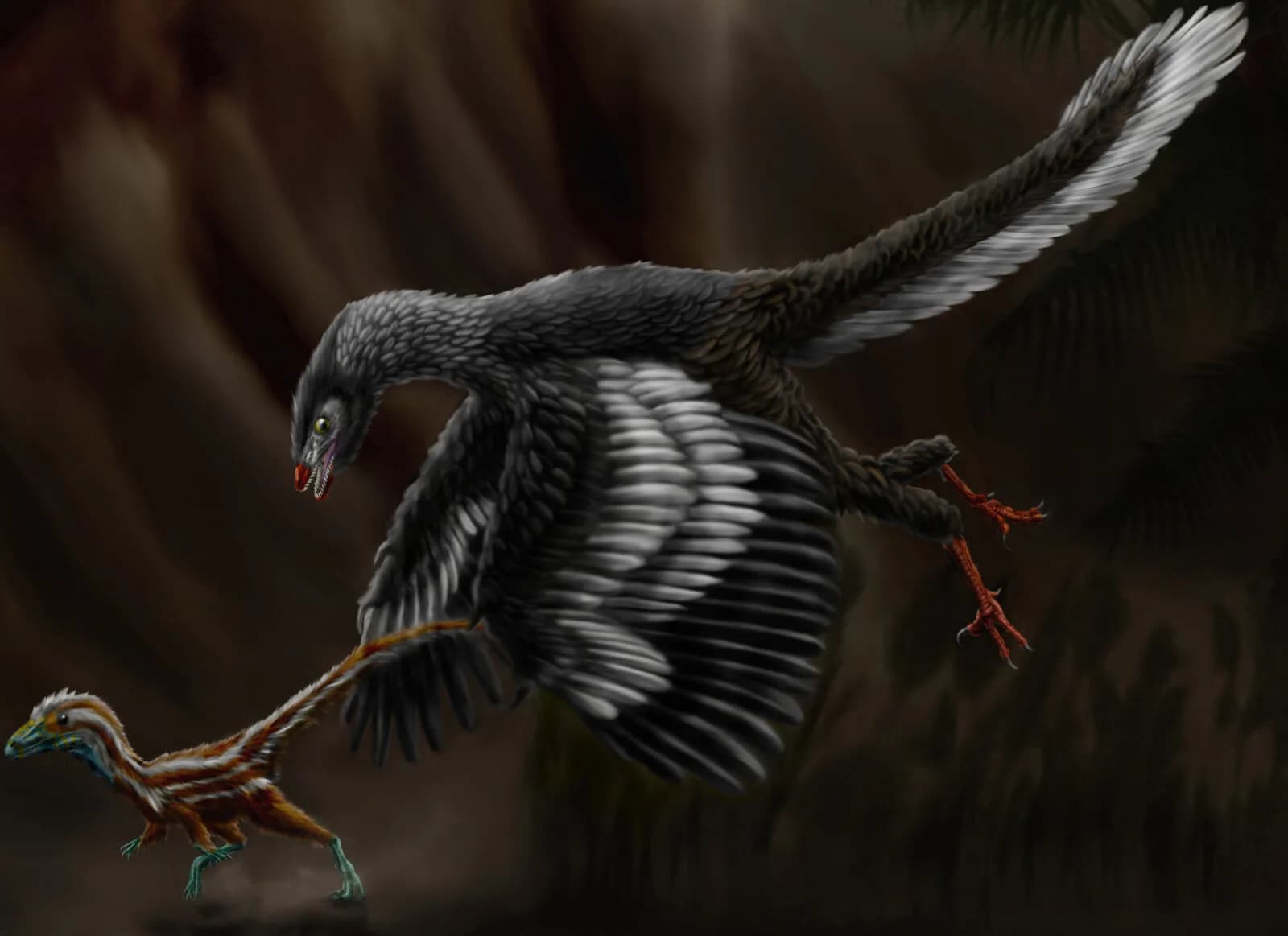
Velociraptor anatomy reveals a highly specialized predator. Its famous 6.5 cm retractable sickle claw on each foot, held raised while walking to stay sharp, was its primary weapon. Feather attachment marks (quill knobs) on its forearm bones were confirmed in 2007, definitively proving that Velociraptor was covered in feathers like a modern bird, despite its inability to fly. Its skull contained a proportionally large brain for a dinosaur, with developed olfactory lobes and enlarged visual areas, indicating intelligence and sharp senses. Its jaws contained about 28 spaced, recurved teeth, more adapted for gripping than crushing. Its tail was stiffened by ossified tendons forming a semi-rigid rod, serving as a rudder during rapid directional changes. Its entire anatomy — lightweight, agile, equipped with sharp senses — made it a remarkably efficient small-sized predator.
Contrary to the Jurassic Park portrayal, Velociraptor likely hunted alone rather than in coordinated packs — no fossil evidence supports pack hunting in dromaeosaurids. The famous 'Fighting Dinosaurs' fossil (1971), showing a Velociraptor locked in combat with a Protoceratops, is one of the most remarkable behavioral fossils ever found, freezing an instant of predation in rock. Analysis of this fossil shows the Velociraptor had planted its claw in the Protoceratops' neck while the ceratopsian had crushed the Velociraptor's arm in its jaws. Its feathers, though not adapted for flight, likely served for thermoregulation, courtship display, and egg protection during brooding. Studies on the shape of its claws and feet suggest it could run at about 40 km/h at peak speed. Its lifestyle was probably crepuscular or nocturnal, as suggested by the large size of its eye sockets.
Discovered in 1923 in Mongolia's Gobi Desert by Roy Chapman Andrews, one of the most famous explorers of the 20th century, during an American Museum of Natural History expedition. The 'Fighting Dinosaurs' specimen, discovered in 1971 by a Mongolian-Polish expedition, is classified as a national treasure of Mongolia. Several species are recognized: V. mongoliensis (the holotype, from Mongolia) and V. osmolskae (from China). Fossils are exceptionally well preserved in the Gobi sandstones, some retaining three-dimensional life or death positions. Joint Sino-American and Mongolian-Japanese expeditions continue to discover new specimens in the Gobi. Velociraptor's popularity since Jurassic Park (1993) has made it one of the most publicized dinosaurs, although its cinematic portrayal is far removed from scientific reality.
| Period | Crétacé supérieur / Late Cretaceous (Campanien) |
| Era | Mésozoïque / Mesozoic |
| Age | 75–71 Ma |
| Location | Asie Centrale / Central Asia (Mongolie, Chine) |
| Length | 1.8–2 m |
| Height | ~0.5 m |
| Weight | 15–20 kg |
| Diet | Carnivore |
| Discovery | 1923 |
Velociraptor mongoliensis measured approximately 1.8 to 2 meters long and weighed only 15 to 20 kg — roughly the size of a large turkey, not the 2-meter tall monster of Jurassic Park. The film's raptors were actually inspired by Deinonychus or Utahraptor, which were much larger. Its hip height reached only about 50 cm.
Contrary to its cinematic portrayal, no fossil evidence supports pack hunting in Velociraptor mongoliensis. The famous 'Fighting Dinosaurs' fossil (1971) shows a single individual attacking a Protoceratops — prey larger than itself — suggesting solitary, opportunistic hunting. Studies by Fowler et al. (2011) show its claw was used to perch on prey like a modern raptor bird.
Yes, Velociraptor mongoliensis was covered in feathers. Feather attachment marks (quill knobs) were confirmed on its forearm bones in 2007 (Turner et al., Science). Despite this bird-like plumage, it could not fly — its feathers likely served thermoregulation, courtship display, and egg brooding protection.
Information on this page is based on peer-reviewed scientific publications.
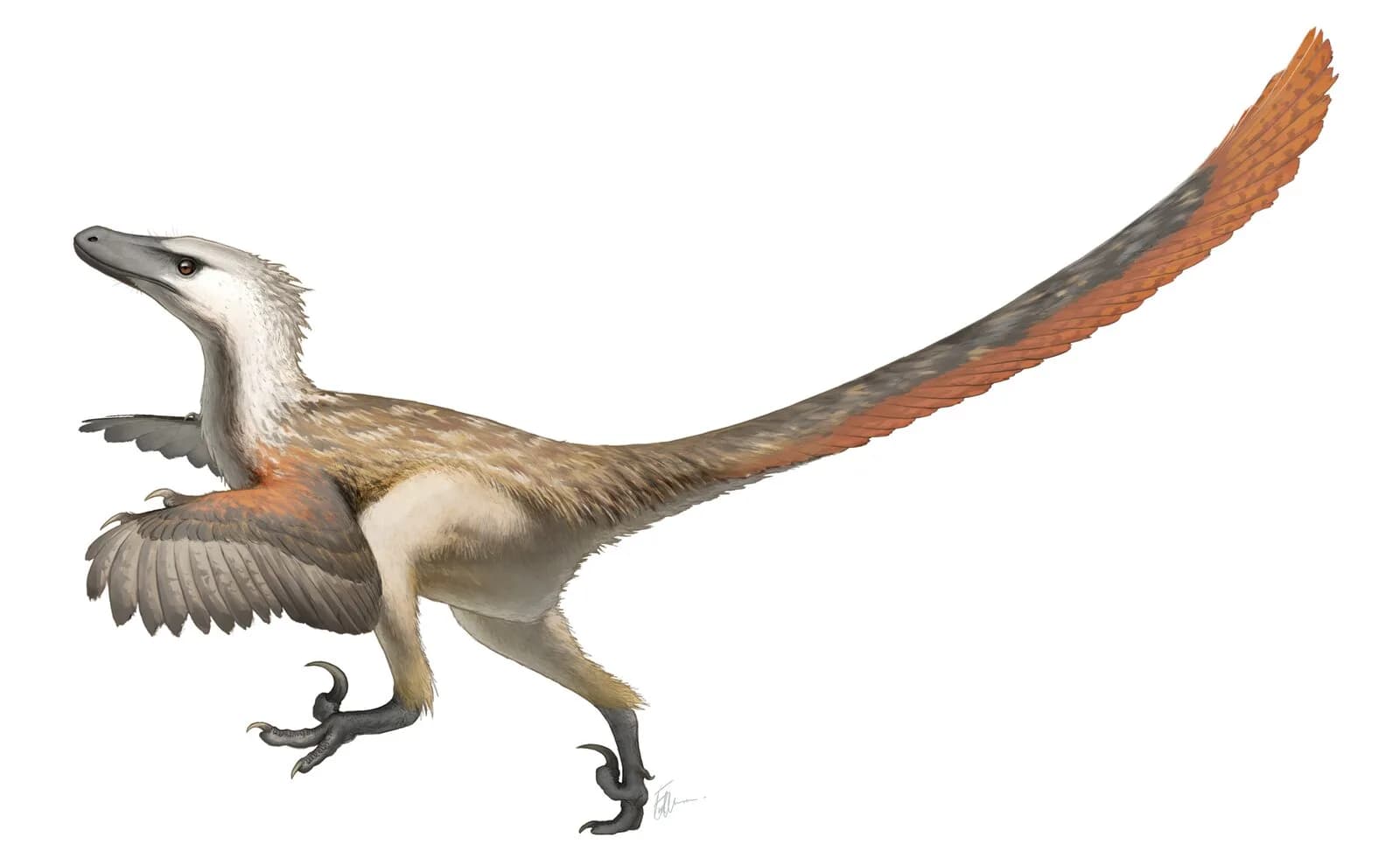
Life restoration of feathered Velociraptor mongoliensis
Fred Wierum, CC BY-SA 4.0, via Wikimedia Commons
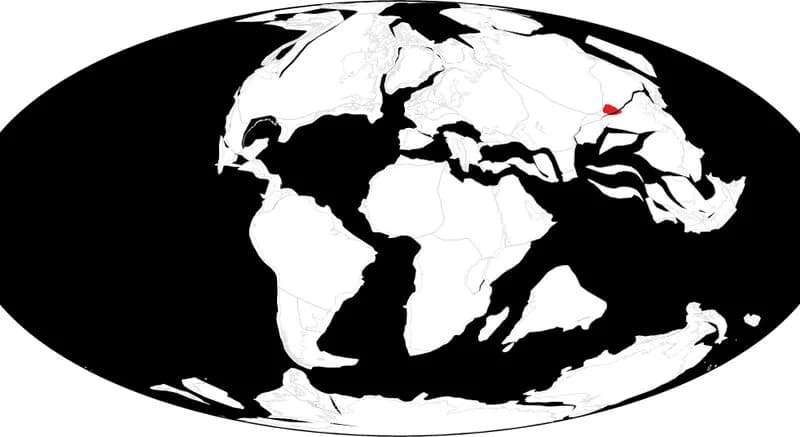
Paleographic range of Velociraptor mongoliensis
HFoxii, CC BY-SA 3.0