Stégosaure
Stegosaurus stenops was a Late Jurassic herbivore from North America and Europe, described in 1877. It measured 7 to 9 metres and weighed 2.5 to 4 tonnes, carrying two rows of back plates and four tail spikes known as the thagomizer. Its brain weighed only about 80 grams, one of the lowest brain-to-body ratios recorded in any land vertebrate.
Living fortress. Slow but deadly in melee — its sweeping tail (Thagomizer) is a kill zone. Its quick pivot compensates for limited speed.
Playable in The Isle: Evrima
See Stegosaurus stenops's in-game stats, tier, strengths & weaknesses on our server.
Playable in Path of Titans
See Stegosaurus stenops's stats, abilities and role on our survival server.
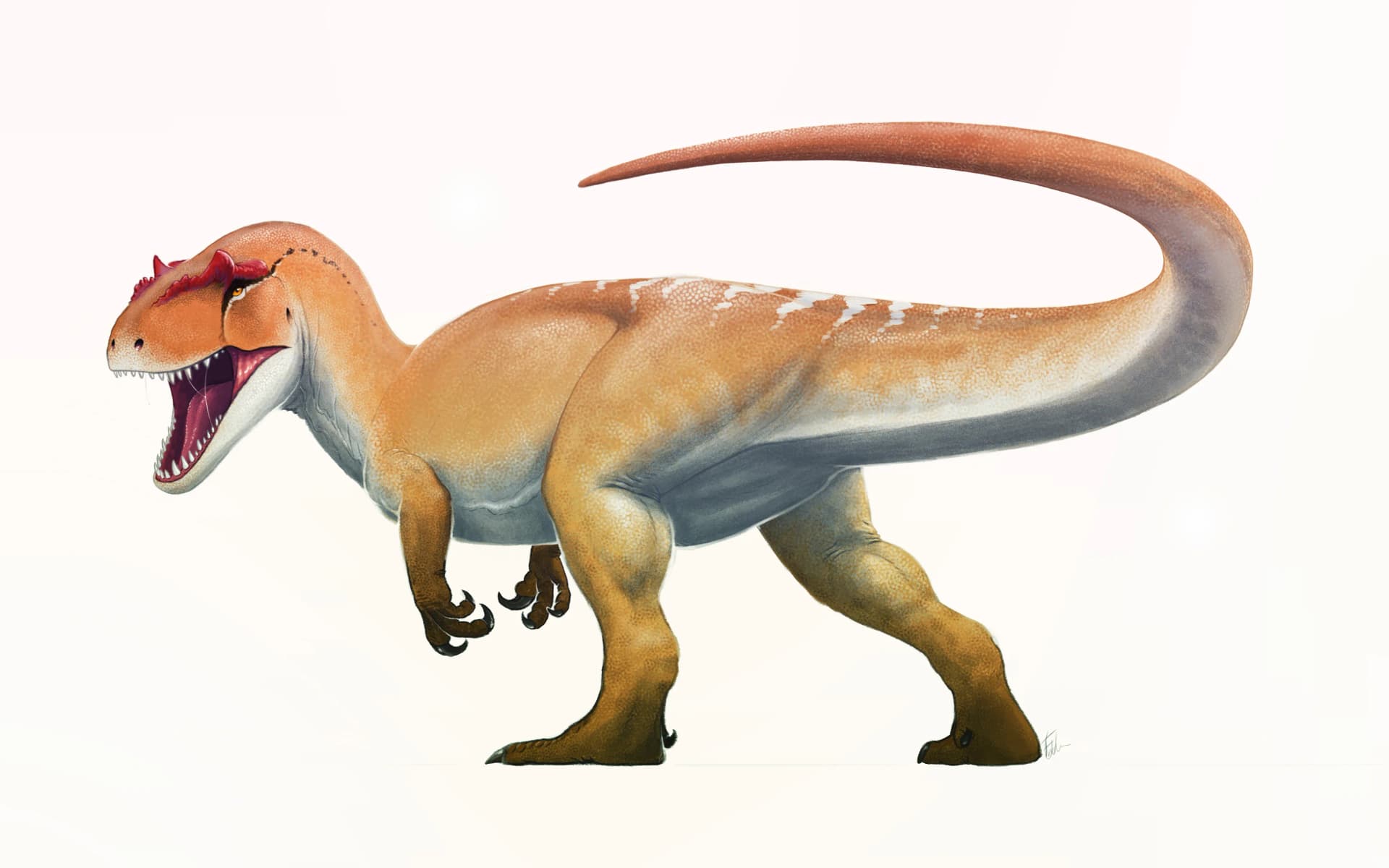
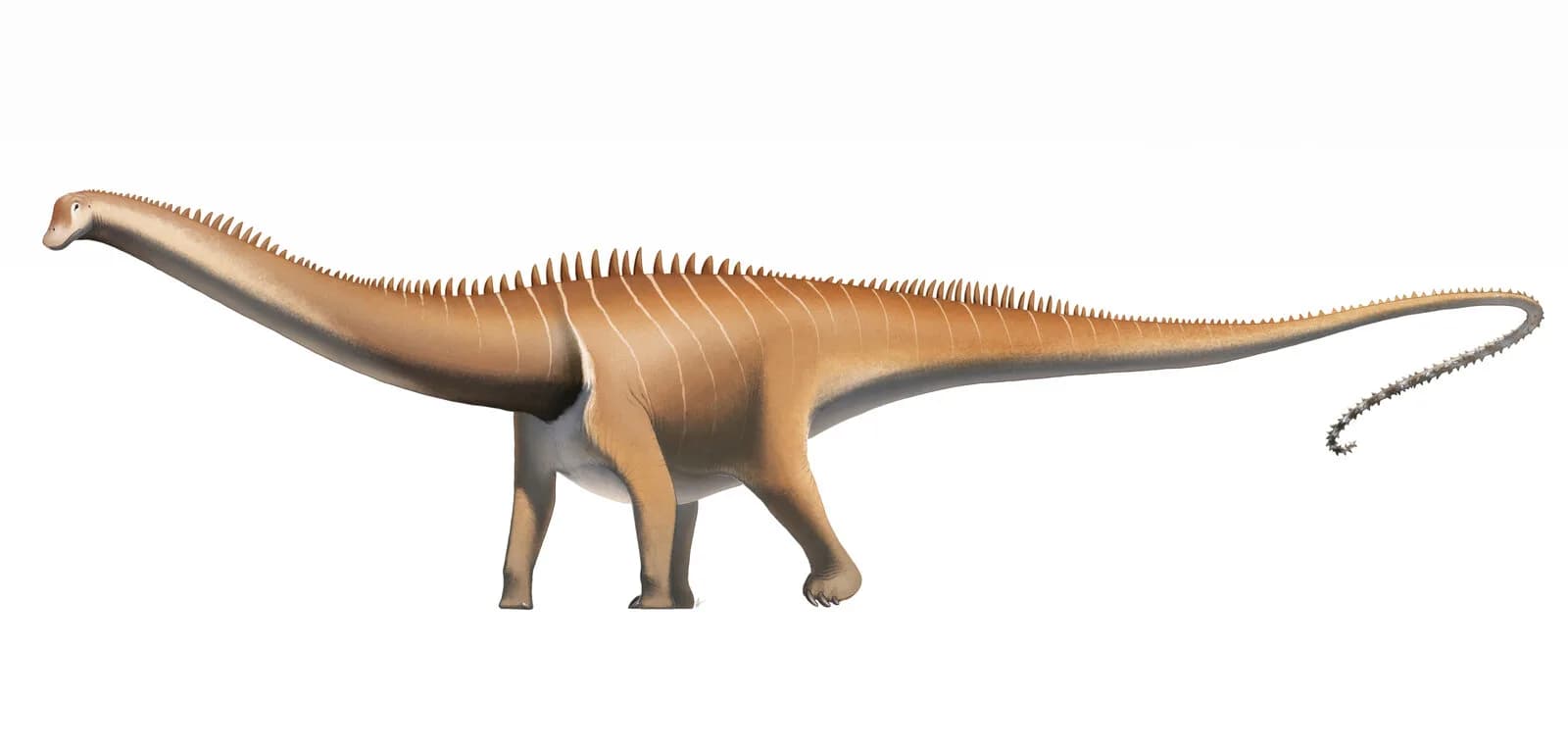
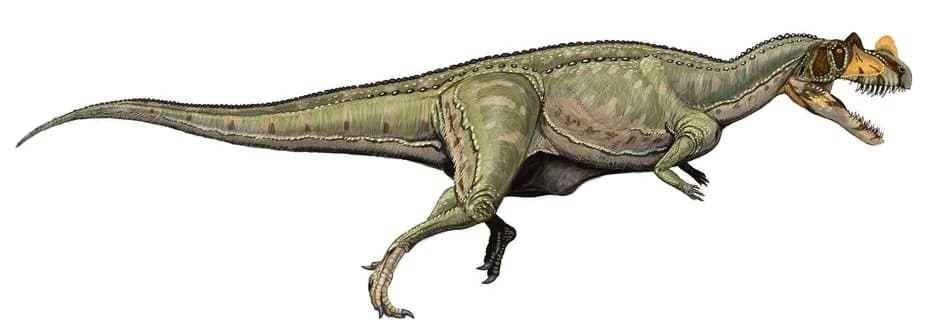
Stegosaurus lived during the Late Jurassic period, from the Kimmeridgian to the early Tithonian, approximately 155 to 145 million years ago. This period corresponds to the peak of the great giant sauropod dinosaurs. It evolved in North America (present-day Morrison Formation in Colorado, Wyoming, Utah) and Europe (Portugal, Morocco). Its environment was a vast semi-arid plain with alternating seasons, populated by conifers, ginkgos, cycads, and ferns — angiosperms (flowering plants) did not yet exist. Stegosaurus coexisted with Apatosaurus, Diplodocus, and Brachiosaurus among herbivores, and faced predators such as Allosaurus and Ceratosaurus.
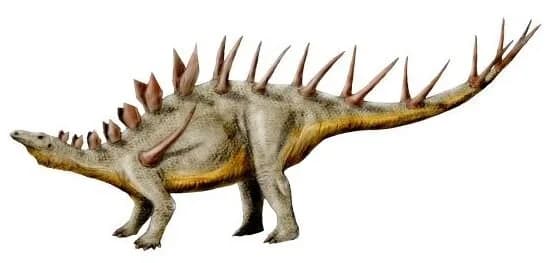
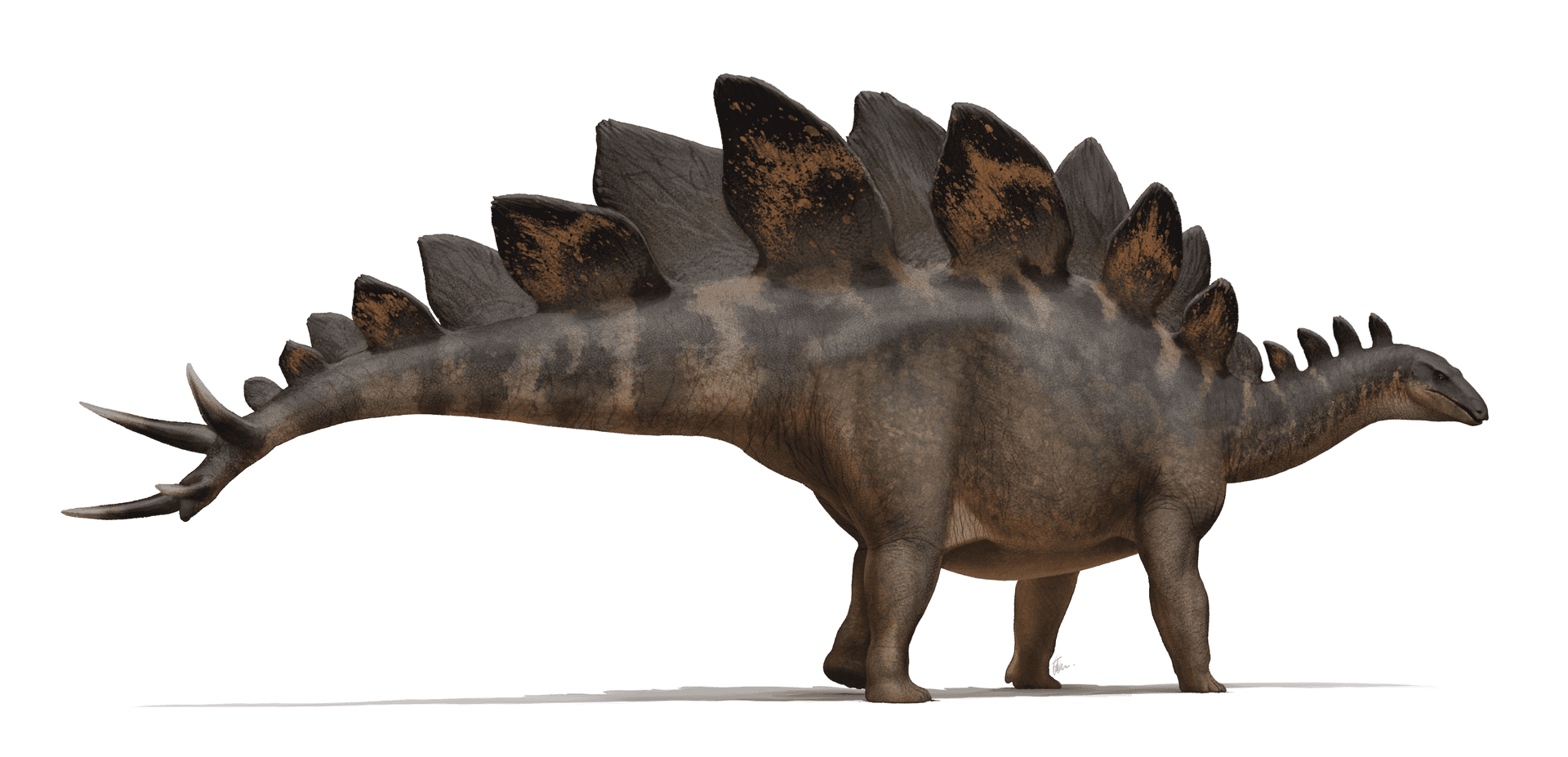
Stegosaurus could reach up to 9 meters in length, about 4 meters in height, with an estimated weight between 2.5 and 4 tons. Its hind legs (three toes) were noticeably longer than the forelimbs (five toes), giving the animal its characteristic forward-tilted posture, with the head remaining no more than two meters from the ground. The 17 alternating bony plates along the back varied in size and shape between individuals. The four defensive tail spikes — the famous 'thagomizer' — measured 60 to 90 cm. The long, narrow skull was surprisingly small: the brain weighed only about 80 grams for an animal weighing over 4 tons.
A strict herbivore, Stegosaurus grazed on low-growing vegetation: ferns, horsetails, cycads, conifers, and mosses. It possessed a horny beak for cutting plants and small, flat triangular teeth at the rear of the mouth, along with cheek pouches suggesting it stored food before chewing. Its digestive strategy differed from hadrosaurs with multiple dental batteries: it likely used gastroliths (stomach stones) to grind vegetation in its stomach, similar to modern birds and crocodiles. The low position of its head naturally predisposed it to graze at ground level.
Primarily distributed in western North America (Colorado, Wyoming, Utah — Morrison Formation), fossils have also been found in Portugal since 2006 and in the Boulahfa region of Morocco, representing the oldest known stegosaurs. These discoveries prove faunal connections across the Proto-North Atlantic during the Late Jurassic. The typical environment was a semi-arid plain with riparian vegetation concentrated along watercourses, comparable to a modern savanna but without flowering plants. Alternating dry and wet seasons fed dense vegetation zones where Stegosaurus could graze in relative safety.
The anatomy of Stegosaurus is dominated by its 17 alternating dorsal bony plates and four tail spikes. The plates, anchored in the skin (not directly attached to the skeleton), were irrigated by numerous blood vessels visible on fossils: they flushed red with blood flow, serving both as a thermal regulator and social display. Their defensive function is unlikely — they were too fragile and poorly positioned for protection. The tiny skull housed a brain of only 80 g, but the spinal cord at the iliac vertebrae showed an enlargement 20 times larger, long called the 'second brain' and now interpreted as a glycogen body serving to coordinate hind-limb movement.
Fossil trackways of young stegosaurs moving as a group suggest multi-age gregarious behavior, with adults protecting juveniles. Its low movement speed (less than 15 km/h) led it to rely on passive defenses rather than flight. The thagomizer was a formidable weapon: Stegosaurus could pivot rapidly on its hindlimbs to sweep its tail with force. Spike marks have been found on Allosaurus bones, proving the effectiveness of this defensive strategy. Its plates could also change color during courtship displays or intimidation between members of the same species.
Named by Othniel Charles Marsh in 1877 during the 'Bone Wars', Stegosaurus is one of the best-documented ornithischian dinosaurs. Several species are recognized: S. armatus (first described specimen, holotype), S. stenops (best known — complete articulated skeleton discovered in 1886 at Garden Park, Colorado, by Marshal Felch), S. ungulatus, S. sulcatus, and S. duplex. Dozens of partial skeletons and several sub-adult specimens have been unearthed. In 2006, a specimen discovered in Portugal confirmed the European distribution of the genus. The abundance of osteoderms (plates) has enabled exhaustive studies on their arrangement, refuting Marsh's early hypotheses that they were horizontal or in a single row.
| Period | Jurassique supérieur / Late Jurassic |
| Era | Mésozoïque / Mesozoic |
| Age | 155-145 Ma |
| Location | Amérique du Nord, Europe / North America, Europe |
| Length | 7-9 m |
| Height | 4 m |
| Weight | 2.5-4 tonnes |
| Diet | Herbivore |
| Discovery | 1877 |
| Type (in-game) | Herbivore |
| Tier | Apex |
The 17 plates of Stegosaurus stenops were not defensive armor — too fragile and poorly positioned for protection. Anchored in the skin and irrigated by numerous blood vessels visible on fossils, they flushed red with blood flow for thermoregulation and social or sexual signaling. They likely also functioned during courtship displays and intimidation between members of the same species.
A strict herbivore, Stegosaurus stenops grazed on low Late Jurassic vegetation: ferns, horsetails, cycads, and conifers. Its small, flat triangular teeth poorly ground tough plant matter. Like modern birds, it likely swallowed gastroliths — stomach stones — to mechanically break down vegetation in its gut. Its head maintained below 2 meters from the ground limited it to the lowest vegetation layer.
The primary weapon of Stegosaurus stenops was its thagomizer: four caudal spikes 60 to 90 cm long. Marks from these spikes have been found directly embedded in Allosaurus bones, proving the effectiveness of this strategy. The animal pivoted rapidly on its hindlimbs to sweep its tail forcefully. Its modest movement speed (under 15 km/h) made flight impractical, hence its reliance on passive defenses.
Information on this page is based on peer-reviewed scientific publications.
Stegosaurus skeletal reconstruction
Wikipedia Commons
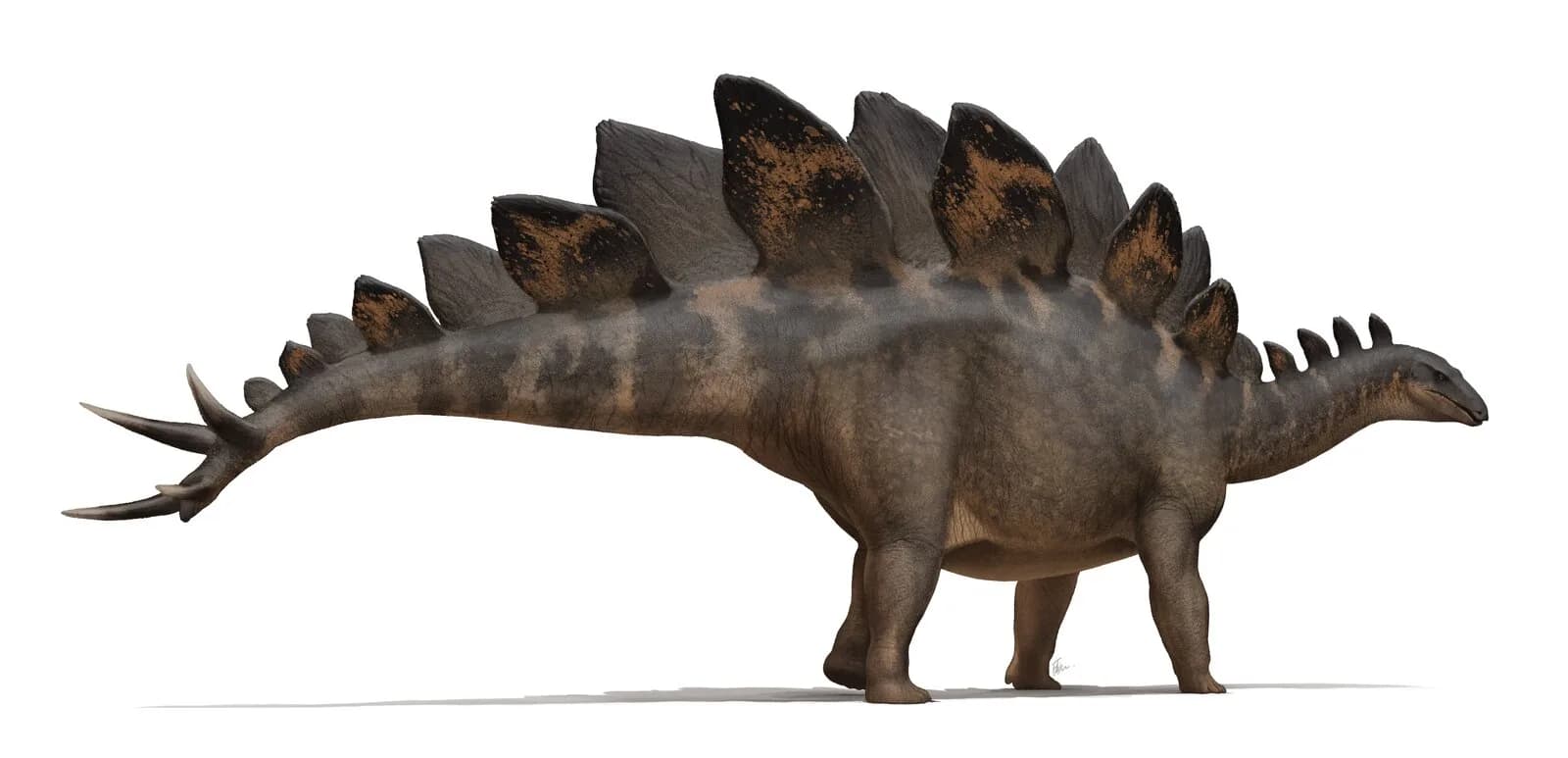
Life restoration of the 'Sophie' Stegosaurus stenops specimen
Fred Wierum, CC BY-SA 4.0