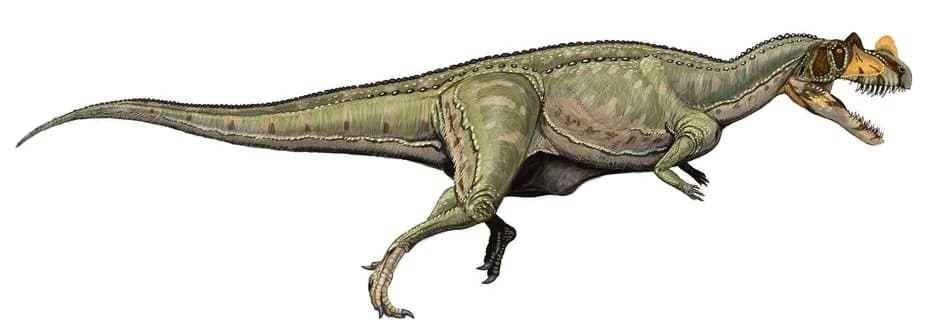
Lézard à cornes
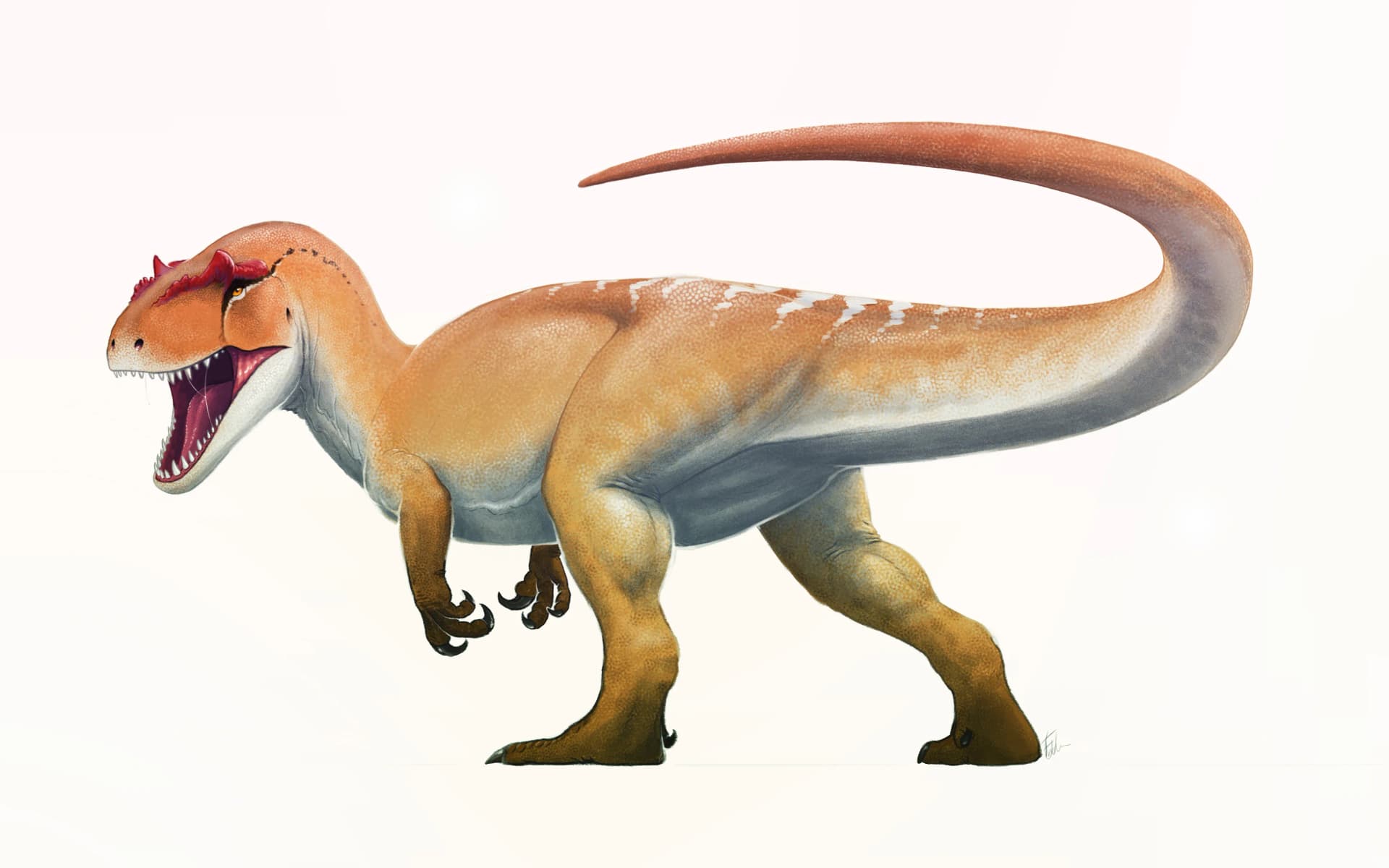
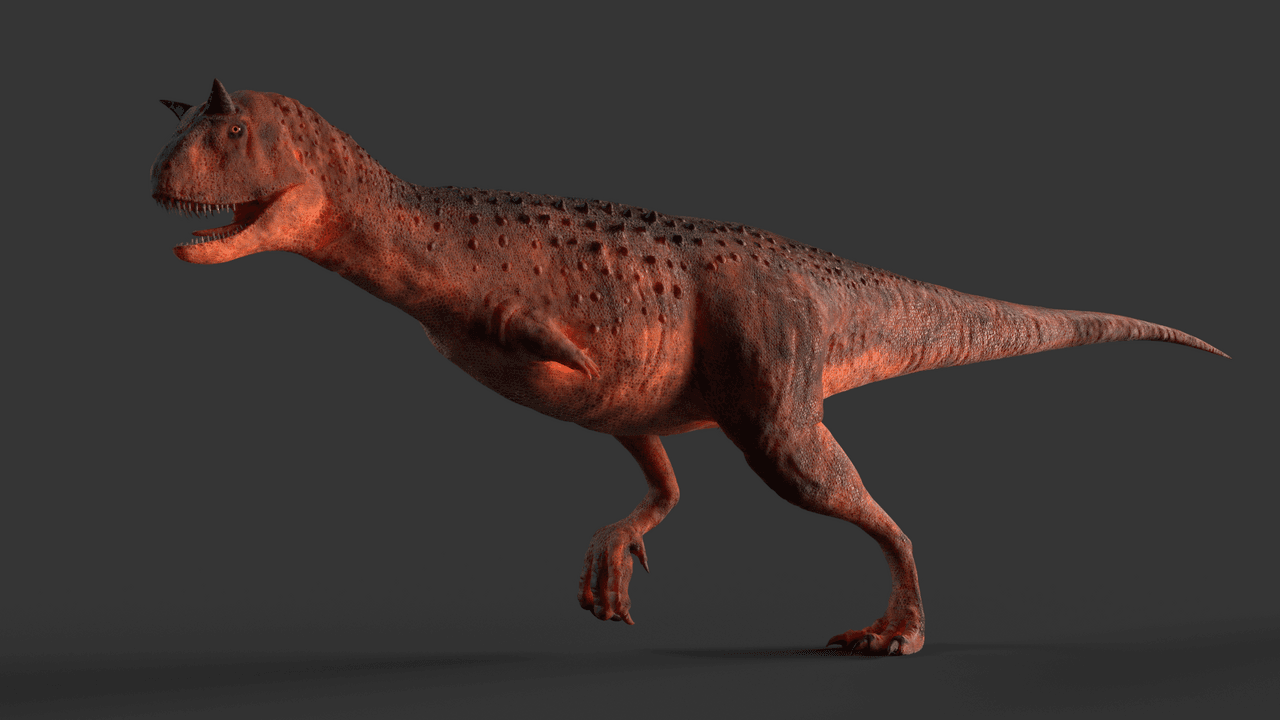
Ceratosaurus nasicornis is the only large Jurassic theropod to carry a nasal horn. At 5.3 to 7 metres and 0.5 to 1 tonne, described in 1884, it lived 153 to 148 million years ago across North America, Europe and Africa. Its back was covered in small osteoderms, a rarity among theropods. A contemporary of Allosaurus, it hunted mostly near water.
Versatile mid-tier tank. Its bacterial bite poisons and causes vomiting, and it can eat bones for a nutrient buff. Solid natural armor.
Playable in The Isle: Evrima
See Ceratosaurus nasicornis's in-game stats, tier, strengths & weaknesses on our server.
Playable in Path of Titans
See Ceratosaurus nasicornis's stats, abilities and role on our survival server.
Ceratosaurus lived during the Late Jurassic, approximately 153 to 148 million years ago, during the Kimmeridgian stage. Contemporary with Allosaurus, it inhabited the same Morrison Formation in North America, as well as similar environments in Europe and Africa. This wide distribution attests to the connectivity of continental landmasses during this period. Ceratosaurus navigated a world of vast floodplains, seasonal rivers, and conifer forests teeming with diverse herbivorous dinosaurs. The climate was warm and relatively humid, supporting lush vegetation and a rich ecosystem that included numerous species of sauropods, ornithopods, and other theropods competing for ecological niches.
Ceratosaurus nasicornis measured approximately 5.3 to 7 meters in length with an estimated weight between 500 kg and 1 ton. Its most striking feature was its bony nasal horn, unique among large theropods of its time. Two smaller horns adorned its brow ridges above the eyes, giving it a distinctly intimidating appearance. The skull was proportionally large and deep, housing powerful jaw muscles. A row of small osteoderms ran along its back, a rare feature among theropods. Despite being smaller than its contemporary Allosaurus, Ceratosaurus was a muscular and powerfully built predator well-adapted to its ecological niche in the Late Jurassic ecosystem.
An opportunistic carnivore, Ceratosaurus hunted varied prey including ornithopods, small sauropods, and potentially aquatic prey such as fish and crocodilians. Its nasal horn and blade-shaped teeth — different from those of Allosaurus — suggest a distinct hunting strategy and separate ecological niche. The teeth were exceptionally long and blade-like, well-suited for slicing through flesh. Some paleontologists believe Ceratosaurus was semi-aquatic in its hunting habits, frequently targeting prey near rivers and lakeshores. This dietary flexibility would have reduced direct competition with the larger and more numerous Allosaurus, allowing both predators to coexist within the same Morrison Formation ecosystem.
Ceratosaurus inhabited the same semi-arid Morrison Formation plains as Allosaurus, but likely exploited different microhabitats — particularly riverbanks and wetlands. This hypothetical aquatic niche would explain its coexistence with a larger dominant predator. Fossils have also been discovered in Portugal and East Africa, suggesting an extensive paleogeographic distribution. The local fauna included Stegosaurus, Brachiosaurus, and Diplodocus, alongside numerous smaller ornithopods that served as accessible prey. Competition with the more abundant and larger Allosaurus likely pushed Ceratosaurus toward wetter, riparian zones where fish and semi-aquatic prey were plentiful. The warm, seasonal climate of the Morrison basin, with its periodic flooding and drought cycles, created a mosaic of habitats that allowed multiple large predators to partition ecological resources.
Ceratosaurus anatomy presents both primitive and derived characteristics. The forelimbs had four fingers, versus three in most advanced theropods. Dorsal osteoderms (row of small plates) are a rarity among theropods and may have served a protective or thermoregulatory function. The nasal horn was likely used for display or intraspecific combat rather than predation. The skull was deep and narrow, with large fenestrae reducing weight while maintaining structural integrity. The tail was notably long and laterally compressed, making it an effective swimming organ and supporting the hypothesis that Ceratosaurus was comfortable in aquatic environments. The vertebrae show a unique pattern of pneumatization that sets this genus apart from other ceratosaurs.
Ceratosaurus was probably solitary and less gregarious than some other theropods. Competition with Allosaurus, which was larger and more common, would have led it to develop alternative hunting strategies and exploit different ecological niches to avoid direct confrontation. Its laterally compressed tail and potential swimming ability suggest it may have been more comfortable in aquatic environments than most theropods, possibly hunting near rivers and lakeshores where competition was reduced. The nasal horn likely played a role in visual communication and intraspecific displays during mating season. Its relatively rare presence in the fossil record compared to Allosaurus supports the idea of a more specialized and solitary lifestyle.
Ceratosaurus nasicornis was described by Othniel Charles Marsh in 1884 from a partial skull discovered at Garden Park, Colorado. A more complete specimen (USNM 4735) was later found at the same site. Additional species C. dentisulcatus and C. magnicornis, described in 2000 from the Cleveland-Lloyd Quarry, have since been debated by specialists regarding their validity as separate species. Remains attributed to Ceratosaurus have also been found in Tanzania and Portugal, suggesting a broad geographic distribution across Pangaea. The relatively few specimens compared to Allosaurus indicate either genuine rarity in its ecosystem or a preference for environments less conducive to fossil preservation.
| Period | Jurassique supérieur / Late Jurassic |
| Era | Mésozoïque / Mesozoic |
| Age | 153-148 Ma |
| Location | Amérique du Nord, Europe, Afrique / North America, Europe, Africa |
| Length | 5.3-7 m |
| Height | 2.5 m |
| Weight | 0.5-1 tonne |
| Diet | Piscivore |
| Discovery | 1884 |
| Type (in-game) | Carnivore |
| Tier | Tier 4 |
Ceratosaurus nasicornis measured 5.3 to 7 meters for a weight of 500 kg to 1 tonne. Unlike Allosaurus (the dominant predator of the Morrison Formation), Ceratosaurus bore a bony nasal horn unique among large theropods, had four fingers per hand (versus three in allosaurids), and dorsal osteoderms, all features of an anatomically distinct group: the ceratosaurs.
Ceratosaurus was an opportunistic carnivore hunting ornithopods, small sauropods, and potentially fish and crocodilians. Its coexistence with the dominant Allosaurus suggests a semi-aquatic niche: recent studies propose specialization in riverbank and wetland prey, reducing direct competition. Its laterally compressed tail supports the hypothesis of aquatic comfort.
Othniel Charles Marsh described Ceratosaurus nasicornis in 1884 from a partial skull from Garden Park, Colorado. The more complete specimen USNM 4735 comes from the same site. Fossils have also been found in Portugal (Lourinhã Formation) and Tanzania (Tendaguru Formation), attesting to a remarkably broad paleogeographic distribution in the Late Jurassic, 153 to 148 million years ago.
Information on this page is based on peer-reviewed scientific publications.
Ceratosaurus mount at Utah museum
Wikipedia Commons
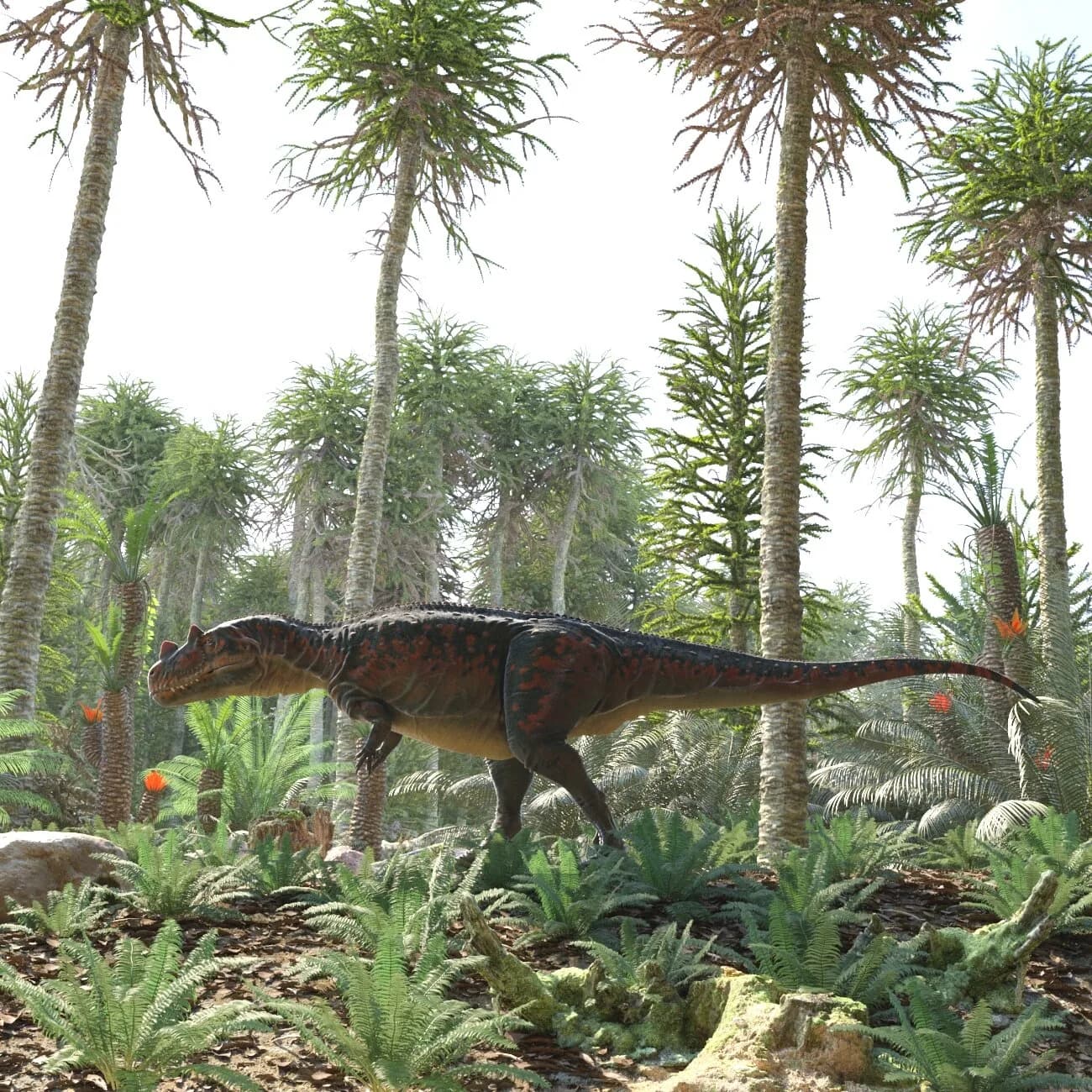
3D reconstruction of Ceratosaurus nasicornis in the Morrison Formation
Oleg Kuznetsov / 3depix, CC BY-SA 4.0