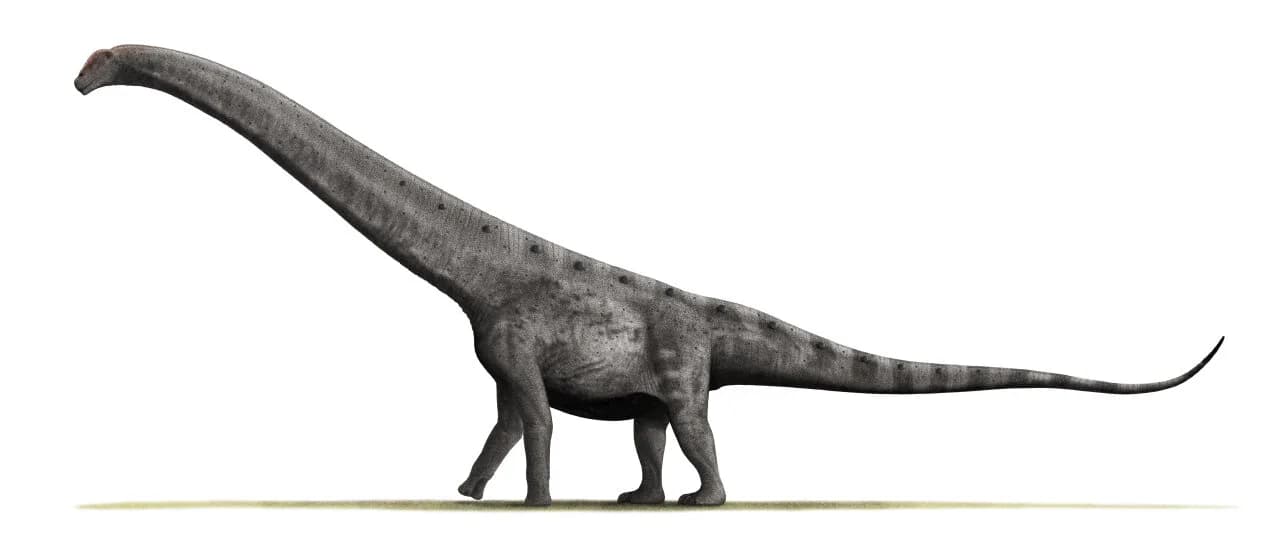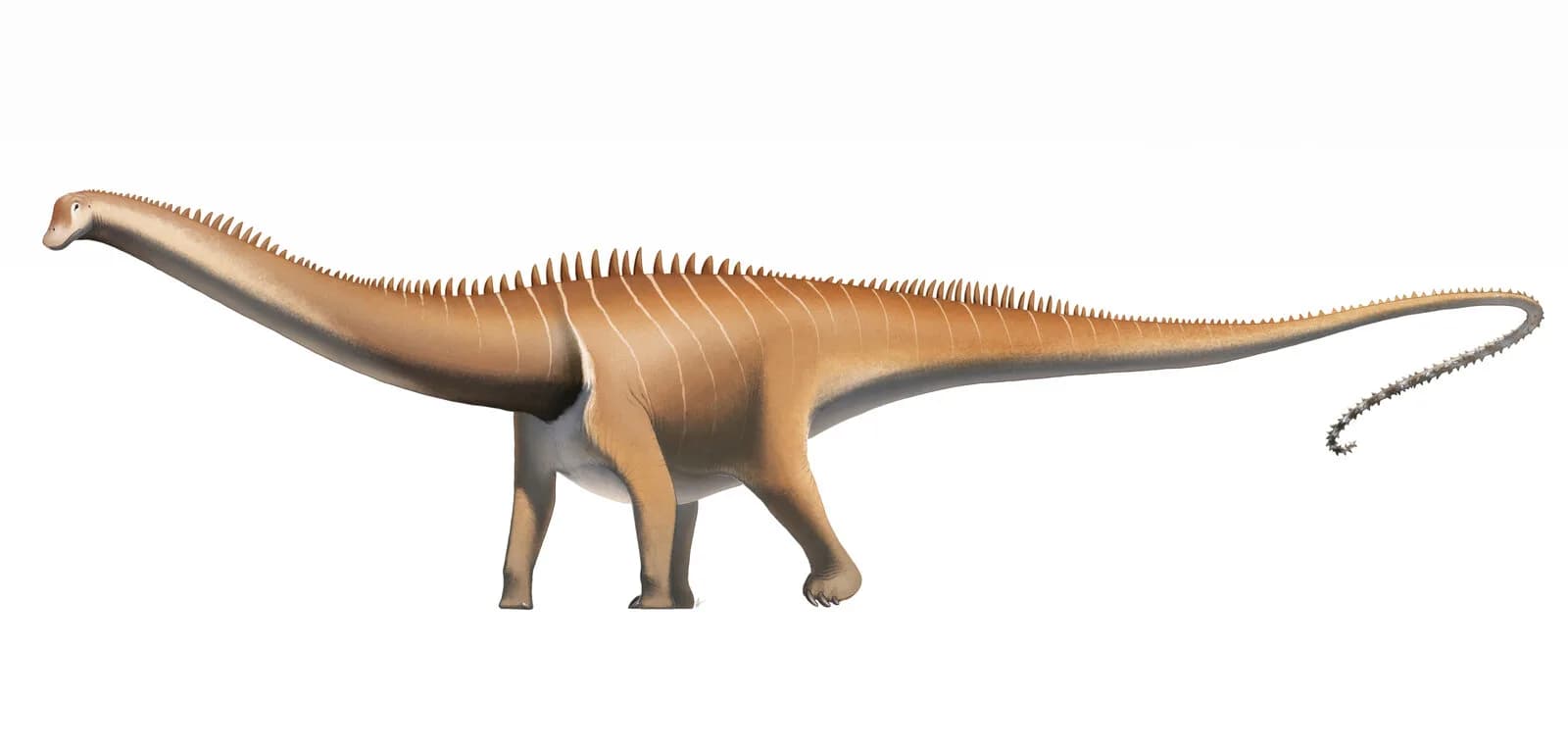
Diplodocus
Diplodocus carnegii was a herbivorous sauropod of the Late Jurassic in North America, described in 1877. It measured 24 to 27 metres long and weighed 10 to 16 tonnes, stripping foliage with pencil-shaped teeth suited only to raking leaves off branches. Andrew Carnegie funded ten full-size casts of the specimen nicknamed Dippy, shipped to museums around the world.
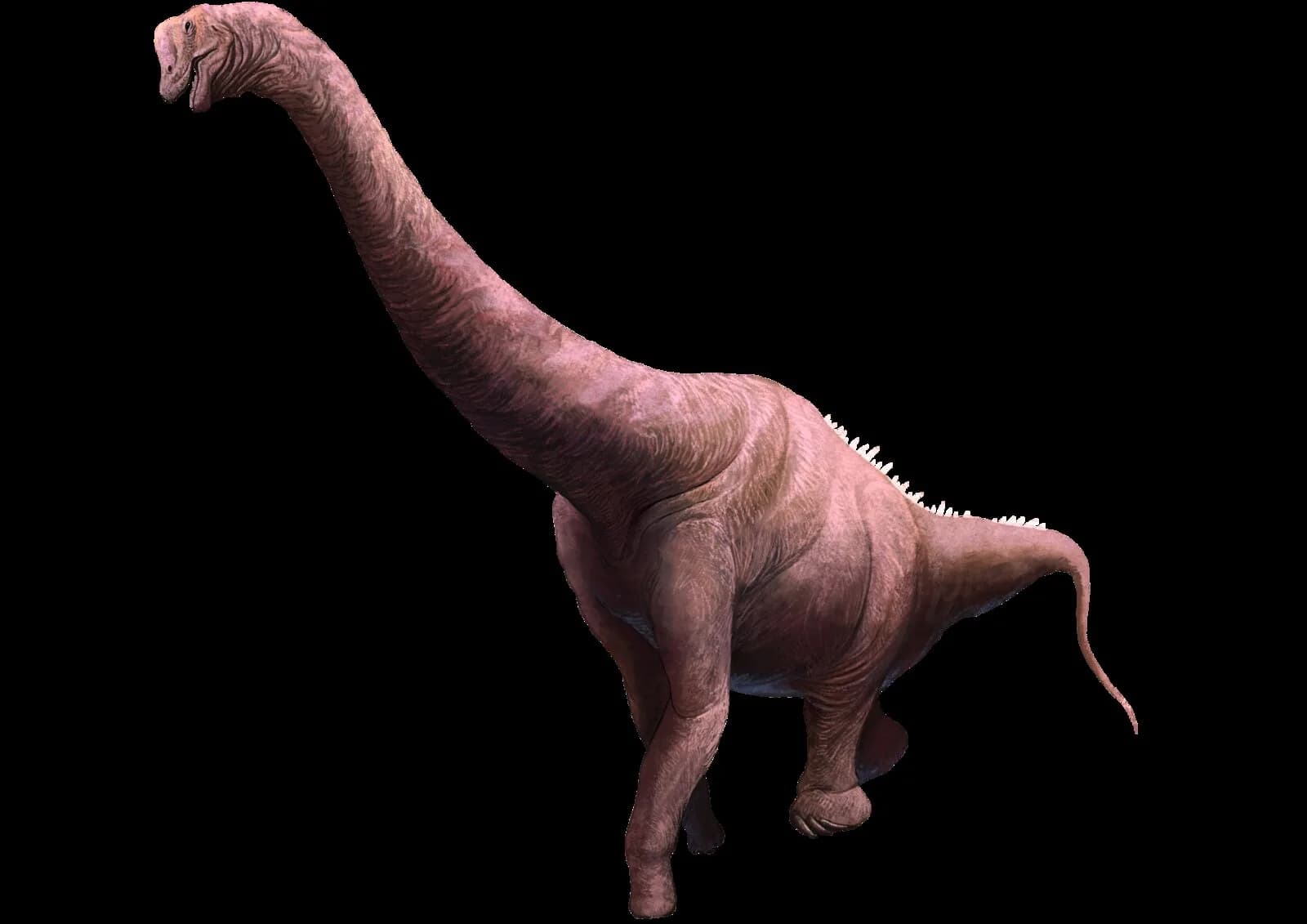
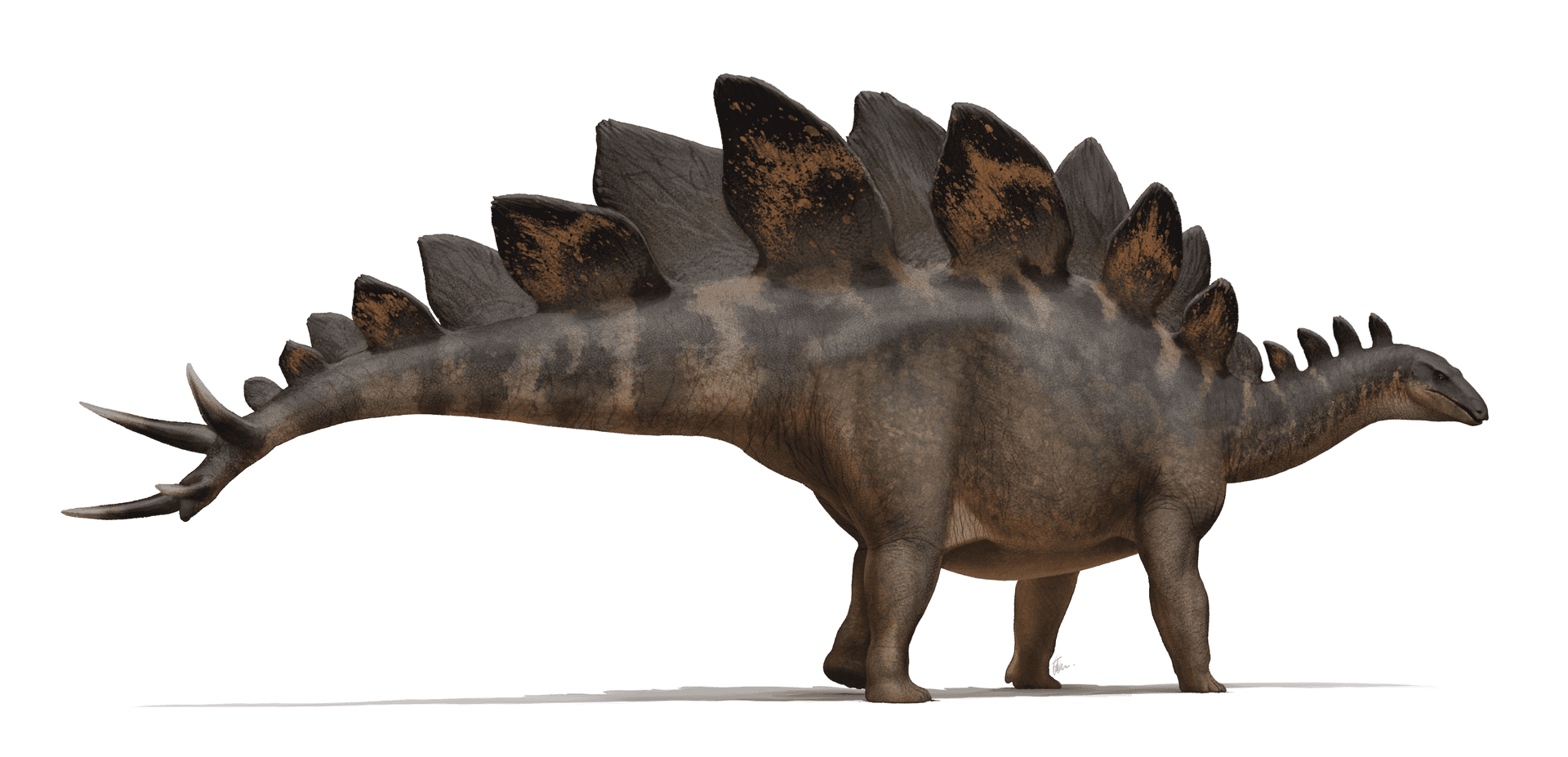
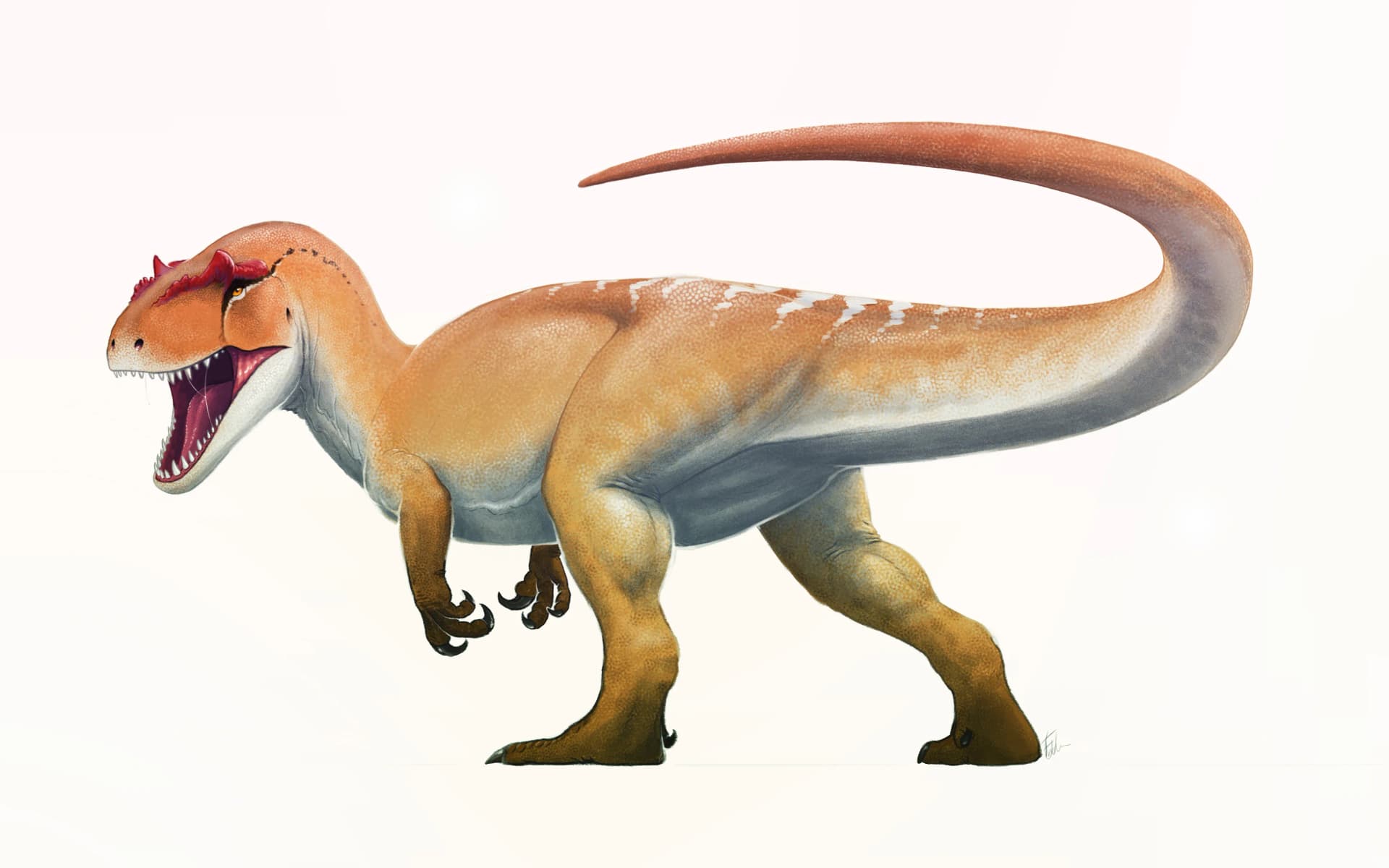
Diplodocus lived in the Late Jurassic, approximately 154 to 152 million years ago, during the Kimmeridgian and Tithonian stages. It shared its environment with Brachiosaurus, Allosaurus, and Stegosaurus in the rich fauna of the Morrison Formation. This period represents the peak of sauropod diversity in North America, with no fewer than ten species of herbivorous giants coexisting in the same ecosystem. The Morrison Formation extended across a vast area from Montana to New Mexico, traversed by complex river systems. The climate was subtropical with marked seasons, alternating wet and dry periods.
One of the longest animals in history: 24 to 27 meters long, half of which consisted of its whip-like tail. Despite this impressive length, it was relatively lightweight for a sauropod — about 10 to 16 tonnes — thanks to its hollow vertebrae and pneumatized bones. Its neck, composed of 15 elongated cervical vertebrae, measured about 6 meters but was held at medium or low height, contrary to popular depictions showing it raised vertically. Its tail had about 80 vertebrae and ended in a thin whip capable of cracking at supersonic speeds. The combination of great length and moderate weight made Diplodocus a remarkably energy-efficient sauropod.
A strict herbivore, Diplodocus used its long pencil-shaped teeth to comb and strip leaves from low branches. Unlike Brachiosaurus which fed at height, Diplodocus exploited low and medium vegetation — ferns, horsetails, and young conifer shoots. Its head was naturally held at about 4 meters high, allowing it to sweep large areas of vegetation laterally without moving its massive body. Micro-wear on its teeth confirms a diet of soft vegetation rather than tough branches. It is estimated that it had to spend most of its waking hours eating to satisfy its energy needs, much like modern elephants.
Diplodocus inhabited the alluvial plains and riparian forests of Jurassic North America, in the Morrison Formation. This habitat was a mix of semi-arid open areas and forested corridors along rivers, with vegetation dominated by tree ferns, giant horsetails, and conifers. Seasonal rivers created temporary wetlands rich in vegetation, attracting large herbivore herds. The Morrison Formation ecosystem was one of the most diverse of the Jurassic, harboring dozens of herbivorous and carnivorous dinosaur species. The coexistence of so many large herbivores was made possible by niche partitioning — each species exploiting a different height or type of vegetation.
Diplodocus anatomy is a masterpiece of natural engineering optimized for lightness and efficiency. Its extremely long tail could be cracked like a whip at supersonic speeds, producing a defensive sonic boom audible for kilometers — a means of deterring predators without physical contact. Its cervical vertebrae (15) allowed wide horizontal movements but relatively little vertical elevation, explaining its lateral sweeping feeding strategy. Its bones were remarkably pneumatized — permeated with air pockets connected to the respiratory system — reducing its skeletal weight by 10 to 15%. Its tiny skull (about 60 cm) compared to its 25-meter body contained a brain the size of a human fist. The structure of its feet, with a single large claw on the forefoot, suggests locomotion adapted to soft terrain.
Probably gregarious, Diplodocus lived in herds for protection from predators like Allosaurus and Ceratosaurus. Juveniles hatched from relatively small eggs (compared to adult size) and had to grow quickly to escape predation. Bone histological analyses indicate a high growth rate, reaching adult size in about 10 to 15 years. Its whip tail probably served both for defense against predators and intraspecific communication — the sonic crack potentially serving to mark territory or attract mates. Fossilized trackways suggest sauropods walked in organized groups, with adults flanking juveniles. The wear on its teeth, which were replaced approximately every 35 days, testifies to intensive and continuous feeding.
Described in 1878 by Othniel Charles Marsh during the 'Bone Wars,' the fierce rivalry with Edward Drinker Cope that characterized the golden age of American paleontology. Andrew Carnegie funded an expedition that discovered a remarkable specimen in 1899 in Wyoming. Casts of this skeleton (nicknamed 'Dippy') were gifted to many museums worldwide — London, Paris, Berlin, Vienna, Buenos Aires — making Diplodocus one of the most recognizable dinosaurs on the planet. The original specimen is displayed at the Carnegie Museum of Natural History in Pittsburgh. Several species have been described: D. longus (the holotype), D. carnegii (the most complete), and D. hallorum (formerly Seismosaurus, possibly the longest at 33 meters). The Morrison Formation continues to yield Diplodocus fossils, some with preserved skin impressions.
| Period | Jurassique supérieur / Late Jurassic |
| Era | Mésozoïque / Mesozoic |
| Age | 154–152 Ma |
| Location | Amérique du Nord / North America (Wyoming, Colorado, Utah) |
| Length | 24–27 m |
| Height | ~4–5 m (épaules) |
| Weight | 10 000–16 000 kg |
| Diet | Herbivore |
| Discovery | 1877 |
The tail of Diplodocus carnegii had about 80 vertebrae and tapered into a very thin whip. When cracked, speed increased along the tapering filament and exceeded the sound barrier, producing a sonic boom audible for kilometers. This theory, supported by biomechanical modeling, suggests it was a deterrent defensive strategy — a sonic crack to frighten predators without physical contact.
In 1899, an expedition funded by Andrew Carnegie discovered a remarkable Diplodocus carnegii specimen in Wyoming. Impressed by its size — up to 27 meters long — Carnegie had life-size casts made and gifted them to ten museums in world capitals: London, Paris, Berlin, Vienna, Buenos Aires, and others. The specimen nicknamed 'Dippy' became one of the most recognizable dinosaurs, with copies on display in institutions visited by millions annually.
Diplodocus carnegii held its neck naturally at about 4 meters high — not raised vertically as old depictions show, but angled forward to sweep large areas of vegetation laterally without moving its massive body. Its pencil-shaped teeth only stripped leaves; it swallowed without chewing, relying on its massive digestive system for fermentation. Its teeth, replaced approximately every 35 days, show intensive and continuous feeding.
Information on this page is based on peer-reviewed scientific publications.
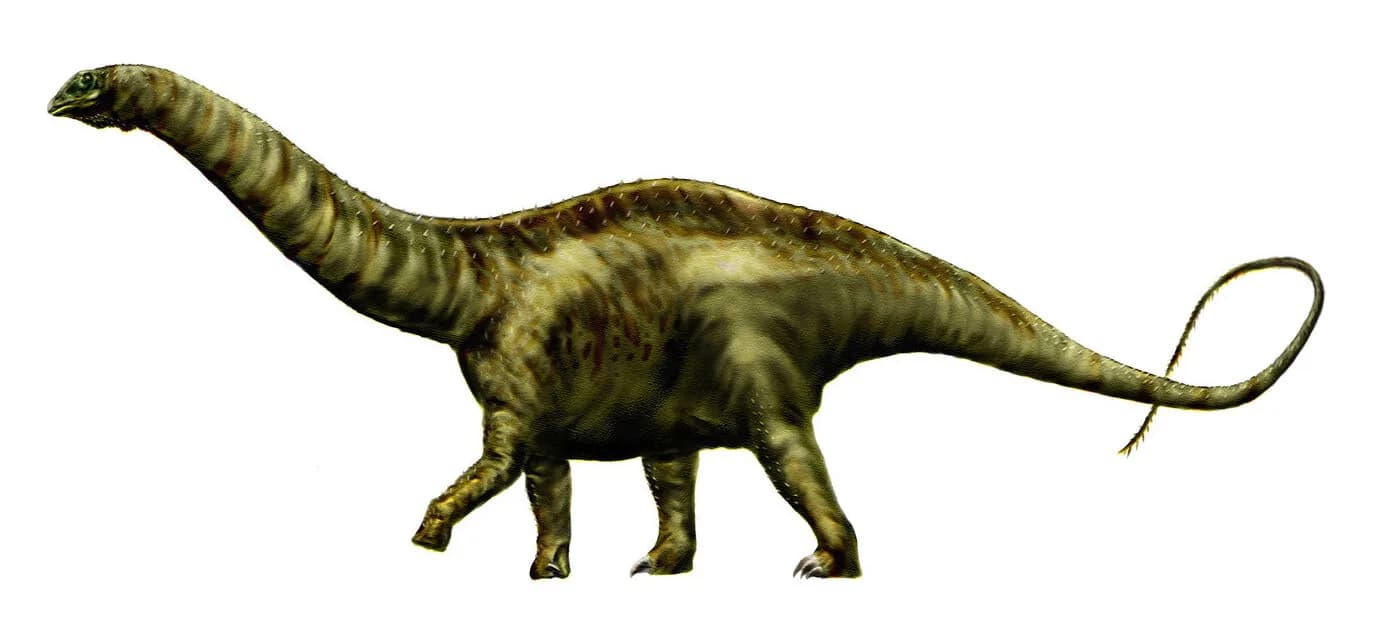
Life reconstruction of Diplodocus carnegii
Fred Wierum, CC BY-SA 4.0, via Wikimedia Commons
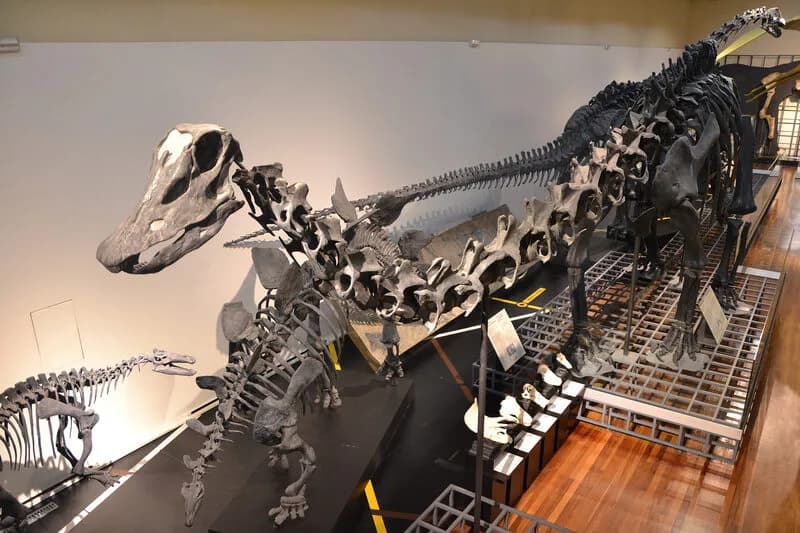
Diplodocus carnegii skeleton replica, MNCN
ProyectowikiMNCN, CC BY-SA 4.0