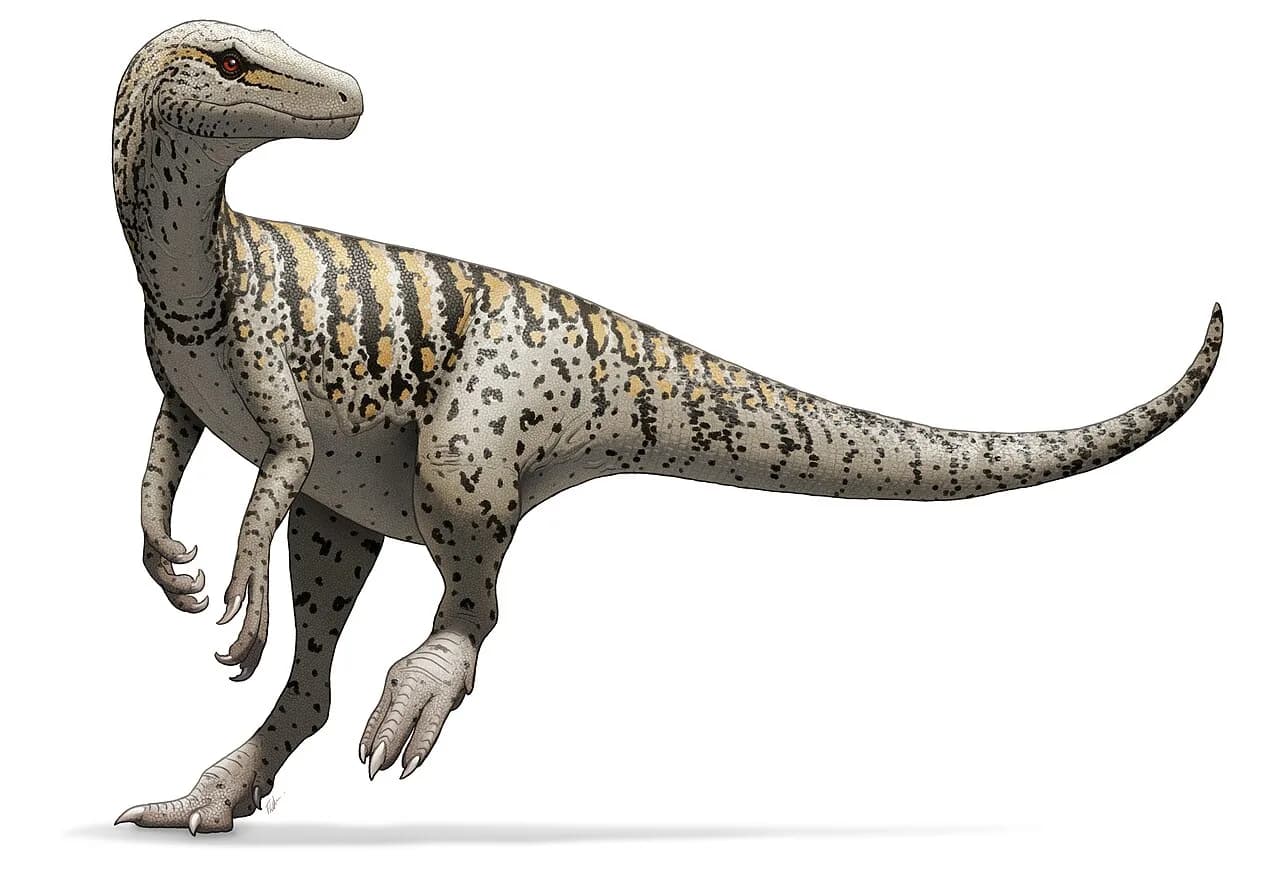
Lézard de Herrera
Herrerasaurus ischigualastensis ranks among the oldest known dinosaurs: 4 to 6 metres and 200 to 350 kilograms, dated to around 228 million years ago. It carries the name of Victorino Herrera, an Argentine goat farmer who spotted the first fossil in 1958. It shared the Ischigualasto Formation with Eoraptor, in an ecosystem where dinosaurs were still a minority.
The only tree climber in the game. Its Drop Attack from the heights is a devastating vertical ambush. Fast and enduring, but very light on the ground.
Playable in The Isle: Evrima
See Herrerasaurus ischigualastensis's in-game stats, tier, strengths & weaknesses on our server.
Herrerasaurus lived during the Late Triassic, approximately 231 to 229 million years ago, during the Carnian stage. It is one of the oldest known dinosaurs, appearing at a time when dinosaurs were still a minor component of terrestrial ecosystems dominated by other archosaurs, synapsids, and rhynchosaurs. This crucial period in Earth's history saw the initial diversification of dinosaurs, which would eventually come to dominate terrestrial ecosystems for over 160 million years. The Carnian stage was marked by significant climatic changes, including the Carnian Pluvial Episode, a period of increased rainfall that may have facilitated the rise of dinosaurs by altering existing ecosystems.
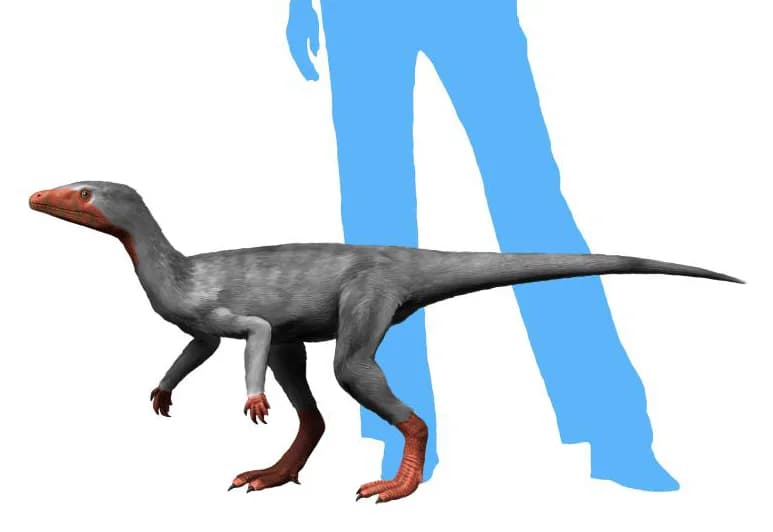
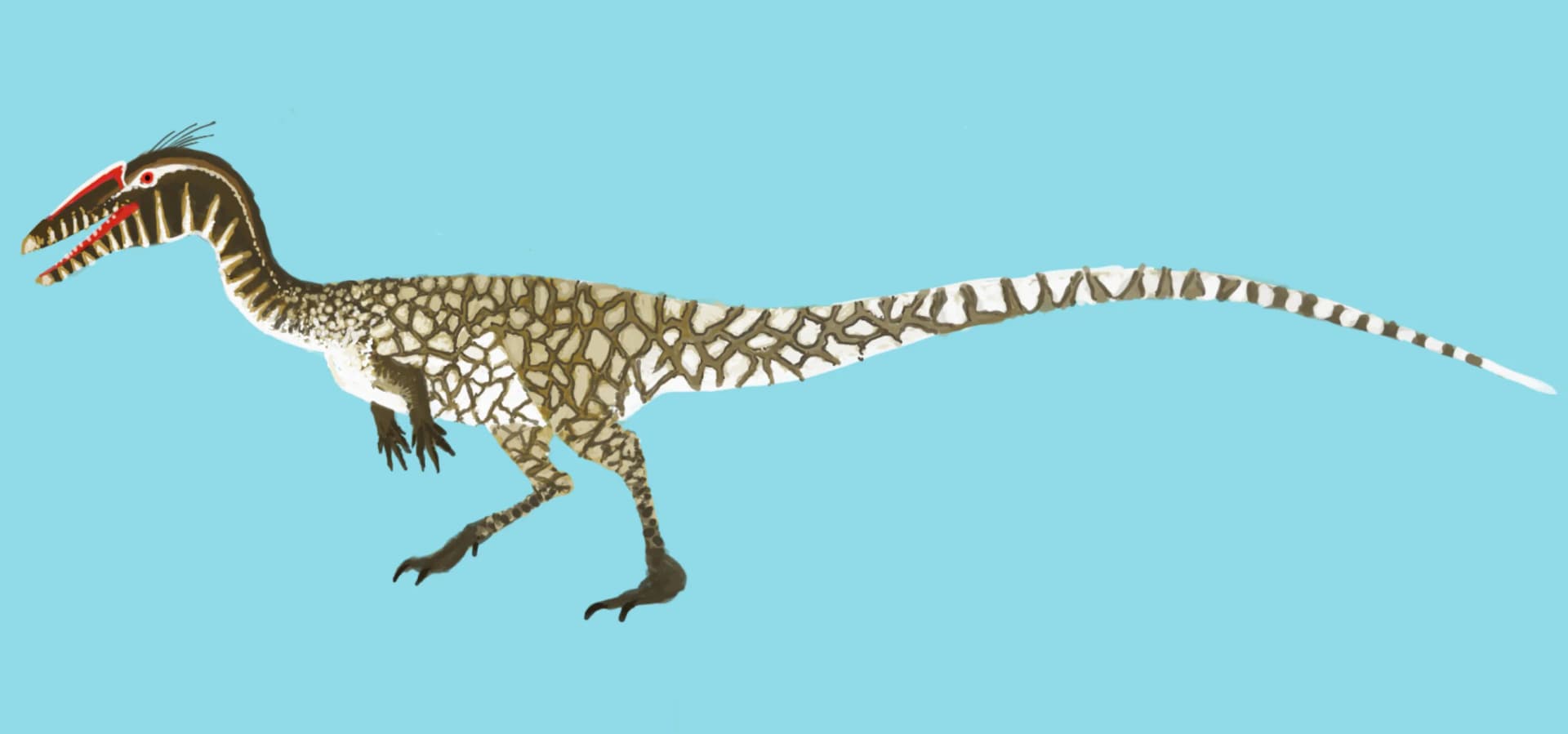
Herrerasaurus measured approximately 3 to 6 meters in length and weighed between 210 and 350 kilograms, making it a medium-sized predator for its time. Its skull was long and narrow, equipped with serrated teeth well-adapted for a carnivorous diet. The body was lightly built and clearly adapted for bipedal locomotion with strong hind limbs. The forelimbs were relatively short but bore powerful grasping hands with three main functional fingers and two reduced outer digits. The tail was long and stiffened by overlapping vertebral processes, providing balance during rapid movements. Despite its relatively modest size, Herrerasaurus was among the largest predators in its Late Triassic ecosystem.
Herrerasaurus was one of the first carnivorous dinosaurs, hunting the smaller herbivores and omnivores of the Late Triassic ecosystem. Its serrated, recurved teeth and flexible jaw joint, which allowed a sliding bite, indicate an efficient predatory adaptation for gripping and processing struggling prey. Likely targets included small to medium-sized rhynchosaurs, cynodonts, and other early archosaurs that were abundant in its environment. The jaw structure featured a unique intramandibular joint that allowed the lower jaw to flex during biting, a primitive feature not seen in later theropods. This dietary specialization placed Herrerasaurus among the first dinosaurs to occupy a carnivorous niche in terrestrial ecosystems.
Herrerasaurus inhabited what is now the Ischigualasto Formation in northwestern Argentina, a region that during the Late Triassic was a volcanically active river valley with a warm, seasonal climate. The landscape featured dense conifer forests, fern meadows, and winding river systems that supported a diverse fauna of early dinosaurs, rhynchosaurs, and therapsids. This formation is one of the most important paleontological sites in the world for understanding early dinosaur evolution, preserving a snapshot of an ecosystem in transition. Seasonal flooding created fertile floodplains that attracted herbivores, which in turn drew predators like Herrerasaurus to these productive areas.
Herrerasaurus anatomy reflects its position as one of the most basal dinosaurs known. It possesses a mix of primitive archosaurian features and derived dinosaurian traits that make its classification challenging. The hand structure is particularly notable, with three elongated inner fingers bearing curved claws for grasping prey and two vestigial outer digits. The pelvis shows a partially open acetabulum, an intermediate condition between non-dinosaurian archosaurs and true dinosaurs. The hindlimbs were well-adapted for bipedal locomotion, with elongated metatarsals suggesting considerable running speed. The vertebral column lacked the extensive pneumatization seen in later theropods, reflecting its primitive position in dinosaur evolution.
Herrerasaurus was likely a swift and agile predator that relied on speed and ambush tactics to catch its prey in the dense Triassic vegetation. Its binocular vision, indicated by forward-facing eyes, would have provided good depth perception for judging distances during attacks. As one of the earliest dinosaurs, it competed with other predatory archosaurs like rauisuchians, which were often larger and potentially more dangerous. Herrerasaurus may have been an opportunistic hunter, taking whatever prey was available including insects, small vertebrates, and juvenile archosaurs. The relatively large brain-to-body ratio compared to contemporary archosaurs suggests enhanced sensory processing and coordination for active predation.
Herrerasaurus ischigualastensis was described by Osvaldo Reig in 1963 from remains found in the Ischigualasto Formation, San Juan Province, Argentina. Initial specimens were fragmentary, leaving its classification uncertain for decades. A nearly complete skeleton with skull, discovered by Paul Sereno in 1988, finally clarified its anatomy and confirmed its dinosaurian identity. The Ischigualasto Formation, also known as the Valley of the Moon, has produced numerous important early dinosaur specimens. Additional Herrerasaurus material has helped paleontologists understand the earliest stages of dinosaur evolution and the ecological conditions under which these remarkable animals first diversified during the Late Triassic period.
| Period | Trias supérieur / Late Triassic |
| Era | Mésozoïque / Mesozoic |
| Age | ~228 Ma |
| Location | Amérique du Sud (Argentine) / South America (Argentina) |
| Length | 4-6 m |
| Height | 1.5 m |
| Weight | 200-350 kg |
| Diet | Carnivore |
| Discovery | 1963 |
| Type (in-game) | Carnivore |
| Tier | Tier 3 |
Herrerasaurus ischigualastensis is one of the oldest known dinosaurs, having lived approximately 228 million years ago (Carnian, Late Triassic) in present-day San Juan Province, Argentina. It coexisted with Eoraptor in the Ischigualasto Formation, at a time when dinosaurs were still rare in ecosystems dominated by non-dinosaurian archosaurs. Described in 1963 by Osvaldo Reig.
Herrerasaurus ischigualastensis measured 4 to 6 meters long, weighing an estimated 200 to 350 kilograms. Its jaw had a unique intramandibular joint allowing wider opening and better prey retention during capture. Its backward-curved teeth prevented prey escape. A nearly complete skeleton discovered in 1988 by Paul Sereno significantly refined knowledge of this species.
Herrerasaurus ischigualastensis inhabited the seasonal fluvial plains and forests of the Ischigualasto Formation in San Juan Province, Argentina, now a UNESCO World Heritage Site. The environment was warm and semi-arid, with ephemeral rivers. Local fauna included rhynchosaurs, cynodonts, and other archosaurs. Herrerasaurus was one of the largest carnivores of this ecosystem despite the persistence of rauisuchians.
Herrerasaurus skeleton
Wikipedia Commons
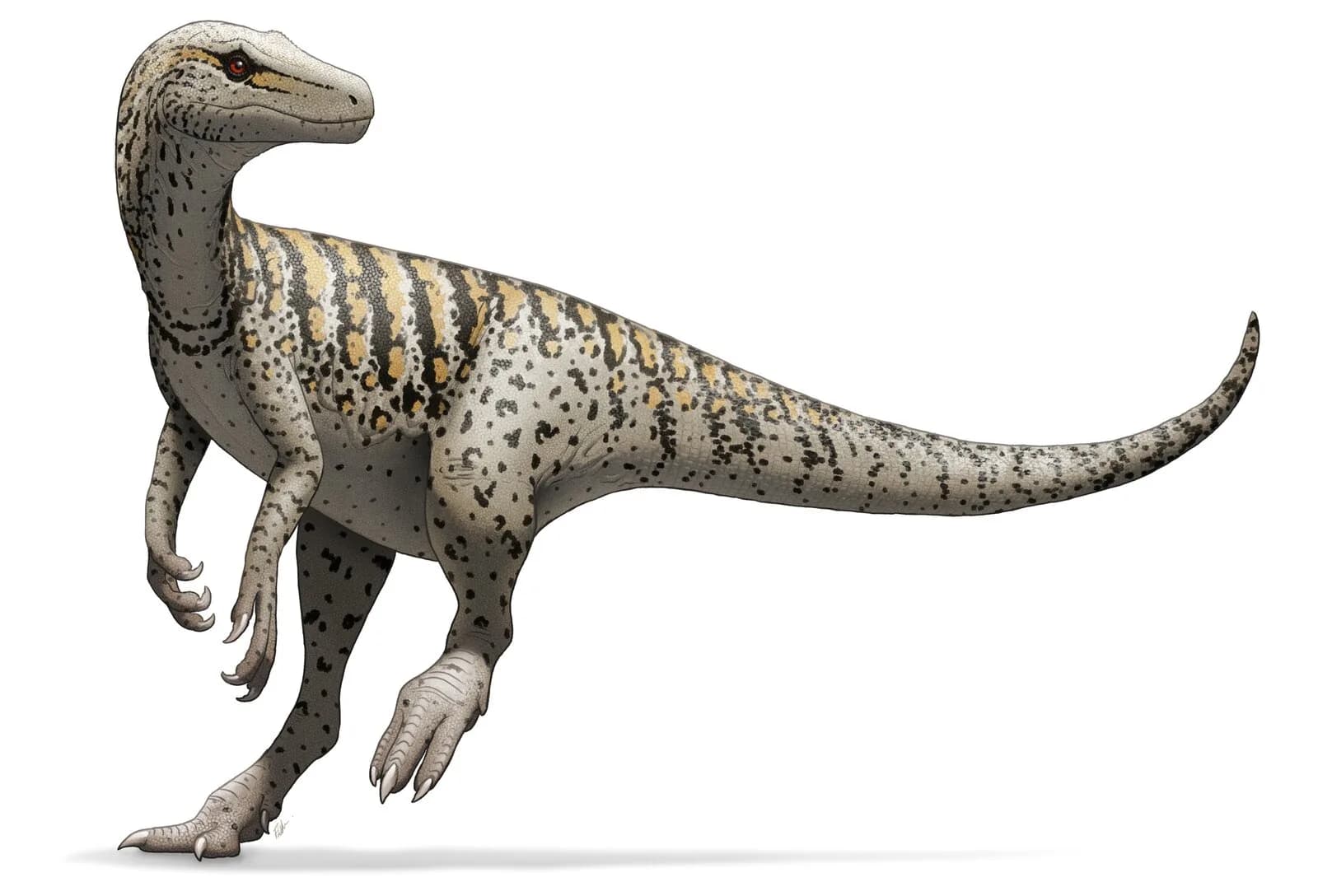
Scientific reconstruction of Herrerasaurus ischigualastensis
Fred Wierum, CC BY-SA 4.0