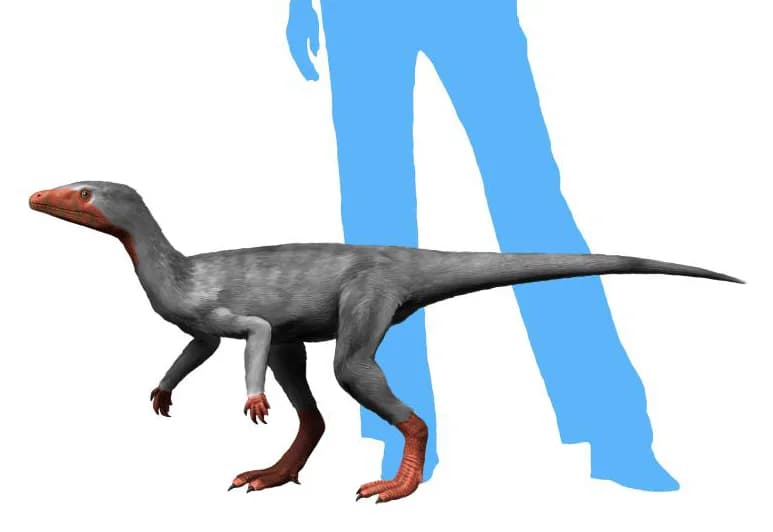
Éorapteur
Eoraptor lunensis ranks among the oldest known dinosaurs: around 231 million years old, described in 1991 in Argentina. It measured barely a metre and some ten kilograms, the size of a fox, a useful reminder that the first dinosaurs were tiny. Its jaw carries two distinct tooth types, a sign of an omnivorous diet rare among dinosaurs.
Eoraptor lived in the Late Triassic, approximately 231 to 228 million years ago, during the Carnian stage. It is one of the oldest known dinosaurs, dating from a time when dinosaurs were just beginning to diversify. It coexisted with non-dinosaurian archosaurs like Saurosuchus, a dominant 7-meter terrestrial predator. The Ischigualasto fauna also included other primitive dinosaurs such as Herrerasaurus, offering a unique glimpse into the dawn of dinosaurs. The Carnian is considered the period when dinosaurs began their rise to global ecological dominance.
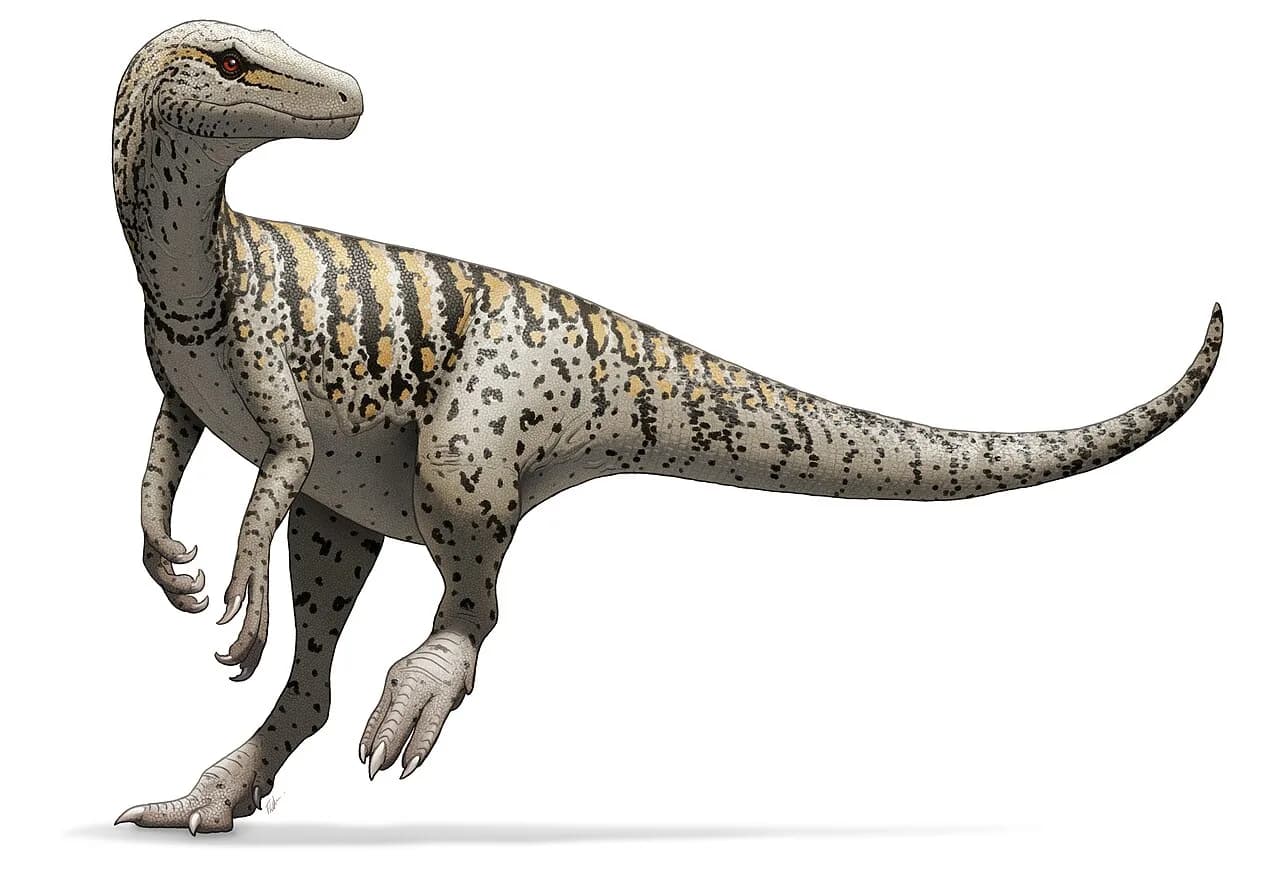
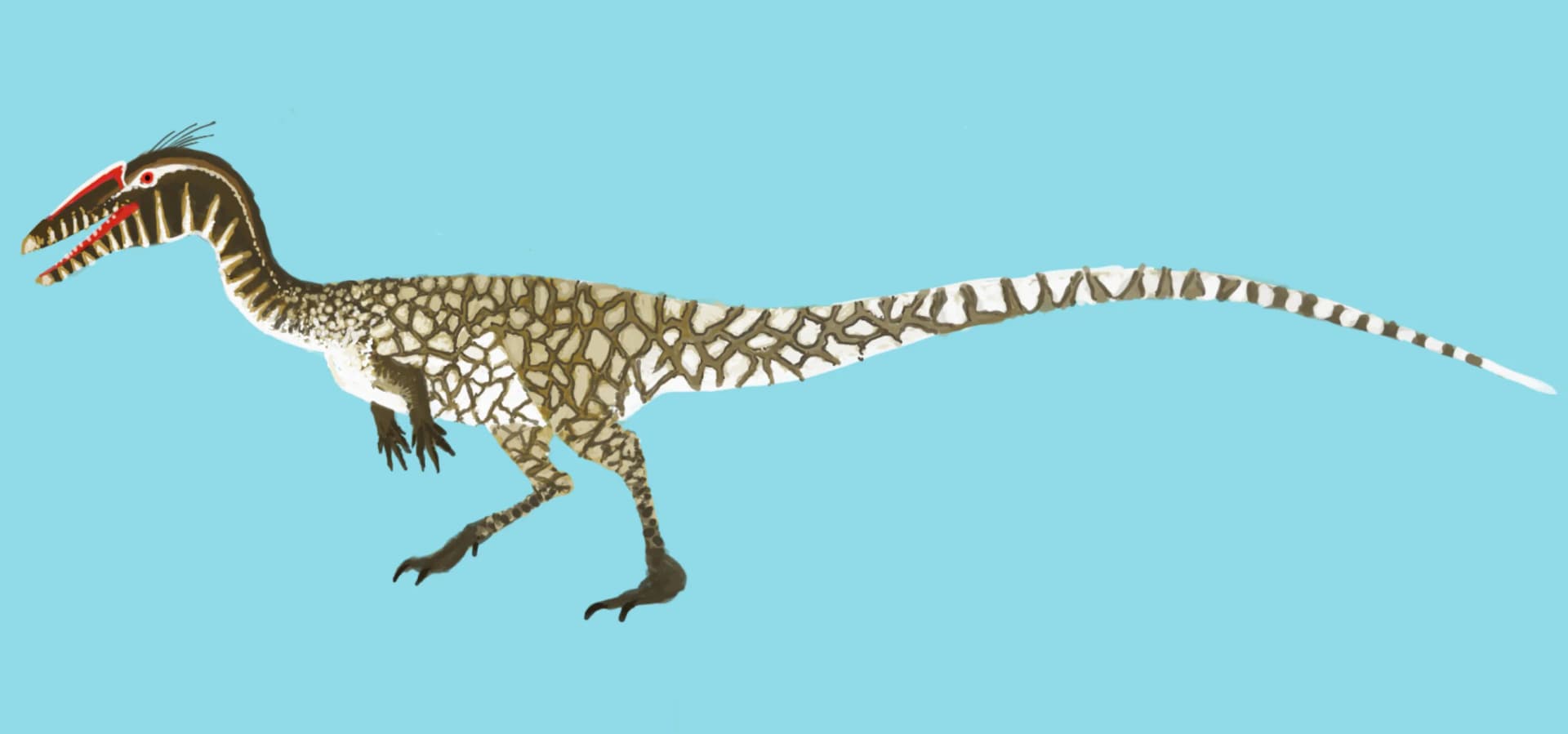
Eoraptor was a tiny dinosaur, measuring about 1 meter long and weighing barely 10 kg, roughly the size of a fox. Its small size and lightness made it an extremely agile animal, capable of quickly evading larger predators. Despite its modest size, it possessed body proportions that foreshadow those of more evolved dinosaurs. Its triangular skull measured about 12 cm long, relatively large compared to its body. The combination of its small size and agility allowed it to exploit ecological niches inaccessible to the more massive archosaurs of its time.
Eoraptor is classified as an omnivore, an unusual characteristic among primitive dinosaurs. Its teeth display two distinct morphologies: anterior recurved and sharp teeth typical of a carnivore, and posterior leaf-shaped teeth adapted for grinding plant material. This mixed diet allowed it to adapt to the variable food resource availability in its semi-arid environment. It likely fed on insects, small lizards, seeds, and tender plant parts. This dietary flexibility may have been a decisive competitive advantage in the highly contested Ischigualasto Triassic ecosystem.
Eoraptor lived in river valleys and wooded plains of the Valley of the Moon (Ischigualasto) in Argentina, a subtropical environment with pronounced dry seasons. The Ischigualasto Formation, today a spectacular desert, was then an alluvial plain crossed by rivers bordered by conifer forests and tree ferns. The climate experienced strong seasonal variations with monsoon periods followed by droughts. This Argentine provincial park is now a UNESCO World Heritage Site for its exceptional paleontological importance. The competitive environment of Ischigualasto, with numerous archosaur predators, likely exerted intense selective pressures on the earliest dinosaurs.
Eoraptor's body plan is extremely basal: it possessed five fingers on the forelimbs (later dinosaurs would have fewer), an elongated skull, and an already well-established bipedal posture. Its bones were light but strong, with thin walls and internal cavities that foreshadowed the pneumatization of more evolved theropods. Its hind limbs were distinctly longer than its forelimbs, confirming obligate bipedal locomotion. Eoraptor's hand is particularly interesting: the first three digits bore claws while the last two were reduced. Its heterodont dentition (teeth of different shapes) is a primitive characteristic that would be lost in most later, more specialized dinosaurs.
As a small omnivore in a competitive environment shared with archosaurs and early mammals, Eoraptor had to be opportunistic and fast to survive among larger predators like Herrerasaurus and Saurosuchus. Its small size suggests it was a potential prey item for many carnivores, implying vigilant behavior and quick reflexes. It likely hunted small prey by ambush or short pursuit, supplementing its diet with plants and insects. Its vision, with lateral eyes offering a wide visual field, was adapted for predator detection. The absence of group specimen discoveries suggests a rather solitary lifestyle or small family groups.
Eoraptor was discovered in 1991 in the Ischigualasto Formation of Argentina by Paul Sereno during a University of Chicago expedition. The holotype is a nearly complete skeleton, one of the finest primitive dinosaur specimens ever found. It is displayed at the Museo de Ciencias Naturales de San Juan in Argentina. Its exact classification has been debated: initially considered a basal theropod, it was reclassified in 2011 as a primitive sauropodomorph by Paul Sereno himself. This reclassification has profound implications for our understanding of early dinosaur evolution. The Ischigualasto Formation continues to yield exceptional fossils that enrich our understanding of the dawn of dinosaurs.
| Period | Trias supérieur / Late Triassic (Carnien) |
| Era | Mésozoïque / Mesozoic |
| Age | ~231 Ma |
| Location | Amérique du Sud / South America (Argentine) |
| Length | ~1 m |
| Height | ~0.4 m |
| Weight | ~10 kg |
| Diet | Omnivore |
| Discovery | 1991 |
Eoraptor lunensis measured about 1 meter long and weighed only 10 kilograms — roughly the size of a fox. It lived approximately 231 to 228 million years ago in the Late Triassic (Carnian) of Argentina. It is one of the oldest known dinosaurs, discovered in 1991 in the Ischigualasto Formation by Paul Sereno.
Eoraptor lunensis was omnivorous, which is unusual among primitive dinosaurs. Its anterior recurved teeth suggested a carnivore, while its posterior leaf-shaped teeth were suited for grinding plant material. This mixed diet — insects, small lizards, seeds — gave it valuable dietary flexibility in the competitive Ischigualasto ecosystem.
Eoraptor lunensis coexisted with Herrerasaurus and the archosaur Saurosuchus, a 7-meter predator. Its bipedal posture, elongated hind limbs, and light weight (10 kg) allowed quick escape. Its lateral eyes provided a wide visual field for threat detection. Its behavior was likely opportunistic and inconspicuous, exploiting resources inaccessible to larger archosaurs.
Life reconstruction of Eoraptor lunensis
Nobu Tamura, CC BY-SA 4.0, via Wikimedia Commons
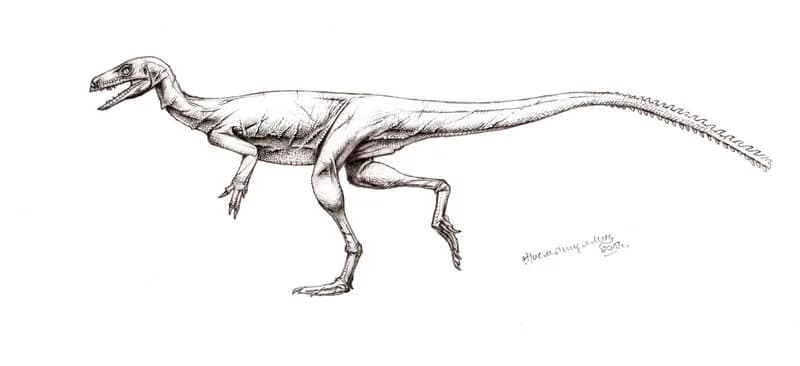
Eoraptor lunensis life reconstruction
Ildarotyrannus, CC BY-SA 4.0