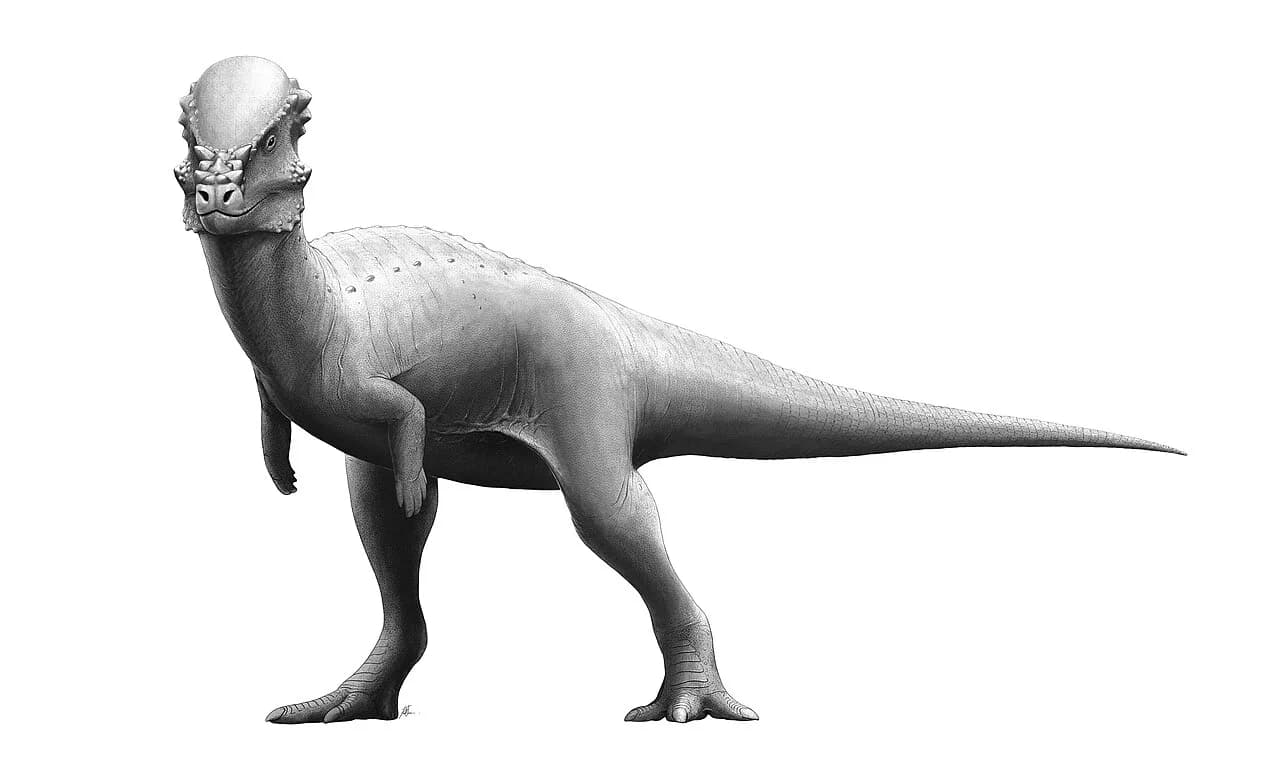
Lézard à tête épaisse
Pachycephalosaurus wyomingensis carries the thickest skull dome of any dinosaur: 25 centimetres of solid bone. Specialists still debate its use, head-butting between males or plain display. Four to 5 metres long and 200 to 450 kilograms, described in 1931, it lived 70 to 66 million years ago, alongside Tyrannosaurus rex.
The herbivore bone breaker. Its headbutt inflicts bone fracture that slows the target. Fast and a good jumper, it can dodge then strike with precision.
Playable in The Isle: Evrima
See Pachycephalosaurus wyomingensis's in-game stats, tier, strengths & weaknesses on our server.
Playable in Path of Titans
See Pachycephalosaurus wyomingensis's stats, abilities and role on our survival server.
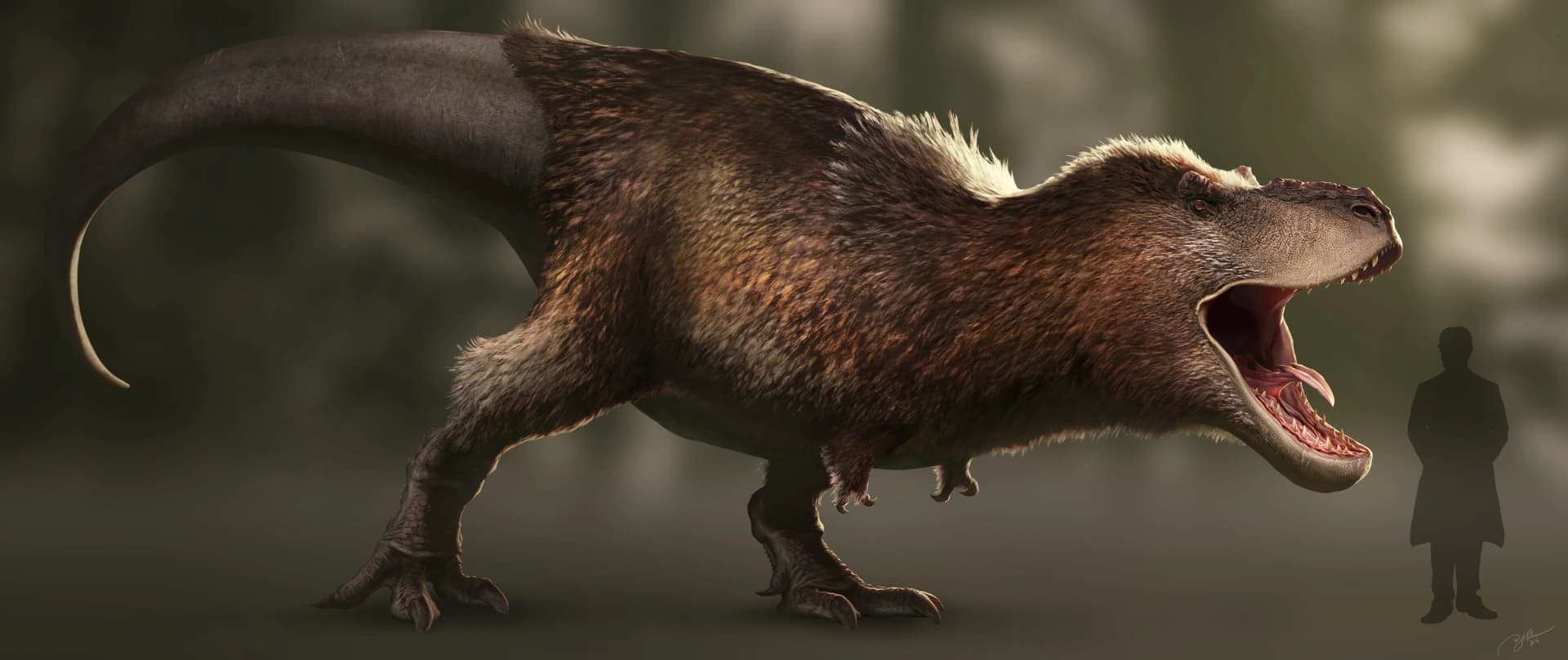
Pachycephalosaurus lived during the Late Cretaceous, approximately 70 to 66 million years ago (Maastrichtian), in western North America. Contemporary with the famous Tyrannosaurus rex and Triceratops, it was among the very last non-avian dinosaurs to have walked the Earth before the massive extinction at the end of the Cretaceous period. It inhabited the Hell Creek Formation (Montana, South Dakota) and the Lance Formation (Wyoming), in an environment of subtropical forests and coastal plains bordering the retreating Western Interior Seaway. It is the largest known pachycephalosaur and the eponymous genus of the entire Pachycephalosauridae family.
Pachycephalosaurus measured between 4 and 5 meters in length with an estimated weight of 200 to 450 kilograms, making it the largest known pachycephalosaur to date. Its most spectacular and iconic anatomical feature is its massive cranial dome, approximately 25 centimeters thick, composed of solid and exceptionally dense bone, surrounded by bony nodules and small decorative horns along its perimeter. This unique dome among all dinosaurs makes Pachycephalosaurus the most famous representative of the pachycephalosaurs, a group of bipedal herbivorous dinosaurs characterized by their distinctively thickened skulls.
Herbivore or possibly omnivore, Pachycephalosaurus likely fed on leaves, seeds, fruit, and perhaps insects or small vertebrates depending on seasonal opportunities. Its small leaf-shaped teeth with serrated edges were effective at shearing tender vegetation but poorly suited for grinding tough fibrous material. Its horny beak at the front of the snout cut stems and leaves with precision, allowing selective feeding on the most nutritious plant parts. Its bipedal posture gave it access to a varied range of vegetation at different heights, from ground-level ferns to shrub-level branches, unlike many quadrupedal herbivores of its time.
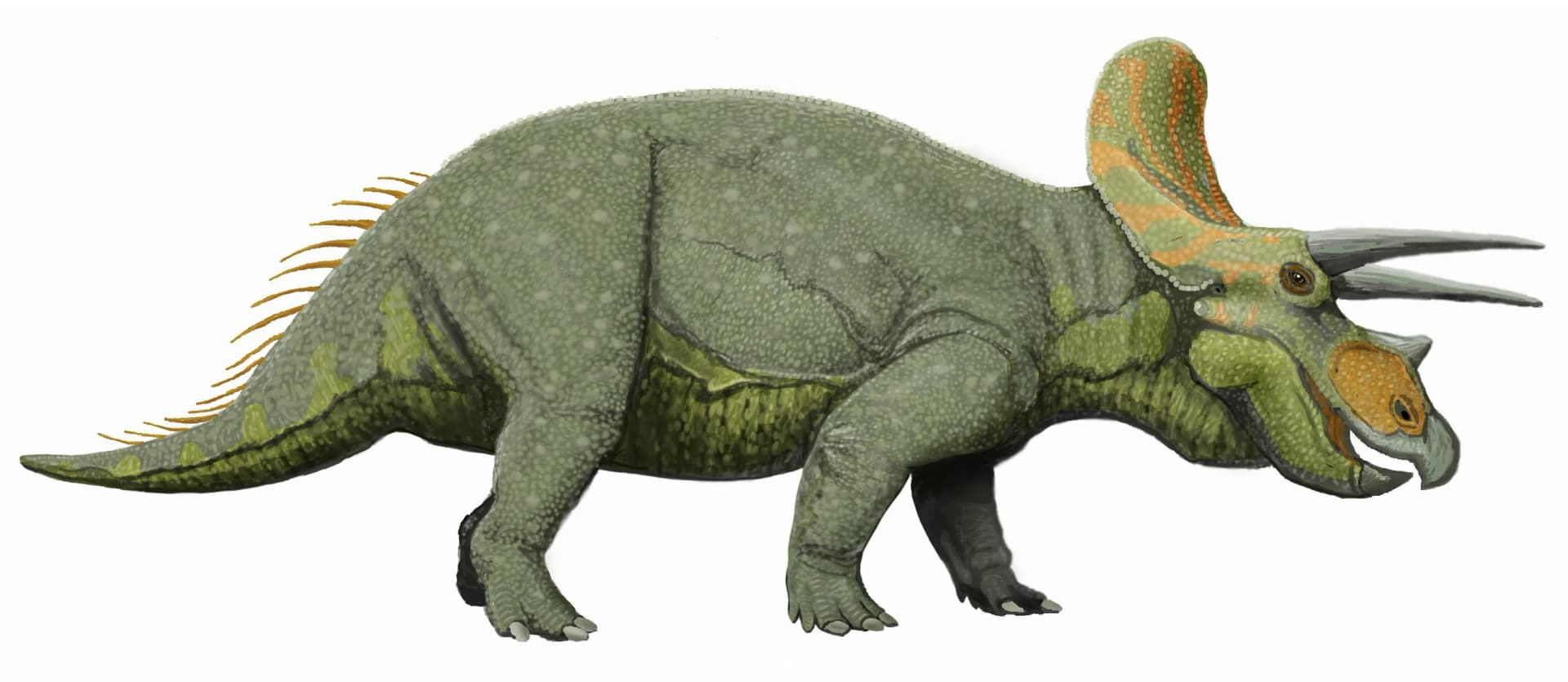
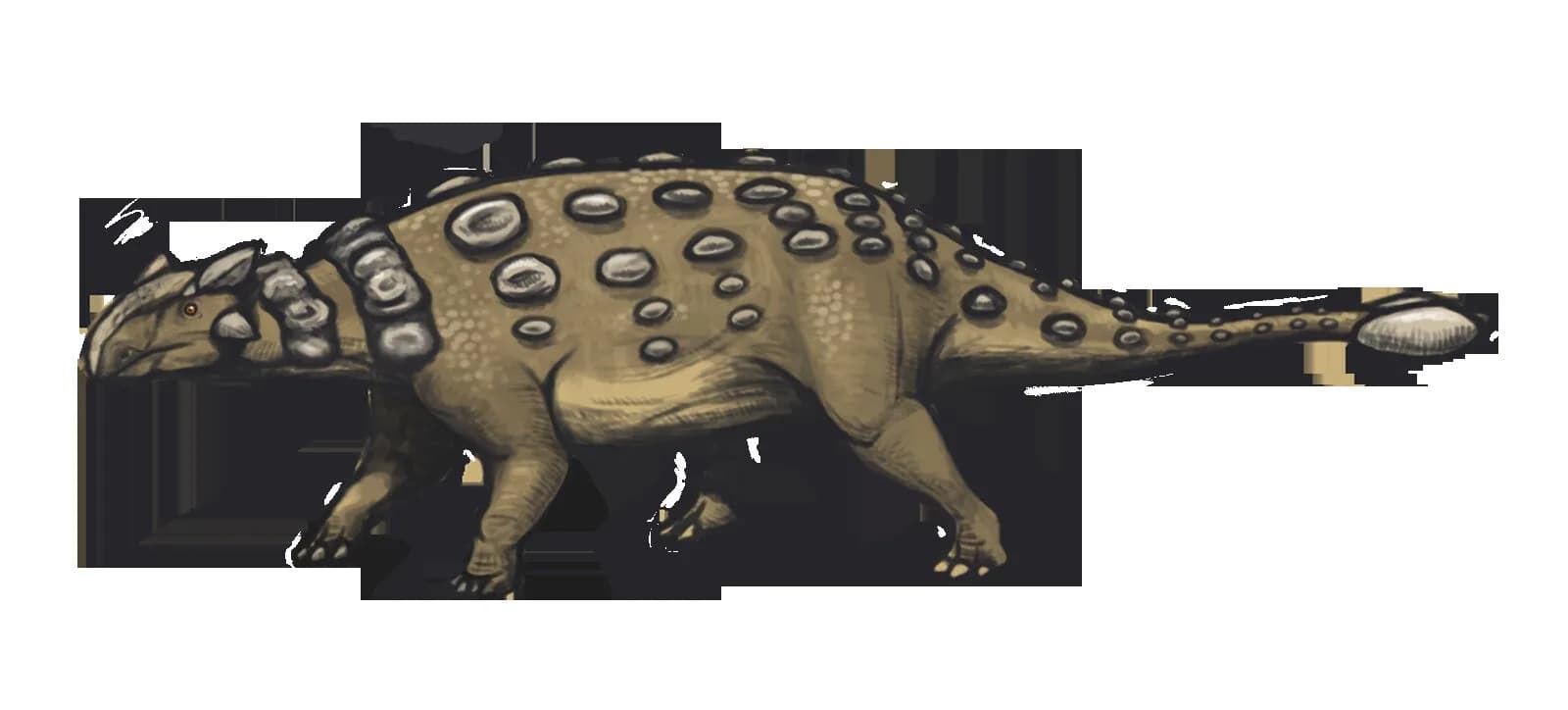
Pachycephalosaurus inhabited the dense forests and wooded areas of interior western North America, primarily in the Hell Creek Formation (Montana, South Dakota) and the Lance Formation (Wyoming). The North American Maastrichtian environment was characterized by dense, humid subtropical forests, interspersed with fertile coastal plains and meandering rivers bordered by lush vegetation. It coexisted alongside Tyrannosaurus rex, Triceratops, Edmontosaurus, and Ankylosaurus in one of the most diverse and well-documented ecosystems of the latest Cretaceous period, just before the catastrophic extinction event that ended the age of dinosaurs.
The cranial dome of Pachycephalosaurus, formed of compact bone of exceptional density, is the subject of numerous biomechanical studies and ongoing scientific debate. CT-scan analyses have revealed an internal spongy vascular structure capable of absorbing shocks during impacts. However, recent research by Goodwin and Horner suggests that the dome changed considerably with age: juveniles had flatter domes adorned with spines, while adults developed the classic rounded dome shape. This significant ontogenetic variation has caused numerous taxonomic confusions throughout the history of pachycephalosaur research, including the debate over whether Stygimoloch and Dracorex represent distinct genera.
The most famous behavior attributed to Pachycephalosaurus is ritual combat between males through frontal dome clashes — similar to modern bighorn sheep or bison. However, this classic hypothesis is increasingly contested: the rounded dome shape would have deflected impacts laterally, risking serious neck injuries during head-on collisions. Alternative models instead propose lateral flank-butting, where individuals struck each other's sides. The dome certainly also served as a powerful visual signal for recognition and establishing social hierarchy within the group, with larger domes indicating more dominant individuals, potentially influencing mate selection.
Pachycephalosaurus wyomingensis was described by Charles Gilmore in 1931 from a fragmentary skull found in Wyoming. The genus was long known only from isolated cranial domes until more complete post-cranial skeletons were found in direct association with cranial material. An important and ongoing debate concerns the possible synonymy with Stygimoloch spinifer and Dracorex hogwartsia — some researchers, notably Jack Horner, propose that these two seemingly distinct genera are actually juveniles and sub-adults of Pachycephalosaurus at different stages of dome development, a hypothesis that would significantly revolutionize the taxonomy of this entire group of thick-headed dinosaurs.
| Period | Crétacé supérieur / Late Cretaceous |
| Era | Mésozoïque / Mesozoic |
| Age | 70-66 Ma |
| Location | Amérique du Nord / North America |
| Length | 4-5 m |
| Height | 1.5 m |
| Weight | 200-450 kg |
| Diet | Omnivore |
| Discovery | 1931 |
| Type (in-game) | Herbivore |
| Tier | Tier 3 |
The classic hypothesis of frontal dome clashes in Pachycephalosaurus wyomingensis — analogous to bighorn sheep and bison — is increasingly contested. CT-scan analyses show that the rounded dome would have deflected impacts laterally, risking serious neck injuries. Alternative models propose lateral flank-butting instead. The dome certainly served as a visual social status signal, with larger domes indicating dominant individuals during breeding season.
Researchers like Jack Horner have proposed that Stygimoloch spinifer and Dracorex hogwartsia — two separately described genera — are actually juvenile and sub-adult stages of Pachycephalosaurus wyomingensis at different dome development stages. Juveniles would have flat domes with spines that progressively transform into the rounded adult dome. This hypothesis would revolutionize pachycephalosaur taxonomy but remains debated in scientific literature.
Pachycephalosaurus wyomingensis lived during the Maastrichtian, 70 to 66 million years ago, in western North America. It was among the very last non-avian dinosaurs, contemporary with Tyrannosaurus rex and Triceratops in the Hell Creek Formation (Montana, South Dakota) and Lance Formation (Wyoming). It lived in dense subtropical forests bordering coastal plains, just before the mass extinction at the Cretaceous-Paleogene boundary caused by the Chicxulub impact.
Information on this page is based on peer-reviewed scientific publications.
Pachycephalosaurus at ROM
Wikipedia Commons
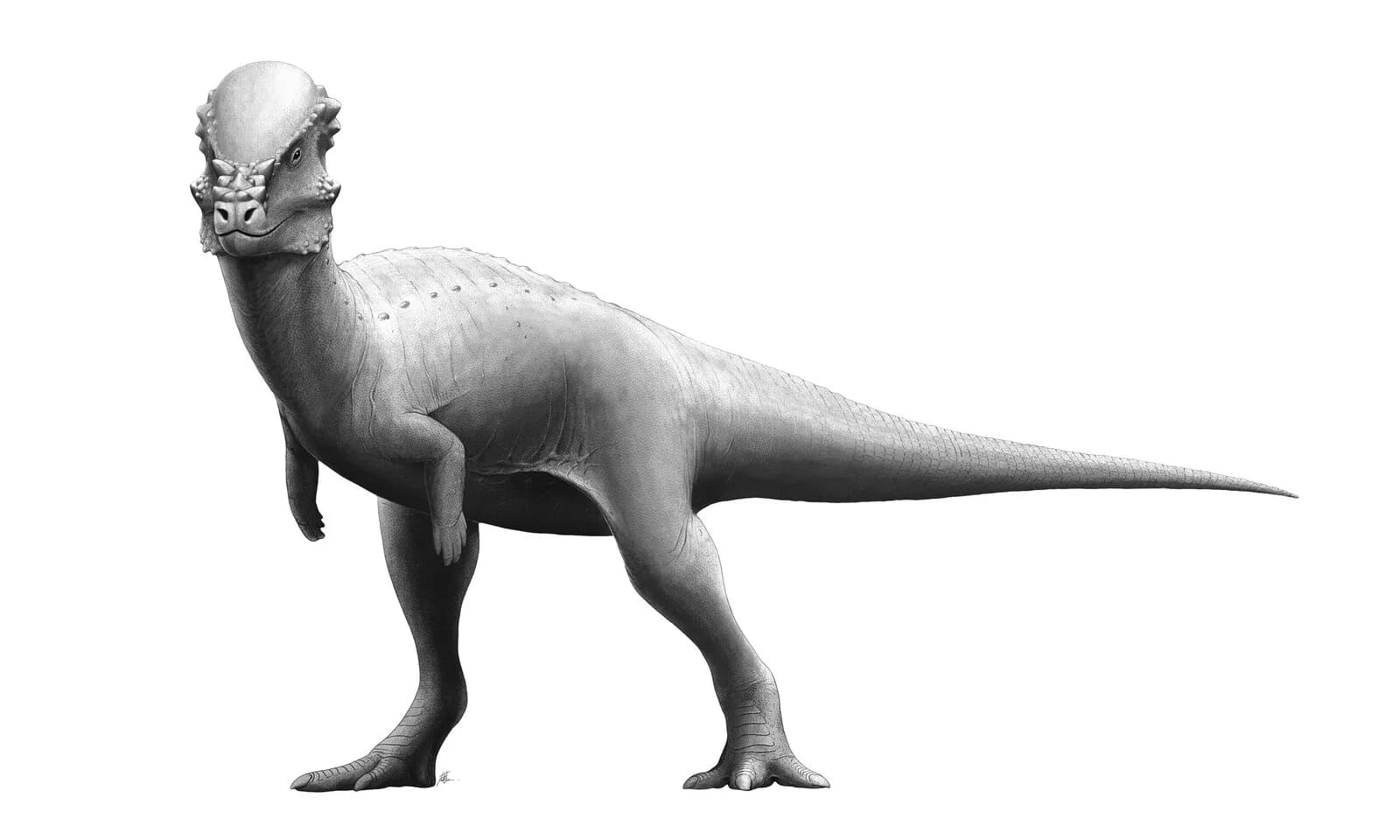
Pachycephalosaurus wyomingensis reconstruction (based on 'Sandy' specimen)
Fred Wierum, CC BY 4.0