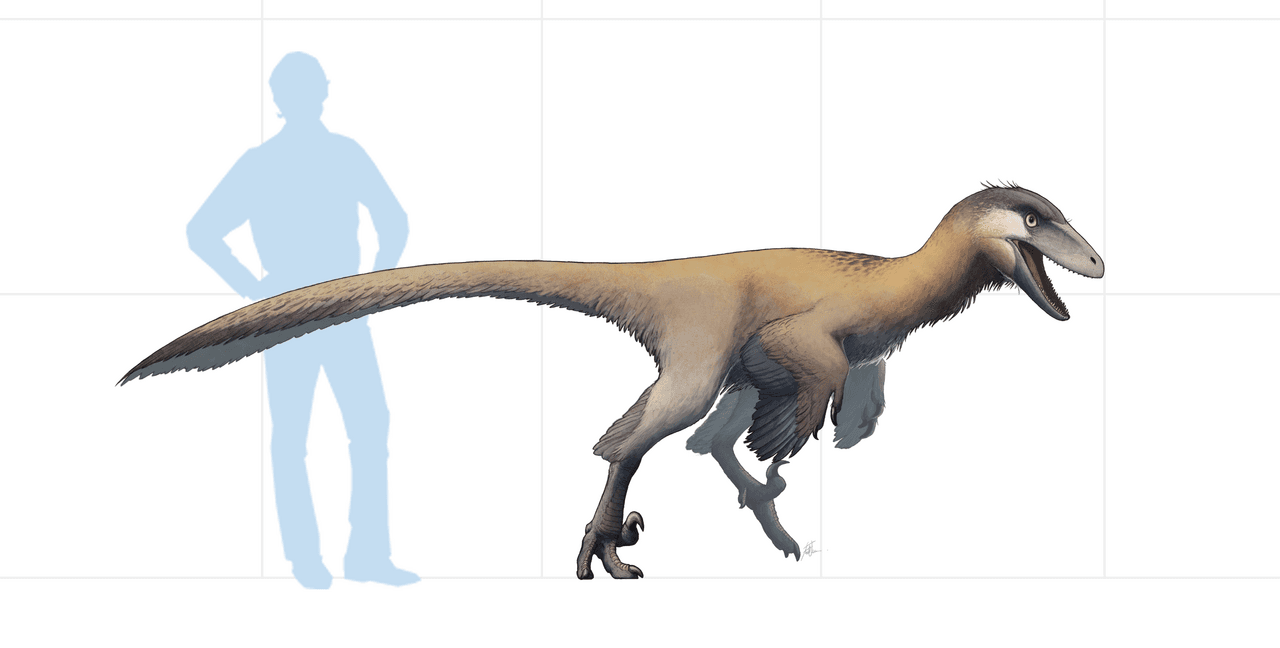
Latenivenatrix
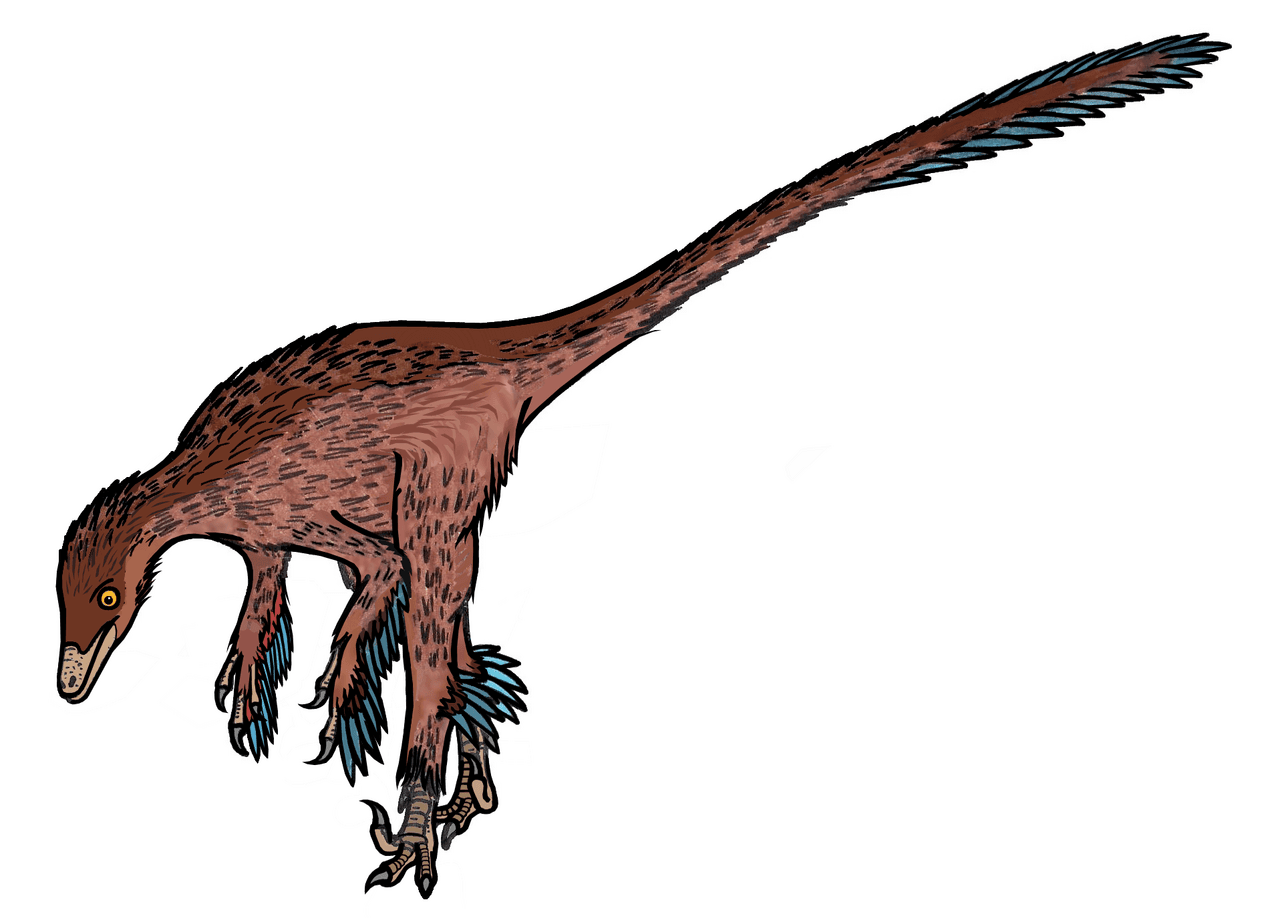
Latenivenatrix mcmasterae is the largest known troodontid: about 3 metres, with a 45-centimetre skull. Its name means « hidden huntress », from the Latin latens and venatrix. Described in 2017 from the Dinosaur Park Formation in Alberta, it rests on fossils previously filed under the name Troodon. It lived some 76 million years ago.
Playable in Path of Titans
See Latenivenatrix mcmasterae's stats, abilities and role on our survival server.
Latenivenatrix lived during the Late Cretaceous, in the Campanian, about 76 million years ago. Its remains come from the Dinosaur Park Formation in Alberta, Canada, one of the richest dinosaur deposits in the world. At that time, the region was a low, humid coastal plain crossed by rivers and bordered by an inland sea that split North America in two. This warm, green landscape supported an abundant fauna of hadrosaurs, ceratopsians and tyrannosaurs, among which this small feathered theropod hunted, probably using low light to stalk its prey.
Latenivenatrix was described in 2017 by palaeontologists Aaron van der Reest and Philip Currie, from fossils previously assigned to the genus Troodon. Their study proposed splitting the "Troodon" material from the Dinosaur Park Formation between two distinct genera, including Latenivenatrix mcmasterae, the larger form. The genus name means "hiding huntress", from the Latin latens ("hiding") and venatrix ("huntress"), while the epithet mcmasterae honours Lyn McMaster. This revision neatly illustrates the difficulties of palaeontology: the same set of fragmentary fossils can be interpreted in several ways depending on the researchers and methods used.
With an estimated skull length of about 45 centimetres, Latenivenatrix is considered the largest known troodontid. Its slender, lightweight body was probably around 3 metres long, making it a giant by the standards of its family, which is mostly made up of modestly sized animals. Despite this size, it remained a gracile theropod, built for running and agility rather than power. Long, slender legs, a flexible neck and a streamlined silhouette betray a fast hunter, the opposite of stocky, heavy predators. This combination of large size for a troodontid and lightweight build makes it an interesting case within its group. This large size in fact played a role in its recognition as a distinct genus: it was partly on the basis of differences in proportions and skull dimensions that researchers separated its material from that of other troodontids in the same formation.
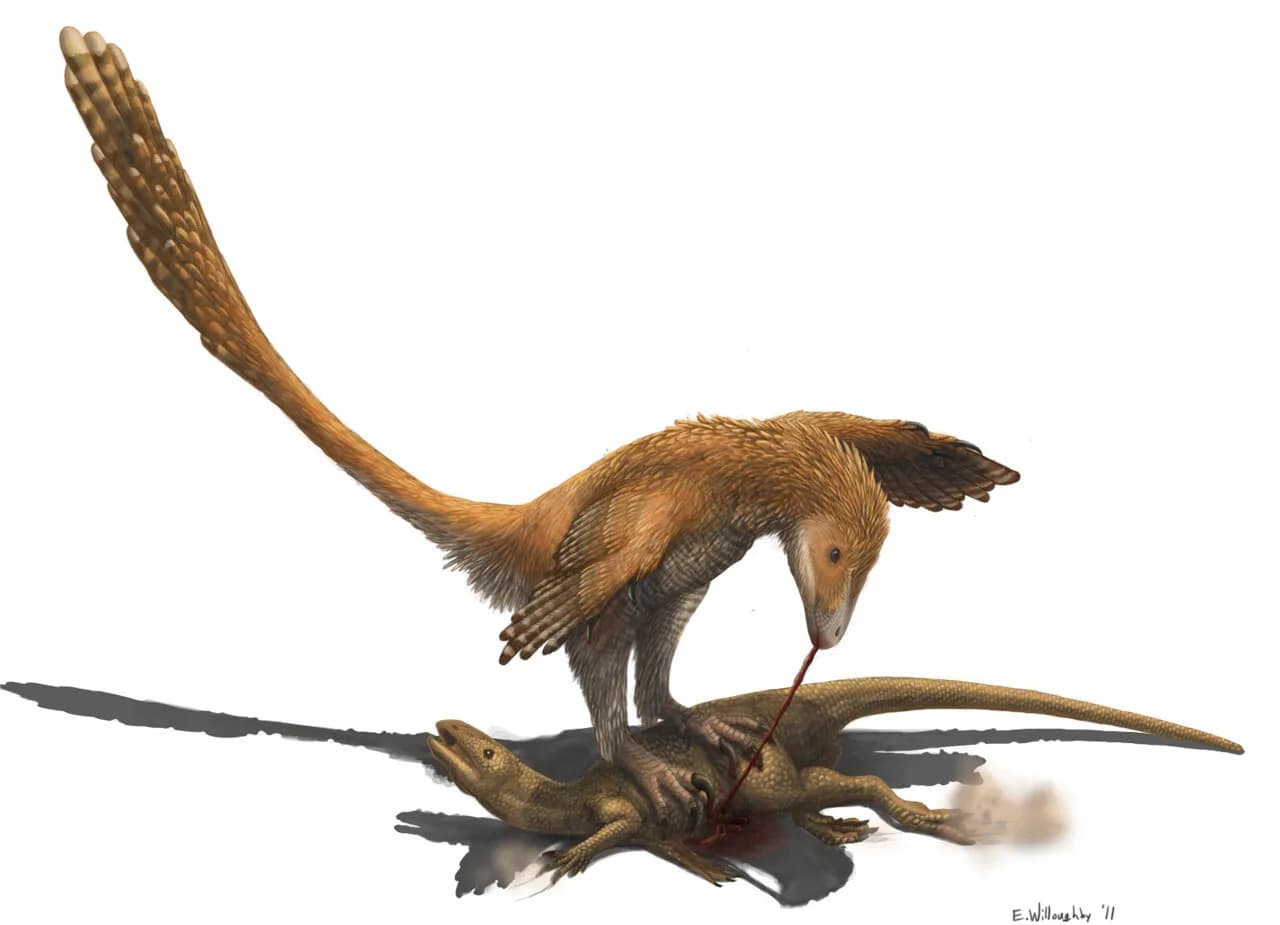
Like other troodontids, Latenivenatrix was probably an opportunistic predator, perhaps even partly omnivorous. Its small, finely serrated teeth and its jaw suggest a diet of small prey: mammals, lizards, young dinosaurs, eggs, insects, even plants in some members of the group. The large sickle claw on its second toe, shared with the deinonychosaurs, likely served to pin or wound its prey. Its agility and sharp vision let it surprise lively, secretive animals often overlooked by larger carnivores. Rather than a hunter of large game, Latenivenatrix exploited a niche as a light, versatile predator, able to adapt to available resources. This dietary versatility is typical of troodontids, some of which even show teeth and jaws hinting at a mixed diet, halfway between predation and plant-eating.
The Dinosaur Park Formation represents a Late Cretaceous coastal-plain ecosystem, crossed by channels and swamps, under a warm and seasonally humid climate. Latenivenatrix shared its range with a spectacular fauna: crested hadrosaurs like Corythosaurus, horned ceratopsians like Centrosaurus and Chasmosaurus, the large tyrannosaurid Gorgosaurus, as well as other small theropods and dromaeosaurids. In this dense community, predators of different sizes divided up the prey, each exploiting a particular niche. Latenivenatrix, agile and probably active at dusk or night, held a place distinct from the large daytime hunters, which reduced direct competition and gave it access to specific prey. Its likely dusk or night-time activity let it hunt when most large predators were resting, an advantage in such a crowded environment.
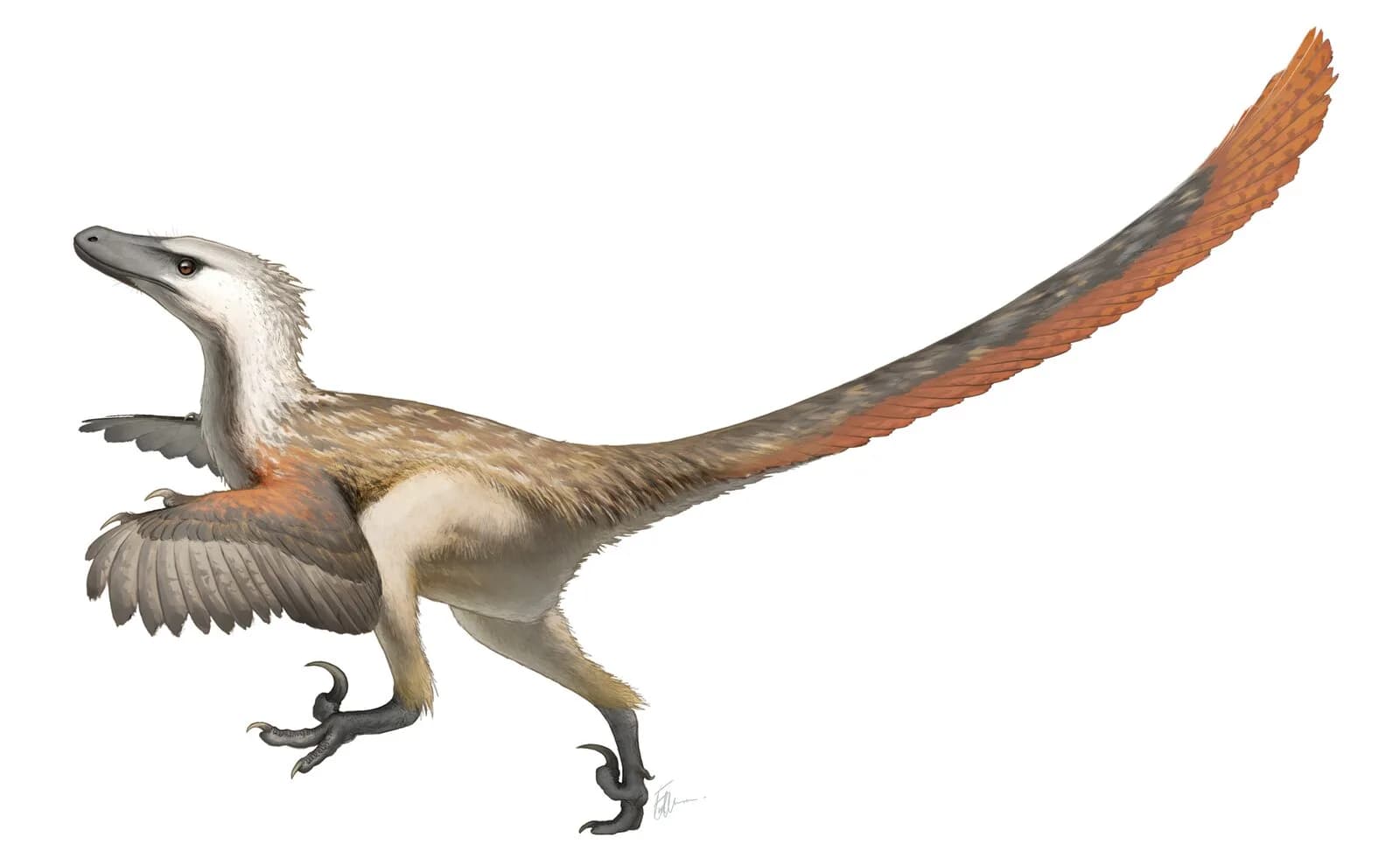
Latenivenatrix had the refined anatomy of troodontids: a feather-covered body, arms turned into wing-like structures, a long tail and slender legs. Its elongated, lightweight skull held large eyes, a sign of strong low-light vision, and a relatively voluminous braincase, indicating a brain well developed for a dinosaur. Its toes bore a curved sickle claw, a trait shared across the deinonychosaurs. Together, these features outline a sensorially well-equipped animal, able to detect and pursue prey in conditions where other predators were at a disadvantage. As in its close relatives, the plumage was not merely insulation: it likely also played a role in display and communication. Troodontids are among the non-avian dinosaurs with the highest brain-to-body size ratio, which earned them a reputation as "intelligent" animals. In Latenivenatrix, this well-developed brain, paired with large forward-facing eyes, would have provided a fine perception of the environment, useful for hunting small, mobile prey.
Latenivenatrix's anatomy paints the picture of an agile hunter with sharp senses. Its large eyes and relatively big brain suggest a predator able to hunt effectively at dusk or by night, a rare advantage among dinosaurs. As with many theropods, the idea of coordinated pack hunting remains an appealing but hard-to-prove hypothesis from fossils alone. What is better established is its profile as a fast, manoeuvrable runner, relying on surprise and speed rather than brute force. Its way of life likely combined stealthy stalking, sudden bursts of speed and use of the foot claw to subdue small prey. Its name, "hiding huntress", neatly captures the picture palaeontologists have of it: a stealthy predator that relied on discretion and patience rather than direct confrontation with large animals.
Latenivenatrix belongs to the family Troodontidae, a group of small bird-like theropods, and more precisely to the subfamily Troodontinae. Its taxonomic position, however, is at the heart of a debate. The genus was created in 2017 to separate part of the material long grouped under the name Troodon, a genus that has become a real headache for specialists. Since then, several researchers have questioned the validity of Latenivenatrix, with some proposing as early as 2021 to treat it as a synonym of Stenonychosaurus. This uncertainty takes nothing away from the interest of the fossils: it simply shows how delicate and ever-changing the assignment of fragmentary bones to a precise genus can be.
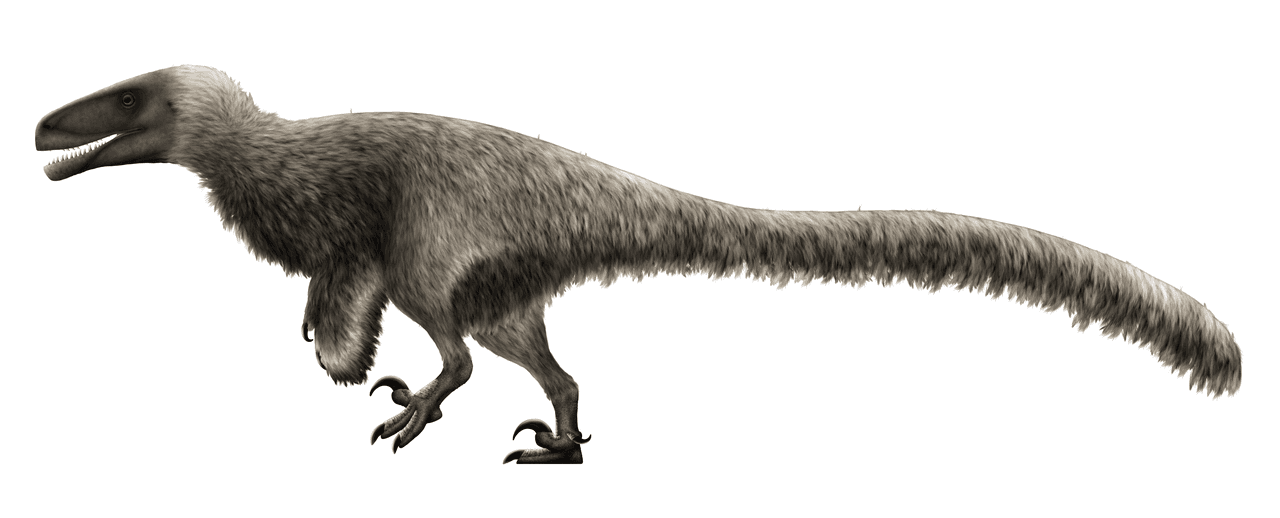
Compared with dromaeosaurids such as Velociraptor or Deinonychus, often confused with it in popular culture, Latenivenatrix belongs to a separate family, the troodontids. The two groups share a sickle claw and kinship with birds, but troodontids stand out with a lighter skull, larger eyes and a proportionately bigger brain, often read as signs of a more sensory, discreet lifestyle. Within the troodontids themselves, Latenivenatrix stands out for its large size, where most of its relatives stayed small. This diversity, from tiny Asian troodontids to the large North American Latenivenatrix, shows the ecological flexibility of this lineage of "intellectuals" of the dinosaur world. Whatever the specialists' final verdict on its name, the fossil remains a valuable witness to this little-known diversity of small feathered predators of the Cretaceous.
The material assigned to Latenivenatrix comes from the Dinosaur Park Formation in Alberta and includes skull and skeletal elements that were used to distinguish it from Troodon. As is often the case with small theropods with thin, hollow bones, the remains are rarely complete, which complicates comparisons and fuels debate over its validity. Each newly identified bone can therefore tip the balance one way or the other in the taxonomic discussion. This fragmentary nature is typical of troodontids in general, whose evolutionary history remains partly obscured by the scarcity of complete skeletons and by the many reassignments of material from one genus to another. The "Troodon problem" is in fact emblematic of North American theropods: for decades, isolated teeth and scattered bones were filed under this single name, before recent studies tried to untangle the knot into several genera, including Latenivenatrix.
Latenivenatrix remains little known to the general public, partly because of its recent discovery and the debate over its validity. It has nonetheless gained visibility through video games: it features among the playable creatures of Path of Titans, where it is showcased as an agile nocturnal hunter and the star of several trailers. Its in-game subspecies, moreover, pay tribute to other real troodontids such as Stenonychosaurus and Troodon. One should keep in mind the distinction between science and fiction, though: the reality of this dinosaur is still debated by palaeontologists. This digital popularity has the merit of drawing attention to a remarkable but often overlooked group, that of the big-brained small theropods, so close to the origin of birds.
| Period | Crétacé supérieur / Late Cretaceous (Campanien) |
| Era | Mésozoïque / Mesozoic |
| Age | ~76 Ma |
| Location | Canada (Alberta, Formation de Dinosaur Park) |
| Length | ~3 m |
| Height | ~0.9 m (hanche / hip) |
| Weight | ~estimé / estimated |
| Diet | Carnivore / omnivore |
| Discovery | 2017 |
Latenivenatrix mcmasterae is estimated at roughly 3 metres in length with a skull of about 45 centimetres — exceptional dimensions for a troodontid, a group usually made up of much smaller animals. It was on the basis of these distinct cranial proportions that van der Reest and Currie separated it from Troodon in 2017.
Latenivenatrix mcmasterae was probably omnivorous: mammals, lizards, young dinosaurs, eggs, insects, and possibly plants. Its finely serrated teeth and sickle claw on the second toe suggest a versatile predator, typical of troodontids, capable of exploiting varied resources in the Dinosaur Park Formation around 76 million years ago.
Yes. Described in 2017 by van der Reest and Currie (Canadian Journal of Earth Sciences, 54:9), Latenivenatrix mcmasterae has been questioned since 2021 by Cullen et al., who propose synonymising it with Stenonychosaurus. The fragmentary remains of troodontids make such attributions difficult: each new bone can shift the classification.
Information on this page is based on peer-reviewed scientific publications.
Life reconstruction of Latenivenatrix mcmasterae, the largest known troodontid, from the Late Cretaceous of Canada.
Fred Wierum, CC BY-SA 4.0, via Wikimedia Commons
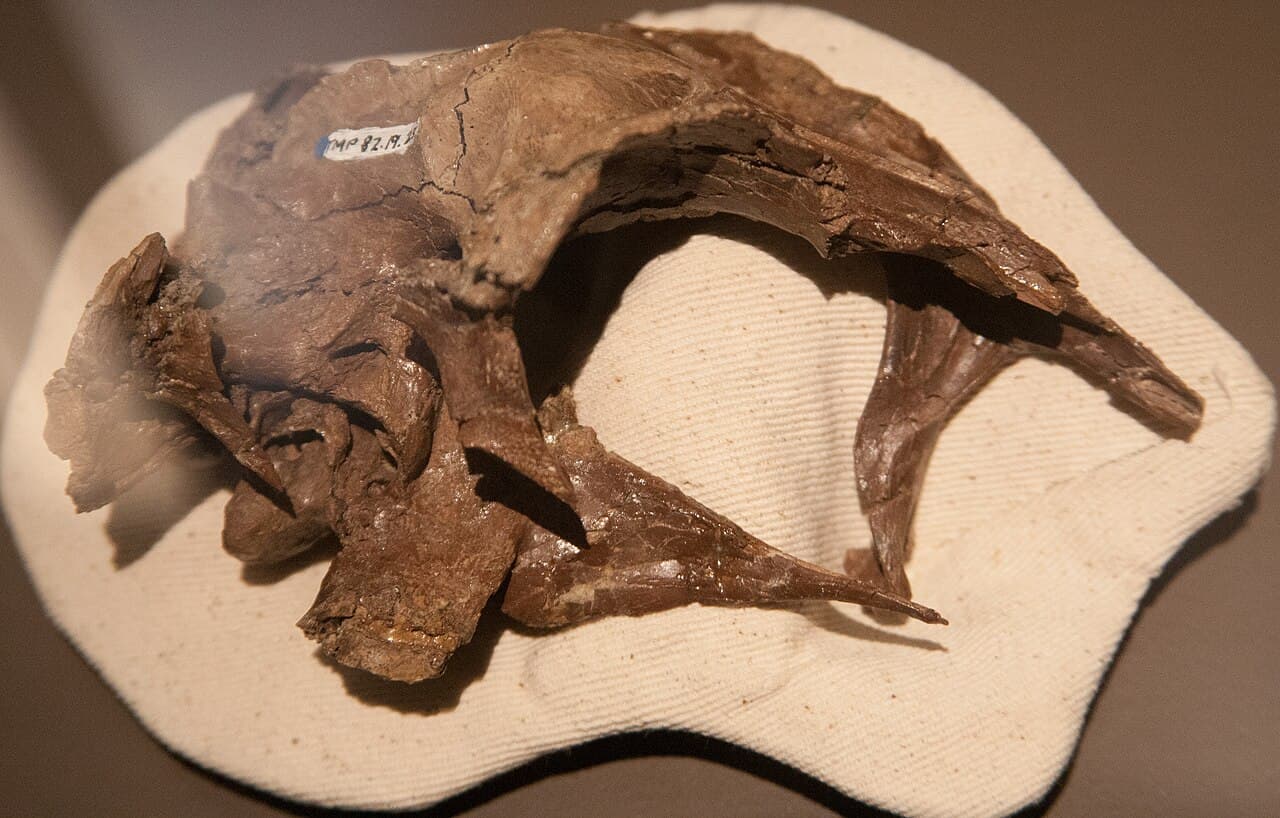
Reconstructed skull of Latenivenatrix, showing the elongated snout and large eye sockets typical of troodontids.
Roland Tanglao, CC BY 2.0, via Wikimedia Commons