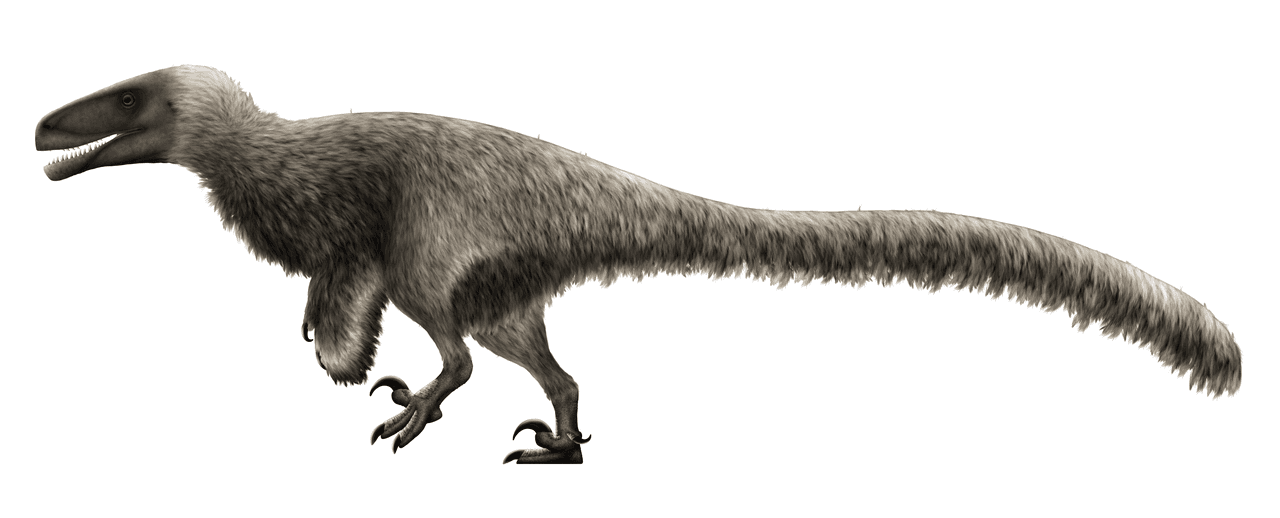
Achillobator
Achillobator giganticus is one of the largest dromaeosaurids known: 5 to 6 metres and 250 to 350 kilograms, far heavier than Velociraptor. Found in Mongolia in 1989 and described in 1999, it lived 96 to 89 million years ago. Its name combines the Greek hero Achilles with the Mongolian word baatar, a nod to its powerful Achilles tendon.
Playable in Path of Titans
See Achillobator giganticus's stats, abilities and role on our survival server.
Achillobator lived during the Late Cretaceous, roughly 96 to 89 million years ago, across the Cenomanian to Santonian stages. Its remains come from the Bayan Shireh Formation in the Gobi Desert of Mongolia. Back then the region was not the arid desert we know today: it held plains crossed by rivers and seasonal lakes, with enough vegetation to support large herbivores. It was in this setting that this large dromaeosaurid hunted, at a time when central Asia hosted a dinosaur fauna very different from that of contemporary North America.
Achillobator's type skeleton was unearthed in 1989 during a joint Mongolian–Russian expedition at Burkhant, but it was only formally described in 1999 by palaeontologists Altangerel Perle, Mark Norell and James Clark. The name blends the Greek hero Achilles with the Mongolian word "baatar" (hero), referring to the powerful Achilles tendon that attached to its sturdy ankle; the species name giganticus highlights its size. The genus is monotypic, containing a single valid species, A. giganticus, and no other complete specimen has been recovered since. The original description sparked debate because the material mixed traits seen as primitive with others considered advanced, leading some to first suspect a chimera assembled from two animals. Later analyses confirmed it is a single, genuine taxon.
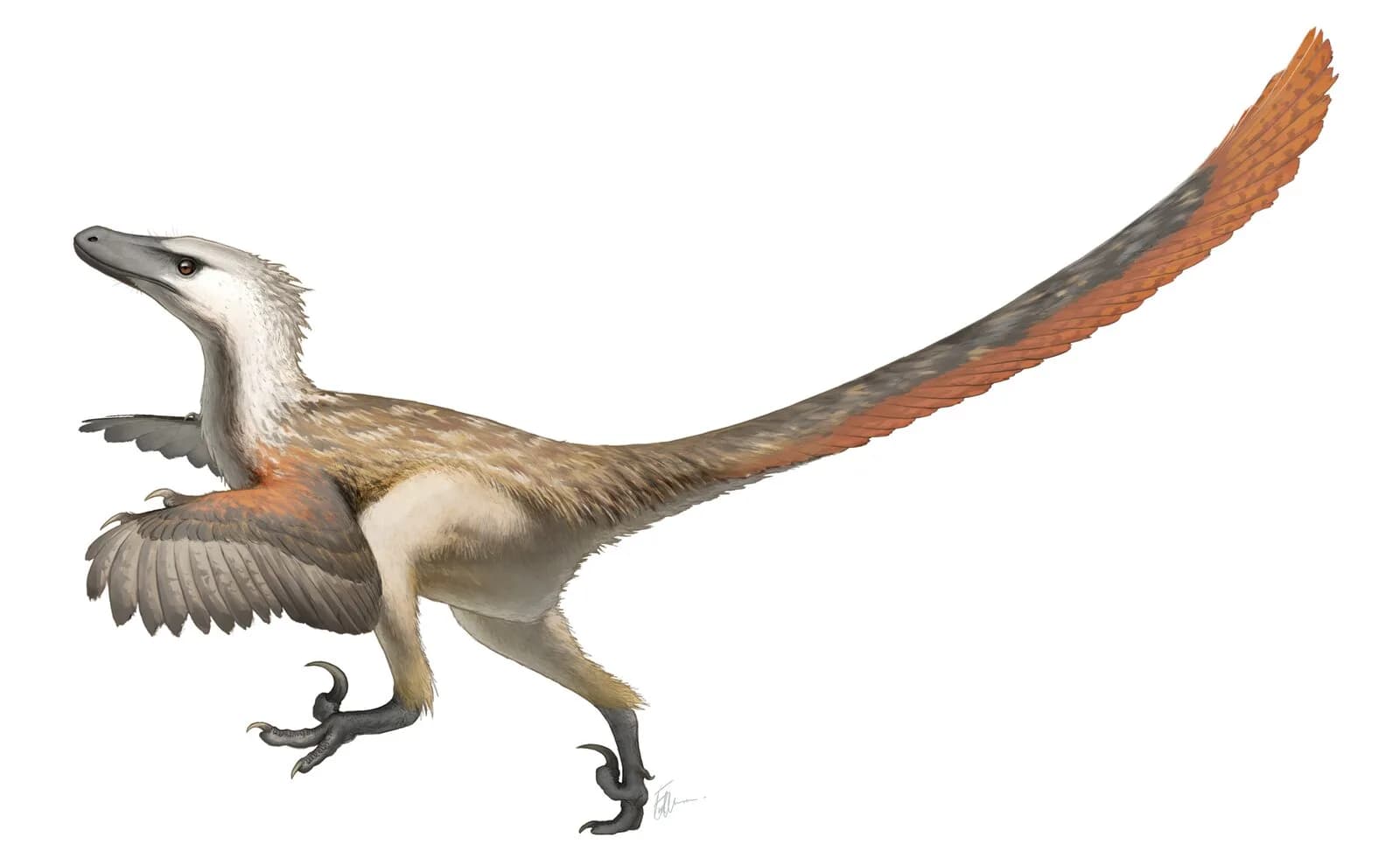
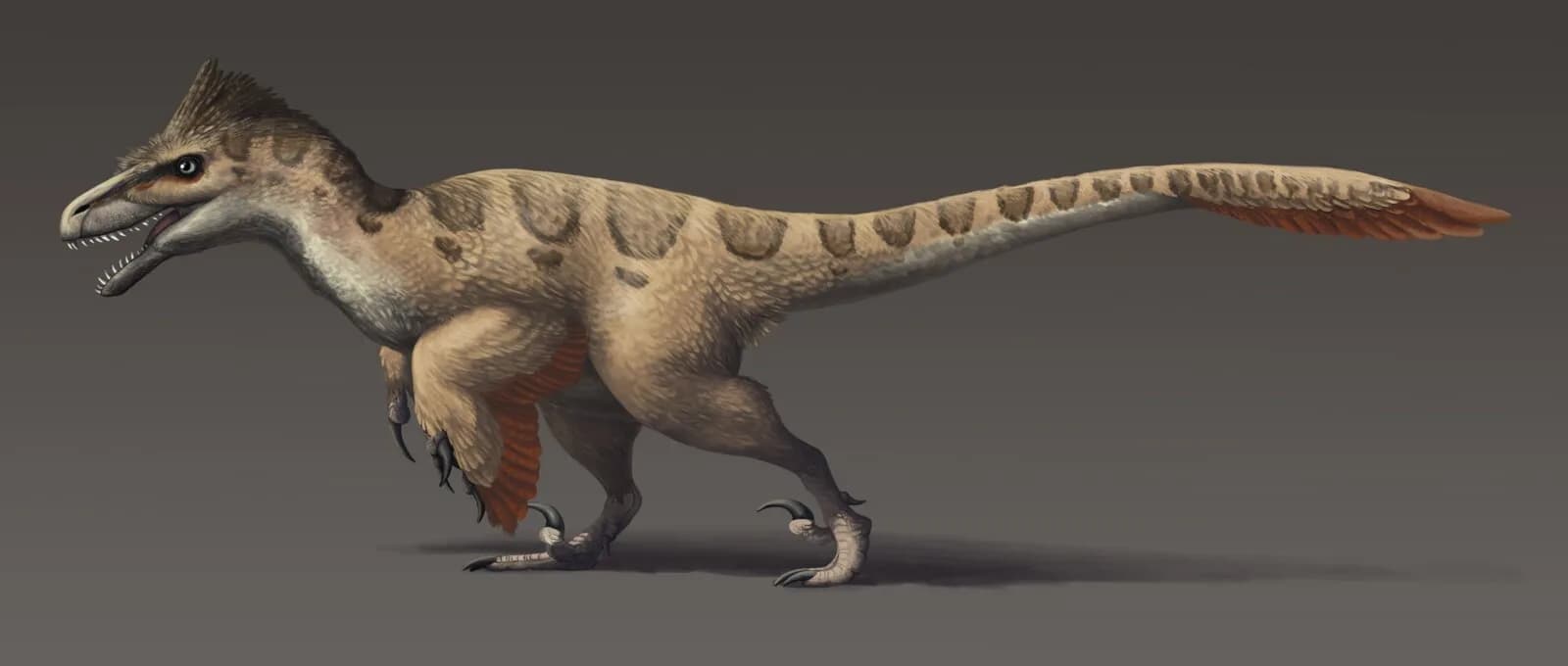
With an estimated length of 5 to 6 metres and a weight on the order of 250 to 350 kilograms, Achillobator ranks among the largest known dromaeosaurids, in the same league as Utahraptor and Dakotaraptor. It dwarfed its lighter relatives such as Velociraptor and Deinonychus. Its build was not that of a slender runner: the preserved bones show thick, stocky bones, strong hindlimbs and a massive pelvis. This robustness points to an animal built for power rather than pure speed, capable of subduing fairly large prey. Its hip height was close to 1.6 metres, making it an imposing predator for a "raptor".
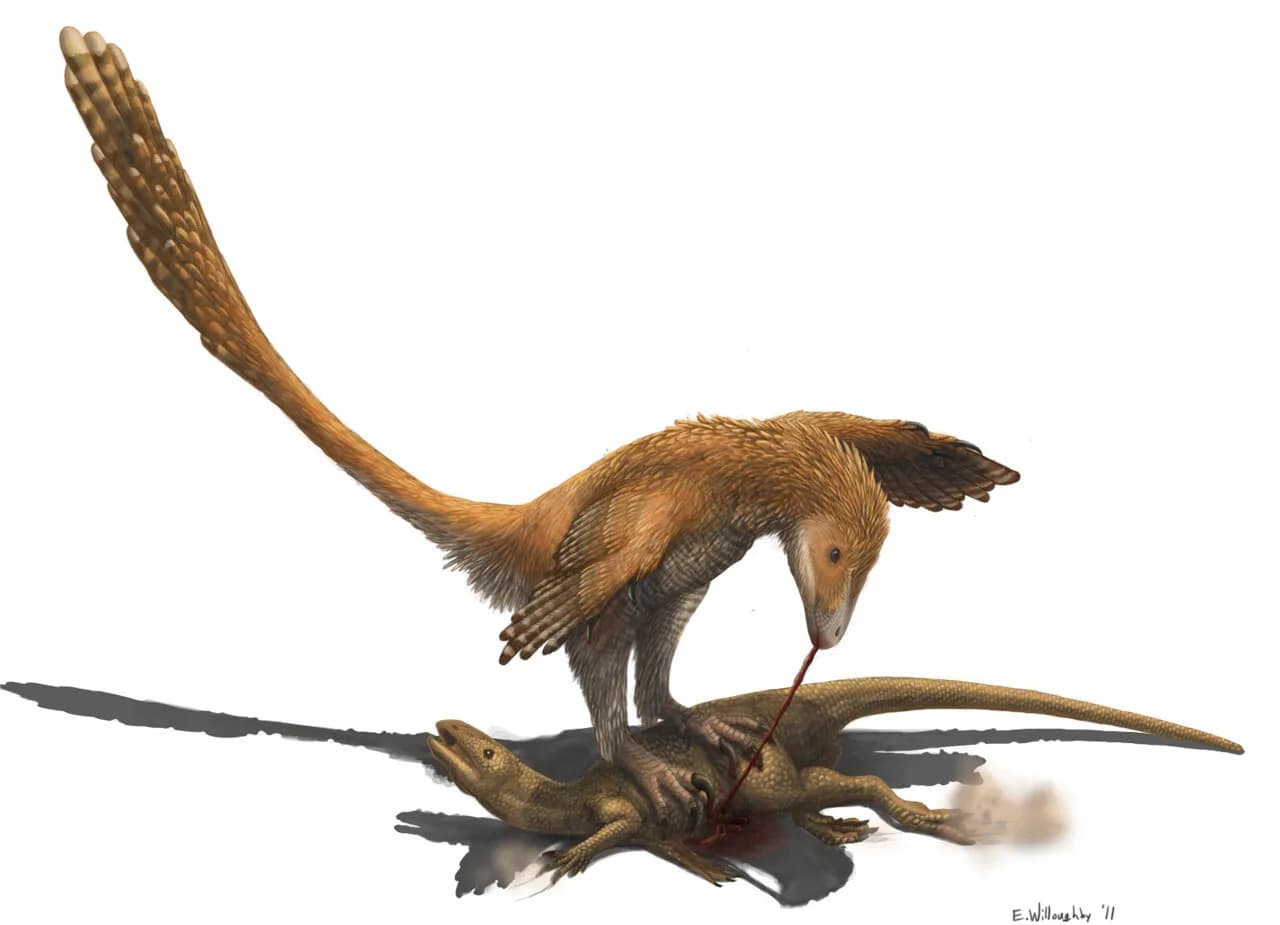
Achillobator was a strict carnivore, an active predator equipped with the signature weapon of its family: a large, retractable sickle-shaped claw on the second toe of each foot. Held raised while walking, this claw could be lowered to slash, pin or grip prey. Its teeth, recurved and serrated, were built to slice flesh and hold onto a struggling victim. Its size let it tackle herbivores larger than those targeted by smaller dromaeosaurids. As in other members of the group, it likely combined biting, hand-claw raking and kicks of the foot claw to bring down its prey.
The Bayan Shireh environment was a semi-arid floodplain crossed by waterways and dotted with bodies of water that filled during wetter seasons. Achillobator shared its range with a distinctly Asian fauna: the armoured ankylosaur Talarurus, the long-clawed therizinosaur Segnosaurus, the ornithomimosaur Garudimimus, the long-necked sauropod Erketu and the hadrosauroid Gobihadros. This mix of potential prey — armoured herbivores, duck-bills and young sauropods — offered a large, opportunistic predator plenty to feed on. Living alongside smaller carnivores suggests a division of roles, each targeting prey of a different size according to its abilities.
Like all dromaeosaurids, Achillobator bore a feather-covered body and arms turned into wing-like structures, a legacy of the common ancestor it shares with birds — even though it was far too massive to fly. Its most debated feature is its primitive pelvis: the pubis pointed downward and forward, an older arrangement than that of most of its relatives, whose pubis points backward. This mosaic of primitive and derived traits is what complicated its classification. The rest of the skeleton confirms the overall sturdiness: thick vertebrae, a solid pelvic girdle, and above all a powerful ankle whose strong Achilles tendon inspired its name. The large, laterally compressed foot claw completed this arsenal.
Large dromaeosaurids are often portrayed as coordinated pack hunters, but that image owes more to popular culture than to solid evidence. For Achillobator, no site directly documents group behaviour, and signs of cooperative hunting in dromaeosaurids generally remain debated among specialists. What is better supported is the profile of an active terrestrial predator: keen sight and smell, good agility despite its mass, and weapons suited to close-quarters fighting. Whether it hunted alone, in pairs or in loose groups, its size certainly made it one of the dominant predators of its ecosystem. Scientific caution warns against over-reading perfectly choreographed pack scenes. Like other dromaeosaurids, it likely relied on sharp senses to spot and track prey, and on good limb coordination to subdue it once in contact. Its sturdy legs suggest it could deliver powerful kicks, and its raised claw probably served as both a weapon and a gripping tool during close assaults.
Achillobator belongs to the family Dromaeosauridae, within the clade Eudromaeosauria that gathers the "true" raptors such as Velociraptor, Deinonychus and Dromaeosaurus. Its exact place in the family tree has shifted between studies: some analyses draw it close to the Dromaeosaurinae, others place it as a relatively basal eudromaeosaur. That uncertainty stems precisely from its atypical pelvis and unusual combination of traits, which blur comparisons with better-known relatives. In any case it is the first and largest dromaeosaurid described from the Bayan Shireh Formation, and an important milestone for understanding the diversity of Asian Late Cretaceous raptors.
Among dromaeosaurids, Achillobator joins the very exclusive club of giants. Most "raptors" were small to mid-sized animals, from Velociraptor — barely bigger than a turkey — to Deinonychus at around 3.4 metres. Achillobator doubled Deinonychus in length and far exceeded it in mass, joining heavyweights like Utahraptor and Dakotaraptor in North America. This drive toward giant size happened several times, independently, on different continents: a case of convergent evolution where separate lineages arrive at comparable silhouettes. In Asia, Achillobator illustrates a path distinct from the small Gobi dromaeosaurids such as Velociraptor or Tsaagan. Its robustness also sets it apart from more gracile, running-oriented raptors: where some bet on speed, it seems to have favoured strength. It was not the largest carnivore of its ecosystem in absolute terms, but its sickle claw and power made it a hunter of a very different kind from the tyrannosauroids. This diversity of sizes and strategies within a single family shows just how varied the niches dromaeosaurids occupied during the Cretaceous.
The known material of Achillobator is limited to the holotype, a partial skeleton including skull and jaw fragments, teeth, vertebrae, part of the pelvic girdle and limb bones. No specimen as complete as those of Velociraptor or Deinonychus has yet been found, leaving several aspects of its anatomy open to interpretation and explaining the ongoing debate over its exact position. This fragmentary record is common among dromaeosaurids, whose hollow, lightweight bones preserve poorly. Every new piece attributable to the genus would therefore be valuable: it would help settle questions of relationships and better define this giant predator that ruled the plains of Mongolia nearly 90 million years ago.
Long obscure outside specialist circles, Achillobator has grown in fame through video games and the online palaeo community. It features among the playable creatures of Path of Titans, where it was added in 2024 after being funded during the game's crowdfunding campaign. There it is presented as the largest playable "raptor" and as a species built for a pack-leader playstyle — a gameplay interpretation that leans on its genuinely large size, without matching fossil evidence for social behaviour. Science and game should be kept apart: the real species is monotypic, whereas the game offers fictional variants. This digital popularity has an upside: it draws attention to a little-known Asian dinosaur and reminds us that "raptors" were not just Velociraptor. For enthusiasts, Achillobator has become a marker of dromaeosaurid diversity, and a good example of how popular culture can help rediscover real species — as long as one keeps in mind the line between scientific reconstruction and the creative licence of fiction.
| Period | Crétacé supérieur / Late Cretaceous (Cénomanien–Santonien) |
| Era | Mésozoïque / Mesozoic |
| Age | 96–89 Ma |
| Location | Mongolie / Mongolia (Formation de Bayan Shireh) |
| Length | 5–6 m |
| Height | ~1.6 m (hanche / hip) |
| Weight | 250–350 kg |
| Diet | Carnivore |
| Discovery | 1989 (décrit en 1999) |
Achillobator giganticus measured 5 to 6 meters and weighed 250 to 350 kilograms, placing it in the same league as Utahraptor and Dakotaraptor — the giant dromaeosaurids. Its stocky bone structure and sturdy hindlimbs indicate a predator built for power rather than pure speed, unlike Velociraptor which was barely larger than a turkey.
Discovered in 1989 in Mongolia and described in 1999 by Perle, Norell and Clark, Achillobator giganticus had a forward-pointing pubis — an older arrangement than most dromaeosaurids. This mosaic of primitive and derived traits led to suspicion of a chimera combining two animals. Subsequent analyses confirmed it as a single valid taxon, the largest dromaeosaurid from the Bayan Shireh Formation.
The retractable claw on the second toe of Achillobator giganticus, held raised while walking, likely served as both a weapon and gripping tool — rather than disemboweling prey as often depicted. Its size of 250-350 kg allowed it to attack herbivores like Gobihadros or Segnosaurus present in Mongolia's Bayan Shireh Formation.
Information on this page is based on peer-reviewed scientific publications.
Life reconstruction of Achillobator giganticus, a large feathered dromaeosaurid from the Late Cretaceous of Mongolia.
PaleoNeolitic, CC BY 4.0, via Wikimedia Commons
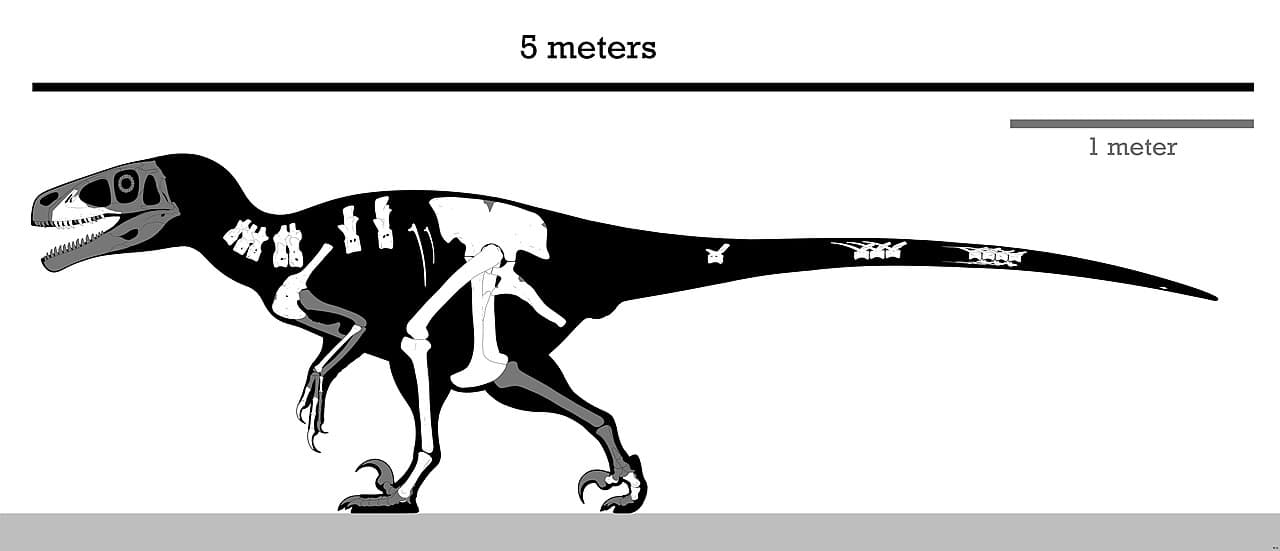
Skeletal reconstruction of Achillobator, showing its stocky, robust build.
PaleoNeolitic, CC BY-SA 4.0, via Wikimedia Commons