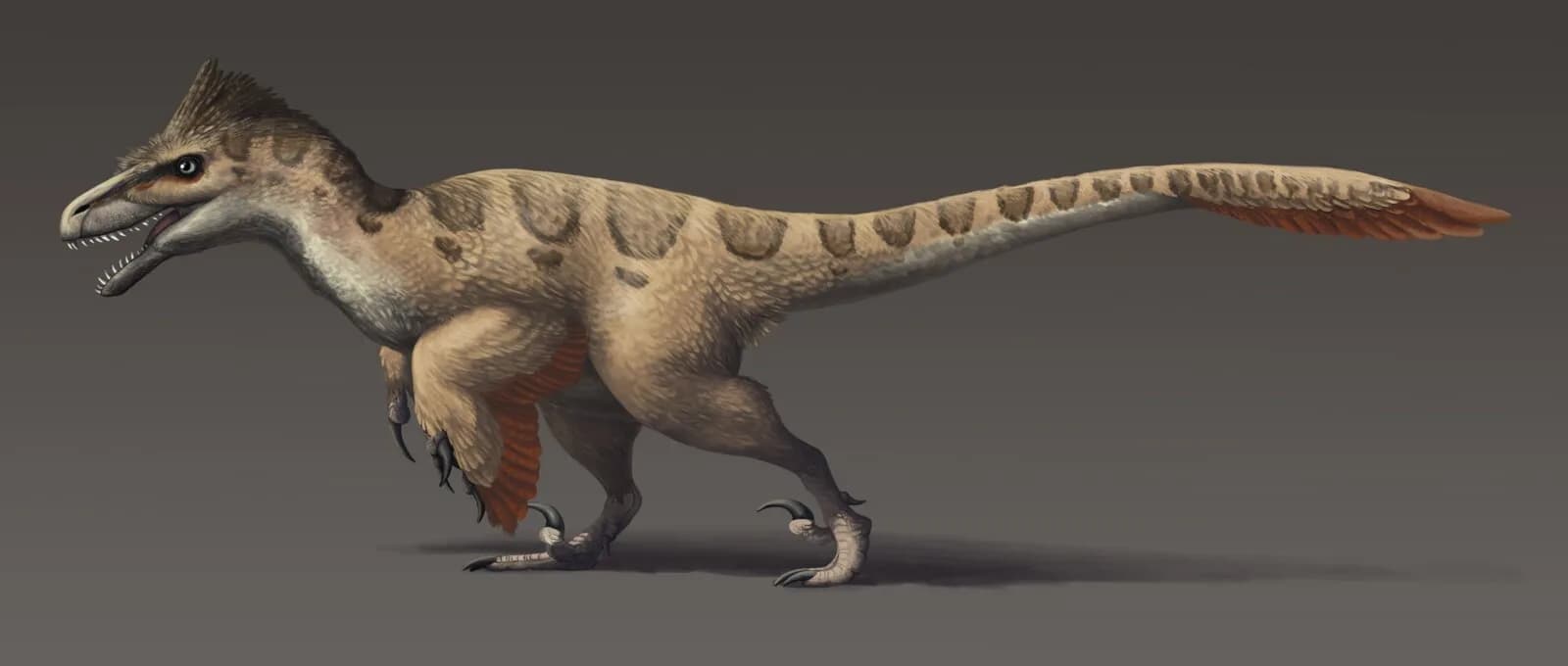
Utahraptor
Utahraptor ostrommaysorum is the largest dromaeosaurid known: 5 to 7 metres long and 280 to 500 kilograms, roughly 25 times the mass of Velociraptor. Discovered in Utah in 1991, it lived 126 to 125 million years ago. Its 22-centimetre sickle claw remains the largest ever found on a raptor.
Utahraptor lived in the Early Cretaceous, approximately 126 to 125 million years ago, during the Barremian stage. It is the largest known dromaeosaurid (raptor), predating its smaller cousins Deinonychus and Velociraptor by 10 million years. Its discovery proved that very large-sized raptors existed in the fossil record, retrospectively (and unintentionally) validating the exaggerated proportions of the Jurassic Park raptors. The Early Cretaceous ecosystem of Utah was a semi-arid environment with seasonal waterways, very different from the current desert landscape. Utahraptor was the apex predator of its environment, dominating an ecosystem that included ornithopods, sauropods, and smaller theropods.
The king of raptors: 5 to 7 meters long and 280 to 500 kg, roughly the size of a polar bear. Its sickle claw could reach 22 to 24 cm on the bone alone, and probably 33 cm with the keratin sheath that covered it in life. This is the largest retractable claw known in dromaeosaurids. Its imposing size made it a predator capable of attacking considerably larger prey. Its forelimbs were proportionally more robust than those of smaller dromaeosaurids, equipped with sharp claws for grasping prey. Its massive skull, though incompletely known, bore large serrated teeth adapted for consuming large prey.
The apex predator of its ecosystem, Utahraptor hunted large prey — ornithopods and potentially even juvenile sauropods. Its size and power placed it at the top of the Early Cretaceous food chain in North America. Its giant claw, combined with powerful jaws and sharp manual claws, made it a formidable multi-weapon predator. Unlike small dromaeosaurids that used the RPR (Raptor Prey Restraint) model, Utahraptor could probably inflict fatal wounds directly with its claw. Its diet was probably less specialized than its smaller cousins, including a greater variety of prey of different sizes. The discovery of the 'Utahraptor block' (see fossils) suggests that prey trapped in quicksand could also attract opportunistic predators.
Utahraptor lived in the plains and forests of what is now Utah, in a semi-arid environment with seasonal waterways, corresponding to the Cedar Mountain Formation. The landscape was a mix of open areas and conifer and fern forests, punctuated by rivers and temporary lakes. The Cedar Mountain Formation represents an important temporal window of the North American Early Cretaceous, less studied than Jurassic or Late Cretaceous formations. The ecosystem included iguanodonts, titanosauriform sauropods, and other smaller theropods. Quicksand and sediment traps were apparently features of this environment, as evidenced by the 'Utahraptor block.'
Utahraptor anatomy is that of a giant dromaeosaurid, with all familial characteristics amplified by its imposing size. Its giant retractable sickle claw was supported by an extremely powerful and muscular second toe, capable of generating considerable impact force. Hypothetical feather impressions are suggested by analogy with its smaller cousins, all confirmed to be feather-covered — so it is very likely that Utahraptor was also feathered. Its rigid tail, reinforced by ossified tendons, served as a counterbalance during attacks and pursuits. Its powerful forelimbs, equipped with three sharp manual claws, could grasp and hold large prey. The overall robustness of its skeleton suggests an animal more powerful but less agile than smaller dromaeosaurids — a size-agility trade-off typical of large predators.
A block of hardened sand containing multiple Utahraptor of different sizes, discovered in 2014 in Utah, suggests a collective death, perhaps during a rescue attempt or a group hunt gone wrong in quicksand. This 'Utahraptor block' continues to be patiently excavated and could contain up to 9 individuals trapped together. If this interpretation is correct, it would provide rare evidence of social behavior in large dromaeosaurids. Its imposing size probably allowed it to hunt solo, unlike smaller dromaeosaurids that might have benefited from cooperation. Feathers, certainly present but not adapted for flight at this size, probably served for thermoregulation, courtship display, and egg protection. Biomechanical models suggest a top speed of about 30-35 km/h, slower than small dromaeosaurids but compensated by superior power and attack range.
Described in 1993 by James Kirkland, Robert Gaston, and Kirk Britt from fossils found in the Cedar Mountain Formation of Utah. Its discovery came when Jurassic Park was in post-production — Steven Spielberg reportedly joked that the film would have been remade had Utahraptor been known earlier. The holotype (CEUM 184v.86) includes skull fragments, claws, and postcranial elements. The most ambitious project concerning Utahraptor is the excavation of the 'Utahraptor block,' a 9-ton sandstone block discovered in 2014 potentially containing 9 individuals trapped in quicksand 125 million years ago. The excavation of this block, partly funded by crowdfunding, could take years and reveal unique information about social behavior in large dromaeosaurids. Additional fossils have been found at other Cedar Mountain Formation sites, progressively enriching our knowledge of this giant predator.
| Period | Crétacé inférieur / Early Cretaceous (Barremien) |
| Era | Mésozoïque / Mesozoic |
| Age | 126–125 Ma |
| Location | Amérique du Nord / North America (Utah) |
| Length | 5–7 m |
| Height | ~1.5–2 m |
| Weight | 280–500 kg |
| Diet | Carnivore |
| Discovery | 1991 |
Utahraptor ostrommaysorum measured 5 to 7 meters long and weighed 280 to 500 kg — roughly the size of a polar bear, and 25 times the mass of the real Velociraptor. It is ironically the closest to the Jurassic Park 'raptors' in terms of actual size. Its sickle claw reached 22 to 24 cm on bone alone, probably 33 cm with the keratinous sheath — the largest known in any dromaeosaurid.
In 2014, a 9-tonne sandstone block was discovered in Utah, potentially containing up to 9 Utahraptor ostrommaysorum individuals of different sizes, trapped together in quicksand 125 million years ago. This 'Utahraptor block,' partly funded by crowdfunding, is still being excavated. If it represents a group trapped during a hunt, it would be rare evidence of social behavior in large dromaeosaurids.
Utahraptor ostrommaysorum was described in 1993 by James Kirkland, Robert Gaston, and Kirk Britt from Cedar Mountain Formation fossils (Utah), discovered in 1991. Its discovery came while Jurassic Park was in post-production — Spielberg reportedly joked the film would have been remade had the species been known earlier. The holotype (CEUM 184v.86) includes skull fragments, claws, and postcranial elements.
Information on this page is based on peer-reviewed scientific publications.
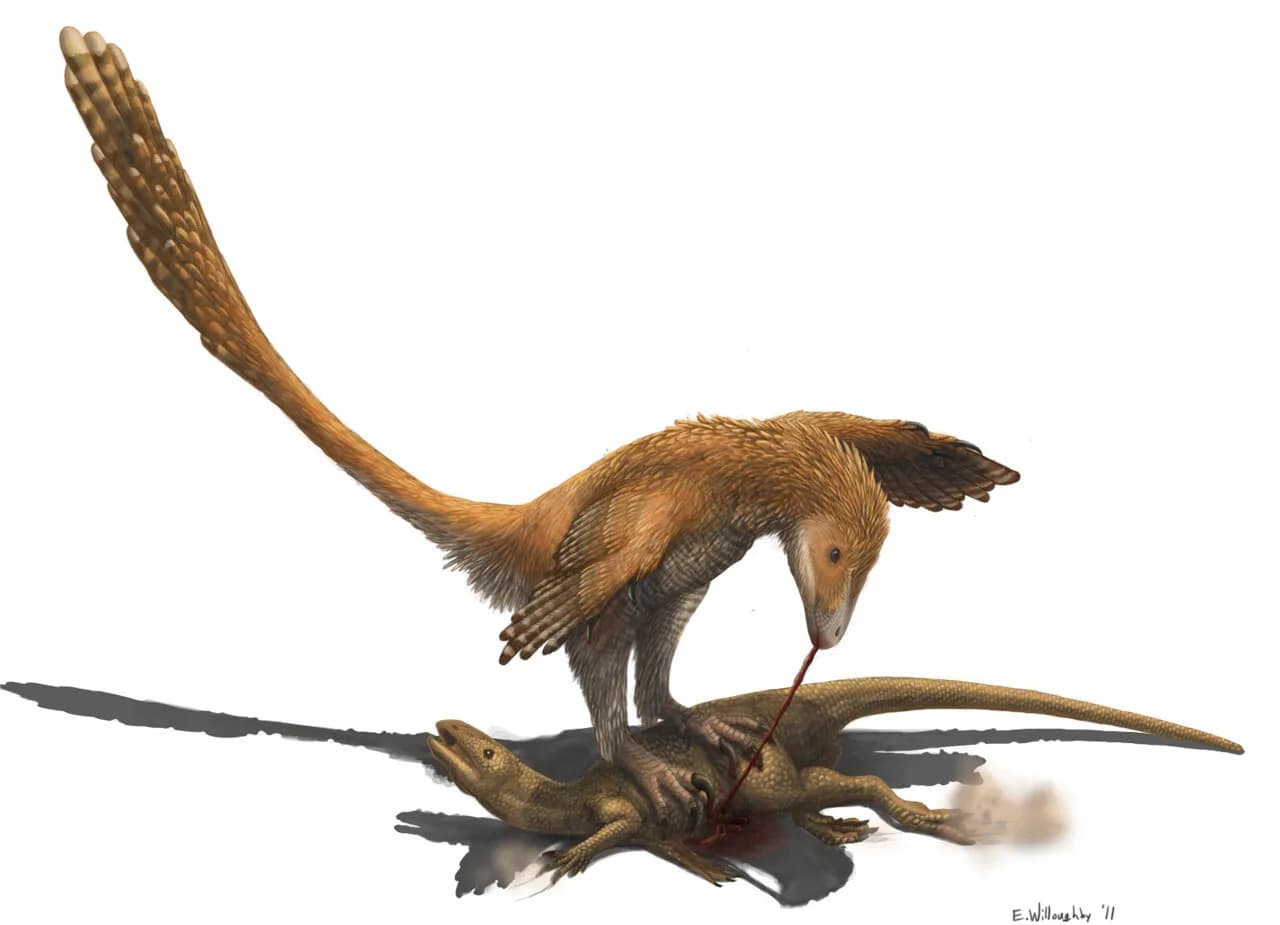
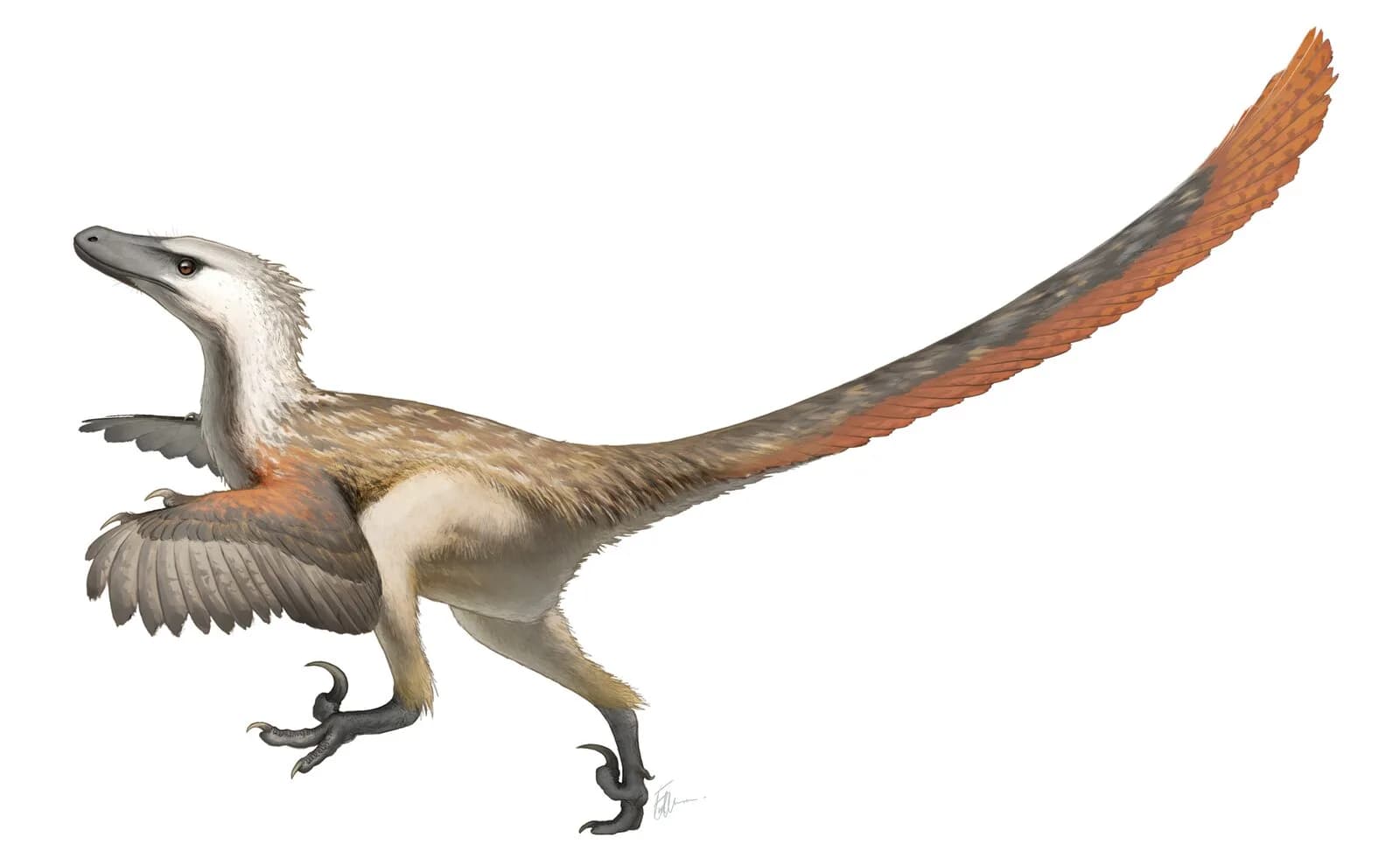
Life reconstruction of Utahraptor ostrommaysorum
Emily Willoughby, CC BY-SA 3.0, via Wikimedia Commons
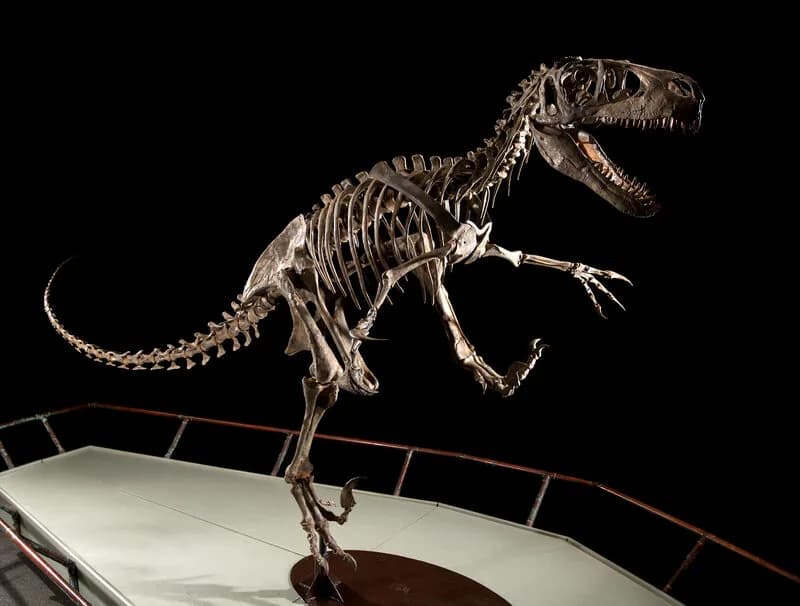
Utahraptor skeletal mount, BYU
Jaren Wilkey, CC BY-SA 4.0