Deinocheirus
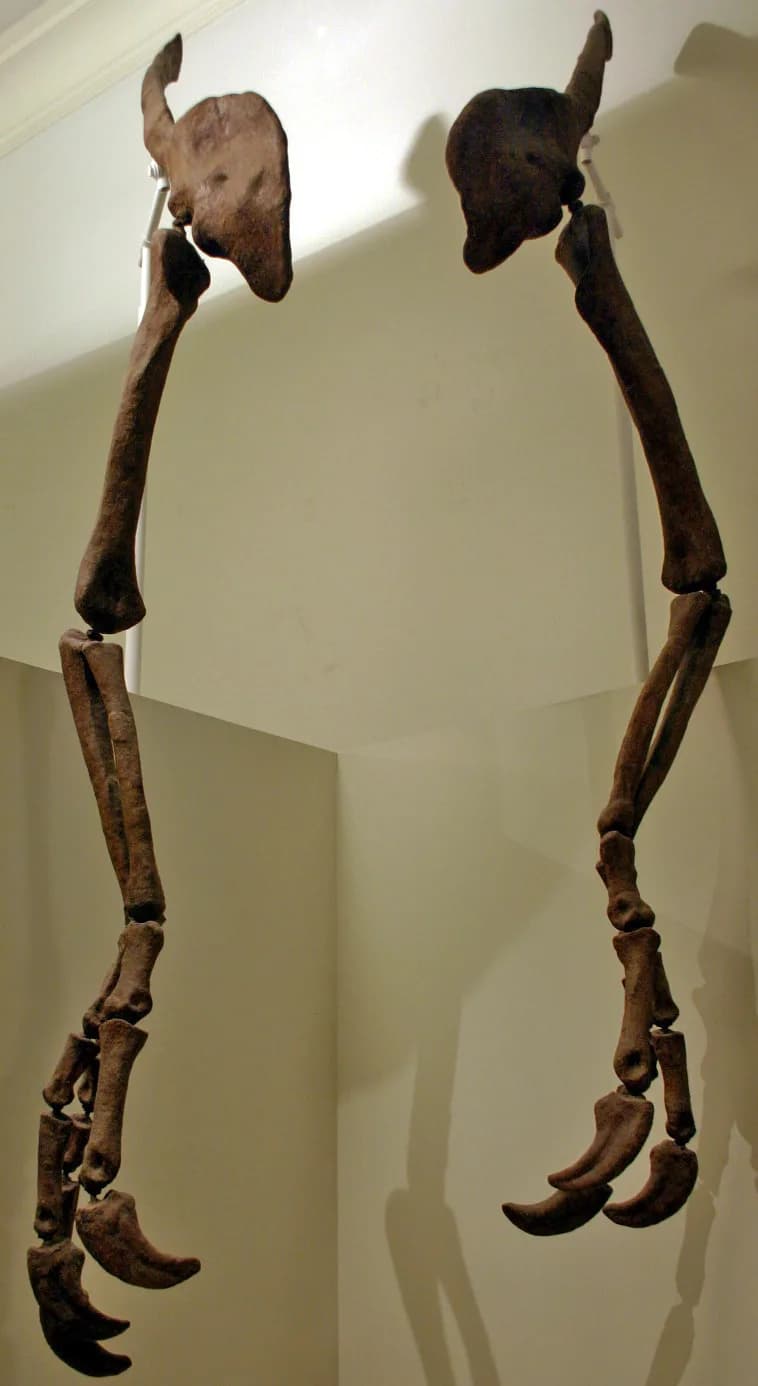
Deinocheirus mirificus was known for nearly fifty years by its arms alone: 2.4 metres long, pulled from the Gobi Desert in 1965, with no other part of the skeleton. The mystery only broke with the discovery of complete individuals. It is now known to have measured around 11 metres and 6 tonnes, some 70 million years ago, and to have filter-fed.
Playable in Path of Titans
See Deinocheirus mirificus's stats, abilities and role on our survival server.
Deinocheirus mirificus lived during the Late Cretaceous period, approximately 70 million years ago, during the Maastrichtian stage. This period corresponds to the final millions of years of the Mesozoic era, just before the Cretaceous-Paleogene mass extinction that wiped out the non-avian dinosaurs. Deinocheirus inhabited the vast alluvial plains of what is now the Gobi Desert in Mongolia, a region that was vastly different from today's arid landscape. The climate at the time was semi-arid but punctuated by seasonal waterways and wetlands that supported remarkable biodiversity. Deinocheirus shared its ecosystem with formidable theropods like Tarbosaurus, the Asian cousin of Tyrannosaurus, as well as hadrosaurs such as Saurolophus and ankylosaurs like Tarchia.
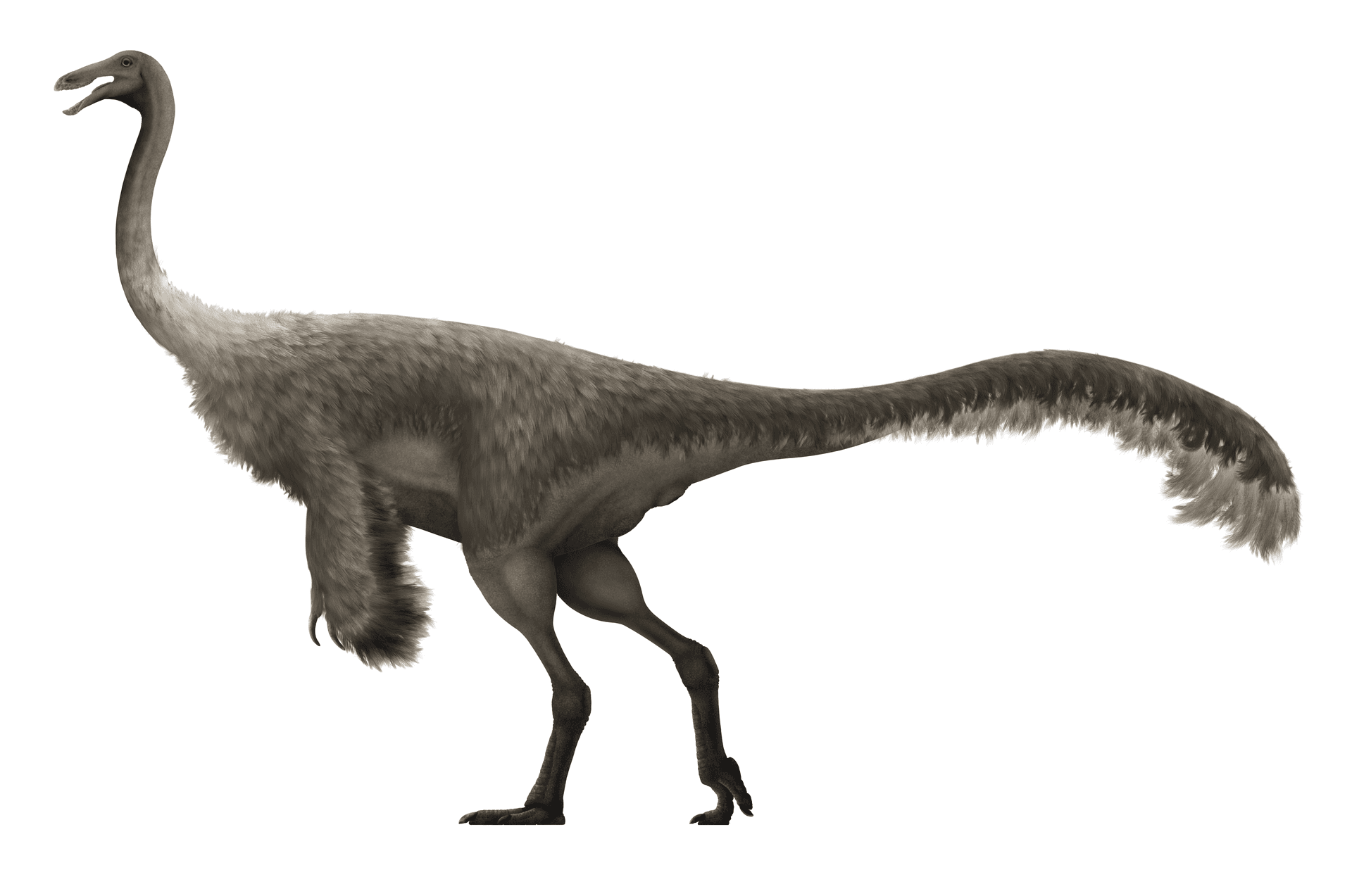
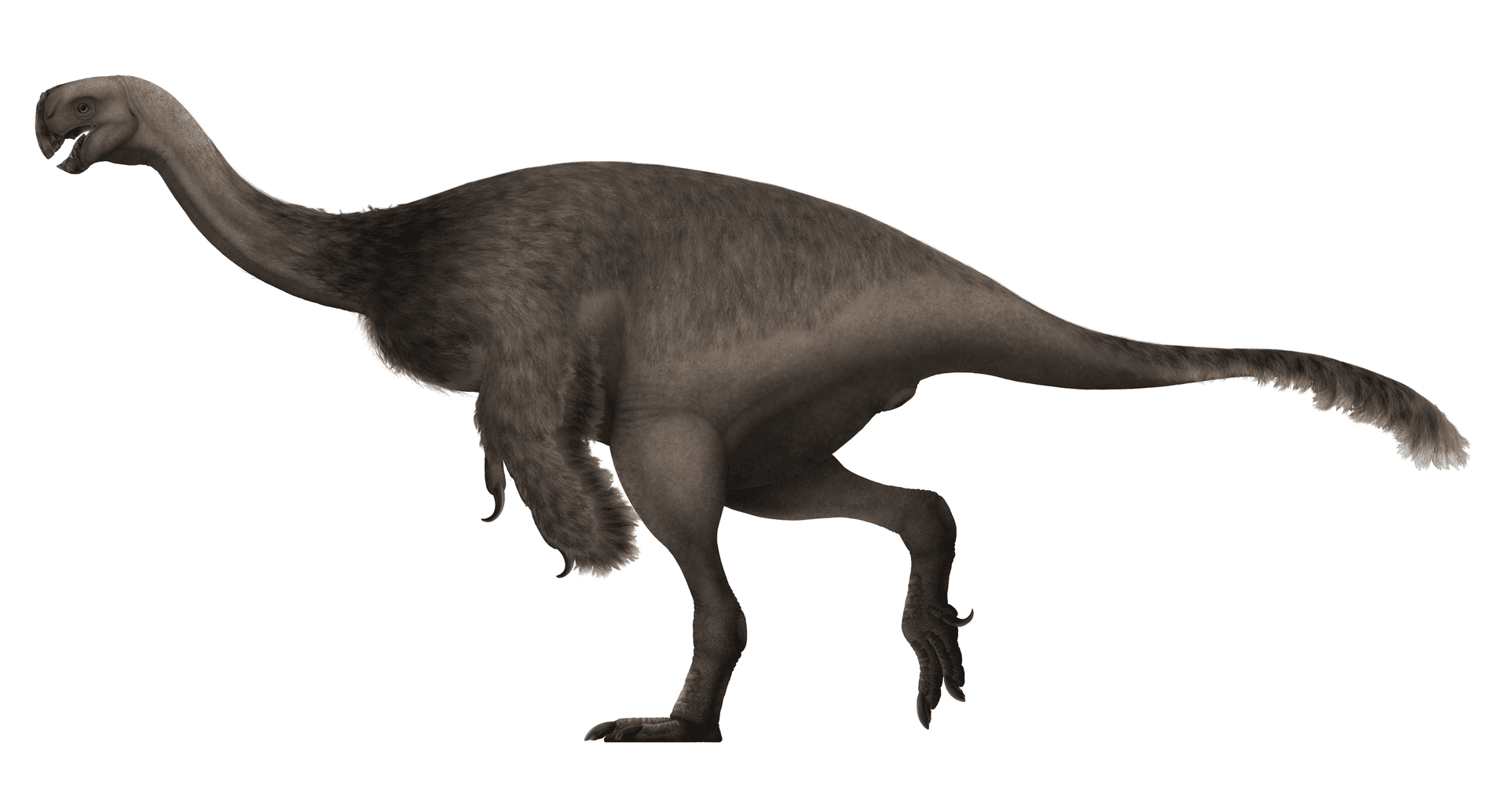
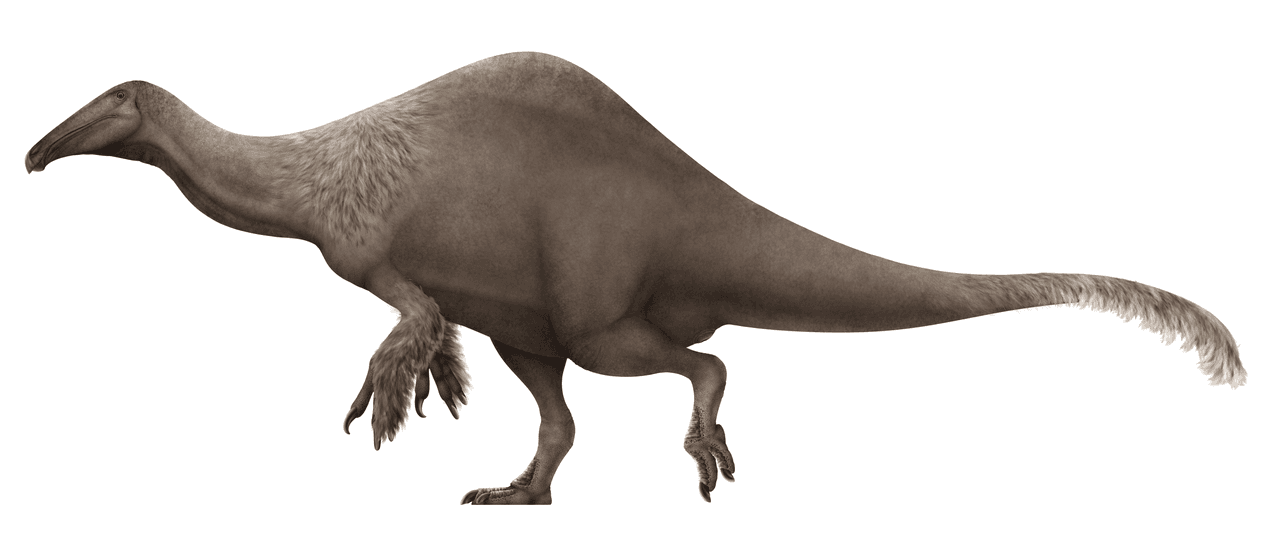
Deinocheirus mirificus was a true giant among ornithomimosaurs, reaching an impressive length of approximately 11 meters and an estimated weight of 6 tonnes, making it the largest known member of this dinosaur group. To put this size in perspective, Deinocheirus was about three times longer and thirty times heavier than its cousin Gallimimus, another Mongolian ornithomimosaur. Its height at the hips reached approximately 4 meters, placing it among the largest theropods of its era. Unlike typical ornithomimosaurs that were slender and built for speed, Deinocheirus had a massive, stocky silhouette with a voluminous torso and body proportions that were more reminiscent of a therizinosaurid than a classic ornithomimosaur. This enormous bulk made Deinocheirus one of the most surprising dinosaur discoveries of the twenty-first century.
Deinocheirus mirificus was an omnivore, a rare characteristic among large theropods that were typically strict carnivores. The most direct evidence of its diet comes from the analysis of preserved stomach contents in the specimen discovered in 2009, which contained both fish scales and gastroliths, stones intentionally swallowed to aid in the digestion of plant material. This combination of fish remains and gastroliths suggests a diversified diet including fish, aquatic plants, and likely terrestrial vegetation as well. Its wide, toothless beak, similar to that of a duck, was perfectly adapted for filtering mud from rivers and marshy areas in search of food. This omnivorous feeding strategy allowed Deinocheirus to exploit a wide variety of resources, thereby reducing direct competition with large carnivores such as Tarbosaurus that dominated the same ecosystem.
Deinocheirus inhabited the alluvial plains and riverine zones of the Nemegt Formation in the present-day Gobi Desert of Mongolia. During the Late Cretaceous, this region presented a landscape radically different from its current aridity: winding rivers traversed vast floodplains bordered by lush vegetation. The climate was semi-arid with marked wet seasons that fed a seasonal hydrographic network, creating wetlands, swamps, and temporary lakes throughout the landscape. This aquatic and riverine environment perfectly matched the probable semi-aquatic lifestyle of Deinocheirus, which could feed in shallow waters thanks to its adapted beak. The Nemegt Formation is one of the richest fossil-bearing deposits in Mongolia, having yielded a diverse fauna comprising tyrannosaurs, hadrosaurs, ankylosaurs, and numerous other theropods that coexisted in this productive ecosystem.
The anatomy of Deinocheirus is among the most bizarre and surprising of all known dinosaurs. Its most famous feature lies in its disproportionately long arms measuring 2.4 meters each, ending in three fingers equipped with massive, curved claws that could reach 20 centimeters in length. These gigantic arms, which earned the dinosaur its name meaning 'terrible hands,' were the longest of any known bipedal theropod. The skull, discovered only in 2009, revealed a surprisingly small head bearing a wide, flattened beak resembling that of a hadrosaur or duck, completely devoid of teeth. A prominent dorsal hump, formed by elongated neural spines of the vertebrae, constituted another remarkable anatomical feature whose exact function remains debated: fat storage, thermoregulation, or visual signaling to conspecifics. The hindlimbs were robust but proportionally short relative to the body, indicating that Deinocheirus was not a fast runner despite belonging to the ornithomimosaur group typically known for their speed.
The behavior of Deinocheirus can be reconstructed from its unique anatomy and ecological environment. Unlike typical ornithomimosaurs that were agile runners comparable to modern ostriches, Deinocheirus was probably a slow, lumbering animal, moving at a leisurely pace along rivers and marshy areas of the Mongolian floodplains. Its lifestyle possibly resembled that of modern bears fishing in rivers, using its immense arms and powerful claws to dig through mud, overturn tree trunks, or catch fish in shallow waters. The dorsal hump likely played a role in intraspecific visual communication, enabling recognition between individuals or serving during courtship displays between potential mates. Its wide beak facilitated grazing on aquatic vegetation and filtering mud to extract edible organisms from river bottoms. Despite its imposing size of six tonnes, Deinocheirus was not an apex predator and probably had to be wary of Tarbosaurus, as evidenced by tyrannosaur bite marks found on some of its bones.
The discovery history of Deinocheirus is one of the greatest mysteries in modern paleontology, spanning nearly fifty years of speculation and intrigue. In 1965, a Polish-Mongolian paleontological expedition led by Zofia Kielan-Jaworowska discovered in the Gobi Desert a pair of gigantic arms measuring 2.4 meters long, along with a few vertebrae and rib fragments. These monumental arms, described in 1970 by Halszka Osmólska and Ewa Roniewicz, constituted for decades one of paleontology's greatest puzzles: what kind of dinosaur did these oversized limbs belong to? Speculations ranged from a giant carnivore to a massive herbivore, with no consensus in sight. It was not until 2009 that two much more complete specimens were discovered in the Nemegt Formation by a Korean-Mongolian team led by Yuong-Nam Lee. In 2014, paleontologists Yuong-Nam Lee, Rinchen Barsbold, and Philip Currie published the complete description of Deinocheirus, finally revealing to the world the stunning appearance of this animal: a giant duck-billed ornithomimosaur with a dorsal hump and a massive body that was totally unexpected.
| Period | Crétacé supérieur / Late Cretaceous (Maastrichtien) |
| Era | Mésozoïque / Mesozoic |
| Age | ~70 Ma |
| Location | Désert de Gobi, Mongolie / Gobi Desert, Mongolia |
| Length | ~11 m |
| Height | ~4 m |
| Weight | ~6 t |
| Diet | Filtreur |
| Discovery | 1965 |
Deinocheirus mirificus was an omnivore — rare for a large theropod. Analysis of the stomach contents of the 2009 specimen revealed fish scales and gastroliths, stones swallowed to aid in digesting plant material. Its wide, toothless beak, similar to a duck's, allowed it to filter mud from rivers of the Nemegt Formation in Mongolia.
In 1965, a Polish-Mongolian expedition uncovered only two gigantic 2.4-meter arms along with a few vertebrae — no skull, no body. For nearly 50 years, these limbs became one of paleontology's greatest mysteries. Only in 2009, with two more complete specimens discovered by a Korean-Mongolian team, was the full description published in 2014.
Deinocheirus mirificus lived approximately 70 million years ago, during the Maastrichtian stage of the Late Cretaceous, across the alluvial plains of the Nemegt Formation in the Gobi Desert of Mongolia. It shared its ecosystem with the tyrannosaur Tarbosaurus, hadrosaur Saurolophus, and ankylosaur Tarchia.
Deinocheirus mirificus illustration
Wikimedia Commons
Deinocheirus restoration
Wikimedia Commons