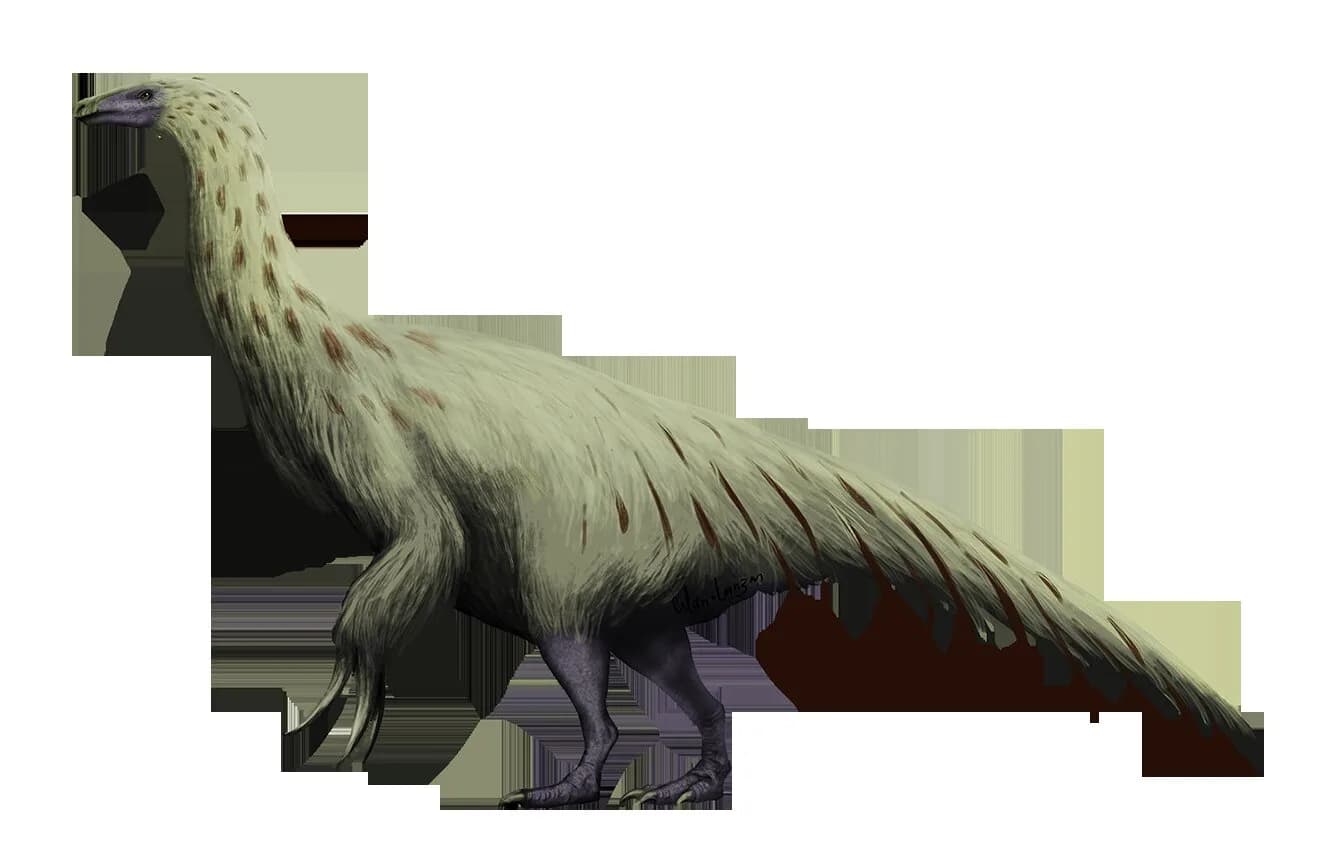
Thérizinosaure
Therizinosaurus cheloniformis was a theropod from Mongolia described in 1948 and dated to around 70 million years ago. At 9 to 10 metres and 3 to 5 tonnes, it carried claws 70 centimetres long — the longest of any land animal known. Despite that appearance it fed mostly on plants: the claws pulled branches toward its mouth.
Therizinosaurus lived during the Late Cretaceous period, approximately 70 million years ago, during the Maastrichtian stage. It inhabited what is now the Nemegt Formation of Mongolia, a region that during this period featured river deltas, floodplains, and seasonal lakes surrounded by diverse vegetation. This was one of the final epochs of the Age of Dinosaurs, just a few million years before the catastrophic Chicxulub asteroid impact that triggered the end-Cretaceous mass extinction. Therizinosaurus shared its ecosystem with formidable predators like Tarbosaurus, large ornithomimosaurs, and various hadrosaurs, representing the remarkable diversity of Late Cretaceous Asian dinosaur faunas.
Therizinosaurus was an imposing animal, measuring between 9 and 10 meters long with an estimated weight of 3 to 5 tonnes. It stood up to approximately 5 meters tall thanks to its long neck and semi-upright posture. But its most spectacular feature is undoubtedly its enormous claws: its hand claws measured up to 70 centimeters long (one meter with the keratinous sheath), the longest of any known animal. Its overall appearance must have been among the most unusual of all dinosaurs.
Therizinosaurus was probably herbivorous or omnivorous, despite belonging to the theropod group, traditionally carnivores. Its long claws likely served to grab high branches and pull them toward its mouth, similar to Pleistocene giant ground sloths. Its horny beak without teeth at the front of the jaw and small leaf-shaped teeth at the back were adapted for a plant diet. It could also use its claws to open termite mounds or dig up roots, supplementing its diet with insects and other small invertebrates.
Therizinosaurus inhabited the river deltas and floodplains of the Nemegt Formation in Late Cretaceous Mongolia. The environment was characterized by meandering river systems, seasonal lakes, and areas of dense vegetation including conifers, ferns, and early flowering plants that provided abundant food resources for this enormous herbivore. The climate was warm with seasonal variations, creating productive ecosystems capable of supporting the large body mass of Therizinosaurus and other giant dinosaurs. This habitat was shared with diverse fauna including tyrannosaurs, ornithomimids, hadrosaurs, and ankylosaurs, creating a complex ecological web. The proximity to water sources was likely important for Therizinosaurus, which needed substantial daily food and water intake.
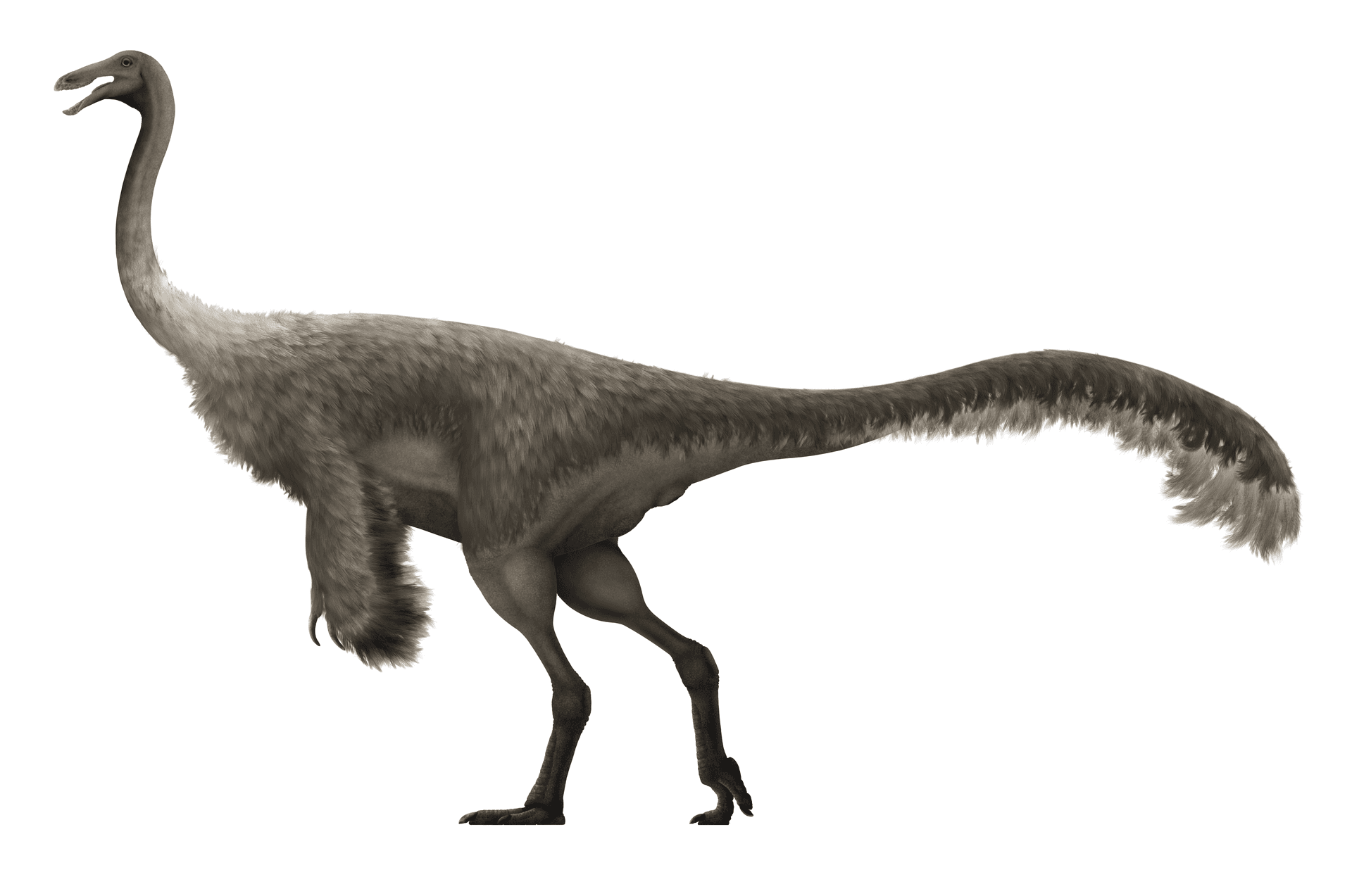
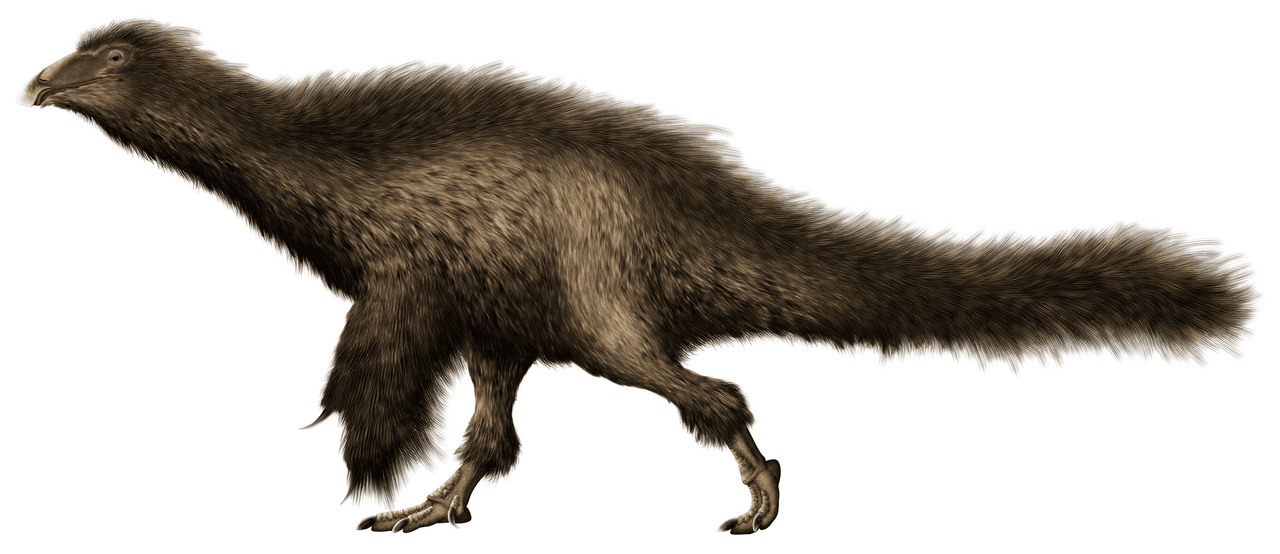
Therizinosaurus anatomy is one of the strangest among dinosaurs. This theropod had developed a massive, stocky body with a wide pelvis, long neck, and small head — a morphology convergent with that of sauropods. Its extraordinary claws, carried by long and powerful arms, are composed of elongated phalanges covered by a keratinous sheath that further increased their length. Its broad four-toed feet gave it an unusual plantigrade posture for a theropod. Its voluminous abdomen probably housed a long digestive system necessary for fermenting plant material.
Therizinosaurus was almost certainly a slow-moving herbivore that used its enormous claws primarily for pulling down branches and stripping vegetation from trees, much like a giant ground sloth would millions of years later. The massive claws, while primarily feeding tools, would have also served as formidable defensive weapons against large predators like Tarbosaurus that shared its habitat. Despite its peaceful herbivorous lifestyle, a threatened Therizinosaurus would have been an extremely dangerous animal capable of inflicting devastating injuries with a single swipe. Social behavior remains uncertain, but the animal may have been somewhat solitary given its large size and the extensive feeding territory each individual would have required to sustain itself.
The first Therizinosaurus fossils were discovered during a joint Soviet-Mongolian expedition in 1948 in the Nemegt Formation of the Gobi Desert. The remains were limited to enormous claws and a few arm bones, so bizarre that scientists initially thought they had found a giant sea turtle — hence the initial name Therizinosaurus cheloniformis meaning 'scythe lizard in the form of a turtle.' Evgeny Maleev described it in 1954, but its true theropod nature was not understood until the 1970s-1990s, thanks to the discovery of more complete relatives like Alxasaurus and Erlikosaurus. Even today, no complete skeleton has been found.
| Period | Crétacé supérieur / Late Cretaceous (Maastrichtien) |
| Era | Mésozoïque / Mesozoic |
| Age | ~70 Ma |
| Location | Asie Centrale / Central Asia (Mongolie / Mongolia) |
| Length | 9–10 m |
| Height | ~4 m |
| Weight | 3 000–5 000 kg |
| Diet | Omnivore |
| Discovery | 1948 |
Therizinosaurus cheloniformis was probably herbivorous or omnivorous despite belonging to theropods, a traditionally carnivorous group. Its horny beak without teeth at the front and small leaf-shaped teeth at the back of its jaws were adapted for a plant diet. Its giant 70 cm claws served to pull down high branches — like Pleistocene giant ground sloths — not to hunt prey.
The first Therizinosaurus cheloniformis fossils, discovered during a Soviet-Mongolian expedition in 1948, were limited to enormous claws and a few arm bones. These bizarre, oversized structures — the longest claws of any known animal, up to 70 cm (one meter with the keratinous sheath) — led scientists to think of a giant sea turtle, hence the name cheloniformis meaning 'turtle-shaped.'
Therizinosaurus cheloniformis lived approximately 70 million years ago in Mongolia (Nemegt Formation), sharing its habitat with Tarbosaurus, a large tyrannosaur. Its 70 cm claws — primarily tools for reaching high vegetation — became formidable weapons during confrontations. An individual rearing on its legs could sweep the air at 5 meters height, creating a perimeter difficult to breach.
Information on this page is based on peer-reviewed scientific publications.
Life reconstruction of Therizinosaurus cheloniformis
Mario Lanzas, CC BY-SA 4.0, via Wikimedia Commons
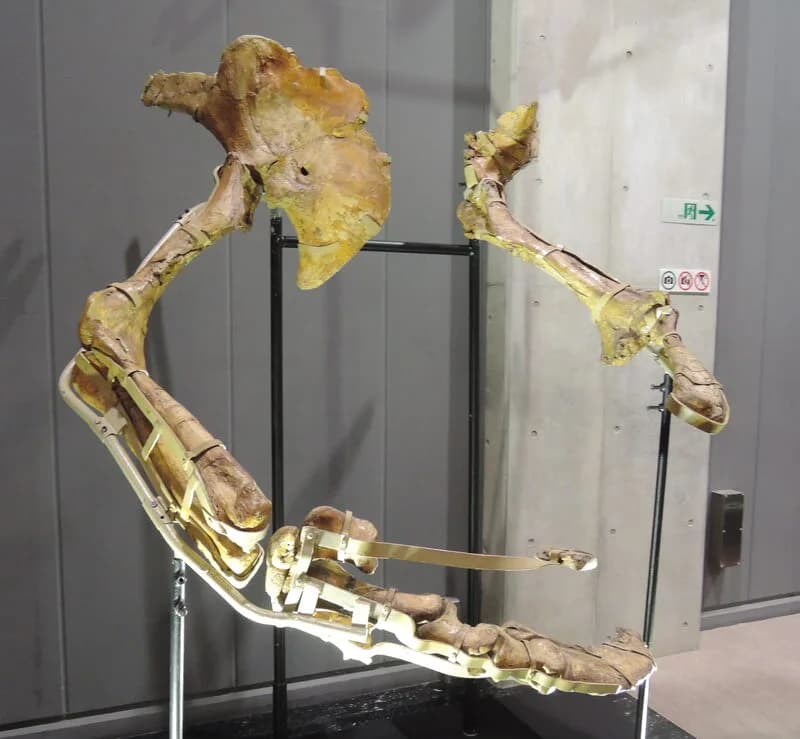
Therizinosaurus fossil claws
Yuya Tamai, CC BY 2.0