Gigantoraptor
Gigantoraptor erlianensis is the largest known oviraptorosaur: 8 metres and 1.5 to 2 tonnes, roughly thirty-five times the mass of its usual cousins. It was uncovered in 2005 in Inner Mongolia by accident, during the filming of a documentary: palaeontologist Xu Xing spotted the fossil on camera. It lived some 70 million years ago.
Gigantoraptor lived during the Late Cretaceous period, approximately 70 million years ago, during the Maastrichtian stage, in what is now the Iren Dabasu Formation of Inner Mongolia, China. This enormous oviraptorosaur lived near the end of the age of dinosaurs, just a few million years before the catastrophic Chicxulub asteroid impact that triggered the end-Cretaceous mass extinction. The Iren Dabasu Formation preserves a Late Cretaceous Asian ecosystem of floodplains and river systems that supported diverse dinosaur communities. Gigantoraptor shared its environment with hadrosaurs, sauropods, and various other theropods, representing the remarkable diversity of Asian dinosaur faunas during the final epoch of the Mesozoic.
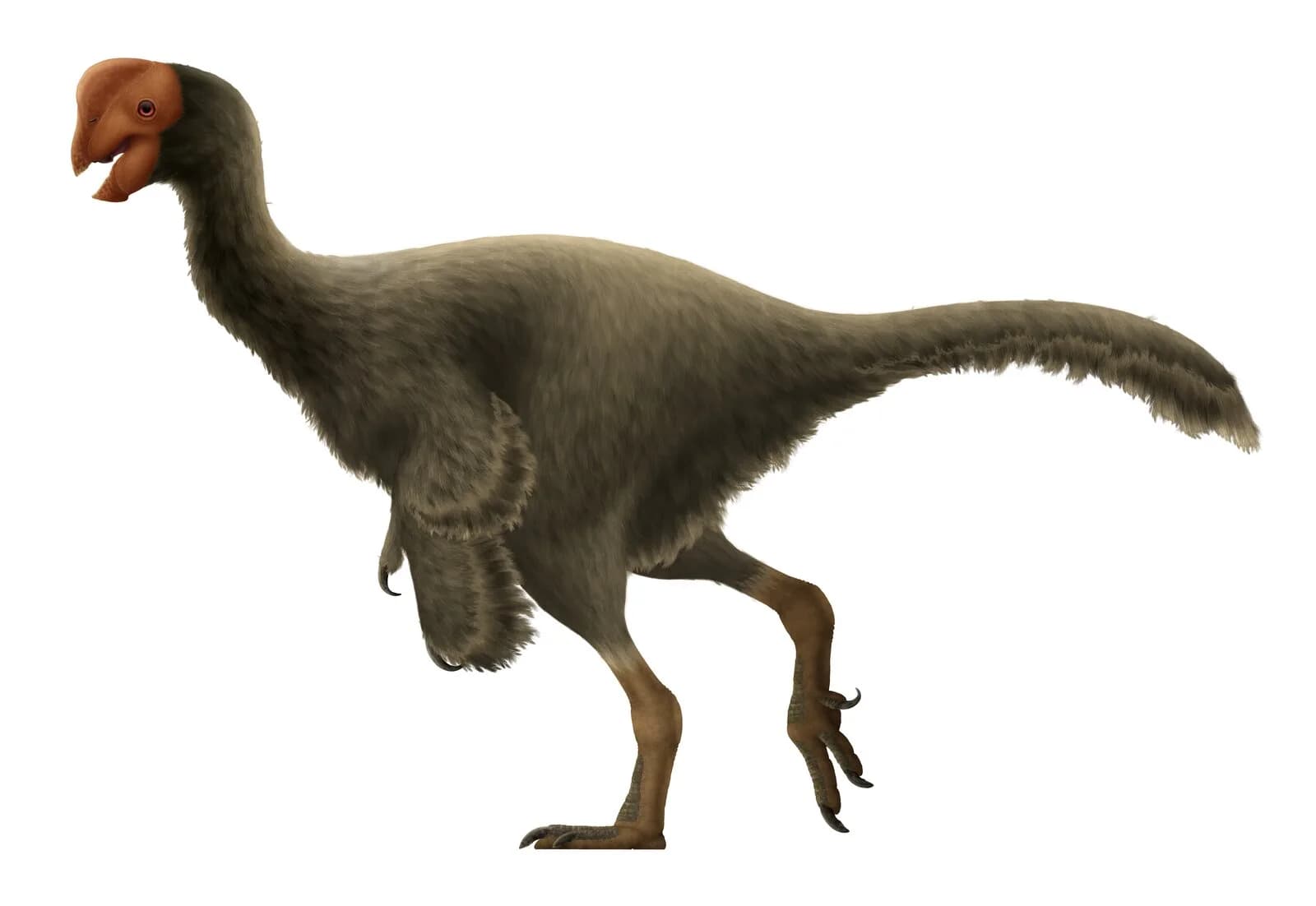
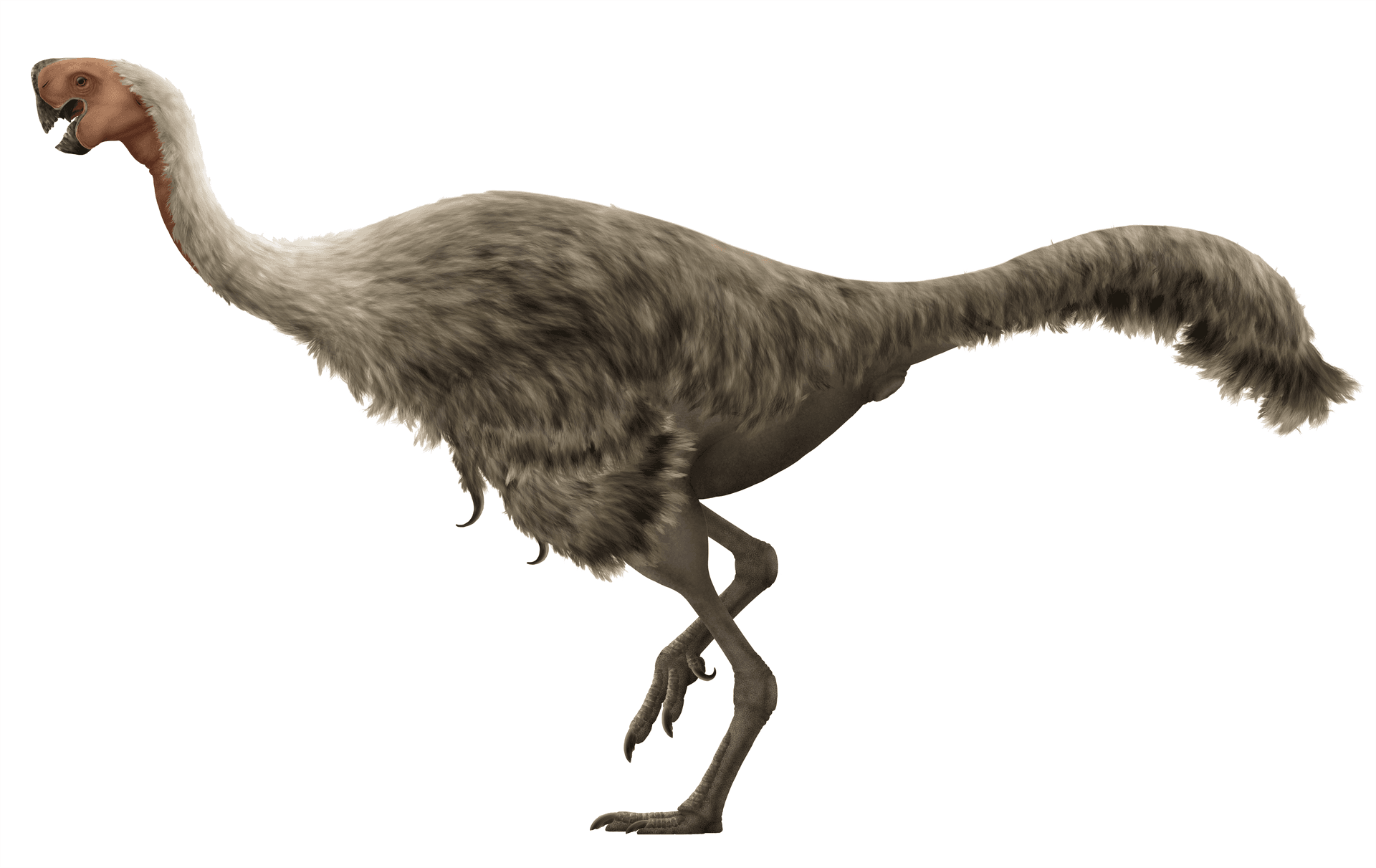
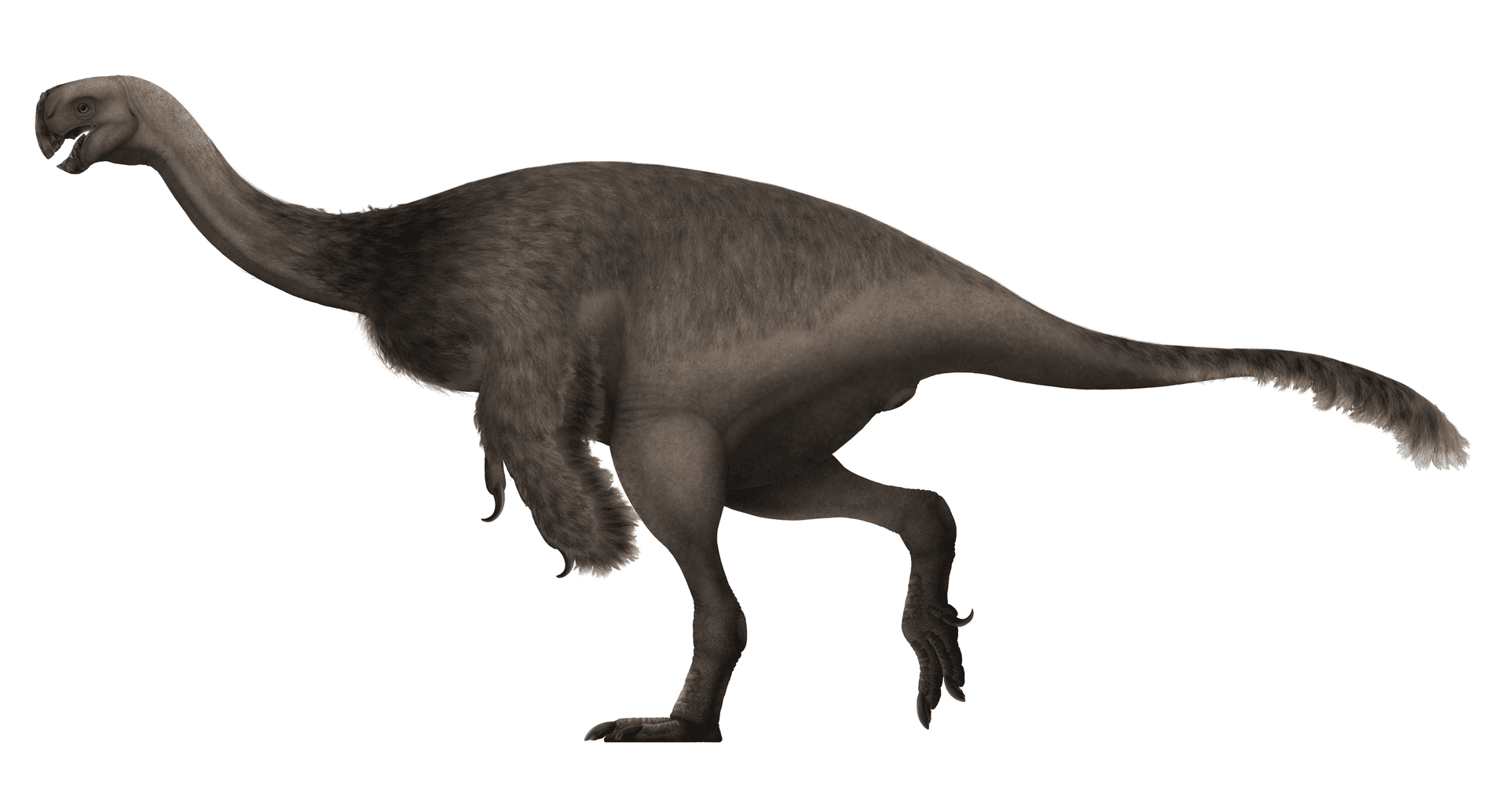
Gigantoraptor was a true giant among oviraptorosaurs, reaching an impressive length of 8 meters and a height of approximately 3.5 meters at head level. Its weight is estimated between 1.5 and 2 tonnes, making it one of the largest known feathered dinosaurs. Contrary to expectations for an animal of this size, its proportions remained surprisingly gracile, with long hind legs adapted for running. Its skull possessed a massive toothless beak and its forelimbs were long and powerful, ending in three fingers equipped with sharp claws.
Gigantoraptor's diet remains debated among paleontologists, as its toothless beak and enormous size create an unusual combination not seen in any other known dinosaur. As an oviraptorosaur, it likely retained the omnivorous tendencies of its smaller relatives, but its massive size may have pushed it toward a more herbivorous lifestyle to meet its caloric needs. The powerful beak could have been used for cropping vegetation, crushing seeds, or processing hard-shelled food items. Some researchers have suggested it may have also consumed small animals and eggs opportunistically, similar to modern large flightless birds. The lack of teeth and the structure of the jaw suggest a diet requiring significant crushing force rather than precise cutting or tearing.
Gigantoraptor inhabited the floodplains and river systems of the Iren Dabasu Formation in what is now Inner Mongolia, China. During the Late Cretaceous, this region featured broad alluvial plains, seasonal rivers, and patches of forest that supported diverse communities of dinosaurs and other animals. The climate was warm with seasonal variations, creating productive ecosystems capable of supporting a large-bodied animal with substantial food requirements. The landscape provided varied foraging opportunities, from open ground where seeds and small animals could be found to forested areas with diverse plant food sources. As one of the largest animals in its ecosystem without being a sauropod, Gigantoraptor occupied a unique ecological niche that had no parallel among other known dinosaur communities.
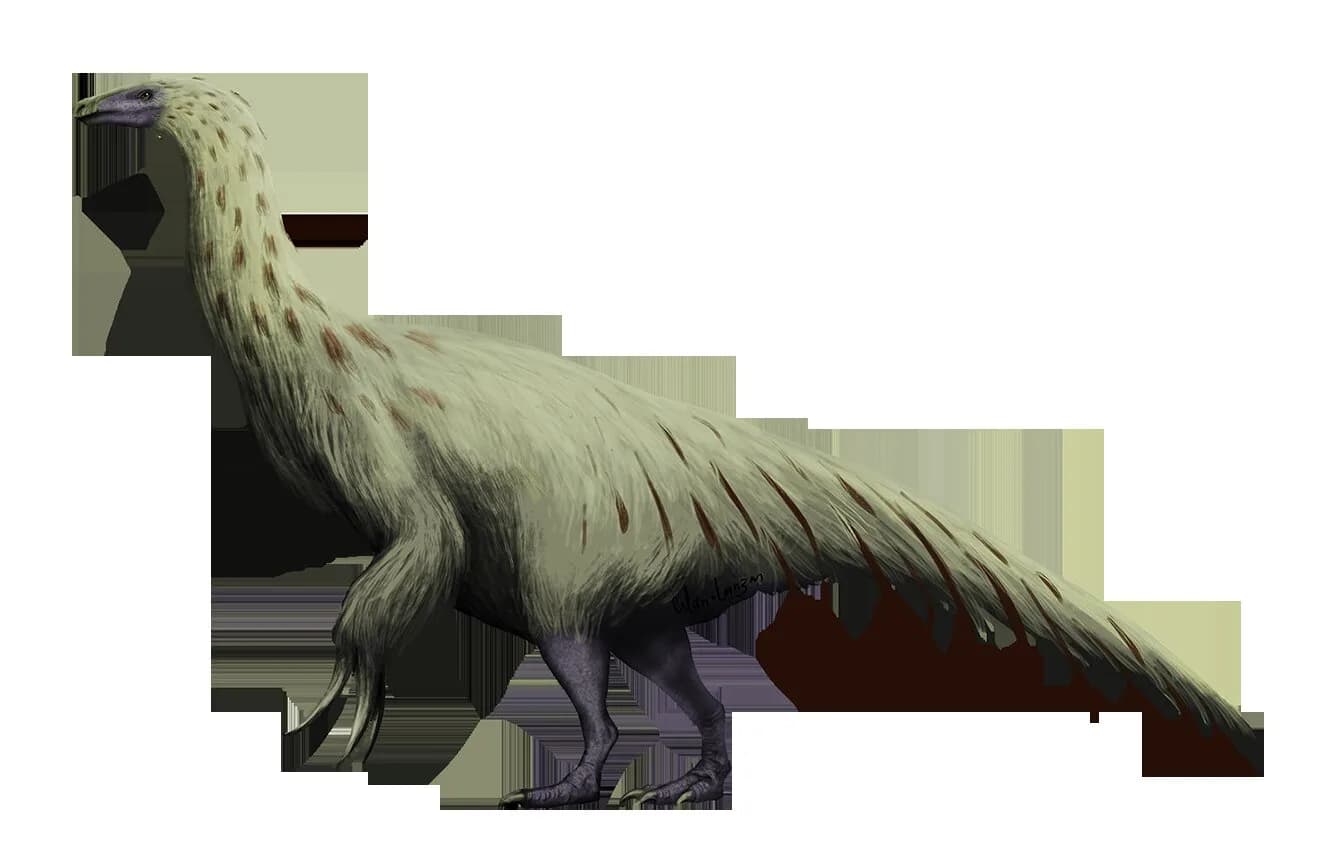
Gigantoraptor's anatomy is remarkable for its unusual proportions. Despite its colossal size of 8 meters, it retained the gracile features typical of oviraptorosaurs, with proportionally long and slender hind limbs. Its skull, while relatively small compared to its body, bore a massive toothless beak capable of exerting considerable force. Its arms were exceptionally long, each ending in three fingers equipped with curved claws measuring over 20 centimeters. Like other oviraptorosaurs, it was very likely covered in feathers, which would make it one of the largest feathered animals in history.
Gigantoraptor's behavior remains largely speculative due to limited fossil evidence. By analogy with its smaller relatives like Citipati and Oviraptor, it probably brooded its eggs, though the logistics of a 2-tonne animal sitting on a nest raise remarkable questions. Its eggs must have been exceptionally large, possibly among the largest known dinosaur eggs. Its long legs suggest it was a fast runner despite its size, capable of reaching considerable speeds for an animal of this mass. It likely lived in small family groups.
Gigantoraptor was discovered serendipitously in 2005 during a documentary filming in the Erlian Basin of Inner Mongolia. Paleontologist Xu Xing, participating in the filming, immediately recognized the significance of the fossil. The species was officially described in 2007 by Xu Xing and colleagues. The name means 'giant thief of Erlian.' Its description was a major surprise: oviraptorosaurs had until then been considered small to medium-sized dinosaurs. Gigantoraptor challenged this assumption by demonstrating that this group had evolved toward gigantism. The holotype specimen comprises relatively well-preserved postcranial skeletal elements.
| Period | Crétacé supérieur / Late Cretaceous (Maastrichtien) |
| Era | Mésozoïque / Mesozoic |
| Age | ~70 Ma |
| Location | Asie / Asia (Mongolie intérieure, Chine / Inner Mongolia, China) |
| Length | 8 m |
| Height | ~3.5 m |
| Weight | 1.5–2 t |
| Diet | Omnivore |
| Discovery | 2005 |
Gigantoraptor erlianensis measured 8 meters long, 3.5 meters tall, with an estimated weight of 1.5 to 2 tonnes. It is the largest known oviraptorosaur, roughly 35 times heavier than its typical cousins. Before its description in 2007 by Xu Xing, oviraptorosaurs were considered small to medium-sized dinosaurs. Gigantoraptor demonstrated that this group had evolved toward gigantism in Asia.
The diet of Gigantoraptor erlianensis remains debated. Its massive toothless beak suggests an omnivorous or herbivorous diet, capable of cutting vegetation or crushing hard foods. Like other oviraptorosaurs, it was very likely covered in feathers, which would make it one of the largest feathered animals to ever exist. Its forelimb claws of over 20 centimeters could serve for defense or capturing prey.
Gigantoraptor erlianensis was discovered serendipitously in 2005 during documentary filming in the Erlian Basin, Inner Mongolia, China. Paleontologist Xu Xing immediately recognized the significance of the fossil in front of the cameras. The species was described in 2007. The holotype specimen, comprising relatively well-preserved postcranial elements, is housed in the collections of the Institute of Vertebrate Paleontology in China.
Artistic restoration of Gigantoraptor erlianensis
Wikimedia Commons, CC BY-SA
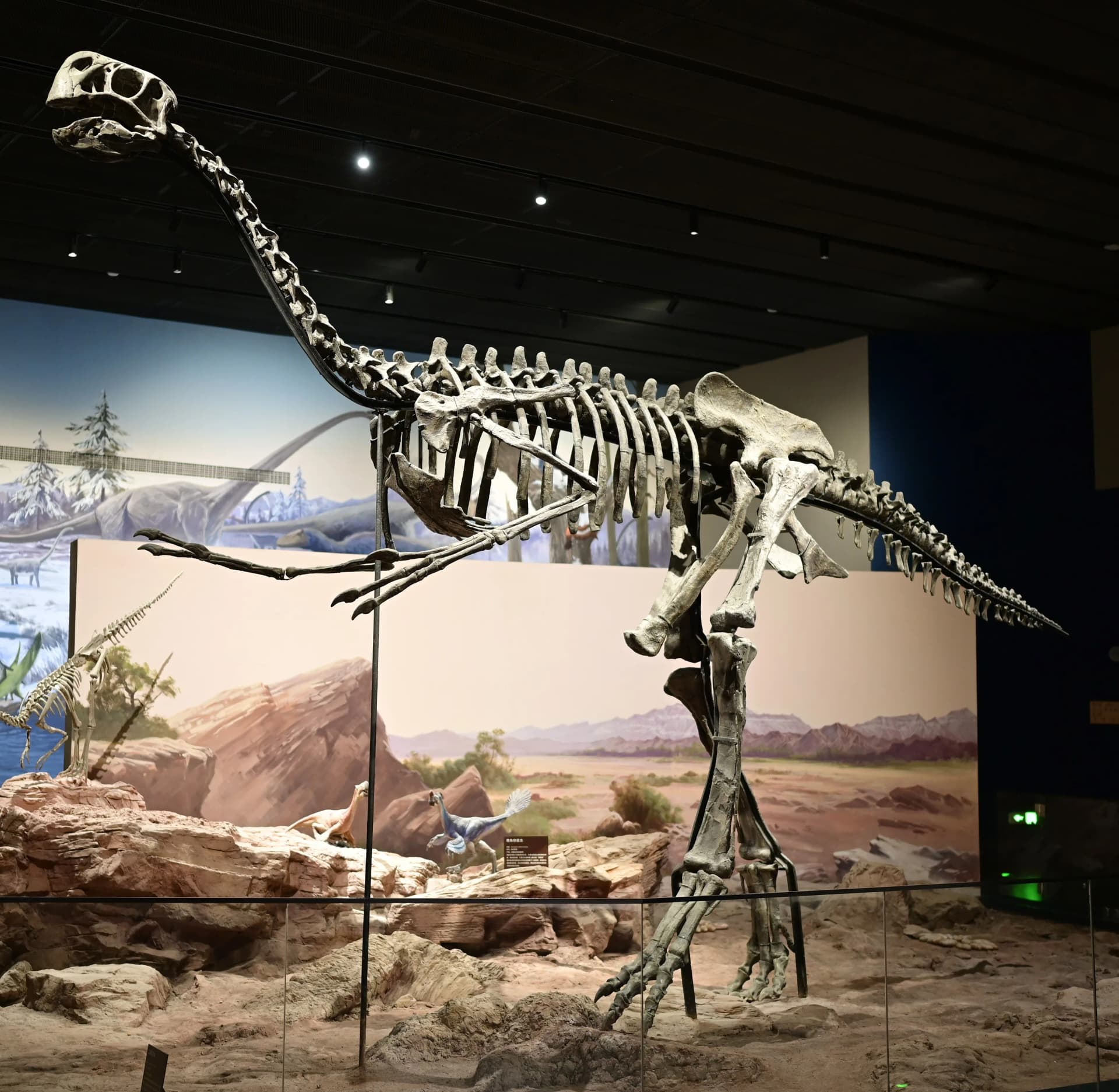
Reconstructed Gigantoraptor skeleton
Wikimedia Commons, CC BY-SA