Ornithomimus
Ornithomimus velox takes its name from its skeletal likeness to today's ratites: « bird mimic ». At 3.5 metres and around 170 kilograms, described in 1890, it ran across Alberta, Colorado and Montana 76 to 66 million years ago, at speeds estimated up to 60 kilometres per hour. Feathered specimens were reported from 2012 onward.
Ornithomimus velox lived during the Late Cretaceous period, approximately 76 to 66 million years ago, spanning the Campanian and Maastrichtian stages. This theropod dinosaur belongs to the ornithomimosaurs, a remarkable group of dinosaurs whose body plan strikingly resembles that of modern ostriches. Ornithomimus survived until the very end of the age of dinosaurs, perishing during the Cretaceous-Paleogene mass extinction triggered by an asteroid impact 66 million years ago. It coexisted with formidable predators such as Tyrannosaurus rex and massive herbivores like Triceratops and Edmontosaurus in the rich and diverse ecosystems of western North America.
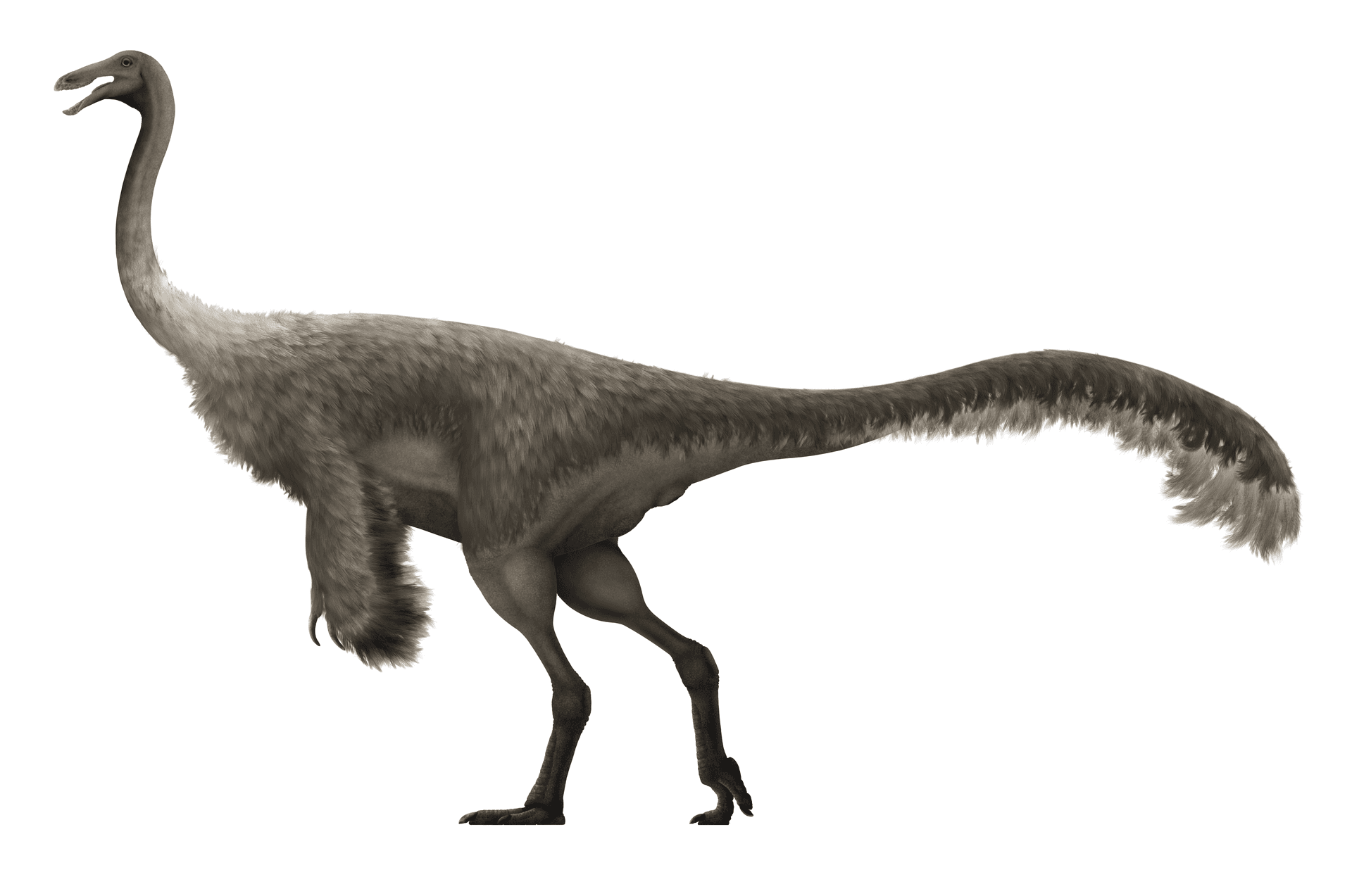
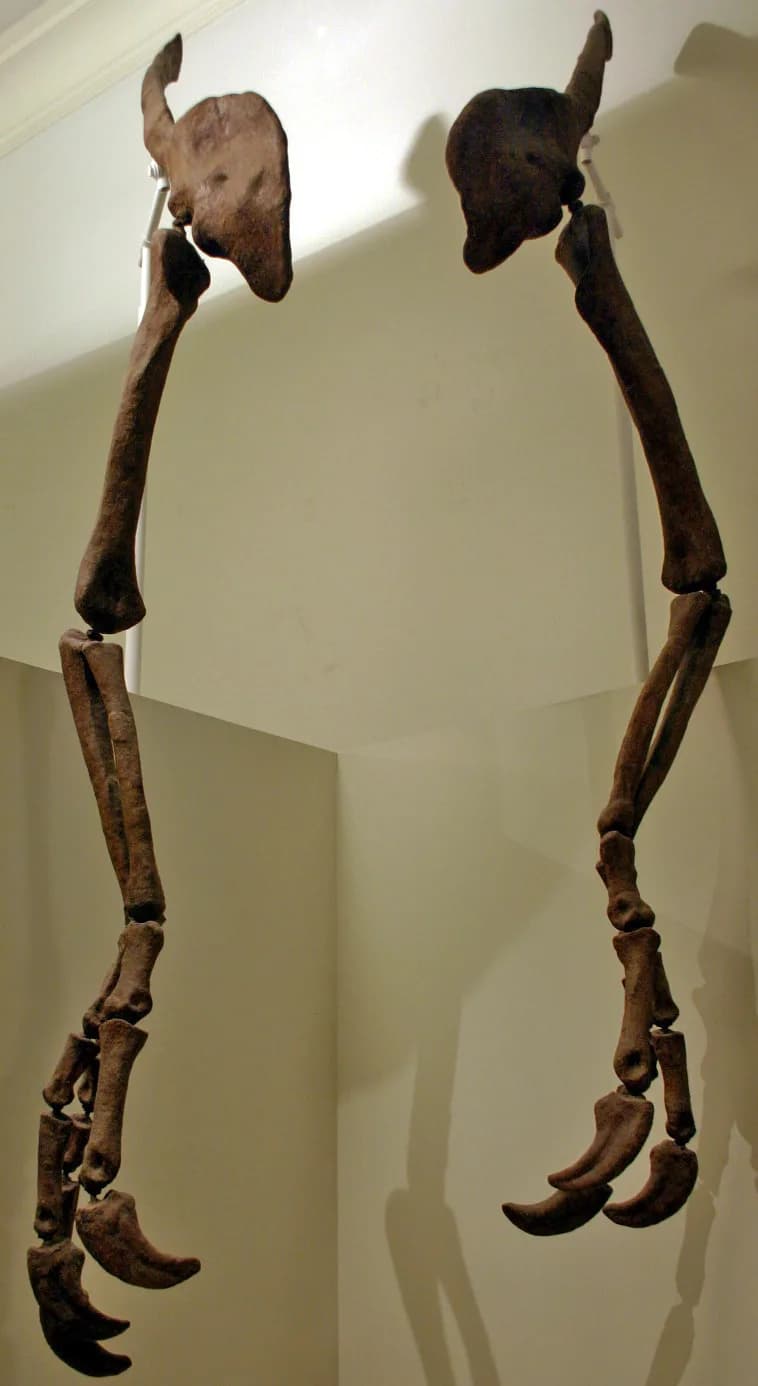
Ornithomimus measured approximately 3.5 meters in total length with an estimated weight of about 170 kilograms, making it a medium-sized but remarkably lightweight dinosaur for its stature. Its silhouette evoked that of a giant ostrich, with a compact body, a long flexible neck, and elongated hindlimbs perfectly adapted for rapid running. Its limb bones were hollow and lightweight, a crucial adaptation for fast locomotion. Its arms, although relatively short compared to its hind legs, were equipped with three clawed fingers capable of grasping and manipulating objects. The long, rigid tail served as a counterbalance during high-speed direction changes.
Ornithomimus was an opportunistic omnivore, equipped with a toothless beak covered in keratin that allowed it to feed on a wide variety of foods depending on seasonal availability. Recent studies of its beak morphology and gastroliths suggest a mixed diet comprising plants, seeds, fruits, insects, small vertebrates, and possibly eggs of other dinosaurs. The complete absence of teeth indicates an adaptation toward a generalist feeding mode rather than specialized active predation. Its ability to exploit diverse food sources constituted a considerable evolutionary advantage in the changing environments of the Late Cretaceous of North America.
Ornithomimus inhabited the vast alluvial plains, river coastal zones, and open forests of western North America, in territories corresponding today to Alberta in Canada, as well as Colorado and Montana in the United States. The Late Cretaceous environment in this region was characterized by a warm, humid subtropical climate, with meandering rivers, fertile deltas, and lush vegetation composed of conifers, ferns, and rapidly diversifying angiosperms. The Western Interior Seaway, which then divided the North American continent, created coastal conditions favorable to exceptional biodiversity. These ecosystems housed a remarkably diverse fauna including tyrannosaurs, ceratopsians, and numerous hadrosaurs.
The anatomy of Ornithomimus reveals an animal superbly adapted for fast running and an omnivorous lifestyle. Its body displayed a characteristic silhouette reminiscent of a modern ostrich, with a long flexible neck topped by a small head featuring a toothless beak and large lateral eyes offering an excellent field of vision for detecting predators. The hands possessed three elongated fingers with moderately curved claws, used for grasping food and digging in the ground. In 2012, a major discovery confirmed the presence of feathers in Ornithomimus, making it the first ornithomimid with direct evidence of plumage. Specimens from Alberta revealed filamentous structures on the body and true pennaceous feathers on adult arms, transforming our understanding of these dinosaurs' appearance.
Ornithomimus was one of the fastest dinosaurs of its time, with biomechanical estimates suggesting a maximum speed of up to 60 kilometers per hour. This exceptional velocity was its primary defense against predators such as Tyrannosaurus rex and dromaeosaurids. Its long hindlimbs, featuring elongated metatarsals characteristic of runners, and its rigid tail serving as a counterbalance gave it remarkable agility during pursuits. Several discovery sites containing groups of individuals suggest gregarious behavior, with Ornithomimus possibly living in small herds to increase collective vigilance against predators. The pennaceous feathers of adults may also have served during courtship displays or intraspecific visual signaling.
Ornithomimus was one of the first bird-mimic dinosaurs to be scientifically described, named in 1890 by the famous American paleontologist Othniel Charles Marsh from fossils discovered in the Denver Formation of Colorado. The generic name means 'bird mimic' in ancient Greek, a reference to the striking resemblance of its limb bones to those of modern ratite birds. Since its initial description, numerous specimens have been discovered, particularly in the Late Cretaceous formations of Alberta, Canada, notably in Dinosaur Provincial Park. The most revolutionary discovery occurred in 2012, when Albertan specimens revealed preserved feathers, confirming for the first time that ornithomimids possessed elaborate plumage including pennaceous structures on adult arms.
| Period | Crétacé supérieur / Late Cretaceous |
| Era | Mésozoïque / Mesozoic |
| Age | 76-66 Ma |
| Location | Alberta, Colorado, Montana / Alberta, Colorado, Montana |
| Length | 3.5 m |
| Height | ~2 m |
| Weight | ~170 kg |
| Diet | Omnivore |
| Discovery | 1890 |
Biomechanical analyses estimate that Ornithomimus velox could reach approximately 60 km/h, making it one of the fastest dinosaurs of the Late Cretaceous. Its elongated metatarsals and lightweight hollow bones were the primary adaptations for this speed, comparable to that of a modern racehorse.
Yes. In 2012, specimens from Alberta provided the first direct evidence of plumage in an ornithomimid. The fossils reveal filamentous structures covering the body and true pennaceous feathers on adult arms only, suggesting a role in courtship displays. Juveniles were covered in down without these arm feathers.
Ornithomimus velox was completely toothless, its keratinous beak replacing all dentition. Its diet was omnivorous and opportunistic: plants, seeds, insects, small vertebrates, and possibly eggs. Gastroliths associated with some specimens confirm it ground plant matter like modern seed-eating birds.
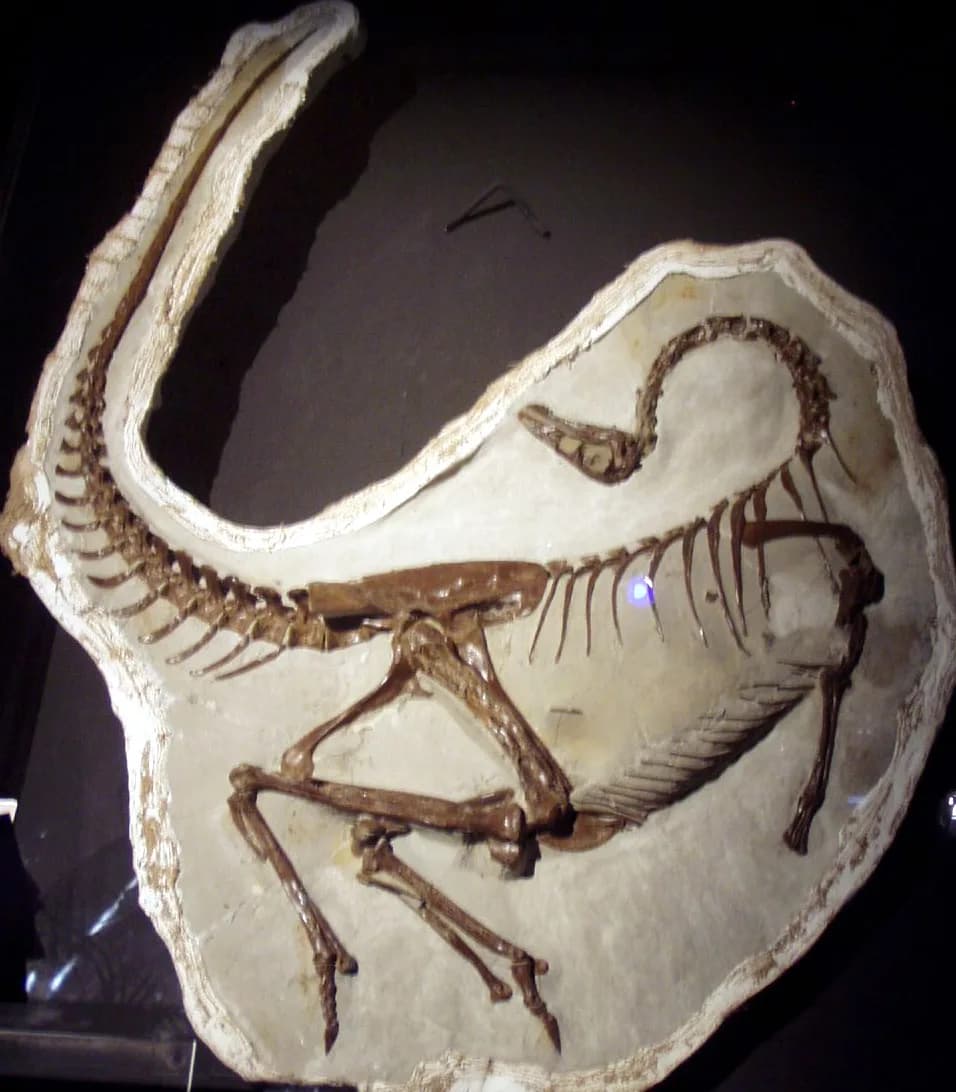
Ornithomimus edmontonicus skeleton
Wikimedia Commons
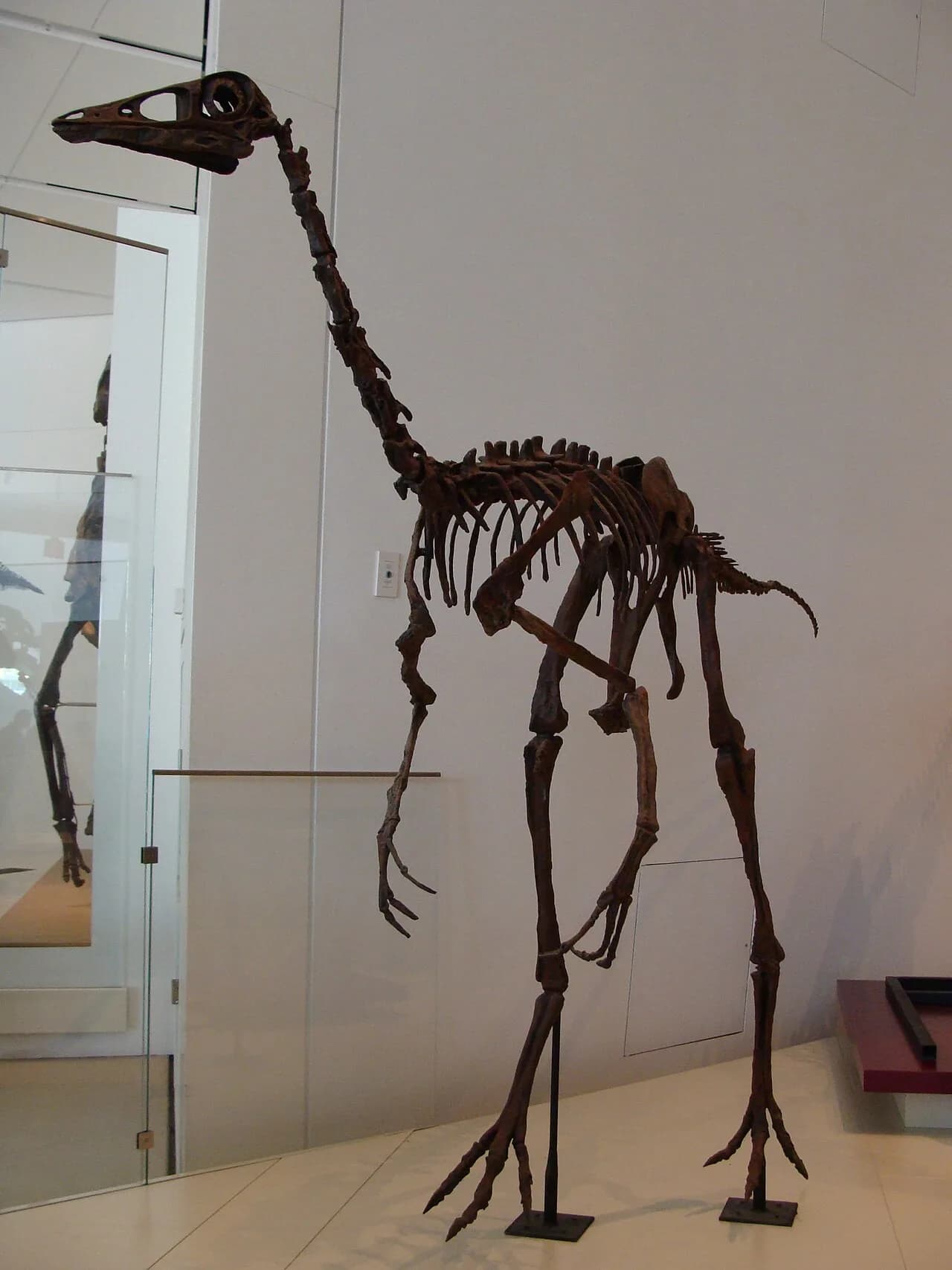
Ornithomimus at Royal Ontario Museum
Wikimedia Commons