Barsboldia
Barsboldia sicinskii is a hadrosaurid 10 to 12 metres long and 4 to 7 tonnes, described in 1981 from fossils in the Nemegt Formation of Mongolia. It lived 72 to 70 million years ago. It is known only from a partial vertebral column, an incomplete pelvis and a few ribs, making it one of the least documented hadrosaurids of the Cretaceous. Its name honours Mongolian palaeontologist Rinchen Barsbold.
Playable in Path of Titans
See Barsboldia sicinskii's stats, abilities and role on our survival server.
Barsboldia lived in the Late Cretaceous, during the early Maastrichtian, approximately 72 to 70 million years ago. This period represents one of the final chapters of the non-avian dinosaur era, just a few million years before the Cretaceous-Paleogene mass extinction. The Nemegt Formation in the Ömnögovi region of southern Mongolia was then a vast alluvial plain crossed by river systems, hosting one of the most diverse ecosystems of the Asian Cretaceous. Barsboldia shared this environment with formidable contemporaries: the giant tyrannosaur Tarbosaurus bataar, the hadrosaur Saurolophus angustirostris, the enigmatic Deinocheirus mirificus, and the therizinosaur Therizinosaurus cheloniformis.
Barsboldia sicinskii was formally described in 1981 by Polish paleontologists Teresa Maryańska and Halszka Osmólska, two central figures of the Polish-Mongolian expeditions of the 1960s and 1970s. The genus name honors Rinchen Barsbold, a Mongolian paleontologist whose work on Central Asian Cretaceous dinosaurs is foundational to the field. The species name sicinskii commemorates Polish geologist Andrzej Siciński. The fossils were collected during the joint Polish-Mongolian Gobi Desert campaigns, expeditions that yielded a remarkable diversity of Mongolian Cretaceous fauna. The original 1981 description was based on very fragmentary skeletal material, which has persistently complicated the animal's taxonomic placement.
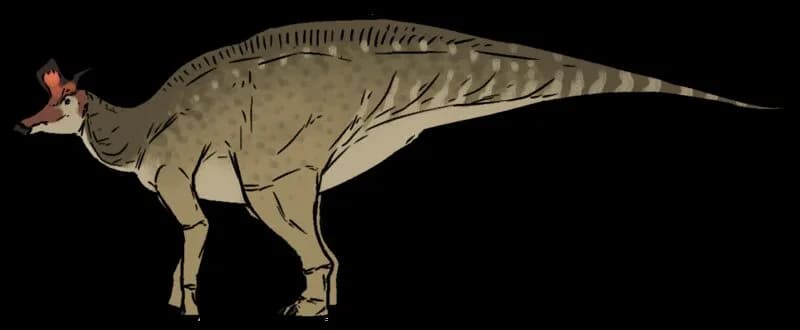
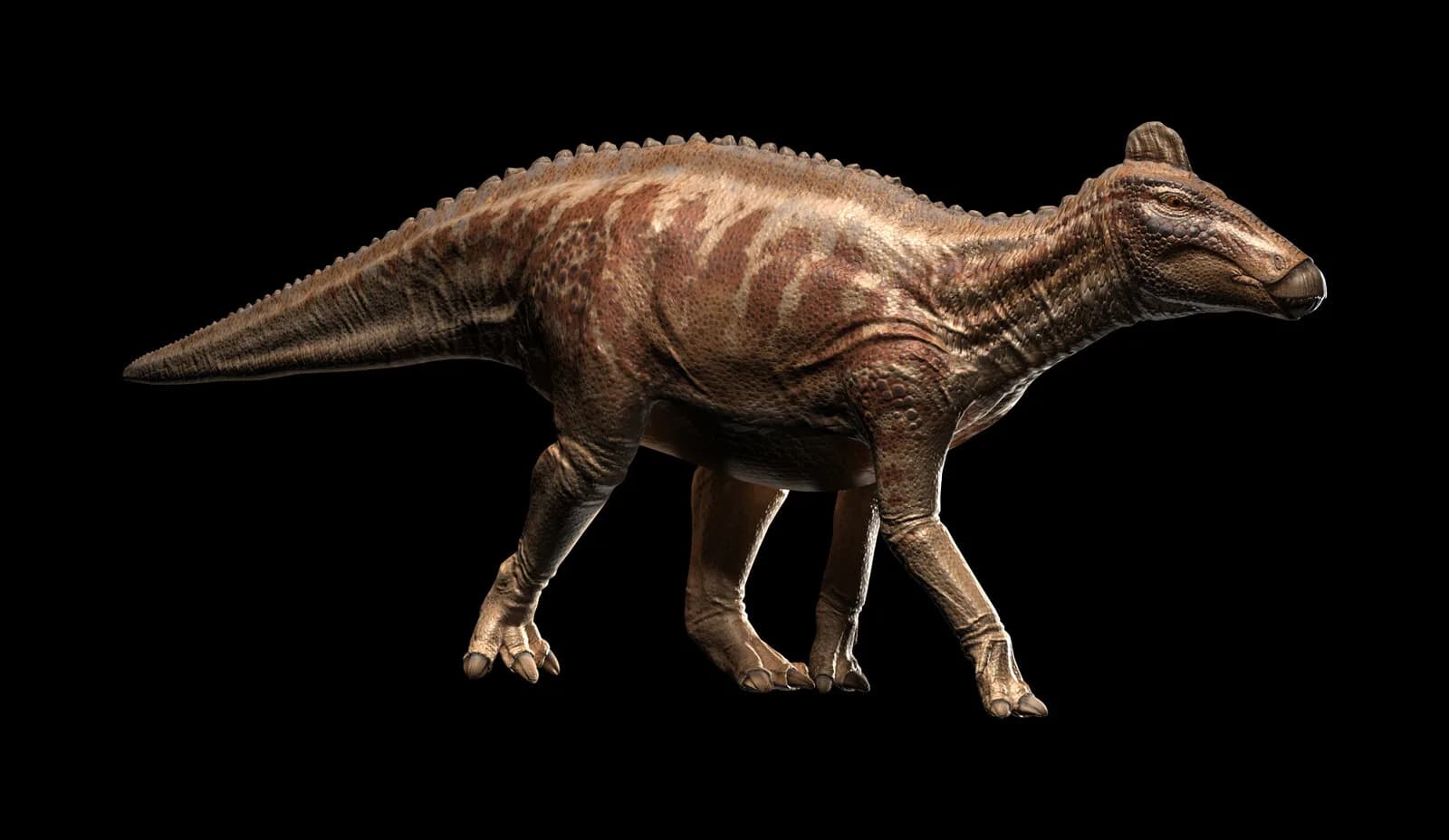
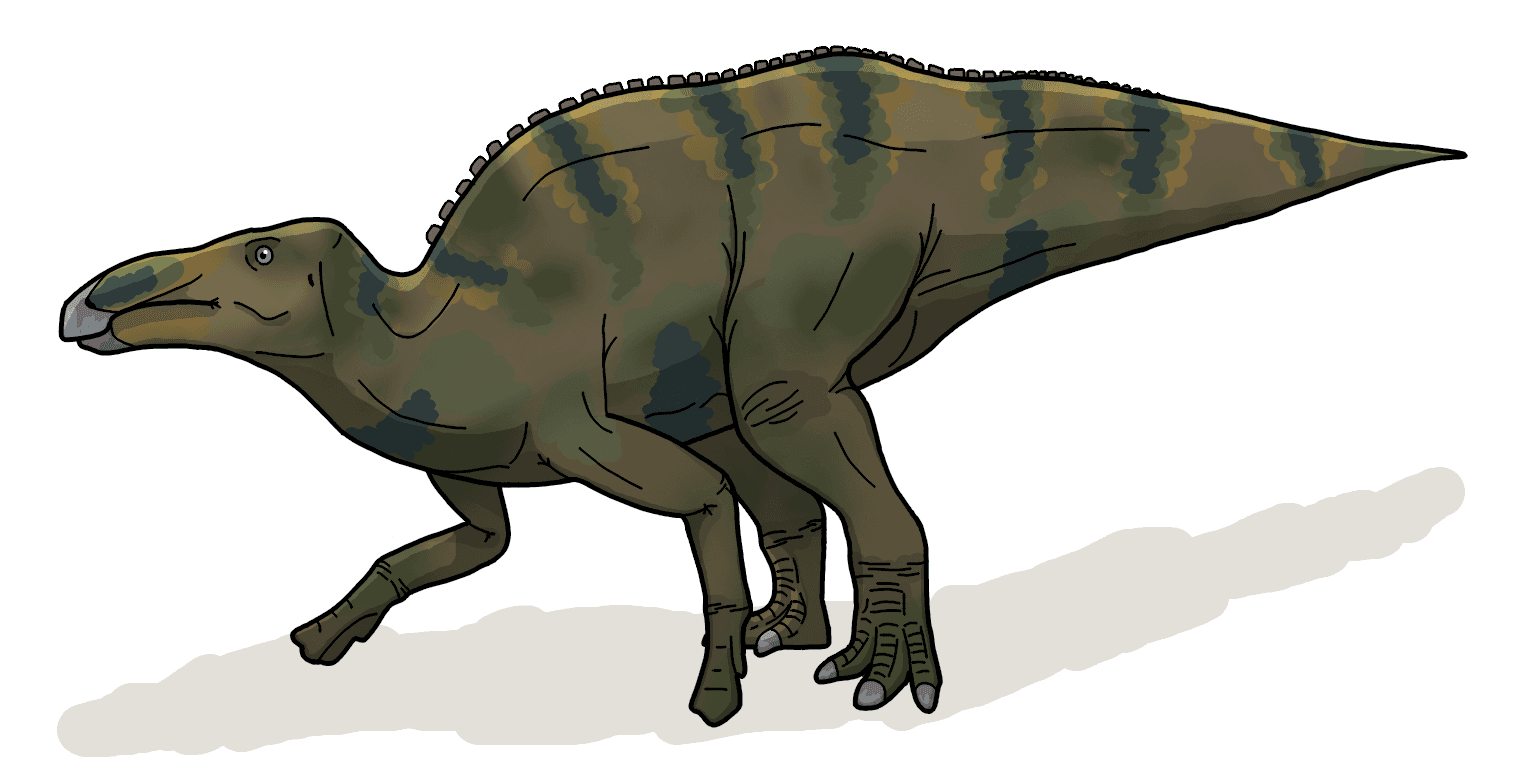
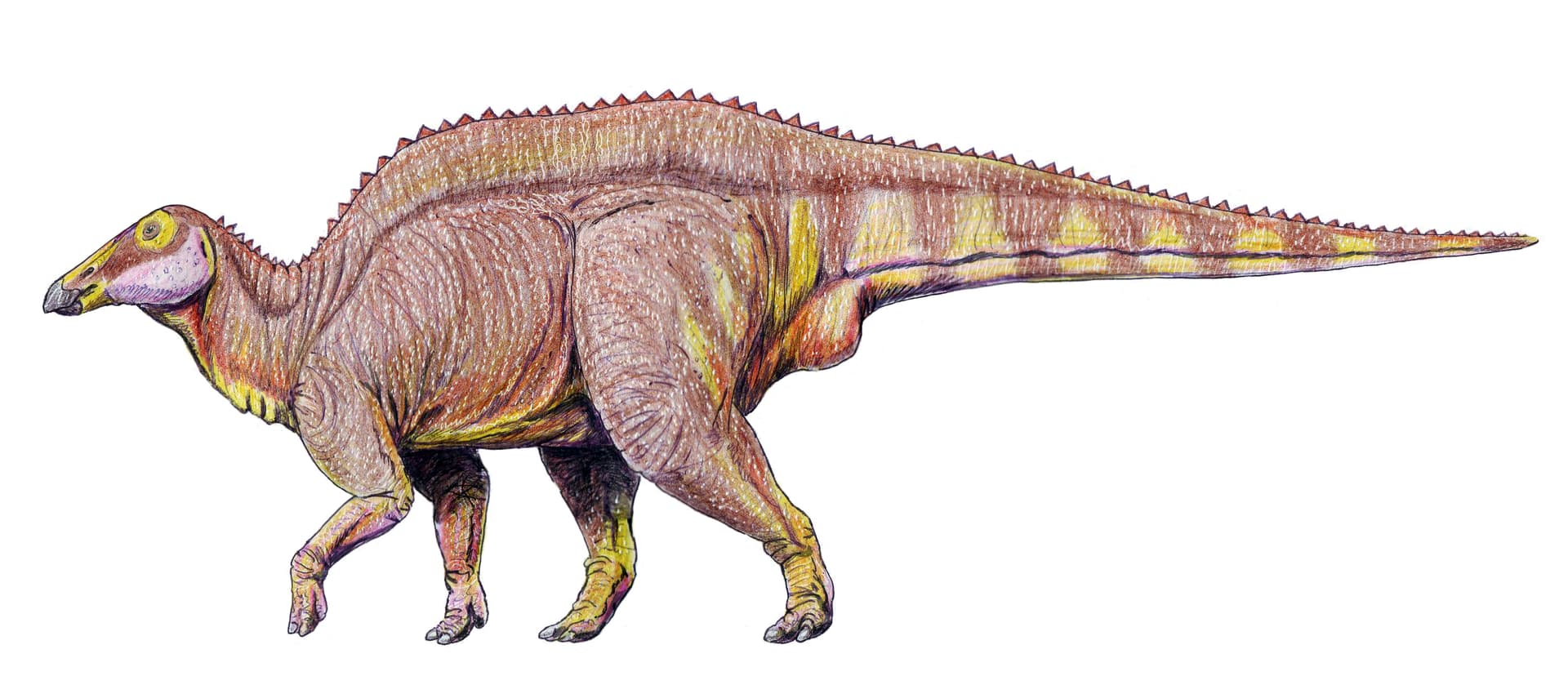
Barsboldia ranked among the larger hadrosaurs of the Nemegt Formation, estimated at 10 to 11 meters in length, with some projections reaching 12 meters. For a hadrosaurid, this placed it in the same size range as Saurolophus angustirostris or the larger Edmontosaurus species. Weight estimates remain imprecise given the fragmentary material, but figures around 4 to 7 tonnes are consistent with body mass models applied to hadrosaurs of comparable dimensions. The elongated neural spines of the dorsal vertebrae suggest a tall dorsal profile, which would have given Barsboldia a visually imposing silhouette when viewed from the side.
Like all hadrosaurids, Barsboldia was a strict herbivore. Its diet relied on the vegetation available in the Nemegt Formation floodplains: flowering plants (angiosperms), conifers, ferns, and low-growing riverbank plants. Hadrosaurids possessed one of the most efficient dental systems of any Mesozoic animal — dental batteries composed of several hundred teeth in continuous replacement, capable of grinding tough plant material that few other dinosaurs could process effectively. Barsboldia, if its oral anatomy matched the standard saurolophine profile, likely fed at varying heights from ground level up to 3 or 4 meters while in bipedal stance. Digestion of plant fibers was handled by a voluminous digestive tract, typical of the group.
The Nemegt Formation represents a large-scale fluvial environment: broad floodplains, anastomosing river channels, shallow lakes, and forested gallery zones along watercourses. The climate was humid and seasonal, considerably more temperate than the semi-arid settings that characterize other Mongolian Cretaceous formations such as the Djadokhta Formation. These conditions supported dense vegetation and an abundant fauna, explaining the Nemegt's exceptional fossil richness. Co-existence with Tarbosaurus — the Asian counterpart of Tyrannosaurus rex — indicates that Barsboldia and the other large Nemegt herbivores faced significant predation pressure. The general landscape resembles modern Southeast Asian river deltas, with a mosaic of open and forested habitats.
The material attributed to Barsboldia sicinskii is limited: a partial vertebral column (dorsal and sacral vertebrae), an incomplete pelvis, and rib fragments. This skeletal corpus is the primary source of the persistent taxonomic uncertainties surrounding this genus. The most notable anatomical feature involves the neural spines of the dorsal vertebrae, which are exceptionally elongated — several times the height of the vertebral body. These tall bony structures superficially resemble a dorsal sail, as seen in some pelycosaurian synapsids or in Spinosaurus, but their functional interpretation in Barsboldia remains unclear: thermoregulatory sail, fatty hump, or simply an elevated muscle attachment ridge along the back. This vertebral morphology was initially considered a lambeosaurine character, but subsequent phylogenetic analyses have questioned that attribution.
Barsboldia's behavior can only be inferred indirectly, by comparison with better-documented hadrosaurids from the same period and similar environments. Hadrosaurids in general are associated with gregarious behaviors — herd groupings, collective movement, and possibly parental care, as suggested by the Maiasaura fossil record in North America. As a large Nemegt herbivore, Barsboldia coexisted with other saurolophines including Saurolophus angustirostris, suggesting possible ecological niche sharing or dietary segregation by size or habitat preference. The presence of Tarbosaurus as the dominant predator of the ecosystem indicates that large hadrosaurids likely relied on numbers or collective vigilance rather than active defense.
Barsboldia's phylogenetic position has been subject to successive revisions since its original description. Maryańska and Osmólska (1981) placed it among the lambeosaurines based on the elongated neural spines, a character considered diagnostic of that subfamily at the time. Later phylogenetic analyses, notably those of Prieto-Márquez (2010 onward), reassessed this placement and aligned Barsboldia closer to the saurolophines. The core problem remains unchanged: with only vertebrae, a partial pelvis, and ribs, the diagnostic characters needed for a solid subfamily assignment are scarce. Barsboldia thus remains a valid hadrosaurid genus but with an intrafamilial position still debated in the specialized literature.
Among large Late Cretaceous hadrosaurids, Barsboldia stands out for its Asian geographic context and its particularly fragmentary fossil record. By size, it compares to Saurolophus angustirostris (its Nemegt contemporary) and to large North American species such as Edmontosaurus regalis or Shantungosaurus giganteus — the latter likely the largest known hadrosaurid at an estimated 15 meters. Barsboldia's elongated neural spines bring its silhouette close to that of Ouranosaurus nigeriensis, an Early Cretaceous African hadrosauriform with a similar dorsal structure, though the two animals are not closely related. Unlike Lambeosaurus or Parasaurolophus, Barsboldia does not appear to have borne a hollow cranial crest — or at least, no cranial material attributable with certainty to this genus has been recovered.
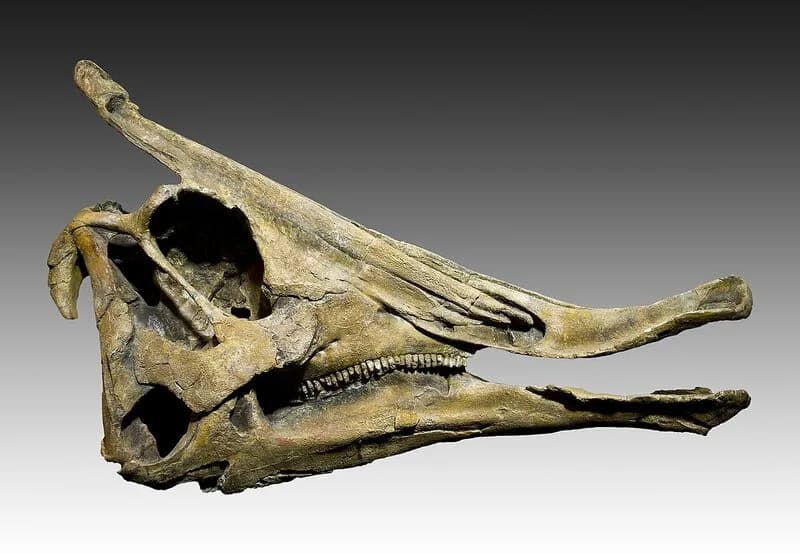
Barsboldia's fossils come from the Nemegt Formation in the Nemegt Basin of southern Mongolia (Ömnögovi Province). Specimens were collected during the Polish-Mongolian expeditions of the 1960s and 1970s, joint field campaigns that enriched the collections of the Museum of the Earth in Warsaw and the Institute of Paleontology of Mongolia in Ulaanbaatar. The holotype material remains limited to postcranial elements: dorsal and sacral vertebrae, portions of the pelvis, ribs. No complete skull or full limb has been formally attributed to this genus, a stark contrast with contemporaries like Saurolophus or Tarbosaurus, which are known from relatively complete skeletons. This material scarcity partly reflects the field conditions of that era and the limited geographic scope of the prospected areas. More recent surveys in the Nemegt have not yet filled these gaps.
Barsboldia holds a modest place in paleontological popular culture, largely overshadowed by its more spectacular Nemegt neighbors — Tarbosaurus, Deinocheirus, or Therizinosaurus. Its name appears in reference paleontological databases and encyclopedic works on hadrosaurids, but it almost never features in mainstream documentaries or toy and figurine collections. For more advanced dinosaur enthusiasts, it primarily represents the classification challenges that arise whenever a genus is founded on incomplete skeletal material. Its name honors Rinchen Barsbold, a Mongolian paleontologist whose contributions to the knowledge of Gobi dinosaurs are immense and who deserves broader recognition in the Western paleontological community.
| Period | Crétacé supérieur / Late Cretaceous |
| Era | Mésozoïque / Mesozoic |
| Age | 72–70 Ma |
| Location | Asie / Asia (Mongolie / Mongolia — Formation Nemegt) |
| Length | 10–12 m |
| Height | ~3.5 m |
| Weight | 4 000–7 000 kg |
| Diet | Herbivore |
| Discovery | 1981 |
Barsboldia sicinskii is known only from a partial vertebral column, an incomplete pelvis, and ribs, with no skull or complete limb. Described in 1981 by Maryańska and Osmólska as a lambeosaurine based on its elongated neural spines, it was later aligned closer to saurolophines by Prieto-Márquez (2010). Without diagnostic cranial material, its intrafamilial placement remains debated.
Barsboldia sicinskii was one of the large herbivores of the Nemegt Formation in Mongolia, 72 to 70 million years ago, estimated at 10 to 12 meters in length and 4,000 to 7,000 kg. It shared this fluvial ecosystem with Saurolophus angustirostris, Deinocheirus mirificus, Therizinosaurus cheloniformis, and its dominant predator, Tarbosaurus bataar.
The exceptionally elongated neural spines of Barsboldia sicinskii's dorsal vertebrae — several times the height of the vertebral body — are the main known anatomical feature of this genus. Their function remains uncertain: thermoregulatory sail, fatty hump, or dorsal muscle attachment ridge. These structures superficially resemble Ouranosaurus nigeriensis, an Early Cretaceous African hadrosauriform, without any direct phylogenetic link.
Information on this page is based on peer-reviewed scientific publications.
Life reconstruction of Barsboldia sicinskii by Dmitry Bogdanov (2008)
Dmitry Bogdanov, CC BY 3.0, via Wikimedia Commons
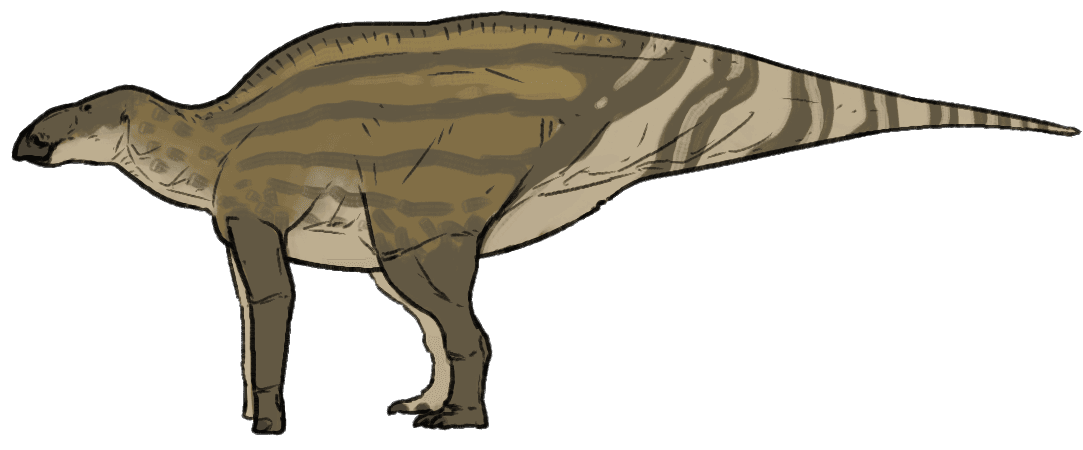
Life reconstruction of Barsboldia sicinskii by Connor Ashbridge (2023)
Connor Ashbridge (Ddinodan), CC BY-SA 4.0, via Wikimedia Commons