Shantungosaure
Shantungosaurus giganteus is the largest hadrosaurid ever found: 15 to 17 metres and 13 to 16 tonnes, the weight of three African elephants. Its mouth held more than fifteen hundred continuously replaced teeth. Described in 1973 near Zhucheng, in Shandong, it browsed China 73 to 65 million years ago.
Shantungosaurus lived during the Late Cretaceous period, approximately 73 to 65 million years ago, in what is now Shandong Province in eastern China. This period corresponds to the Campanian and Maastrichtian stages, the final millions of years of the great age of dinosaurs before the mass extinction event. Eastern China experienced a warm, humid climate at this time, with fertile coastal plains and lush vegetation that could support enormous herbivores. Shantungosaurus was one of the last and by far one of the largest herbivorous dinosaurs to walk the Earth, representing the pinnacle of hadrosaur gigantism.
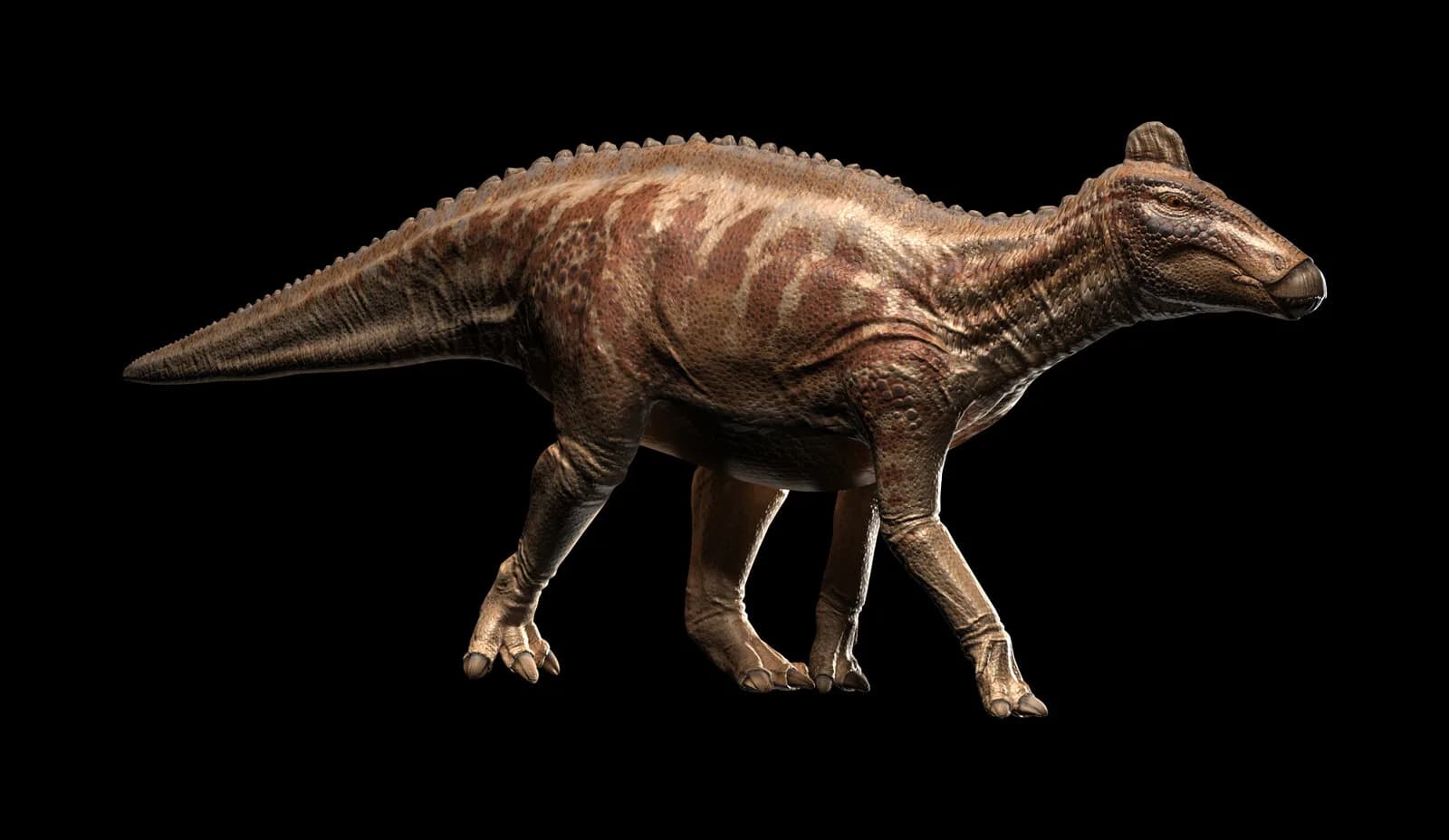
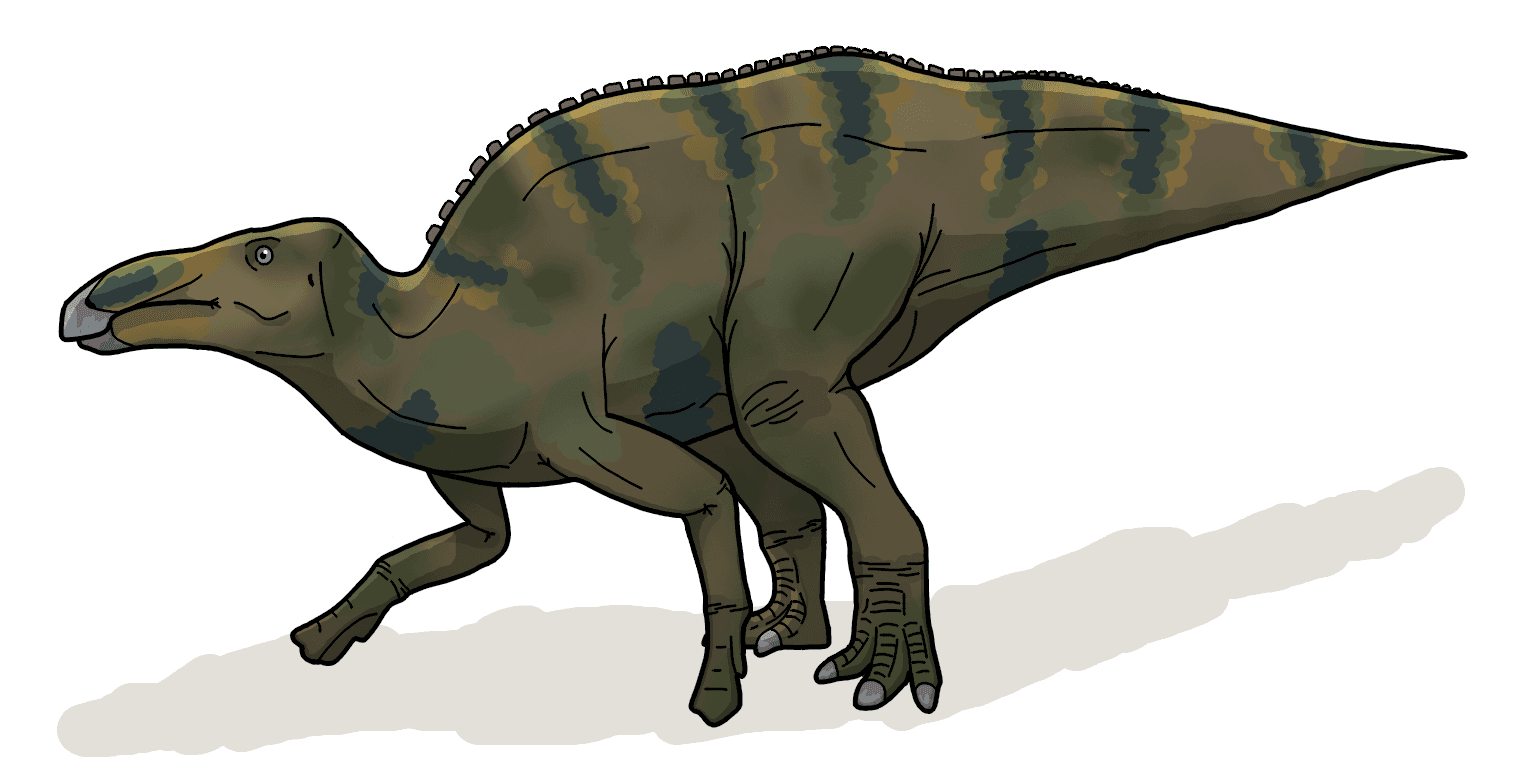
Shantungosaurus holds the record for the largest hadrosaur ever discovered, and quite possibly the largest ornithischian dinosaur of all time. It reached a staggering length of 15 to 17 meters and stood an impressive 5 meters tall at head height when adopting a bipedal posture. Its weight is estimated between 13 and 16 tonnes, rivaling some medium-sized sauropods in sheer body mass. Its skull alone measured approximately 1.6 meters long and contained more than 1,500 individual teeth arranged in highly efficient dental batteries that were continuously replaced throughout its lifetime, ensuring it always had sharp grinding surfaces.
A strict herbivore, Shantungosaurus possessed a remarkably efficient dental system composed of batteries containing over 1,500 teeth that were continuously replaced throughout its life, ensuring a perpetually sharp grinding surface. This self-renewing mechanism allowed it to grind enormous quantities of tough vegetation, including conifers, ferns, and primitive flowering plants that dominated its Late Cretaceous environment. Its broad, flattened duck-like beak was perfectly designed for stripping leaves and snapping low branches in large quantities with each bite. An animal of this colossal size needed to consume several hundred kilograms of plant matter daily to maintain its metabolic requirements and sustain its massive body.
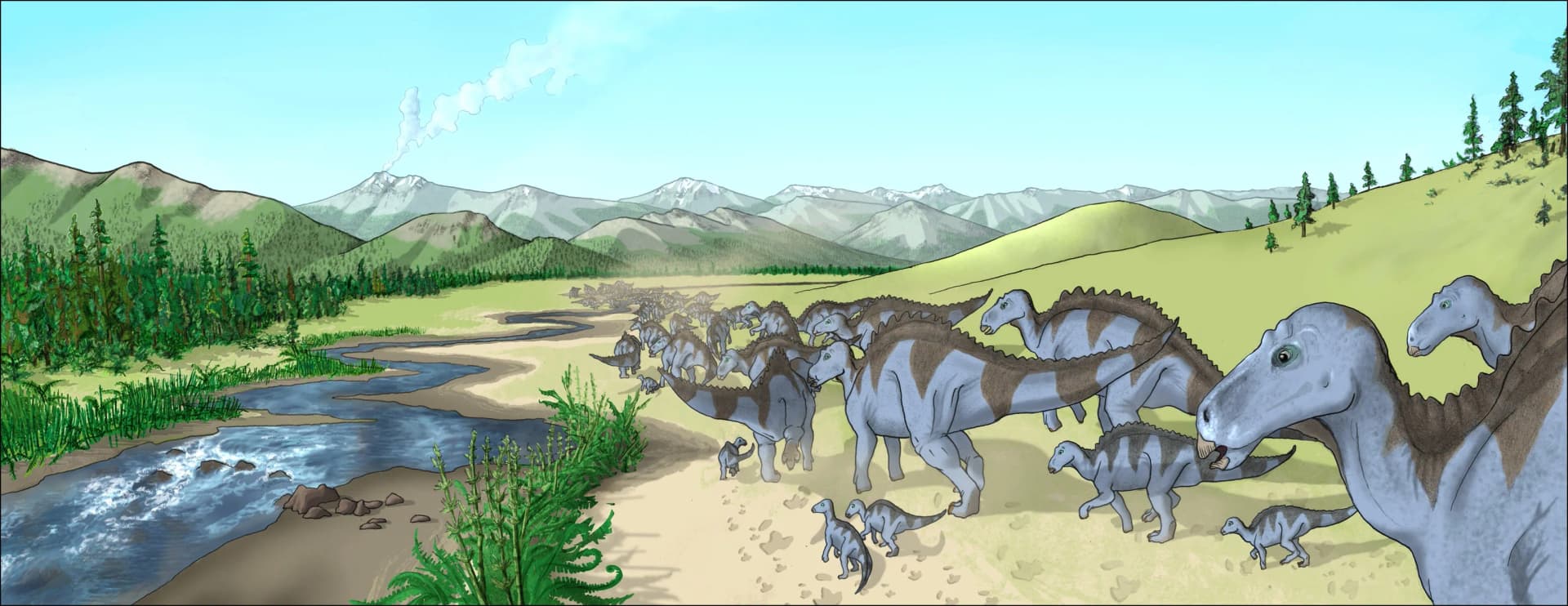
Shantungosaurus lived in the vast coastal plains of eastern China during the Late Cretaceous, specifically in the Wangshi Formation of Shandong Province. This productive environment was characterized by extensive river deltas, wetlands rich in aquatic life, and dense vegetation composed of towering conifers, ginkgos, and rapidly diversifying flowering plants. The warm, humid climate supported very high plant productivity, which was absolutely necessary to sustain an herbivore of such colossal size and its considerable daily food requirements. It likely lived in large herds numbering dozens or even hundreds of individuals, as strongly suggested by the remarkable accumulations and concentrations of multiple fossils found together at the Zhucheng excavation site.
Shantungosaurus' anatomy reflects typical hadrosaur adaptations pushed to the extreme by gigantism. Its massive 1.6-meter skull housed a flattened duck-like beak, toothless at the front but equipped with dental batteries at the back. These batteries contained over 1,500 teeth arranged in columns and rows, continuously replacing themselves as they wore down. Its long, laterally compressed tail served as a counterbalance during bipedal locomotion. Its massive hind legs supported the bulk of its colossal weight. An enlarged nasal opening on the skull suggests the possible presence of an inflatable nasal sac used for vocal communication.
Shantungosaurus very likely lived in large herds, as convincingly evidenced by the massive fossil concentrations discovered at the famous Zhucheng locality in Shandong Province. This gregarious behavior provided significant protection against predators through collective vigilance and facilitated efficient foraging across the vast coastal plains of eastern China. Communication within the herd was probably achieved through vocalizations amplified by specialized nasal structures, allowing individuals to coordinate movements and warn of approaching threats. Like other hadrosaurs, it could alternate between bipedal locomotion for faster running and quadrupedal walking for more relaxed ground-level grazing. Juveniles grew remarkably rapidly, reaching their enormous adult size in just a few years of sustained growth.
Shantungosaurus was discovered in 1973 in Shandong Province, China, and described by Hu Chengzhi the same year. The discovery site, near the city of Zhucheng nicknamed 'Dinosaur City,' yielded thousands of bones belonging to numerous individuals. The composite reconstructed skeleton at the Geological Museum of China measures over 16 meters long, one of the most impressive mounted specimens in the world. Additional excavations in the 2000s and 2010s unearthed even more fossil material. The discovery of Shantungosaurus demonstrated that hadrosaurs could reach sizes comparable to large sauropods.
| Period | Crétacé supérieur / Late Cretaceous (Campanien–Maastrichtien) |
| Era | Mésozoïque / Mesozoic |
| Age | 73–65 Ma |
| Location | Asie / Asia (Shandong, Chine / China) |
| Length | 15–17 m |
| Height | ~5 m (bipède) |
| Weight | 13–16 t |
| Diet | Herbivore |
| Discovery | 1973 |
Shantungosaurus giganteus reached 15 to 17 meters in length with an estimated weight of 13 to 16 tonnes, rivaling some medium-sized sauropods. Its skull alone measured about 1.6 meters. The composite skeleton on display at the Geological Museum of China exceeds 16 meters, making it the largest known ornithischian and by far the largest hadrosaur ever discovered.
Shantungosaurus giganteus teeth were arranged in dental batteries — columns and rows of over 1,500 teeth that continuously replaced themselves as they wore down. This self-renewing system allowed grinding of enormous quantities of tough vegetation (conifers, ferns, angiosperms). Its broad, flattened duck-like beak stripped leaves and branches, while the batteries then ground the plant material.
Shantungosaurus giganteus was discovered in 1973 in the Wangshi Formation, Shandong Province, China, and described by Hu Chengzhi the same year. The Zhucheng site, nicknamed 'Dinosaur City,' yielded thousands of bones from numerous individuals during excavations in the 1970s and again in the 2000s–2010s. The exceptional fossil density reflects the extraordinary productivity of this Late Cretaceous coastal environment.
Life reconstruction of Shantungosaurus giganteus
Wikimedia Commons, CC BY-SA
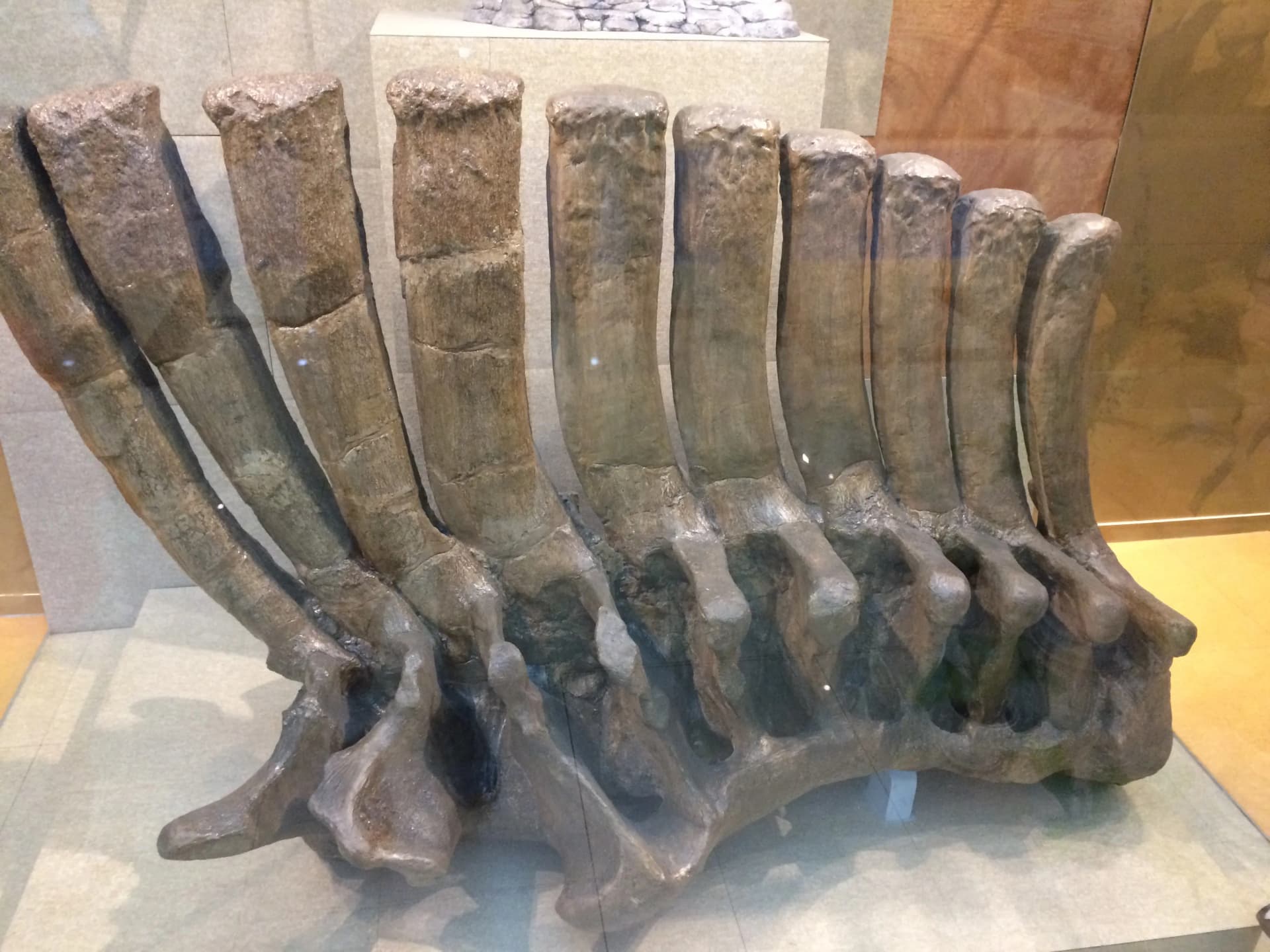
Giant Shantungosaurus fossil skeleton at the Geological Museum of China
Wikimedia Commons, CC BY-SA