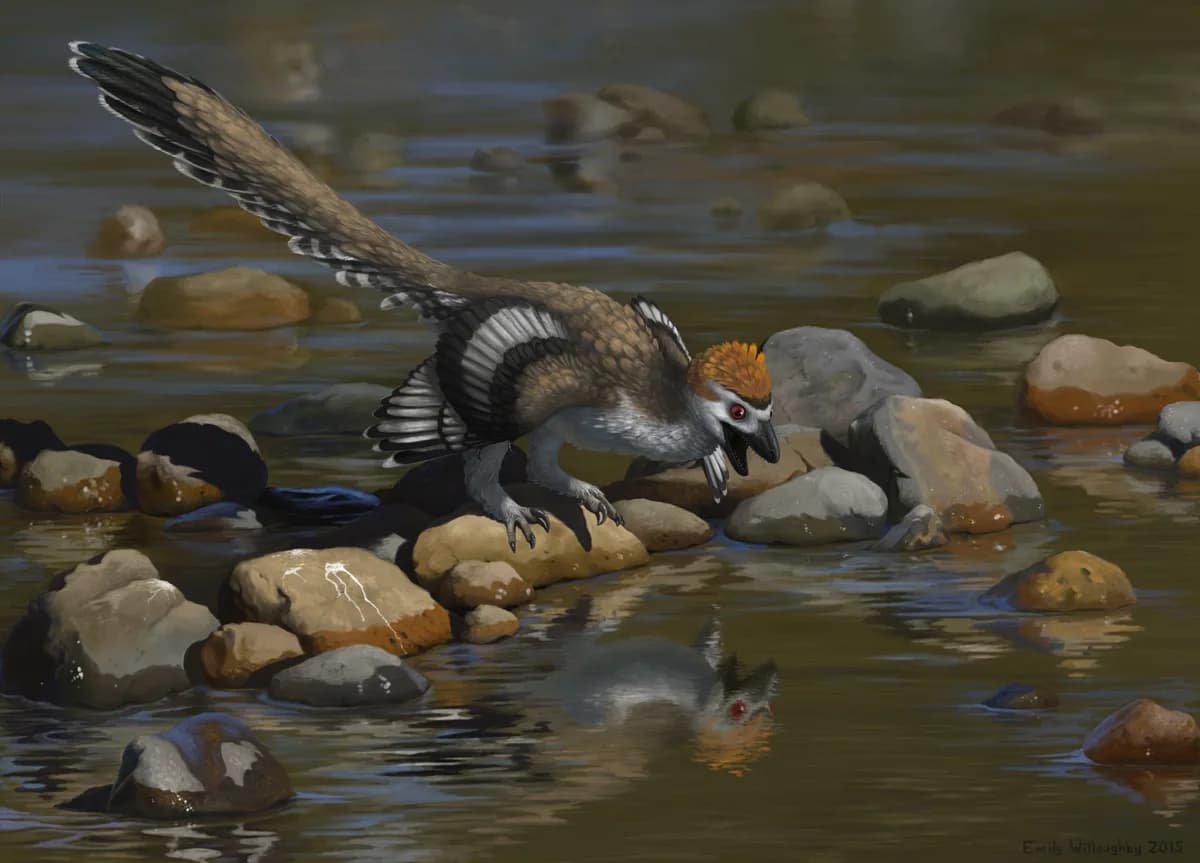
Zhenyuanlong
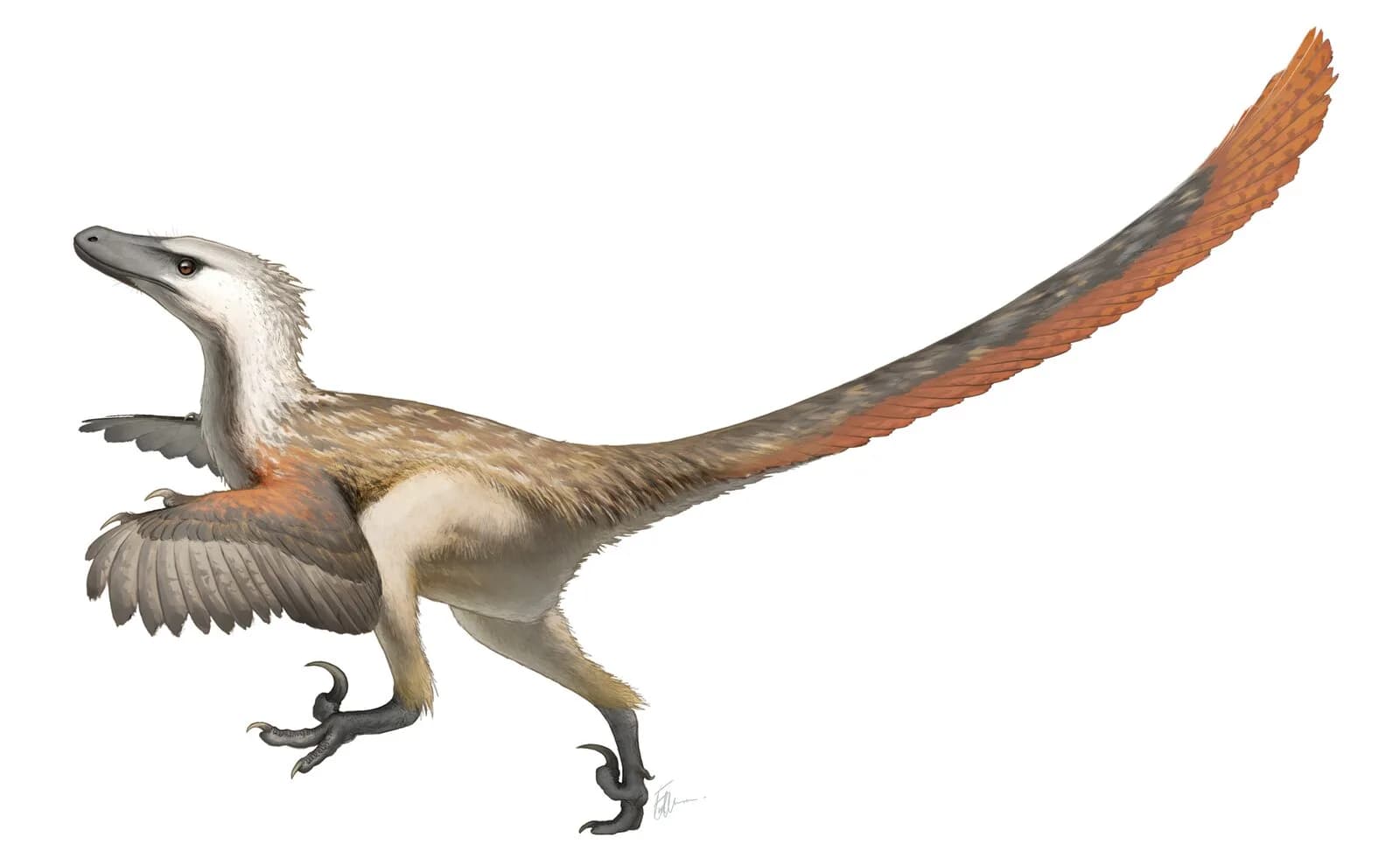
Zhenyuanlong suni was a feathered dromaeosaurid from China, described in 2015 from fossils in Liaoning and dated to around 125 million years ago. At 1.65 metres and close to 20 kilograms, it was the largest fully feathered dinosaur known at the time of its discovery. Its wings carried large pennaceous feathers, yet it could not fly.
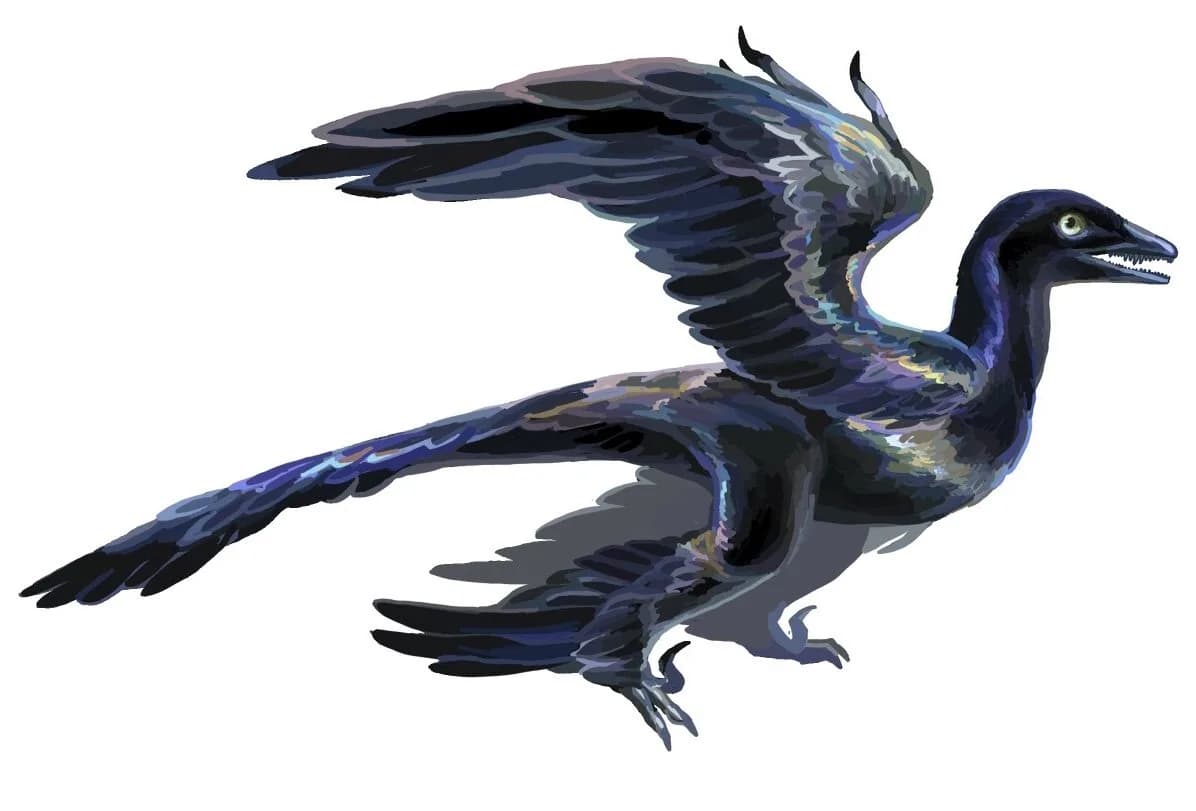
Zhenyuanlong suni lived during the Early Cretaceous period, approximately 125 million years ago, during the Aptian stage. This period corresponds to an era of great diversification of feathered dinosaurs in eastern Asia, particularly in the Liaoning region of China. The climate of the time was temperate and humid, favoring the development of lush forest ecosystems. The Yixian Formation, where the fossil was preserved, is famous for its exceptional fossilization conditions due to intense volcanic activity. Volcanic ash allowed remarkable preservation of soft tissues, including feathers and integumentary structures. Zhenyuanlong shared its environment with numerous other feathered dinosaurs such as Microraptor and Sinosauropteryx.
Zhenyuanlong suni measured approximately 1.65 meters in total length, making it the largest dromaeosaurid with complete plumage known at the time of its discovery in 2015. Its height is estimated at approximately 50 centimeters at the hips, with an approximate weight of 20 kilograms. Despite its relatively modest size compared to large theropods, Zhenyuanlong was an agile and well-proportioned predator. Its slender body featured elongated hindlimbs adapted for rapid running. The arms were proportionally short relative to the body, yet they bore large pennaceous feathers forming well-developed wings, a surprising contrast for an animal clearly incapable of active flight.
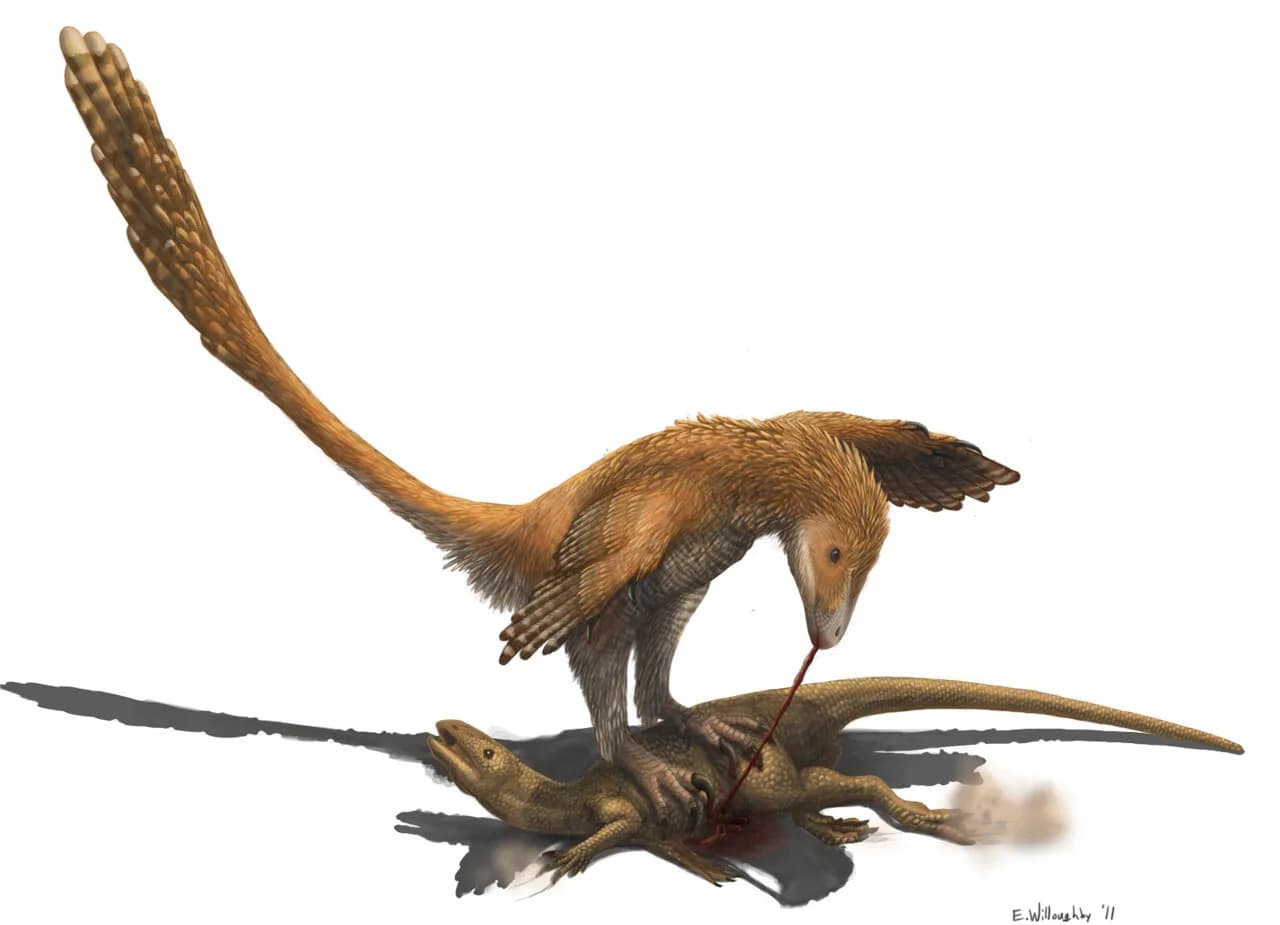
Zhenyuanlong was an opportunistic carnivore, probably hunting a variety of small prey including lizards, primitive mammals, insects, and possibly small dinosaurs. Its sharp, curved teeth, typical of dromaeosaurids, were ideal for grasping and holding agile prey. The relatively light but efficient jaw suggests a predation strategy based on speed rather than brute force. Like its dromaeosaurid cousins, Zhenyuanlong probably possessed an enlarged retractable claw on the second toe, used to pin down prey. Comparative studies with other Liaoning theropods suggest a diversified diet, possibly supplemented by small fish or invertebrates depending on seasonal resource availability.
Zhenyuanlong inhabited the temperate forests and lacustrine areas of the Yixian Formation, in the present-day province of Liaoning in northeastern China. This Early Cretaceous environment was characterized by a mosaic of conifer forests, ginkgoes, and tree ferns surrounding volcanic lakes. Frequent volcanic activity in the region created a dynamic landscape, with periods of eruptions followed by phases of vegetative recolonization. The regional lakes harbored diverse aquatic fauna including fish, amphibians, and invertebrates. This lacustrine-forest biome offered numerous ecological niches, allowing the coexistence of an extraordinarily diverse fauna, including dozens of species of feathered dinosaurs, pterosaurs, and primitive birds.
The anatomy of Zhenyuanlong reveals a dromaeosaurid remarkably well adapted to terrestrial life while retaining elaborate plumage. The elongated, lightweight skull bore sharp teeth and proportionally large eye sockets suggesting excellent vision. The most spectacular feature of Zhenyuanlong lay in its large asymmetric pennaceous feathers on the arms, forming true wings similar to those of modern birds. These complex feathers, with a central rachis and organized barbs, presented a paradoxically aerodynamic structure for a terrestrial animal. The tail also bore long feathers forming a fan. The robust, elongated hindlimbs ended in feet equipped with the characteristic sickle claw of dromaeosaurids. The preserved skeleton shows a well-developed furcula and an ossified sternum, indicating significant pectoral muscle attachments despite the inability to fly.
Zhenyuanlong's behavior can be inferred from its anatomy and comparisons with related dromaeosaurids. Its long hindlimbs and rigid tail indicate an agile runner, capable of rapid pursuits through forest undergrowth. The presence of large wing feathers, although useless for flight, suggests complex display behaviors, possibly linked to courtship or territorial intimidation. Zhenyuanlong likely used its feathered wings to impress rivals or attract mates, a behavior observable in many modern flightless birds such as the ostrich. The retractable foot claw, the signature weapon of dromaeosaurids, was likely used to pin prey to the ground. Studies on related dromaeosaurids suggest possible life in small groups, increasing hunting efficiency against larger prey.
The holotype fossil of Zhenyuanlong suni (JPM-0008) was discovered in the Yixian Formation, in the province of Liaoning, China, and described in 2015 by paleontologists Junchang Lü and Stephen Brusatte in the journal Scientific Reports. The specimen is a nearly complete and articulated skeleton, preserved on a slab of sedimentary rock with exceptionally detailed feather impressions across the entire body. The genus name means 'Zhenyuan's dragon' in honor of Zhenyuan Sun, who secured the holotype specimen for science. The discovery made worldwide headlines in 2015, with media dubbing the animal the 'fluffy feathered raptor' due to its spectacular plumage. This fossil overturned classic representations of dromaeosaurids by demonstrating that even large members of the group possessed elaborate plumage with true pennaceous wings, and not simply filamentous proto-feathers.
| Period | Crétacé inférieur / Early Cretaceous (Aptien) |
| Era | Mésozoïque / Mesozoic |
| Age | ~125 Ma |
| Location | Chine (Liaoning) / China (Liaoning) |
| Length | ~1.65 m |
| Height | ~0.5 m |
| Weight | ~20 kg |
| Diet | Carnivore |
| Discovery | 2015 |
Zhenyuanlong suni bore large asymmetric pennaceous feathers on its arms, comparable to those of modern birds, despite its inability to actively fly. These wings likely served display purposes — territorial intimidation or courtship — like modern ostriches. The presence of these feathers demonstrates that even large dromaeosaurids possessed elaborate plumage, not just filamentous proto-feathers.
Zhenyuanlong suni measured approximately 1.65 meters in total length with an estimated hip height of 50 centimeters and an approximate weight of 20 kilograms. It lived approximately 125 million years ago (Aptian, Early Cretaceous) in the Yixian Formation of Liaoning Province, China. At its discovery in 2015, it was the largest dromaeosaurid with complete plumage known.
The holotype fossil JPM-0008 of Zhenyuanlong suni was discovered in the Yixian Formation (Liaoning, China). It was described in 2015 by Junchang Lü and Stephen Brusatte in Scientific Reports. The specimen is a nearly complete articulated skeleton with exceptionally detailed feather impressions across the entire body. The name means 'Zhenyuan's dragon' in honor of Zhenyuan Sun, who secured the fossil for science.
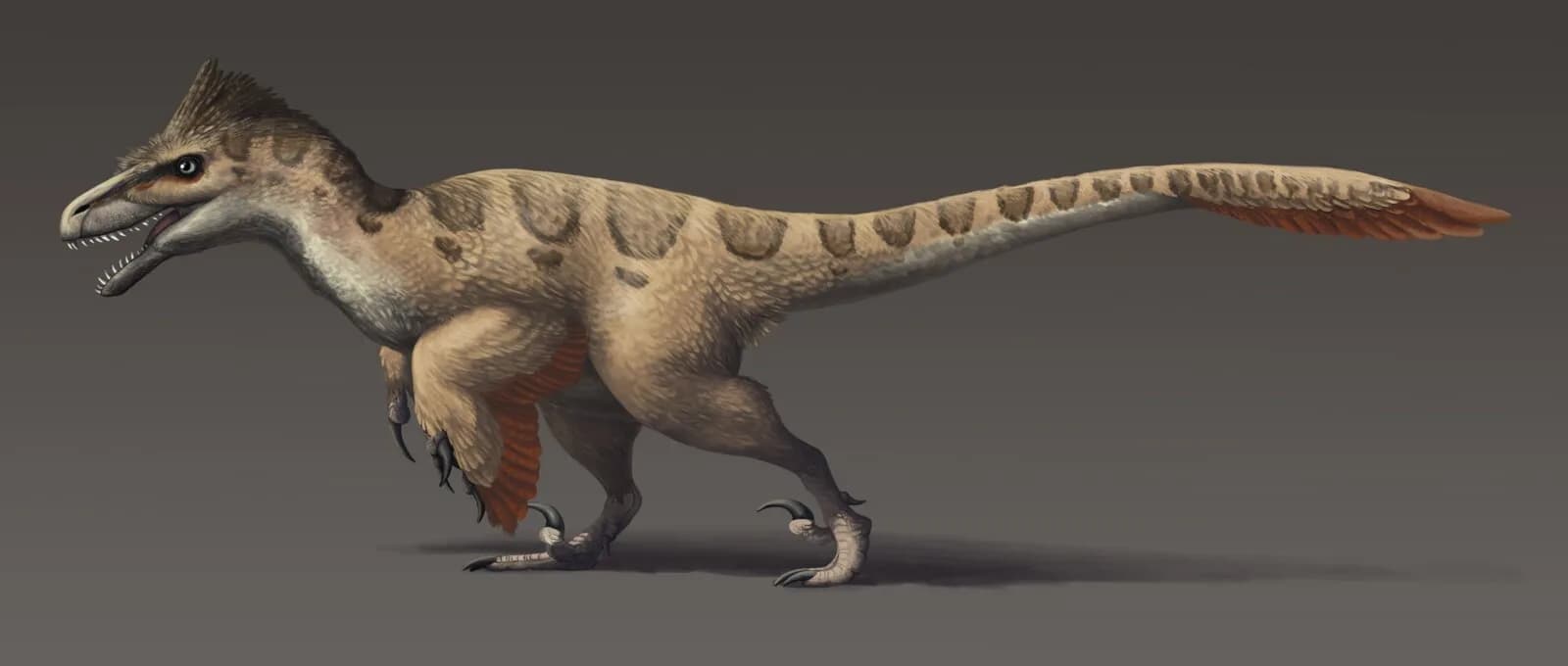
Life reconstruction of Zhenyuanlong suni
Chuang Zhao, CC BY 4.0, via Wikimedia Commons
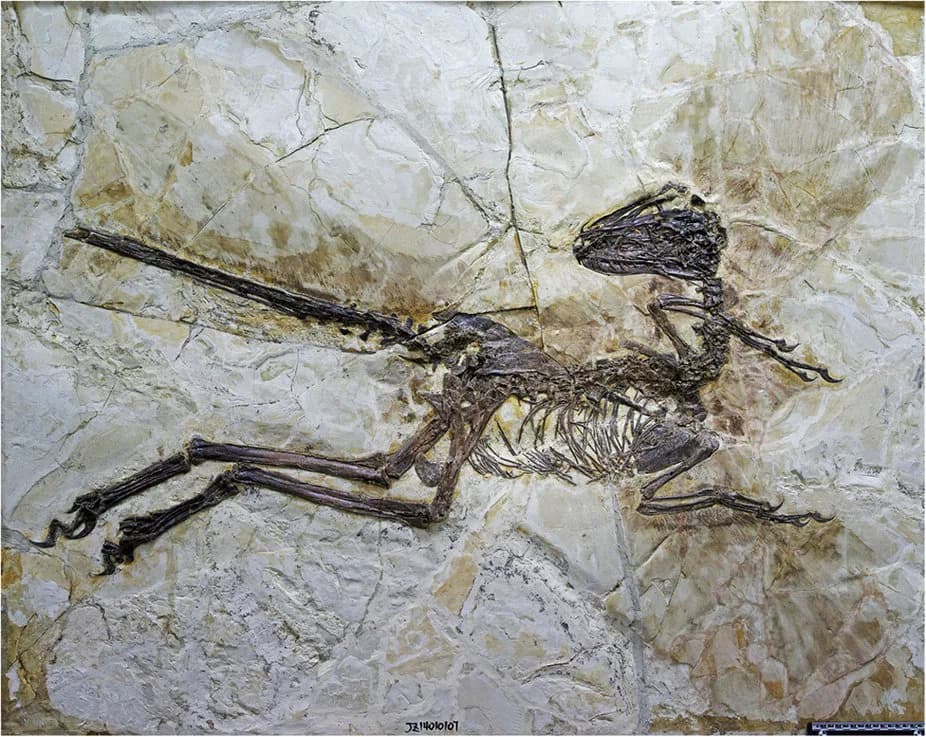
Fossil of Zhenyuanlong suni showing preserved feathers
Lü & Brusatte 2015, CC BY 4.0, via Wikimedia Commons