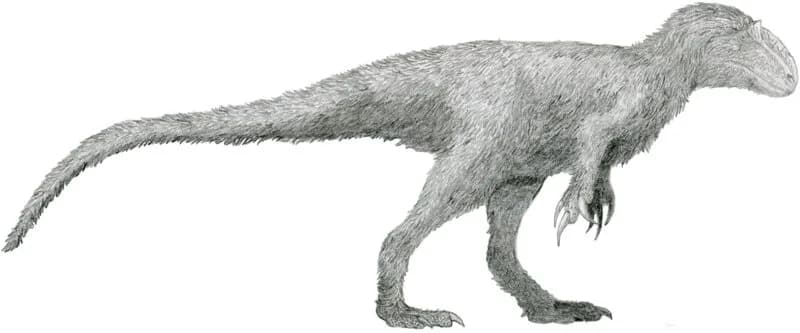
Yutyrannus
Yutyrannus huali is the largest feathered dinosaur ever found: about 9 metres and 1,400 kilograms, with filaments reaching 20 centimetres. Three skeletons were uncovered together in Liaoning and described in 2012. Its name blends Mandarin and Latin: « beautiful feathered tyrant ». It lived some 125 million years ago.
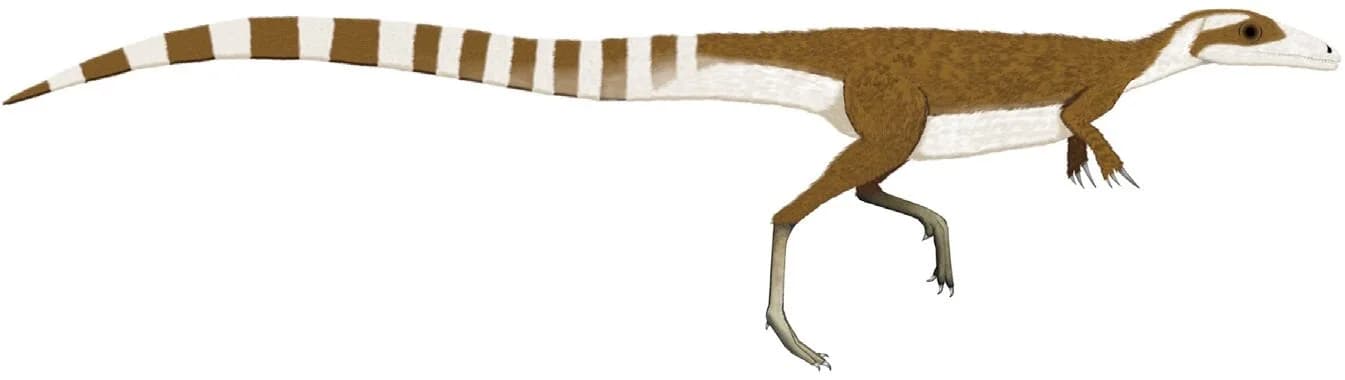
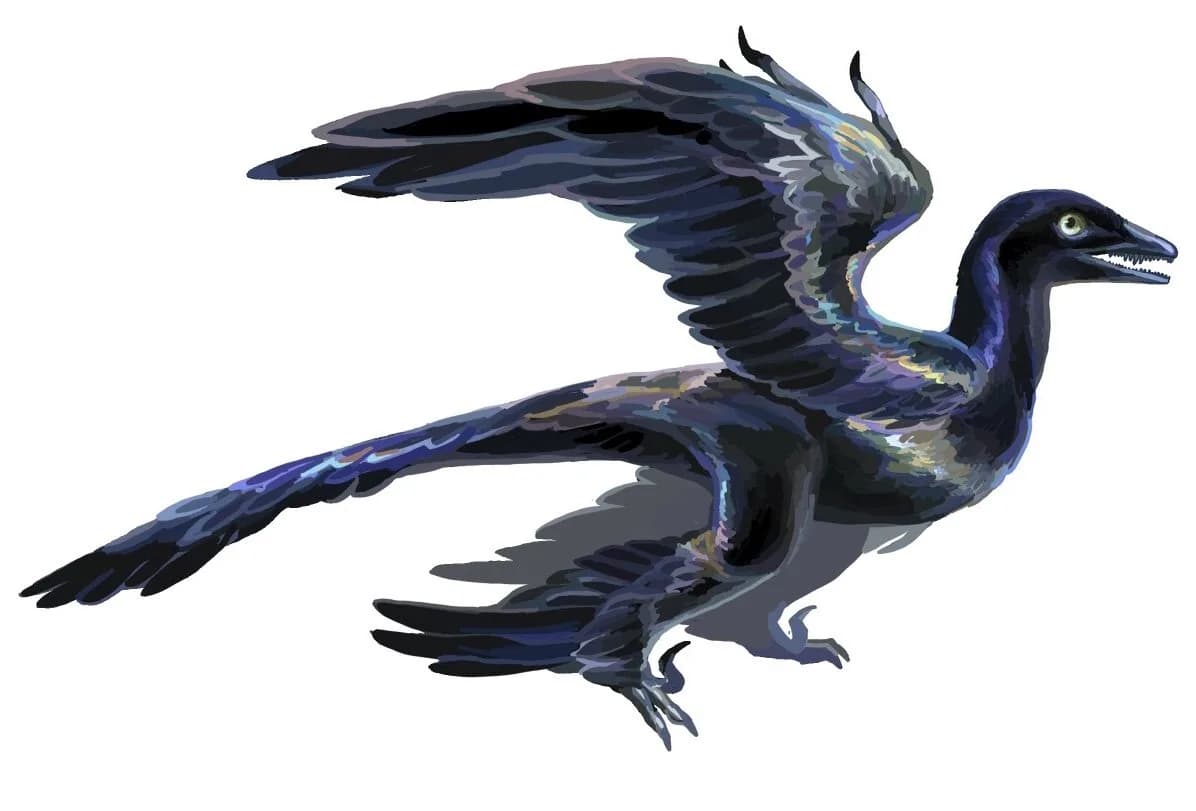
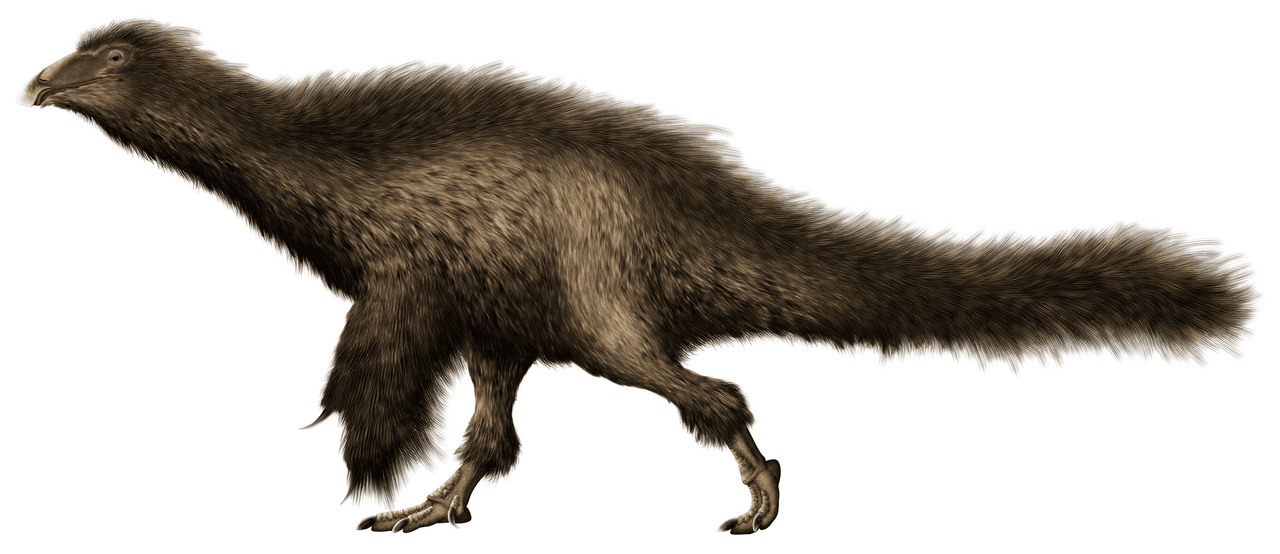
Yutyrannus lived during the Early Cretaceous, approximately 125 million years ago, during the Aptian stage. It inhabited the temperate forests and plains of what is now Liaoning Province in northeastern China. This region is famous for the Yixian Formation, an exceptional Lagerstatte that has yielded some of the best-preserved fossils in the world, including numerous feathered dinosaurs. The climate at the time was cooler than other regions of the globe during the Cretaceous, with mean annual temperatures estimated at around 10 degrees Celsius, which may explain the presence of feathers on this large predator. Yutyrannus shared its ecosystem with other iconic dinosaurs such as Sinosauropteryx, Microraptor, and Beipiaosaurus.
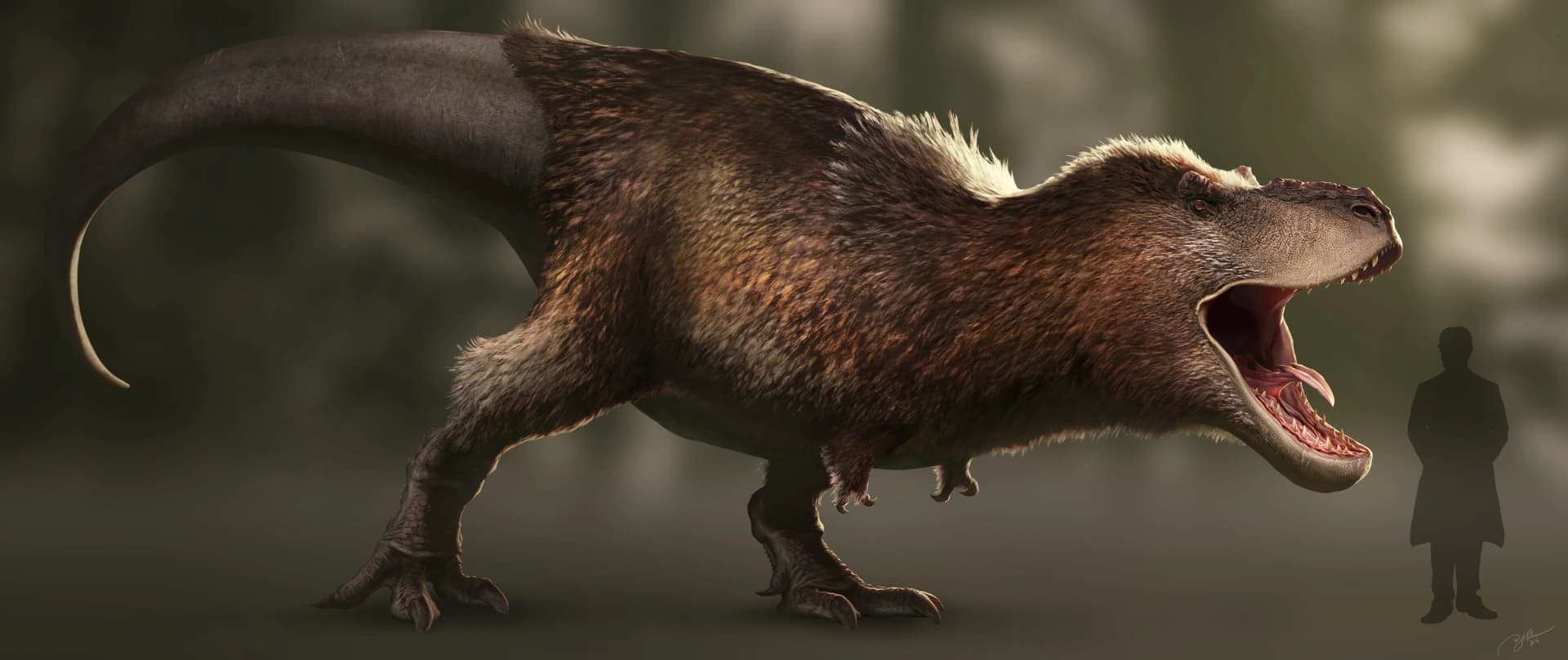
Yutyrannus was a large theropod for its time, measuring approximately 9 meters long and weighing roughly 1,400 kilograms. It is the largest known feathered dinosaur to date, a remarkable title that profoundly changed our understanding of feather distribution among dinosaurs. Its skull measured about 90 centimeters long, with a prominent nasal crest characteristic of proceratosaurids. Its hind limbs were robust and well-adapted for bipedal locomotion, while its forelimbs were relatively short but more developed than those of later tyrannosaurs. Its long, muscular tail served as a counterbalance during walking and running.
Yutyrannus was a carnivore and probably the dominant apex predator of its ecosystem in the Yixian Formation. As a large basal tyrannosauroid, it likely hunted the large herbivores of its environment, including juvenile sauropods, ornithopods, and primitive ceratopsians. Its teeth were typical of basal tyrannosauroids, relatively long and slightly recurved, adapted for seizing and tearing flesh. The structure of its jaws suggests a considerable bite force for a predator of its size. Like modern large predators, it probably combined active hunting and opportunistic scavenging depending on circumstances and the availability of food resources.
Yutyrannus inhabited the temperate forests and lacustrine areas of the Yixian Formation, in what is now Liaoning Province in northeastern China. The landscape of this period was dominated by conifer forests, ginkgos, and tree ferns, interspersed with volcanic lakes and waterways. The intense volcanic activity in the region regularly produced ash that, by rapidly burying organisms, created the exceptional fossilization conditions for which the Yixian Formation is famous. The climate was notably cooler than other regions of the world during the Early Cretaceous, with possibly harsh winters, which likely explains the presence of insulating plumage on Yutyrannus.
Yutyrannus anatomy presents a striking mix of primitive and derived characters within the tyrannosauroids. Its most remarkable feature is the presence of filamentous feathers measuring up to 20 centimeters long, preserved on several body parts including the arm, pelvis, and tail. The skull bore a low but prominent nasal crest formed by the nasal and premaxillary bones, a feature shared with proceratosaurids. Its arms, though relatively short, were proportionally longer than those of T. rex and bore three clawed digits. The overall bone structure was lighter than that of Late Cretaceous tyrannosaurs, with hollow bones characteristic of theropods. Its teeth, smaller than those of T. rex, were nonetheless effective for predation.
Yutyrannus was likely an active predator that used its large size to dominate other carnivores in its ecosystem. The discovery of three specimens found together has led some paleontologists to suggest possible gregarious behavior or pack hunting, though this interpretation remains debated — it could be an accidental post-mortem accumulation. Its dense plumage probably played a crucial thermoregulatory role in the cool temperate climate of the Yixian Formation, functioning as an insulating layer against the cold. The nasal crest possibly served as a visual signal for intraspecific recognition or sexual selection. As the largest predator in its habitat, it likely had no natural predators as an adult.
Yutyrannus huali was described in 2012 by Chinese paleontologist Xu Xing and colleagues, based on three remarkably complete specimens discovered in the Yixian Formation, Liaoning Province, China. The holotype (ZCDM V5000) is a nearly complete adult skeleton, accompanied by two additional smaller specimens (ZCDM V5001 and ELDM V1001), possibly subadults. The generic name Yutyrannus means 'feathered tyrant' (from Mandarin yu, meaning 'feather,' and Latin tyrannus, meaning 'tyrant'), while the specific epithet huali means 'beautiful' in Mandarin. This discovery was considered one of the most important paleontological findings of the decade, as it demonstrated that feathers were not limited to small dinosaurs but could also cover very large theropods.
| Period | Crétacé inférieur / Early Cretaceous (Aptien) |
| Era | Mésozoïque / Mesozoic |
| Age | ~125 Ma |
| Location | Chine (Liaoning) / China (Liaoning) |
| Length | ~9 m |
| Height | ~3 m |
| Weight | ~1 400 kg |
| Diet | Carnivore |
| Discovery | 2012 |
Yutyrannus huali measured approximately 9 meters in length with a weight of around 1,400 kilograms, making it the largest dinosaur for which filamentous feathers have been directly preserved on fossils. These feathers, reaching 20 centimeters in length, were found on the arm, pelvis, and tail of the three specimens discovered in the Yixian Formation (Liaoning, China) in 2012.
The large filamentous feathers of Yutyrannus huali likely served thermal insulation in the cool climate of the Yixian Formation, where mean annual temperatures are estimated at around 10°C. Large modern animals generally avoid insulating plumage since they produce enough heat, but a cooler-than-average Cretaceous environment made this thermal advantage essential for this Aptian tyrannosauroid.
Three Yutyrannus huali specimens were discovered together in the Yixian Formation — one adult (holotype ZCDM V5000) and two smaller individuals, possibly subadults (ZCDM V5001 and ELDM V1001). This grouping led some paleontologists to suggest gregarious behavior or pack hunting. The interpretation remains debated: it could represent an accidental post-mortem accumulation rather than a social group.
Life reconstruction of Yutyrannus huali
Tomopteryx, CC BY-SA 4.0, via Wikimedia Commons
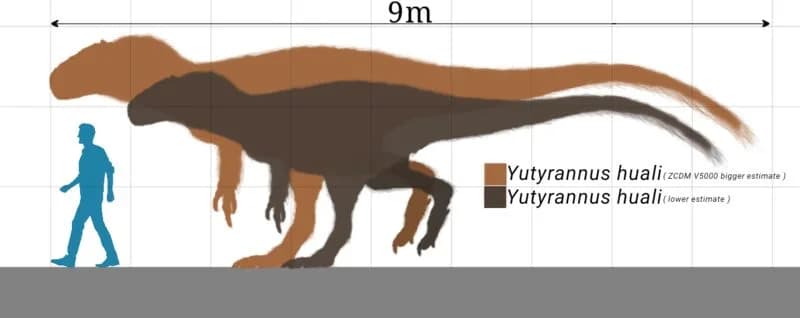
Size comparison between Yutyrannus huali and a human
Megaraptor-The-Allo, CC0, via Wikimedia Commons