Monstre de Tully
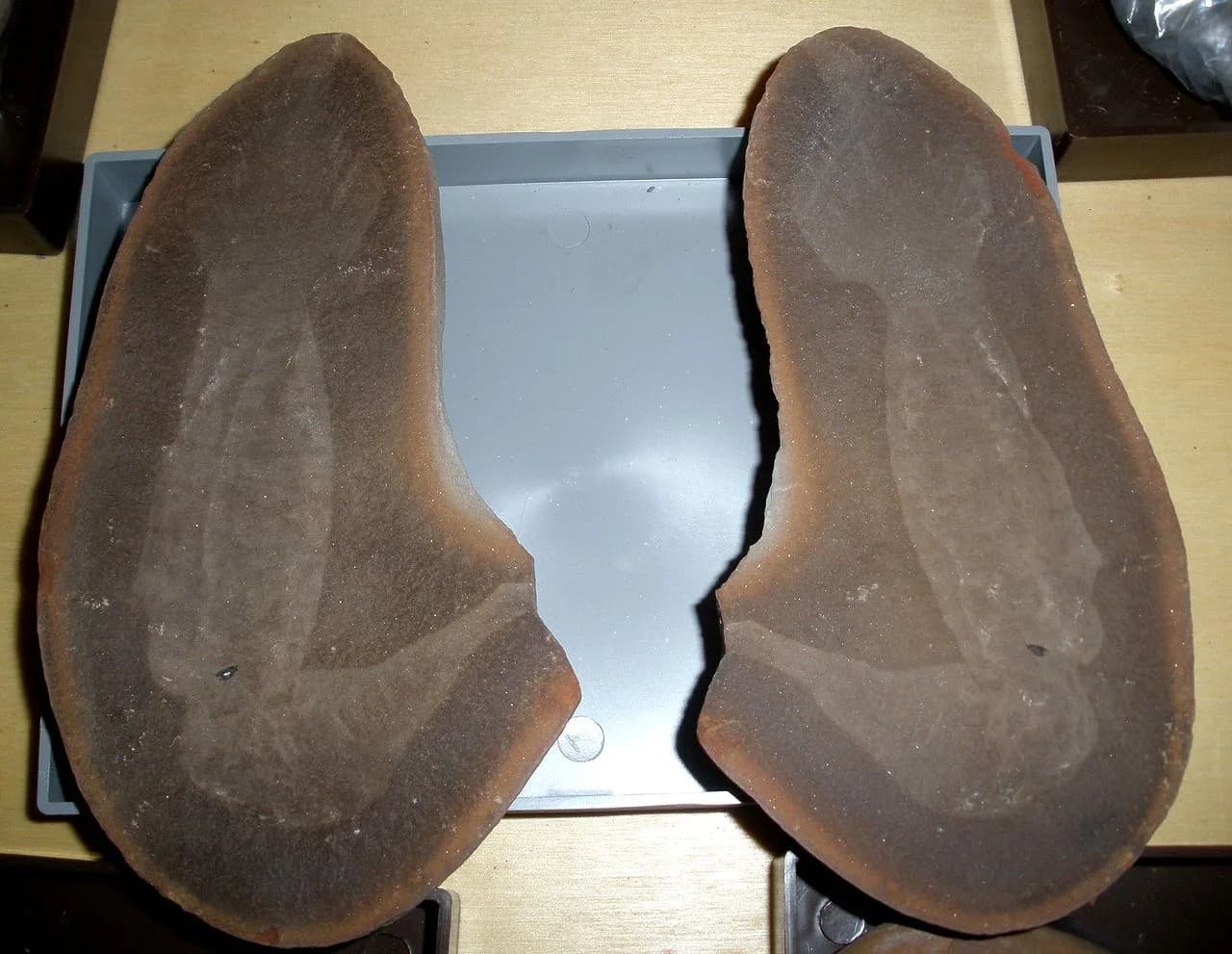
Tullimonstrum gregarium has been the official fossil of Illinois since 1989, even though no one can classify it. Vertebrate or invertebrate, mollusc or lamprey relative: after more than sixty years of study and tens of thousands of specimens pulled from Mazon Creek, the question remains open. It lived 307 million years ago.
Tullimonstrum lived during the Late Carboniferous period, approximately 307 million years ago, at a time when vast tropical swamp forests covered much of North America. The climate was hot and humid, promoting the growth of dense forests of giant lycopsids, tree ferns, and horsetails that sometimes reached heights of 30 meters. These lush forests formed the vast coal deposits that give this geological period its name. The shallow seas and coastal lagoons bordering these forests harbored a diverse marine fauna, including jellyfish, shrimp, primitive fish, and our mysterious Tullimonstrum. It was in the muddy sediments of these tropical lagoons, now known as the Mazon Creek formation in Illinois, that thousands of specimens were preserved in siderite concretions of exceptional quality.
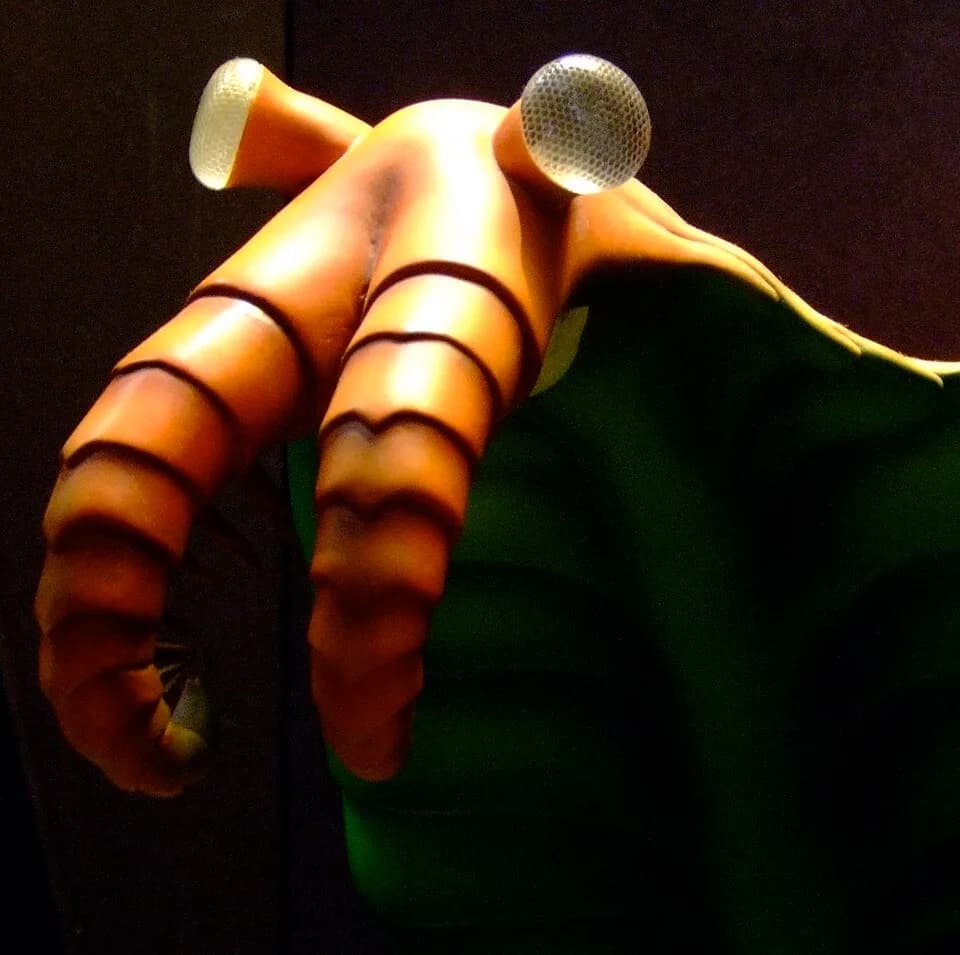
Tullimonstrum measured approximately 35 centimeters in total length, making it a modestly sized animal in Carboniferous waters. Its body was elongated and fusiform, torpedo-shaped, adapted for active swimming in coastal waters. The most striking part of its morphology was its long flexible proboscis, representing about one-third of the total length, which terminated in a toothed claw or pincer. At the other end, a rigid transverse bar carried eyes at both its extremities, giving the animal an absolutely unique silhouette in the animal kingdom. The tail bore a caudal fin that allowed it to propel itself efficiently through the water. No other known animal, living or fossil, combines such strange anatomical features together in quite the same way.
Tullimonstrum was probably an active small predator that hunted in the shallow waters of Carboniferous lagoons. Its long flexible proboscis, tipped with a toothed claw composed of eight small teeth, was perfectly adapted for seizing and capturing small prey. The animal could likely project its proboscis forward to grab small crustaceans, marine worms, larvae, and other soft-bodied invertebrates that populated the lagoon floors. The position of the mouth, located at the base of the proboscis on the ventral side of the body, suggests that the proboscis brought prey back to it after capture. This feeding method is reminiscent of the Cambrian Opabinia, although the two animals are probably not closely related to each other.
Tullimonstrum lived in tropical coastal lagoons and shallow estuaries that bordered the immense swamp forests of the Late Carboniferous in Illinois. The Mazon Creek formation, where all known specimens have been found, represents an ancient system of deltas and protected coastal marine lagoons. These calm, shallow waters were rich in organic matter from the surrounding forests, creating a productive ecosystem harboring a diverse fauna. Tullimonstrum shared its habitat with jellyfish, shrimp, horseshoe crabs, primitive shark-like fish, amphibians, and a multitude of marine and brackish-water invertebrates. Periodic anoxic conditions in the muddy sediments allowed the exceptional fossilization of these remarkable biological communities.
Tullimonstrum's anatomy is one of the most bizarre and most hotly debated in all of paleontology. Its torpedo-shaped body, unsegmented and lacking any limbs, extended forward into a long flexible proboscis terminating in a toothed pincer with eight teeth. This articulated proboscis could probably bend in all directions to capture prey. But the most extraordinary element was its rigid transverse bar, perpendicular to the body axis, located at the front of the head and bearing an eye at each end — like a miniature hammerhead shark but even stranger. These eyes apparently contained melanin, suggesting functional vision. The tail ended in a diamond-shaped caudal fin. The internal anatomy remains mysterious: some researchers have identified a possible notochord and primitive gill structures, while others firmly contest these interpretations as misidentified features.
Tullimonstrum was most likely an active and agile swimmer, propelled by undulations of its fusiform body and caudal fin. Its eyes mounted on lateral stalks gave it a remarkable panoramic field of vision, simultaneously covering areas above, below, and on each side of its body — a considerable advantage for detecting both prey and predators. This near-360-degree vision, combined with its prehensile proboscis, probably made it an efficient hunter of small invertebrates in the turbid lagoon waters. The animal likely spent much of its time actively swimming in search of food, exploring muddy bottoms and algal masses looking for prey items. The large number of specimens found together strongly suggests that Tullimonstrum lived in groups or schools in the coastal lagoons.
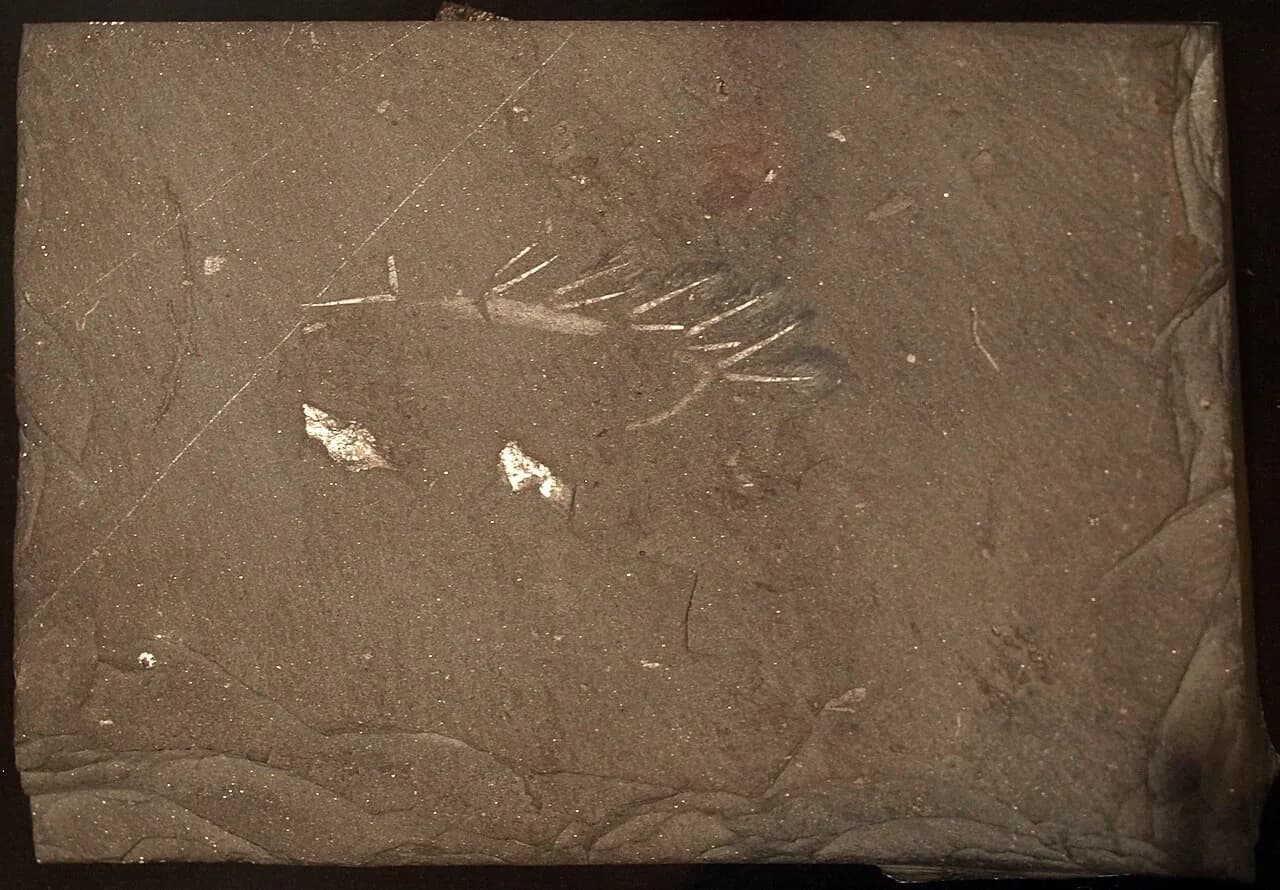
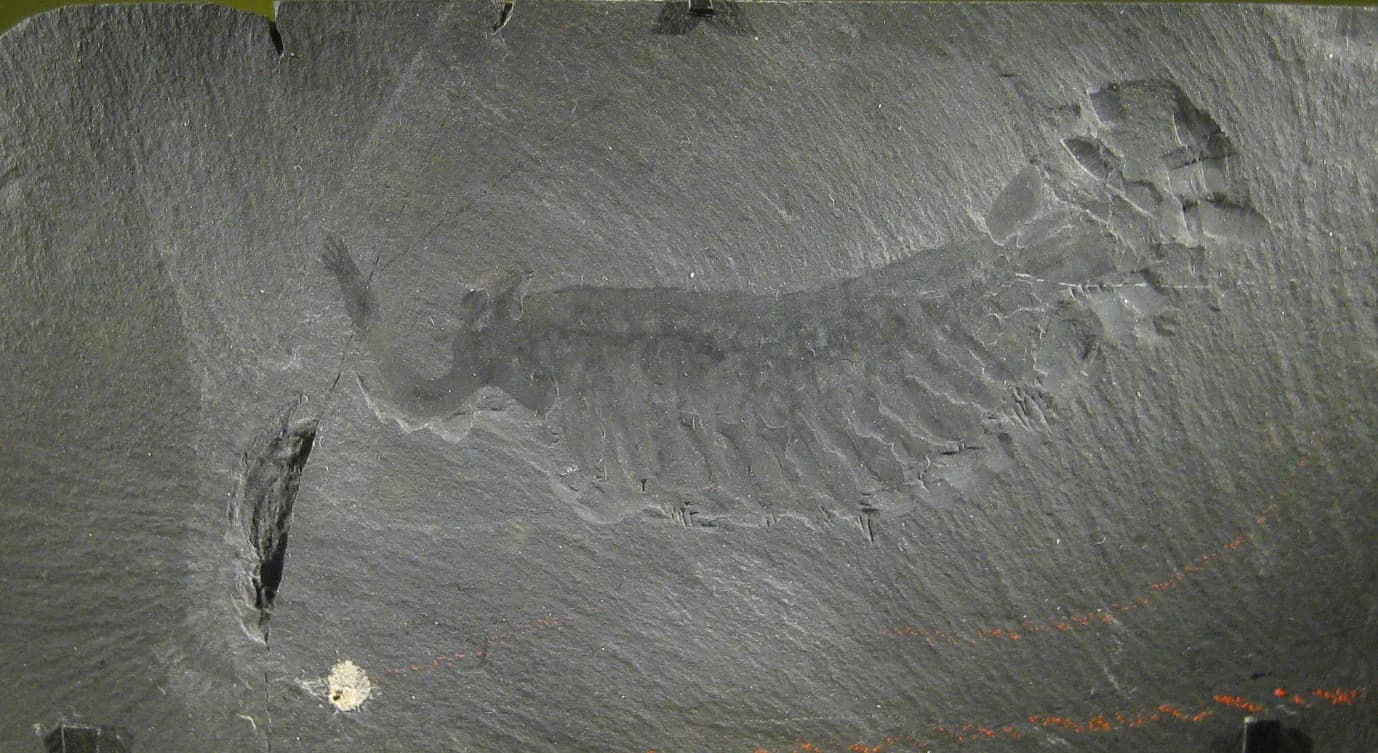
Tullimonstrum was first discovered in 1958 by Francis Tully, an amateur fossil collector who was exploring coal mine spoil heaps at Mazon Creek in Grundy County, Illinois. Intrigued by this strange fossil that he could not identify, he brought it to the Field Museum in Chicago where paleontologists were equally baffled. The species was formally described in 1966 by Eugene Richardson under the name Tullimonstrum gregarium — the 'common Tully monster.' Since then, tens of thousands of specimens have been found exclusively in siderite concretions at Mazon Creek, nowhere else in the world. In 1989, Tullimonstrum became the official state fossil of Illinois. Despite this abundance of specimens, its taxonomic classification remains one of paleontology's greatest mysteries: a 2016 study in Nature classified it among vertebrates as a primitive lamprey relative, but a 2017 counter-study disputed this conclusion. As of 2023, the debate still rages on — some consider it a vertebrate, others an invertebrate, and nobody truly knows what the Tully Monster really is.
| Period | Carbonifère / Carboniferous |
| Era | Paléozoïque / Paleozoic |
| Age | 307 Ma |
| Location | Mazon Creek, Illinois, États-Unis / Mazon Creek, Illinois, USA |
| Diet | Carnivore |
The question remains unsettled. A study published in Nature in 2016 classified Tullimonstrum gregarium among vertebrates, specifically as a primitive lamprey, based on identification of a notochord and gill structures. A 2017 counter-study challenged these interpretations. Despite tens of thousands of specimens found exclusively at Mazon Creek, Illinois (307 Ma), its taxonomic affinity remains one of paleontology's major mysteries.
Tullimonstrum gregarium measured approximately 35 centimeters. Its fusiform body extended into a long flexible proboscis tipped with a pincer bearing eight small teeth. At the front, a rigid transverse bar bore an eye at each end — like a miniature hammerhead shark. A diamond-shaped caudal fin provided propulsion. No other known animal, living or fossil, combines these features.
Tullimonstrum gregarium was discovered in 1958 by Francis Tully, an amateur diver and fossil collector, in the coal mine spoil heaps of Mazon Creek, Grundy County, Illinois. Unable to identify this strange fossil, Tully brought it to the Field Museum in Chicago where paleontologists were equally puzzled. The species was formally described in 1966 by Eugene Richardson. In 1989, Tullimonstrum became the official state fossil of Illinois.
Tullimonstrum gregarium fossil
Wikimedia Commons
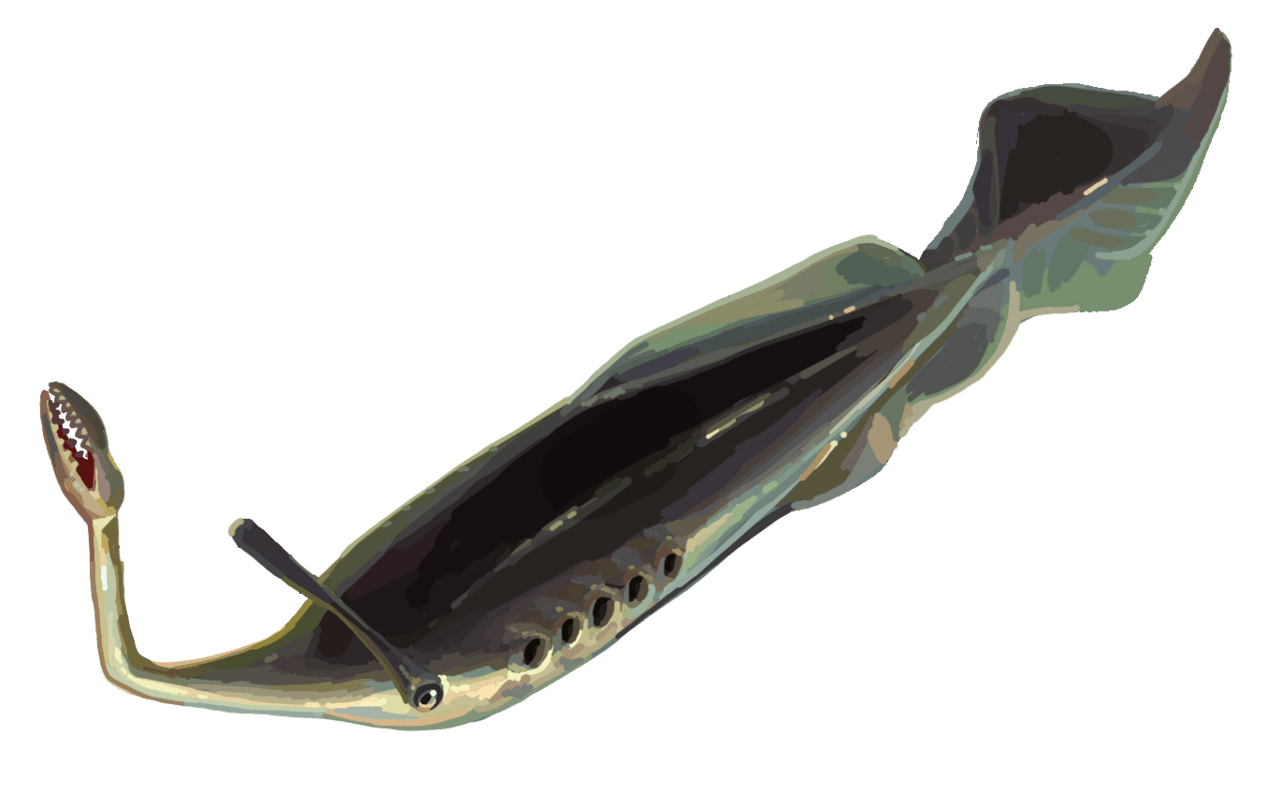
Tullimonstrum reconstruction
Wikimedia Commons