Anomalocaris
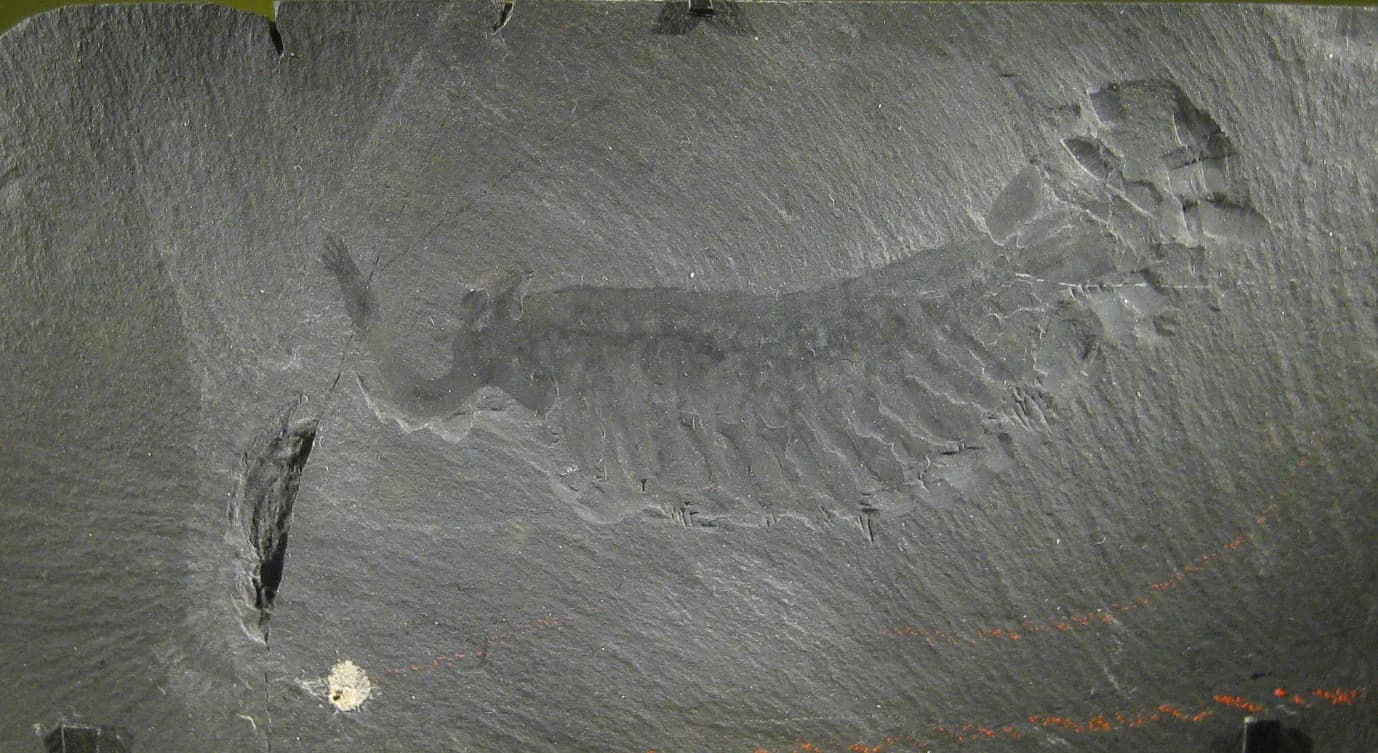
Anomalocaris canadensis was a Cambrian arthropod from the Burgess Shale and Chengjiang, described in 1892 and dated to 520 to 488 million years ago. Between 60 centimetres and 1 metre long, it was among the great predators of its time. Its appendages, mouth and body were described as three separate animals before being reunited in 1985.
Anomalocaris lived during the Middle to Late Cambrian, approximately 520 to 488 million years ago, in the shallow seas covering much of the continents. It was the very first known super-predator in the history of life — the undisputed king of the Cambrian Explosion. Anomalocaris belongs to the radiodonts, a group of primitive arthropods that included the largest animals of their time. When most Cambrian creatures didn't exceed a few centimeters, Anomalocaris reached one meter in length, dominating the food chain with overwhelming superiority. Its fossils have been found on every continent, from the Burgess Shale in Canada to the Chengjiang deposits in China.
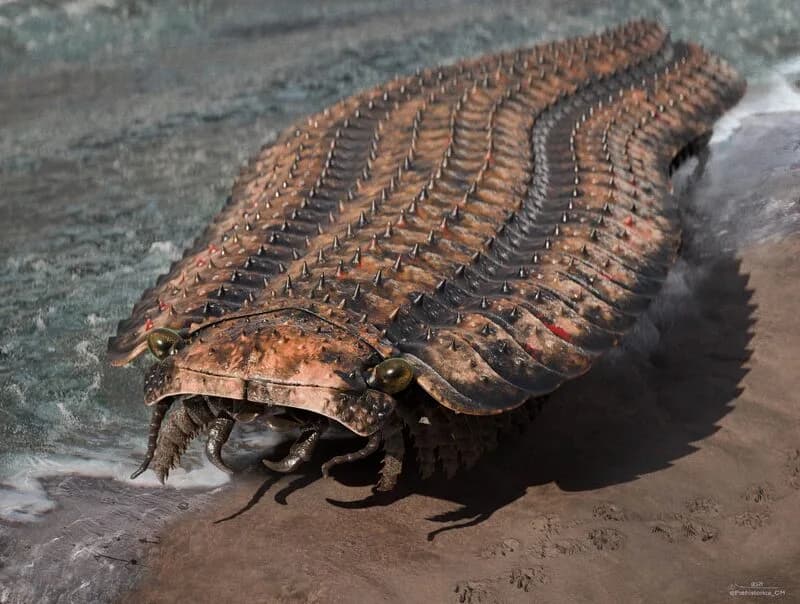
Anomalocaris was the giant of Cambrian seas, measuring about 60 centimeters to 1 meter in length — a colossal size in a world where most animals didn't exceed a few centimeters. Its dorso-ventrally flattened body was propelled by rows of lateral swimming lobes that undulated in sequence, like a ray's fins. Its head bore a pair of articulated frontal appendages 10 to 15 centimeters long, armed with spines, used to capture prey and bring them to its circular ventral mouth. Its large stalked compound eyes, among the most sophisticated of the Cambrian, contained up to 16,000 lenses — exceptional resolution for the time.
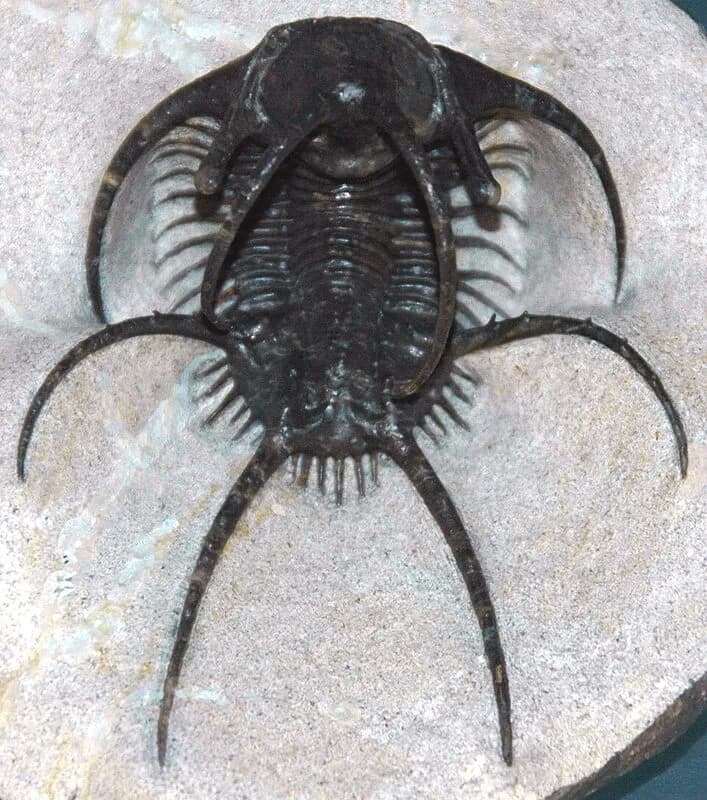
Anomalocaris was the absolute apex super-predator of Cambrian oceans. Its large articulated, spiny frontal appendages allowed it to capture, manipulate, and immobilize prey of various sizes. Its diet included trilobites (circular bite marks on trilobite shells are attributed to it), worms, hyolithids, sponges, and virtually any organism within reach. Its circular mouth, surrounded by toothed plates arranged in concentric rings, could crush hard exoskeletons. However, recent studies suggest that some Anomalocaris species may have been filter feeders rather than active predators, using their appendages as sieves to filter plankton.
Anomalocaris inhabited the warm, shallow epicontinental seas of the Cambrian, in biodiversity-rich environments. The most famous fossils come from the Burgess Shale in British Columbia, Canada (508 Ma), but specimens have been found in the Chengjiang deposits in China (520 Ma), Australia (Emu Bay Shale), Morocco, and other localities worldwide. This global distribution confirms that Anomalocaris was an active swimmer capable of covering great distances in Cambrian oceans. It probably occupied the mid-water column and near-bottom zones, actively hunting in waters of variable visibility.
Anomalocaris' anatomy is unique in the animal kingdom. Its segmented, flattened body bore rows of flexible lateral swimming lobes that undulated in sequence for smooth, efficient propulsion. Its head was dominated by a pair of articulated, spiny frontal appendages — its main predation tools — and by two large stalked compound eyes containing up to 16,000 individual lenses (among the most sophisticated eyes ever evolved in the Cambrian). Its circular ventral mouth, long described as a fossil 'pineapple ring' before it was understood to belong to Anomalocaris, was surrounded by toothed plates forming a crushing apparatus. Remarkably, the mouth probably couldn't close completely, fueling debate about its effectiveness as a hard-exoskeleton crusher.
Anomalocaris was an active, agile swimmer, propelling itself by undulating its lateral swimming lobes in a manner similar to a modern ray. Hydrodynamic simulations have shown that this propulsion method was surprisingly efficient, allowing cruising speeds sufficient to intercept the fastest Cambrian prey. Its high-resolution compound eyes (16,000 lenses) allowed it to spot prey at distance in Cambrian waters. It probably hunted during the day, using its superior vision as a decisive advantage over prey with less developed eyes. Its position as apex super-predator meant it had no natural predators — it was the T. rex of Cambrian seas, 450 million years before the real T. rex.
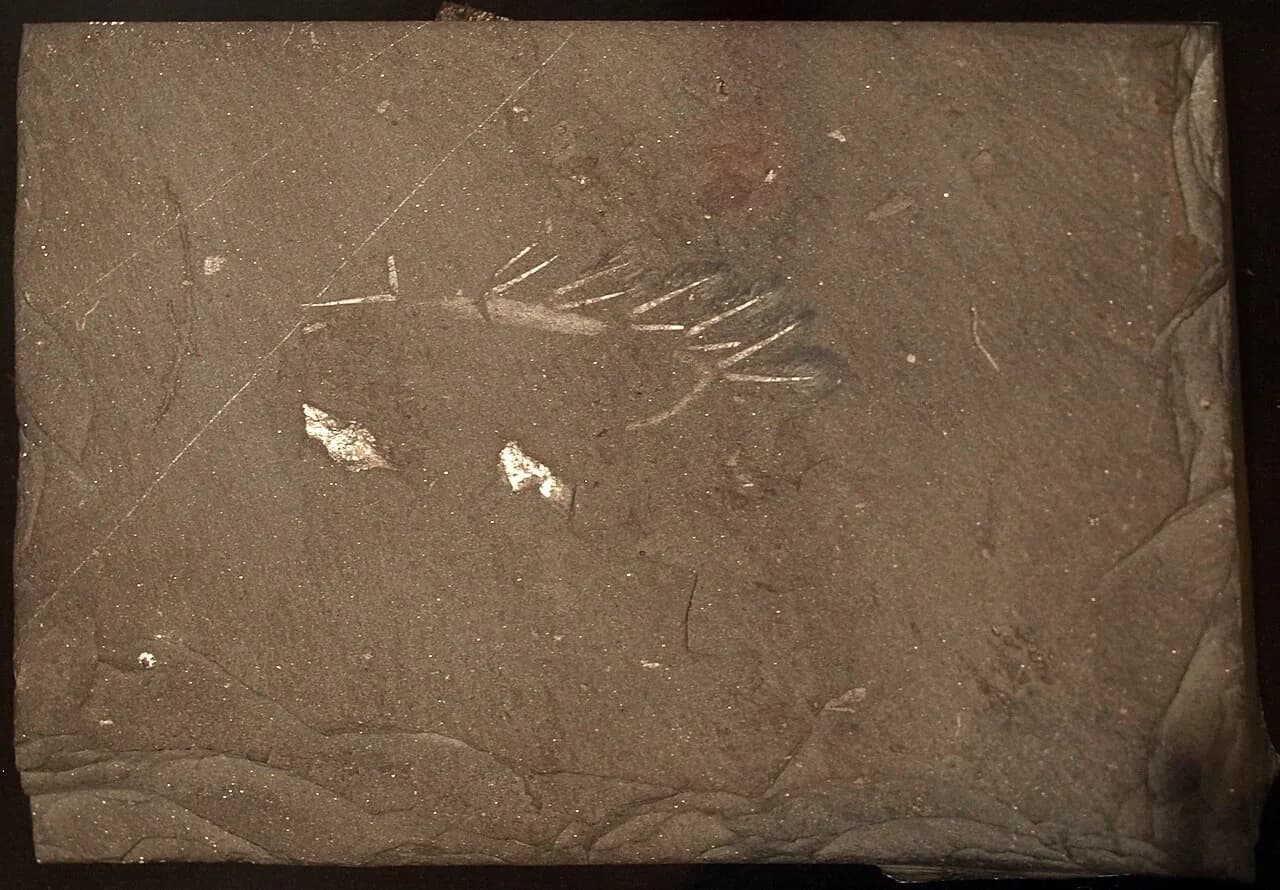
Anomalocaris' discovery story is one of paleontology's most convoluted. First described in 1892 by Joseph Frederick Whiteaves, only the frontal appendage was known — and was interpreted as a shrimp's abdomen (hence the name 'abnormal shrimp'). Its circular mouth was separately described as a fossil jellyfish (Peytoia). Its body was mistaken for a sponge (Laggania). It wasn't until 1985 that Harry Whittington and Derek Briggs finally assembled the puzzle pieces, realizing that all these 'different fossils' belonged to the same animal. Remarkably complete specimens from the Chengjiang deposits in China (520 Ma) helped refine our understanding of its anatomy. In 2011, the discovery of its fossilized eyes with 16,000 lenses revealed it possessed one of the most sophisticated visual systems of the Cambrian.
| Period | Cambrien moyen à supérieur / Middle to Late Cambrian |
| Era | Paléozoïque / Paleozoic |
| Age | 520-488 Ma |
| Location | Schistes de Burgess (Canada), Chengjiang (Chine), mondial / Burgess Shale (Canada), Chengjiang (China), worldwide |
| Length | 60 cm - 1 m |
| Height | 15 cm |
| Weight | ~5 kg (estimation) |
| Diet | Carnivore |
| Discovery | 1892 |
No, Anomalocaris canadensis was a primitive arthropod of the radiodont group, extinct roughly 260 million years before the first dinosaurs appeared. It lived during the Cambrian, 520 to 488 million years ago, in shallow seas. It was the first known apex super-predator in the history of life, with no phylogenetic relationship to reptiles.
In 1892, Joseph Frederick Whiteaves only had an isolated frontal appendage, interpreted as a shrimp abdomen. Its circular mouth was separately described as a jellyfish (Peytoia), its body as a sponge (Laggania). Not until 1985 did Harry Whittington and Derek Briggs assemble the pieces to recognize Anomalocaris canadensis as a single coherent organism — one of paleontology's most famous corrections.
Anomalocaris canadensis used its articulated frontal appendages of 10 to 15 cm, armed with spines, to capture prey and bring them to its circular ventral mouth lined with toothed plates. Circular bite marks found on trilobite shells are directly attributed to it. Its compound eyes containing 16,000 lenses gave it exceptional vision for spotting prey in Cambrian waters.
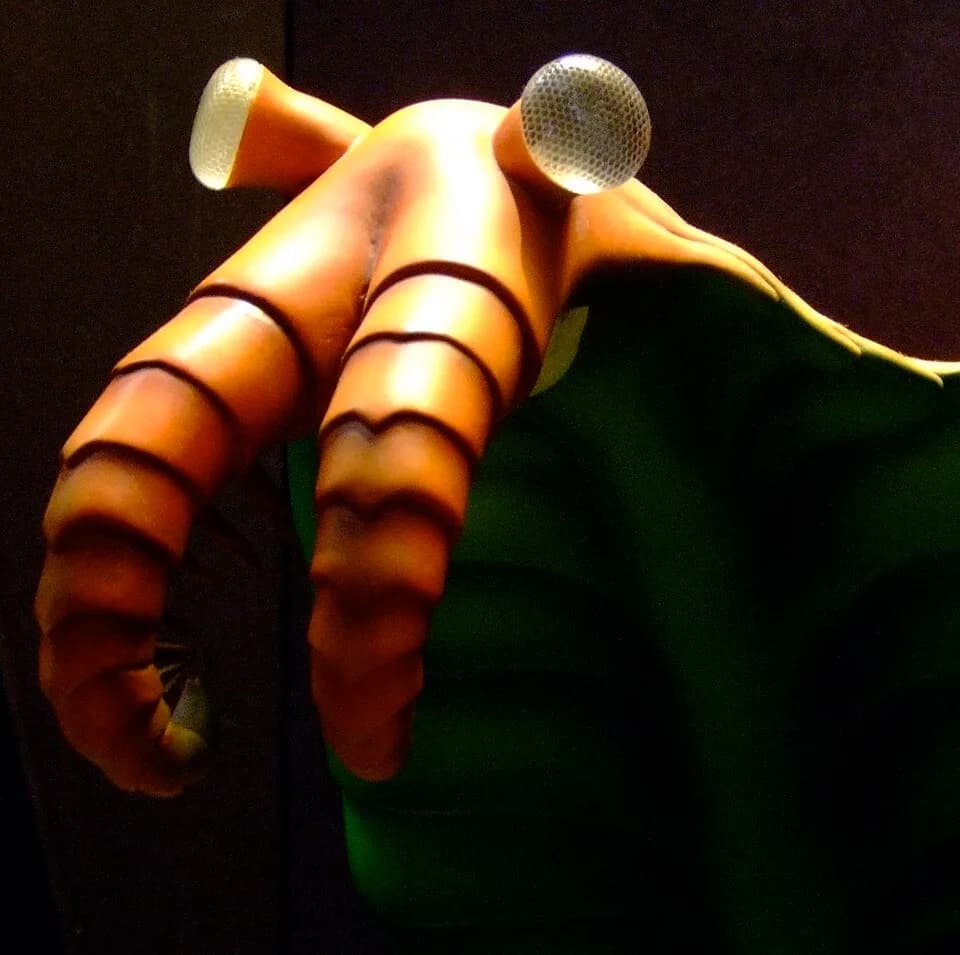
Anomalocaris canadensis model showing its frontal appendages and circular mouth
Wikipedia Commons
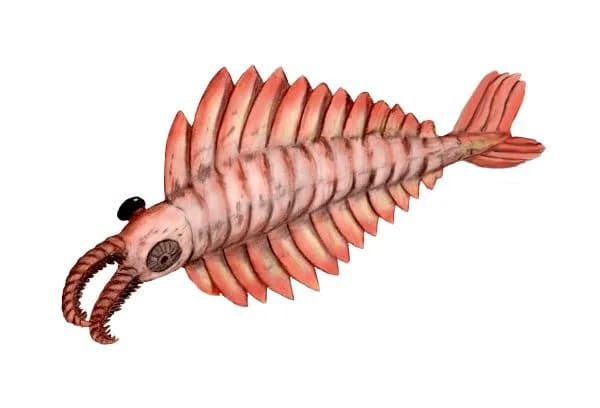
Artistic reconstruction of Anomalocaris, the Cambrian super-predator
Nobu Tamura, CC BY-SA 3.0