Hallucigenia
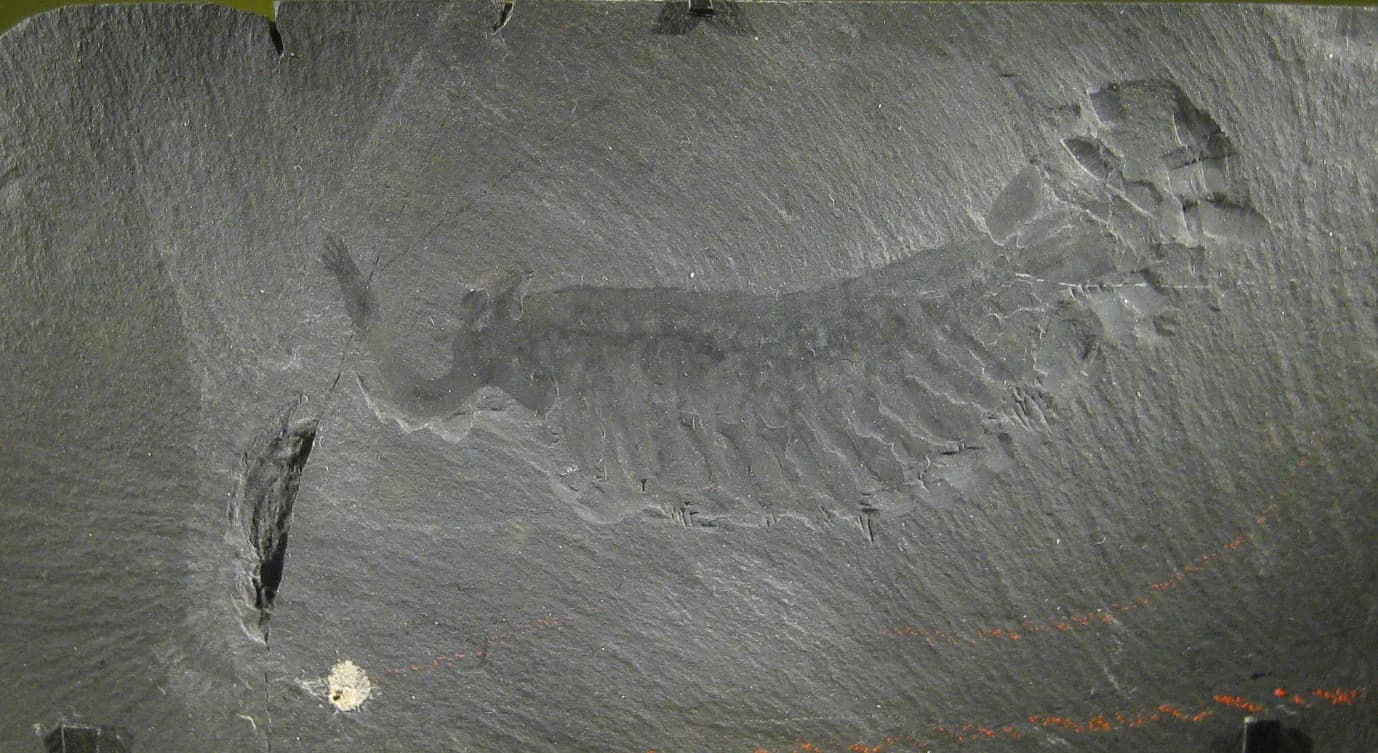
Hallucigenia sparsa was reconstructed upside down and back to front for fourteen years: palaeontologists had mistaken its dorsal spines for legs. This detritivore, 5 to 35 millimetres long, comes from the Burgess Shale in British Columbia and dates to 508 million years ago. Its name evokes hallucination, so thoroughly did its shape confound those who first described it.
Hallucigenia lived during the Middle Cambrian, approximately 508 million years ago, in the shallow seas that covered what is now British Columbia, Canada. This creature was part of the Cambrian Explosion, the most spectacular event in the history of life on Earth, during which most major animal groups appeared within just a few million years. Hallucigenia is one of the most iconic animals from the famous Burgess Shale deposit, discovered in 1909 by Charles Doolittle Walcott. This exceptional site preserved soft-bodied organisms in extraordinary detail, offering a unique window into Cambrian marine life. Hallucigenia is classified among the lobopodians, a group of invertebrates related to modern onychophorans (velvet worms) and arthropods.
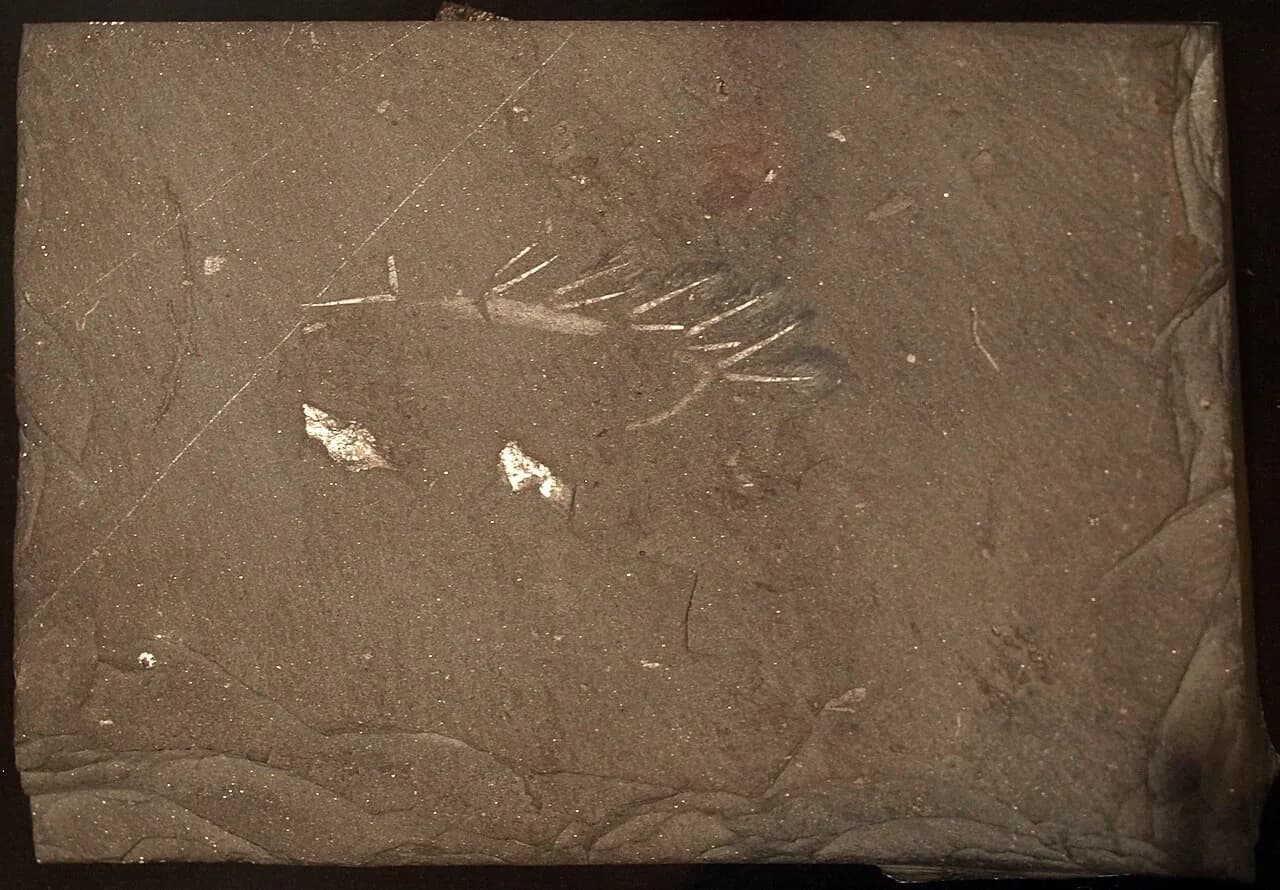
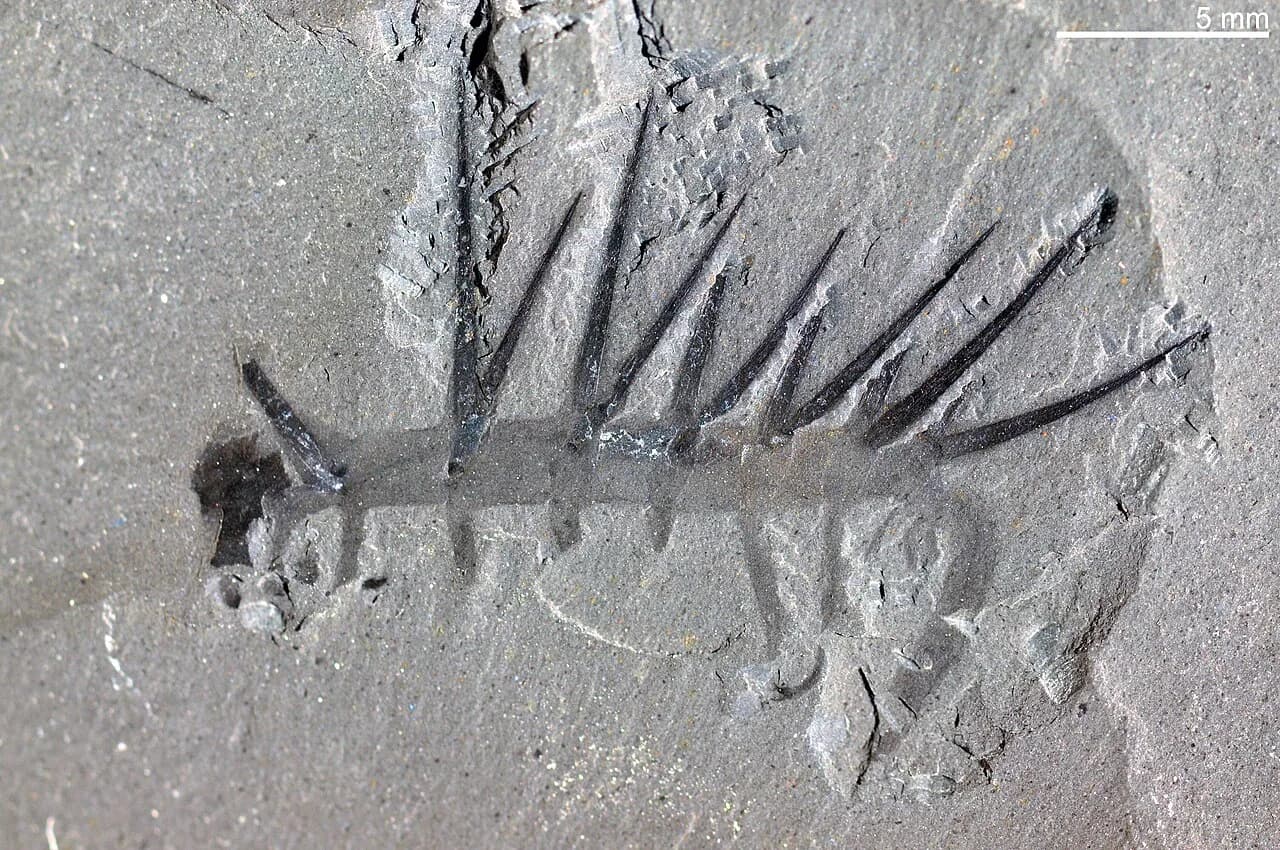
Hallucigenia was a tiny creature by our standards, measuring between 5 and 35 millimeters in length — barely larger than a human fingernail for the biggest specimens. Its body was tubular and elongated, bearing seven pairs of rigid spines on its back and seven to eight pairs of soft legs ending in claws on its belly. The head, long confused with the tail, was small and rounded, equipped with a pair of simple eyes and a mouth surrounded by a ring of teeth. Despite its ridiculous size, Hallucigenia possessed a remarkably complex anatomy that baffled paleontologists for decades.
Hallucigenia probably fed on decaying organic matter, bacteria, and small food particles on the seafloor. Its mouth, surrounded by a ring of teeth, was adapted for scraping and ingesting food from ocean substrate surfaces. Some researchers believe it may also have fed on sponges, which were abundant in Cambrian seas. Its simple digestive tract ran straight through the entire body. Hallucigenia was certainly not a predator — its small size and slow locomotion placed it among the detritivores and grazers of the Cambrian seafloor.
Hallucigenia lived on the shallow seafloors of Cambrian seas, in a tropical environment situated near the equator. The Burgess Shale site in British Columbia represents an ancient sponge reef located at the edge of an underwater escarpment called 'the Cathedral.' Fine sediments and underwater mud flows periodically buried seafloor communities, preserving them in extraordinary detail. Hallucigenia shared its habitat with a teeming community of bizarre Cambrian organisms: Anomalocaris (the giant super-predator), Opabinia (with five eyes), Wiwaxia (armored with scales), Pikaia (one of the earliest chordates), and hundreds of other species.
Hallucigenia's anatomy caused one of the greatest mix-ups in paleontological history. When Simon Conway Morris redescribed it in 1977, the animal was reconstructed both upside down AND back to front: the dorsal spines were interpreted as walking legs, the real legs were mistaken for dorsal tentacles, and the head was confused with the tail. It was not until 1991 that Lars Ramskold flipped the animal correctly after discovering better-preserved Chinese specimens. In 2015, a study published in Nature finally revealed the head, with its two simple eyes and ring of pharyngeal teeth — definitively confirming which end was the front. The dorsal spines likely served as defense against predators, while the lobopod legs enabled slow locomotion on the seafloor.
Hallucigenia was a slow benthic animal, moving across the seafloor using its soft lobopod legs. Its rigid dorsal spines constituted its main defense against predators, making the animal difficult to swallow for predators like Anomalocaris. Its locomotion would have resembled that of modern onychophorans (velvet worms), with slow, undulating movements. Hallucigenia probably lived in groups or concentrations on food-rich surfaces, as suggested by the large number of specimens found together in certain Burgess Shale layers. It was likely active continuously, slowly grazing the seafloor surface in search of food.
The name Hallucigenia was given in 1977 by British paleontologist Simon Conway Morris, referring to the 'hallucinatory' appearance of this bizarre animal that seemed to defy all classification. Fossils come primarily from the Burgess Shale (508 Ma) in British Columbia, Canada, initially discovered by Charles Walcott in 1911 under the name Canadia sparsa. Over 100 specimens have been found at this site. Related species were discovered in China in the Chengjiang deposits (H. fortis, 520 Ma), slightly older. Hallucigenia's taxonomic history is famous as an example of the difficulty of interpreting organisms with no modern analogues — it took nearly 40 years (1977-2015) to correctly reconstruct this 2 cm animal.
| Period | Cambrien moyen / Middle Cambrian |
| Era | Paléozoïque / Paleozoic |
| Age | 508 Ma |
| Location | Schistes de Burgess, Colombie-Britannique, Canada / Burgess Shale, British Columbia, Canada |
| Length | 5-35 mm |
| Weight | < 1 g |
| Diet | Détritivore |
| Discovery | 1911 |
Hallucigenia sparsa measured between 5 and 35 millimeters — barely larger than a fingernail. Its 1977 redescription by Simon Conway Morris was mistaken: the animal was reconstructed upside down and back to front for 14 years. In 1991, Lars Ramskold corrected it using better-preserved Chinese specimens. Only in 2015 did a study in Nature definitively identify the head, bearing two eyes and a ring of pharyngeal teeth.
Hallucigenia sparsa was a detritivore and seafloor grazer, certainly not a predator. Its ring of teeth around the mouth served to scrape and ingest decaying organic matter, bacteria, and possibly sponges. Its rigid dorsal spines made it difficult for predators like Anomalocaris to swallow. It moved slowly across the seafloor of Cambrian seas 508 million years ago, in what is now British Columbia.
Hallucigenia sparsa is classified among lobopodians, a group related to modern onychophorans — velvet worms (Onychophora) — which still exist in South America, Africa, and Oceania. Lobopodians are also closely related to arthropods. This Cambrian ancestral lineage represents an evolutionary link between annelid worms and arthropods, bearing witness to the Cambrian explosion 508 million years ago.
Artistic reconstruction of Hallucigenia sparsa as a Cambrian onychophoran
Apokryltaros, CC BY 2.5
Hallucigenia fossil on display at the Smithsonian, Washington D.C.
Wikipedia Commons