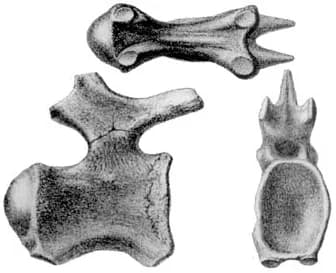
Titanosaurus
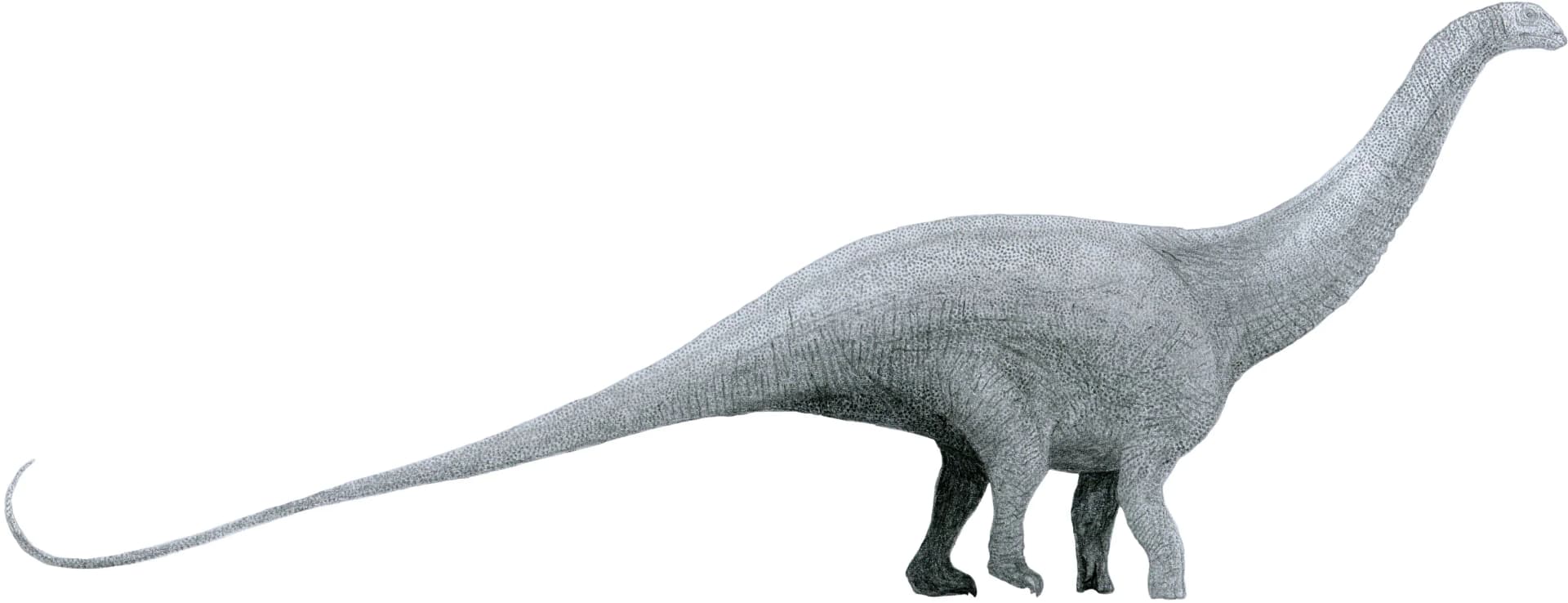
Titanosaurus indicus gave its name to the titanosaurs, the most diverse sauropod group known. It ranks among the very first dinosaurs described from Indian fossils, by Richard Lydekker in 1877. Nine to 12 metres long and 5 to 13 tonnes, it lived 72 to 66 million years ago, in India as well as France.
Titanosaurus lived during the Late Cretaceous, approximately 72 to 66 million years ago, during the Campanian and Maastrichtian stages. This period corresponds to the final millions of years of the age of dinosaurs, just before the mass extinction at the Cretaceous-Paleogene boundary that would annihilate all non-avian dinosaurs. Titanosaurus was among the last great sauropods to walk the Earth, testifying to the resilience of this group until the very end of the Mesozoic era. It coexisted with the last great theropods and ceratopsians in ecosystems that remained diverse despite the ongoing climatic and volcanic upheavals, notably the intense volcanism of the Deccan Traps in India.
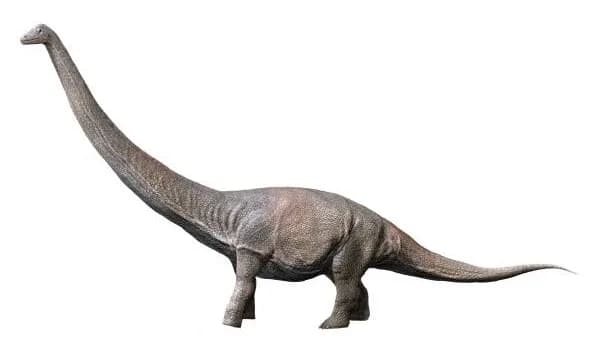
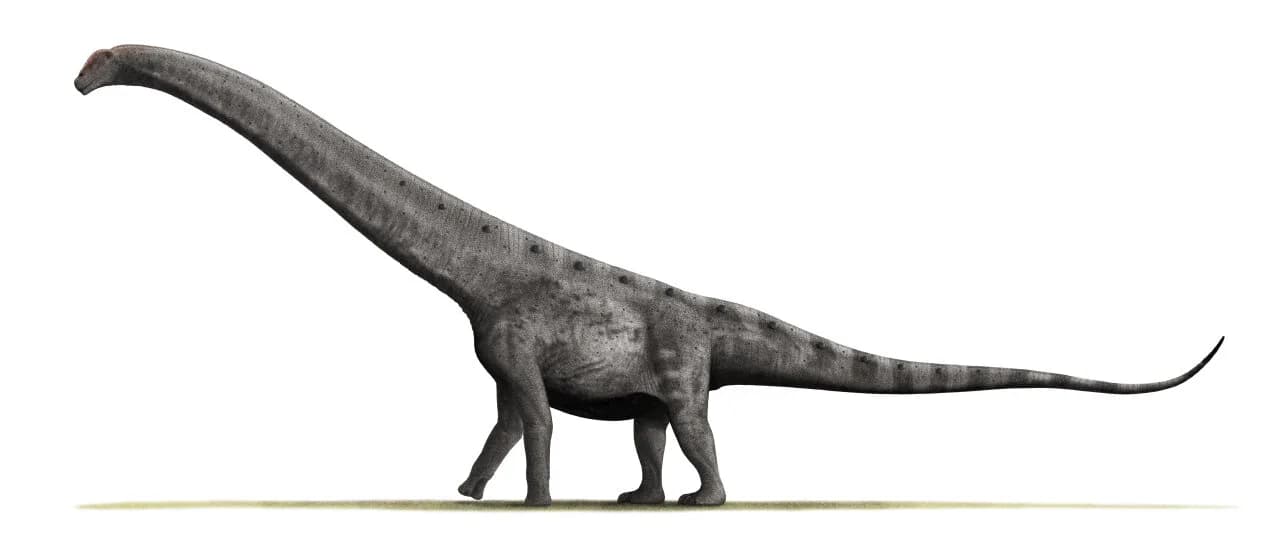
Titanosaurus was a medium-to-large sauropod, estimated at between 9 and 12 meters in length and weighing several tonnes. Although modest compared to giant titanosaurs like Argentinosaurus or Patagotitan, it remained one of the largest terrestrial animals of its time and environment. Its historical importance far exceeds its physical size: it is the animal that gave its name to the entire titanosaur group, one of the most diverse and geographically widespread clades of dinosaurs ever known. Despite its relatively modest size for a sauropod, Titanosaurus was still an imposing herbivore capable of dominating its ecosystem through its considerable mass.
A strict herbivore, Titanosaurus fed on the abundant vegetation of the Late Cretaceous, including angiosperms (flowering plants) that were undergoing spectacular diversification at the time, as well as conifers, ferns, and palms. Its peg-shaped teeth, characteristic of titanosaurs, were adapted for stripping vegetation rather than chewing it. Food was swallowed whole and digested in a vast fermentative digestive system, probably aided by gastroliths. Its long neck allowed it to sweep a wide area of vegetation without having to move its massive body, an energetically efficient strategy for an animal of this size.
Titanosaurus primarily inhabited the Indian subcontinent, which was at the time an island continent drifting northward after separating from Gondwana. Fossils have also been attributed to this species in Europe, particularly in southern France, suggesting intermittent land connections between these landmasses via island bridges. The Late Cretaceous climate in India was warm and humid, with lush vegetation sustained by tropical conditions. The Lameta geological formations in central India, where the main fossils were discovered, indicate an environment of alluvial plains with seasonal rivers and shallow lakes surrounded by dense forests.
Titanosaurus displayed the typical morphology of titanosaur sauropods: a massive body supported by four robust columnar limbs, a long flexible neck, and a long tail serving as a counterweight. Like many titanosaurs, it probably possessed osteoderms, bony plates embedded in the skin forming partial armor against predators. This defensive feature is rare among sauropods and distinguishes titanosaurs from other families. Its vertebral column consisted of procoelous vertebrae (concave at the front) characteristic of the group, providing both flexibility and strength. Its limbs were adapted to a wide-gauge posture, conferring increased stability to this multi-tonne animal.
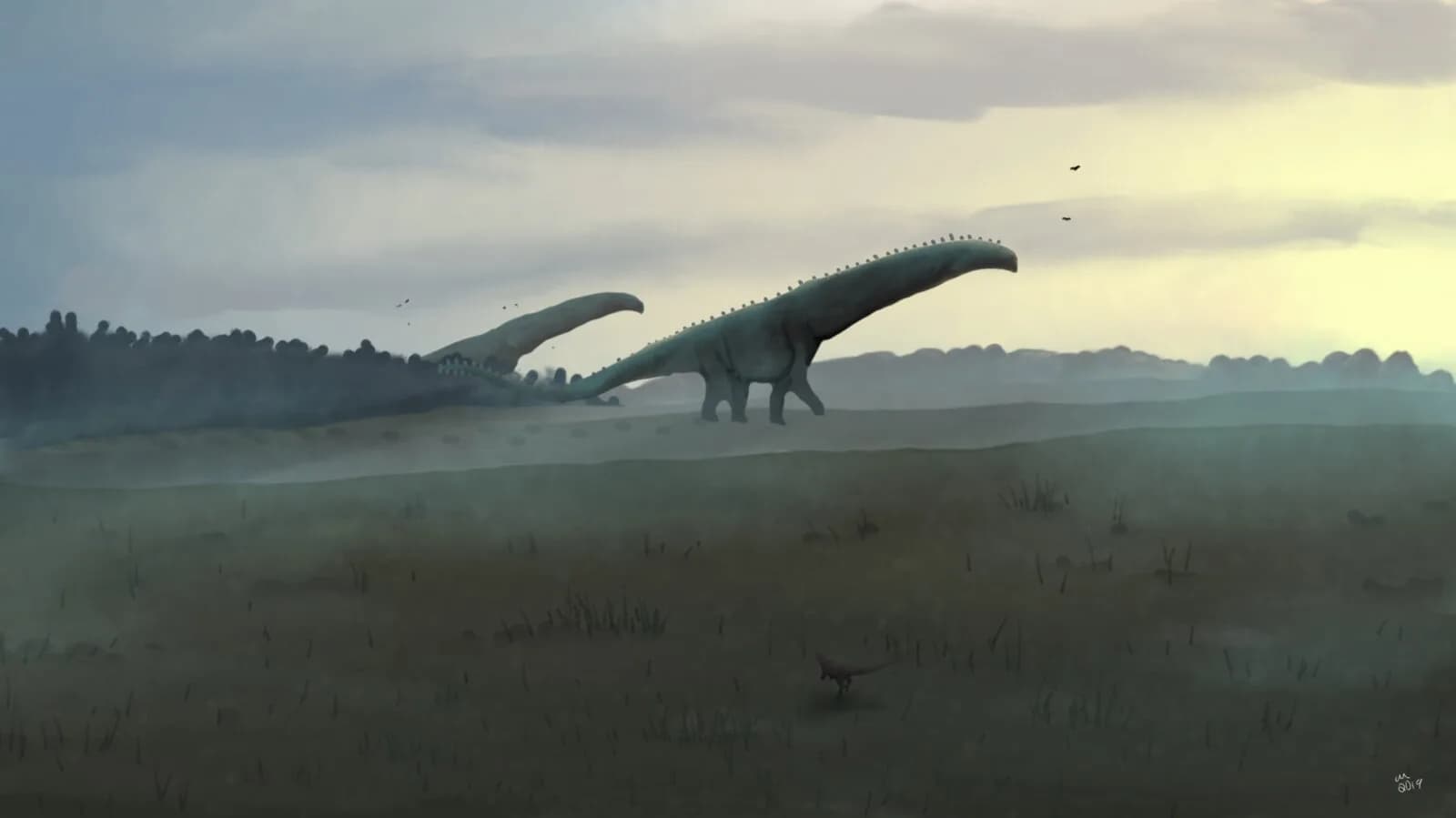
Titanosaurus likely lived in herds, as suggested by nesting sites discovered in India containing dozens of titanosaur eggs. These communal nesting sites indicate social behavior at least on a seasonal basis, with females gathering to lay eggs in favorable areas. The last sauropods of the Late Cretaceous, including Titanosaurus, were among the few large herbivores to have survived in certain regions until the final extinction event. Their gregarious lifestyle and ability to exploit a wide variety of plant resources likely contributed to their evolutionary longevity. Fossil evidence suggests seasonal migratory behaviors between grazing areas and nesting sites.
Titanosaurus was first described in 1877 by British paleontologist Richard Lydekker, from fossils discovered in the Lameta formations of central India. It is one of the first dinosaurs described from remains found in India, marking the beginning of dinosaur paleontology on the Indian subcontinent. The type material is unfortunately fragmentary, consisting primarily of caudal vertebrae and a partial femur, which has led some paleontologists to consider Titanosaurus a nomen dubium — a taxonomic name whose validity is disputed due to insufficient diagnostic characters. Despite this controversy, the name Titanosaurus gave rise to the group Titanosauria, one of the most important clades of dinosaurs. Titanosaurus appeared in the film Jurassic World: Rebirth released in 2025, renewing public interest in this historic dinosaur.
| Period | Crétacé supérieur / Late Cretaceous (Campanien–Maastrichtien) |
| Era | Mésozoïque / Mesozoic |
| Age | 72–66 Ma |
| Location | Inde, France / India, France |
| Length | 9–12 m |
| Height | ~4–5 m |
| Weight | ~5 000–13 000 kg |
| Diet | Herbivore |
| Discovery | 1877 |
Titanosaurus indicus, described in 1877 by Richard Lydekker from fossils of the Lameta Formation in India, is considered a nomen dubium because the type material is too fragmentary — primarily caudal vertebrae and a partial femur — to establish reliable diagnostic characters. Despite this taxonomic controversy, the name Titanosaurus gave its name to the clade Titanosauria.
Titanosaurus indicus is estimated between 9 and 12 meters in length, weighing between 5,000 and 13,000 kilograms, making it a medium-to-large sauropod. Modest compared to giant titanosaurs like Argentinosaurus or Patagotitan, it was nevertheless one of the largest terrestrial animals of the Late Cretaceous in India, 72 to 66 million years ago.
Communal nesting sites discovered in India, containing dozens of titanosaur eggs, suggest that Titanosaurus lived at least partially in groups and gathered seasonally to lay eggs. These nesting colonies on the alluvial plains of the Lameta Formation indicate social behavior comparable to that of modern sea turtles.
Titanosaurus illustration
Wikimedia Commons
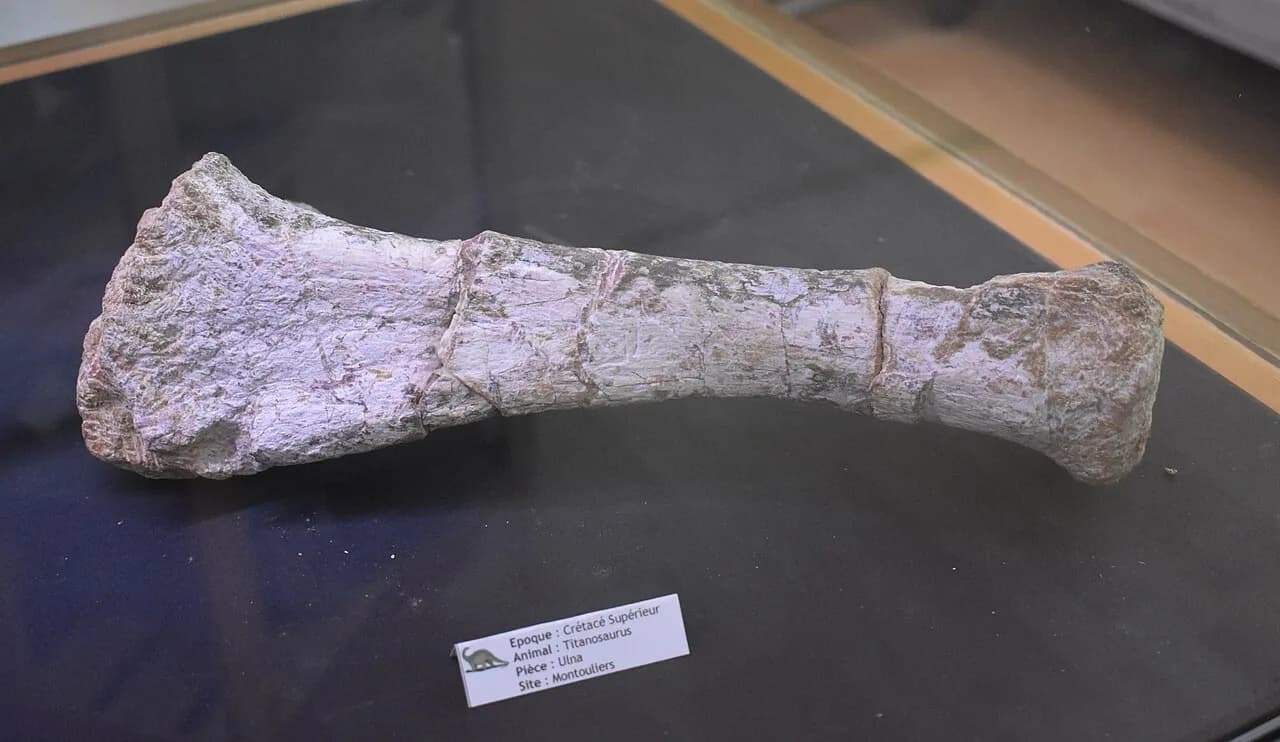
Titanosaur fossil at Cruzy
Wikimedia Commons