Argentinosaurus
Argentinosaurus huinculensis ranks among the heaviest land animals known: 30 to 35 metres long and 65 to 80 tonnes, the mass of ten African elephants. Its remains, dated to 96 to 92 million years ago, surfaced in Argentina in 1987 after a rancher mistook the first bone for petrified wood. A single back vertebra stands 1.59 metres tall.
Argentinosaurus lived during the Late Cretaceous, approximately 96 to 94 million years ago, during the Cenomanian stage. This era was marked by exceptionally high global temperatures and sea levels far above today's. Argentine Patagonia, where this animal was discovered, was then a vast semi-arid plain with seasonal rivers and vegetation of conifers and ferns. It was in this context that South American titanosaurs reached truly titanic dimensions, culminating with Argentinosaurus. This period represents one of the warmest intervals in Earth's history, with greenhouse conditions that fostered lush vegetation even in relatively arid regions.
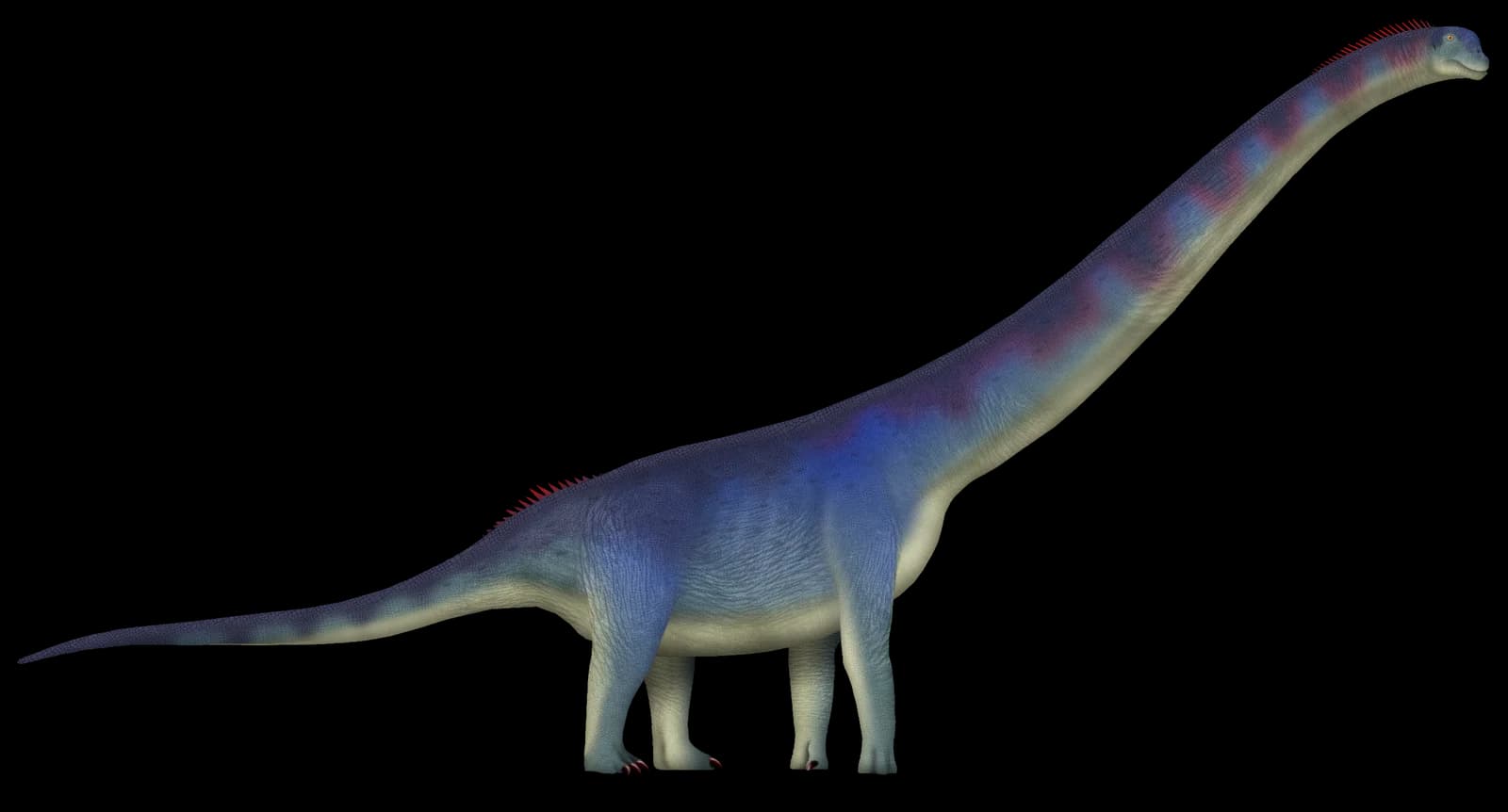
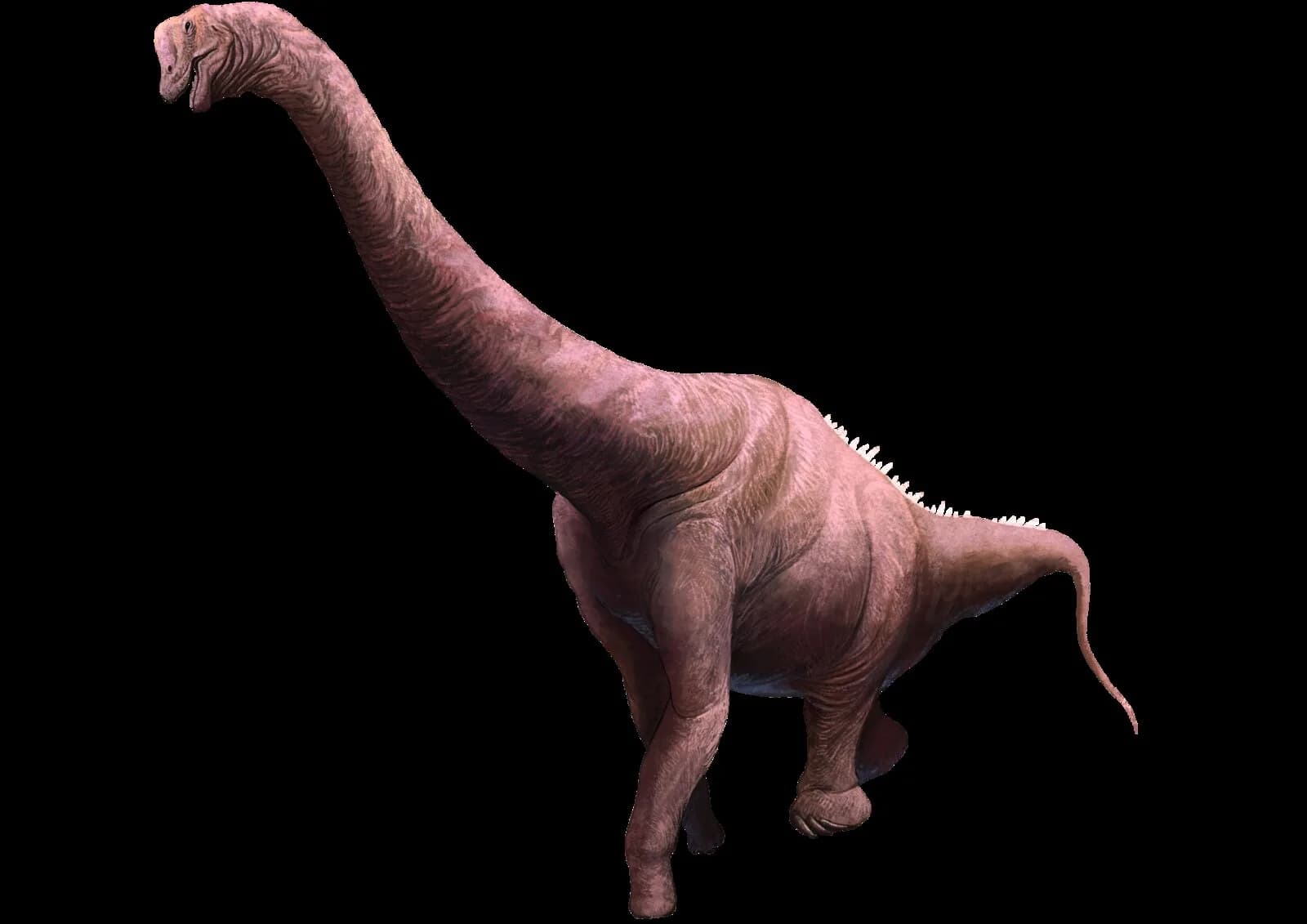
Argentinosaurus is considered one of the largest terrestrial animals of all time. Size estimates vary considerably, but the most reliable place it between 30 and 35 meters long with a weight of 65 to 80 tonnes. Some more generous estimates go up to 100 tonnes. A single dorsal vertebra measured 1.59 meters tall, and its femur reached 2.5 meters long. For comparison, this animal weighed as much as ten African elephants combined, making it one of the most massive living beings ever to exist on dry land.
Argentinosaurus was a colossal herbivore whose dietary needs were proportional to its gigantic size. It had to consume hundreds of kilograms of vegetation per day, primarily conifers (araucarias), tree ferns, and other plants available during the Cretaceous. Like other sauropods, it probably swallowed its food without chewing, relying on gastric fermentation in a massive digestive system to extract nutrients. Gastroliths (stomach stones) may have aided in the mechanical digestion of tough plant matter. Its enormous body required a constant intake of energy, and its long neck allowed it to sweep vast areas of vegetation without needing to move its massive frame frequently.
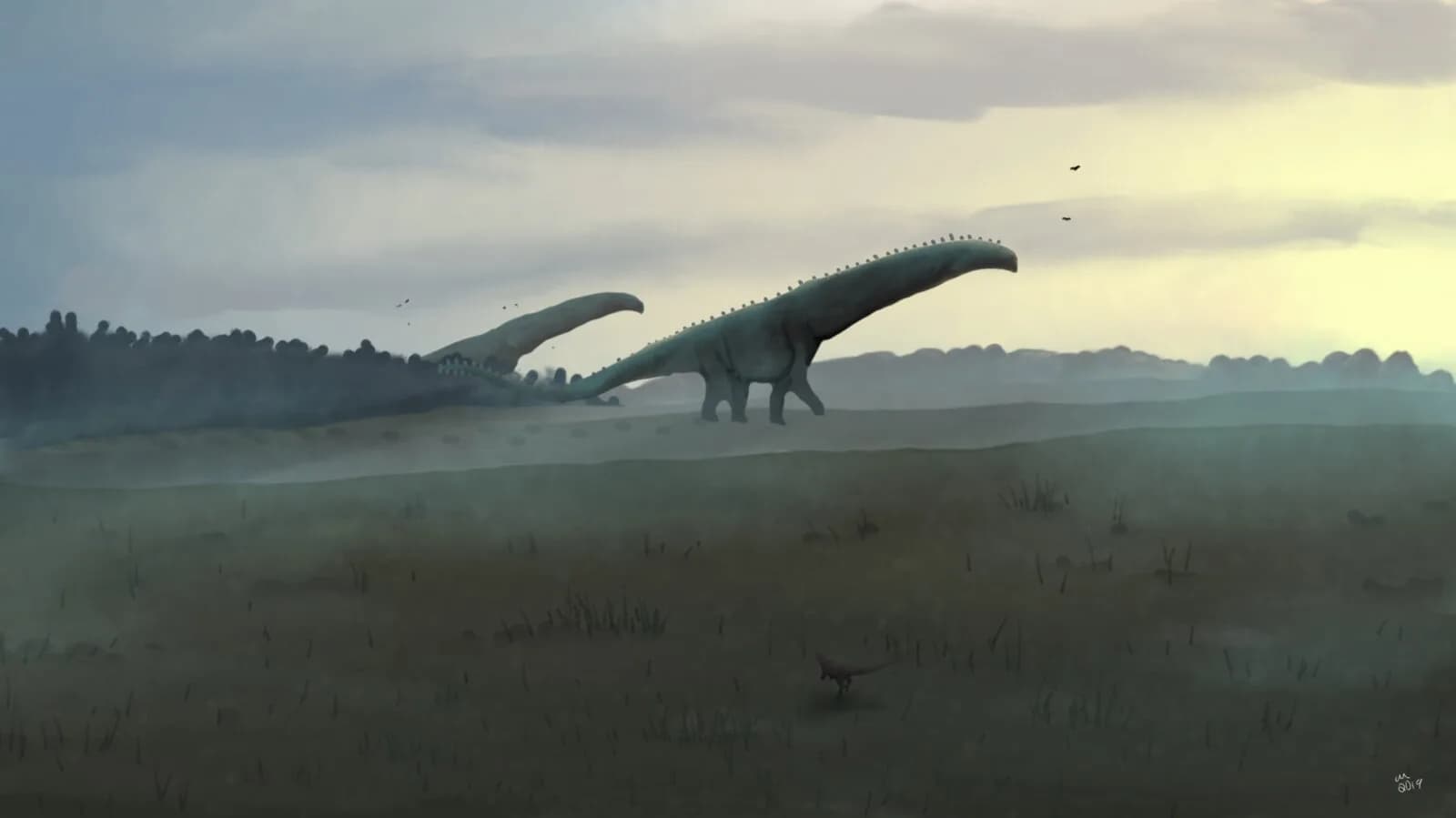
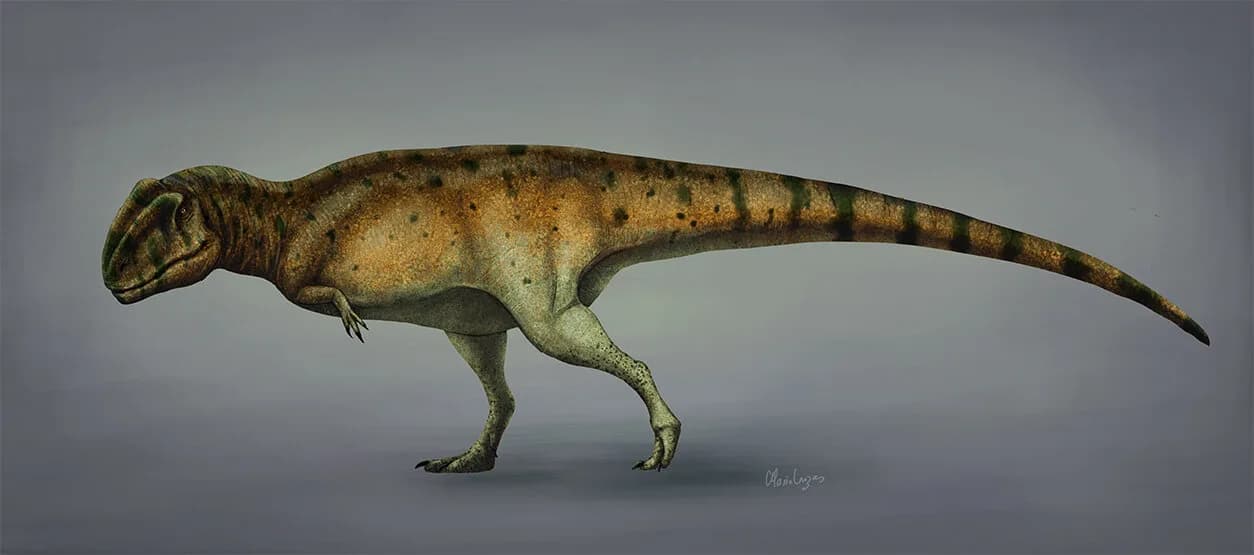
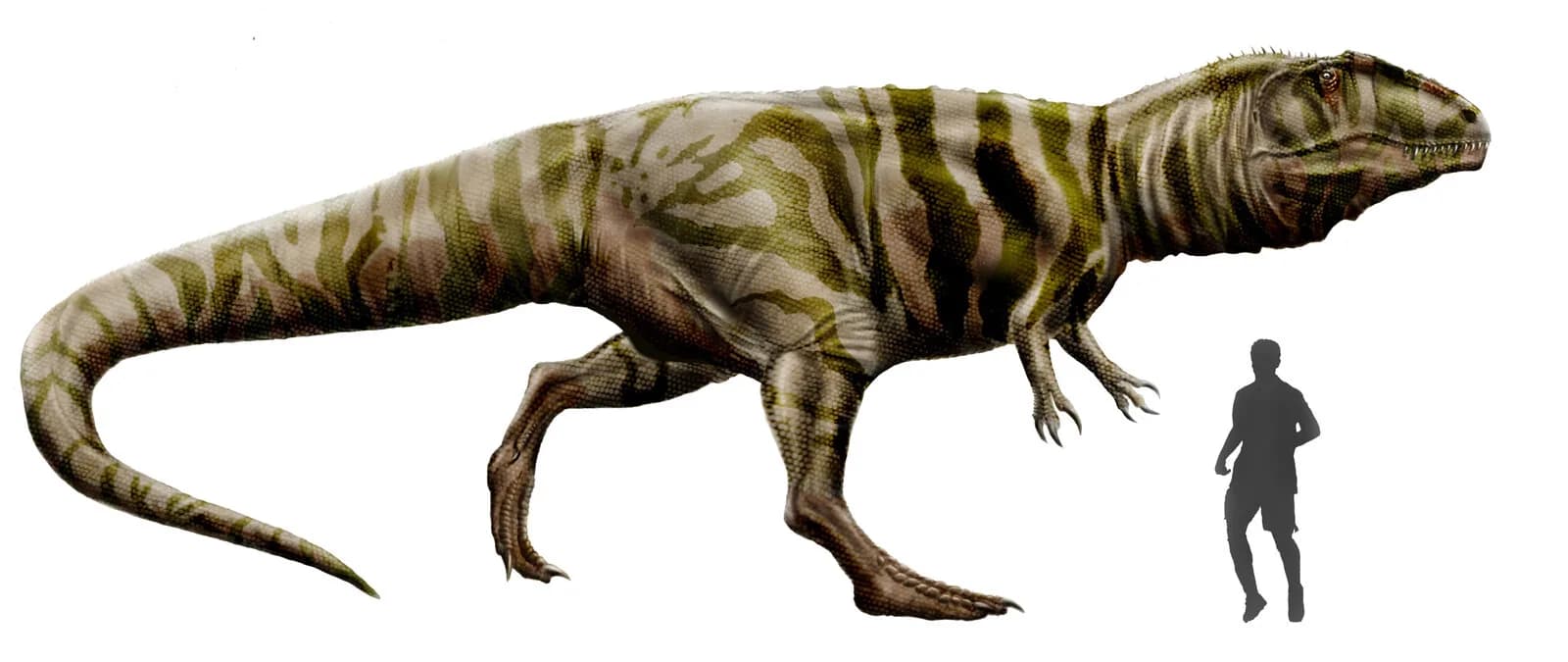
Argentinosaurus inhabited the vast alluvial plains of the Huincul Formation in Neuquén Province, Argentine Patagonia. This environment was characterized by seasonal waterways, semi-arid zones, and vegetation dominated by conifers and ferns. The landscape was relatively open, suiting an animal of this size that required vast territories for feeding. It coexisted with other smaller sauropods and shared its habitat with the apex predator Mapusaurus, probably one of the only predators capable of threatening an adult individual. The semi-arid conditions with seasonal rainfall created a dynamic environment where herds likely migrated between water sources and areas of fresh vegetation.
Argentinosaurus anatomy was designed to support a colossal weight. Its dorsal vertebrae were hollowed with pneumatic cavities (pleurocoels) that lightened the skeleton while maintaining its structural strength. Its limbs were massive and columnar, like bridge pillars, with thick-walled bones to resist mechanical stress. Its pelvis was wide and powerfully anchored to the vertebral column by fused sacral vertebrae. Its neck, though not entirely known, must have measured several meters long, allowing it to sweep a wide grazing zone without moving its immense body.
Argentinosaurus probably lived in herds that moved slowly across the plains in search of fresh vegetation. Like other titanosaurs, it laid eggs that were relatively small compared to its adult size, buried in ground nests. Young individuals grew rapidly to escape predation, going from a few kilograms at birth to tens of tonnes in adulthood. Healthy adults were probably invulnerable to individual predators, but juveniles and sick or elderly individuals could be targeted by groups of large theropods like Mapusaurus.
The first Argentinosaurus bones were discovered in 1987 by a rancher named Guillermo Heredia on his property at Plaza Huincul, in Neuquén Province, Argentina. He reportedly first mistook an enormous tibia bone for a piece of petrified wood. Paleontologists José Bonaparte and Rodolfo Coria described the species in 1993 as Argentinosaurus huinculensis. The fossil material includes dorsal vertebrae, ribs, the sacrum, a tibia, and an incomplete femur. Although fragmentary, the impressive size of each bone allows reliable estimates of the complete animal, confirming its status among the largest known dinosaurs.
| Period | Crétacé supérieur / Late Cretaceous (Cénomanien–Turonien) |
| Era | Mésozoïque / Mesozoic |
| Age | 96–92 Ma |
| Location | Amérique du Sud / South America (Argentine / Argentina) |
| Length | 30–35 m |
| Height | ~7 m |
| Weight | 65 000–80 000 kg |
| Diet | Herbivore |
| Discovery | 1987 |
The fossil material of Argentinosaurus huinculensis described by Bonaparte and Coria (1993) is limited to dorsal vertebrae, ribs, the sacrum, a tibia, and an incomplete femur. But each bone reaches colossal proportions: a single dorsal vertebra measured 1.59 meters tall, and the femur 2.5 meters. By applying anatomical ratios from more complete titanosaurs, researchers extrapolate a length of 30 to 35 meters and a weight of 65 to 80 tonnes — equivalent to ten African elephants.
The first Argentinosaurus huinculensis bones were found in 1987 by rancher Guillermo Heredia on his property in Neuquén Province, Argentine Patagonia. He reportedly first mistook an enormous tibia bone for a piece of petrified wood. After alerting local authorities, paleontologists José Bonaparte and Rodolfo Coria took over the site and described the species in 1993 as Argentinosaurus huinculensis.
An adult Argentinosaurus huinculensis weighing 65 to 80 tonnes was probably invulnerable to isolated predators. Only Mapusaurus — a large carcharodontosaurid that coexisted in the Huincul Formation — could potentially threaten adult individuals, but only by attacking in groups. Juveniles and sick or aged individuals were more vulnerable. Mapusaurus bone beds containing multiple individuals have been interpreted as evidence of cooperative hunting behavior against these giants.
Information on this page is based on peer-reviewed scientific publications.
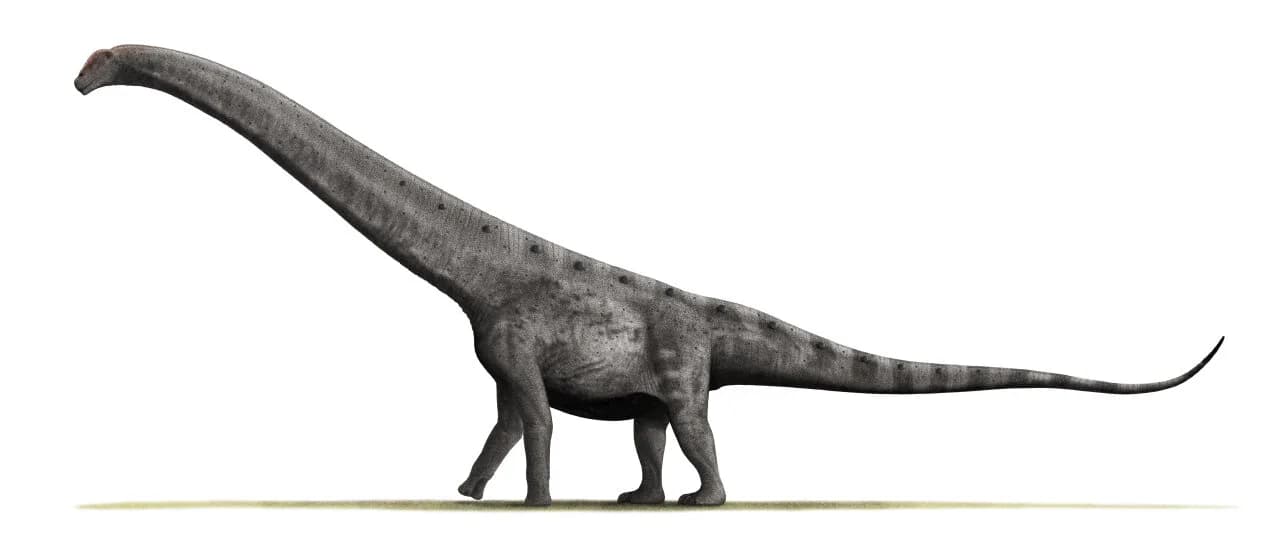
Life reconstruction of Argentinosaurus huinculensis
Nobu Tamura, CC BY 3.0, via Wikimedia Commons
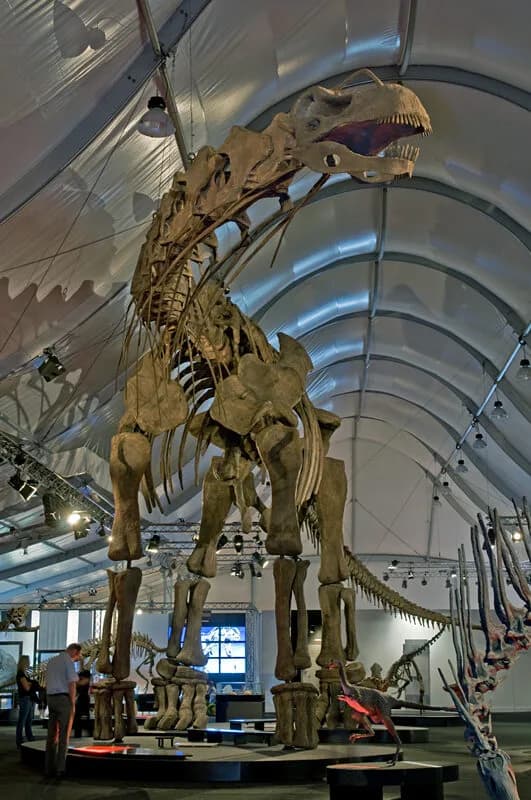
Mounted Argentinosaurus huinculensis skeleton
Eva K., GFDL 1.2