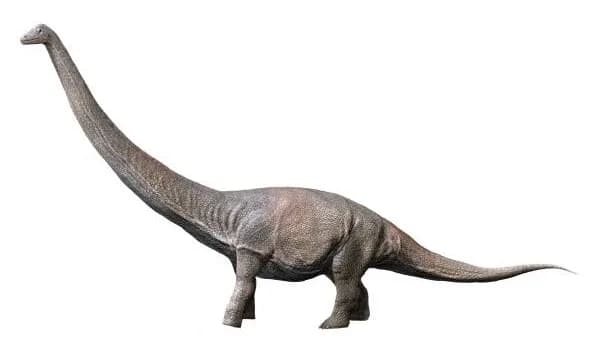
Dreadnoughtus
Dreadnoughtus schrani is the most complete giant titanosaur ever unearthed: about 70 % of the skeleton was recovered, which remains rare for an animal of 65 tonnes. Roughly 26 metres long, it browsed Argentine Patagonia some 77 million years ago. Its name, « fears nothing », refers to the HMS Dreadnought class of battleships.
Dreadnoughtus schrani lived during the Late Cretaceous, approximately 77 million years ago, during the Campanian stage. This colossal titanosaur roamed what is now Argentine Patagonia, in the Cerro Fortaleza Formation. At that time, South America was an isolated continent, separated from Africa for tens of millions of years, which favoured the evolution of titanosaur sauropods of extraordinary sizes. The Campanian was a period of intense diversification for South American titanosaurs, which dominated terrestrial ecosystems as the largest herbivores on the continent. Dreadnoughtus is one of the last representatives of this lineage of giants, living just 11 million years before the end-Cretaceous mass extinction that wiped out all non-avian dinosaurs.
Dreadnoughtus is one of the most massive land animals ever to have existed, with an estimated length of about 26 meters from snout to tail tip and a colossal weight of approximately 65 tonnes. To put these dimensions in perspective, that is equivalent to the weight of about ten adult African elephants or a Boeing 737 at takeoff. Its femur alone measures nearly 1.9 meters long, testifying to the extraordinary robustness of its weight-bearing limbs. Despite these titanic proportions, histological analysis of its bones indicates that the discovered specimen had not yet finished growing at the time of death, meaning Dreadnoughtus could potentially have reached even more impressive dimensions. The height at hip level is estimated at approximately 6 meters.
A strict herbivore like all sauropods, Dreadnoughtus had to consume phenomenal quantities of vegetation each day to maintain its colossal 65-tonne body mass. It is estimated that it probably ingested several hundred kilograms of plant matter daily, feeding on conifers, tree ferns, and primitive angiosperms that made up the flora of Cretaceous Patagonia. Its long neck allowed it to sweep a vast area of vegetation without having to move its massive body, thus optimizing its energy expenditure-to-acquisition ratio. Its teeth, typical of titanosaurs, were cylindrical peg-shaped, adapted for stripping vegetation rather than chewing it. Bacterial fermentation in a voluminous digestive system ensured the breakdown of plant cellulose.
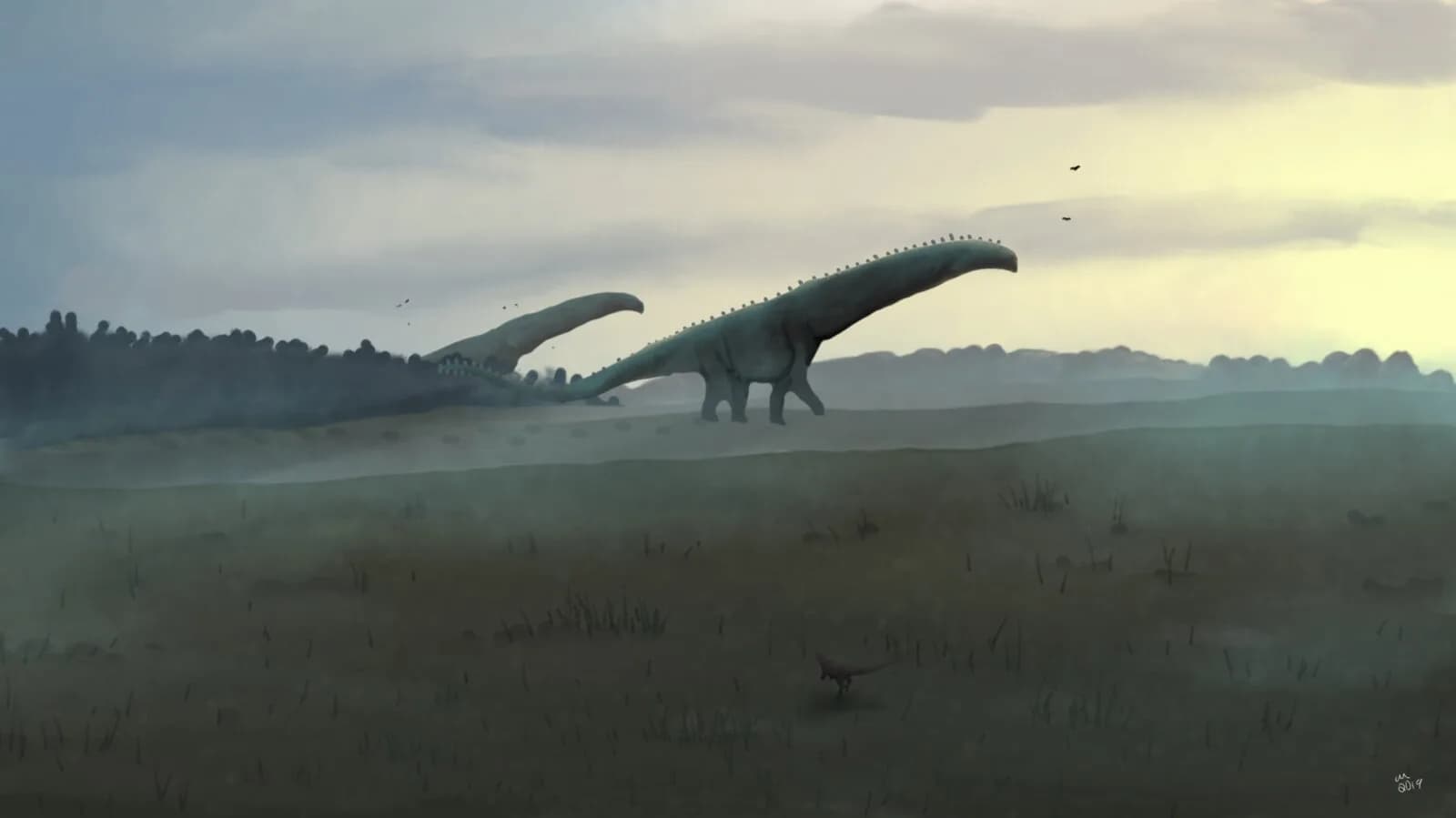
Dreadnoughtus inhabited alluvial plains and wooded areas of Argentine Patagonia during the Late Cretaceous, in an environment corresponding today to Santa Cruz Province. The Cerro Fortaleza Formation, where its fossils were discovered, indicates a setting dominated by floodplains along waterways, with abundant vegetation of conifers and ferns. The climate of Cretaceous Patagonia was considerably warmer and more humid than today, with average temperatures well above the current conditions of this region. The sedimentary deposits suggest that the specimen was rapidly buried during a flood or catastrophic inundation event, which explains the exceptional preservation state of the skeleton. This resource-rich vegetated environment could support the presence of these giant herbivores.
The anatomy of Dreadnoughtus reveals an exceptionally robust titanosaur, with a massive skeleton adapted to support a weight of 65 tonnes. Its neck measured approximately 11 meters long, supported by cervical vertebrae lightened through a complex pneumatization system, with internal air pockets considerably reducing bone weight. Its tail was long and muscular, probably serving as a counterweight to the massive neck and potentially as a defensive weapon against predators. The limb bones were extraordinarily thick and dense, with a 1.9-meter femur designed to bear colossal loads. Its caudal vertebrae featured wide transverse processes, indicating powerful tail musculature. The pelvis, massive and broadened, provided a large attachment surface for hindlimb muscles, essential for locomotion of this titanic animal.
Due to its colossal size, an adult Dreadnoughtus likely had no natural predators, fully justifying its name meaning 'fears nothing.' Juveniles, however, were certainly vulnerable to the carnivorous theropods of Cretaceous Patagonia. Like most titanosaurs, Dreadnoughtus was probably oviparous, laying eggs relatively small compared to its adult size. Growth was likely rapid during the first years of life, allowing young individuals to reach a size sufficient to escape predation as quickly as possible. Its movement speed was probably slow and steady, limited by its considerable mass. Biomechanical studies suggest that sauropods of this size moved at speeds of about 5 to 8 km/h at most.
Dreadnoughtus was discovered in 2005 by American paleontologist Kenneth Lacovara in the Cerro Fortaleza Formation, in Santa Cruz Province of Argentine Patagonia. The species was officially described and named in 2014, with the name Dreadnoughtus schrani referencing dreadnought-class battleships, warships so powerful they 'feared nothing.' With approximately 70% of the skeleton recovered (excluding the skull), it is the most complete giant titanosaur ever discovered, a remarkable feat for an animal of this size. The exceptional completeness of the specimen has allowed much more precise mass estimates than for other giant sauropods like Argentinosaurus, known only from fragments. Extracting the fossils required four field expeditions spread over several years, mobilizing international teams of paleontologists.
| Period | Crétacé supérieur / Late Cretaceous (Campanien) |
| Era | Mésozoïque / Mesozoic |
| Age | ~77 Ma |
| Location | Argentine (Patagonie) / Argentina (Patagonia) |
| Length | ~26 m |
| Height | ~6 m (hanches / at hips) |
| Weight | ~65 000 kg |
| Diet | Herbivore |
| Discovery | 2005 |
Dreadnoughtus schrani is exceptional among giants: approximately 70% of its skeleton (excluding the skull) was recovered during four expeditions led by paleontologist Kenneth Lacovara starting in 2005 in Argentine Patagonia. It is the most complete giant titanosaur ever discovered. This completeness allows much more precise mass estimates than for Argentinosaurus, known only from fragments, and provided unprecedented data on the anatomy of the largest land animals.
No. Bone histological analysis of Dreadnoughtus schrani indicates that the discovered specimen had not yet finished growing at the time of death. This means 65 tonnes — the weight of a Boeing 737 at takeoff — was not its maximum size. The animal could potentially have reached even more impressive dimensions. This finding makes mass estimates for giant titanosaurs even harder to establish definitively.
Sedimentary deposits of the Cerro Fortaleza Formation in Argentine Patagonia suggest the Dreadnoughtus schrani specimen was rapidly buried during a flood or catastrophic inundation event. This rapid burial in fine-grained alluvial sediments protected the bones from dispersal and weathering, explaining the exceptional preservation state. The Cretaceous Patagonian fluvial environment favored this type of fossilization for large herbivores.
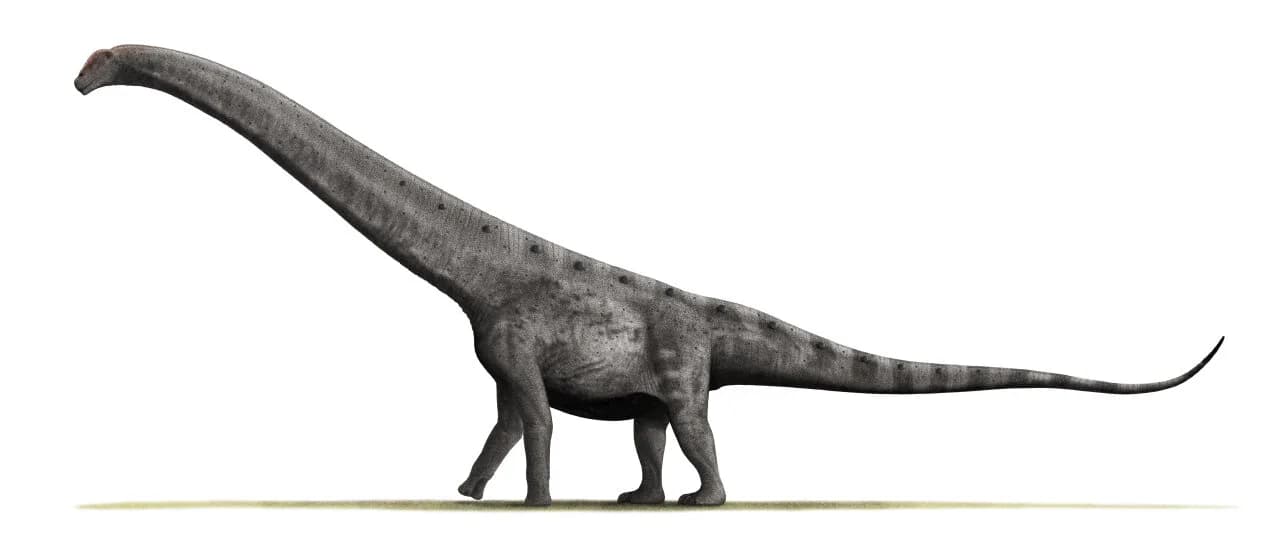
Life reconstruction of Dreadnoughtus schrani
Nobu Tamura, CC BY-SA 3.0, via Wikimedia Commons
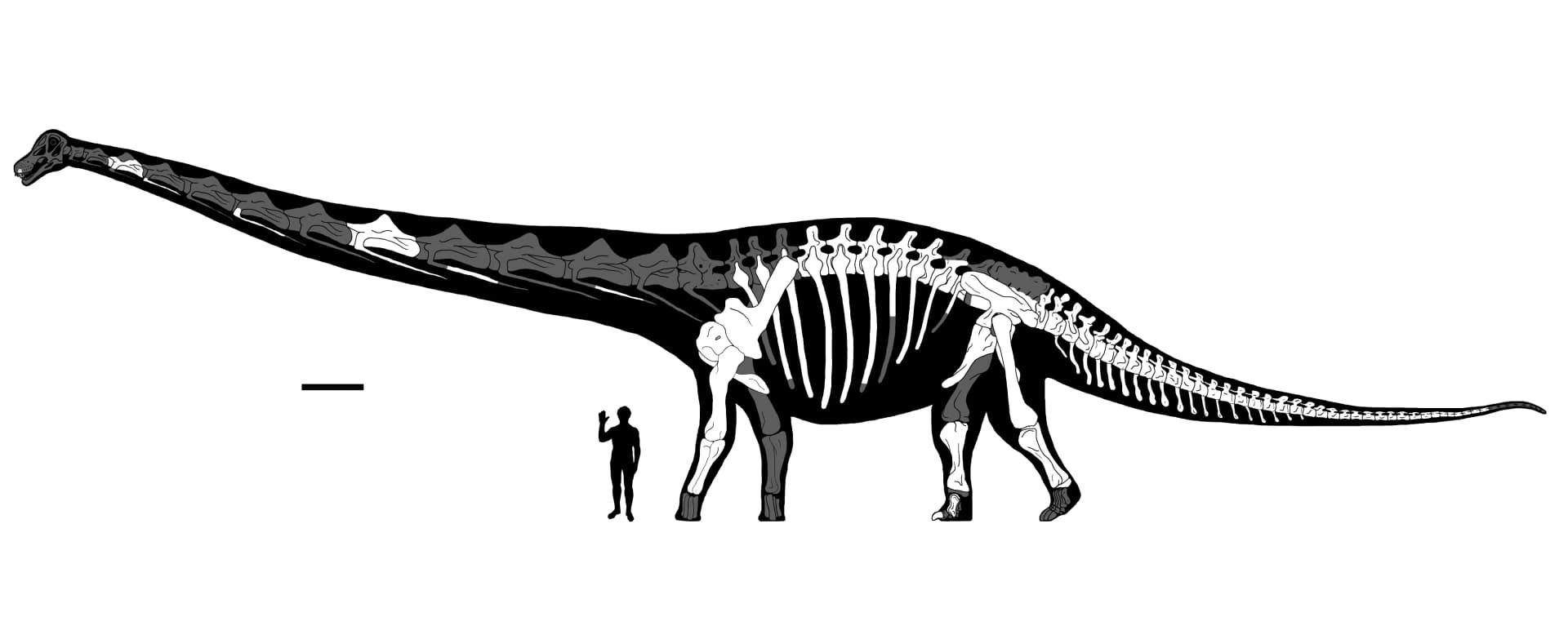
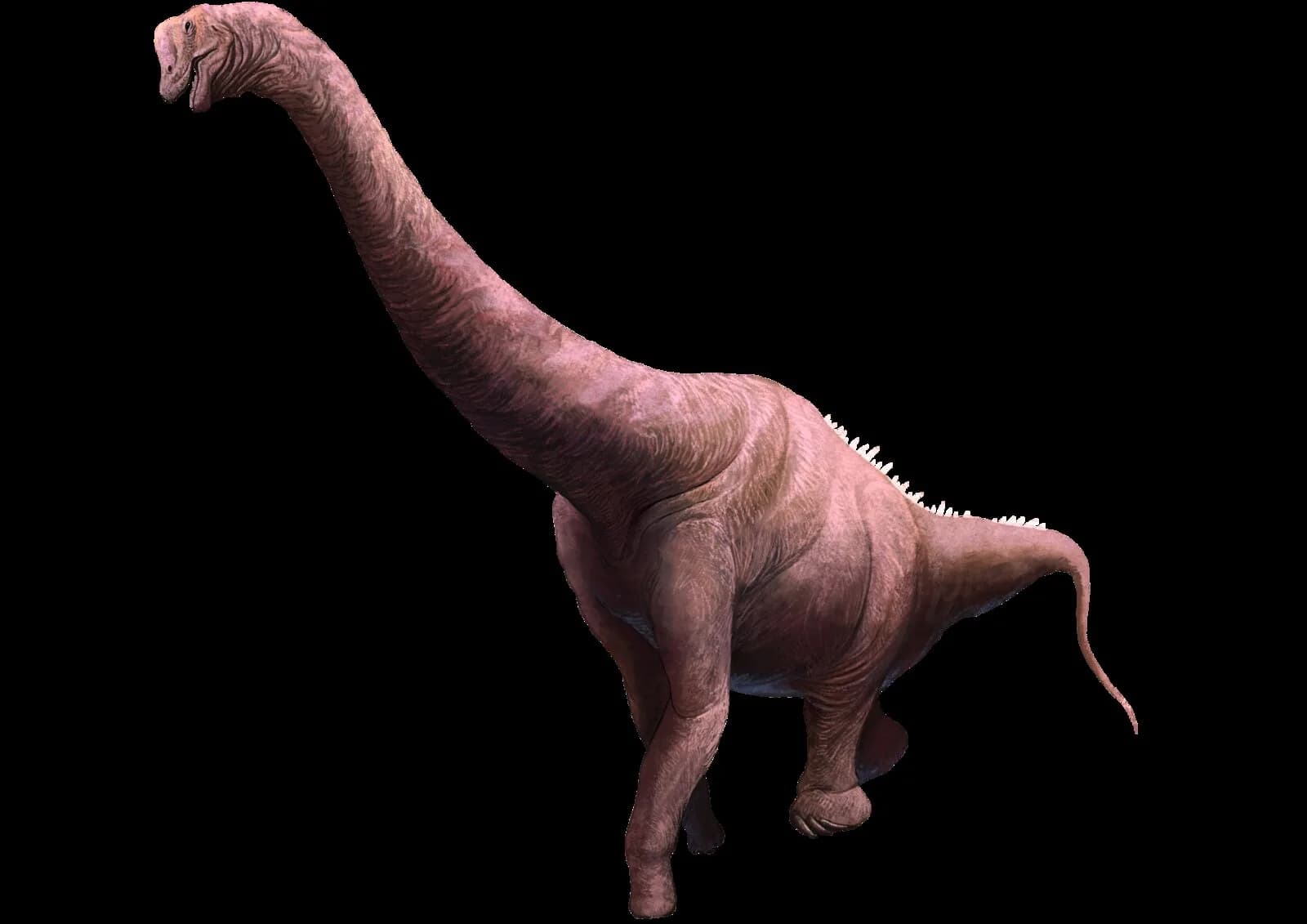
Scientific reconstruction of Dreadnoughtus schrani
Jennifer Hall, CC BY-SA 4.0, via Wikimedia Commons