Brontosaure
Brontosaurus excelsus was a herbivorous sauropod of the Late Jurassic in North America, described in 1879. It measured 21 to 22 metres and weighed 15 to 17 tonnes, and its name means thunder lizard. Treated as invalid from 1903 to 2015, it was restored as a distinct genus by a 300-page study — a rare case of taxonomic resurrection.
Brontosaurus lived in the Late Jurassic, approximately 155 to 150 million years ago, during the Kimmeridgian and Tithonian stages. This iconic dinosaur was part of the rich fauna of the Morrison Formation, which stretches across western North America and constitutes one of the most important fossil deposits for Jurassic dinosaurs. The Late Jurassic represents the golden age of sauropods, a period when these herbivorous giants dominated terrestrial ecosystems with unprecedented diversity. The climate of this era was warm and relatively humid, supporting abundant vegetation of conifers, ferns, and cycads capable of sustaining these colossal animals. Brontosaurus shared its environment with other famous sauropods such as Diplodocus, Apatosaurus, and Camarasaurus, as well as the formidable theropods Allosaurus and Ceratosaurus.
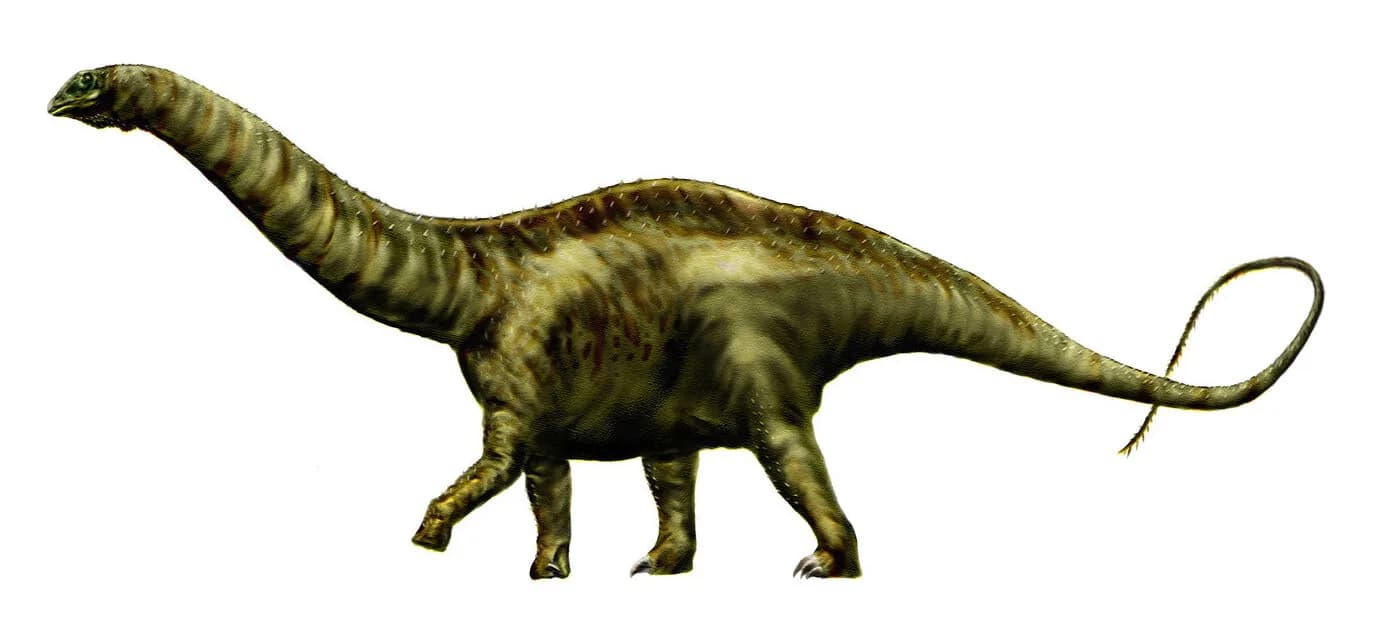
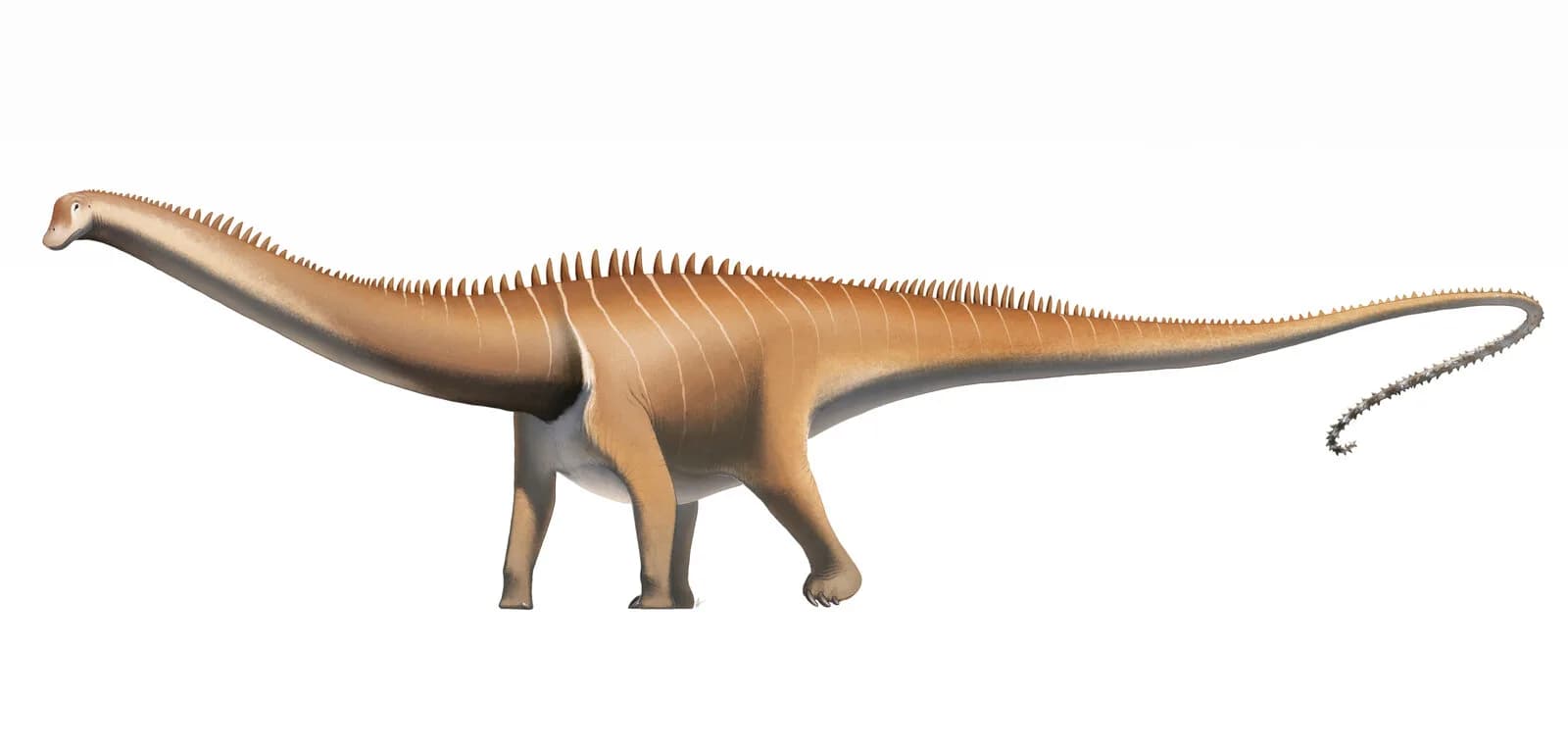
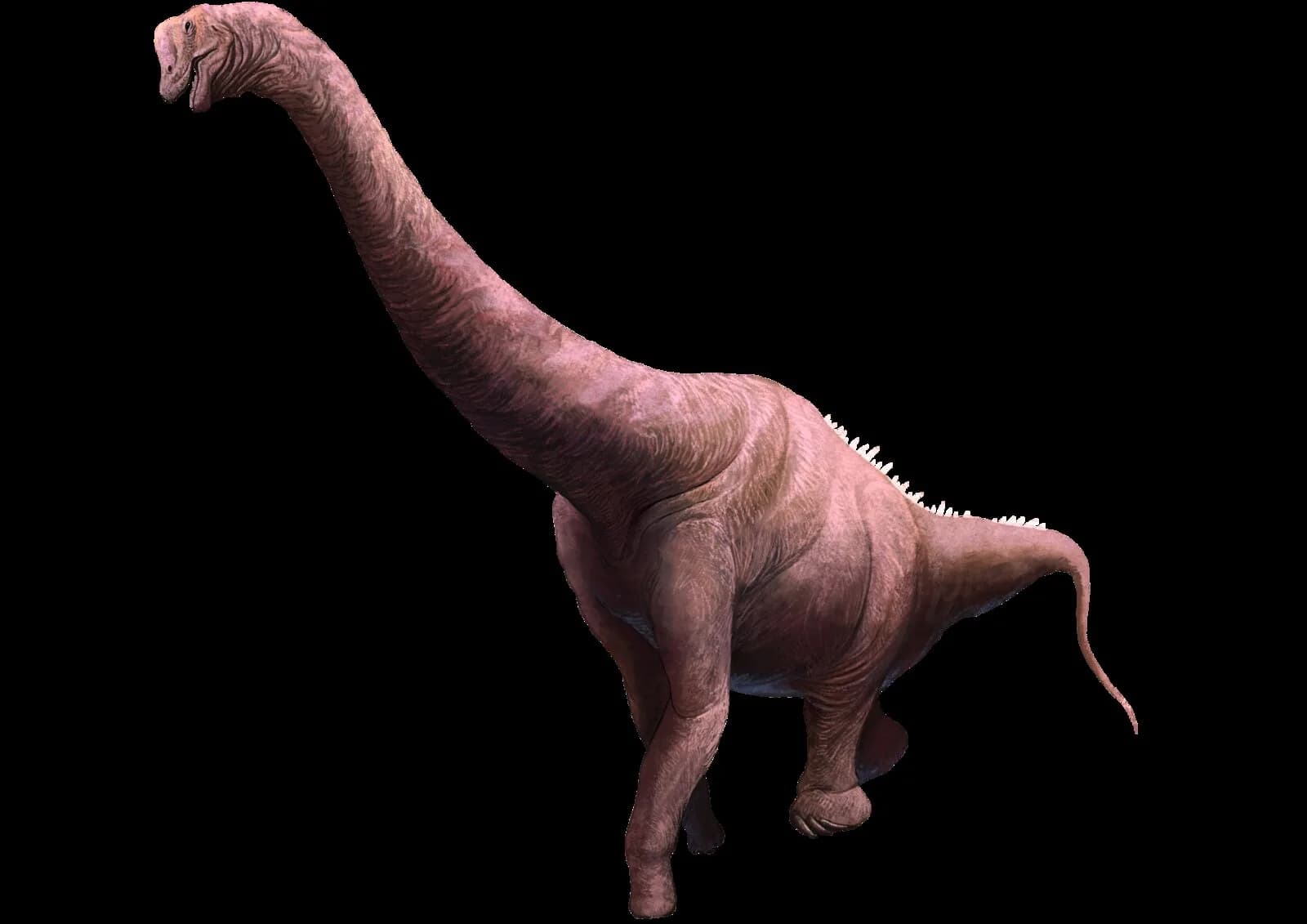
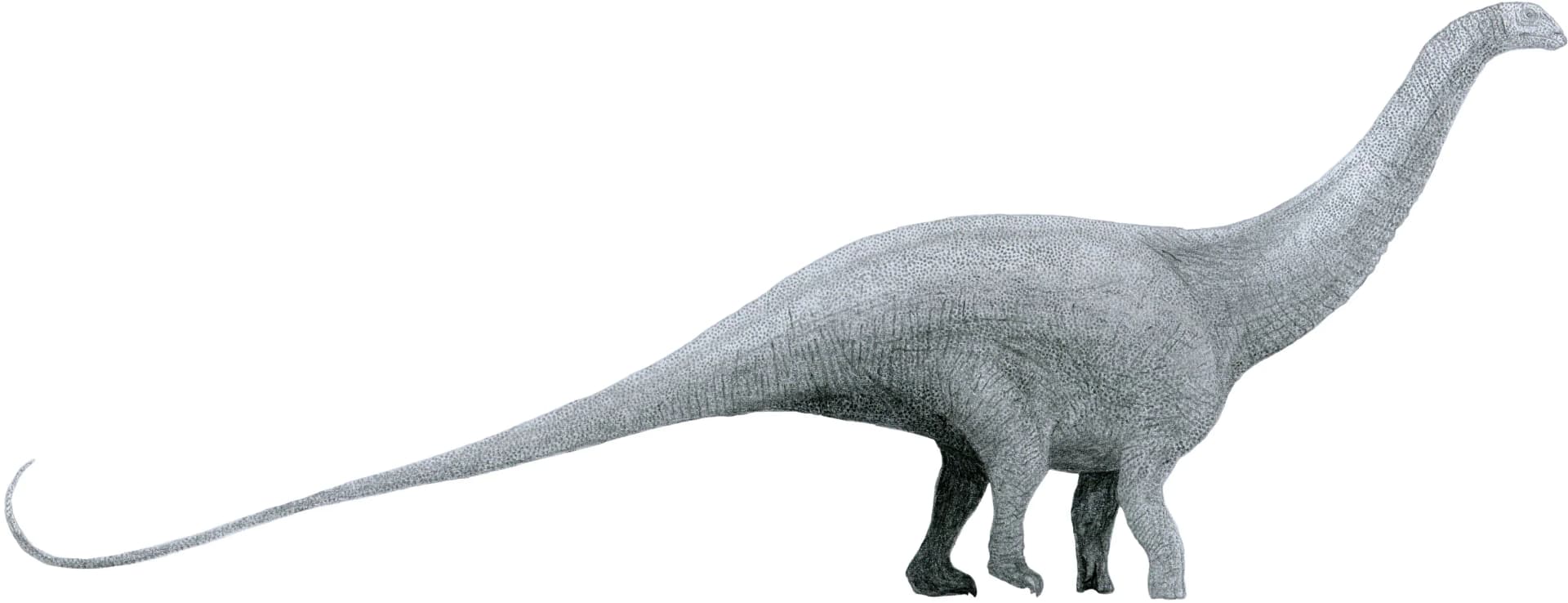
Brontosaurus was a true giant among sauropod dinosaurs, measuring between 21 and 22 meters in length and weighing an estimated 15 to 17 tonnes. Its hip height reached approximately 4.5 meters, and its long neck allowed it to raise its head well above that height to reach the tops of trees. Its massive, barrel-shaped body rested on four extremely robust columnar legs, adapted to support considerable weight. The hind limbs were slightly longer than the forelimbs, giving the back a slight forward inclination. The tail, extremely long and tapering, represented a significant portion of the animal's total length and likely served as a counterbalance to the massive neck. Despite its impressive size, Brontosaurus was not the largest sauropod in its ecosystem, with some specimens of Diplodocus and Apatosaurus reaching comparable dimensions.
A strict herbivore, Brontosaurus fed primarily on conifers, ferns, cycads, and horsetails that made up the dominant vegetation of the Late Jurassic. Its peg-like teeth, typical of diplodocids, were adapted for stripping leaves and needles from branches rather than chewing. Food was swallowed without being chewed and digested in a voluminous digestive system, probably aided by gastroliths — ingested stones that mechanically ground plant material in the stomach. It is estimated that an adult needed to consume between 200 and 300 kilograms of plant matter per day to maintain its body mass. Its long neck gave it a considerable advantage in exploiting different vegetation layers, thus reducing direct food competition with other herbivores in its ecosystem.
Brontosaurus inhabited the alluvial plains and open woodlands of western North America, in regions corresponding to present-day Wyoming, Utah, and Oklahoma. The Morrison Formation, where its fossils were discovered, extended over a vast area covering several US states and presented a semi-arid environment punctuated by seasonal rivers and wetlands. The vegetation consisted of conifer forests such as araucarias and primitive sequoias, interspersed with fern and horsetail meadows along waterways. The climate experienced distinct seasons with dry periods that may have forced sauropod herds to migrate long distances to find water and food. This exceptionally rich ecosystem harbored remarkable biodiversity, with dozens of dinosaur species coexisting in a complex ecological balance.
The anatomy of Brontosaurus displays the classic characteristics of diplodocids, while possessing distinctive traits that justify its status as a separate genus. Its skull, relatively small compared to its immense body, was elongated and equipped with nostrils positioned toward the top of the snout. Its massive neck was composed of approximately 15 cervical vertebrae lightened by air pockets (pneumatization), reducing the weight of this imposing structure. The tail, composed of approximately 82 caudal vertebrae, ended in a thin whip that the animal could probably crack at supersonic speeds to intimidate predators. Its massive legs resembled columns, with broad feet bearing a large claw on the first toe of the forelimbs. The dorsal vertebrae featured tall, bifurcated neural spines characteristic of the Diplodocidae family, which served as anchors for powerful ligaments and muscles supporting the neck and tail.
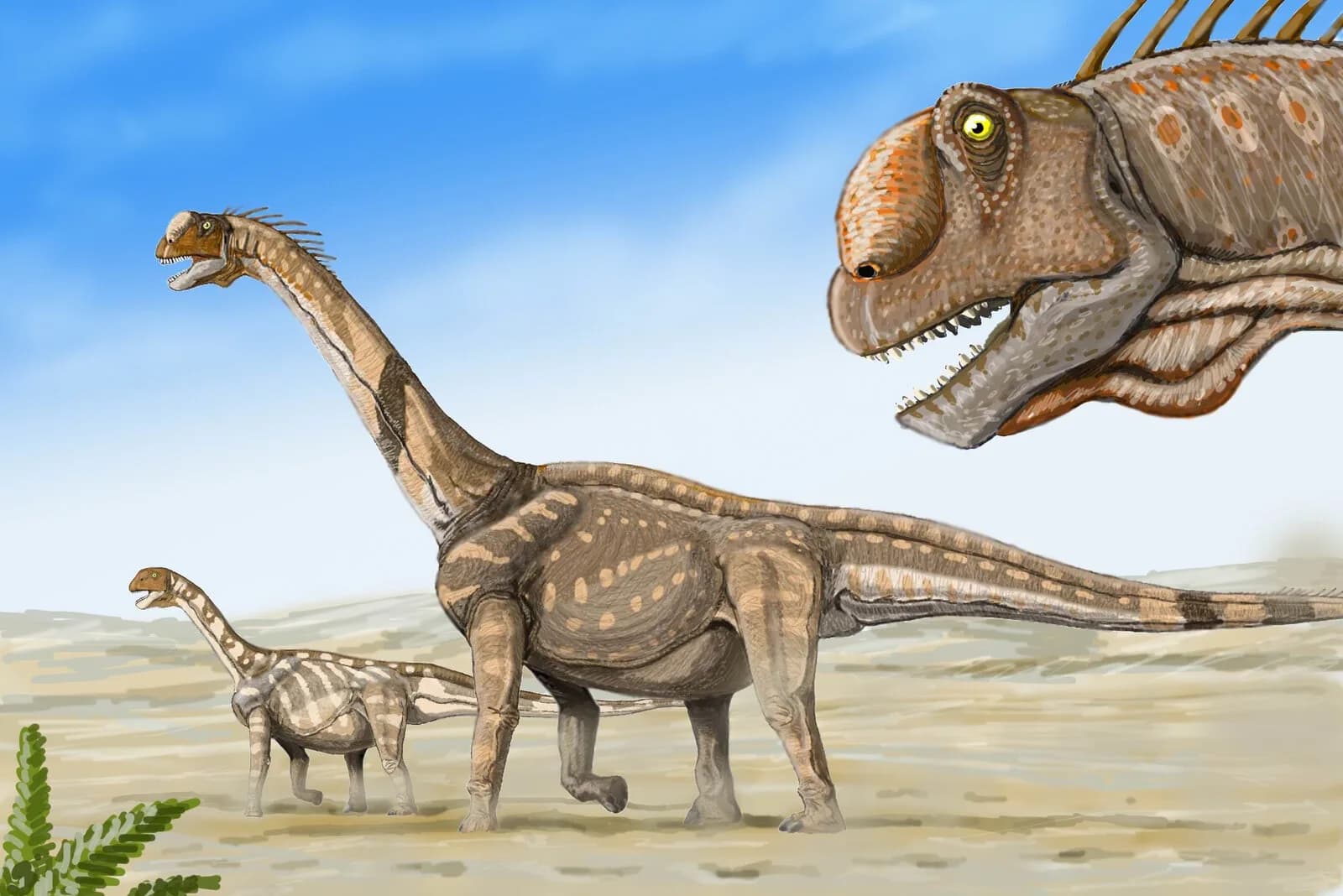
Brontosaurus was probably a gregarious animal that moved in herds, as suggested by fossil sites containing individuals of different ages found together. Adults, thanks to their colossal size, were virtually immune to predators, but juveniles remained vulnerable to attacks from Allosaurus and other large theropods. Herd life provided collective protection for the young and facilitated seasonal movements in search of fresh pastures. Biomechanical studies indicate that Brontosaurus moved at a walking speed of about 4 to 6 km/h, with a maximum speed probably not exceeding 20 km/h. Its whip-like tail could have served as a means of sonic communication between individuals or as a defense mechanism against predators. Brontosaurus growth was probably rapid during the first years of life, reaching adult size in approximately 10 to 15 years.
Brontosaurus was first described in 1879 by American paleontologist Othniel Charles Marsh, based on fossils discovered in Wyoming. Its name, meaning 'thunder lizard,' became one of the most famous in all of paleontology. In 1903, paleontologist Elmer Riggs synonymized Brontosaurus with Apatosaurus, arguing that the differences between the two genera were insufficient to justify separation. For over a century, the name Brontosaurus was considered invalid by the scientific community, despite its persistent popularity in popular culture. In 2015, a major study led by Emanuel Tschopp, Octávio Mateus, and Roger Benson rehabilitated Brontosaurus as a valid genus, demonstrating through detailed cladistic analysis that the anatomical differences with Apatosaurus were sufficient. The main fossils come from the Morrison Formation, particularly from Wyoming and Utah, with the holotype YPM 1980 housed at the Peabody Museum of Yale University.
| Period | Jurassique supérieur / Late Jurassic (Kimméridgien–Tithonien) |
| Era | Mésozoïque / Mesozoic |
| Age | 155–150 Ma |
| Location | Amérique du Nord (Wyoming, Utah, Oklahoma) / North America (Wyoming, Utah, Oklahoma) |
| Length | 21–22 m |
| Height | ~4.5 m (hanches / at hips) |
| Weight | 15 000–17 000 kg |
| Diet | Herbivore |
| Discovery | 1879 |
In 1903, paleontologist Elmer Riggs considered that the differences between Brontosaurus and Apatosaurus did not justify two distinct genera, making Brontosaurus invalid. For over a century, the name was no longer scientifically recognized. In 2015, a 300-page study by Tschopp, Mateus, and Benson demonstrated through detailed cladistic analysis that the anatomical differences between the two genera were sufficient to separate them, rehabilitating Brontosaurus excelsus.
Brontosaurus excelsus measured between 21 and 22 meters in length with an estimated weight of 15,000 to 17,000 kg. Its hip height reached approximately 4.5 meters. It consumed 200 to 300 kg of plant matter per day. Despite its imposing size, it was not the largest sauropod in the Morrison Formation — Diplodocus and Apatosaurus reached comparable dimensions in the same Late Jurassic ecosystem.
The tail of Brontosaurus excelsus, composed of approximately 82 caudal vertebrae and ending in a thin whip, has been the subject of biomechanical studies suggesting it could be cracked at supersonic speeds, generating a sonic boom comparable to a thunderclap. This hypothesis, proposed by Nathan Myhrvold and Philip Currie in the 1990s, remains debated: the tail may also have served as a communication signal or defense against predators.
Life reconstruction of Brontosaurus excelsus
Tom Parker, CC BY-SA 4.0, via Wikimedia Commons
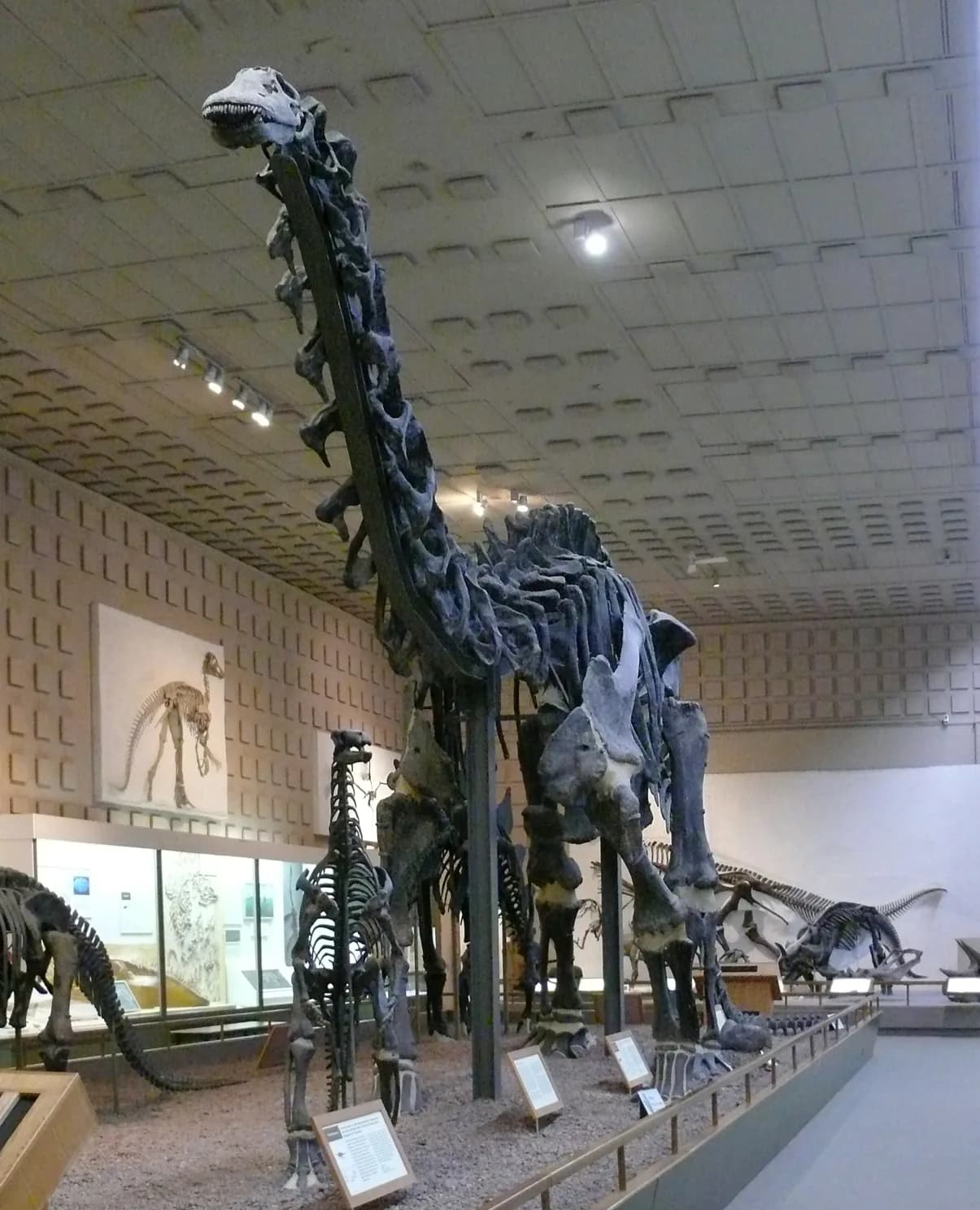
Brontosaurus skeleton at the Peabody Museum, Yale
Peabody Museum of Natural History, Yale University, Public domain