Titanis
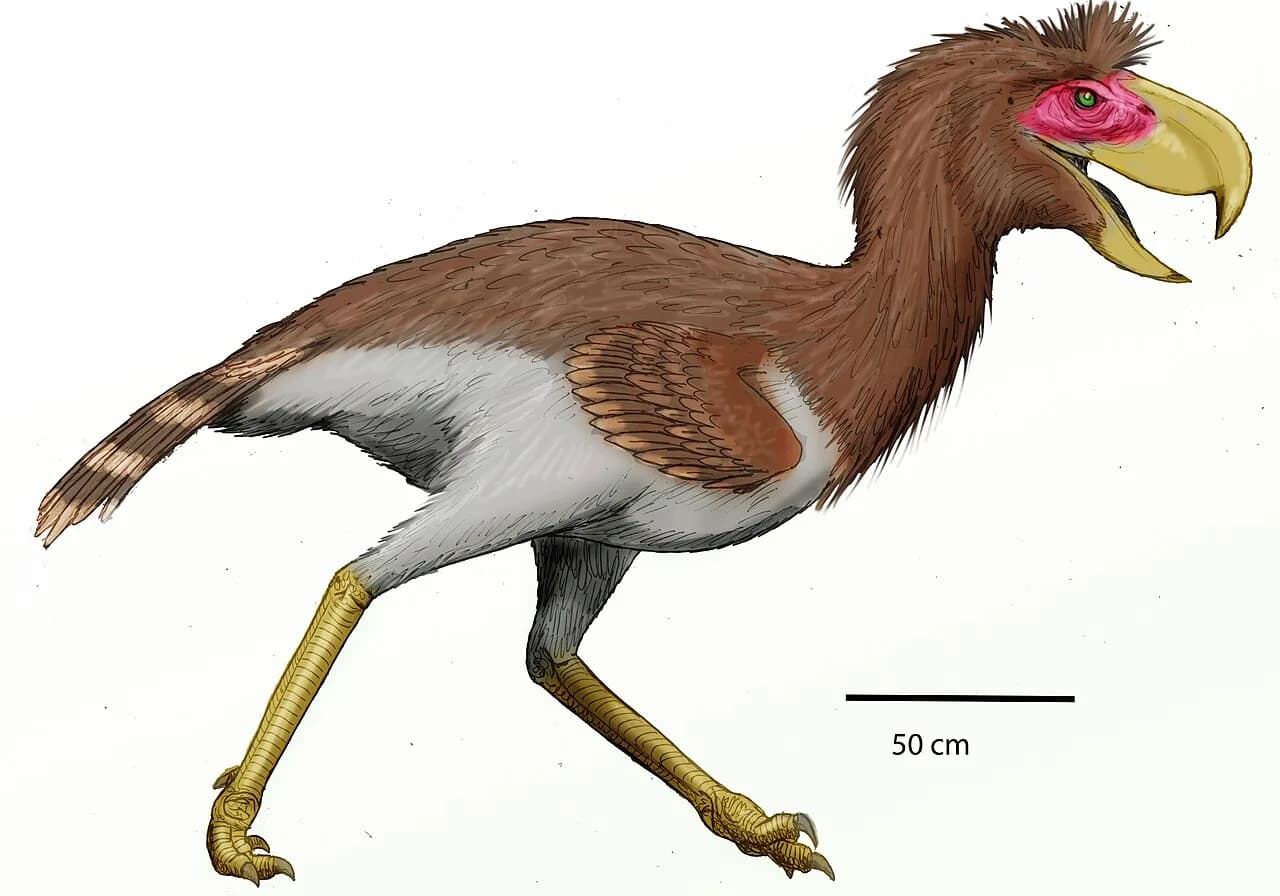
Titanis walleri is the only terror bird to have colonised North America, described in 1963 from fossils in Florida and Texas and present from 4.9 to 1.8 million years ago. Standing 1.5 metres and 150 kilograms, it could run at over 60 km/h. Its wings carried functional claws, a trait unique among phorusrhacids.
Titanis walleri lived from the Pliocene through the early Pleistocene, approximately 4.9 to 1.8 million years ago, in North America. Unlike most terror birds that remained confined to South America, Titanis successfully crossed northward during the Great American Biotic Interchange, traversing the newly formed Isthmus of Panama. It is the only known phorusrhacid to have successfully colonized North America. First described in 1963 by Benjamin Waller from fossils discovered in Florida, it represents one of the last terror birds before their final extinction from the fossil record.
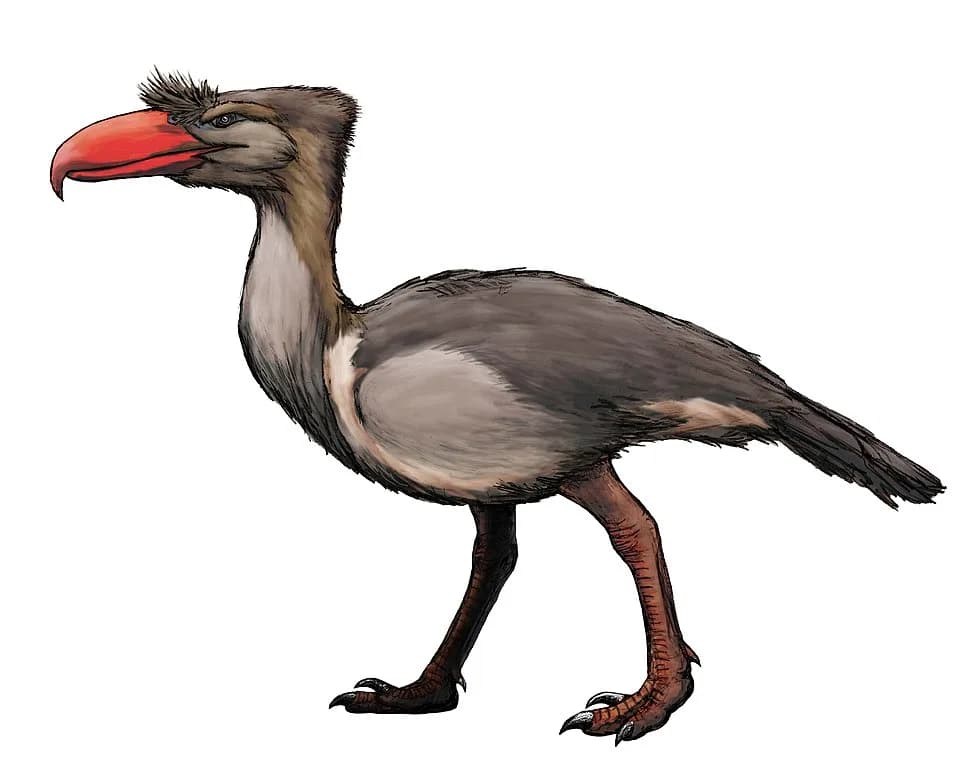
Titanis walleri measured approximately 1.5 meters in body length and reached an impressive height of 2.5 meters, making it one of the largest terrestrial birds ever to inhabit North America. Its weight is estimated at approximately 150 kilograms, comparable to that of an adult male lion. Its robust skull measured about 45 centimeters in length, dominated by a massive axe-shaped beak perfectly adapted for striking and killing prey with devastating force. Its powerful, heavily muscled hind legs gave it a dominant stature within its ecosystem and enabled remarkable running speeds.
A formidable carnivore, Titanis actively hunted small to medium-sized mammals across the grasslands and open woodlands of Florida and Texas. Its primary hunting technique relied on rapid pursuit followed by violent strikes with its axe-shaped beak, capable of fracturing bones and instantly stunning prey. Biomechanical studies suggest a striking force comparable to that of a blacksmith's hammer, concentrated on the beak tip. It likely preyed upon giant rodents, small ungulates, and reptiles, supplementing its diet with opportunistic carrion during periods of food scarcity across its extensive hunting territory.
Titanis occupied the vast coastal plains and subtropical grasslands of the southeastern United States, primarily in Florida and Texas. The Pliocene-Pleistocene environment in these regions included grassy savannas dotted with groves, wetlands, and open woodlands providing ideal hunting ground for a large cursorial predator. The humid subtropical climate supported an abundance of mammalian prey, including rodents, small ungulates, and various herbivores that had recently arrived from South America. Rivers and swamps provided essential water sources and natural chokepoints around which unsuspecting prey animals regularly congregated in large numbers.
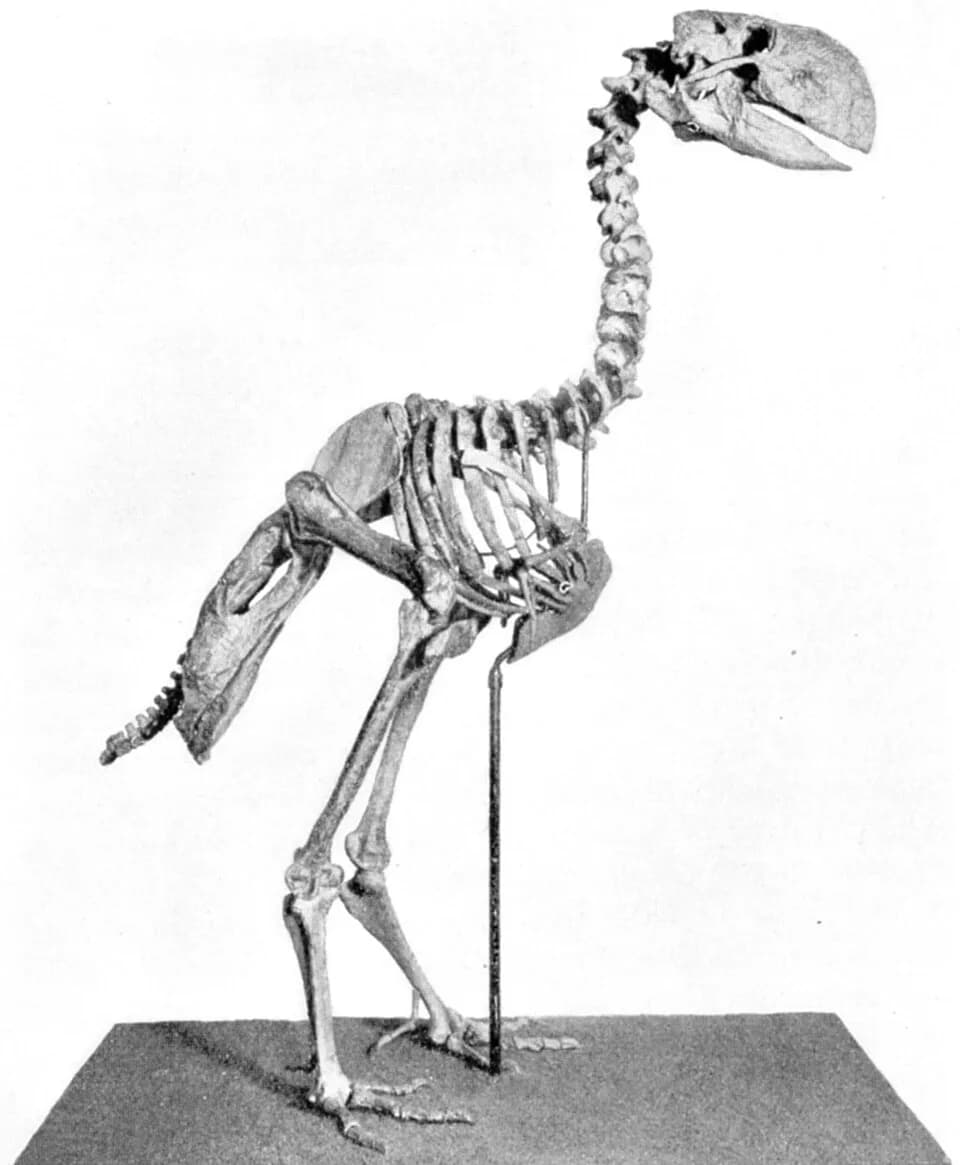
The anatomy of Titanis reveals extreme adaptation for terrestrial predation. Its wings were considerably reduced and completely useless for flight, but presented a noteworthy peculiarity: the wing tips bore robust bony structures interpreted as functional claws, unique among the Phorusrhacidae family. Its hind legs were long, powerful, and equipped with sharp claws capable of immobilizing prey on the ground. The massive, deep skull supported a laterally compressed beak with a formidable hooked tip. The well-developed cervical musculature enabled striking movements of considerable power and speed.
Titanis was most likely a solitary and territorial hunter that patrolled vast hunting territories across the North American grasslands. Its ability to run at speeds estimated between 60 and 65 km/h allowed it to compete effectively with contemporary mammalian predators such as the ancestors of modern canids. Unlike carnivorous mammals that primarily used their jaws to kill, Titanis employed a unique downward-striking technique with its massive beak, stunning prey before tearing them apart. Its well-developed binocular vision provided excellent depth perception for accurately judging distances during high-speed pursuit.
The first fossils of Titanis were discovered in 1963 by amateur diver Benjamin Waller in the Santa Fe River, Florida, hence the species name 'walleri' in his honor. The holotype consists of a remarkably well-preserved left tarsometatarsus. Additional fragments have been found in Texas, considerably extending its known geographic range. The dating of the Texas fossils was subject to controversy, with some researchers initially suggesting survival until 15,000 years before present, but subsequent analyses confirmed an extinction around 1.8 million years ago. The specimen is housed at the Florida Museum of Natural History.
| Period | Pliocène-Pléistocène / Pliocene-Pleistocene |
| Era | Cénozoïque / Cenozoic |
| Age | 4.9-1.8 Ma |
| Location | Amérique du Nord (Floride, Texas) / North America (Florida, Texas) |
| Length | 1.5 m |
| Height | 2.5 m |
| Weight | 150 kg |
| Discovery | 1963 |
Titanis walleri stood approximately 2.5 meters tall with a body length of 1.5 meters, weighing around 150 kilograms — comparable to an adult male lion. Its massive skull measured 45 centimeters, dominated by an axe-shaped beak. It ranks as one of the largest terrestrial birds ever to inhabit North America.
Yes. Titanis walleri is the only known phorusrhacid to have colonized North America, crossing the newly formed Isthmus of Panama during the Great American Biotic Interchange, approximately 4.9 to 1.8 million years ago. All other terror birds remained confined to South America until their extinction.
Titanis walleri hunted by rapid pursuit — estimated at 60 to 65 km/h — followed by violent strikes with its axe-shaped beak. Biomechanical studies indicate striking force concentrated at the beak tip. Its wing tips also bore bony structures interpreted as functional claws, unique among the Phorusrhacidae family.
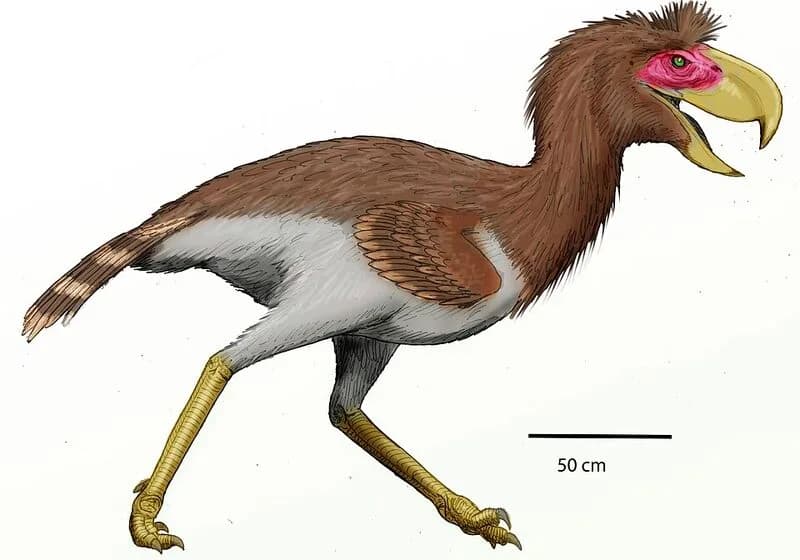
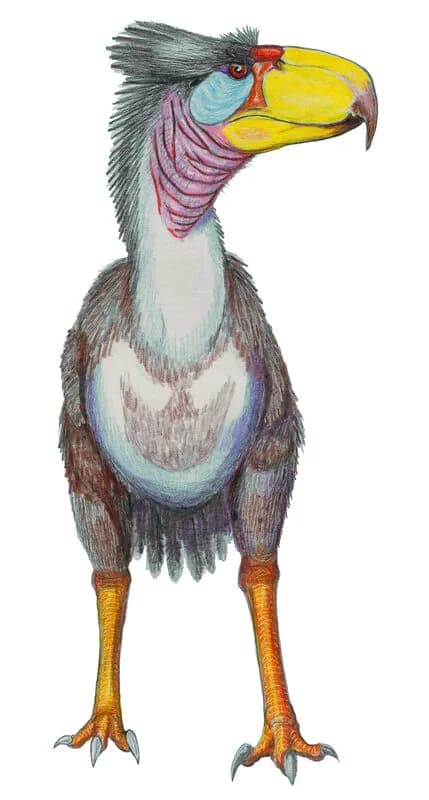
Life reconstruction of Titanis walleri, the North American terror bird
PaleoNeolitic, CC BY 4.0
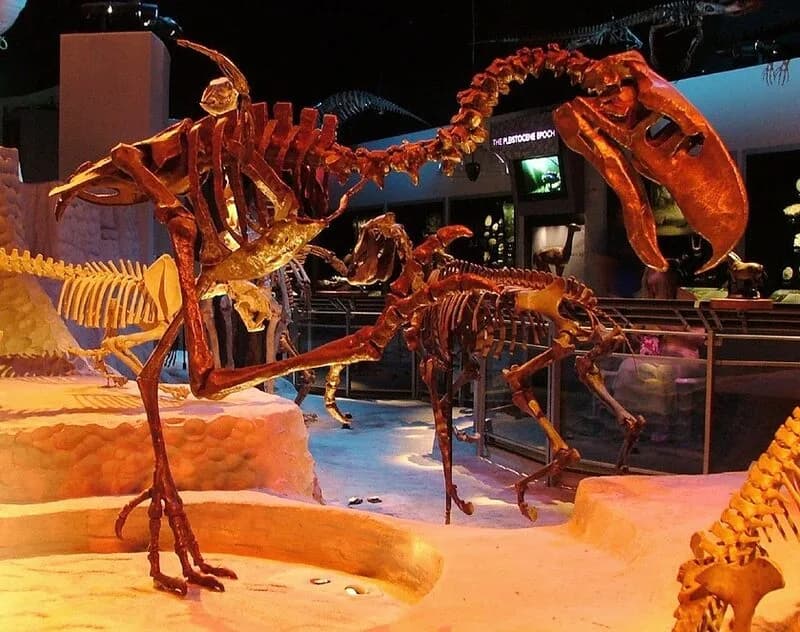
Titanis skeleton at the Florida Museum of Natural History
Wikimedia Commons, CC BY-SA