Oiseaux de terreur
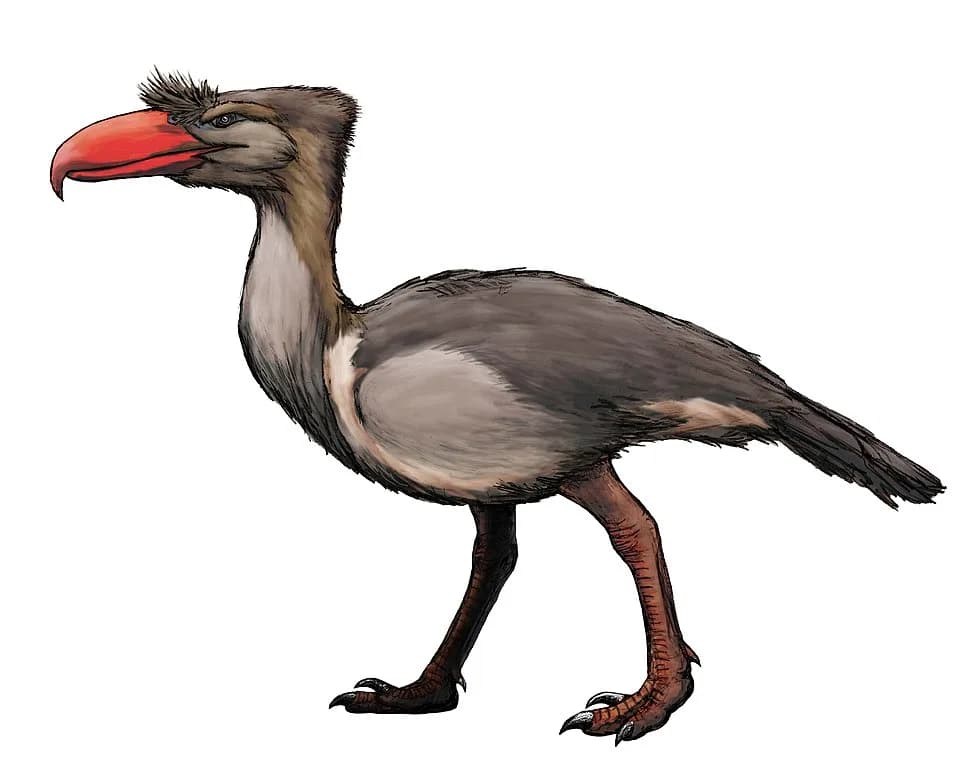
The Phorusrhacids, or terror birds, form a family of flightless predatory birds that dominated South America for close to sixty million years, from the Paleocene to the Pleistocene. The family covers some thirty species, from 1.5 to 3 metres tall. Three genera are documented here: Phorusrhacos, Kelenken and Titanis, the only one to reach North America.
Terror birds, or Phorusrhacidae, ruled the plains of South America for much of the Cenozoic era, from the Paleocene through the early Pleistocene, a reign spanning tens of millions of years. These formidable predators thrived for an extraordinarily long period, taking full advantage of South America's prolonged geographic isolation long before the formation of the Isthmus of Panama connected it to North America. Their progressive and inexorable decline coincided with the massive arrival of placental carnivores from North America during the Great American Biotic Interchange, roughly two million years ago.
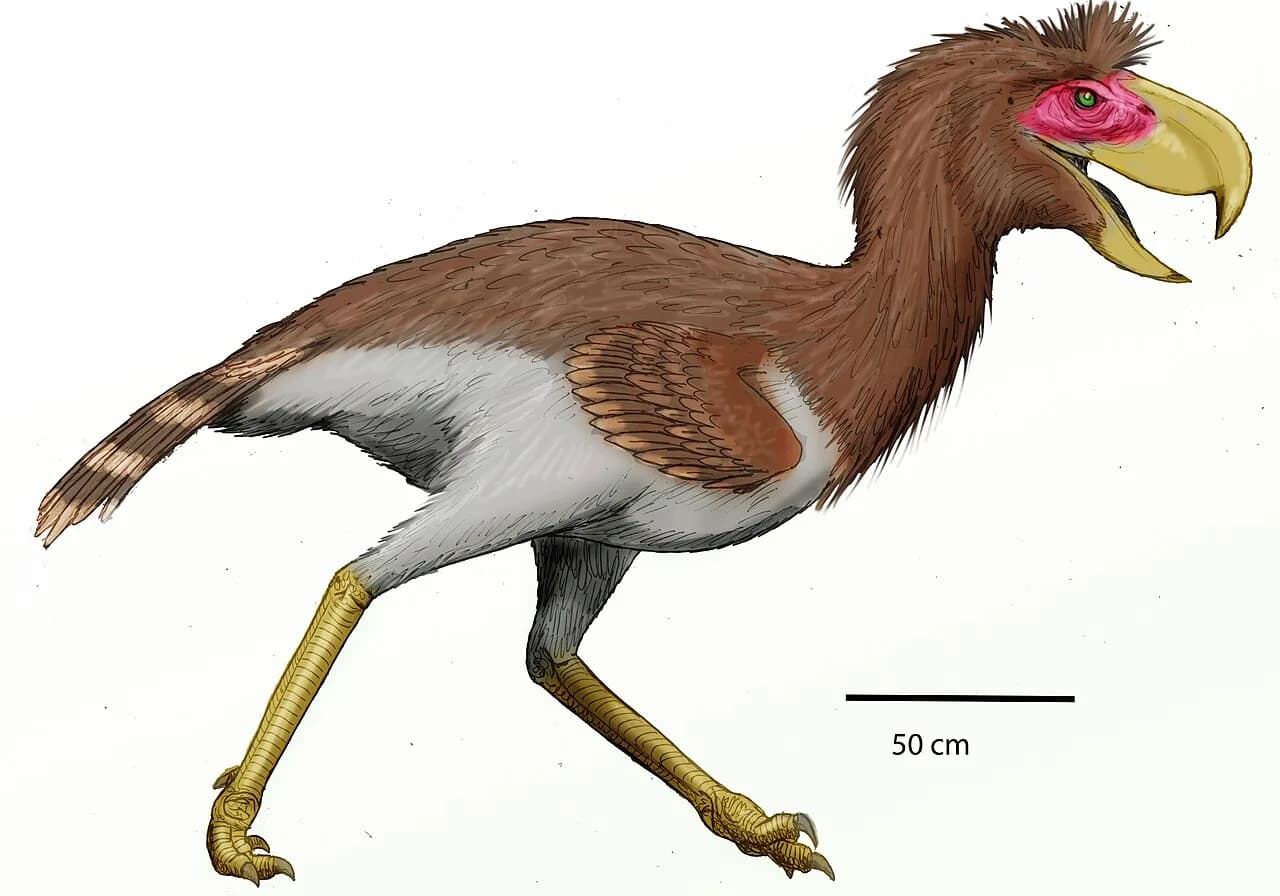
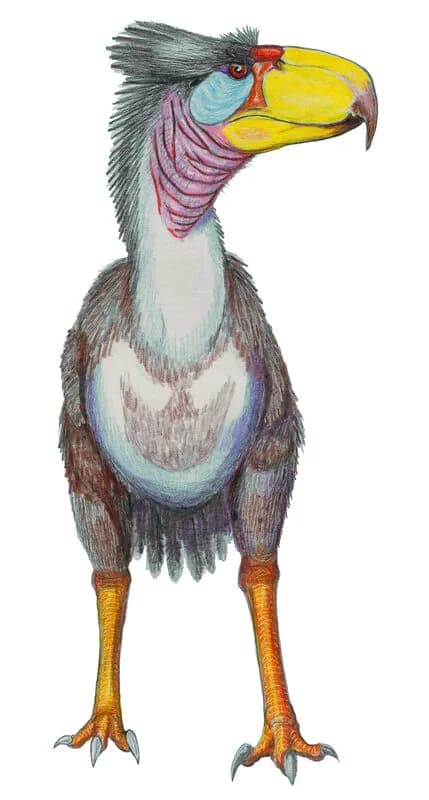
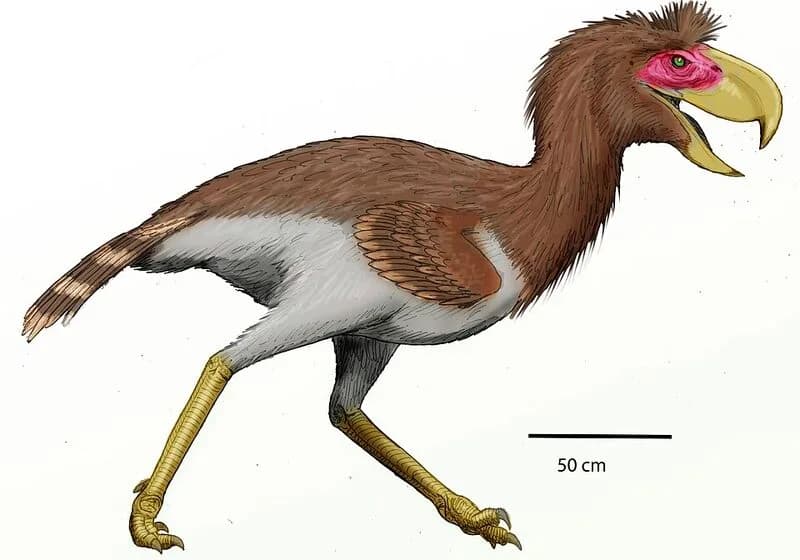
Phorusrhacos longissimus stood approximately 2.5 meters tall and weighed between 130 and 180 kilograms, making it one of the largest and most formidable terrestrial predators of its time anywhere in South America. Its massive and robust skull reached nearly 60 centimeters in length, dominated by an enormous hooked beak shaped like a sharp curved blade. Some closely related species, such as Kelenken guillermoi, possessed an even more imposing skull exceeding 70 centimeters in length, rivaling the largest skulls of theropod dinosaurs in terms of sheer dimensions and striking power.
Terror birds were strict and ferocious carnivores that actively hunted small to medium-sized mammals across the open grasslands of their territory. Their highly effective hunting technique relied on their remarkable running speed and the devastating power of their hooked beak, which was capable of striking prey with considerable downward force. Biomechanical studies strongly suggest they used rapid, repeated head movements to stun and kill their victims, then methodically tear apart the flesh for consumption. They likely supplemented their primary diet of fresh kills with carrion whenever the opportunity presented itself across their hunting grounds.
These giant and imposing birds primarily occupied the vast grasslands and expansive savannas of South America, open and unobstructed environments that greatly favored their running-based hunting strategy of chasing down prey at high speeds. Their fossils are found across Argentina, Brazil, and Uruguay, demonstrating an extensive geographic distribution spanning much of the southern continent. Some later species even successfully reached North America after the geological formation of the Isthmus of Panama, most notably Titanis walleri, whose remains have been recovered from fossil sites in both Florida and Texas.
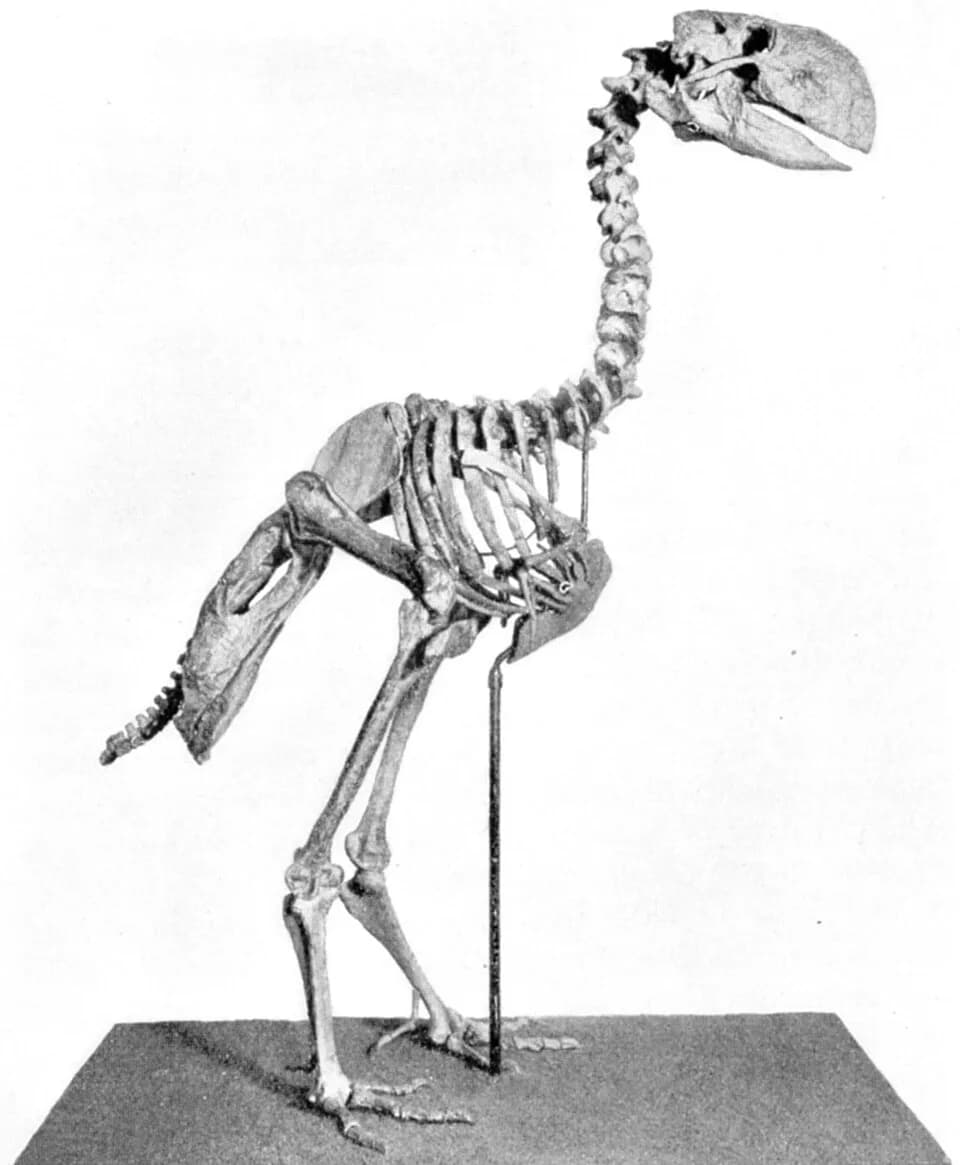
The anatomy of Phorusrhacidae reveals a remarkable and highly specialized adaptation for exclusive terrestrial predation. Their wings were considerably reduced in size and completely useless for flight, transformed into short vestigial appendages tipped with small claws. Their hind limbs were long, heavily muscled, and extremely powerful, equipped with sharp claws ideally suited for pinning down and firmly immobilizing captured prey on the ground. The skull, massive and particularly rigid in construction, supported a laterally compressed beak with a formidable hooked tip that served as a devastating weapon for both striking and tearing flesh from prey.
Terror birds were most likely solitary and fiercely territorial hunters that patrolled vast territories in constant search of prey animals. Their remarkable ability to run at speeds estimated between 50 and 60 km/h allowed them to effectively pursue and overtake fast-running herbivorous mammals across the open plains. The internal structure of their inner ear suggests an excellent sense of balance, a capability crucial for executing rapid direction changes during high-speed pursuit of agile prey. Their well-developed binocular vision gave them superior depth perception for accurately judging distances to fleeing prey animals.
The first fossils of Phorusrhacos were discovered in Argentina by the pioneering paleontologist Florentino Ameghino in 1887, and were initially misinterpreted as the remains of a giant edentate mammal rather than a bird. The true avian nature of these remarkable remains was only recognized later upon closer anatomical examination, fundamentally revolutionizing scientific understanding of bird evolution and ecological diversity. Exceptional fossil deposits in Patagonia have yielded nearly complete skeletons, enabling detailed reconstructions of the biomechanics and hunting strategies of these formidable predators. The Monte Hermoso site in Argentina remains one of the most prolific localities for studying Phorusrhacidae.
| Period | Paléocène-Pléistocène / Paleocene-Pleistocene |
| Era | Cénozoïque / Cenozoic |
| Age | 62-1.8 Ma |
| Location | Amérique du Sud / South America |
| Length | 1.5-3 m |
| Height | 1-2.5 m |
| Weight | 130-180 kg |
| Diet | Carnivore |
| Discovery | 1887 |
No, but they descended from them. Phorusrhacids, including Phorusrhacos longissimus, are birds — and modern birds are themselves feathered theropod dinosaurs. They are not non-avian like T. rex or Velociraptor. These Cenozoic predators (62 to 1.8 Ma) evolved long after the extinction of large non-avian dinosaurs 66 million years ago.
The family spans a wide size range, from 1.5 to 3 metres tall and 130 to 180 kilograms. Kelenken guillermoi holds the record for the largest known bird skull, close to 71 centimetres. Biomechanical studies suggest these birds struck prey with rapid head movements, to stun rather than bite. Their running speed is estimated at 50 to 60 km/h. Phorusrhacos longissimus, the type species, was described by Ameghino in 1887 from Argentine fossils.
Phorusrhacids thrived for tens of millions of years thanks to South America's geographic isolation. Their decline coincides with the formation of the Isthmus of Panama (around 3 Ma), which allowed the mass arrival of placental carnivores (felids, canids, ursids) from North America during the Great American Biotic Interchange. These new competitors, better adapted to pursuit running, likely outcompeted Phorusrhacids for terrestrial predator niches.
Reconstruction of Phorusrhacos longissimus, the terror bird
Wikimedia Commons, CC BY-SA
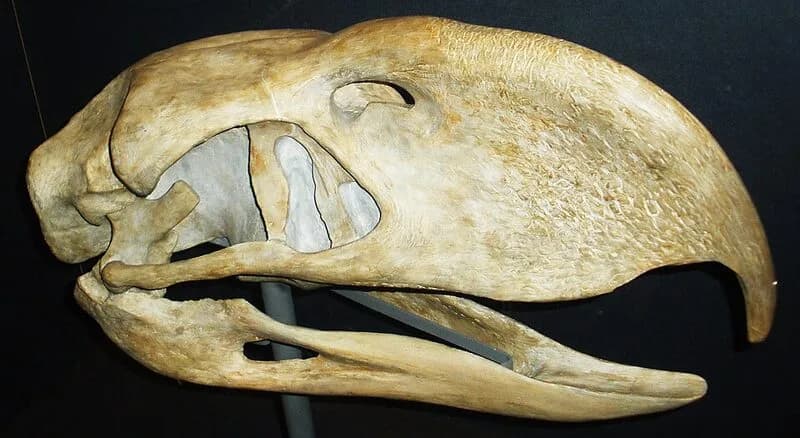
Fossil skull of a Phorusrhacid showing the characteristic hooked beak
Wikimedia Commons, CC BY-SA