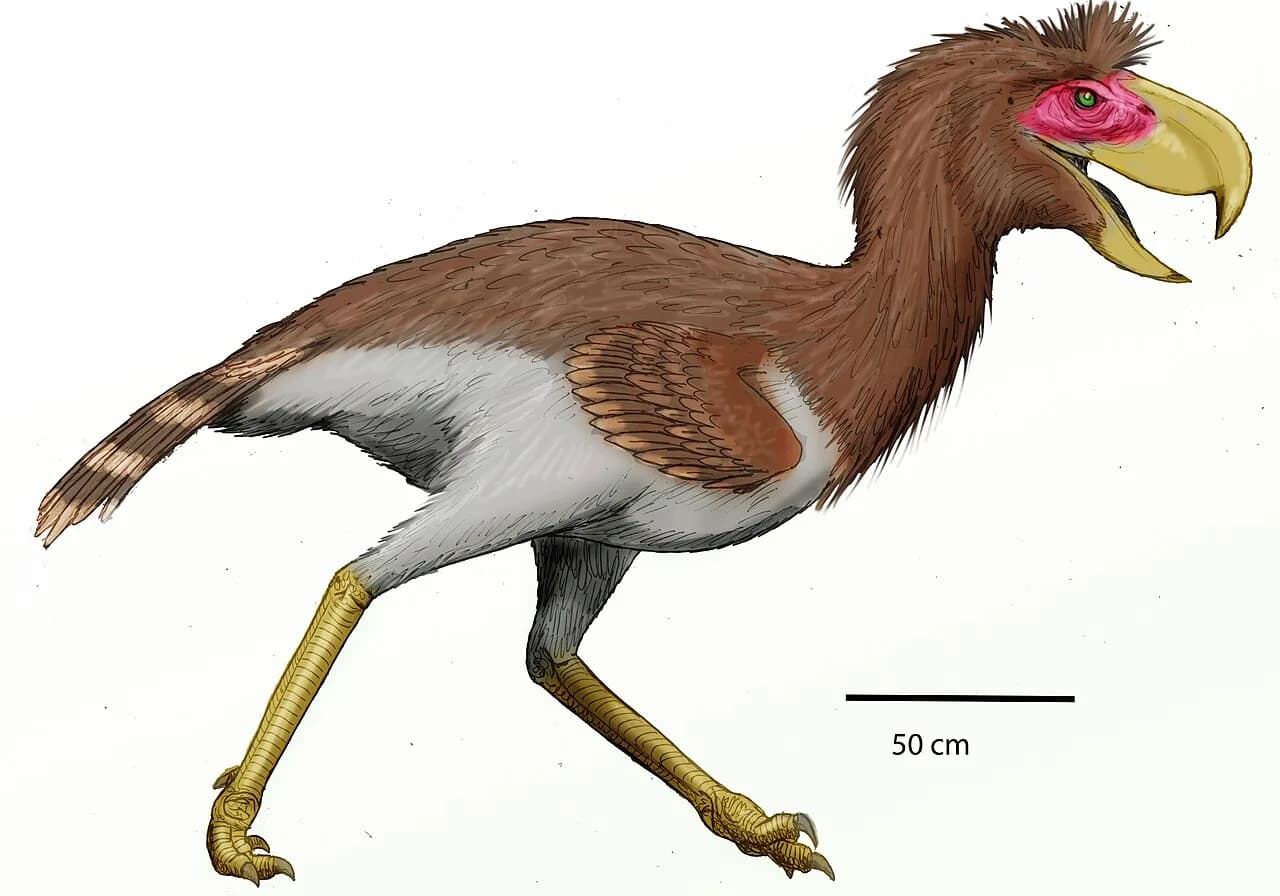
Phorusrhacos
Phorusrhacos longissimus is the original terror bird: it gave its name to the whole phorusrhacid family. Standing about 1.5 metres and weighing 130 kilograms, described in 1887 in Patagonia, it hunted 20 to 13 million years ago. It held the top of the food chain because South America, then isolated, harboured no large placental carnivore.
Phorusrhacos dominated the vast plains of South America during the Miocene epoch, between 20 and 13 million years ago, at a time when the South American continent was still an immense territory isolated from the rest of the world. This prolonged period of geographic isolation allowed terror birds to become the supreme terrestrial predators, in the near-total absence of large placental carnivorous mammals capable of challenging their ecological dominance. Phorusrhacos thrived in an environment where ocean currents and marine barriers prevented any significant migration of competitors from North America or Africa, ensuring its unchallenged supremacy for millions of years.
Phorusrhacos longissimus stood approximately 2.5 meters in total height and weighed roughly 130 kilograms, making it one of the largest and most impressive terror birds ever to walk the Patagonian landscape. Its massive and particularly robust skull reached nearly 60 centimeters in length, topped by an enormous hooked beak that served as its primary weapon against prey. Standing upright, this colossal bird far exceeded the height of an adult human, towering over every other terrestrial animal in its Miocene ecosystem. Its imposing stature combined with its powerful musculature made it a formidable predator that few contemporary creatures dared to challenge or confront.
Phorusrhacos was a strict carnivore and active hunter that fed primarily on small to medium-sized mammals inhabiting the grasslands and open woodlands of Miocene Patagonia. Its massive hooked beak, a veritable instrument of death, was capable of delivering blows of extreme violence upon its prey, fracturing bones and tearing flesh with devastating efficiency. Detailed biomechanical studies suggest that Phorusrhacos used rapid and powerful head movements, striking its victims with the sharp tip of its beak like a lethal pickaxe. It likely supplemented its dietary intake by consuming carrion whenever fresh carcasses presented themselves within the boundaries of its hunting territory.
Phorusrhacos primarily occupied the vast grasslands, open savannas, and sparse woodlands of Patagonia during the Miocene, an environment that greatly favored its hunting strategy based on rapid running and relentless pursuit of prey. The climatic conditions of this period were considerably warmer and more humid than present-day Patagonia, supporting diverse vegetation and abundant fauna that served as the pantry of this winged apex predator. Fossils recovered from the Santa Cruz geological formations in Argentina attest to a well-established and enduring presence in this region over millions of years. The habitat of Phorusrhacos offered an ideal mixture of open areas for high-speed chasing and vegetative cover for ambush tactics.
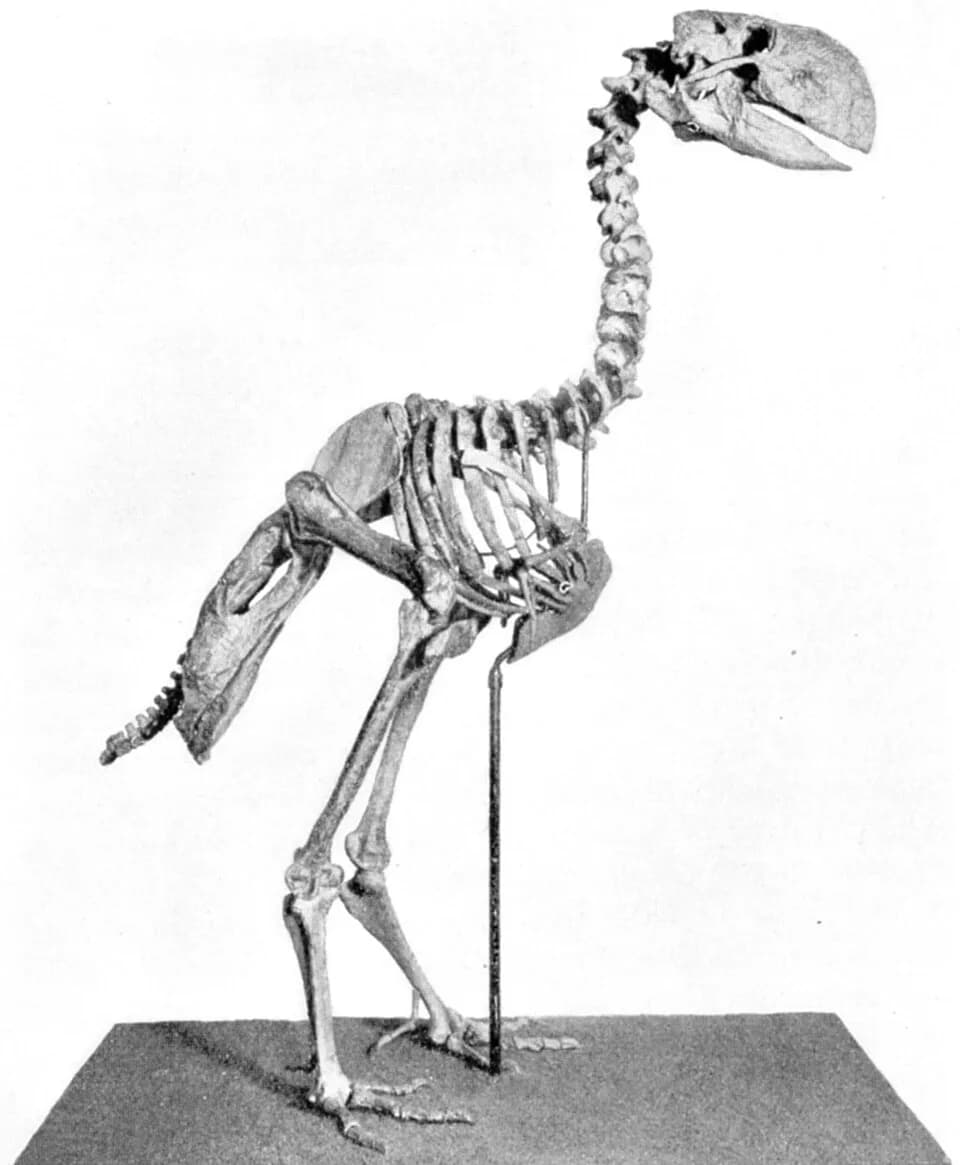
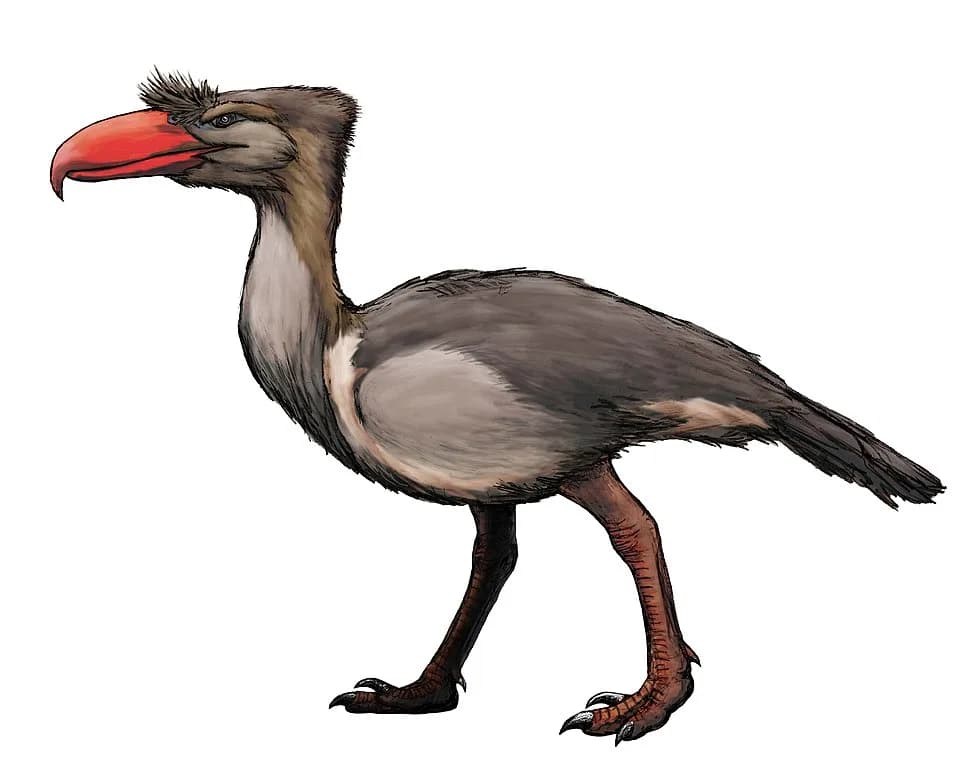
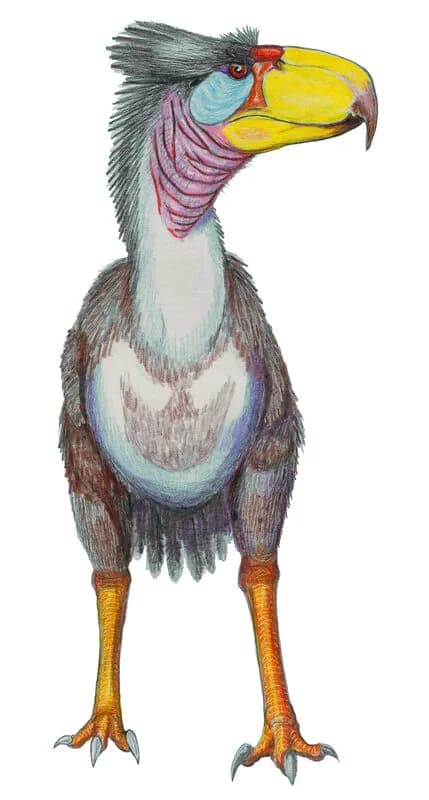
The anatomy of Phorusrhacos reveals a remarkable and refined specialization for exclusive terrestrial predation, with every aspect of its body optimized for ground-based hunting. Its massive and extremely rigid skull supported a laterally compressed beak with a formidable hooked tip, capable of piercing, gripping, and tearing the flesh of its prey with surgical precision. Its wings were considerably reduced and completely incapable of flight, transformed into short vestigial appendages tipped with small claws whose exact function remains debated among paleontologists. Its hind limbs were long, muscular, and powerfully built, equipped with robust claws ideal for firmly pinning captured prey to the ground during the kill.
Phorusrhacos was most likely a solitary and territorial hunter that methodically patrolled vast expanses of terrain in constant and tireless search of potential prey. Its remarkable ability to run at high speeds, estimated by biomechanicians between 48 and 60 kilometers per hour, allowed it to effectively pursue and overtake even the fastest herbivorous mammals in its Miocene ecosystem. Its hunting strategy likely combined phases of patient stalking, explosive sprinting, and decisive strikes with its devastating beak. The structure of its inner ear, analyzed through computed tomography scanning, suggests an excellent sense of balance, absolutely crucial for rapid directional changes during high-speed pursuits across uneven terrain.
The first fossils of Phorusrhacos were discovered in Argentina and first described in 1887 by the celebrated Argentine paleontologist Florentino Ameghino, who initially and erroneously interpreted them as the remains of a giant edentate mammal related to ground sloths. This remarkable misidentification illustrates just how much the unusual morphology of this giant predatory bird defied the conventional zoological classifications of the Victorian era. The true avian nature of these fossils was only recognized several years later, profoundly revolutionizing the scientific understanding of bird evolution and diversification in South America. Phorusrhacos has since become one of the most iconic and recognizable prehistoric birds, a true symbol of the Cenozoic megafauna of South America.
| Period | Miocène / Miocene |
| Era | Cénozoïque / Cenozoic |
| Age | 20-13 Ma |
| Location | Patagonie, Argentine / Patagonia, Argentina |
| Length | ~1.5 m (corps) |
| Height | 2.5 m |
| Weight | 130 kg |
| Diet | Carnivore |
| Discovery | 1887 |
No. Phorusrhacos longissimus was a bird — a terror bird from the family Phorusrhacidae — that lived in Patagonia during the Miocene, between 20 and 13 million years ago. Terror birds are avians (descendants of theropod dinosaurs) but are not dinosaurs in the strict sense. Phorusrhacos was incapable of flight, compensating with a running speed estimated at 48–60 km/h.
Phorusrhacos longissimus stood approximately 2.5 meters tall and weighed 130 kg. Its 60 cm skull bore a massive hooked beak capable of striking prey with great force, fracturing bones. CT-scan biomechanical studies of the inner ear confirm an excellent sense of balance for rapid high-speed turns during pursuits on Patagonian plains.
When Florentino Ameghino described the first Phorusrhacos longissimus fossils in 1887, he interpreted them as remains of a large edentate mammal related to ground sloths. The unusual morphology of the bone fragments, particularly the massive toothless skull, defied the classifications of the era. The avian nature was only recognized a few years later, revolutionizing understanding of bird evolution in South America.
Phorusrhacos longissimus restoration
Wikimedia Commons
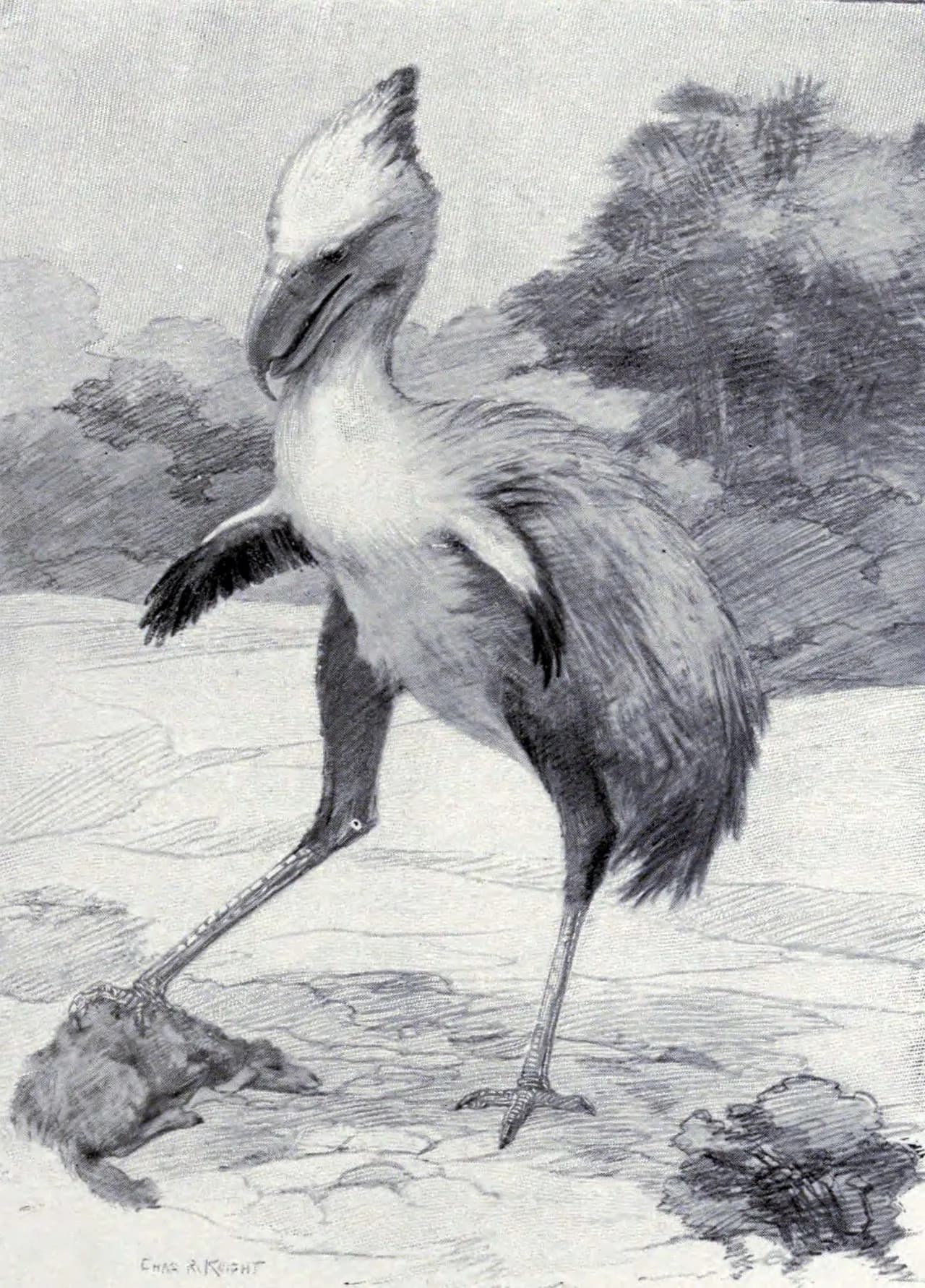
Phorusrhacos skeleton
Wikimedia Commons