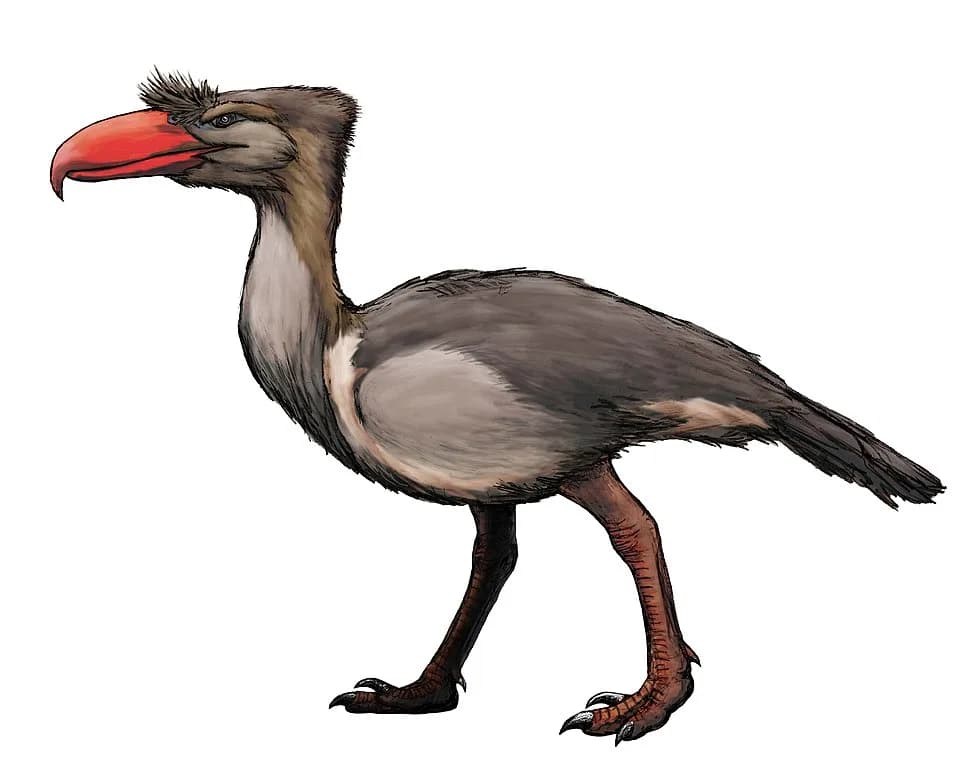
Kelenken
Kelenken guillermoi was a terror bird from Patagonia, described in 2007 and dated to 15 million years ago. Weighing around 150 kilograms, it carried a 71-centimetre skull — the largest bird skull ever found, longer than a wolf's. Its name comes from an evil spirit in Tehuelche mythology.
Kelenken lived during the Middle Miocene, approximately 15 million years ago, in the pampas and grasslands of what is now Patagonian Argentina. It was one of the largest and most formidable 'terror birds' (Phorusrhacidae) — a family of giant flightless predatory birds that dominated South American ecosystems for over 60 million years, from the Paleocene to the Pleistocene. Kelenken holds the record for the largest skull of any known bird, with a skull 71 centimeters long! South America was then an isolated continent (like Australia today), and in the absence of large mammalian carnivores, terror birds had evolved to fill the role of terrestrial super-predators.
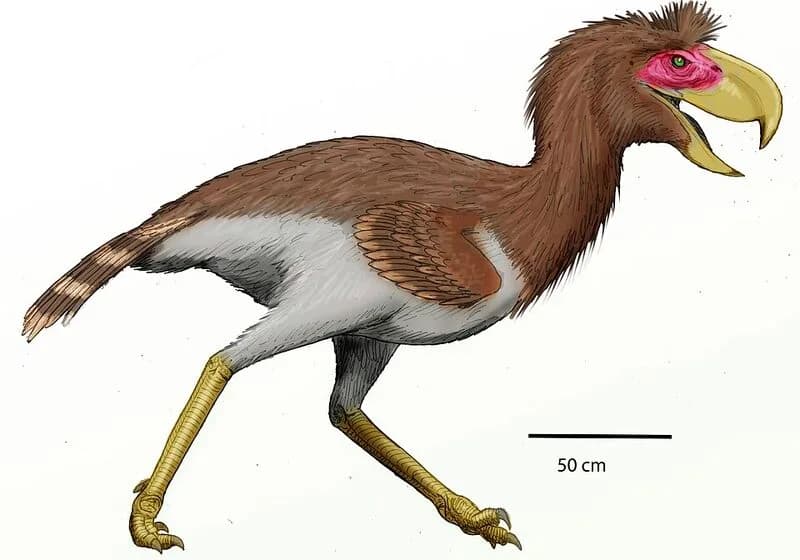
Kelenken is one of the largest known terror birds, standing about 2.5 to 3 meters tall — far exceeding an adult human. Its 71-centimeter skull is the largest bird skull ever discovered, dominated by a massive hook-shaped beak that constituted three-quarters of the total skull length. This curved, tall, laterally compressed beak was a devastating weapon. Its legs were long and powerful, adapted for fast running in grasslands, with robust claws. Like all phorusrhacids, its wings were reduced and useless for flight, though they may have served as stabilizers while running.
Kelenken was a formidable terrestrial super-predator, hunting herbivorous mammals of the Miocene pampas with brutal efficiency. Its massive hooked beak, functioning like a biological axe, was its main weapon. The probable hunting technique consisted of pursuing prey at a run, then striking with devastating vertical beak blows, using neck power and gravity to inflict lethal wounds. Its beak could also grasp and violently shake smaller prey. Its diet probably included notoungulates (herbivorous mammals endemic to South America), giant rodents, and other small mammals and reptiles of the Patagonian grasslands.
Kelenken lived in the vast open grasslands and savannas of Patagonia during the Middle Miocene, an environment similar to modern pampas but with a warmer climate. South America was still an isolated continent, with no land connection to North America (the Isthmus of Panama wouldn't form for another 12 million years). This isolation had allowed the evolution of unique mammalian fauna including notoungulates, litopterns, giant armadillos, and ground sloths — all potential prey for terror birds. Kelenken shared its ecosystem with other predators such as sparassodonts (carnivorous marsupials) and other phorusrhacid species.
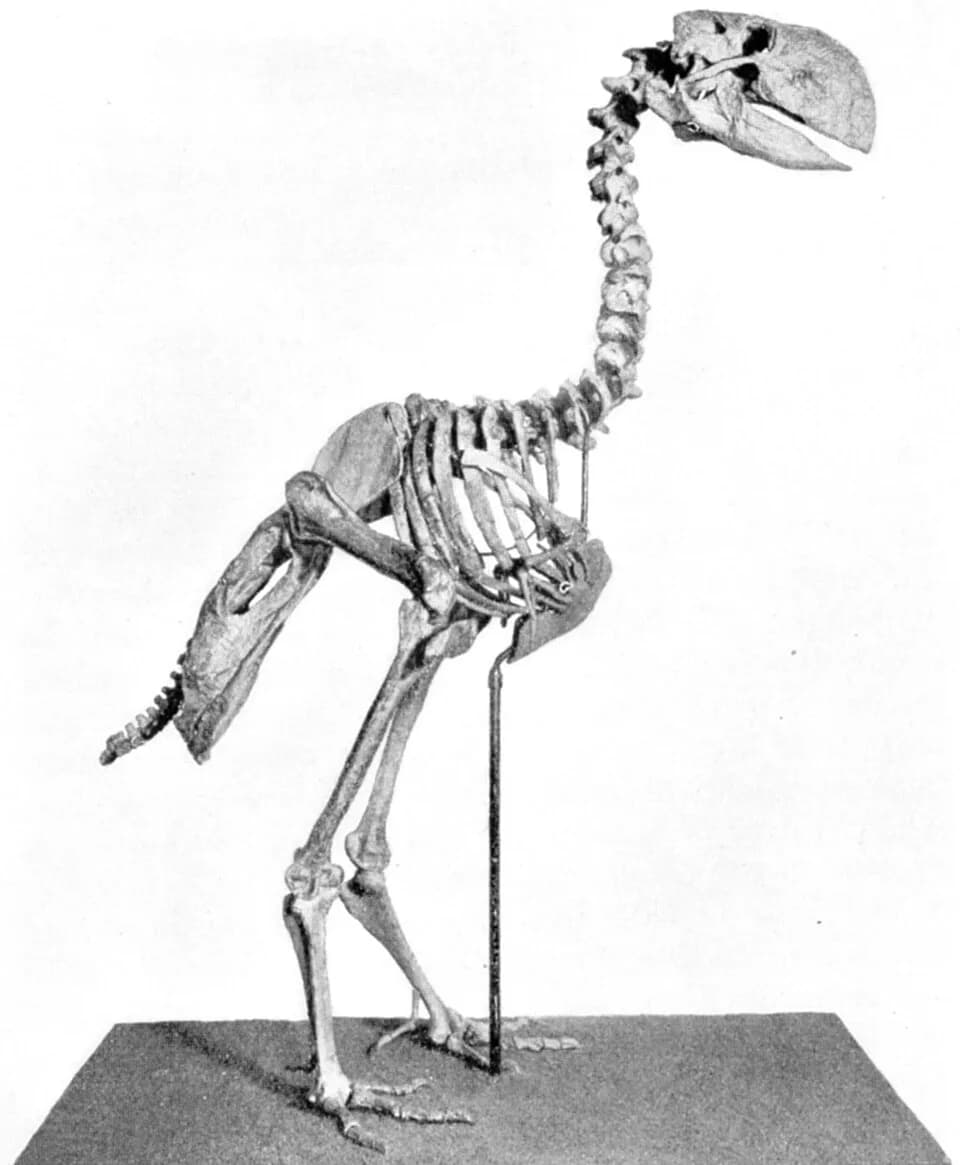
Kelenken's anatomy was that of a highly specialized terrestrial running predator. Its 71 cm skull is the largest of any bird, dominated by a massive hook-shaped beak with a sharp downward-curving tip — convergent with modern raptor beaks but at a far greater scale. The skull was reinforced with thick bones and fused cranial sutures to withstand impact forces during strikes. Its neck was long and muscular, capable of powerful, precise movements. Its legs were long and adapted for fast bipedal running, with a tridactyl plan (three toes) and robust claws. The vestigial wings still retained some bones but were totally incapable of flight.
Kelenken was a fast, agile terrestrial predator, actively hunting in the open grasslands of Patagonia. Its hunting strategy probably combined pursuit running (thanks to its long runner's legs) and lethal strikes from its massive beak. Biomechanical studies suggest terror birds primarily used vertical top-down beak strikes, using skull weight and neck power like a biological pile driver. The hooked beak tip could also grasp, shake, and dismember prey. Kelenken was probably solitary and territorial, dominating a vast hunting territory. As the largest terrestrial predator in its ecosystem, it had essentially no natural enemies.
Kelenken guillermoi was described in 2007 by Luis Bertelli, Luis Chiappe, and Claudia Tambussi, from a remarkably complete skull discovered in the Collón Curá Formation (Middle Miocene) in Patagonia, Argentina. The genus name comes from an evil spirit in Tehuelche mythology (indigenous people of Patagonia), and the species honors Guillermo Aguirrezabala, who discovered the specimen. The discovery of the 71-centimeter skull was a paleontological sensation, establishing Kelenken as possessing the largest avian skull of all time. The specimen is housed at the Museo Paleontológico Egidio Feruglio in Trelew, Argentina. The discovery strengthened our understanding of the dominant role of phorusrhacids in South American ecosystems before the Great American Interchange.
| Period | Miocène moyen / Middle Miocene |
| Era | Cénozoïque / Cenozoic |
| Age | 15 Ma |
| Location | Patagonie, Argentine / Patagonia, Argentina |
| Height | 2.5-3 m |
| Weight | ~150 kg (estimation) |
| Diet | Carnivore |
| Discovery | 2007 |
Kelenken guillermoi stood approximately 2.5 to 3 metres tall, with an estimated weight of around 150 kilograms. Its 71-centimetre skull is the largest bird skull ever found, dominated by a hooked beak that accounts for three-quarters of the total skull length.
Kelenken guillermoi lived approximately 15 million years ago, during the Middle Miocene, in the open grasslands of Patagonia, Argentina. Its remains were found in the Collón Curá Formation. At that time, South America was an isolated continent, with no land connection to North America.
Kelenken guillermoi chased prey using its long legs, then delivered vertical downward beak strikes, using skull weight as a natural pile driver. Biomechanical studies confirm this technique among phorusrhacids (terror birds), the family to which Kelenken belongs.
Reconstruction of Kelenken guillermoi, giant terror bird of Patagonia
Wikipedia Commons
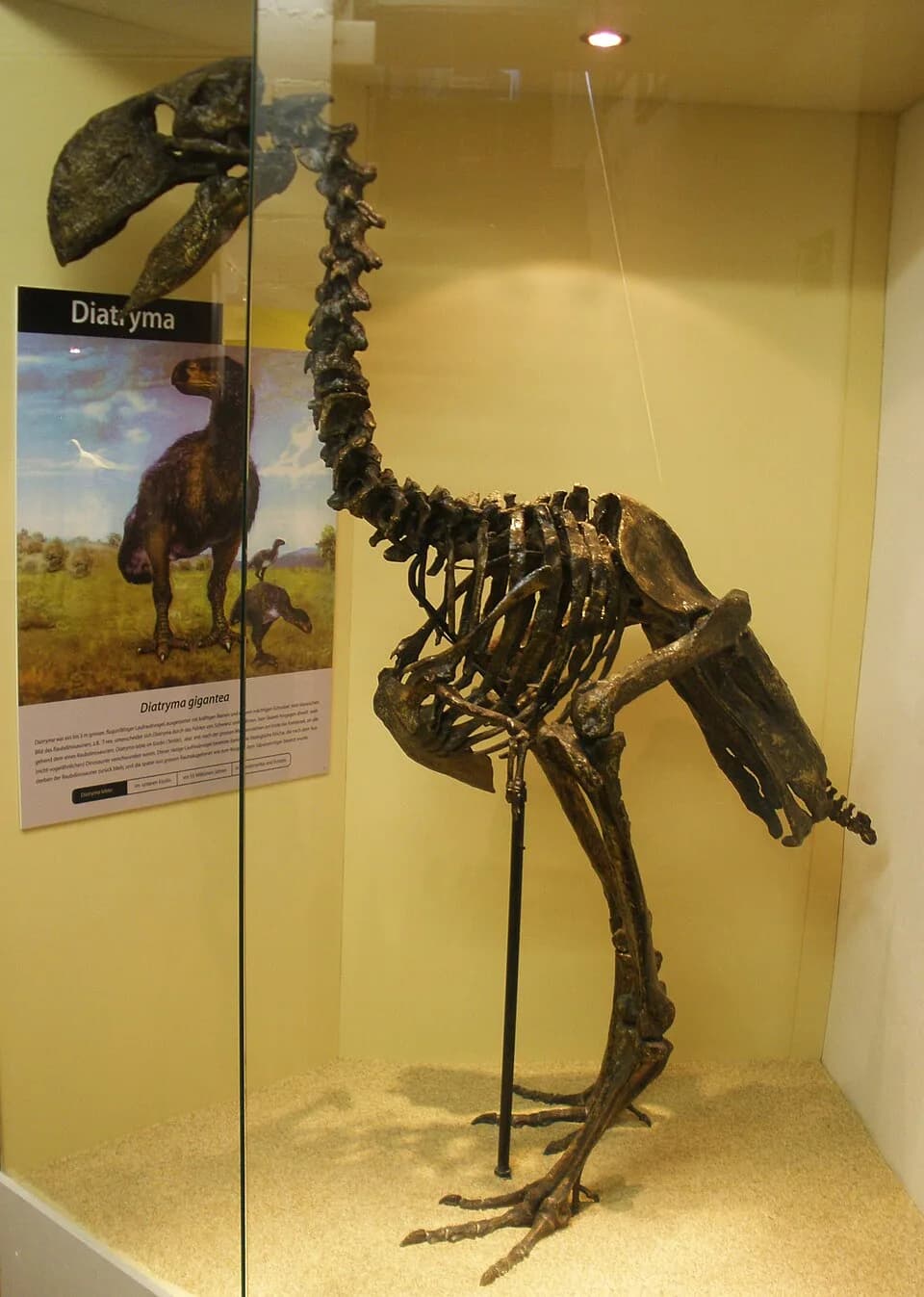
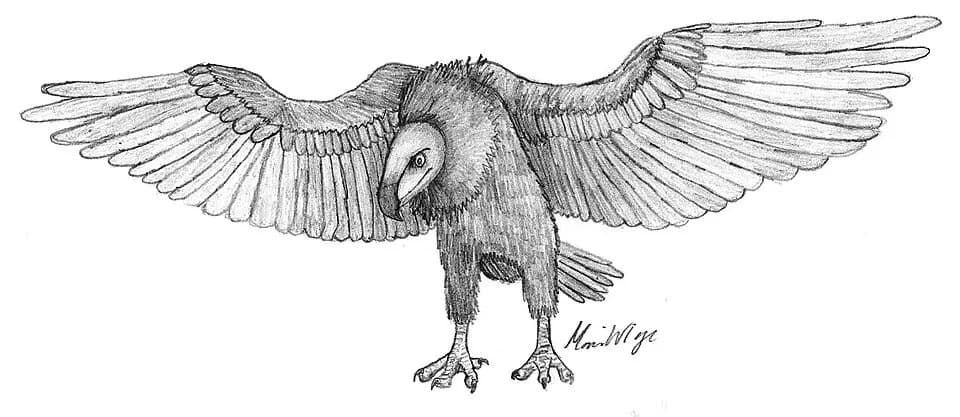
Diatryma/Gastornis reconstruction, giant bird related to terror birds
Wikipedia Commons