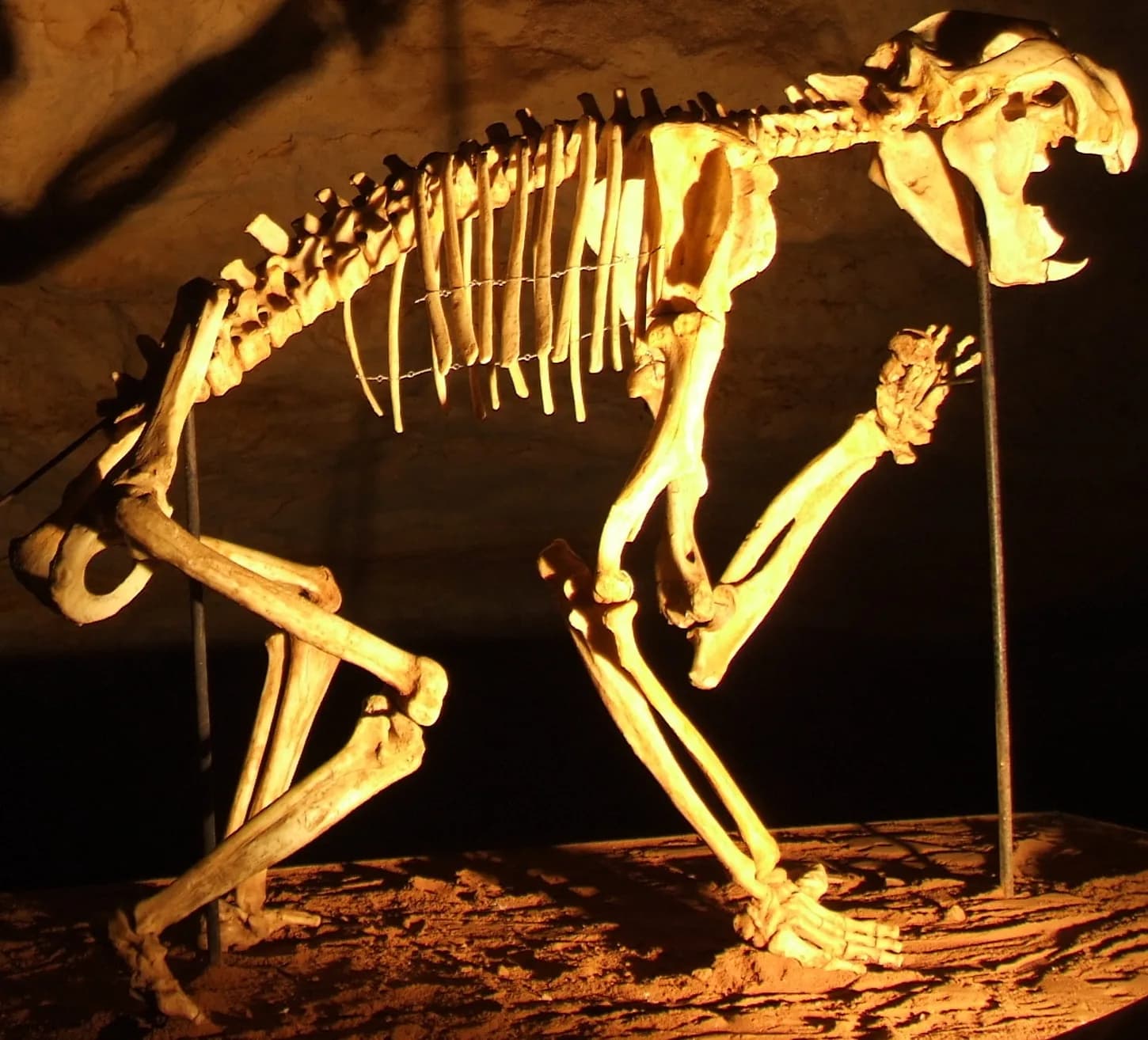
Lion marsupial
Thylacoleo carnifex, the marsupial lion, was an Australian predator described in 1859, present from 2 million years ago until 46,000 years before the present. At 1.5 metres and 100 to 130 kilograms, it was unrelated to cats: it descends from herbivorous ancestors close to koalas and wombats. Its bite is the strongest ever measured in a mammal for its size.
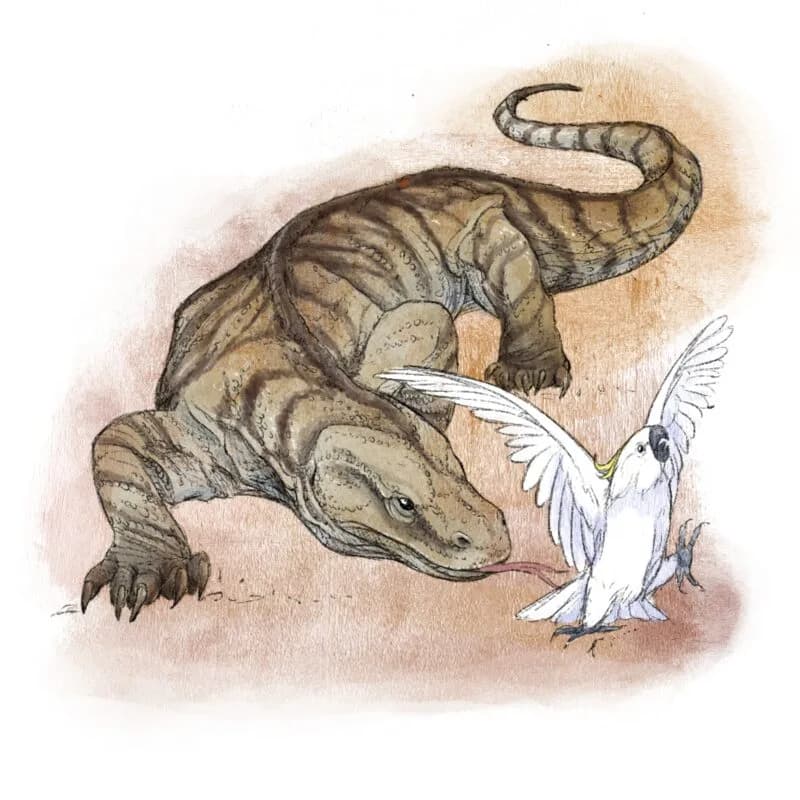
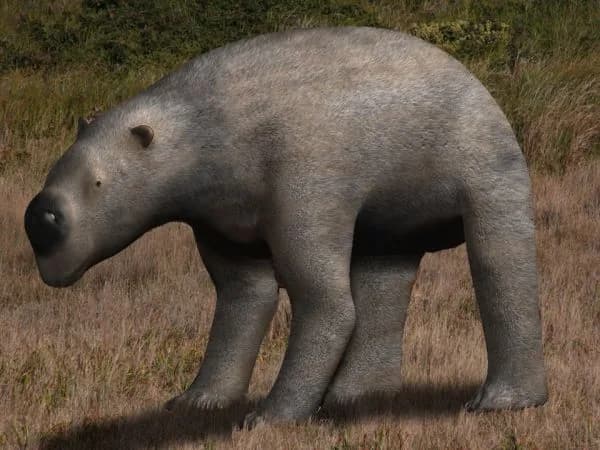
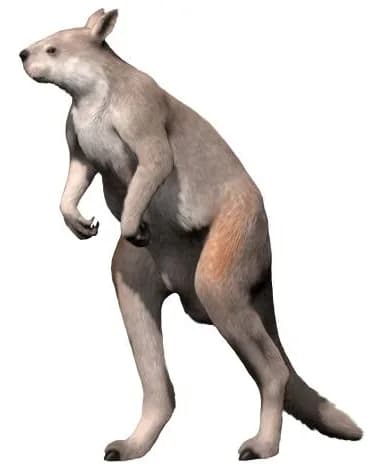
Thylacoleo carnifex lived during the Australian Pleistocene, approximately 2 million to 46,000 years ago, a period marked by intense climatic oscillations and the emergence of a unique megafauna on the isolated continent. This marsupial predator appeared at the beginning of the Pleistocene, descending from herbivorous ancestors of the family Thylacoleonidae, a lineage of diprotodont marsupials that evolved toward carnivory. It coexisted with other Australian giants such as Diprotodon, Procoptodon, and Megalania, forming an ecosystem unparalleled in the modern world. Thylacoleo disappeared around 46,000 years ago, a period coinciding with the arrival of the first humans in Australia and the massive extinction of Australian megafauna that eliminated over eighty-five percent of the continent's large-bodied species.
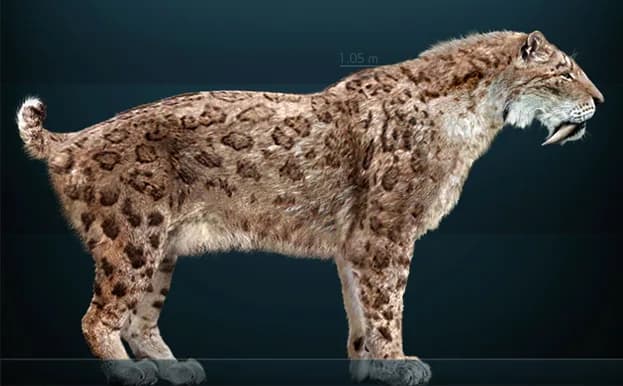
Thylacoleo carnifex was the largest marsupial mammalian carnivore to have ever existed in Australia. It measured approximately 1.5 meters in length, including its tail, with a shoulder height of about 75 centimeters. Its weight ranged between 100 and 130 kilograms, comparable to that of a modern African lioness. Its build was robust and muscular, with particularly powerful forelimbs equipped with semi-opposable thumbs bearing massive retractable claws. Despite its nickname of 'marsupial lion,' it had no kinship with felines whatsoever. Its stocky morphology and proportionally short limbs suggest an animal adapted for power rather than speed, capable of exerting considerable force when capturing its prey.
Thylacoleo carnifex was a formidable hypercarnivore, the most specialized marsupial predator in Australian history. Biomechanical analyses revealed that its bite was proportionally the most powerful of all known mammals, exceeding even that of the modern lion and tiger relative to its body size. Its diet consisted primarily of large Pleistocene Australian herbivores, including diprotodonts, giant kangaroos, and possibly juvenile giant wombats. Paradoxically, Thylacoleo descended from strictly herbivorous ancestors, and its carnassial teeth were actually premolars modified into cutting blades, rather than the canines or molars used by placental carnivores. This convergent adaptation, unique in the animal kingdom, testifies to the intense selective pressure that shaped this predator.
Thylacoleo carnifex occupied a variety of habitats across Pleistocene Australia, from open forests to semi-arid zones and tree-dotted plains. Its geographic distribution covered most of the Australian continent, from southern coastal regions to the more arid interior zones. Fossil discoveries in caves of the Nullarbor Plains and Naracoorte Caves in South Australia suggest it also frequented karst systems, possibly using them as dens to raise its young. Aboriginal rock paintings in northwestern Australia appear to depict this animal, indicating that the first Australians coexisted with it. The Pleistocene Australian environment was greener and wetter than today, with inland lakes and more extensive forests providing suitable habitat for this large predator.
The anatomy of Thylacoleo carnifex presents a notable blend of primitive marsupial characteristics and highly specialized predatory adaptations. Its dentition was unique among mammals: a pair of elongated dagger-like upper incisors replaced the absent canines, while its third upper and lower premolars formed enormous carnassial blades capable of shearing through flesh and bone. Its thumbs were semi-opposable and bore massive retractable claws, similar to those of a feline, enabling it to grasp and restrain its prey. Its jaw possessed exceptional mechanical leverage: studies have demonstrated that it exerted a bite pressure equivalent to 100 kilograms per square centimeter. Its tail was robust and muscular, likely used as a support during confrontations with large prey.
Thylacoleo carnifex was most likely an ambush predator, combining arboreal and terrestrial strategies to capture its prey. Its retractable claws and powerful forelimbs suggest a capacity for tree-climbing, from which it could pounce on prey passing below, similar to a modern leopard. Fossil claw marks discovered on the walls of Australian caves confirm its climbing abilities. As a marsupial, it possessed a ventral pouch for raising its young, implying an extended period of maternal dependence. Whether it hunted alone or in groups remains unknown, but its morphology suggests a solitary or pair-bonded predator. Its rigid muscular tail could have served as a tripod support when manipulating carcasses, similar to how kangaroos use their tail as a third leg.
Thylacoleo carnifex was first described in 1859 by the renowned British paleontologist Sir Richard Owen, based on cranial and dental fragments discovered in lacustrine deposits of Lake Colongulac in Victoria, Australia. Owen immediately recognized the carnivorous nature of the animal despite its belonging to the diprotodont marsupials, which are typically herbivorous. The most important sites for this species are the Naracoorte Caves in South Australia, a UNESCO World Heritage Site, where nearly complete skeletons were found at the bottom of natural traps formed by sinkholes. In 2007, a remarkably complete specimen was discovered in a limestone cave of the Nullarbor Plains, preserving even traces of soft tissue and claw marks on the walls. The name Thylacoleo means 'pouch lion' in Greek, referencing its marsupial nature and predatory prowess.
| Period | Pléistocène / Pleistocene |
| Era | Cénozoïque / Cenozoic |
| Age | 2 Ma - 46 000 ans |
| Location | Australie / Australia |
| Length | 1.5 m |
| Height | 0.75 m (au garrot / at shoulder) |
| Weight | 100-130 kg |
| Diet | Carnivore |
| Discovery | 1859 |
Thylacoleo carnifex descended from strictly herbivorous ancestors — a remarkable evolutionary paradox. It belongs to the diprotodont marsupials, a typically herbivorous group including koalas and wombats. Its formidable carnassial teeth were not canines but premolars modified into cutting blades, a unique anatomical solution with no equivalent among placental carnivores. Its bite was proportionally the most powerful of any known mammal.
Thylacoleo carnifex disappeared around 46,000 years ago, coinciding with the arrival of the first humans in Australia and the mass extinction of Australian megafauna that eliminated over 85% of the continent's large-bodied species. Whether direct human hunting or habitat modification through fire were the primary causes remains debated, but Aboriginal rock paintings in northwestern Australia appear to depict Thylacoleo, confirming coexistence with the first Australians.
Fossil claw marks discovered on the walls of Australian caves confirm the climbing abilities of Thylacoleo carnifex. Its retractable claws — unique among marsupials — and powerful forelimbs with semi-opposable thumbs allowed it to grip vertical surfaces like a leopard. This arboreal capability suggests an ambush strategy from trees to attack prey passing below, in addition to terrestrial hunting.
Thylacoleo carnifex skeleton displayed in the Naracoorte Caves
Wikimedia Commons
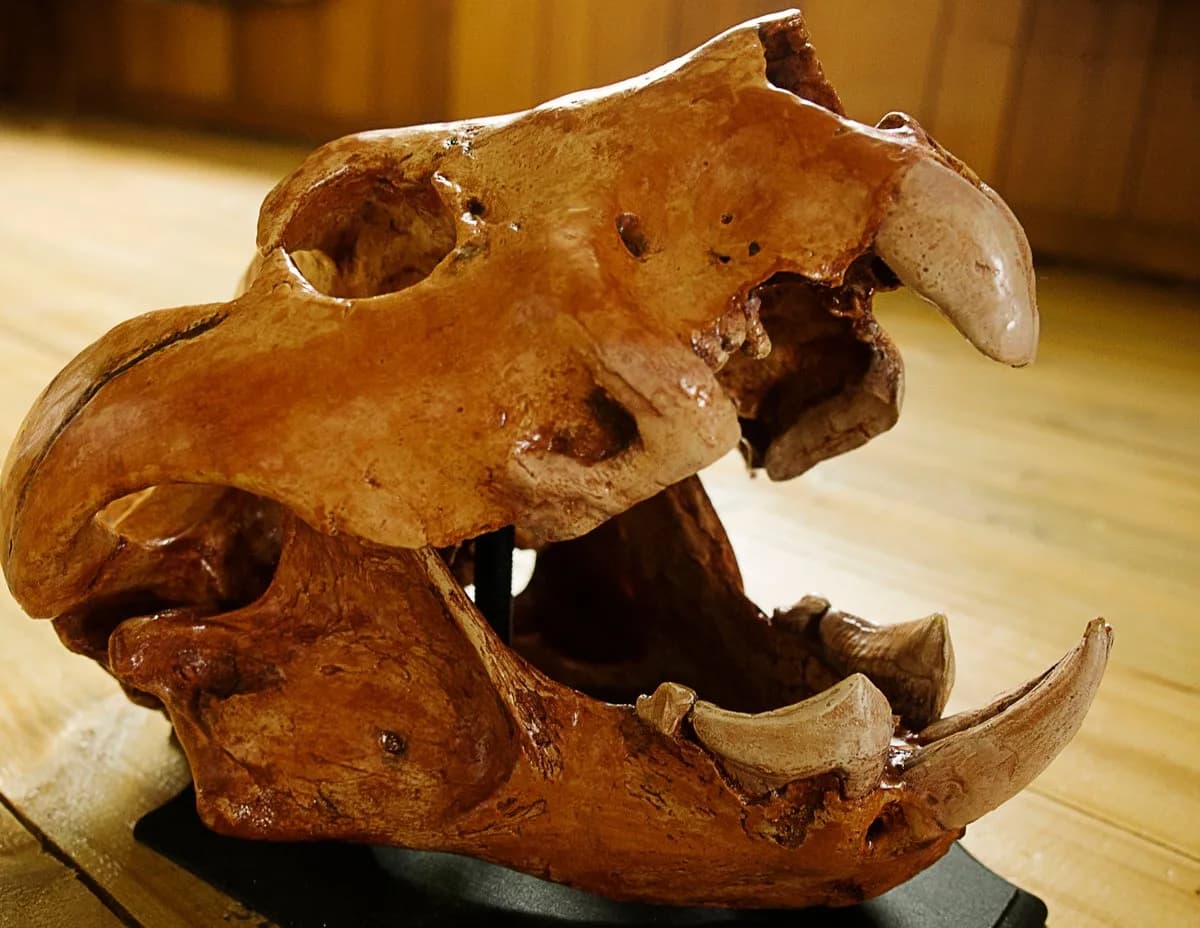
Fossil skull of Thylacoleo carnifex showing its carnassial premolars
Wikimedia Commons