Procoptodon
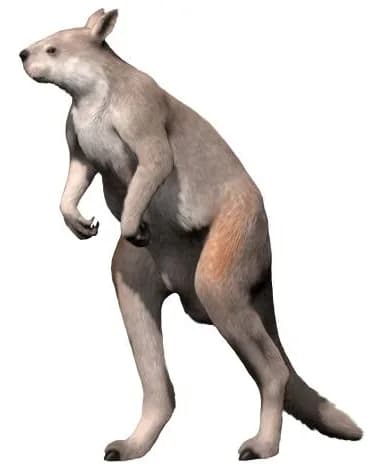
Procoptodon goliah is the largest kangaroo of all time: a 2-metre body and 200 to 250 kilograms, three times a living red kangaroo. Its mass ruled out hopping: it moved by walking, one foot in front of the other. It occupied the whole of Australia between 1.6 million and 45,000 years ago, browsing shrub foliage.
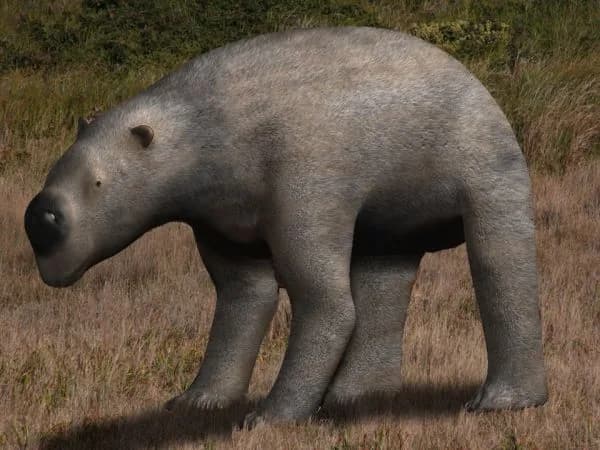
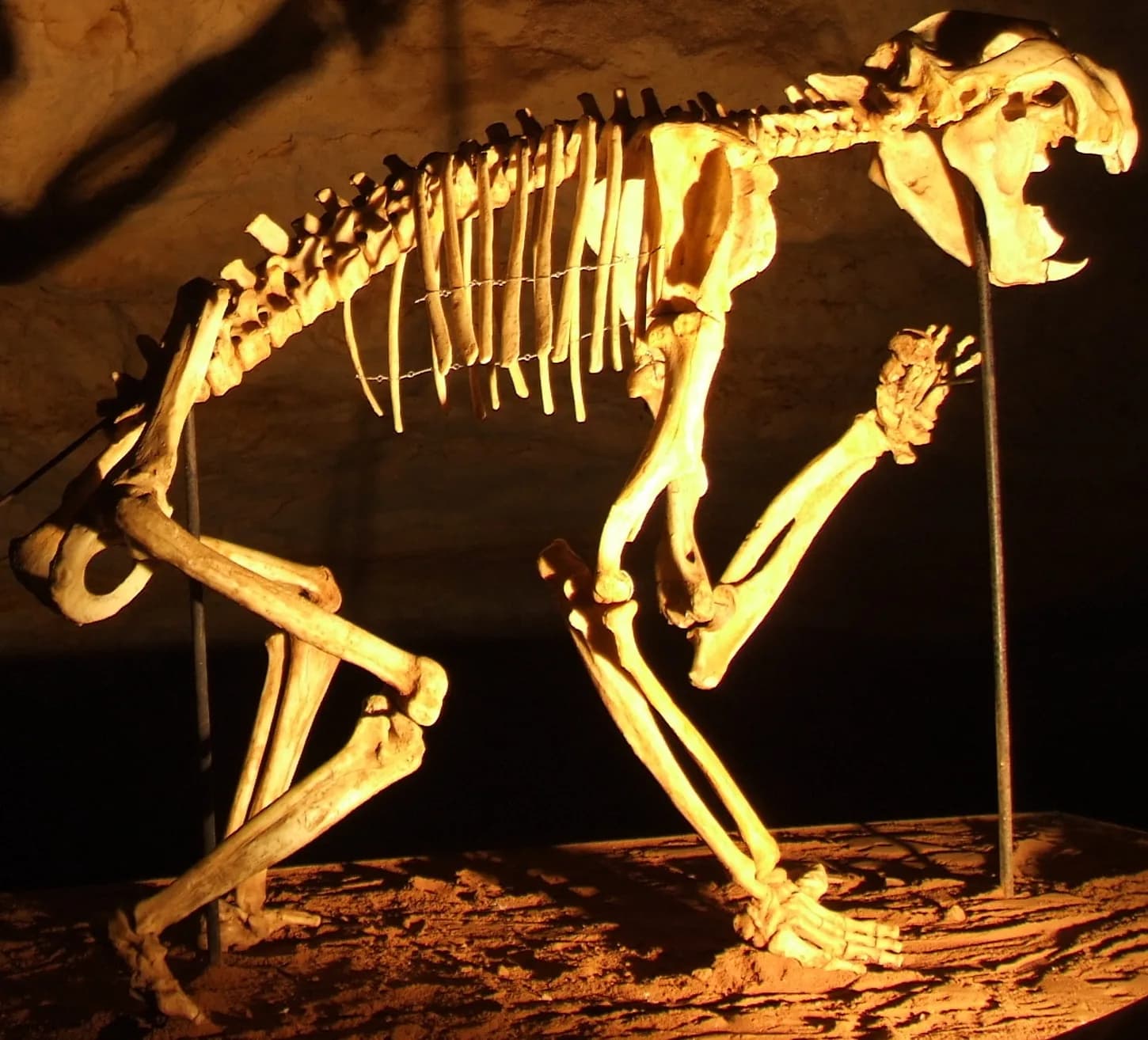
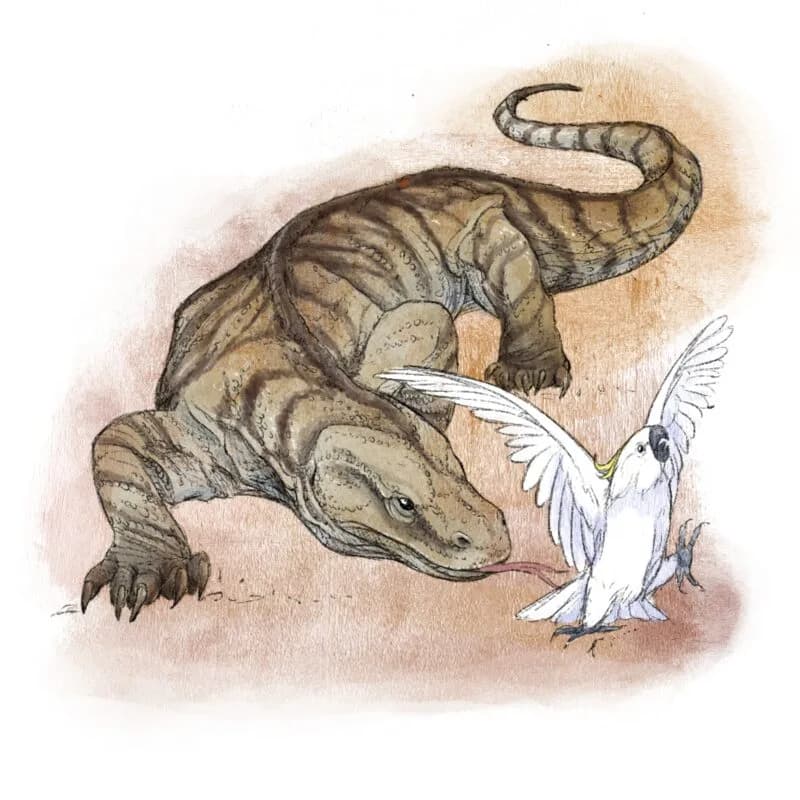
Procoptodon goliah lived during the Pleistocene, from approximately 1.6 million to 45,000 years ago, as part of the spectacular Australian megafauna that ranked among the most extraordinary large animal assemblages on the planet. This giant kangaroo appeared in Australia at a time when the continent was dominated by marsupials of colossal size, including Diprotodon (a giant wombat weighing 2.8 tonnes), Thylacoleo (the marsupial lion), and Megalania (a 6-meter giant monitor lizard). Procoptodon thrived through the glacial cycles of the Pleistocene, adapting to successive environmental changes that transformed Australian landscapes. Its disappearance, occurring approximately 45,000 years ago, coincides disturbingly with the arrival of the first humans in Australia, the ancestors of Aboriginal peoples, who reached the continent by sea from Southeast Asia. This massive extinction of Australian megafauna, which eliminated roughly 85% of species weighing more than 44 kg, remains one of the most debated events in Quaternary paleontology.
Procoptodon goliah was the largest kangaroo that ever existed, a veritable mountain of muscle and fur that towered over all other macropods of its era. Standing upright, it reached an impressive height of 2 to 3 meters, far surpassing the largest modern red kangaroo, which rarely exceeds 1.8 meters. Its estimated weight hovered around 230 kilograms, roughly three times the weight of a large modern male red kangaroo. Its imposing stature made it not only the largest kangaroo of all time but also one of the largest marsupials ever to have walked the surface of the Earth, exceeded only by Diprotodon in terms of pure body mass. Males were probably larger than females, a sexual dimorphism consistent with patterns observed in modern macropods where dominant males compete for access to breeding females.
Procoptodon was a herbivore specialized in consuming leaves and tall vegetation, a feeding mode described by paleontologists as selective browsing. Unlike modern kangaroos that feed primarily on grasses at ground level, Procoptodon was adapted to reach and consume foliage from trees and tall shrubs thanks to its long arms and towering stature. Its short, flattened face, vastly different from the elongated snout of modern kangaroos, gave it a powerful jaw capable of generating considerable bite force for crushing tough leaves and woody stems. Analysis of its dental morphology reveals molars adapted for grinding resistant plant material rather than chewing tender grasses. This dietary specialization placed it in an ecological niche distinct from other herbivores of the Australian megafauna.
Procoptodon inhabited the entire Australian continent, occupying a remarkable variety of habitats ranging from open woodlands to sparse forests and the semi-arid zones of the continental interior. Fossils have been discovered in virtually every region of Australia, testifying to a widespread geographic distribution that rivaled that of the most common modern kangaroos. Its preferred habitat appears to have been open woodlands and dry eucalyptus forests, environments offering both arboreal vegetation for feeding and sufficient open space for movement despite its considerable size. During the Pleistocene, Australia experienced climatic cycles alternating between wetter periods with extensive forests and drier periods favoring open landscapes, and Procoptodon adapted to these successive environmental fluctuations over more than a million years.
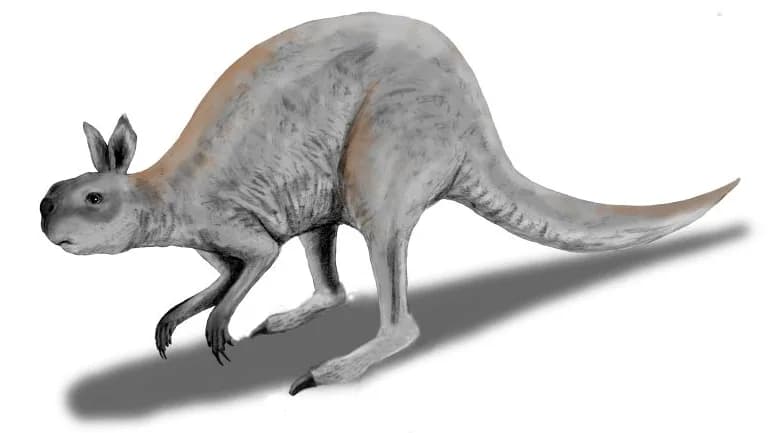
Procoptodon's anatomy was radically different from that of any modern kangaroo, featuring several unique adaptations that made it a truly singular animal. Its most striking feature was its short, flattened face, far removed from the elongated snout typical of modern macropods, with forward-facing eyes that gave it superior binocular vision compared to modern kangaroos. Each foot possessed only a single large functional toe, an extreme digit reduction unique among kangaroos, unlike the two functional toes of modern species. This single-toed adaptation suggests a fundamentally different mode of locomotion. Its arms were proportionally longer than those of modern kangaroos, equipped with elongated fingers tipped with claws adapted for grasping and pulling branches toward its mouth. The robust skeleton, with thick and massive bones, testifies to an animal built for power rather than speed or agility.
Unlike modern kangaroos that move by hopping at high speed, Procoptodon was probably unable to jump due to its considerable body mass of 230 kilograms. Biomechanical analyses of its skeleton suggest that it walked upright on its two hind legs, moving with a slow, measured gait rather than performing the characteristic bounds of modern macropods. This non-saltatorial bipedal locomotion is unique among known kangaroos and represents a remarkable adaptation to its gigantic size. Its lifestyle likely consisted of moving methodically between areas of arboreal vegetation, using its long arms and prehensile fingers to pull down branches and access foliage beyond the reach of smaller herbivores. The binocular vision provided by its forward-facing eyes suggests an ability to accurately gauge distances, useful both for reaching branches and for detecting predators such as Thylacoleo.
The genus Procoptodon was first described in 1874 by British paleontologist Richard Owen, one of the most influential scientists of the Victorian era and the inventor of the term 'dinosaur.' Fossils have been discovered at numerous sites across Australia, from caves in the south to lacustrine deposits in the arid interior, confirming the species' continental distribution. Procoptodon is part of the great Australian megafauna extinction that eliminated roughly 85% of the continent's large mammal species approximately 45,000 years ago, a catastrophic event that coincides with the arrival of the first humans in Australia. The scientific debate over the causes of this extinction remains vigorous: some researchers favor overkill by newly arrived human populations, others invoke the drastic climate changes of the late Pleistocene, and a growing consensus suggests a synergistic combination of both factors that pushed the megafauna beyond its capacity to adapt.
| Period | Pléistocène / Pleistocene |
| Era | Cénozoïque / Cenozoic |
| Age | 1,6 Ma - 45 000 ans |
| Location | Australie (toutes régions) / Australia (all regions) |
| Length | 2 m |
| Height | 2.7 m (debout / standing) |
| Weight | 200-250 kg |
| Diet | Herbivore |
| Discovery | 1838 |
Procoptodon goliah stood 2 to 3 meters tall and weighed approximately 230 kilograms — three times the mass of a modern red kangaroo. Biomechanical analyses show this mass made hopping impractical; it moved upright as a walking biped. It is the largest kangaroo ever to have existed, known from the Australian Pleistocene (1.6 Ma – 45,000 years ago).
Procoptodon goliah had only a single large functional toe per foot, an extreme digit reduction unique among all known kangaroos. Modern species have two functional toes. Its proportionally long arms, ending in prehensile clawed fingers, allowed it to pull down branches beyond the reach of smaller herbivores, confirming its selective browser diet.
The extinction of Procoptodon goliah coincides with the arrival of the first humans in Australia, ancestors of Aboriginal peoples. A growing consensus points to a synergy between human hunting and late Pleistocene climate changes. This extinction is part of the disappearance of 85% of Australian species weighing over 44 kg, including Diprotodon and Thylacoleo, within a few thousand years.
Procoptodon goliah, the largest known kangaroo
Nobu Tamura, Wikimedia Commons
Procoptodon goliah, a giant kangaroo from prehistoric Australia
Wikimedia Commons