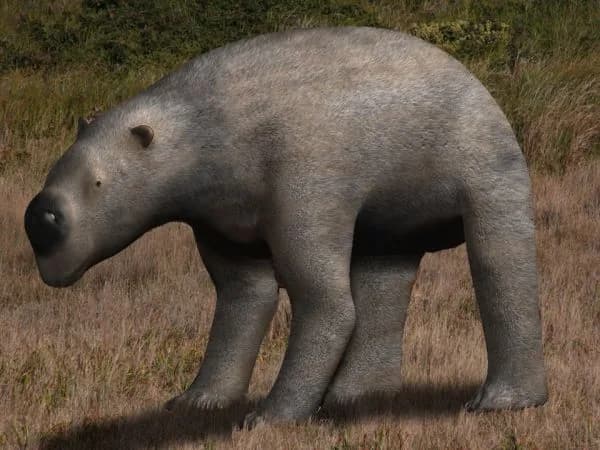
Diprotodon
Diprotodon optatum is the largest marsupial that ever lived: 3 metres long and 2.8 tonnes, the mass of a rhinoceros. It occupied the whole of Australia between 1.6 million and 44,000 years ago. Its outline suggests an oversized wombat, and that is no accident: living wombats are among its closest surviving relatives.
Diprotodon lived during the Pleistocene, from approximately 1.6 million years ago until its extinction around 44,000 years ago, closely coinciding with the arrival of the first humans on the Australian continent. This giant marsupial was an integral part of the spectacular Australian Pleistocene megafauna, a unique assemblage of large-bodied animals that evolved in isolation on the island continent for millions of years. Diprotodon is regarded as the largest marsupial that ever lived, surpassing in mass all known modern and fossil marsupials. Its extinction was part of a massive wave of disappearances that wiped out nearly all of Australia's megafauna within a few thousand years, an event primarily attributed to human hunting pressure and the use of fire by the first Aboriginal peoples, although late Pleistocene climate changes likely played an aggravating role in fragmenting its habitats.
Diprotodon was a truly colossal animal for a marsupial, reaching approximately 3 meters in length from snout to tail base and an impressive shoulder height of 1.8 meters. Its estimated weight approached 2.8 tonnes, making it by far the largest marsupial of all time — heavier than a modern white rhinoceros and rivaling in mass some small elephants. By comparison, the largest living marsupial today, the red kangaroo, weighs only about 90 kg, more than thirty times less than Diprotodon. Males were noticeably larger than females, a pronounced sexual dimorphism suggesting competition between males for access to females. Its massive build, with robust limbs and a barrel-shaped torso, gave it an imposing silhouette that dominated the Australian Pleistocene plains.
Diprotodon was a strict herbivore that fed on a wide variety of plant material, including tree and shrub leaves, bushes, herbs, and grasses depending on seasonal and regional availability. Carbon and oxygen isotope analysis of dental enamel from multiple specimens reveals a mixed browser-grazer diet, combining the consumption of tree and shrub foliage (C3 plants) with tropical grasses (C4 plants). Its cheek teeth featured transverse ridges adapted for efficient grinding of fibrous plant matter. The prominent upper incisors, characteristic of the genus, likely served to strip leafy branches and uproot low-growing plants. An adult would have needed to consume considerable quantities of vegetation daily to maintain its enormous body mass, ranging across vast territories in search of fresh pastures.
Diprotodon occupied a remarkable diversity of habitats across the entire Australian continent, demonstrating impressive ecological adaptability for an animal of such large size. Fossils have been discovered in virtually every region of Australia, from the tropical rainforests of Queensland to the semi-arid plains of the interior, through the temperate woodlands of the southeast and the open savannas of the west. It preferentially frequented areas near permanent water sources — lakes, rivers, and marshes — where vegetation was more abundant and diverse. The discovery of numerous specimens in ancient dried lake beds, notably at Lake Callabonna in South Australia, suggests that these water sources were crucial gathering places. During periods of intense drought, Diprotodon would converge on the last remaining water sources, which could lead to mass mortalities.
Diprotodon's anatomy evoked that of a wombat of gigantic proportions, which is unsurprising since modern wombats are among its closest living relatives within the Vombatiformes. Its massive skull, which could reach one meter in length, was characterized by a pair of large forward-pointing upper incisors — the distinctive trait of diprotodonts that gives its name to the entire order. Its powerful jaw housed molars with transverse ridges perfectly adapted for grinding tough vegetation. The postcranial skeleton reveals an animal with robust and relatively short limbs, with a distinctive pigeon-toed stance similar to that of modern wombats. This particular gait is clearly visible in preserved fossil trackways. As with all marsupials, the female Diprotodon possessed a backward-facing marsupial pouch in which she carried and nursed her young during the first months of its life.
Paleontological evidence suggests that Diprotodon was a gregarious animal living in herds, much like many large modern herbivores. This hypothesis is strongly supported by the discovery at Lake Callabonna of a vast mass death site containing dozens of individuals of all ages and both sexes, which died together probably by becoming mired in the mud of a drying lake. Oxygen isotope analysis of dental enamel from specimens across different regions has revealed signatures consistent with regular seasonal migrations, covering considerable distances to follow food resources and water sources through the seasons. Females carried their young in their backward-facing marsupial pouch, protecting them from predators such as Thylacoleo (the marsupial lion). The significant sexual dimorphism between males and females suggests fighting or displays between rival males during breeding periods.
The genus Diprotodon was first described in 1838 by the celebrated British paleontologist Sir Richard Owen, based on fossils discovered in caves near Wellington, New South Wales. Owen, who would later coin the term 'dinosaur' in 1842, immediately recognized the significance of this gigantic animal for understanding marsupial fauna. The most spectacular site is unquestionably Lake Callabonna in South Australia, where a veritable mass death assemblage of Diprotodon was unearthed in the late nineteenth century — dozens of complete or near-complete skeletons preserved in the sediments of an ancient lake, providing an unprecedented window into the species' population biology. Diprotodon fossils have been found in every Australian state, attesting to its continental distribution. The oral traditions of Aboriginal peoples contain noteworthy accounts describing giant creatures resembling Diprotodon, known by various names in the Dreamtime, suggesting prolonged coexistence between humans and megafauna and a remarkably enduring cultural transmission of these memories.
| Period | Pléistocène / Pleistocene |
| Era | Cénozoïque / Cenozoic |
| Age | 1,6 Ma - 44 000 ans |
| Location | Australie (toutes régions) / Australia (all regions) |
| Length | 3.0 m |
| Height | 1.8 m (au garrot / at shoulder) |
| Weight | 2.8 tonnes |
| Diet | Herbivore |
Diprotodon optatum reached 3 meters long and 1.8 meters at the shoulder, weighing approximately 2.8 tonnes — heavier than a white rhinoceros and by far the largest marsupial of all time. By comparison, the red kangaroo, the largest living marsupial, weighs only about 90 kg. Males were noticeably larger than females.
The extinction of Diprotodon optatum closely coincides with the arrival of the first humans in Australia. Most paleontologists primarily attribute the disappearance of this animal and the Australian megafauna to human hunting pressure and the use of fire by the first Aboriginal peoples, with late Pleistocene climate changes likely aggravating the fragmentation of its habitats.
The major site is Lake Callabonna in South Australia, where dozens of complete or near-complete Diprotodon optatum skeletons were unearthed from ancient lake sediments — a mass death site likely caused by animals becoming mired in drying mud. The genus was described in 1838 by Sir Richard Owen from cave fossils near Wellington, New South Wales.
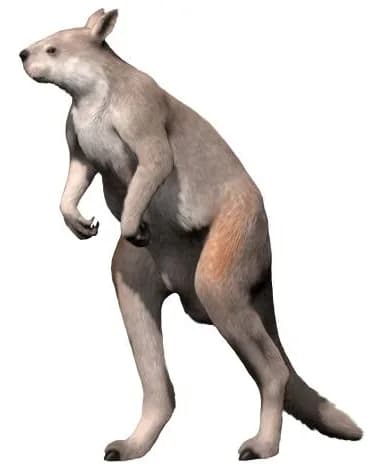
Diprotodon optatum restoration
Wikimedia Commons
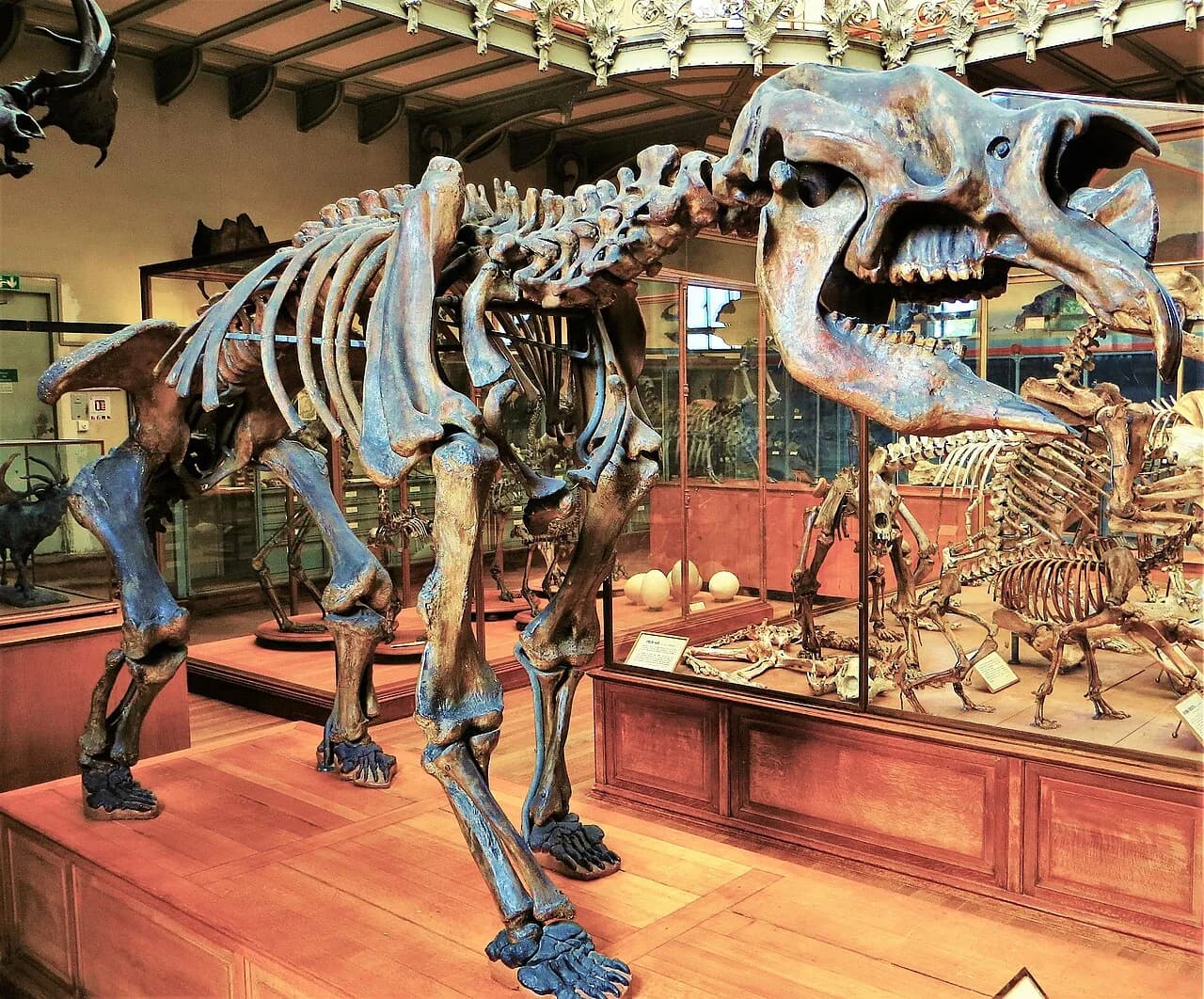
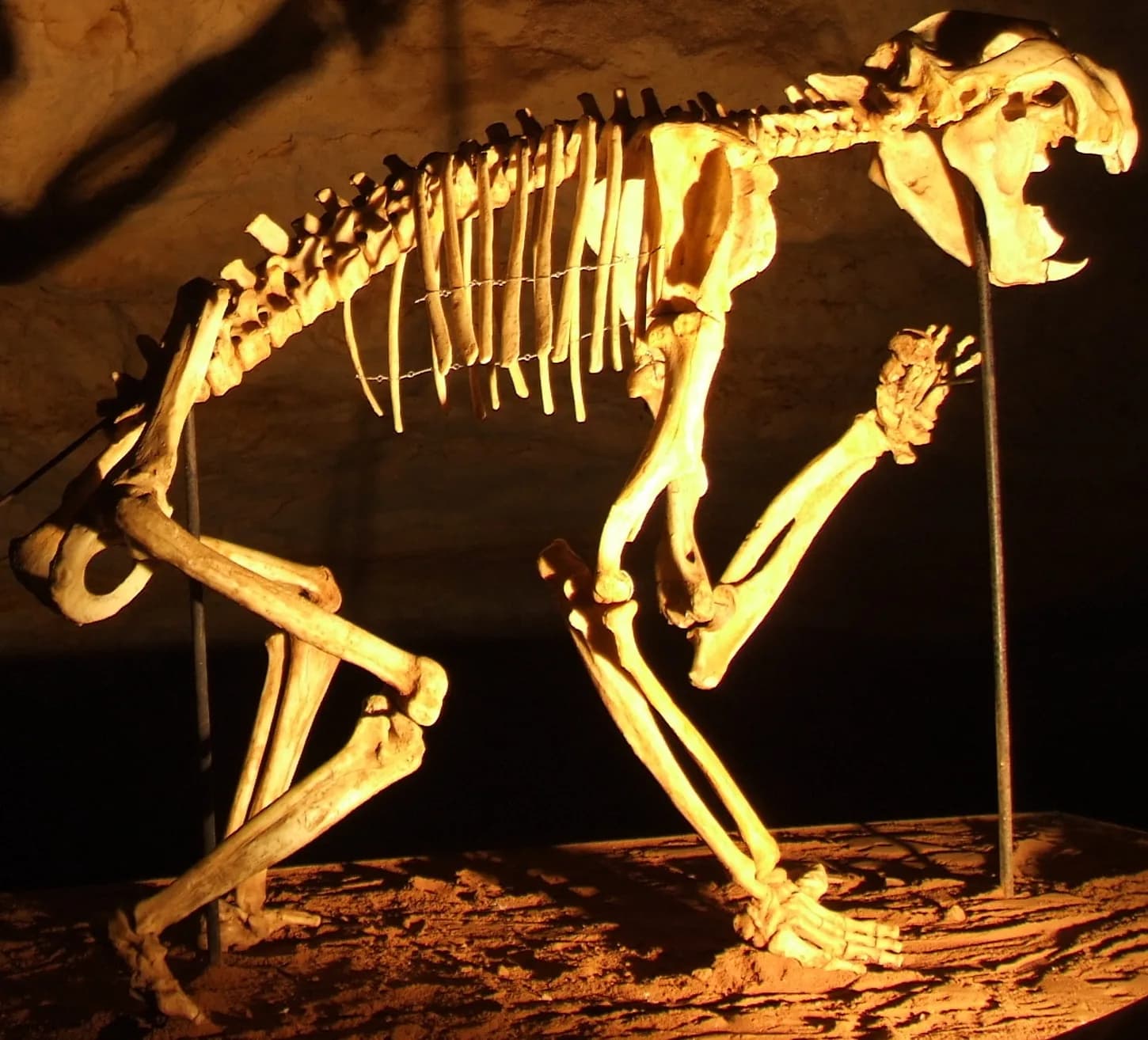
Diprotodon australis skeleton
Wikimedia Commons