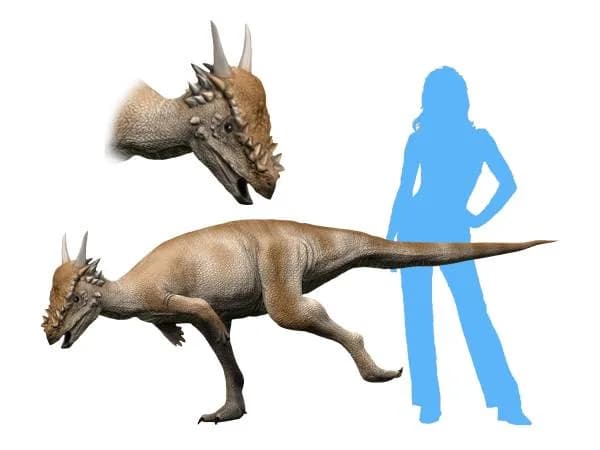
Stygiimoloch
Stygimoloch spinifer was a pachycephalosaur from the Hell Creek Formation, described in 1983 and dated to 66 million years ago. At 3 metres and 78 kilograms, its name means demon of the river Styx. A hypothesis put forward by Jack Horner in 2009 makes it a juvenile Pachycephalosaurus whose horns resorbed with age.
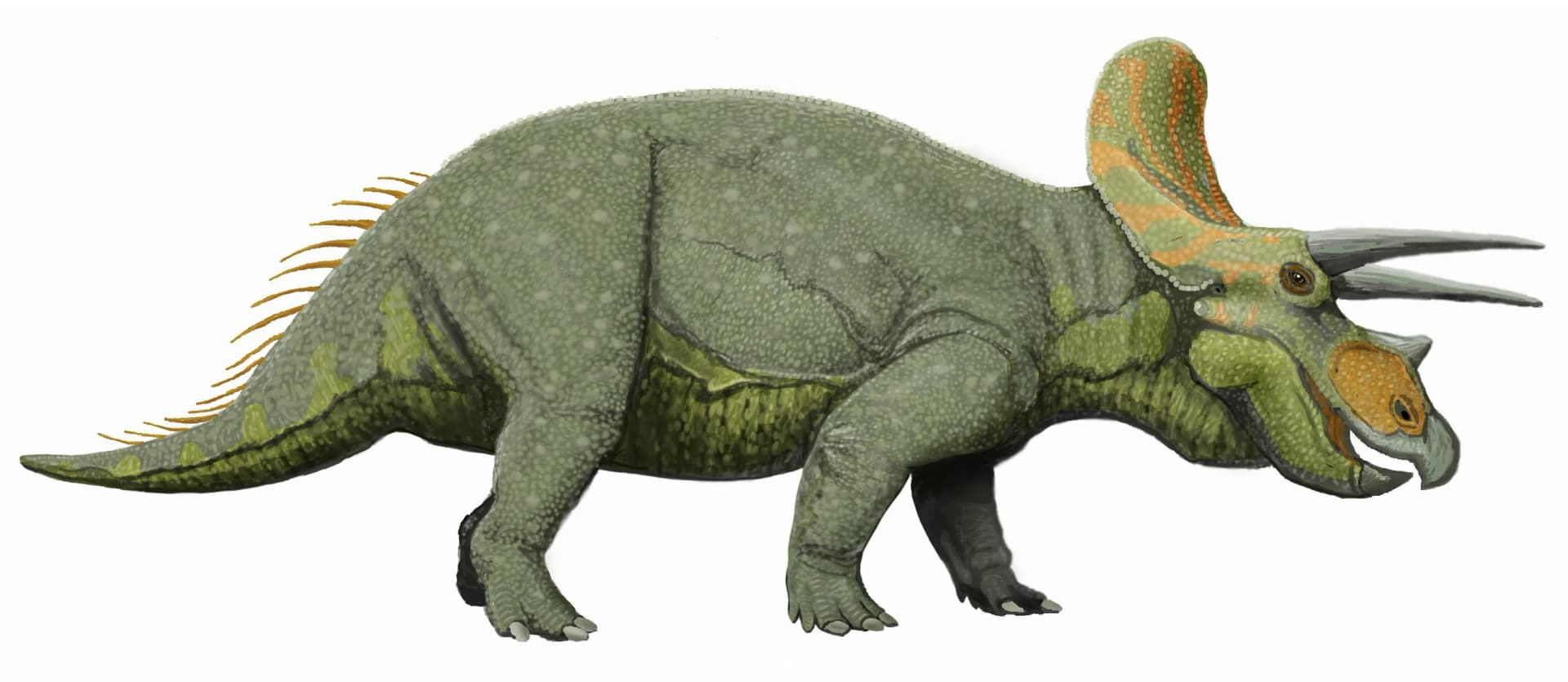
Stygimoloch lived at the very end of the Late Cretaceous period, approximately 66 million years ago, during the Maastrichtian stage. It belongs to the Hell Creek Formation, one of the most famous fossil-bearing deposits in the world, located in Montana and South Dakota. This period corresponds to the very last few million years before the massive Cretaceous-Paleogene extinction event, triggered by the Chicxulub asteroid impact. Stygimoloch shared its environment with giants such as Tyrannosaurus rex and Triceratops, as well as other pachycephalosaurs like Pachycephalosaurus. Its existence during this pivotal era makes it a direct witness to the last ecosystems dominated by non-avian dinosaurs on the North American continent.
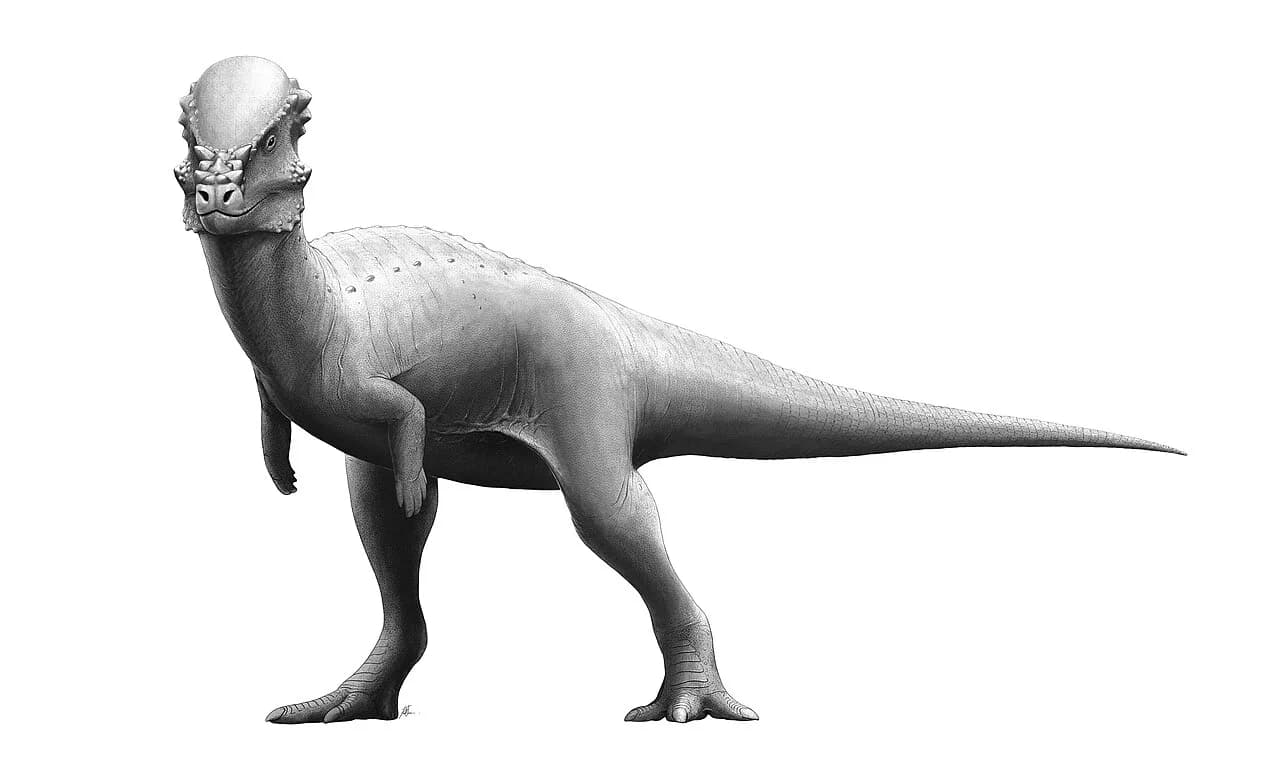
Stygimoloch was a medium-sized pachycephalosaur, measuring approximately 3 meters in length with an estimated weight of 78 kilograms. Strictly bipedal, it moved on its two powerful hind legs, while its considerably shorter forelimbs likely served for food manipulation or balance. Its silhouette was typical of pachycephalosaurs: a compact body mounted on long muscular hind legs, a rigid tail serving as a counterbalance, and a proportionally large head crowned with spectacular bony ornaments. Its modest size placed it between the smaller Stegoceras and the massive Pachycephalosaurus in the pachycephalosaurid hierarchy.
An herbivore, Stygimoloch primarily fed on low-growing vegetation across the floodplains of the Hell Creek Formation. Its diet likely included ferns, horsetails, primitive flowering plants (basal angiosperms), and tender shoots of conifers and cycads. Its horny beak at the front of the jaw allowed efficient cutting of stems and leaves, while its small triangular teeth ensured basic grinding before swallowing. The naturally low position of its head, combined with its bipedal locomotion, allowed it to graze at ground level while maintaining good vigilance against surrounding predators in the rich Late Cretaceous ecosystem.
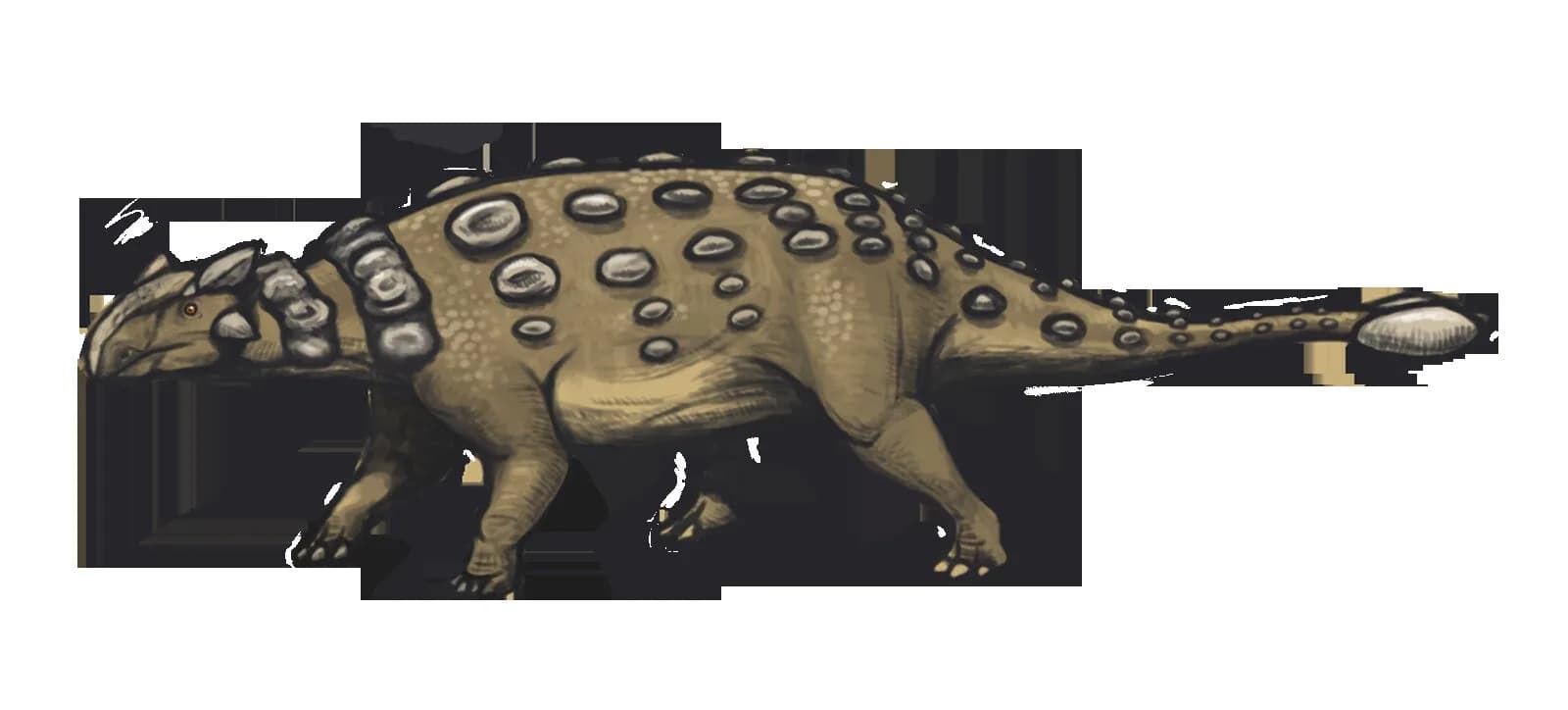
Stygimoloch inhabited the vast floodplains and riparian forests of western North America, primarily in the present-day regions of Montana and South Dakota. The Hell Creek Formation, where its fossils were discovered, represented a subtropical environment with marked seasons, traversed by wide meandering rivers bordered by forests of bald cypress, sequoias, and palms. The plains between waterways were covered with ferns and flowering plants. Stygimoloch coexisted with an exceptionally rich fauna: Tyrannosaurus rex at the top of the food chain, Triceratops, Edmontosaurus, Ankylosaurus, and Pachycephalosaurus among the herbivores.
The anatomy of Stygimoloch is dominated by its spectacular skull, adorned with a crown of remarkable bony horns and spines. Unlike Pachycephalosaurus whose cranial dome was massive and rounded, that of Stygimoloch was smaller and flatter, but compensated by an impressive array of elongated horns pointing backward and to the sides of the skull. The longest squamosal spines could reach several centimeters in length, giving the animal a particularly intimidating appearance. The rest of the skeleton followed the typical pachycephalosaurid body plan: reinforced dorsal vertebrae to absorb impacts, a wide pelvis, robust hind legs, and a tail stiffened by ossified tendons.
The behavior of Stygimoloch is the subject of passionate debates among paleontologists. The central question concerns the use of its ornamented skull: was it used for head-to-head combat like modern rams, or rather for visual display in sexual selection and species recognition? Recent biomechanical studies suggest that the relatively small cranial dome of Stygimoloch was less suited to frontal impacts than that of Pachycephalosaurus, favoring the hypothesis of a primarily ostentatious role. The lateral spines and horns would have served as visual signals during courtship displays or hierarchical confrontations, similar to the antlers of modern cervids.
Stygimoloch was named and described in 1983 by paleontologists Peter Galton and Hans-Dieter Sues, based on cranial fragments discovered in the Hell Creek Formation of Montana. Its name, meaning 'demon of the River Styx,' references the river of the Underworld in Greek mythology and Moloch, a Canaanite deity associated with sacrifice. Since 2009, the taxonomic validity of Stygimoloch has been hotly contested following Jack Horner and Mark Goodwin's hypothesis proposing that Stygimoloch and Dracorex are actually juvenile stages of Pachycephalosaurus. According to this theory, the spectacular horns of Stygimoloch would have gradually resorbed with maturity to form the smooth dome characteristic of adult Pachycephalosaurus.
| Period | Crétacé supérieur / Late Cretaceous |
| Era | Mésozoïque / Mesozoic |
| Age | 66 Ma |
| Location | Formation Hell Creek, Montana et Wyoming / Hell Creek Formation, Montana and Wyoming |
| Length | 3 m |
| Weight | 78 kg |
| Diet | Herbivore |
| Discovery | 1983 |
The question remains open. In 2009, Jack Horner and Mark Goodwin proposed that Stygimoloch spinifer and Dracorex were juvenile stages of Pachycephalosaurus wyomingensis — the spectacular horns being resorbed with age to form the smooth adult dome. Other researchers maintain it is a valid, distinct species. The taxonomic debate remains active among pachycephalosaurid specialists.
Recent biomechanical studies suggest the relatively small cranial dome of Stygimoloch spinifer was less suited to head-on combat than that of Pachycephalosaurus. The long squamosal spines — reaching several centimeters — likely served as visual signals during courtship displays and dominance contests, comparable to the antlers of modern cervids, rather than as direct percussion weapons.
Stygimoloch spinifer measured approximately 3 meters in length with an estimated weight of 78 kilograms. It lived around 66 million years ago during the Maastrichtian (Late Cretaceous) in the Hell Creek Formation of Montana and South Dakota. It is one of the last non-avian dinosaurs, contemporary with Tyrannosaurus rex and Triceratops on the North American plains.
Stygimoloch spinifer illustration
Nobu Tamura, Wikimedia Commons
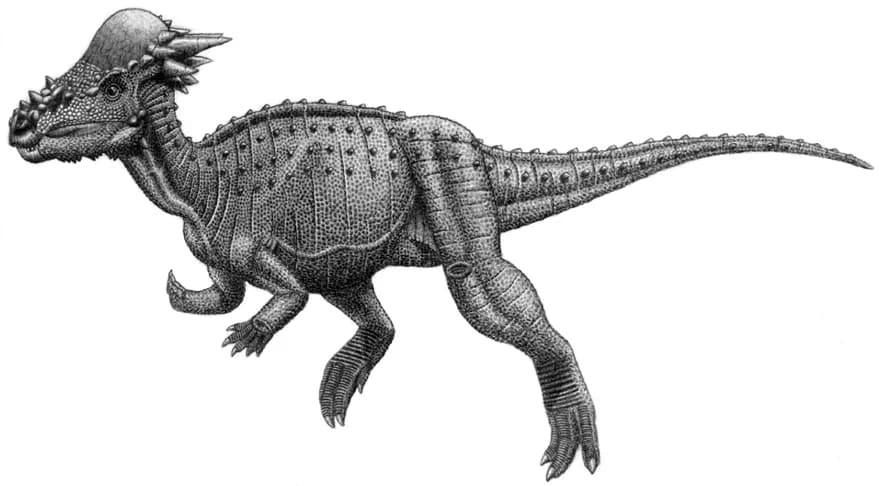
Compared pachycephalosaur skulls
Wikimedia Commons