Stupendemys
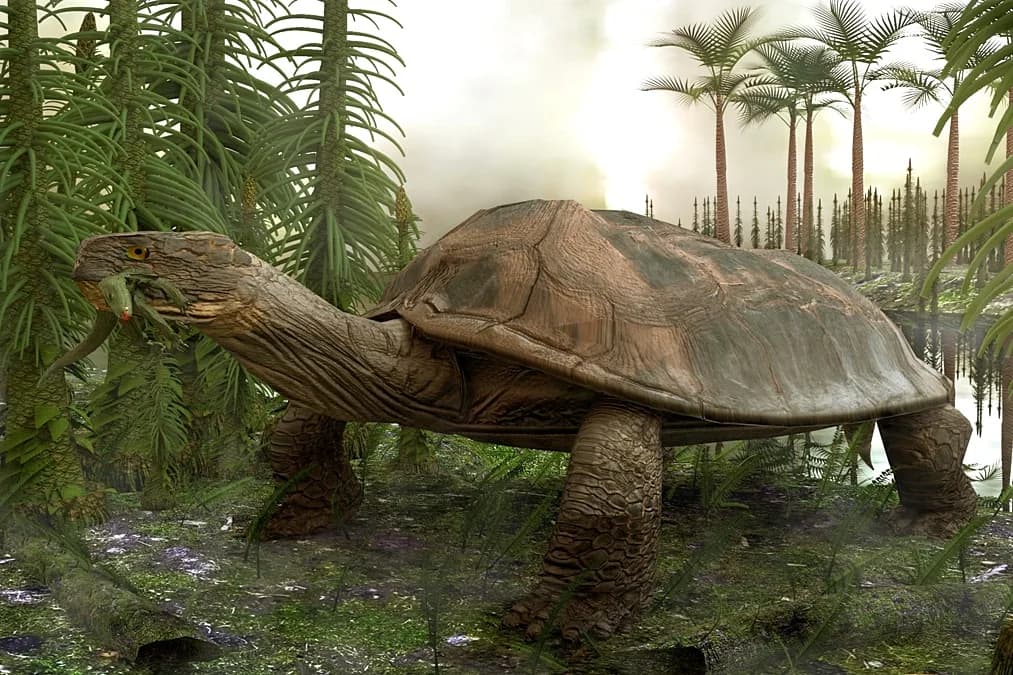
Stupendemys geographicus is the largest freshwater turtle that ever lived: a 2.4-metre shell and around 1.1 tonnes, the footprint of a small city car. Described in 1972, it lived 12 to 5 million years ago in Venezuela, Colombia and Brazil. Males carried lateral horns on the shell, absent in females.
Stupendemys geographicus lived during the Late Miocene, approximately 12 to 5 million years ago, in the vast tropical wetlands of South America. During this period, the northern part of the South American continent was dominated by an immense system of interconnected lakes and rivers known as the Pebas-Acre system, which extended across thousands of kilometers through present-day Venezuela, Colombia, and Brazil. This giant hydrographic network hosted a spectacular freshwater fauna, including giant caimans, titanic catfish, and rodents the size of bison. Stupendemys was the largest freshwater turtle in this remarkable ecosystem, a true giant among chelonians. Its extinction coincided with the gradual drying up of these giant lakes and the formation of the modern Amazon basin as we know it today.
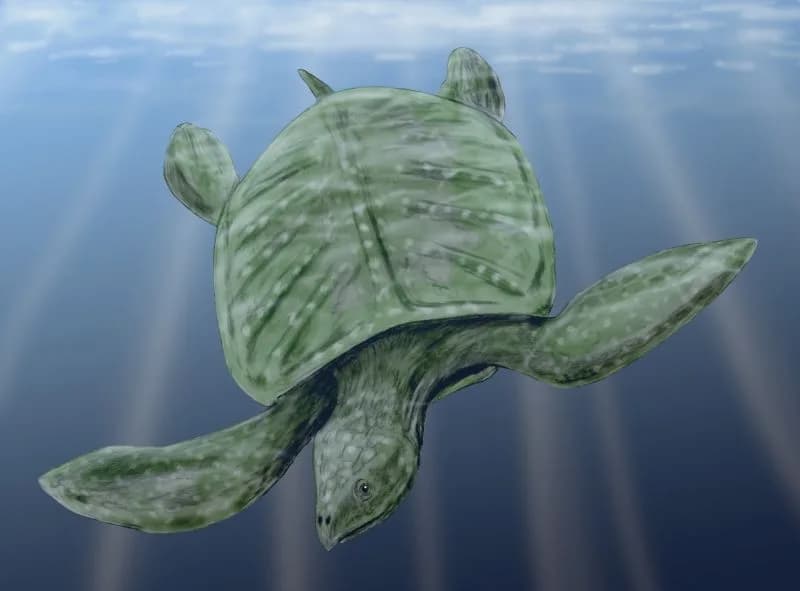
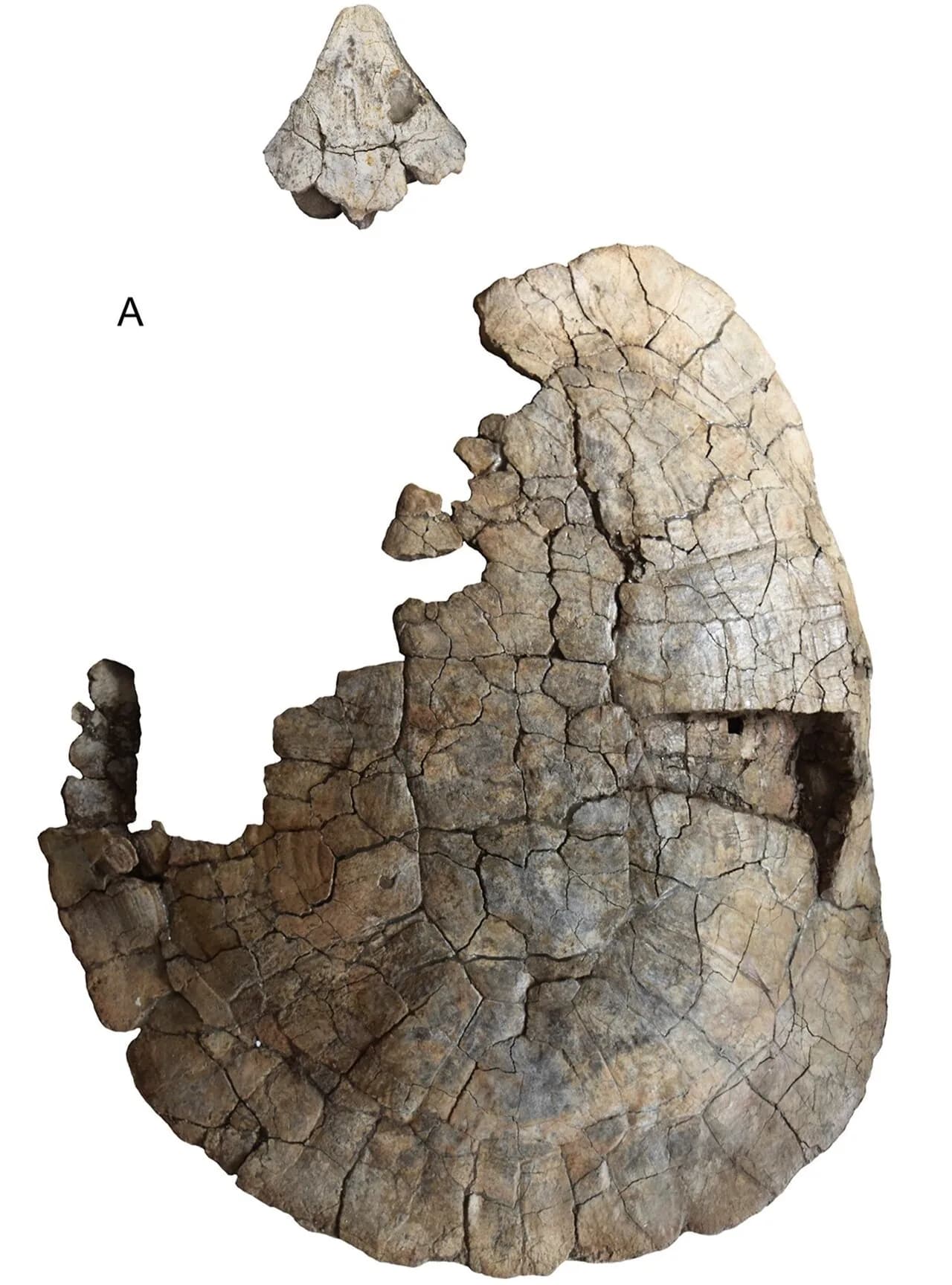
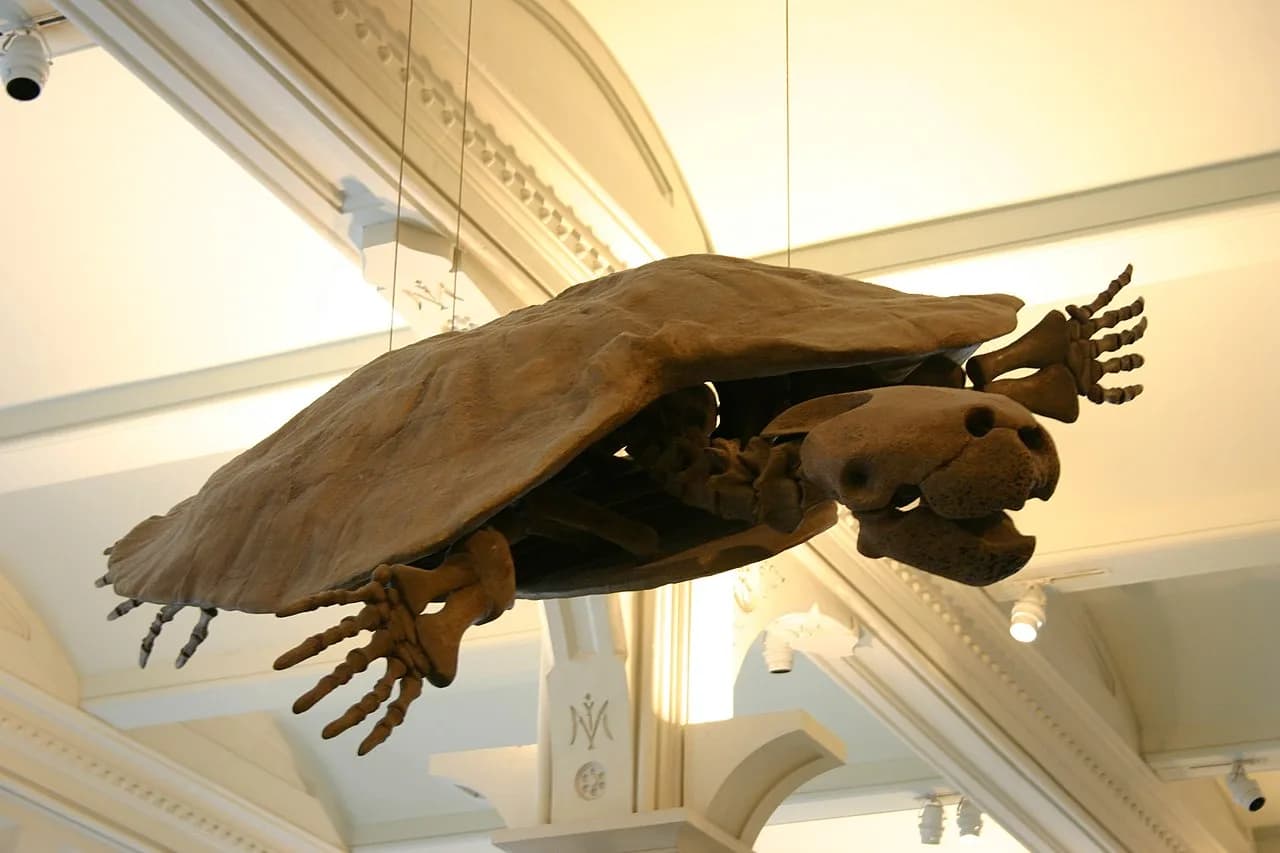
Stupendemys geographicus holds the absolute record as the largest freshwater turtle that ever existed on Earth. Its shell reached an astonishing length of 2.4 meters, approximately the size of a small city car. Its weight is estimated at roughly 1,145 kilograms, making it a truly colossal animal for a freshwater turtle. To put this size in perspective, the largest living freshwater turtle today, the Yangtze giant softshell turtle, weighs only about 100 kilograms, nearly ten times less than Stupendemys. Only Archelon, a marine turtle from the Cretaceous period, exceeded Stupendemys in overall size, but that was a marine animal rather than a freshwater species. The massive shell of Stupendemys provided considerable protection against predators, even the most imposing ones in its environment, though evidence suggests even this armor was not always sufficient against the largest caimans.
Stupendemys was a herbivore that fed primarily on aquatic plants, fallen fruits, and abundant riverside vegetation in the tropical lakes and rivers of Miocene South America. Its broad, powerful horny beak was perfectly adapted for crushing fibrous and tough plant material typically found in tropical swampy environments. Modern pleurodire turtles related to Stupendemys, such as the extant podocnemidid turtles of the Amazon basin, are also opportunistic herbivores that consume fruits, seeds, and aquatic leaves floating on the water surface. It is likely that Stupendemys played a major ecological role in seed dispersal across the vast network of interconnected lakes and rivers, helping to maintain plant diversity across this enormous wetland system. Its large size allowed it to consume substantial quantities of vegetation daily, thereby contributing significantly to nutrient cycling within its aquatic ecosystem.
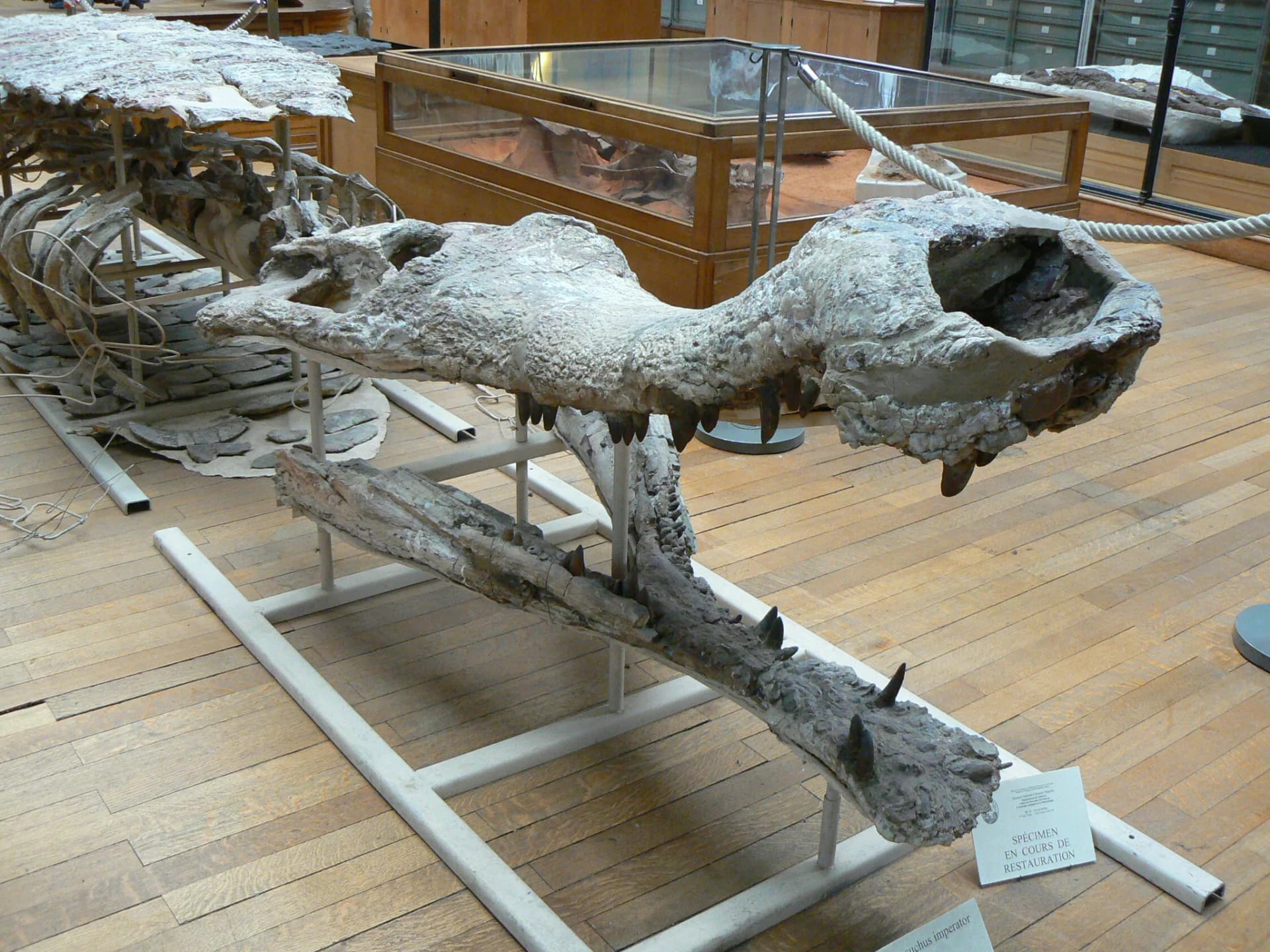
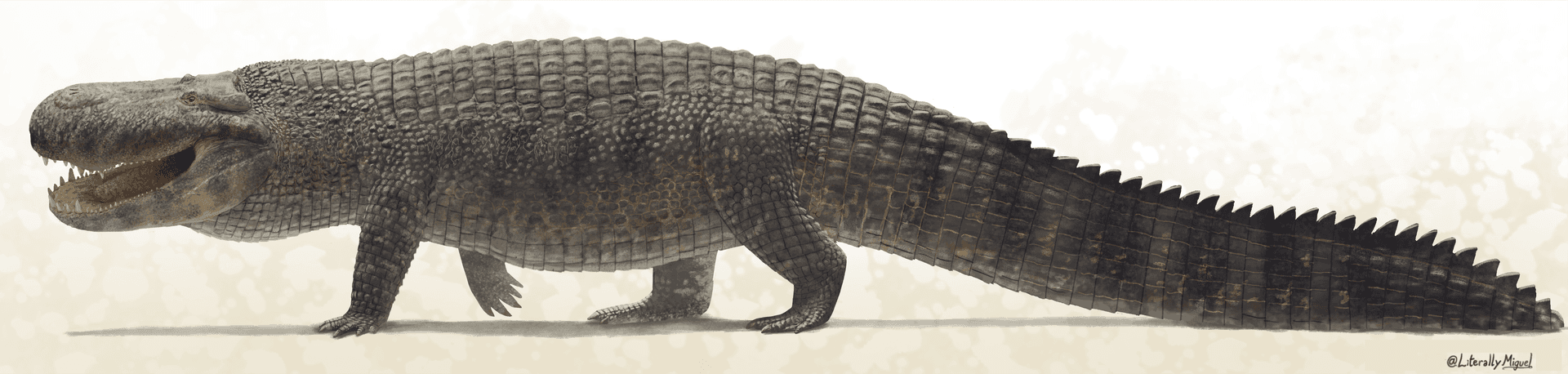
Stupendemys inhabited the immense freshwater lakes and slow-flowing rivers of northern South America during the Late Miocene epoch. The Pebas lake system, which covered an area comparable in size to the Mediterranean Sea, constituted its primary habitat and home range. This gigantic tropical hydrographic network extended across the present-day territories of Venezuela, Colombia, and Brazil, offering a warm, humid environment rich in aquatic vegetation year-round. The waters were shallow in many places, with extensive marshes, seasonal floodplains, and lush riverside forests that provided an abundance of plant food for large herbivores. This unique and extraordinarily productive ecosystem also harbored an impressive megafauna including Purussaurus, a giant caiman measuring over 10 meters in length, which was likely the primary predator of adult Stupendemys despite the turtle's imposing size and heavily armored shell.
The anatomy of Stupendemys is remarkable in several important respects that set it apart from all other known turtles. Its colossal shell measuring 2.4 meters in length is the largest ever documented for any freshwater turtle species in the entire fossil record. Stupendemys was a pleurodire turtle, meaning it retracted its neck sideways rather than vertically like the more familiar cryptodire turtles commonly kept as pets. The most spectacular anatomical discovery was revealed in a landmark 2020 study: males possessed massive lateral horns on the anterior portion of the shell, a feature absolutely unique among all known turtles, living or extinct, across the entire evolutionary history of the group. These pointed bony outgrowths, located on each side of the front edge of the carapace, likely served as weapons used during male-to-male combat for access to females during the breeding season. This skeletal sexual dimorphism is unprecedented among chelonians and testifies to a complex behavioral biology.
The behavior of Stupendemys can be reconstructed through analogy with its closest living relatives, the large podocnemidid turtles of the modern Amazon basin, and through exceptional morphological clues preserved in the fossil record. The horns present exclusively on male shells clearly indicate ritualized intraspecific combat for access to breeding females, similar to the jousting contests observed in giant Galápagos tortoises on land today. Males would have confronted each other by pushing and using their prominent shell horns as levers to overturn or forcefully repel their rivals during the mating season. Stupendemys lived in vast tropical wetlands and likely traveled considerable distances between interconnected lakes and rivers, possibly undertaking seasonal migrations linked to annual flooding cycles and water level fluctuations. Bite marks found on several fossilized shells confirm that Stupendemys was regularly attacked and preyed upon by giant caimans such as the fearsome Purussaurus, which measured over 10 meters in total length.
The first fossils of Stupendemys were discovered in Venezuela during the 1970s and the species was officially described in 1976 by paleontologist Roger Wood in a landmark publication. The generic name Stupendemys literally means 'stupendous turtle,' referencing the extraordinary size of the animal that astonished researchers, while the specific epithet geographicus honors the National Geographic Society that funded the collection expeditions. For several decades, only fragmentary shell pieces and isolated bones were known, leaving many fundamental questions unanswered about the complete morphology and biology of this enigmatic giant. The major breakthrough came in 2020 with the publication of a revolutionary study describing remarkably complete new specimens discovered in Venezuela and Colombia by an international research team. These exceptional fossils revealed for the very first time the existence of combat horns on the shells of male individuals, an absolutely unexpected discovery that fundamentally transformed our understanding of this animal's biology and behavior. The fossils are primarily housed in the collections of Venezuelan and Colombian universities.
| Period | Miocène supérieur / Late Miocene |
| Era | Cénozoïque / Cenozoic |
| Age | 12-5 Ma |
| Location | Venezuela, Colombie, Brésil / Venezuela, Colombia, Brazil |
| Length | 3 m |
| Height | ~1.2 m (carapace / shell) |
| Weight | ~1.1 tonnes |
| Diet | Herbivore |
| Discovery | 1972 |
Yes. Stupendemys geographicus holds the absolute record as the largest known freshwater turtle. Its shell reached 2.4 meters in length and its weight is estimated at around 1,145 kilograms. The largest living freshwater turtle, the Yangtze giant softshell, does not exceed 100 kg — ten times less. Only Archelon, a Cretaceous marine turtle, surpasses Stupendemys in size, but it was a sea species.
Revealed in 2020 by an international study, the lateral horns on male Stupendemys geographicus shells likely functioned during intraspecific combat for access to females. Males would confront rivals using these bony outgrowths as levers to push and repel opponents — a sexual dimorphism unique among all known turtles, living or extinct. Bite marks from Purussaurus (a 10-m caiman) have also been found on fossilized shells.
Stupendemys geographicus inhabited the Pebas lake system, a network of interconnected lakes and rivers covering an area comparable to the Mediterranean Sea, across present-day Venezuela, Colombia, and Brazil. These shallow tropical Late Miocene waters also housed Purussaurus, a caiman exceeding 10 meters, the largest aquatic predator in this extraordinary South American Cenozoic ecosystem.
Stupendemys geographicus restoration
Wikimedia Commons
Stupendemys geographicus fossil
Wikimedia Commons