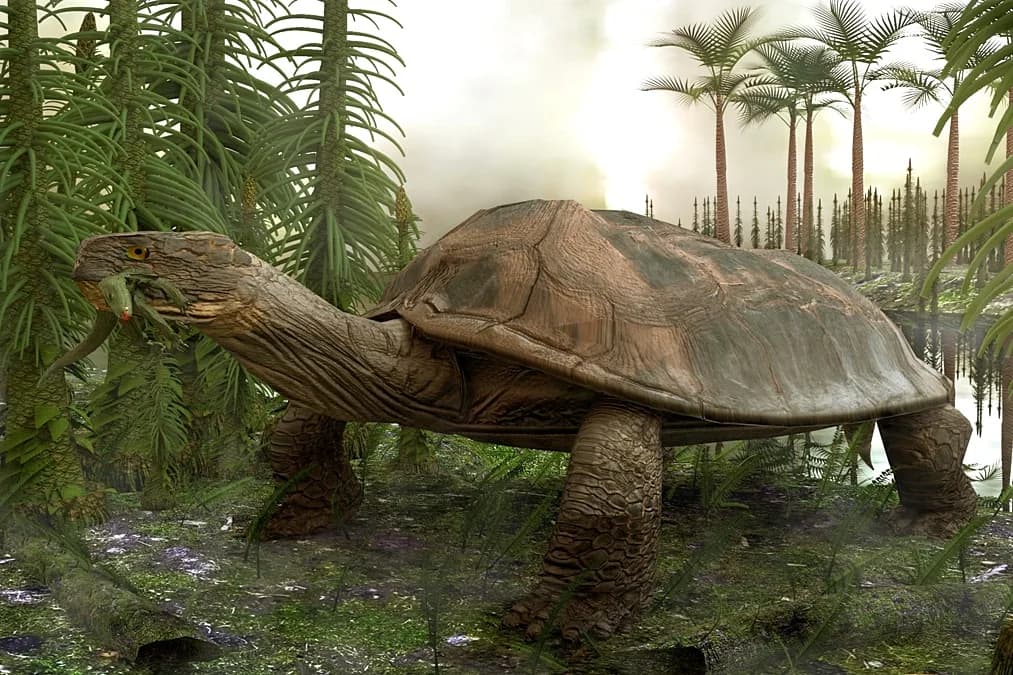
Carbonemys
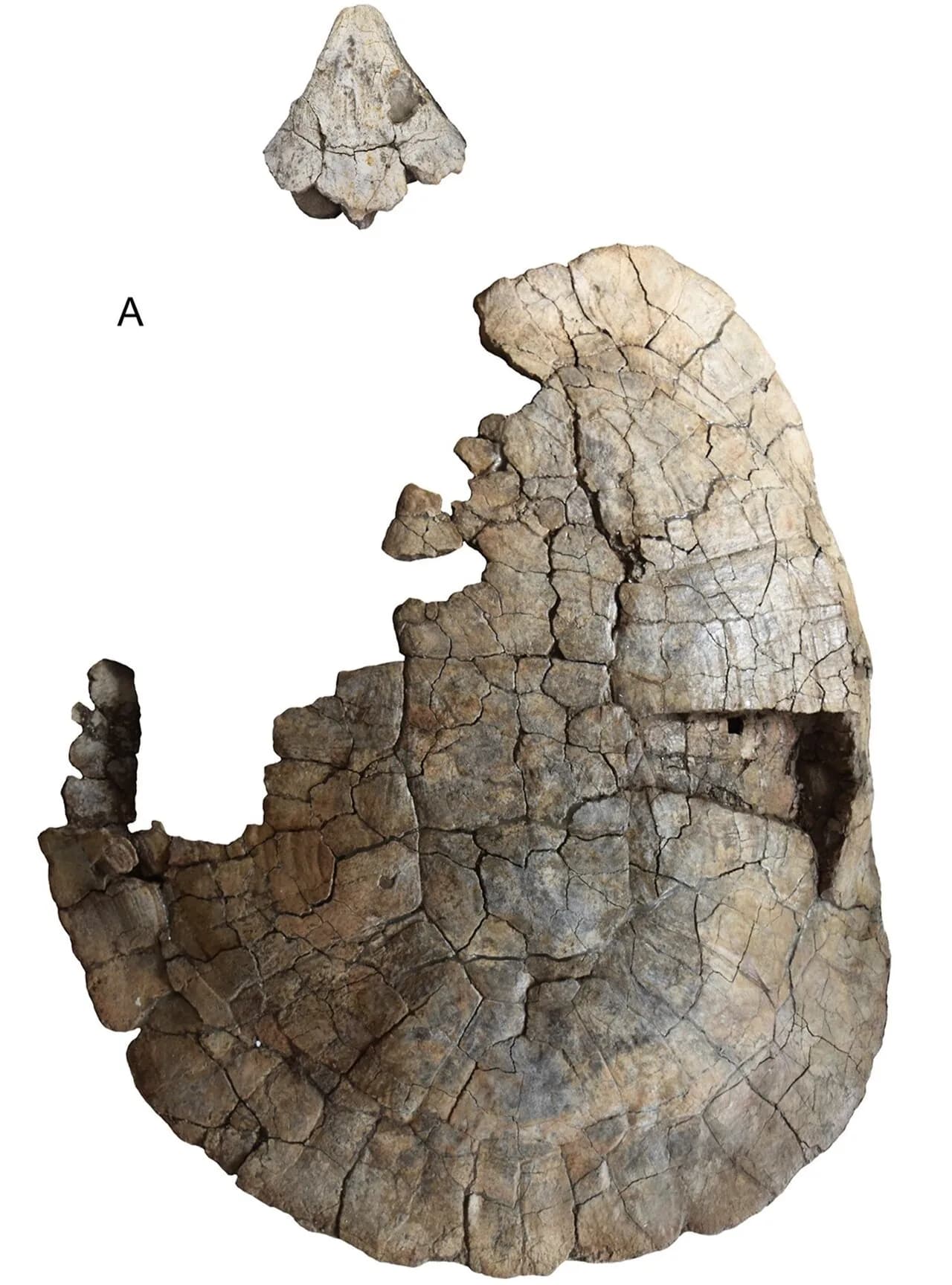
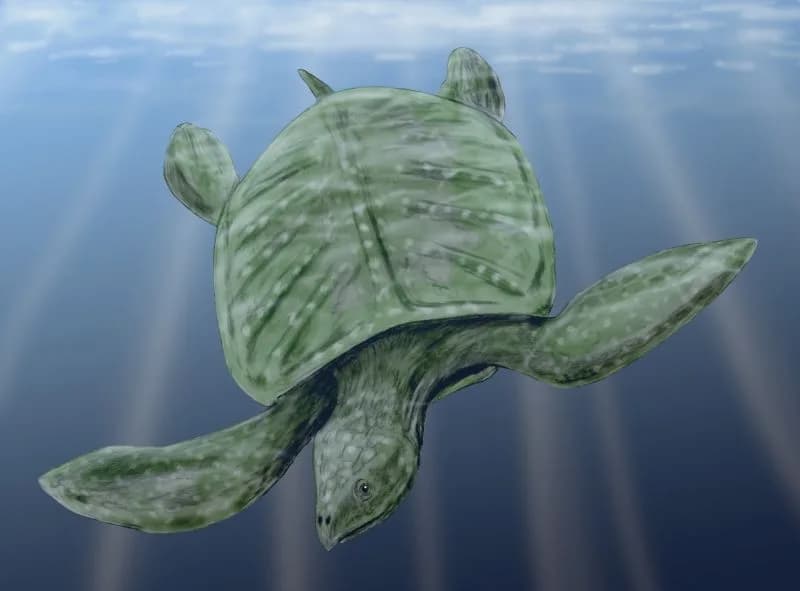
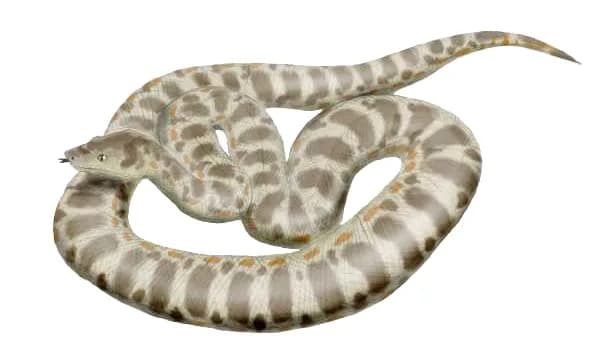
Carbonemys cofrinii was a giant turtle from Colombia, described in 2005 from fossils at the Cerrejón coal mine and dated to 60 million years ago. Its shell reached 1.72 metres and it weighed 200 to 500 kilograms. It shared its swamp with Titanoboa, the largest snake that ever lived.
Carbonemys cofrinii lived during the Paleocene epoch, approximately 60 million years ago, in the tropical rainforests of what is now Colombia in South America. This period followed shortly after the devastating Cretaceous-Paleogene (K-Pg) mass extinction event that wiped out the non-avian dinosaurs some 66 million years ago. The Paleocene was an era of extraordinary biological renewal during which ecological niches left vacant by the dinosaurs were progressively filled by new groups of animals, most notably mammals and certain reptiles that achieved colossal sizes never seen before. The Cerrejón fauna, of which Carbonemys is a prominent member, represents one of the best-documented tropical ecosystems of the entire Paleocene epoch. Global average temperatures were considerably higher than today, promoting the development of dense rainforests and the growth of giant ectothermic reptiles.
Carbonemys cofrinii possessed a shell measuring approximately 1.72 meters in length, making it one of the largest freshwater turtles that ever existed on Earth. To put this remarkable size into perspective, its shell alone was longer than a standard single bed and roughly the size of a small car door. Its total weight is estimated at several hundred kilograms, possibly between 200 and 500 kg depending on the reconstruction method used. Its size rivaled that of certain living sea turtles, but Carbonemys lived exclusively in freshwater environments, inhabiting the rivers and tropical swamps of Paleocene Colombia. This gigantic size is a classic example of Paleocene gigantism, a widespread phenomenon observed across numerous animal groups following the extinction of the dinosaurs, when the ecological constraints previously imposed by large Mesozoic predators had vanished entirely.
Carbonemys was an omnivore equipped with extremely powerful jaws capable of exerting considerable bite force that far exceeded that of any modern freshwater turtle. Paleontologists estimate that its massive jaws were strong enough to crush the shells of other smaller turtles, making it a formidable predator within its freshwater ecosystem. Its diet likely included mollusks, crustaceans, fish of various sizes, aquatic plants, and potentially even small crocodilians that shared its waterways. The remarkable power of its jaws suggests a durophagous feeding strategy — that is, one specialized in crushing hard-shelled food items such as shellfish and turtle carapaces. Some researchers have even proposed that it could prey upon juvenile crocodilians, thus reversing the typical predator-prey relationship normally observed between turtles and crocodiles in modern ecosystems.
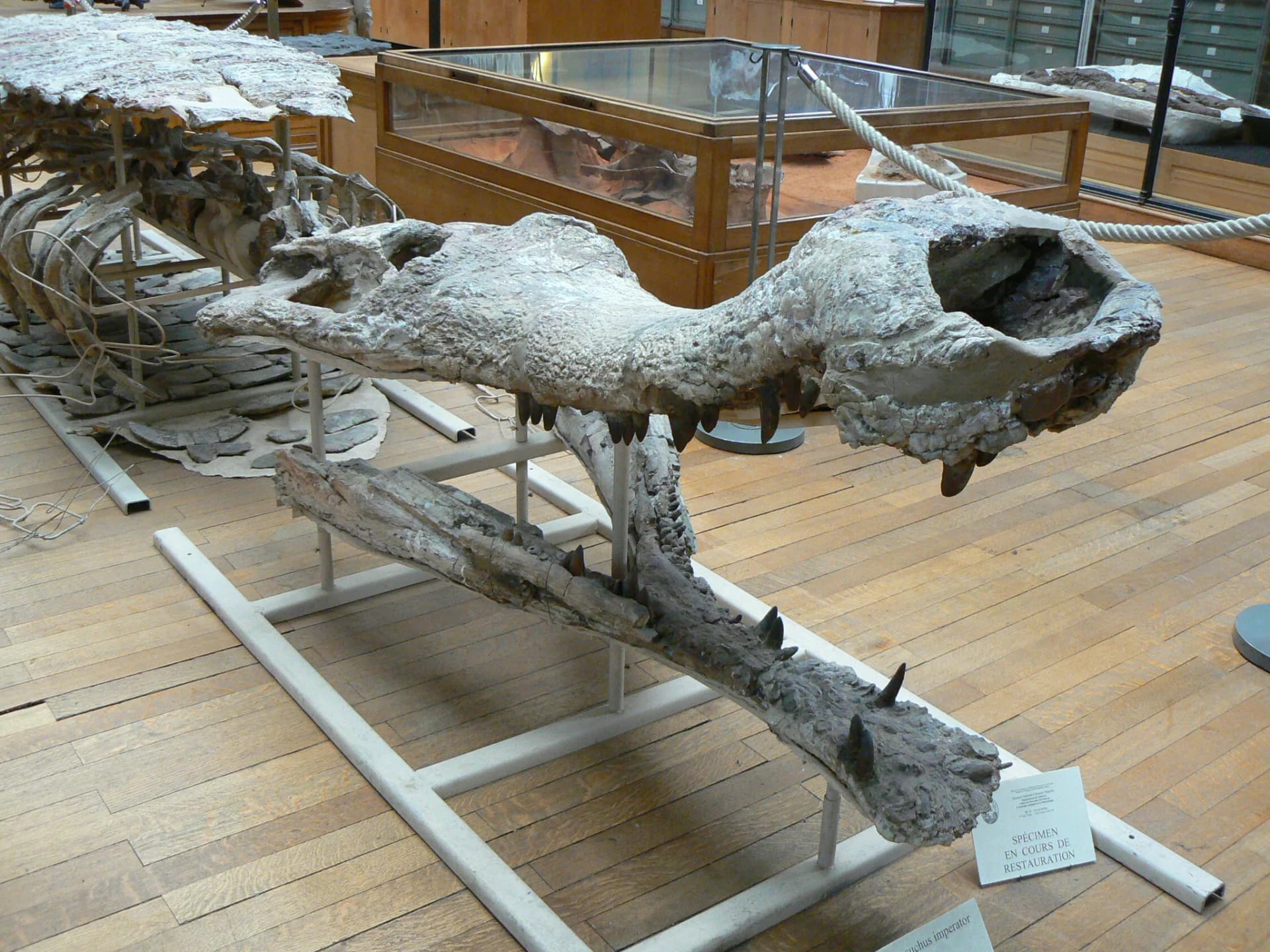
Carbonemys inhabited the hot, humid tropical rainforests of Paleocene Colombia, an environment that was even warmer and denser than today's Amazon rainforest. Its primary habitat was the Cerrejón geological formation, located in what is now the northern department of La Guajira in Colombia, a region that was at the time covered by vast swamps, meandering rivers, and shallow lakes bordered by lush tropical vegetation. Average annual temperatures likely exceeded 30 degrees Celsius throughout the year, creating ideal conditions for giant ectothermic reptiles to thrive and reach unprecedented sizes. Carbonemys shared this remarkable ecosystem with other notable giants, including the legendary Titanoboa cerrejonensis — the largest snake ever known to have existed — as well as large crocodilians, giant lungfish, and diverse tropical flora that formed a complex and productive food web.
Carbonemys cofrinii was a pleurodire turtle, meaning it retracted its neck sideways beneath its shell rather than pulling it straight back vertically like the more familiar cryptodire turtles that dominate today. Its massive shell, measuring 1.72 meters in length, provided virtually impenetrable protection against most predators of its era, functioning as a nearly indestructible fortress of bone and keratin. Its jaws, toothless as in all turtles both living and extinct, were covered by an extremely robust horny beak capable of exerting tremendous crushing pressure on hard-shelled prey items. Its cranial morphology reveals highly developed mandibular adductor muscles, confirming its formidable capacity to crush hard-shelled prey such as other turtles and mollusks. Its legs were likely webbed and powerful, well-adapted for swimming in freshwater while retaining the ability to move effectively on land for nesting and overland travel between water bodies.
As one of the largest freshwater predators in its ecosystem, Carbonemys occupied a position as a dominant apex predator in the rivers and swamps of Paleocene Colombia, sharing that role with crocodilians and the enormous Titanoboa. Its imposing size and massive shell rendered it virtually invulnerable to attacks from most other predators in its environment, with the possible exception of the gigantic Titanoboa cerrejonensis, which also inhabited the same waterways and could potentially overpower even large-shelled prey. Researchers suggest that Carbonemys spent much of its time submerged in the warm waters of rivers and swamps, emerging only to lay its eggs on riverbanks or to travel overland between different bodies of water during seasonal changes. Like large modern freshwater turtles such as alligator snapping turtles, it was probably a solitary and territorial animal that actively defended its hunting territory against conspecifics.
Carbonemys cofrinii was discovered in 2005 in the open-pit Cerrejón coal mine, located in the department of La Guajira in northern Colombia. This mine, one of the largest open-pit coal mines in the entire world, has become a paleontological site of global renown thanks to its exceptional and remarkably well-preserved Paleocene fossils. The holotype specimen, a remarkably well-preserved skull that allowed detailed anatomical study, was formally described and named in 2012 by paleontologists Edwin Cadena and Jonathan Bloch in a landmark paper published in the Journal of Systematic Palaeontology. The species name cofrinii honors David Cofrin, a philanthropist who generously supported paleontological research in the region. The Cerrejón site is also world-famous for yielding the fossils of Titanoboa cerrejonensis in 2009, conclusively demonstrating the extraordinary richness and scientific importance of this Paleocene tropical ecosystem.
| Period | Paléocène / Paleocene |
| Era | Cénozoïque / Cenozoic |
| Age | 60 Ma |
| Location | Mine de charbon Cerrejón, Colombie / Cerrejón coal mine, Colombia |
| Length | 1.7 m |
| Height | ~0.8 m (carapace / shell) |
| Weight | 200-500 kg |
| Diet | Omnivore |
| Discovery | 2005 |
Carbonemys cofrinii had a shell measuring 1.72 meters in length, comparable in size to a car door. Its weight is estimated between 200 and 500 kg. This giant freshwater turtle lived during the Paleocene, approximately 60 million years ago, in what is now Colombia, in the tropical forests of the Cerrejón Formation, discovered in 2005 in an open-pit coal mine.
Carbonemys was omnivorous, equipped with extremely powerful jaws capable of crushing the shells of smaller turtles, mollusks, and crustaceans. Its toothless horny beak, reinforced by highly developed mandibular adductor muscles, even allowed it to prey upon juvenile crocodilians. Its durophagous strategy, specialized in crushing hard food items, made it dominant in Paleocene rivers and swamps.
Carbonemys cofrinii shared its Paleocene Colombian ecosystem with Titanoboa cerrejonensis, the largest snake ever known at 13 meters, along with giant crocodilians and lungfish. This exceptional fauna from Colombia's Cerrejón mine testifies to widespread gigantism among ectothermic reptiles under Paleocene tropical conditions exceeding 30°C.
Carbonemys cofrinii, a giant Paleocene turtle
Wikimedia Commons
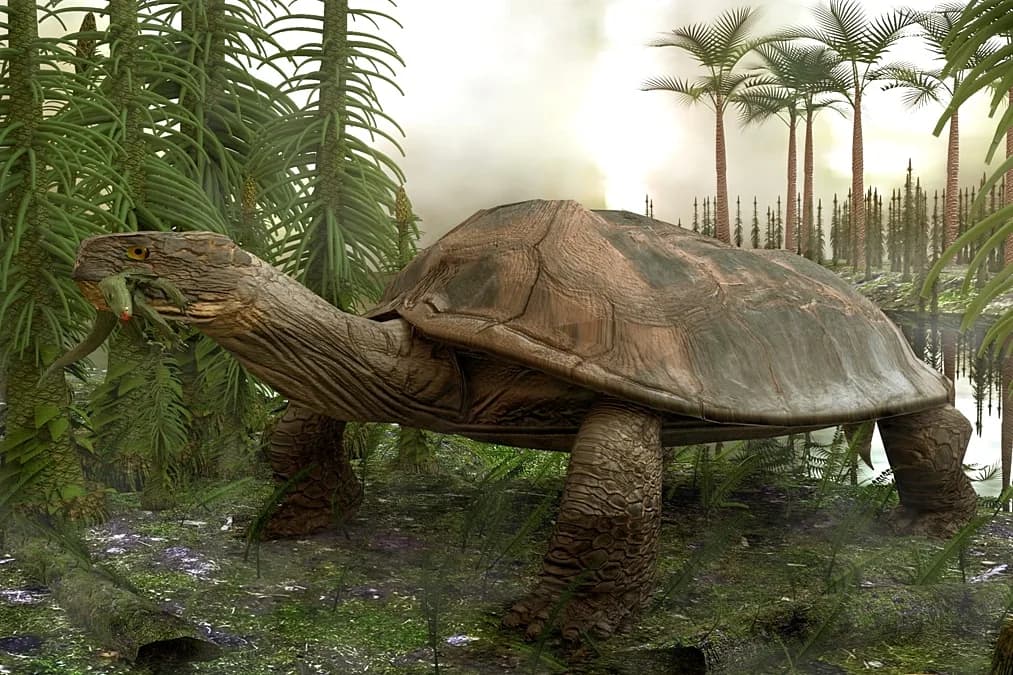
Carbonemys cofrinii, a colossal freshwater turtle from Colombia
Wikimedia Commons