Archelon
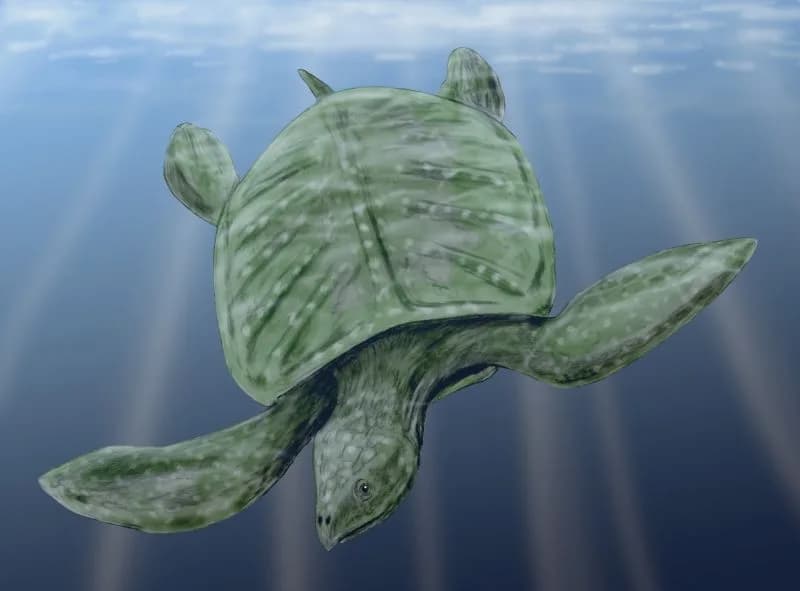
Archelon ischyros is the largest turtle ever found: 4.6 metres long and around 2.2 tonnes, the weight of a compact car. Discovered in 1895 in South Dakota and Wyoming, it swam the Cretaceous inland sea between 75 and 66 million years ago. Its shell was not hard but covered in leathery skin, like today's leatherback turtle.
Archelon lived during the Late Cretaceous, approximately 75 to 66 million years ago (Campanian to Maastrichtian), in the warm waters of the Western Interior Seaway that divided North America into two distinct landmasses. This shallow, nutrient-rich sea teeming with marine life stretched from the present-day Gulf of Mexico to the Arctic Ocean, creating an ideal aquatic corridor for large marine reptiles and other megafauna. Archelon ischyros is the largest sea turtle that has ever existed, far surpassing all living species in both size and weight. This giant belonged to the family Protostegidae, a now entirely extinct group of marine turtles distinguished by their reduced shells and powerful flippers adapted for open ocean swimming. The extinction of Archelon coincided with the catastrophic Chicxulub impact event 66 million years ago, which annihilated non-avian dinosaurs and most of the great marine reptiles of the Mesozoic era.
Archelon ischyros is unquestionably the largest sea turtle of all time, a record that has stood unchallenged since its discovery. The most imposing specimens measured up to 4.6 meters long from beak to tail, with a flipper span that could reach an extraordinary 5 meters from tip to tip. Its estimated weight approached 2,200 kilograms, more than double the mass of the largest living sea turtle, the leatherback (Dermochelys coriacea), which rarely exceeds 900 kilograms. To put this into perspective, Archelon weighed as much as a compact car, and its shell alone measured approximately 2 meters across at its widest point. Its massive head, armed with a powerful horny beak entirely devoid of teeth, measured roughly 50 centimeters in length and housed powerful jaw muscles for crushing prey. Its front flippers, proportionally longer than those of modern sea turtles, gave it considerable swimming power in the currents of the Western Interior Seaway.
Archelon was an opportunistic omnivore whose diet primarily consisted of jellyfish, squid, shelled mollusks, and various soft-bodied marine organisms found abundantly in the Western Interior Seaway. Its powerful horny beak, toothless as in all turtles, was perfectly adapted for crushing mollusk shells and grasping slippery prey such as jellyfish and cephalopods with remarkable efficiency. The shape of its beak, broad and robust with sharp cutting edges, suggests an ability to exploit a wide variety of food resources depending on seasonal availability and local abundance. Comparative studies with modern sea turtles, particularly the leatherback which feeds almost exclusively on jellyfish, indicate that Archelon could consume enormous quantities of gelatinous cnidarians to maintain its considerable body mass and sustain its metabolic needs. It likely supplemented this diet with marine algae and aquatic vegetation, as some modern sea turtles do today during certain seasons.
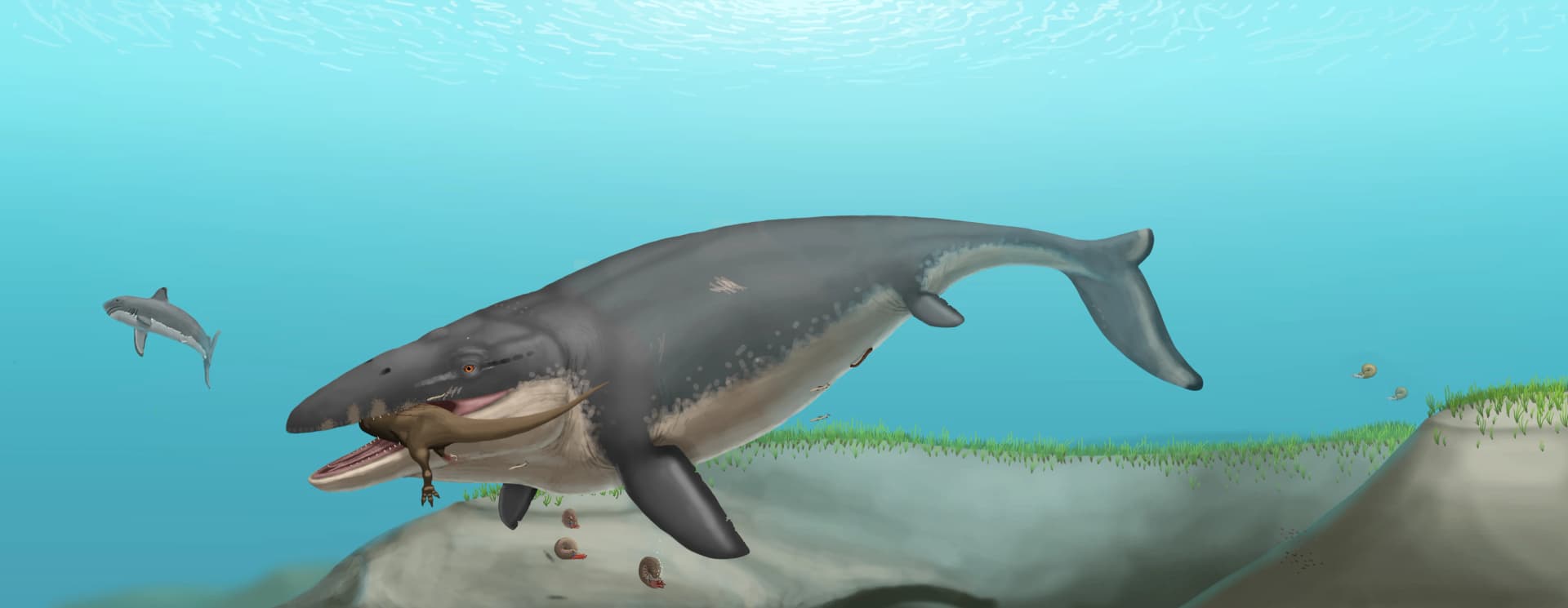
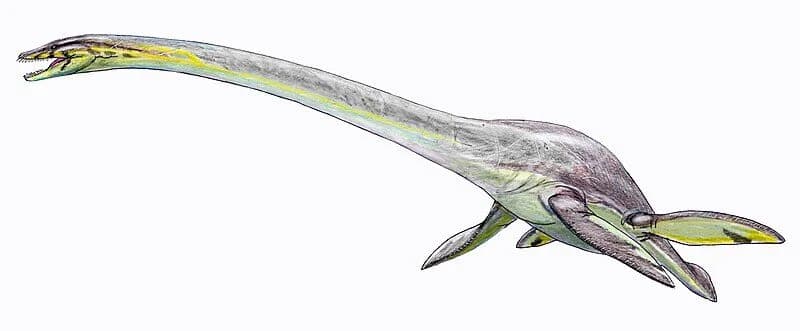
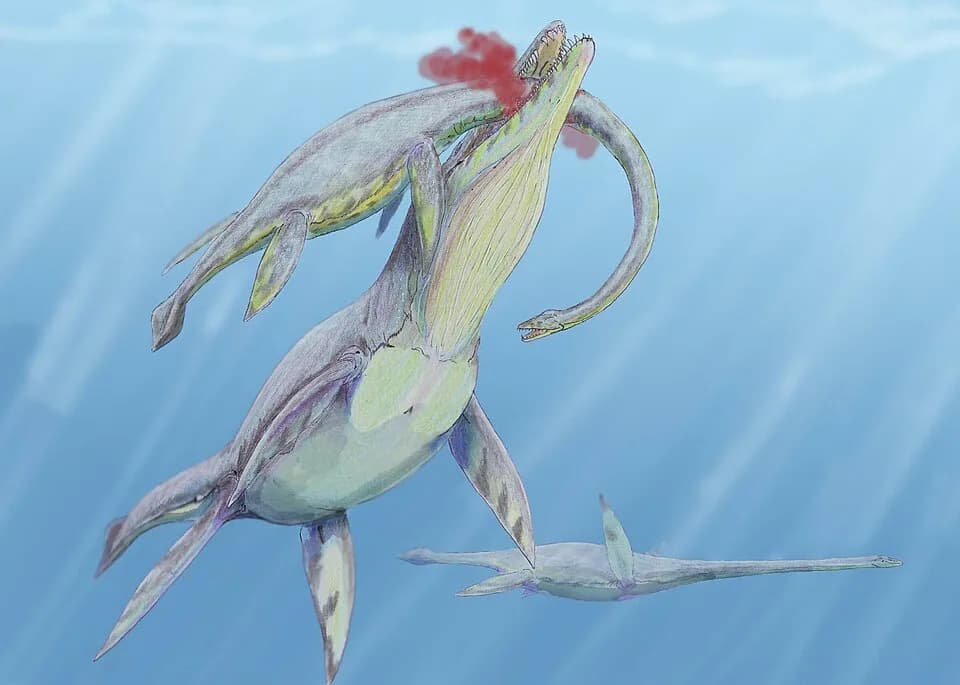
Archelon inhabited the warm, shallow waters of the Western Interior Seaway, the vast epicontinental sea that split North America in two during the Late Cretaceous period. This extraordinary body of water stretched for thousands of kilometers from north to south, with a width reaching up to 1,000 kilometers in places, creating a unique marine environment harboring exceptional biodiversity unmatched by any modern inland sea. The waters were subtropical to tropical in temperature, significantly warmer than today due to the overall greenhouse climate conditions of the late Mesozoic era. Archelon shared these productive waters with an impressive array of marine predators: giant mosasaurs such as Tylosaurus and Mosasaurus, primitive sharks including Cretoxyrhina, large predatory fish, and long-necked plesiosaurs that hunted in the same waters. Fossils of Archelon come primarily from the Pierre Shale formations in South Dakota and Wyoming, marine sediments deposited in this now-vanished seaway that once defined the geography of North America.
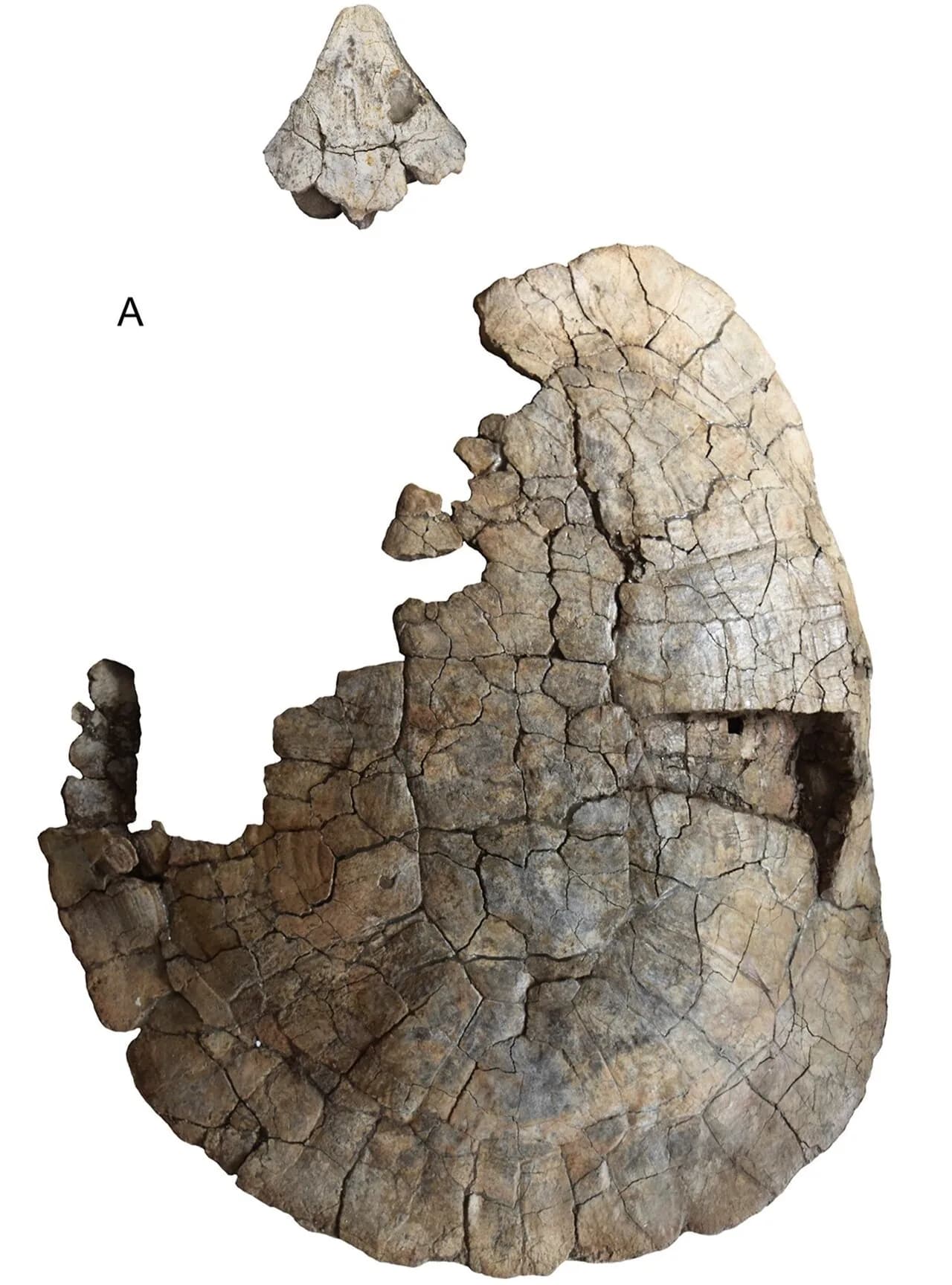
The anatomy of Archelon presents unique characteristics that distinguish it from modern sea turtles in several fundamental ways. Its carapace was not composed of solid, fused bony plates as in most turtles, but rather consisted of a skeletal framework of expanded ribs covered by thick, leathery, cartilaginous skin, remarkably similar to what is observed in the modern leatherback turtle. This lighter construction significantly reduced the animal's overall weight and dramatically improved its hydrodynamics for sustained open-ocean swimming over long distances. Its four limbs were transformed into powerful, elongated flippers, with the anterior pair being noticeably larger than the posterior ones and serving as the primary means of propulsion through vertical beating motions resembling the underwater flight of modern sea turtles. Its massive, horny beak, entirely devoid of teeth, was remarkably powerful with well-developed cranial musculature for efficient crushing of hard-shelled prey. The plastron, the ventral part of the shell, was also reduced, leaving much of the belly protected only by thick, tough skin.
Archelon was an open-ocean swimmer capable of covering vast distances across the Western Interior Seaway, using its powerful front flippers to propel itself with remarkable efficiency through the warm Cretaceous waters. Like modern sea turtles, it had to regularly surface to breathe, being a lung-breathing reptile that could not extract oxygen from water despite its fully aquatic lifestyle. By analogy with modern leatherback turtles, Archelon could probably dive to considerable depths to hunt jellyfish and cephalopods in the deeper waters of the seaway, potentially reaching depths of several hundred meters on extended breath-hold dives. Reproduction almost certainly followed the same pattern as modern sea turtles: females had to return to sandy beaches to lay their eggs in carefully excavated nests, a perilous terrestrial journey for an animal of such enormous size and weight. The nests likely contained dozens of eggs, and the hatchlings made the dangerous dash to the sea while exposed to terrestrial and aerial predators. Archelon's lifespan is estimated at over 100 years, comparable to that of large modern terrestrial tortoises like the Galapagos giant tortoise.
The first Archelon specimen was discovered in 1895 by paleontologist G.R. Wieland in the Pierre Shale formations near the Cheyenne River in South Dakota, United States. This remarkably well-preserved specimen, now on permanent display at the Peabody Museum of Natural History at Yale University, remains one of the most complete giant turtle fossils ever found anywhere in the world. Wieland named the animal Archelon ischyros in 1896, a name meaning 'powerful ruler turtle' (Greek: arche 'ruler, chief' + chelone 'turtle' + ischyros 'powerful'), a fitting name for the largest turtle that ever lived. A second spectacular specimen, even larger than the first, was discovered in 1970 in South Dakota and is currently displayed at the Natural History Museum in Vienna, Austria, where it attracts thousands of visitors annually. Fossils of Archelon come exclusively from Upper Cretaceous marine formations of the American Great Plains, primarily South Dakota and Wyoming, regions that were then covered by the Western Interior Seaway. The exceptional preservation quality of these specimens has allowed scientists to reconstruct in remarkable detail the anatomy and lifestyle of this giant turtle.
| Period | Crétacé supérieur / Late Cretaceous |
| Era | Mésozoïque / Mesozoic |
| Age | 75-66 Ma |
| Location | Dakota du Sud, Wyoming / South Dakota, Wyoming |
| Length | 4.6 m |
| Height | ~2 m (carapace / shell) |
| Weight | ~2.2 tonnes |
| Diet | Omnivore |
| Discovery | 1895 |
Archelon ischyros measured up to 4.6 meters long with a flipper span reaching 5 meters and an estimated weight of 2,200 kilograms — more than double the modern leatherback turtle (900 kg max). It is the largest sea turtle of all time. The species was first described by G.R. Wieland in 1896 from a Pierre Shale specimen (South Dakota), now displayed at the Peabody Museum of Yale University.
No — Archelon ischyros's shell was not composed of solid bony plates like most turtles, but rather a framework of expanded ribs covered by thick, leathery, cartilaginous skin. This structure, similar to that of the modern leatherback turtle (Dermochelys coriacea), greatly reduced the animal's overall weight and improved hydrodynamics for open-ocean swimming.
Archelon ischyros inhabited the Western Interior Seaway 75 to 66 million years ago, a subtropical epicontinental sea dividing North America in two. It shared these waters with giant mosasaurs like Tylosaurus, primitive sharks, and plesiosaurs. Fossils come primarily from the Pierre Shale formations of South Dakota and Wyoming — marine Cretaceous sites now exposed in the continental interior.
Archelon ischyros, the largest known sea turtle
Nobu Tamura, Wikimedia Commons
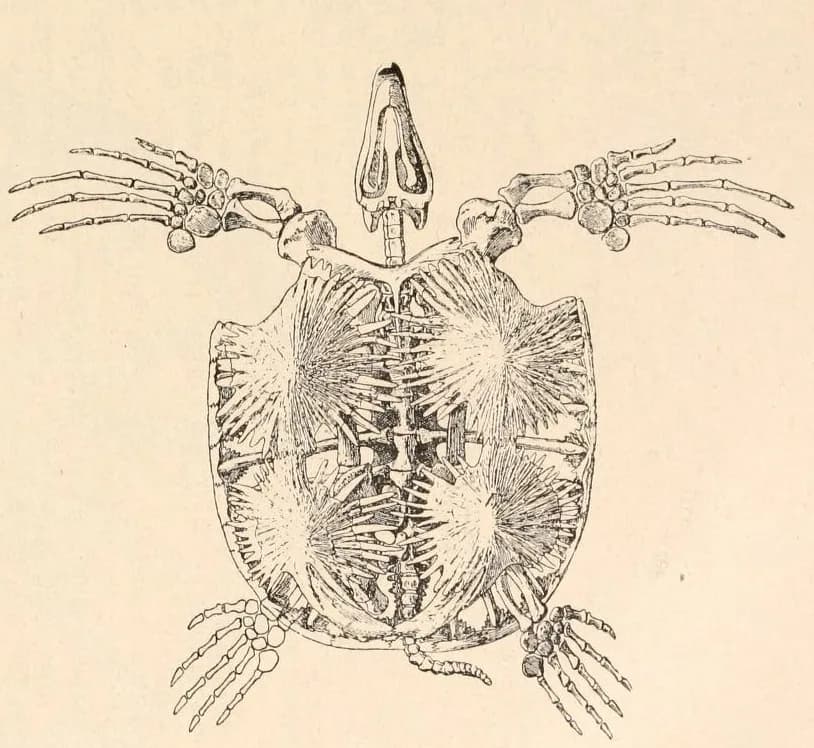
Archelon ischyros, a giant turtle from the Late Cretaceous
Wikimedia Commons