Saurosuchus
Saurosuchus galilei dominated the Ischigualasto Formation at the very moment the first dinosaurs appeared, Herrerasaurus and Eoraptor. It was not a dinosaur but a pseudosuchian, on the crocodile branch: 6 to 7 metres and 250 to 350 kilograms, 231 to 225 million years ago. Dinosaurs were still bit players then.
Saurosuchus lived during the Late Triassic (Carnian), approximately 231 to 225 million years ago, in what is now northwestern Argentina. It was a pivotal time in the history of terrestrial life: the first dinosaurs had just appeared and were still only small, marginal animals. The true masters of Triassic terrestrial ecosystems were the rauisuchians — a group of pseudosuchians (archosaurs of the crocodilian lineage) that occupied the role of apex super-predators. Saurosuchus is one of the largest and most famous of these Triassic predators, discovered in the Ischigualasto Formation of Argentina, one of the world's most important deposits for Late Triassic fauna.
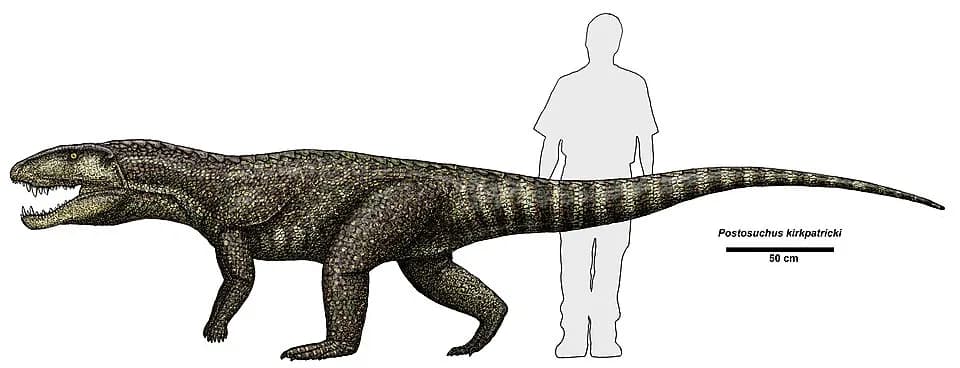
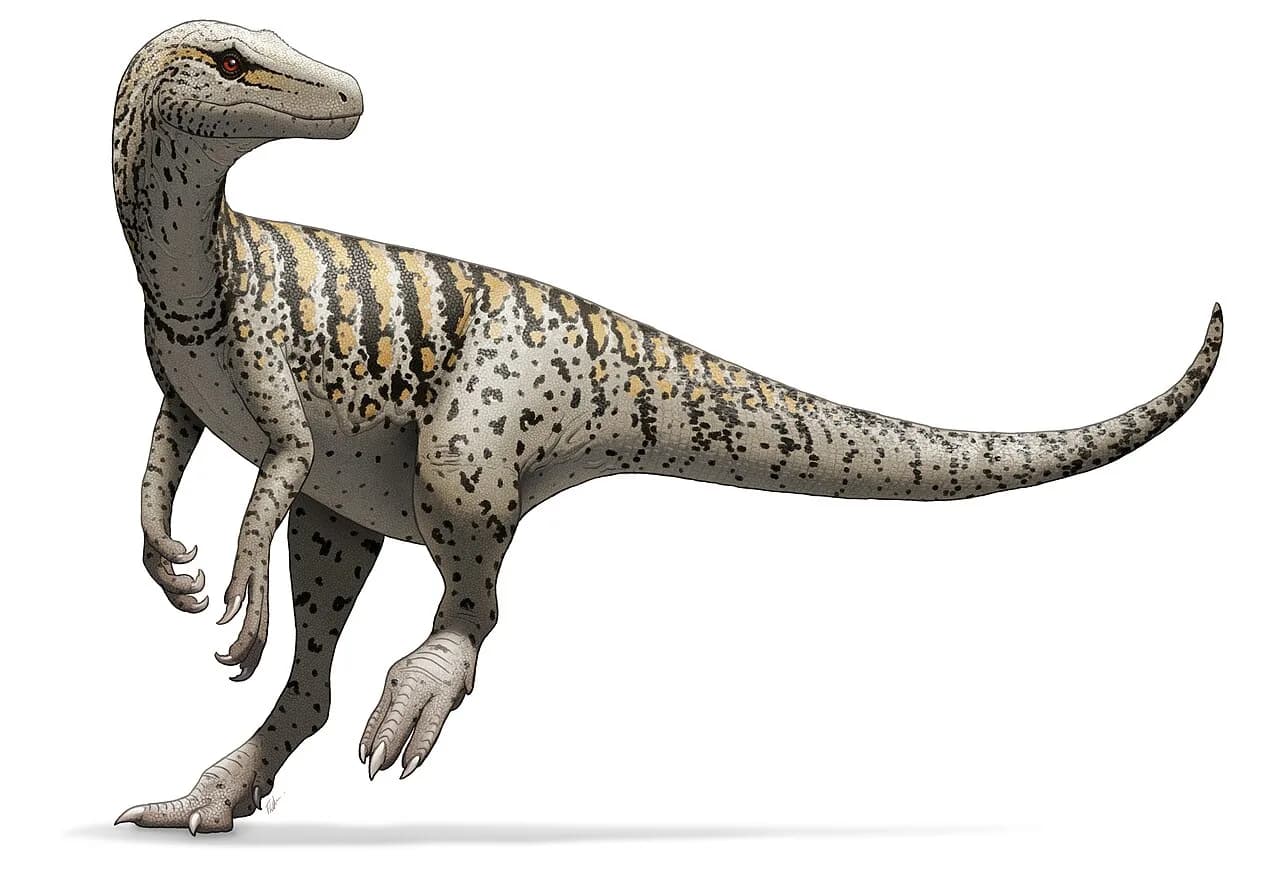
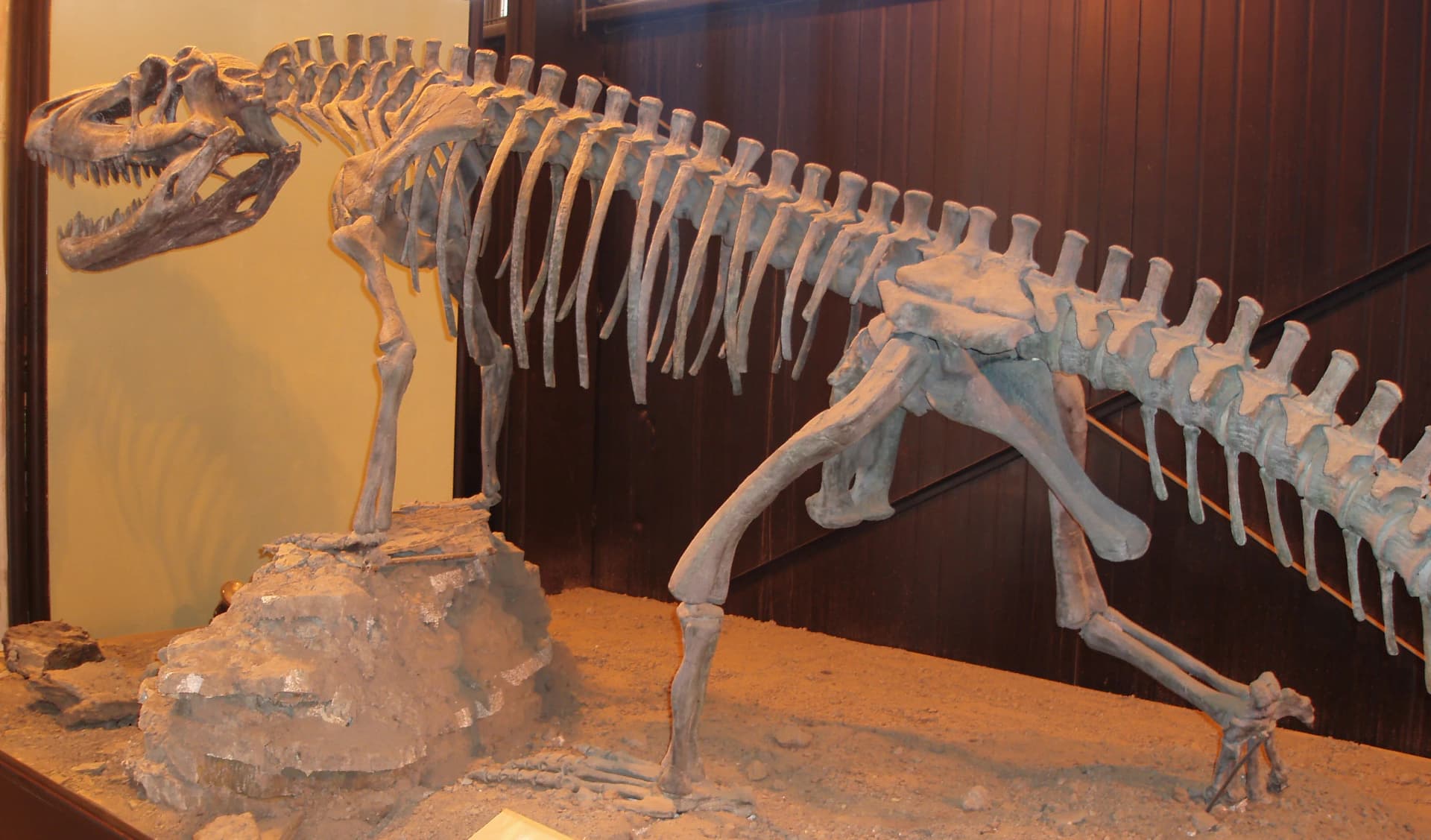
Saurosuchus was a colossal predator for its time, measuring about 6 to 7 meters in total length with an estimated weight of 250 to 350 kg. It was the largest terrestrial predator in its environment, far exceeding the first dinosaurs that coexisted with it (such as Herrerasaurus, about 4 meters, and Eoraptor, barely 1 meter). Its skull measured about 60 centimeters in length, with deep jaws armed with laterally compressed and serrated teeth — perfectly efficient predator weapons. Its massive, elongated body was supported by four powerful limbs in a semi-erect to pillar-like posture, more vertical than modern crocodiles but less so than dinosaurs.
Saurosuchus was the undisputed apex super-predator of the Ischigualasto ecosystem in the Late Triassic. Its laterally compressed and finely serrated teeth (ziphodont) were ideal for slicing flesh and tendons. A 2024 study on its bite biomechanics revealed that its bite force was surprisingly weaker than expected for a predator of its size — convergent with later theropods rather than modern crocodilians. Its diet probably included herbivorous dicynodonts like Ischigualastia (massive synapsids weighing up to 300 kg), rhynchosaurs, aetosaurs, and potentially the first dinosaurs like Herrerasaurus and Eoraptor that shared its ecosystem.
Saurosuchus lived in the floodplains and riparian forests of what is now San Juan Province in northwestern Argentina. The Ischigualasto Formation (often called 'Valle de la Luna' — Valley of the Moon) represents a Late Triassic environment with a markedly seasonal climate, alternating between wet periods and dry seasons. Vegetation was dominated by conifers, tree ferns, and giant horsetails. This ecosystem hosted a diverse fauna including the very first dinosaurs (Herrerasaurus, Eoraptor, Panphagia), dicynodonts, rhynchosaurs, armored aetosaurs, and other rauisuchians. Saurosuchus sat at the top of this complex food chain.
Saurosuchus possessed a highly specialized terrestrial predator anatomy. Its 60 cm skull was tall and narrow, with terminal nostrils and large antorbital fenestrae that lightened the structure. Its ziphodont teeth (compressed and serrated) resembled those of theropods — a remarkable example of convergent evolution. Its body was protected by two rows of dorsal osteoderms (bony plates) that formed armor along the spine, a characteristic feature of pseudosuchians. Its limbs were positioned in a semi-erect to pillar-like posture, more vertical than in modern crocodilians, allowing more efficient terrestrial locomotion. Its long, muscular tail served as a counterweight during walking and running.
Saurosuchus was probably a solitary, territorial predator that dominated vast hunting territories in the Triassic floodplains. Its hunting strategy probably combined ambush and short-distance pursuit. The 2024 study on its cranial biomechanics suggests it used a bite-and-release technique similar to large theropods, rather than the prolonged bite of modern crocodiles. Its semi-erect posture allowed more efficient terrestrial locomotion than sprawling archosaurs, but less endurance than the theropod dinosaurs that would eventually supplant it. Saurosuchus represents the evolutionary peak of Triassic pseudosuchian predators, just before theropod dinosaurs took over.
Saurosuchus galilei was described in 1959 by Argentine paleontologist Osvaldo Reig, from a remarkably complete skeleton discovered in the Ischigualasto Formation in San Juan Province, Argentina. The name means 'lizard crocodile' (Greek: sauros 'lizard' + soukhos 'crocodile') and the species honors Galileo J. Scaglia, who discovered and prepared the specimen. The Ischigualasto Formation (dated 231-225 Ma) is one of the world's most important deposits for understanding the dawn of the age of dinosaurs, as it contains both the last great rauisuchians like Saurosuchus AND the very first dinosaurs like Herrerasaurus and Eoraptor. In 2000, the site was designated a UNESCO World Heritage Site. Recent studies (2024) used finite element modeling to analyze Saurosuchus' cranial biomechanics, revealing surprising convergences with theropods.
| Period | Trias supérieur (Carnien) / Late Triassic (Carnian) |
| Era | Mésozoïque / Mesozoic |
| Age | 231-225 Ma |
| Location | Formation d'Ischigualasto, San Juan, Argentine / Ischigualasto Formation, San Juan, Argentina |
| Length | 6-7 m |
| Weight | 250-350 kg |
| Diet | Carnivore |
| Discovery | 1959 |
No. Saurosuchus galilei was a rauisuchian, belonging to the pseudosuchians — the archosaur lineage that would give rise to modern crocodilians. It lived during the Late Triassic (231–225 Ma) in Argentina, at the same time as the very first dinosaurs such as Herrerasaurus and Eoraptor, which it greatly dominated. Its 6 to 7 meters and 250 to 350 kg made it the apex superpredator of the Ischigualasto Formation.
During the Ischigualasto Formation times (231–225 Ma), Saurosuchus galilei measured 6 to 7 meters and completely dominated the first dinosaurs: Herrerasaurus reached about 4 meters and Eoraptor barely 1 meter. These early dinosaurs were only marginal predators of modest size. Only after the end-Triassic mass extinction were theropod dinosaurs able to fill the vacant apex predator niche.
A 2024 study using finite element modeling on the skull of Saurosuchus galilei revealed that its bite force was surprisingly weaker than expected for a predator of its size — convergent with later theropods rather than modern crocodilians. This suggests a bite-and-release technique similar to large Jurassic allosauroids, rather than a prolonged grip as seen in modern crocodiles.
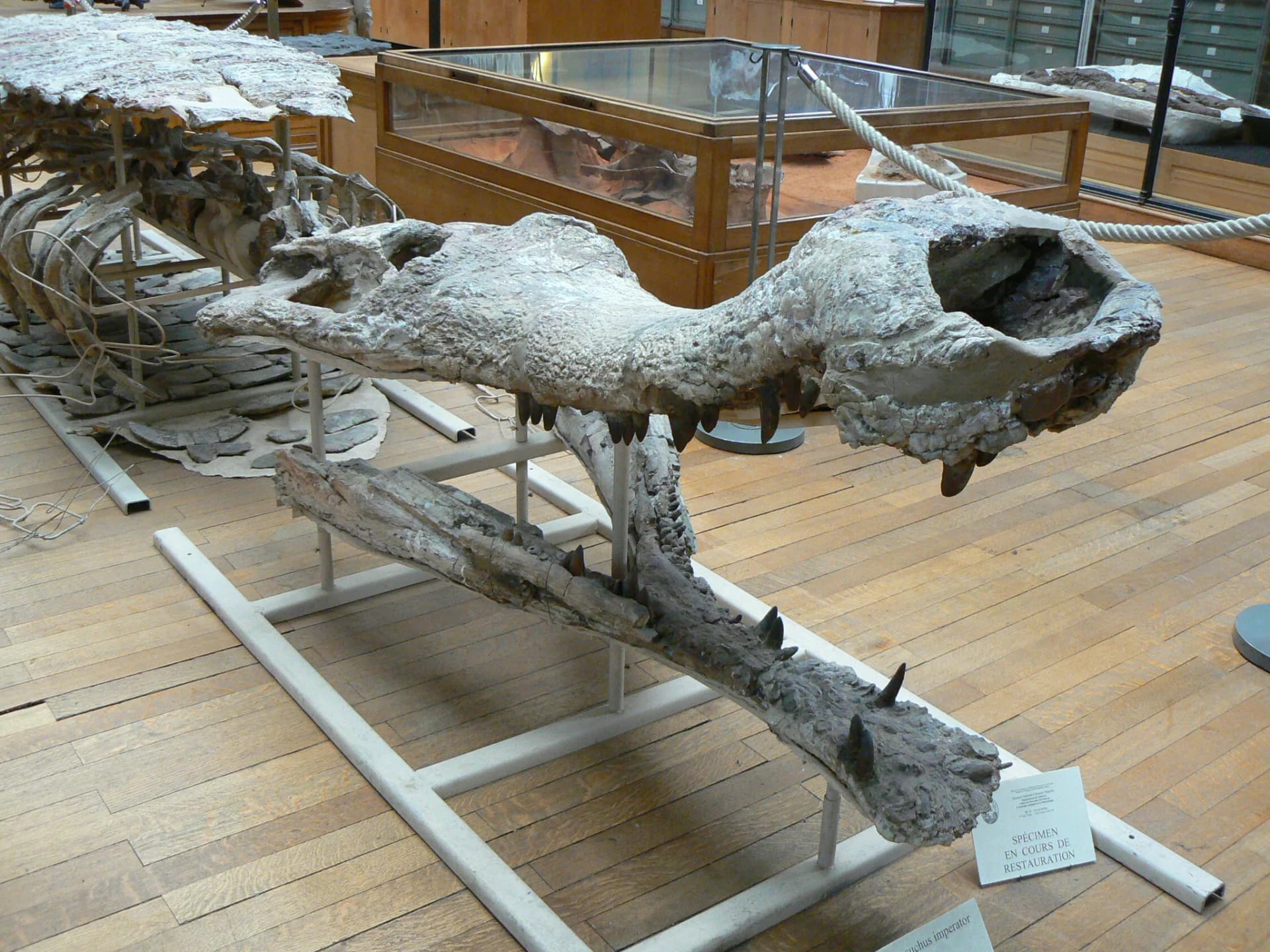
Mounted Saurosuchus galilei skeleton at the Ischigualasto Museum, Argentina
Wikipedia Commons, CC BY-SA 3.0
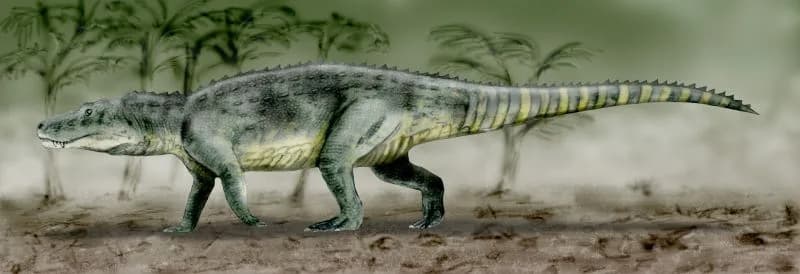
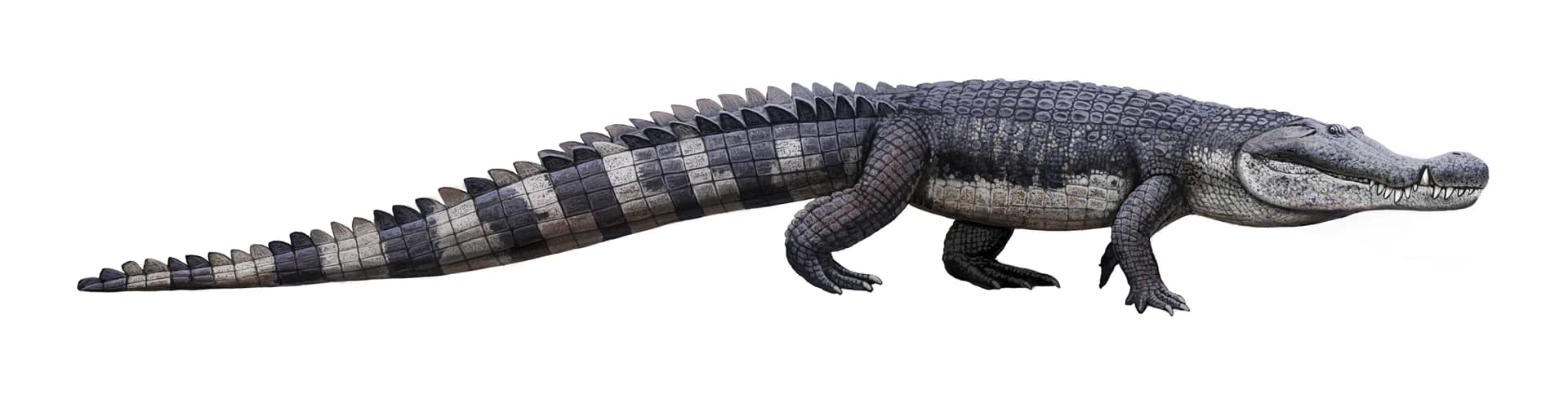
Artistic reconstruction of Saurosuchus galilei, a Triassic rauisuchian
Nobu Tamura, CC BY-SA 3.0