Seigneur des mangeurs de lézards
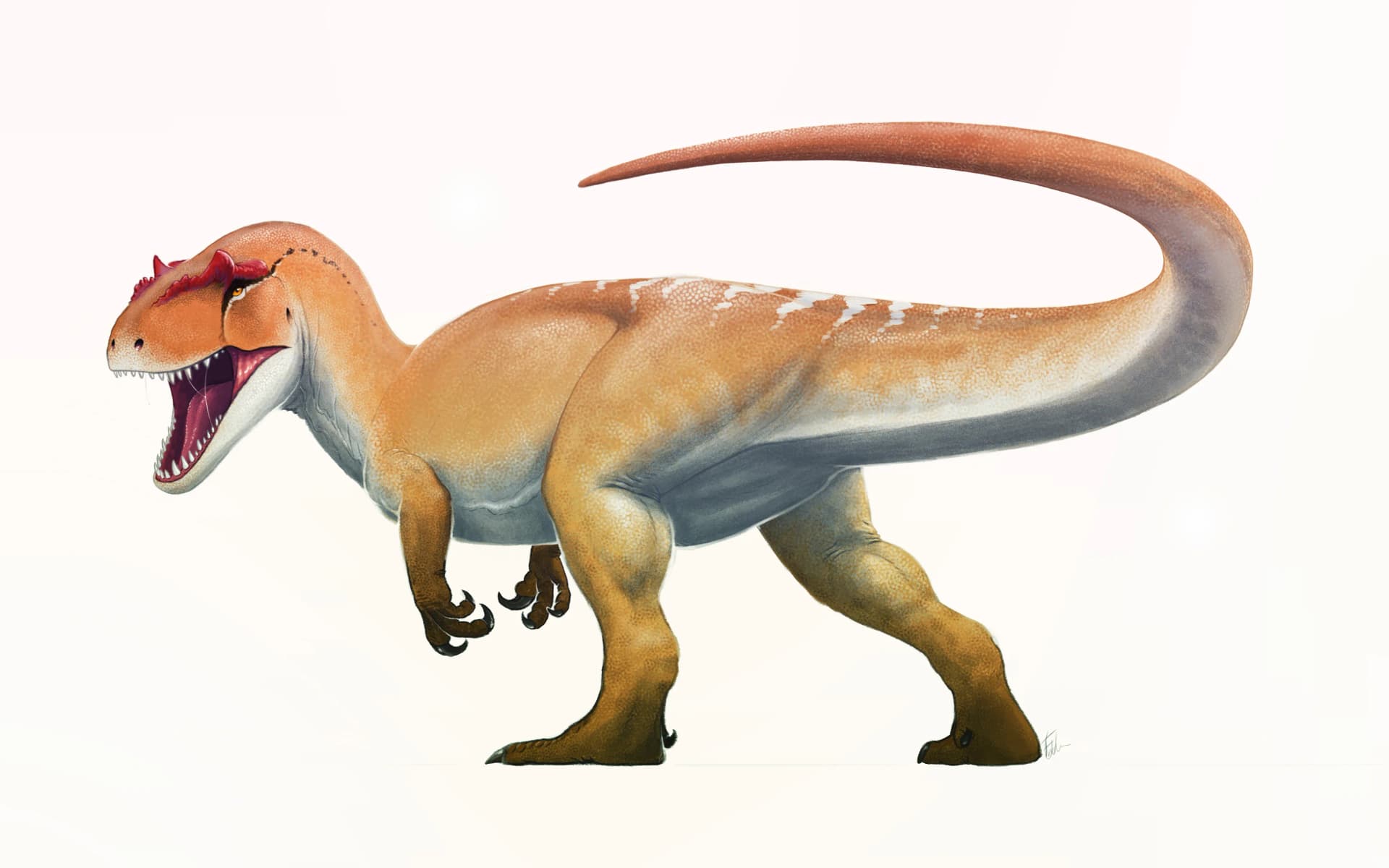
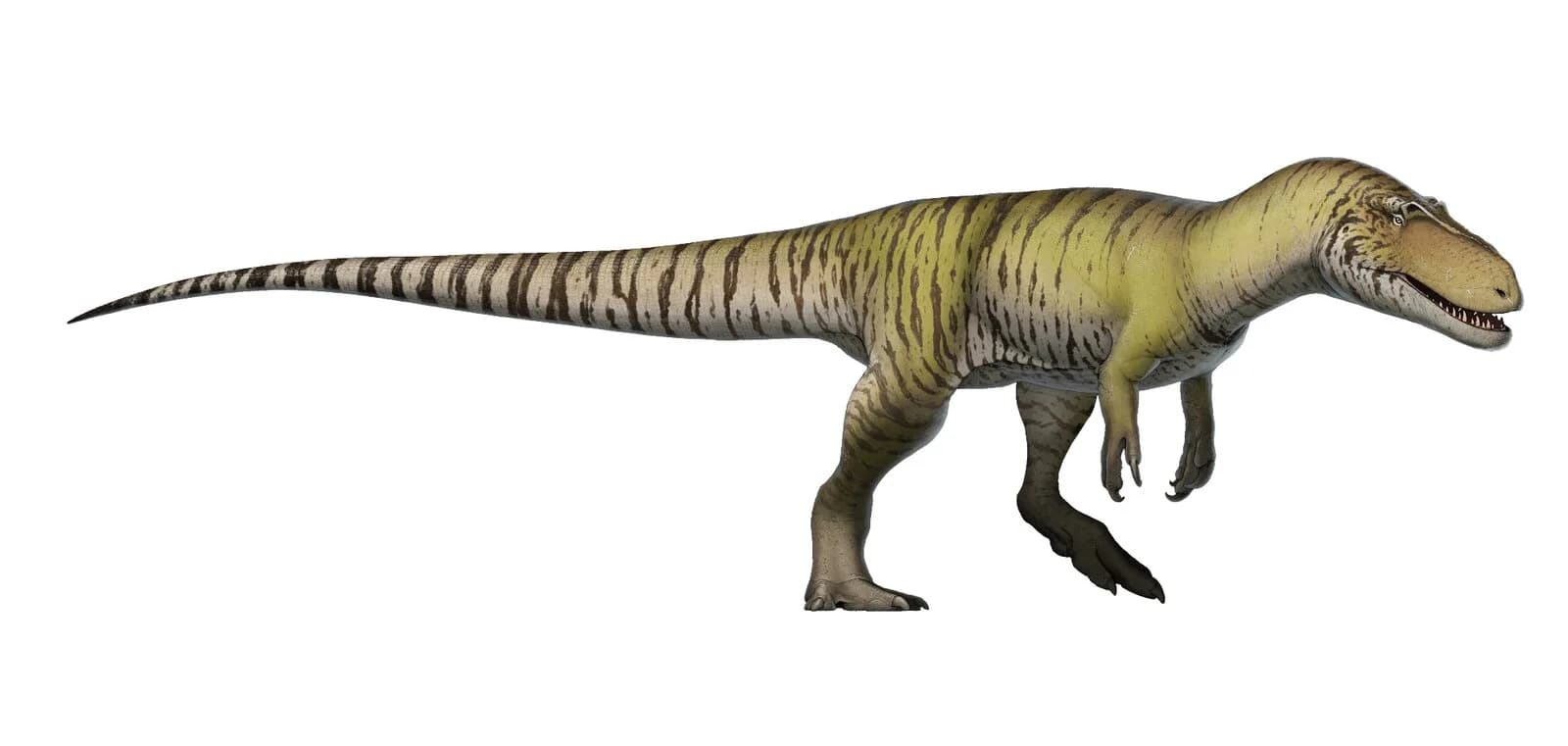
Saurophaganax maximus was a carnivorous theropod from Oklahoma, described in 1931 and dated to around 151 million years ago. At 10.5 to 13 metres and 3 to 4.5 tonnes, it outsized Allosaurus by 25 to 30%. Its name means lord of lizard-eaters, and it has been Oklahoma's official state dinosaur since the year 2000.
Saurophaganax lived during the Late Jurassic, approximately 151 million years ago, in North America. This gigantic carnivorous theropod occupied the absolute top of the food chain in the famous Morrison Formation, surpassing even the fearsome Allosaurus in size and power. Saurophaganax reigned over an extraordinarily rich ecosystem that included some of the largest dinosaurs to have ever existed, including the giant sauropods Apatosaurus, Diplodocus, and Brachiosaurus. Its existence demonstrates that even among Jurassic superpredators, a hierarchy existed, and Saurophaganax undeniably sat at its summit in North America.
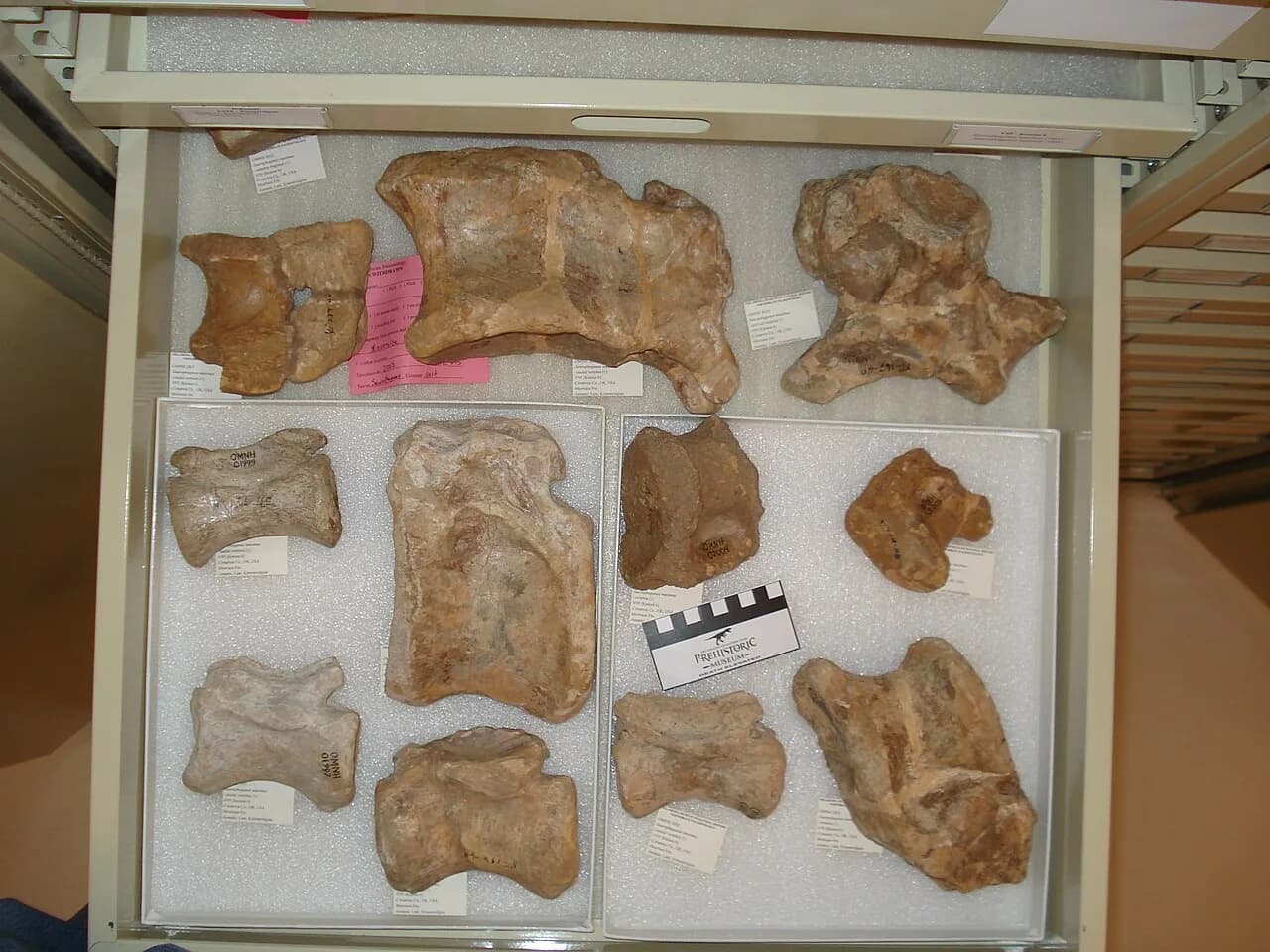
Saurophaganax was probably the largest Jurassic theropod, with an estimated length between 10.5 and 13 meters and a weight reaching 3 to 4.5 tonnes. It exceeded Allosaurus fragilis by approximately 25 to 30 percent in linear dimensions, translating to a significantly greater mass. Its skull is estimated at over one meter long, armed with massive, sharp teeth. The discovered dorsal vertebrae are among the largest of all Jurassic theropods, with characteristic blade-shaped neural spines that distinguish Saurophaganax from its cousin Allosaurus. Its imposing stature made it the undisputed predator of its era in North America.
Saurophaganax was a hypercarnivore that hunted the largest herbivores of the Late Jurassic North America. Thanks to its colossal size, it could attack adult sauropods like Camarasaurus and juveniles of larger species like Apatosaurus and Diplodocus. Its broad, curved teeth, typical of allosauroids but larger than those of Allosaurus, were designed to tear off large chunks of flesh. It likely practiced the bite-and-retreat technique characteristic of large allosauroids, inflicting devastating hemorrhagic wounds rather than maintaining its grip like a tyrannosaur. Its size also allowed it to appropriate kills from smaller predators.
Saurophaganax inhabited the semi-arid alluvial plains of the Morrison Formation, in what is now Oklahoma and possibly other western American states. The Morrison Formation represents a vast environment of savannas and riparian forests traversed by seasonal rivers, under a warm climate with marked dry and wet seasons. This ecosystem supported the highest known concentration of giant dinosaurs, with dozens of species of sauropods, ornithischians, and theropods coexisting. Saurophaganax occupied the most productive territories, probably around permanent water holes where herds of herbivores gathered.
The anatomy of Saurophaganax, while known fragmentarily, reveals an allosauroid of exceptional dimensions. Its dorsal vertebrae possess distinctive horizontally expanded blade-shaped neural spines, a unique character that clearly distinguishes it from Allosaurus and has led some researchers to classify it in its own distinct genus. The known limb bones are robust and massive, indicating a powerfully muscled animal. Its caudal chevrons and vertebrae suggest a long, robust tail serving as a counterbalance to its massive skull. The overall skeletal structure shows a classic allosauroid body plan but enlarged to a truly colossal scale for the Jurassic.
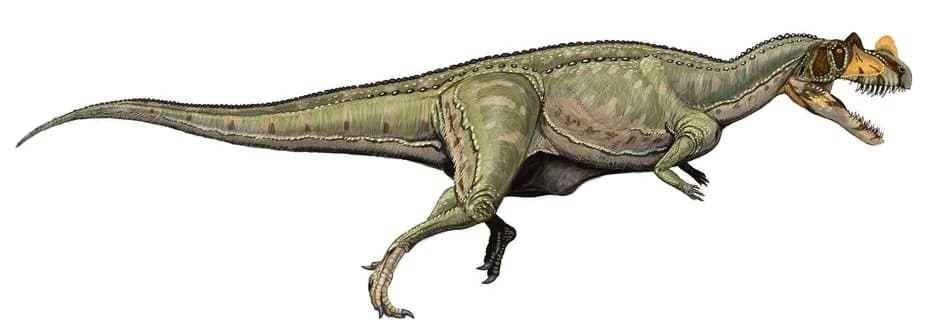
As the largest predator of the Morrison Formation, Saurophaganax must have exerted considerable ecological influence on its environment. Its size advantage over Allosaurus likely gave it an edge in competition for carcasses and premium hunting territories. It probably practiced kleptoparasitism, stealing kills from smaller Allosaurus and Ceratosaurus, much like lions steal prey from leopards and hyenas today. Despite its size, its allosauroid construction suggests surprising agility and an ability to make rapid charges over short distances to surprise prey or intimidate rivals.
The fossils of Saurophaganax come primarily from the Kenton quarry in the Oklahoma Panhandle region, discovered in the 1930s and 1940s by John Willis Stovall of the University of Oklahoma. The original material, long attributed to Allosaurus, was reevaluated and the new genus Saurophaganax was formally erected by Daniel Chure in 1995. The material includes vertebrae, limb elements, skull fragments, and chevrons, sufficient to establish that this animal was distinct from Allosaurus and considerably larger. Saurophaganax has been the official state dinosaur of Oklahoma since 2000, an honor that contributed to its public notoriety. The taxonomic debate continues: some researchers consider it a valid genus, others a large species of Allosaurus.
| Period | Jurassique supérieur / Late Jurassic (Kimméridgien) |
| Era | Mésozoïque / Mesozoic |
| Age | ~151 millions d'années / ~151 million years ago |
| Location | Amérique du Nord (Oklahoma) / North America (Oklahoma) |
| Length | 10,5–13 m |
| Height | ~4 m |
| Weight | 3–4,5 tonnes |
| Diet | Carnivore |
| Discovery | 1931 |
Saurophaganax maximus is estimated at 10.5 to 13 meters long weighing 3 to 4.5 tonnes, exceeding Allosaurus fragilis by about 25 to 30 percent in linear dimensions. Some researchers consider it a valid genus distinct from Allosaurus based on its horizontally expanded blade-shaped dorsal neural spines; others view it as simply a large species of Allosaurus. The taxonomic debate has persisted since the formal description by Daniel Chure in 1995.
Saurophaganax maximus occupied the absolute apex of the Morrison Formation food chain approximately 151 million years ago, dominance reinforced by its size advantage over Allosaurus. Its hunting technique, typical of allosauroids, involved slashing bites inflicting hemorrhagic wounds rather than prolonged grip. It likely targeted Camarasaurus and juveniles of Apatosaurus and Diplodocus, and also practiced kleptoparasitism on Allosaurus.
Saurophaganax maximus fossils come primarily from the Kenton quarry in the Oklahoma Panhandle, discovered in the 1930s and 1940s by John Willis Stovall. Long attributed to Allosaurus, these remains were reevaluated by Daniel Chure in 1995 to erect the new genus. Saurophaganax has been the official state dinosaur of Oklahoma since 2000, an honor voted by the state legislature.
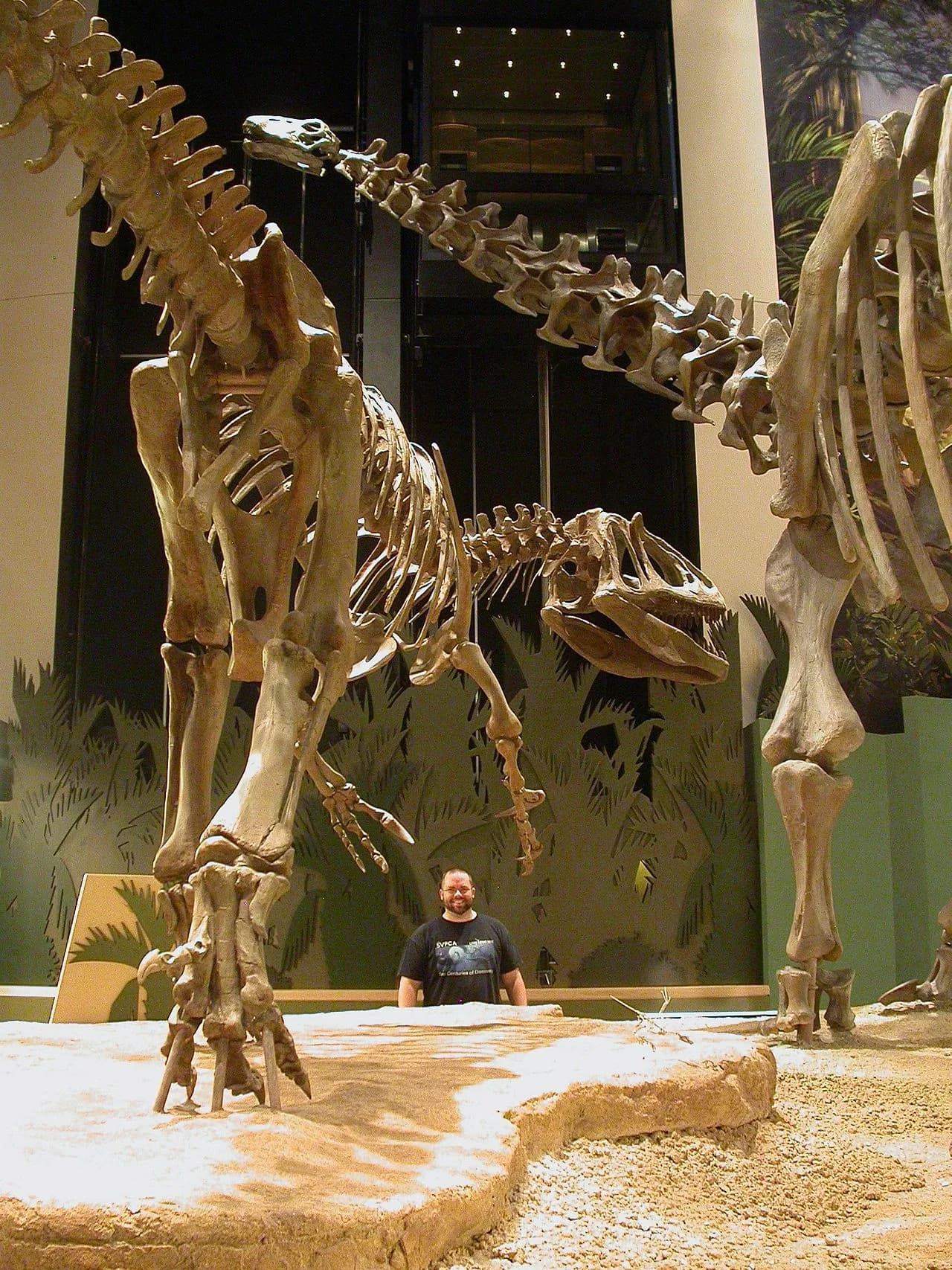
Mounted skeleton of Saurophaganax maximus on display
Wikimedia Commons
Artistic reconstruction of Saurophaganax attacking an Apatosaurus
Wikimedia Commons