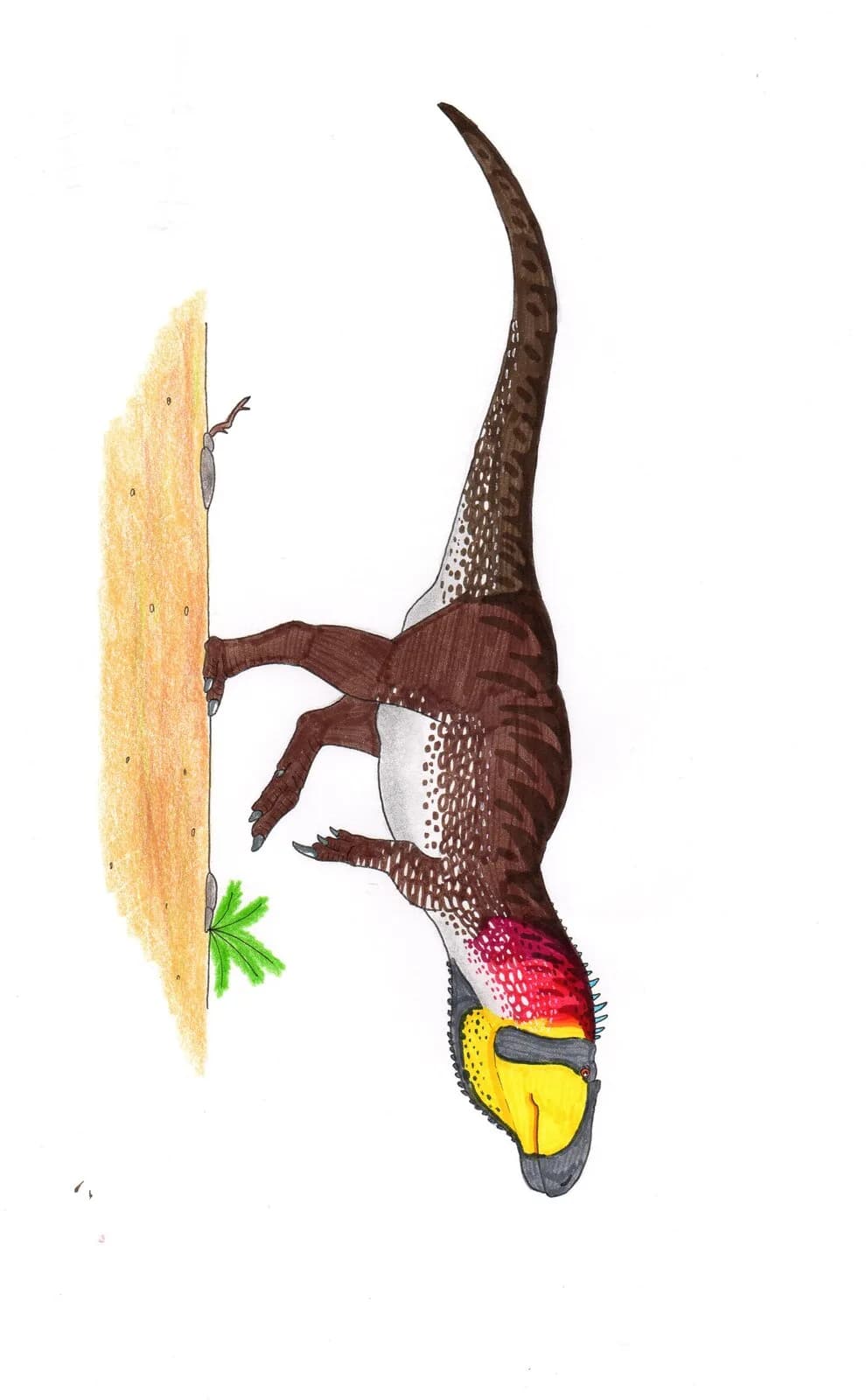
Mégalosaure
Megalosaurus bucklandii is the first dinosaur ever formally named, described in 1824 by William Buckland from English fossils. At 6 to 9 metres and 700 to 1,400 kilograms, it lived 166 to 164 million years ago. Its discovery launched Victorian dinomania, long before anyone realised it walked on two legs rather than four.
Megalosaurus lived in the Middle Jurassic, approximately 166 to 164 million years ago, during the Bathonian stage. It was the first dinosaur to be scientifically described and named, in 1824 by William Buckland, marking the beginning of dinosaur paleontology. Its description even precedes the invention of the word 'dinosaur' by Richard Owen in 1842. This historical primacy gives Megalosaurus a unique place in natural history. In the Middle Jurassic, Europe was a low-lying tropical archipelago bordered by the Tethys Sea, with a warm, humid climate favorable to diverse fauna.
A medium to large theropod: 6 to 9 meters long and 700 to 1,400 kg. An active biped with powerful hind limbs and short forelimbs armed with sharp claws. Its size made it the dominant predator of its Middle Jurassic European ecosystem. Its skull, though imperfectly known, was typically theropod with large recurved, serrated teeth. Compared to later Jurassic theropods like Allosaurus, Megalosaurus had more robust proportions and more powerful limbs. Biomechanical estimates suggest it could run at speeds of 25 to 35 km/h.
The apex carnivore of its time in Europe, Megalosaurus likely hunted large herbivores such as Jurassic sauropods and ornithopods. Its blade-shaped teeth with pronounced serrations were perfectly adapted for slicing flesh and inflicting deep wounds. The tooth shape indicates a predator that killed by biting and tearing off chunks of flesh rather than crushing bones. It was probably an active predator but also an opportunistic scavenger, taking advantage of large herbivore carcasses. Its diet must have included a variety of prey available in its European island environment.
Megalosaurus inhabited the forests and coastal beaches of Jurassic Europe, in present-day England. The region was a series of low-lying tropical islands bordered by the Tethys Sea, with a warm, humid climate. The Bathonian oolitic limestones of Oxfordshire, where the first fossils were found, formed in tropical coastal environments with lagoons and reefs. The Middle Jurassic European island ecosystem harbored diverse but distinct fauna from that of large continental landmasses. Island conditions may have favored particular adaptations in Megalosaurus, though this remains speculative.
A typical tetanuran theropod with an elongated skull, large recurved and serrated teeth, and tridactyl claws on the forelimbs. Its general morphology is that of a large bipedal predator with a conservative but effective body plan. Its powerful hind limbs supported a muscular body that was agile for its size. The teeth, D-shaped in cross-section with fine serrations, were particularly effective for cutting flesh. Unfortunately, the complete anatomy of Megalosaurus remains poorly known due to the fragmentary nature of available fossils — no complete skeleton has been found. Modern reconstructions are based on comparisons with better-known megalosaurids like Torvosaurus.
A solitary predator at the top of the European Jurassic food chain, Megalosaurus likely hunted by ambush or pursuit of medium-sized prey. Its active predator anatomy, with long legs and a rigid tail for balance, suggests it was capable of fast runs over short distances. It probably exploited an extensive territory to find enough prey in its island environment. Like modern large predators, it probably combined active hunting with opportunistic scavenging. The lack of evidence for social behavior suggests a primarily solitary lifestyle, perhaps congregating only during the breeding season.
The lower jaw described by William Buckland in 1824 at Oxford is the first officially described dinosaur fossil in the history of science. This description is a founding moment of paleontology. The original tooth, found in a slate quarry at Stonesfield, had actually been collected as early as 1677 by Robert Plot, who attributed it to a human giant. For decades, any poorly-known theropod was classified in Megalosaurus, making it a 'wastebasket taxon' that has since been considerably cleaned up by taxonomic revision. Today, only the original Bathonian material from Oxfordshire is attributed with certainty to Megalosaurus bucklandi. The Megalosaurus statue at the Crystal Palace in London (1854), though anatomically very incorrect, is one of the first dinosaur reconstructions ever made.
| Period | Jurassique moyen / Middle Jurassic (Bathonien) |
| Era | Mésozoïque / Mesozoic |
| Age | 166–164 Ma |
| Location | Europe (Angleterre / England) |
| Length | 6–9 m |
| Height | ~2–3 m |
| Weight | 700–1 400 kg |
| Diet | Carnivore |
| Discovery | 1824 |
Yes. Megalosaurus bucklandii was officially named and described in 1824 by William Buckland at Oxford — this is the first formal description of a dinosaur in the history of science, even predating the invention of the word 'dinosaur' by Richard Owen in 1842. A tooth had been collected as early as 1677 by Robert Plot, who wrongly attributed it to a human giant, but Buckland was the first to identify a distinct fossil giant reptile.
Megalosaurus bucklandii measured 6 to 9 meters in length with an estimated weight of 700 to 1,400 kilograms. This bipedal theropod from the Bathonian (166–164 Ma) was the dominant predator of the Jurassic tropical islands of present-day England (Tethys Sea archipelago). Biomechanical estimates suggest a top speed of 25 to 35 km/h.
For decades after 1824, any poorly-known theropod in Europe and beyond was automatically classified in the genus Megalosaurus for lack of a better option. This taxonomic 'wastebasket' lumped dozens of unrelated species together. 20th-century systematic revision cleaned up this problem: today, only the Bathonian material from Oxfordshire is reliably attributed to Megalosaurus bucklandii, with other species reassigned to their own genera.
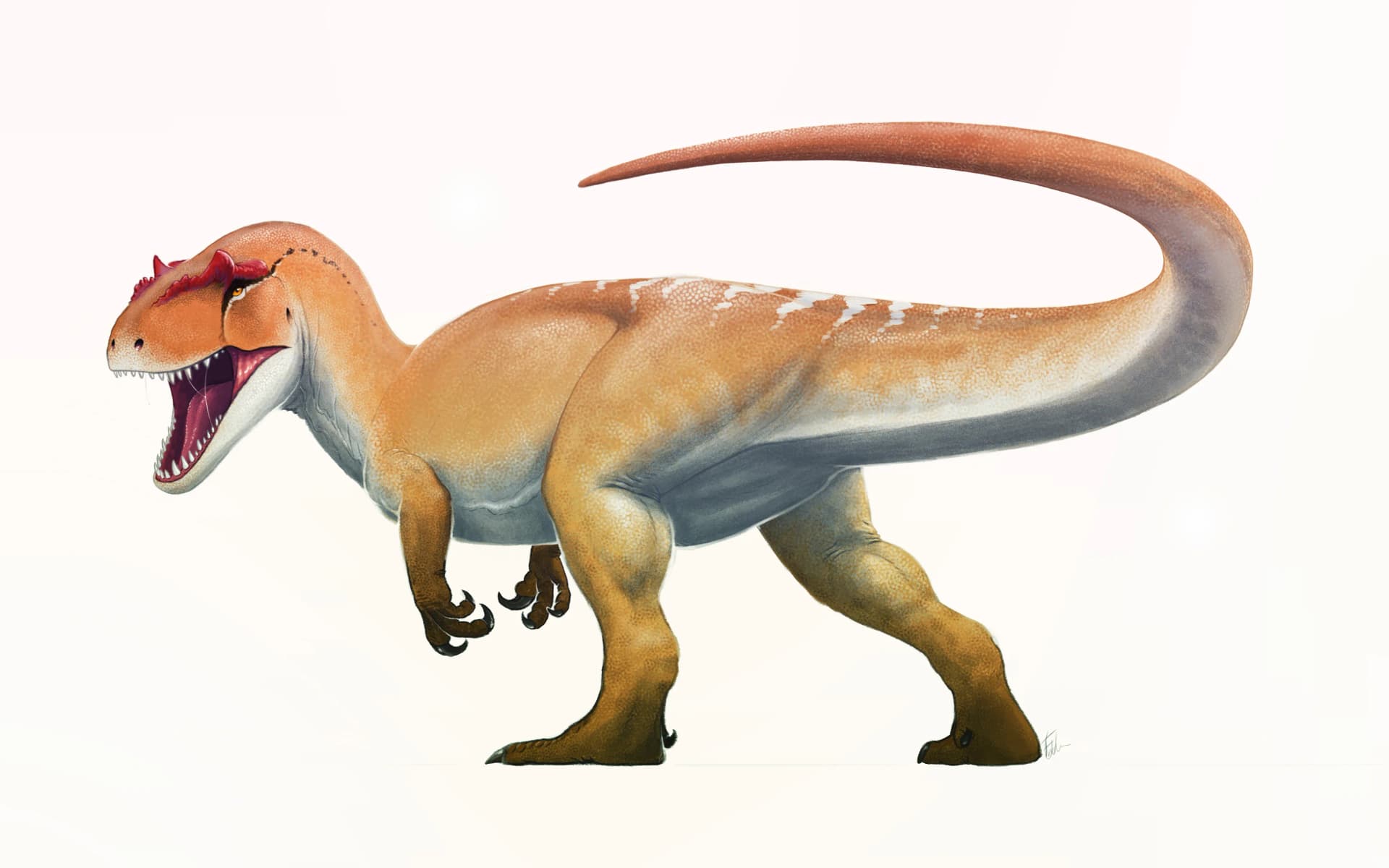
Life restoration of Megalosaurus bucklundii
Federico Benzan, CC BY-SA 4.0, via Wikimedia Commons
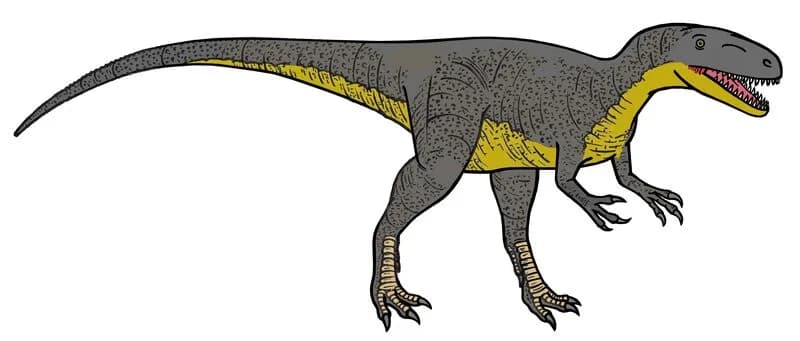
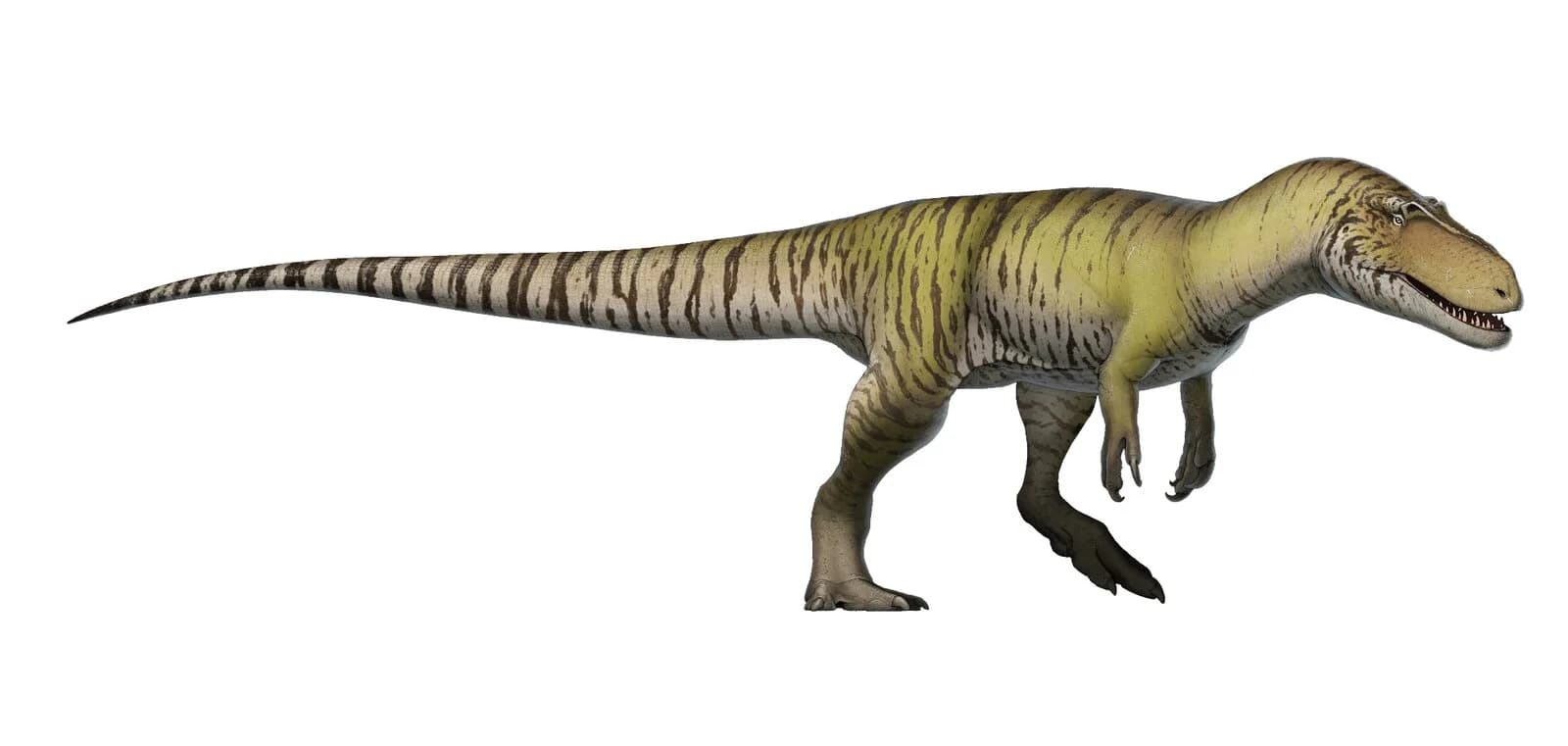
Megalosaurus bucklandii reconstruction
Conty, CC BY-SA 3.0