Sauropelta
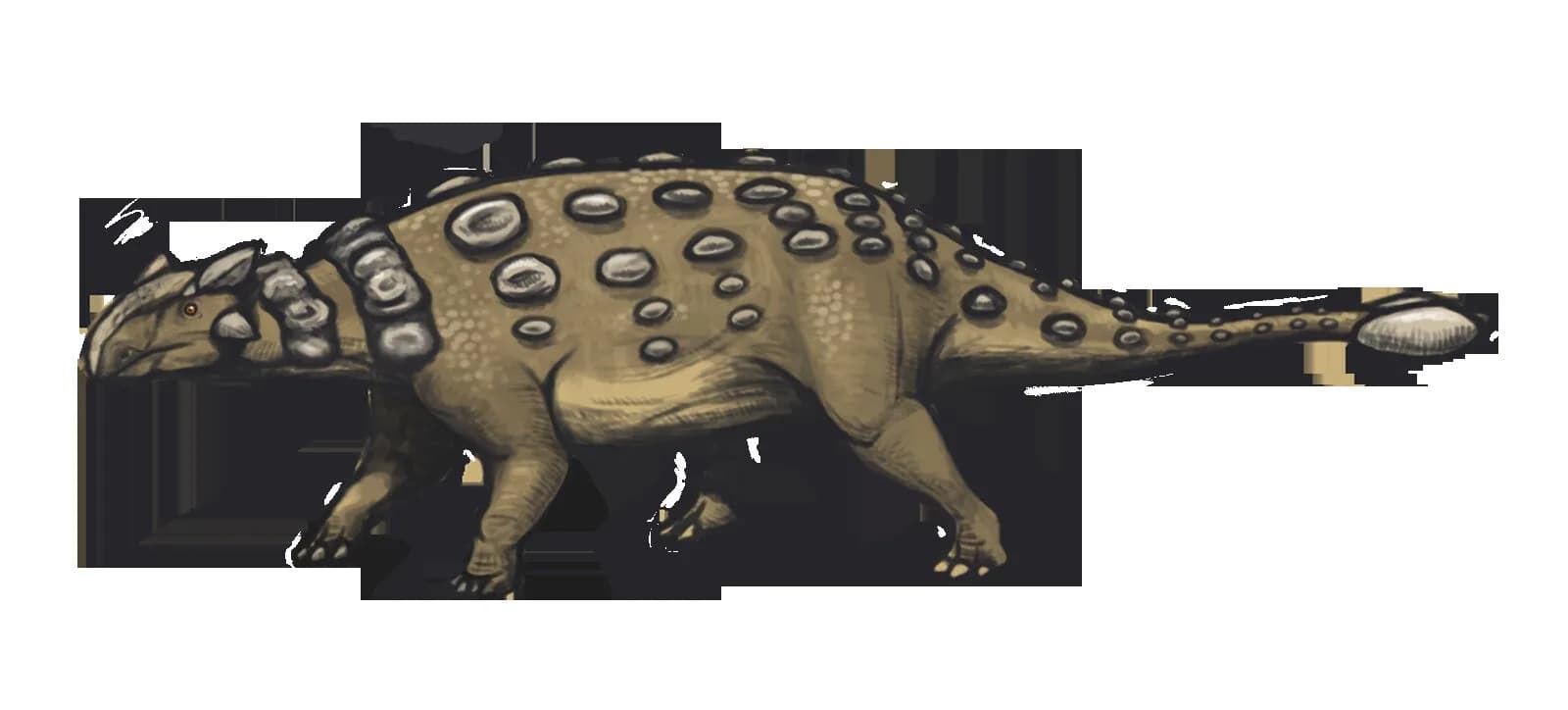
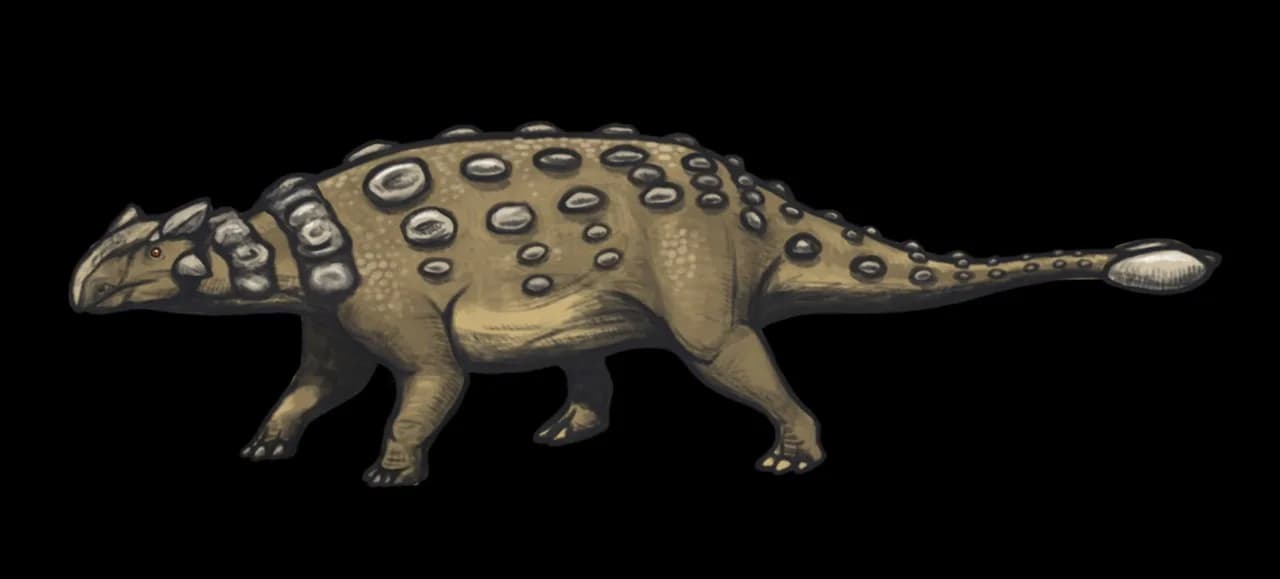
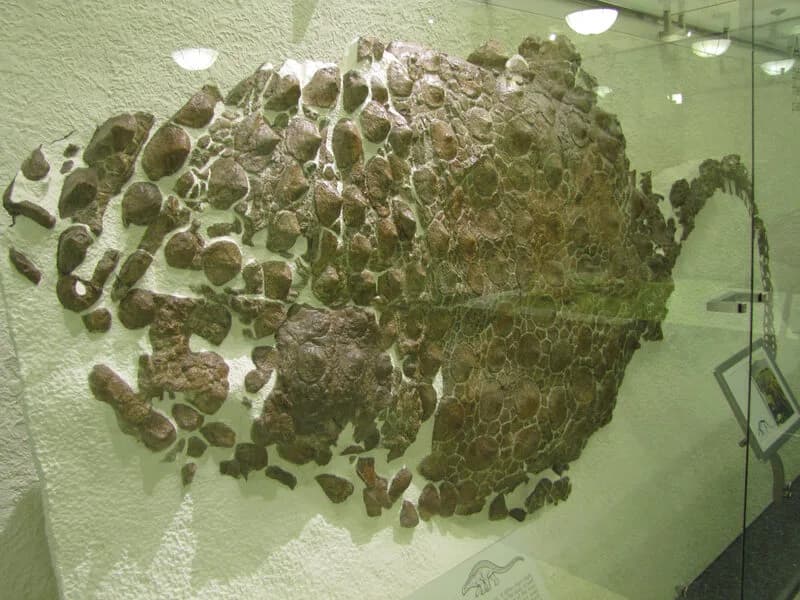
Sauropelta edwardsorum means « shield lizard », after the bony armour covering its back and flanks. Unlike the ankylosaurs it had no tail club: its defence rested on long spikes projecting outward at the neck. Five to 6 metres long and 1.5 tonnes, it lived 115 to 110 million years ago.
Sauropelta edwardsorum lived during the Early Cretaceous period, approximately 115 to 110 million years ago, during the Aptian-Albian stages. This era was marked by a remarkable diversification of dinosaurs across North America. Ecosystems were dominated by dense forests, floodplains, and winding rivers. The climate was considerably warmer and more humid than today, supporting lush vegetation that formed the dietary foundation for large herbivores like Sauropelta. It was during this period that nodosaurids reached considerable diversity and abundance across the North American continent, establishing themselves as important members of Early Cretaceous ecosystems.
Sauropelta was one of the largest nodosaurids of its time, measuring between 5 and 6 meters in length with a shoulder height of approximately 1.5 meters. Its weight is estimated at around 1.5 tonnes, making it an imposing animal despite its relatively low profile. Its silhouette was characterized by an elongated, stocky, and powerfully built body, with robust limbs capable of supporting the considerable weight of its bony armor. The tail, while long and muscular, lacked a club at its tip — unlike ankylosaurs — and instead tapered to a point, reflecting its classification within the nodosaurid family.
Sauropelta was a strict herbivore whose diet consisted primarily of low-growing vegetation: ferns, horsetails, cycads, dwarf conifers, and primitive angiosperms that were just beginning to emerge during the Early Cretaceous. Its jaws were equipped with small, leaf-shaped teeth well-suited for cropping and slicing through tough plant material. Rather than true chewing, Sauropelta would have coarsely fragmented vegetation before swallowing it. Its large, voluminous digestive system allowed for extended fermentation to extract maximum nutrients from the fibrous and nutritionally sparse plants available in its environment.
Sauropelta inhabited semi-arid to wooded environments in what is now Montana and Wyoming in the western United States. Its fossils have been found primarily in the Cloverly Formation, a geological unit that records a setting of alluvial plains, river deltas, and riparian forests. This habitat offered an abundance of low vegetation and water sources essential for an animal of its size. Sauropelta shared this environment with other dinosaurs such as Tenontosaurus, Deinonychus, and Microvenator, forming a complex and diverse prehistoric ecosystem that provides paleontologists with a detailed window into Early Cretaceous North American life.
The anatomy of Sauropelta is dominated by its spectacular defensive armor, among the most developed known in nodosaurids. Its back and flanks were covered with osteoderms — bony plates embedded within the skin — of varying shapes and sizes, ranging from small nodules to large flat shields. Its most striking feature remains its massive lateral spines located at the shoulders and neck, potentially exceeding 45 centimeters in length. These outward-pointing spines provided a formidable deterrent against predators attempting a lateral attack. The skull was narrow and elongated, typical of nodosaurids, with a keratinous beak at the front used for cropping vegetation.
As a heavily armored herbivore, Sauropelta likely adopted a passive defensive strategy when threatened by predators. When confronted, it presumably crouched low to the ground, exposing its impenetrable dorsal armor while protecting its more vulnerable underbelly. Its massive shoulder spines would have deterred any attempt at a lateral bite. Sauropelta may have lived in loose groups to increase collective vigilance, although direct evidence remains limited. Its movement was slow but steady, constrained by the weight of its armor. It would have spent most of its days browsing low vegetation, covering short distances to access food resources across its floodplain habitat.
Fossils of Sauropelta edwardsorum have been found primarily in the Cloverly Formation of Montana and Wyoming, United States. The official scientific description was made by paleontologist John Ostrom in 1970, based on remarkably well-preserved specimens including articulated osteoderms, skull fragments, and postcranial skeletal elements. The genus name Sauropelta, meaning 'lizard shield' from the Greek, reflects the animal's most distinctive feature — its extensive bony armor. It is considered one of the best-documented nodosaurids from the Early Cretaceous of North America, and these fossils have played a key role in understanding the evolutionary history of defensive armor among thyreophorans.
| Period | Crétacé inférieur / Early Cretaceous |
| Era | Mésozoïque / Mesozoic |
| Age | 115-110 Ma |
| Location | Amérique du Nord / North America |
| Length | 5-6 m |
| Height | 1.5 m |
| Weight | 1.5 tonnes |
| Diet | Herbivore |
| Discovery | 1970 |
Sauropelta edwardsorum was a nodosaurid, not an ankylosaur — an important distinction within thyreophorans. Unlike ankylosaurs, Sauropelta lacked a bony tail club; its tail tapered to a point. Its primary defense relied on its massive lateral spines at the shoulders and neck, potentially exceeding 45 centimeters, along with a dorsal osteoderm armor covering its back and flanks.
Sauropelta edwardsorum measured 5 to 6 meters long with a shoulder height of about 1.5 meters and an estimated weight of 1.5 tonnes. It lived 115 to 110 million years ago (Aptian-Albian) in the Cloverly Formation of Montana and Wyoming. Its coexistence with Deinonychus and Tenontosaurus in the same deposit makes this one of the best-documented Early Cretaceous North American ecosystems.
Sauropelta edwardsorum was officially described in 1970 by paleontologist John Ostrom, the same researcher who revolutionized understanding of Deinonychus in 1969. Its fossils, including articulated osteoderms and skull fragments, played a major role in understanding the evolution of defensive armor in thyreophorans, confirming that nodosaurids represent a lineage distinct from ankylosaurs.
Sauropelta fossil armor
Wikimedia Commons, CC BY-SA
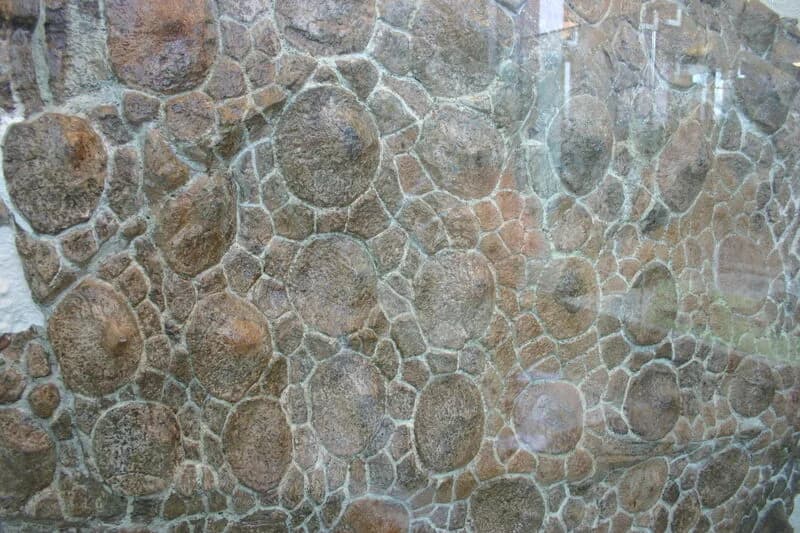
Sauropelta osteoderms on display
Wikimedia Commons, CC BY-SA