Edmontonia
Edmontonia longiceps is a nodosaurid 6 to 7 metres long and 2 to 3.5 tonnes, described in 1928 from Alberta and Montana. Unlike Ankylosaurus it had no tail club at all: its whole defence rested on forward-pointing shoulder spikes split into double tips. The genus lasted more than eight million years, from 76.5 to 68 million years ago.
Edmontonia lived in the Late Cretaceous, approximately 76.5 to 68 million years ago, during the Campanian and Maastrichtian stages. This long existence, spanning over 8 million years, makes it one of the most persistent nodosaurids in dinosaur history. Edmontonia belongs to the family Nodosauridae, a group of ankylosaurs characterized by the absence of a tail club but equipped with impressive body armor and lateral spines. It lived in the coastal plains of western North America, a region that hosted an extremely diverse dinosaur fauna during the Late Cretaceous. The climate of the time was subtropical, favoring lush vegetation and productive ecosystems capable of supporting large populations of armored herbivores.
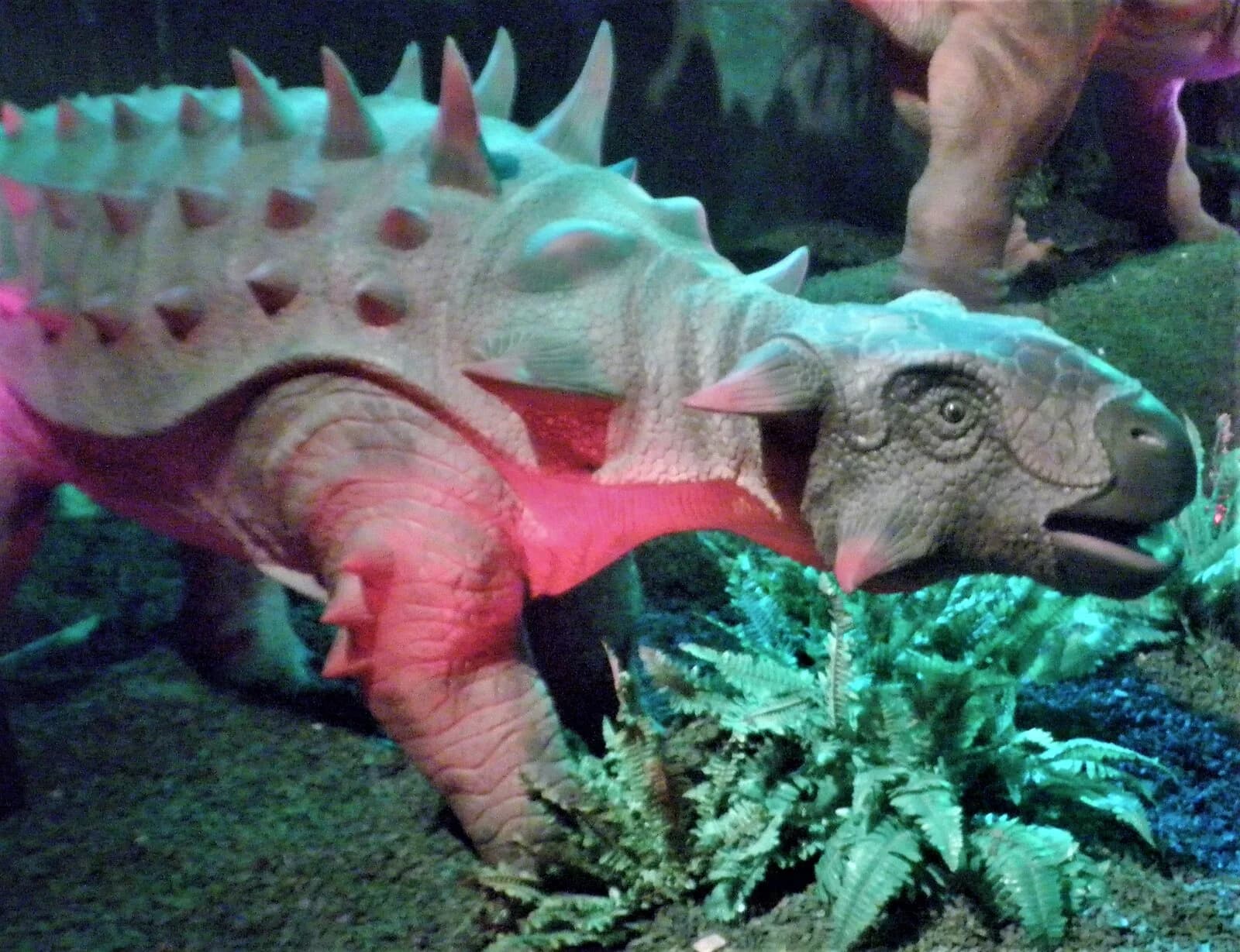
Edmontonia measured approximately 6 to 7 meters in length, with a height of about 1.5 to 2 meters and an estimated weight between 2 and 3.5 tonnes. It was one of the largest known nodosaurids, comparable in size to a large rhinoceros or small hippopotamus. Its body was wide and flattened, covered in an impressive armor of osteoderms. The most spectacular feature of Edmontonia is the presence of large bony spines projecting laterally from the shoulders, some of which could reach 30 to 40 centimeters in length. These spines were often bifurcated (split into two points), creating a bristling, menacing lateral profile. The skull was relatively flat and triangular, protected by fused bony plates forming a solid helmet.
A strict herbivore, Edmontonia fed on the low vegetation of the Late Cretaceous, including ferns, horsetails, cycads, and early angiosperms. Its horny beak at the front of the jaw was adapted for selectively picking tender plants and leaves. Its small leaf-shaped teeth, relatively simple compared to the sophisticated dental batteries of hadrosaurs and ceratopsians, suggest a diet based on more tender, less fibrous plants. The very low position of its head (less than one meter from the ground) confined it to ground-level vegetation, a non-competitive ecological niche ignored by larger herbivores browsing higher up. Its digestive system must have been voluminous to ferment plant fibers, contributing to the wide, pot-bellied silhouette characteristic of nodosaurids.
Edmontonia inhabited the coastal plains and lowlands of western North America, in present-day Alberta and Montana. The Late Cretaceous environment in this region was characterized by a humid subtropical climate, with winding rivers, extensive swamps, and forests bordering the Western Interior Seaway. The Horseshoe Canyon Formation and Dinosaur Park Formation in Alberta are the main fossil sources. Edmontonia coexisted with a rich and varied fauna including ceratopsids like Styracosaurus and Chasmosaurus, hadrosaurs like Corythosaurus and Parasaurolophus, other ankylosaurs like Euoplocephalus, and predatory theropods like Gorgosaurus and Daspletosaurus. Dense vegetation of ferns and low conifers provided abundant cover and food.
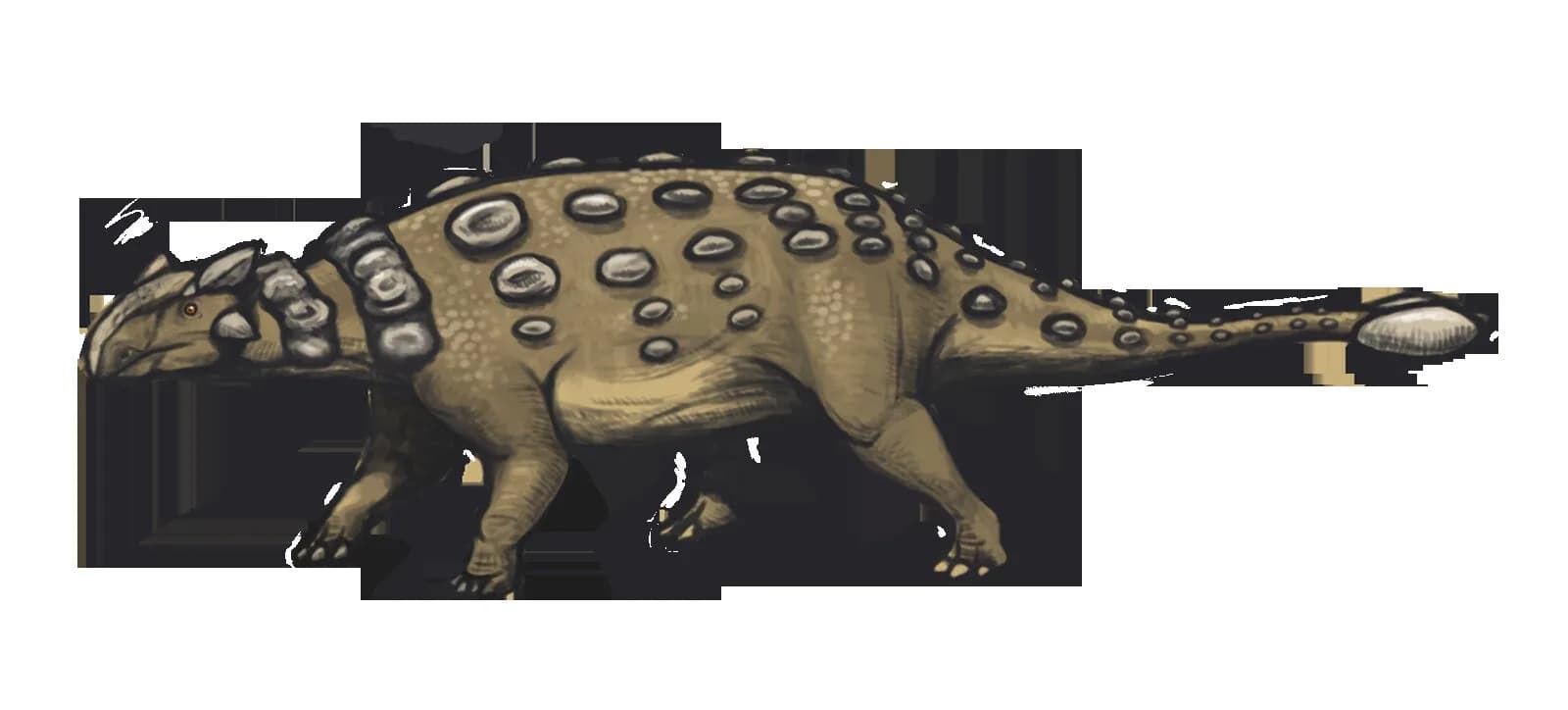
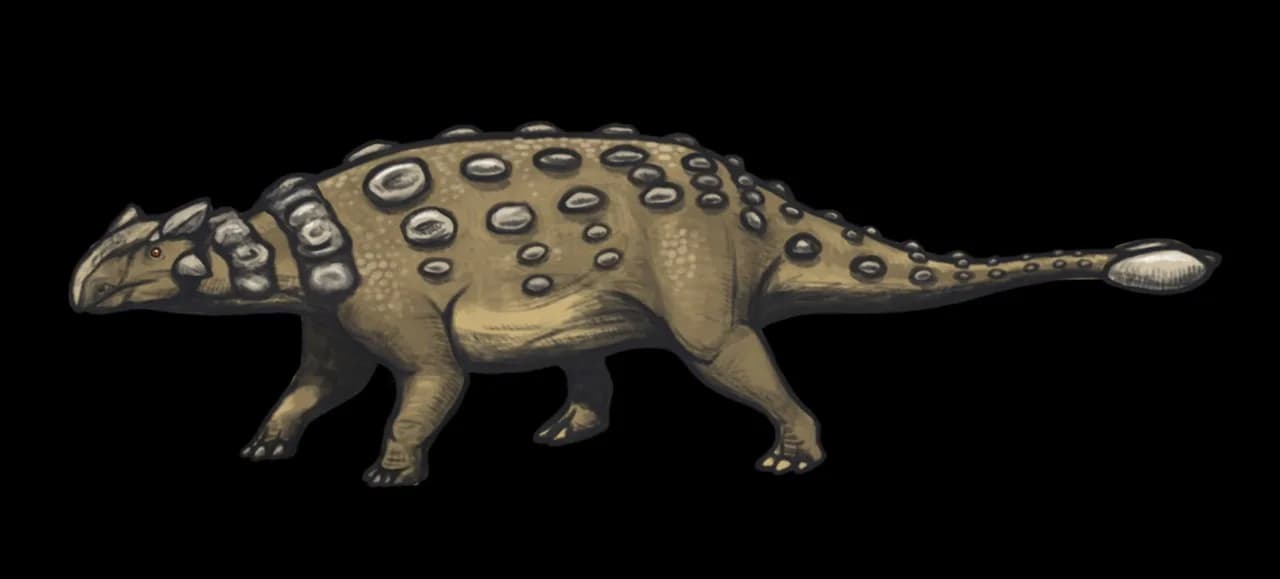
Edmontonia's anatomy is that of a living tank. Its entire body was covered in osteoderms — dermal bone plates of different sizes and shapes arranged in regular rows from skull to tail. The back bore rows of oval scutes and bony nodules forming a continuous shell. The flanks were protected by large lateral bony spines, the most impressive of which were on the shoulders — some bifurcated into double points, creating a formidable defense against predators. The skull was armored by fused dermal plates forming a protective helmet. Unlike ankylosaurids like Ankylosaurus, Edmontonia did not possess a tail club — its tail simply tapered. The limbs were robust and short, with wide feet adapted to support the considerable weight of the armor. The hindlimbs were slightly longer than the forelimbs.
Edmontonia was probably a solitary animal or lived in small dispersed groups, slowly roaming the understory in search of food. Its primary defense strategy relied on its armor rather than flight: when threatened, it could probably flatten itself to the ground, protecting its vulnerable belly and presenting only its armored back and menacing spines to the predator. The large lateral shoulder spines also served as offensive weapons: biomechanical studies suggest that Edmontonia could charge laterally at an opponent using its bifurcated spines as pikes. This behavior recalls that of the modern porcupine, combining passive defense with active deterrence. Its travel speed was probably very low, estimated at less than 10 km/h, but its massive armor made most predators reluctant to attack.
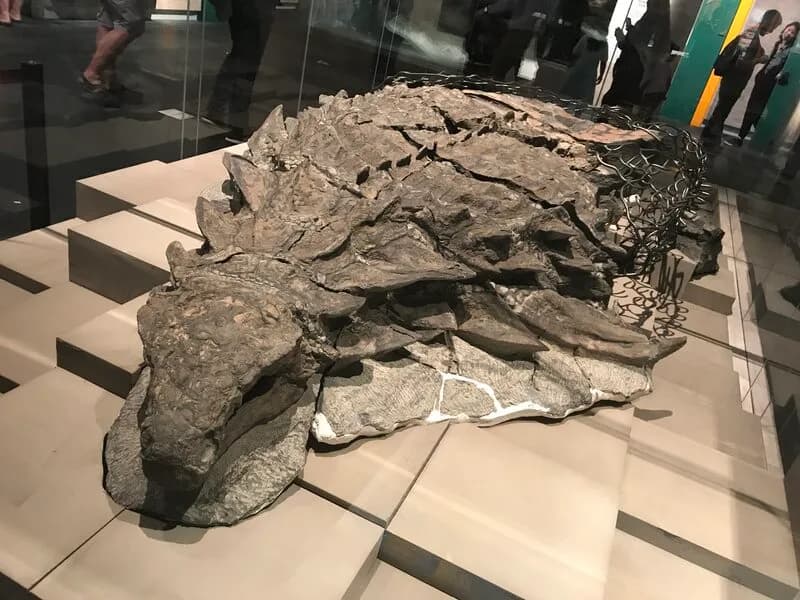
Edmontonia longiceps was first described in 1928 by Charles M. Sternberg, from fossils discovered in the Horseshoe Canyon Formation near Edmonton, Alberta, Canada — hence its name. The holotype is a well-preserved skull that clearly shows the fused dermal plates characteristic of the genus. A second species, E. rugosidens, was named in 1930 by Gilmore from Montana fossils. Numerous specimens have been discovered since, including partial skeletons and isolated armor elements, in the Dinosaur Park, Horseshoe Canyon, and Two Medicine Formations. One of the most complete specimens was discovered in Alberta with much of the dermal armor in anatomical position, allowing a precise reconstruction of the arrangement of osteoderms and spines. Edmontonia is today one of the best-documented nodosaurids from the North American Late Cretaceous.
| Period | Crétacé supérieur / Late Cretaceous |
| Era | Mésozoïque / Mesozoic |
| Age | 76.5-68 Ma |
| Location | Amérique du Nord (Alberta, Montana) / North America (Alberta, Montana) |
| Length | 6-7 m |
| Height | ~2 m |
| Weight | 2-3.5 tonnes |
| Diet | Herbivore |
| Discovery | 1928 |
Edmontonia longiceps belonged to Nodosauridae, while Ankylosaurus is an Ankylosauridae. The main distinction is the absence of a tail club in nodosaurids: their defense relied on lateral spines and body armor. Edmontonia's bifurcated shoulder spines could reach 30 to 40 centimeters and also served as offensive weapons during lateral charges against predators.
Edmontonia longiceps measured 6 to 7 meters long, 1.5 to 2 meters tall, and weighed 2 to 3.5 tonnes. It is one of the largest known nodosaurids. It persisted for over 8 million years, from the Campanian to Maastrichtian stages (76.5 to 68 Ma), making it one of the most long-lived dinosaur genera in the North American Late Cretaceous.
Edmontonia longiceps was described in 1928 by Charles M. Sternberg from the Horseshoe Canyon Formation in Alberta, Canada — hence its name linked to Edmonton. The holotype is a well-preserved skull showing the fused dermal plates. A second species, E. rugosidens, was named in 1930 from Montana fossils. The most complete specimens come from the Dinosaur Park and Horseshoe Canyon Formations.
Edmontonia longiceps life reconstruction
Wikimedia Commons
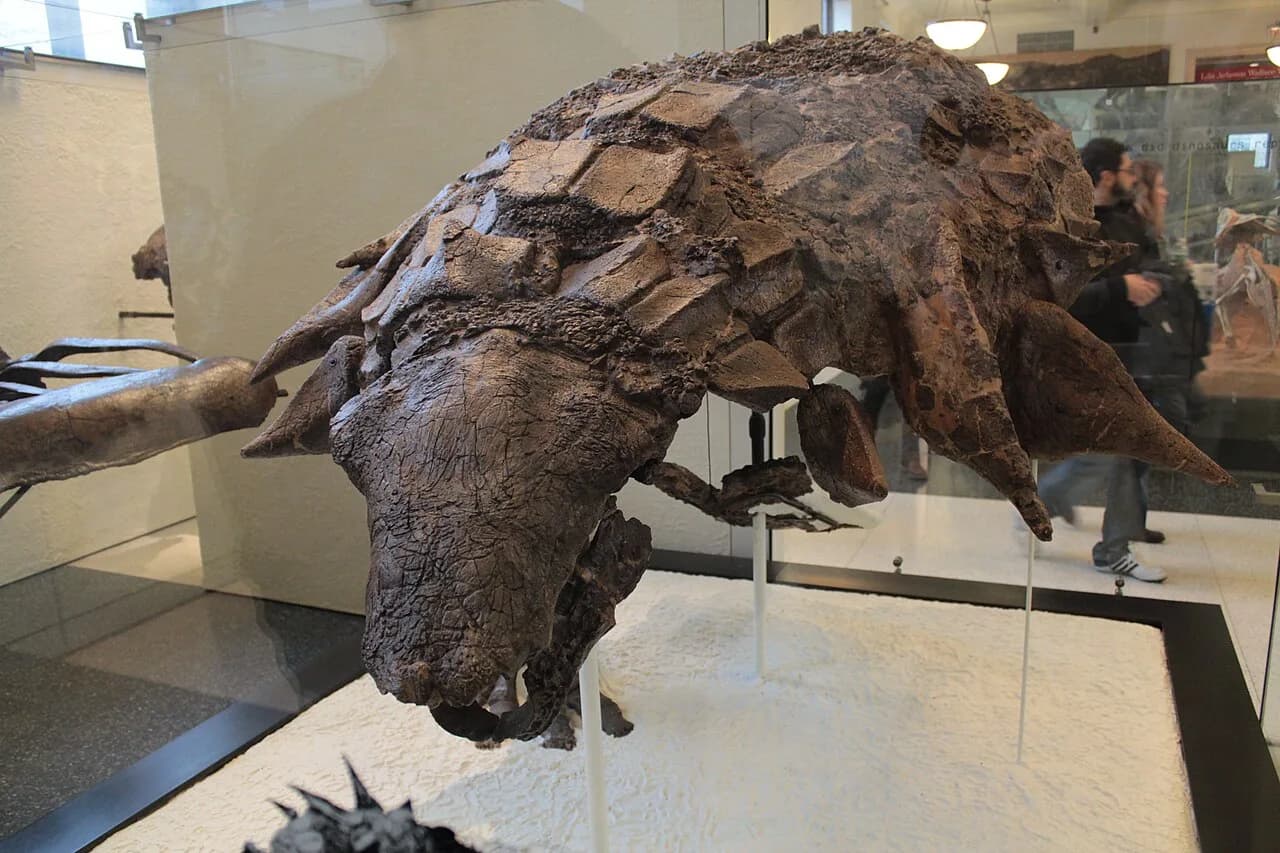
Edmontonia skeleton at the Royal Tyrrell Museum
Wikimedia Commons