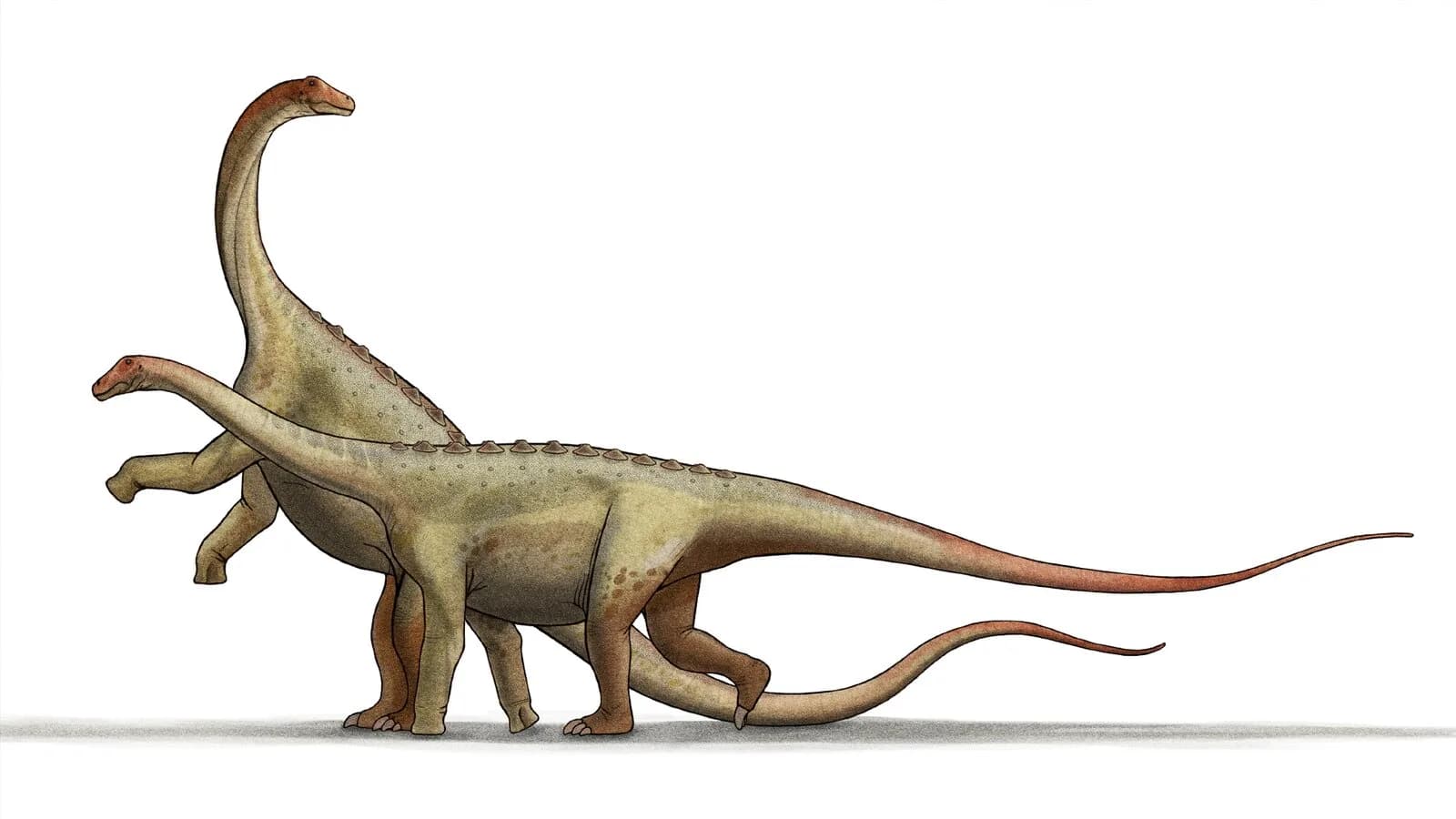
Saltasaurus
Saltasaurus loricatus is the first sauropod found with armour: bony plates embedded in the skin of the back, a complete surprise in 1980. Eight to 12 metres long and 5 to 7 tonnes, modest for a sauropod, it lived in Argentina 70 to 66 million years ago. Clustered nests there attest to colonial breeding.
Saltasaurus lived during the Late Cretaceous, approximately 70 to 66 million years ago, during the Maastrichtian stage, the very last stage before the mass extinction event that ended the age of dinosaurs. South America at this time was an isolated continent, separated from Africa and North America, which allowed its fauna to evolve in relative isolation. Salta Province in northwestern Argentina was characterized by a semi-arid climate with lake basins and seasonal waterways. Saltasaurus is part of the great diversification of South American titanosaurs that dominated the continent's herbivore ecosystems until the end-Cretaceous extinction.
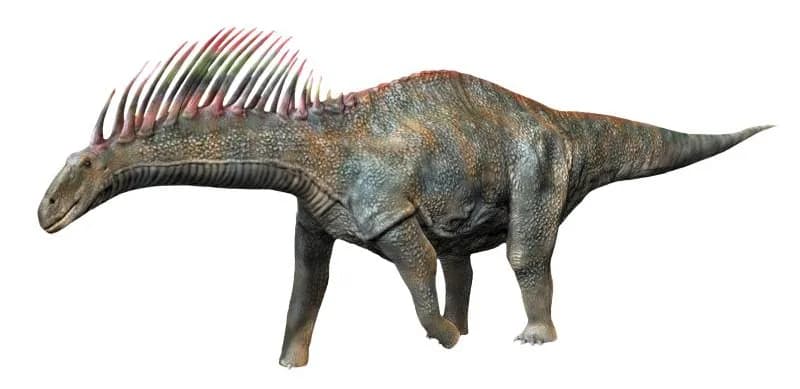
Saltasaurus was a relatively modestly sized titanosaur sauropod, measuring about 8 to 12 meters long with an estimated weight of 3 to 7 tonnes. This was considerably smaller than giants like Argentinosaurus or Patagotitan, which could reach over 30 meters in length. Its skull was small and elongated, with peg-shaped teeth adapted for a herbivorous diet. Despite its reduced size for a sauropod, it remained an imposing animal, comparable in mass to a large African elephant. Its body was remarkably compact and stocky for a sauropod, with robust limbs well-suited to its armored frame.
Saltasaurus was a herbivore that fed on the vegetation available in its semi-arid environment during the Late Cretaceous. Its diet included ferns, low conifers, and the early flowering plants that were beginning to diversify during this period. Its peg-shaped teeth served to strip leaves and tender branches without chewing, with digestion occurring through a massive gastrointestinal system and prolonged fermentation. Its more modest size compared to giant titanosaurs allowed it to access different food sources, feeding at lower heights and in more closed habitats that larger sauropods could not easily exploit.
Saltasaurus inhabited the lacustrine and fluvial environments of the El Brete Formation and Allen Formation in northwestern Argentina. The landscape included sedimentary basins, seasonal waterways, and vegetation adapted to a semi-arid climate with alternating dry and wet seasons. Titanosaur nesting sites discovered in the same region, notably at Auca Mahuevo, suggest communal breeding areas where hundreds of females gathered to lay eggs in carefully prepared ground nests. Saltasaurus coexisted with other dinosaurs, crocodilians, and various smaller vertebrates that populated these Late Cretaceous South American ecosystems.
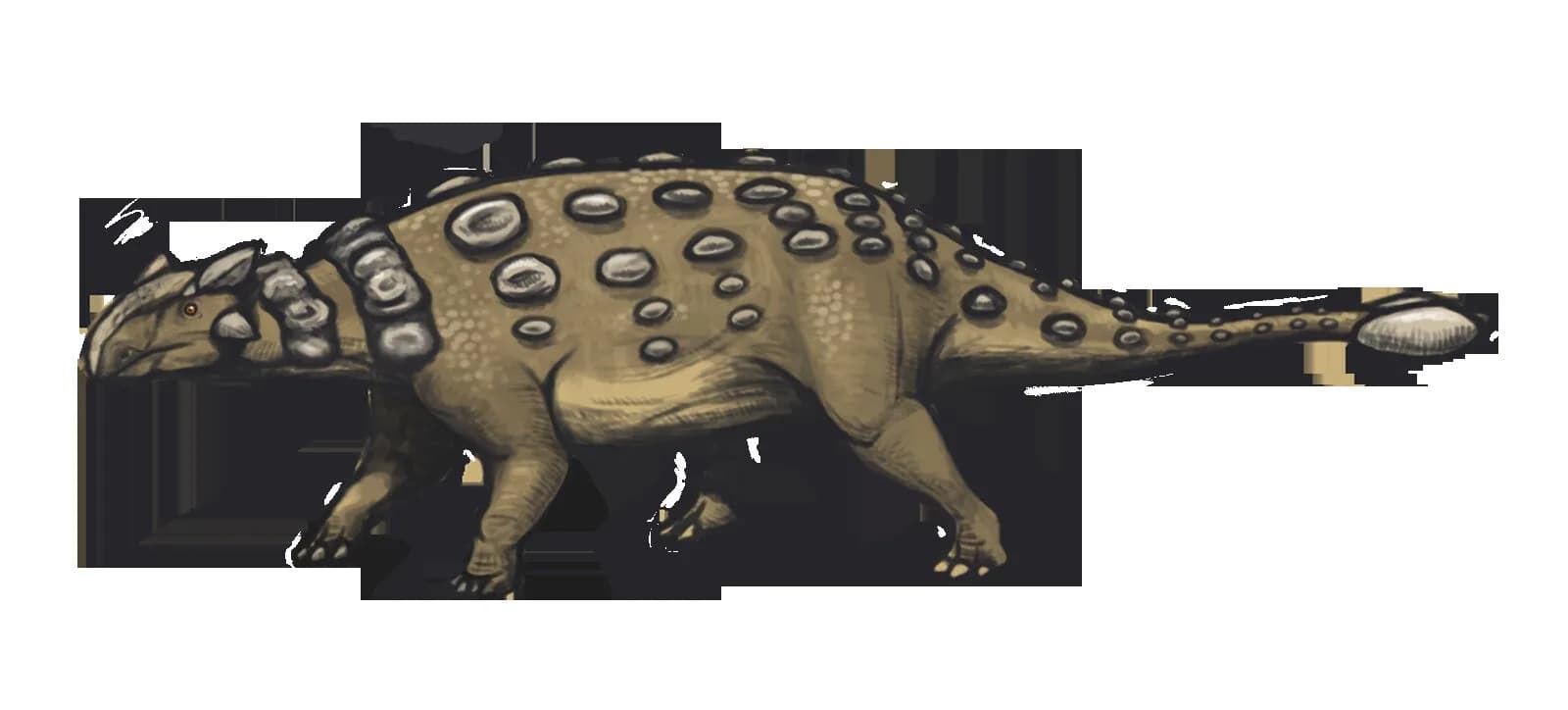
The most remarkable anatomical feature of Saltasaurus is its dermal armor. It was the first sauropod for which osteoderms were discovered — bony plates embedded in the skin, of two types: large oval osteoderms approximately 12 centimeters in diameter and small bony nodules of a few millimeters. This armor provided protection against predators, unique among sauropods known at the time. Its body was compact with a wide pelvis, robust limbs, and a moderately long neck. Its anterior caudal vertebrae were procoelous, an advanced titanosaur trait.
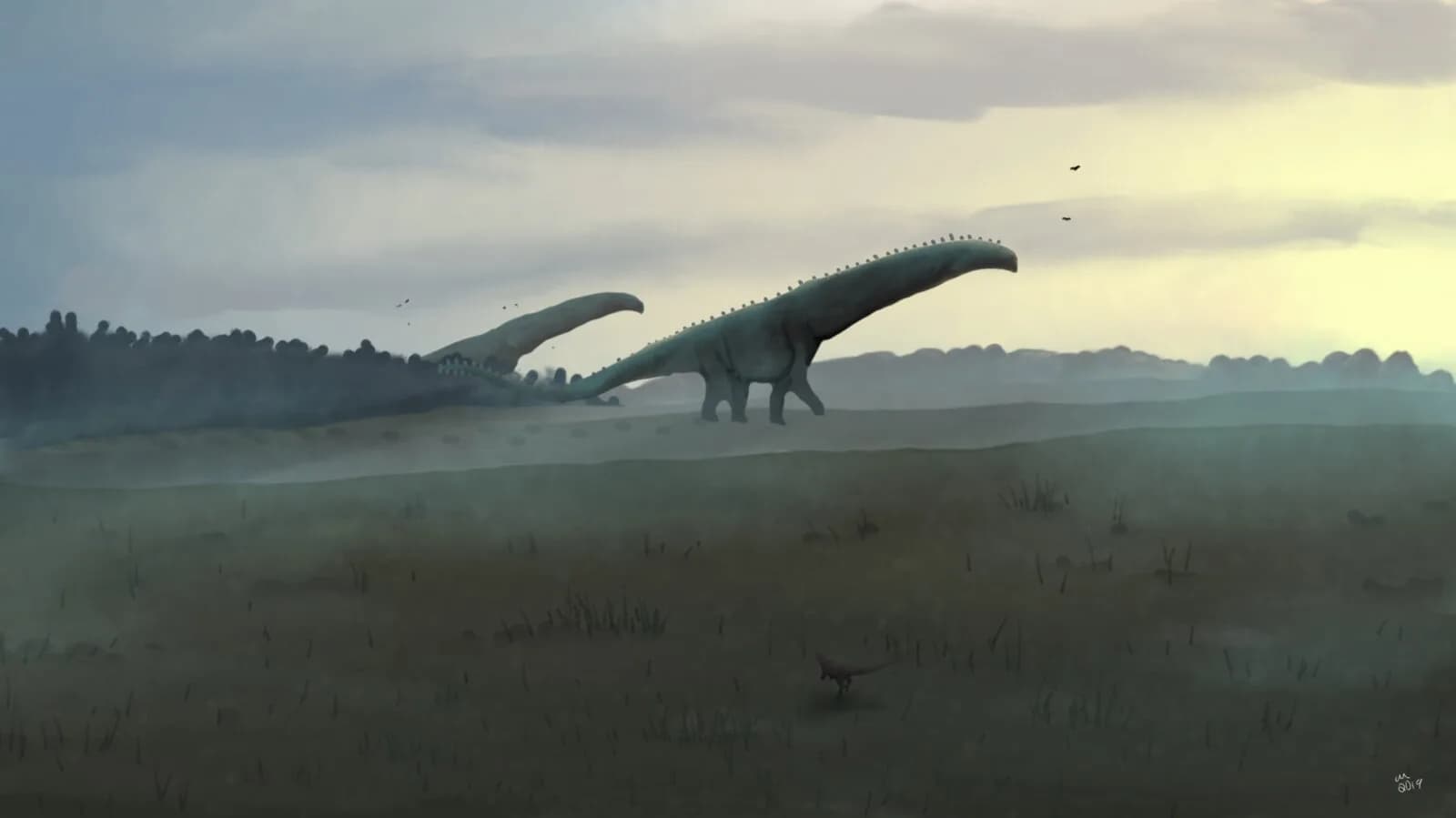
Saltasaurus probably lived in herds, as suggested by colonial nesting sites associated with titanosaurs from the same region and era. Females gathered in large numbers to lay their eggs in ground-dug nests, which were carefully covered with vegetation for incubation. Young individuals grew rapidly and probably stayed with the herd for collective protection against the numerous predators in their environment. Its dermal armor suggests it faced significant predation pressure, even as an adult, probably from abelisaurid theropods like Aucasaurus or the fearsome Carnotaurus that shared its habitat.
Saltasaurus was described in 1980 by José Bonaparte and Jaime Powell from fossils discovered in the El Brete Formation near the city of Salta, Argentina. The type species is Saltasaurus loricatus, the species name 'loricatus' meaning 'armor-bearer' in reference to the osteoderms. The discovery of this armor was a major surprise, as it was previously thought that sauropods depended entirely on their size for protection. Since then, osteoderms have been found in other titanosaurs, confirming that dermal armor was widespread in this family. The type material includes vertebrae, the sacrum, limb bones, and numerous osteoderms.
| Period | Crétacé supérieur / Late Cretaceous (Maastrichtien) |
| Era | Mésozoïque / Mesozoic |
| Age | 70–66 Ma |
| Location | Amérique du Sud / South America (Argentine / Argentina) |
| Length | 8–12 m |
| Height | ~3.5 m |
| Weight | 5 000–7 000 kg |
| Diet | Herbivore |
| Discovery | 1975 |
Saltasaurus loricatus was the first sauropod for which osteoderms — dermal bony plates — were formally discovered: large ovals of about 12 cm in diameter and small nodules of a few millimeters. This armor, described in 1980 by Bonaparte and Powell, revealed that sauropods did not rely solely on size for defense. Since then, osteoderms have been found in other titanosaurs as well.
Saltasaurus measured 8 to 12 meters long with an estimated weight of 5,000 to 7,000 kg, far smaller than titanosaur giants like Argentinosaurus or Patagotitan which exceeded 30 meters. This reduced size allowed it to access food sources at lower heights and in the semi-arid habitats of Salta Province, Argentina, where it lived 70 to 66 million years ago.
Massive nesting sites discovered at Auca Mahuevo in Argentina, in the same region as Saltasaurus loricatus, reveal hundreds of ground nests containing titanosaur eggs sometimes preserving embryos. These concentrations indicate that females gathered in colonies to lay eggs, a behavior analogous to that of modern sea turtles at communal nesting grounds.
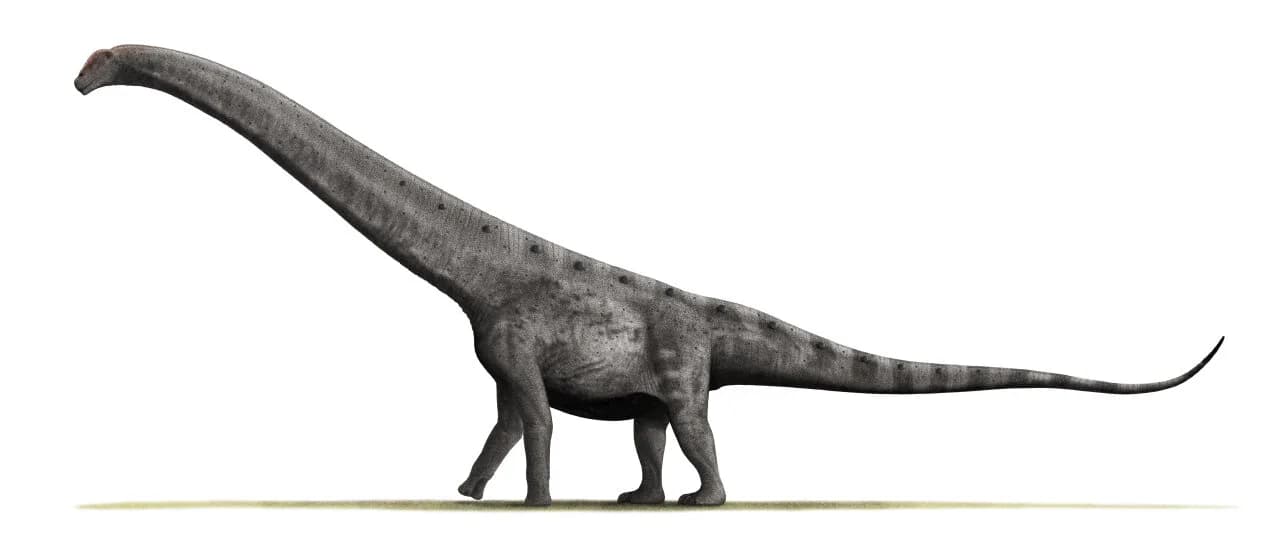
Life reconstruction of Saltasaurus loricatus
LadyofHats/FunkMonk, domaine public, via Wikimedia Commons
Saltasaurus loricatus life reconstruction
LadyofHats, Public domain