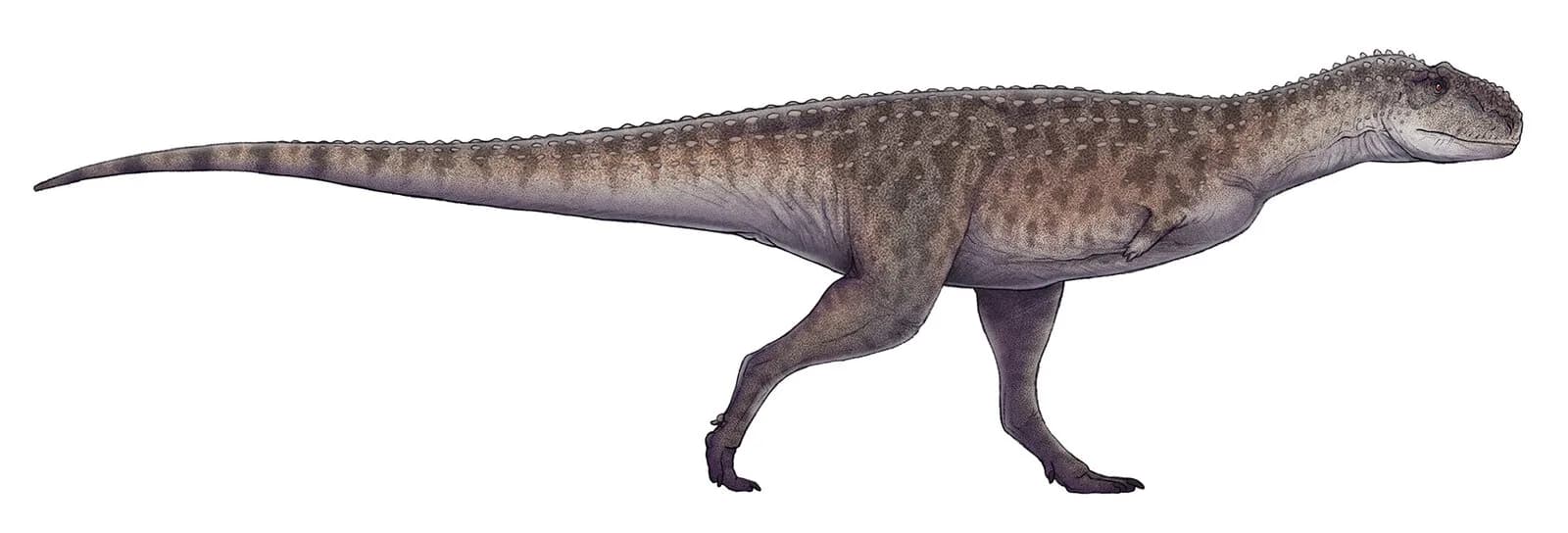
Rajasaurus
Rajasaurus narmadensis, « king lizard », was India's dominant predator at the close of the Cretaceous: 6 to 11 metres and 1 to 4 tonnes, 70 to 66 million years ago. It carries a brow horn unique among Indian abelisaurids. Its close kinship with Majungasaurus of Madagascar attests that the two landmasses were then joined.
Rajasaurus lived during the Late Cretaceous, approximately 70 to 66 million years ago, during the Maastrichtian stage. India at this time was an island-continent drifting northward, separated from all other continents. The Deccan Traps volcanoes were beginning their massive eruptions that would cover a vast area with lava. Rajasaurus was the dominant apex predator of the Indian subcontinent during the last few million years of the Cretaceous, an abelisaurid that testifies to the paleogeographic connections between India, Madagascar, and South America.
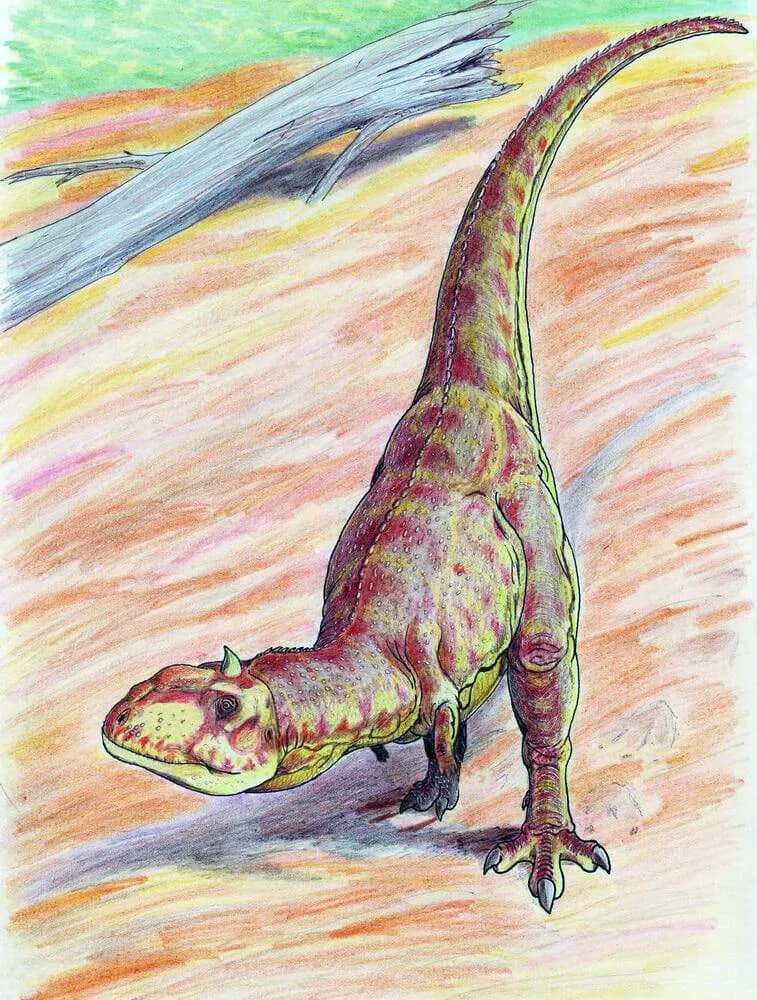
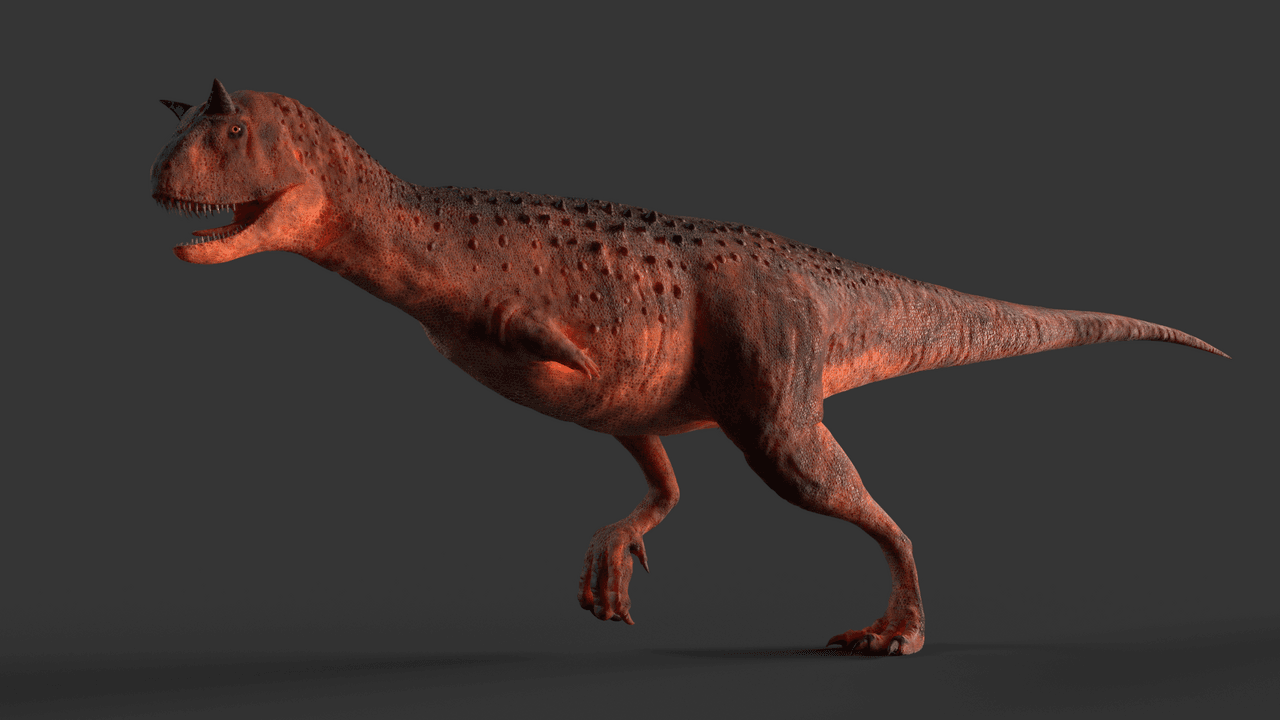
Rajasaurus measured approximately 6.6 to 7 meters in length with an estimated weight of around 700 kilograms to 1 ton, making it a medium to large-sized abelisaurid theropod. Its skull was robust and deep, featuring a distinctive single nasal horn crest similar to its relative Carnotaurus but lower and more rounded. The jaws were powerful, housing thick teeth adapted for a strong gripping bite. The body was stocky and muscular, with characteristically short but robust forelimbs that are a hallmark of abelisaurid anatomy. The hind limbs were strong and well-suited for bipedal locomotion, while the tail was thick and muscular, providing balance and stability during movement.
Rajasaurus was a carnivorous apex predator that likely preyed on the sauropods and other herbivorous dinosaurs of Late Cretaceous India. Its robust skull and strong jaw muscles suggest it employed a powerful bite to subdue prey, gripping and holding rather than slicing. The primary prey available in its ecosystem included titanosaur sauropods like Isisaurus, which were the dominant large herbivores of the Indian subcontinent during this period. As an abelisaurid, Rajasaurus may have used head-butting or ramming attacks supplemented by its biting force to take down prey. The relatively isolated nature of the Indian subcontinent may have limited prey diversity, making Rajasaurus a generalist predator that targeted whatever large herbivores were available.
Rajasaurus inhabited the fluvial and lacustrine environments of the Lameta Formation in the Gujarat region of western India. This landscape included alluvial plains with seasonal rivers, lakes, and vegetation of conifers and palms. The climate was hot and tropical with marked seasons. The nascent volcanic activity of the Deccan Traps was beginning to modify the environment. The ecosystem was dominated by titanosaurs and included crocodilians, snakes, and primitive mammals. The Lameta Formation is also known for its numerous dinosaur nests.
Rajasaurus anatomy reflects its classification as an abelisaurid theropod, sharing many features with its relatives Carnotaurus and Majungasaurus. The most distinctive feature is the single, low nasal horn crest formed by fused nasal bones, likely used for intraspecific display or combat. The skull was deep and powerfully built with reinforced bone structure around the jaw joints, indicating very strong bite forces. The forelimbs were extremely reduced, even more so than in tyrannosaurs, a characteristic shared with all abelisaurids. The vertebral column shows evidence of robust muscle attachments, particularly in the neck region, suggesting powerful head movements during feeding. The overall body plan was compact and heavily muscled, emphasizing power over speed.
Rajasaurus likely exhibited typical large abelisaurid hunting behavior, using its powerful build and strong bite to ambush and overpower prey. The nasal horn crest probably played a role in visual signaling and intraspecific combat during mating season, with individuals engaging in head-pushing contests similar to those proposed for other horned abelisaurids. As the likely apex predator of its Late Cretaceous Indian ecosystem, Rajasaurus would have defended territories against rival individuals and competing predators. The isolated nature of the Indian subcontinent during this period meant that Rajasaurus evolved in relative geographic isolation, developing unique adaptations distinct from abelisaurids on other Gondwanan landmasses like South America and Madagascar.
The first Rajasaurus fossils were discovered in the 1980s in the Lameta Formation near Rahioli, Kheda district, Gujarat, India. Excavations were conducted by the Geological Survey of India. The species was described in 2003 by Jeffrey Wilson, Paul Sereno, Suresh Srivastava, Devendra Kumar Bhatt, Ashu Khosla, and Ashok Sahni as Rajasaurus narmadensis, the genus name meaning 'king of lizards' in Sanskrit and the species name referencing the Narmada River. The material includes a partial skull, vertebrae, pelvis, and limb bones. Rajasaurus is one of the best-known Indian dinosaurs and a symbol of subcontinent paleontology.
| Period | Crétacé supérieur / Late Cretaceous (Maastrichtien) |
| Era | Mésozoïque / Mesozoic |
| Age | 70–66 Ma |
| Location | Asie / Asia (Inde / India, Gujarat) |
| Length | 6–11 m |
| Height | ~2.5 m |
| Weight | 1 000–4 000 kg |
| Diet | Carnivore |
| Discovery | 1982 |
Rajasaurus narmadensis possessed a low, rounded nasal horn unique among Indian abelisaurids, formed by thickened frontal bones. This horn likely functioned during ritualized combat between males and for visual recognition between individuals. Its arms were extremely reduced — even more vestigial than tyrannosaur arms — and its short, deep skull is typical of the family Abelisauridae.
Rajasaurus narmadensis measured 6.5 to 7 meters long with a weight between 700 kilograms and 1 tonne. The first fossils were discovered in the 1980s in the Lameta Formation near Rahioli (Kheda district, Gujarat, India). The species was described in 2003 by Wilson, Sereno et al. Its name means 'king of lizards' in Sanskrit, and the epithet narmadensis references the Narmada River.
Rajasaurus narmadensis, a close relative of Majungasaurus from Madagascar and Carnotaurus from South America, reflects the terrestrial connections that existed between India, Madagascar, and South America when they were part of Gondwana. India, having become an island-continent during the Maastrichtian (70–66 Ma) as it drifted northward, had developed a distinctive abelisaurid fauna adapted to this geographic isolation.
Life restoration of Rajasaurus narmadensis
Paleocolour, CC BY-SA 3.0, via Wikimedia Commons
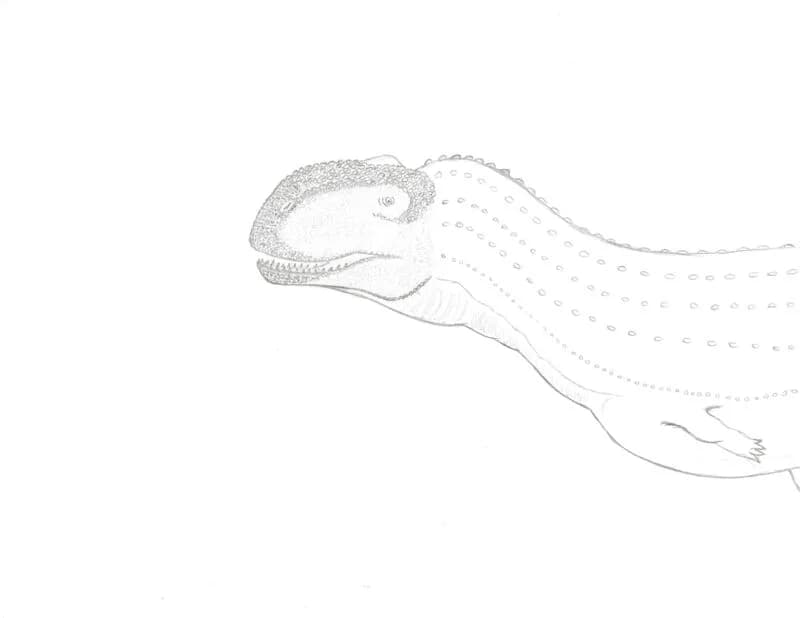
Rajasaurus narmadensis reconstruction
AtharvK, CC BY-SA 4.0